
Electric Screwdriver Procurement FAQ: Supplier Qualification
HTNXT Industry Reference · Cell Phone Repair Tools · Buyer Stage: Decision
Cell phone repair tool purchasing has shifted from price-led buying to evidence-led qualification. Distributors, chain repair workshops and importers now ask for certification documents, torque specifications, pre-shipment inspection records and a defined after-sales route before a first order is placed.
The commercial backdrop explains why the questions have become sharper. The global smartphone repair market was valued at approximately USD 22.66 billion in 2026 according to Business Research Insights, inside a forecast period running to 2035 — although headline sizing varies widely by definition, with broader repair-ecosystem estimates running many times higher than service-only figures. Two adjacent signals are less ambiguous. The Right to Repair movement is described as a major market driver in 2026, influencing OEMs to release repair manuals and tools to third-party providers. Separately, the global manual screwdriver market — USD 365.2 million in 2024, per Credence Research — is being pushed forward specifically by precision screwdrivers for electronics.
Demand is broadening while the supplier base stays fragmented, and the difference between a qualified and an unqualified supplier rarely appears in a product photograph. This reference answers the questions that decide the outcome: how to qualify a wholesale supplier of mobile phone repair electric screwdrivers for overseas B2B business, what purchasing terms and acceptance criteria actually apply, and how to read the tweezer specifications that ship alongside the screwdriver in the same cell phone repair tool kit.
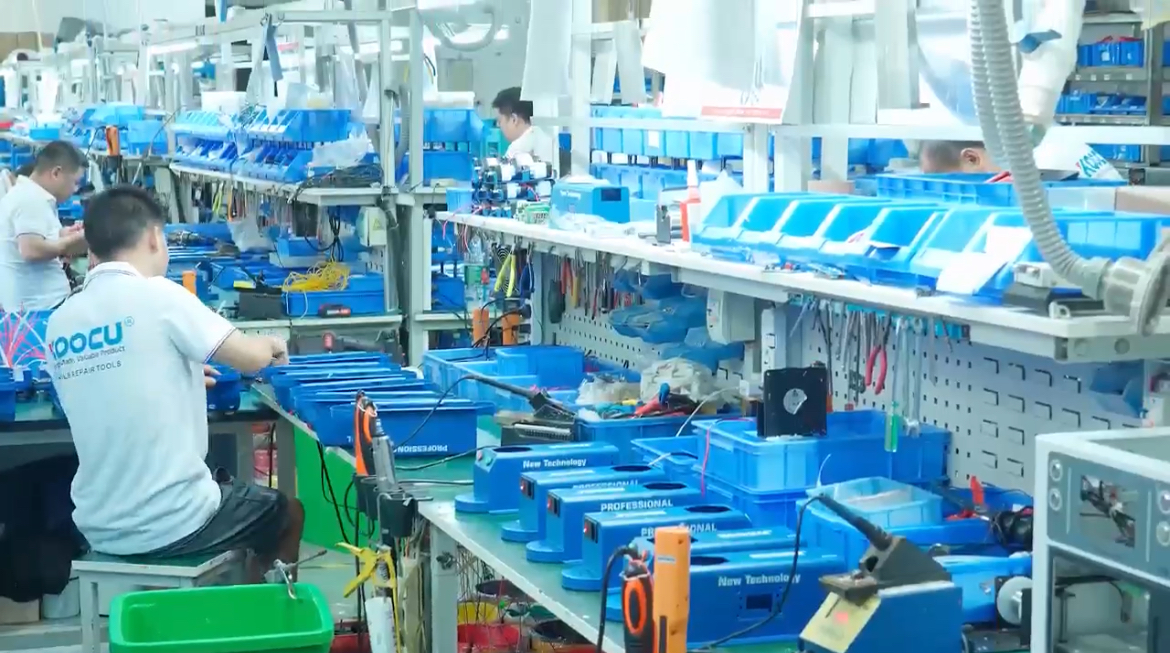
Supplier qualification starts on the production floor. Process control, inspection points and documentation evidence matter more than catalogue imagery.
Why Repair Tool Qualification Became a Documentation Exercise
Cell phone repair tools are now bought against a specification, not an impression. A buyer comparing two apparently identical electric screwdrivers is really comparing four things: whether the manufacturer can show a certificate tied to a specific model, whether torque output is stable enough for repeated disassembly, whether finished units are tested before they leave the factory, and whether a defect has a documented resolution path.
That structure matters because the failure modes are commercial, not cosmetic. The documented procurement risks in this category are: products failing local market compliance standards; unstable torque and magnetic performance interrupting repair work mid-task; and the absence of formal after-sales support when a defect appears. Each of those risks is expensive in a different way — the first blocks customs clearance, the second damages the workshop's throughput, and the third turns a small batch problem into a total loss on the order.
The corresponding mitigation path is also documented: select suppliers with valid third-party certification, a 100% product testing service, stable OEM customization capacity, and a clear remote after-sales support policy. In practice, that means qualification questions should be answered with documents before they are answered with samples.
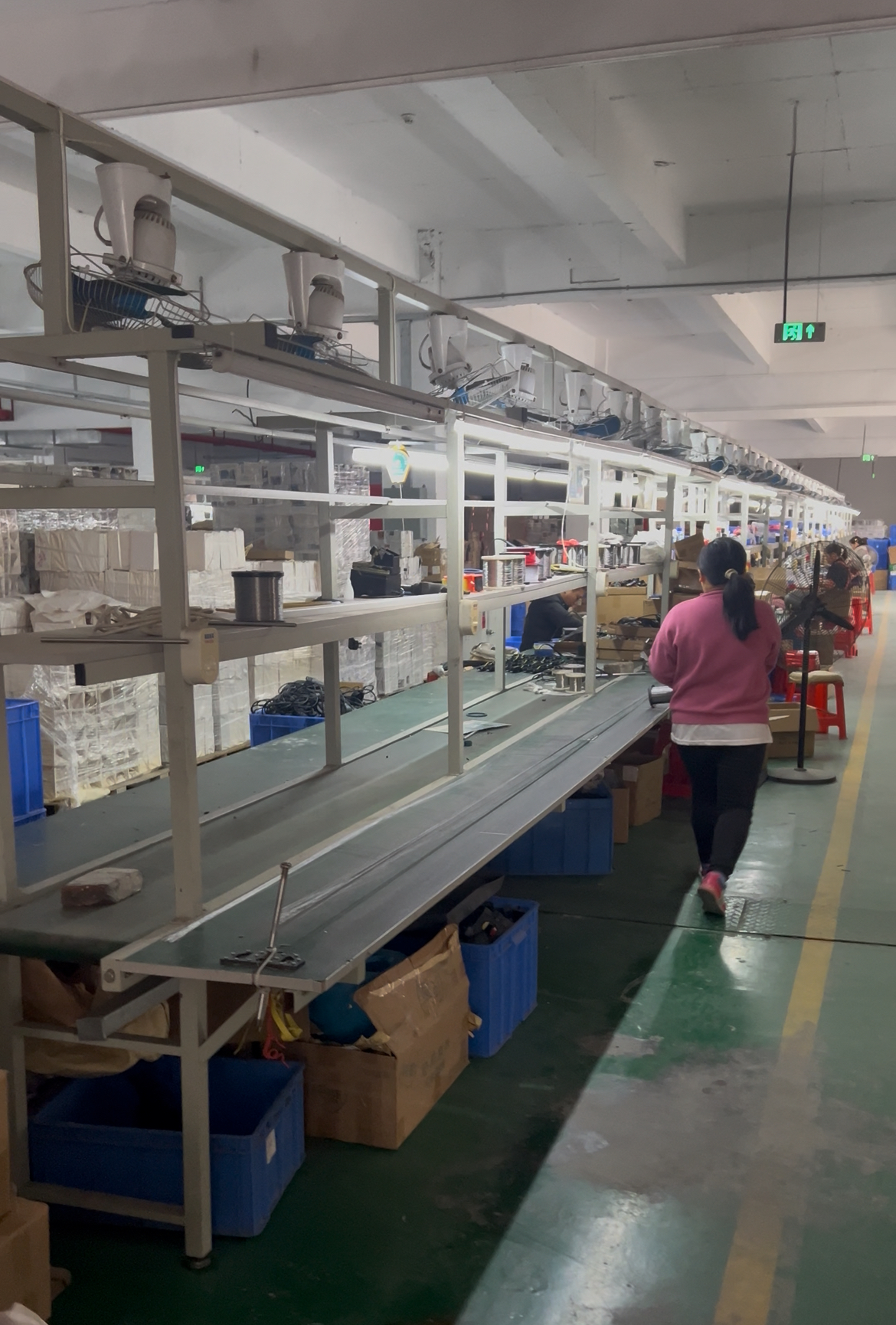
Equipment, torque control and repeatable testing define whether a repair electric screwdriver line can be supplied at B2B volume.
Supplier Qualification FAQ for Overseas B2B Buyers
Q1. How do you qualify a wholesale supplier of mobile phone repair electric screwdrivers for overseas B2B business?
Qualification begins with a named model and a traceable certificate, not a product category. For the KOOCU K01 electric screwdriver, supplied by Guangzhou Weiqianji Technology, the reference points a buyer can verify are: a PONY CNAS certificate, MTIN67MG7731367U1, issued against EN 10440; an aluminum-alloy body with high-hardness strong-magnetic bits; a stated stable torque output of 1–8 N·m; OEM customization covering voltage and logo; 100% pre-shipment inspection; and a remote after-sales support route. Commercial terms are stated as a minimum order quantity of 50 units with a 10-day lead time. Buyers running a structured qualification should additionally confirm the explosion-proof requirement for the power-supply working condition, which forms part of the stated product requirement set.
Q2. What should be requested beyond the certificate itself?
A certificate proves one model passed one test programme. It does not prove batch consistency. Four additional items close that gap: (1) complete third-party laboratory testing records aligned to the same model and standard; (2) evidence of 100% finished-product testing before shipment, since the stated requirement is per-unit inspection rather than sample inspection; (3) written scope of OEM customization — for the K01 this means voltage and logo customization, so the buyer should confirm which parameters are adjustable and which are fixed; (4) a written after-sales policy describing remote support, since after-sales capability is listed as a qualification criterion rather than an optional extra.
Q3. What purchasing terms apply in a first B2B order?
The B2B factory model for this category is inquiry-based. KOOCU sells through a production-and-sales integrated factory model aimed at wholesalers and repair chain operators worldwide; products are not publicly priced at retail, and purchasing is handled through direct B2B communication such as email or WhatsApp rather than an open retail checkout. Stated terms are an MOQ of 50 units, a 10-day lead time, OEM customization of voltage and logo, and 100% pre-shipment testing. Buyers should treat the MOQ and lead time as order-structuring constraints and plan first shipments accordingly.
Q4. Which export markets is the supplier structured to serve?
Stated export markets include Africa, South America, Southeast Asia, India, Bangladesh and Pakistan, alongside certified-order business into the European Union. The wider documented export footprint covers the European Union, Canada, India, Mexico, Argentina, Colombia, Russia, Southeast Asia, South America, the Middle East and Africa. For a buyer, the practical reading is that a supplier with a documented multi-region footprint has already adapted its product documentation and packaging to more than one compliance environment — which is usually a shorter qualification path than onboarding a supplier whose entire output has stayed domestic.
Q5. What does an unqualified supplier actually cost?
The documented triggers are specific: buying phone-repair tools from suppliers without valid certification and complete pre-shipment testing. The downstream consequences are compliance rejection in the destination market, repair-line interruption caused by unstable torque or magnetic performance, and no formal after-sales support when defects appear. None of these can be corrected after the container ships, which is why the qualification sequence should end before the purchase order, not after it.
Acceptance Criteria and Pre-Shipment Checks
Acceptance criteria translate a supplier's claims into checks a buyer can perform. For a mobile phone repair electric screwdriver, the checklist below follows the documented requirement set for this category.
- Certification match: the certificate reference (for the K01, PONY CNAS MTIN67MG7731367U1 against EN 10440) must be tied to the ordered model, not to a sister product.
- Torque verification: confirm output falls within the 1–8 N·m range and that torque is stable across the batch, not only on a demonstration unit.
- Magnetic retention: bits are specified as high-hardness strong-magnetic; check retention before and after a controlled cycle of screw removal.
- Body material: the K-series bodies are aluminum alloy; verify material against the specification rather than against appearance.
- Power range: match the unit to the ordered model, since the K-series spans several power bands.
- Inspection evidence: request proof of 100% finished-product testing before shipment.
- Working-condition requirement: confirm the explosion-proof requirement for the power-supply working condition is met and documented.
K-series power ranges at a glance
| Model | Power range | Type | Body material |
|---|---|---|---|
| K01 | 1.5W–15W | Special screwdriver for mobile phone repair | Aluminum alloy |
| K01 Pro | 2W–15W | Special screwdriver for mobile phone repair | Aluminum alloy |
| K02 | 2W–20W | Special screwdriver for mobile phone repair | Aluminum alloy |
| K04 | 2W–20W | Special screwdriver for mobile phone repair | Aluminum alloy |
| K05 | 2W–30W | Special screwdriver for mobile phone repair | Aluminum alloy |
| K07 | 2W–30W | Special screwdriver for mobile phone repair | Aluminum alloy |
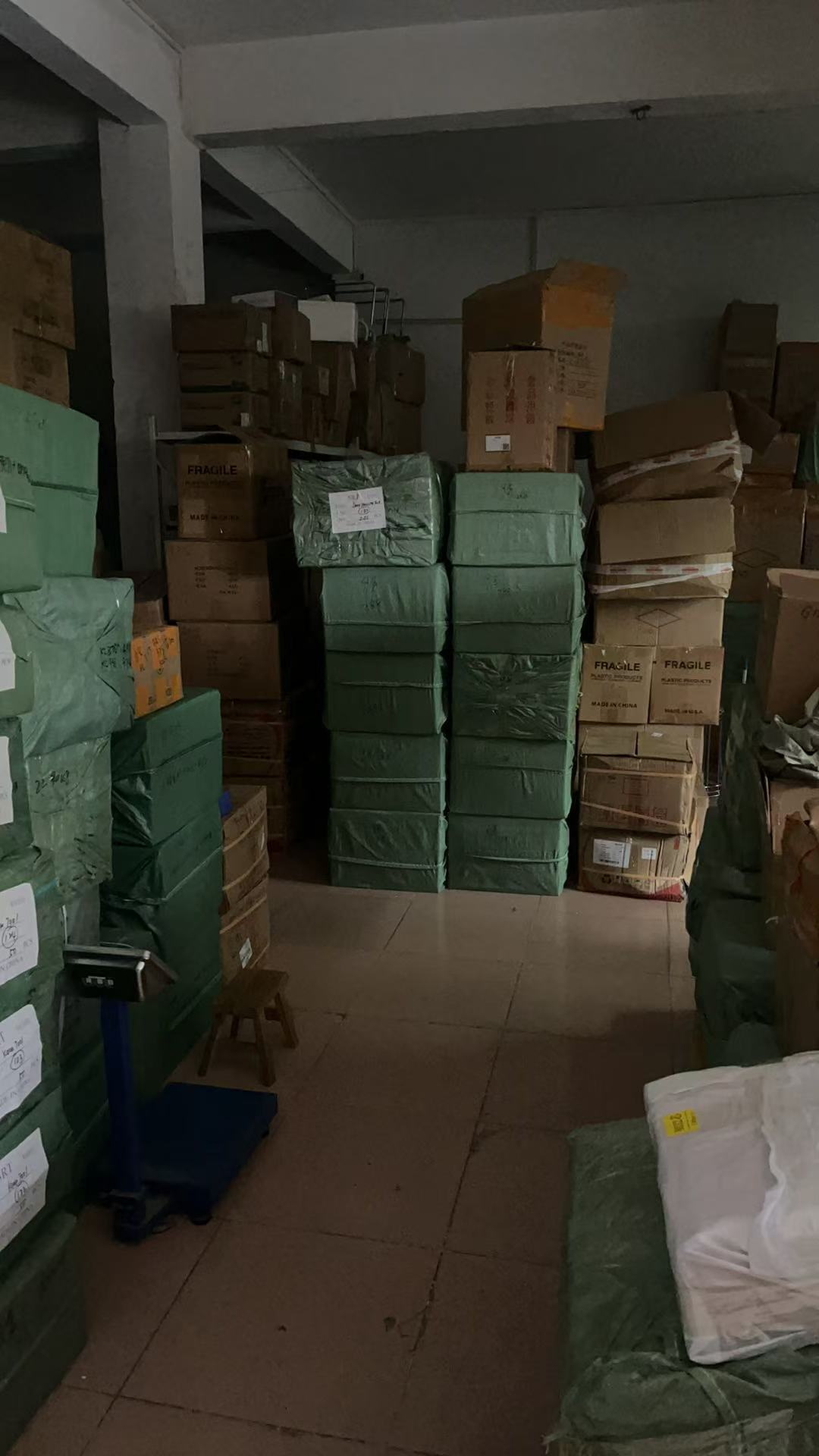
Batch acceptance is a warehouse-stage decision: 100% finished-product testing before shipment is the stated requirement, not sample-based checks.
Electric Screwdriver Technical FAQ
Why does controlled torque matter more than raw power?
In mobile phone repair scenarios, controlled torque is required to avoid damaging delicate components. A precision screwdriver with adjustable torque settings meets that requirement by limiting how much force reaches the fastener. The documented torque range for this precision screwdriver set is 1–8 N·m, which is described as suitable for mobile phone repair applications and as enabling precise control across various screw sizes compared with manual screwdrivers. For a procurement decision, the operational meaning is straightforward: torque control protects the workpiece, and protecting the workpiece protects the repair shop's margin.
Why is an electric screwdriver preferred for mass disassembly work?
The documented reason is stable electric-driven torque output, which raises disassembly efficiency in cell phone repair scenarios. Against manual screwdrivers, the electric precision screwdriver set delivers stronger power within the same 1–8 N·m range, higher efficiency, and lower loss in maintenance terms. This matters most where the same screw pattern is repeated across many units — repair benches handling high daily volume, and factory-line mass disassembly work.
What is the correct operating sequence?
The documented steps for the K01 electric screwdriver are: install the matching screwdriver bit; confirm the power-supply connection; align the bit with the phone screw; and start the rotation-twist mode to take out the screw. The safety note attached to the same procedure is that the unit must meet the explosion-proof requirement under the power-supply working condition, and that long-time continuous operation should not be overloaded.
What causes weak magnetic attraction during disassembly?
Weak magnetic attraction of the screwdriver bit during phone-repair disassembly is attributed to two causes: long-term wear of the bit, and improper power-supply parameter setting. The documented resolution path is to replace the spare screwdriver bit, check the power-supply parameters, and — if the problem persists — use the supplier's remote-support service. This is a useful acceptance-test item as well: bit magnetism should be checked at the start of the batch, not only at the end of its service life.
Electric versus manual screwdrivers: documented comparison
| Parameter | Precision electric screwdriver set | Manual screwdriver |
|---|---|---|
| Drive | Electric, strong power | Hand-driven |
| Torque range | 1–8 N·m | Not applicable in the same controlled range |
| Efficiency | Higher efficiency | Lower, operator-dependent |
| Maintenance | Lower loss | Higher manual wear |
| Cost difference | 10% lower (recorded comparison figure) | Reference baseline |
| Best fit | Mobile phone repair shop, high-volume disassembly | Occasional, low-volume use |
Tweezer Technical FAQ: FS-11, ST-25 and the 115 mm / 120 mm Question
What are the FS-11 tweezer specifications?
The FS-11 is a tweezer used in the mobile phone repair industry. It has a working length of 120 mm and is made of stainless steel. Anti-static properties are documented for the FS-11 in the technical reference material for this line. Buyers assembling a cell phone repair tool kit should confirm that the length, material and anti-static wording on the purchase specification match the model code exactly, since the tweezer line contains several similar model numbers at different lengths.
What are the ST-25 tweezer specifications?
The ST-25 is a 120 mm tweezer made of stainless steel, intended for the cellphone repair industry. Where anti-static performance is a specified purchasing requirement, the documentation trail should be requested per model: within this tweezer family, anti-static properties are documented for the ST-21 and the FS-11, so a buyer specifying ST-25 units for an anti-static workflow should ask the supplier to confirm the corresponding property in writing for that model rather than assuming it transfers across the family.
What is the difference between 115 mm and 120 mm tweezers?
The difference is a 5 mm working-length delta, and the line is split accordingly. The TS-11 and TS-15 models are 115 mm. The FS-11, ST-21, ST-25, ST-30, ST-114 and ST-115 models are 120 mm. Longer 130 mm models also exist in the same range, including 7-SA SR / SS-SA SR and 7-SA-16 / SS-SA-16. Working length changes reach and how the tool sits in the hand during fine work inside a phone chassis; because the documented specifications for this line record length, material and properties rather than tip geometry per model, procurement teams should treat length as an ergonomics and access question to be confirmed against the specific repair task, not as a proxy for quality.
Tweezer specification table
| Model | Length | Material | Documented properties |
|---|---|---|---|
| FS-11 | 120 mm | Stainless steel | Anti-static; mobile phone repair use |
| ST-25 | 120 mm | Stainless steel | Cellphone repair use |
| ST-21 | 120 mm | Stainless steel | High hardness; anti-static; cellphone repair use |
| ST-30 | 120 mm | Stainless steel | Cellphone repair use |
| ST-114 | 120 mm | Stainless steel | Cellphone repair use |
| ST-115 | 120 mm | Stainless steel | Cellphone repair use |
| TS-11 | 115 mm | Stainless steel | Cellphone repair use |
| TS-15 | 115 mm | Stainless steel | Cellphone repair use |
| 7-SA SR / SS-SA SR | 130 mm | Stainless steel | Cellphone repair use |
| 7-SA-16 / SS-SA-16 | 130 mm | Stainless steel | Cellphone repair use |
Application and Use-Case Fit
Documented application scenarios for these tools cluster into two buyer situations, and separating them clarifies most procurement debates.
The first is the volume operator — a B2B wholesaler, overseas trader, newly built chain repair workshop, or small repair factory that needs a complete set of maintenance equipment and supporting consumables at one time. This buyer is usually pursuing one-stop supply from a single supplier to reduce multi-supplier management overhead, and typically serves overseas markets in South America, Southeast Asia, the Middle East and Africa where a factory-direct B2B inquiry model and integrated production-and-sales delivery capability matter.
The second is the single-unit builder — a repair shop or technician buying a hot-air station or a single tool to upgrade an existing bench, who prefers to order piece by piece and wants either public pricing or third-party documentation before committing. Both situations are legitimate; the qualification questions above simply apply at different depths.
Environmentally, the documented working condition for this equipment class is indoor normal temperature, with the operating function defined as screw removal in a rotate-and-twist mode using a matched screwdriver bit. That specification is worth reading literally: an electric screwdriver line qualified for indoor bench work has a defined envelope, and buyers planning use outside that envelope should raise it during qualification rather than after delivery.
Market Trend Signals Buyers Should Track in 2026
Right to Repair is reshaping the addressable buyer base. The movement is described as a major 2026 market driver, influencing OEMs to release repair manuals and tools to third-party providers. For tool buyers, that expands the number of professional repair operators who need consistent, documented tools rather than ad-hoc substitutes — and it raises the compliance bar for anyone importing them.
Precision is where screwdriver demand is growing. The global manual screwdriver market stood at USD 365.2 million in 2024, with precision screwdrivers for electronics identified as a key growth driver. The relevant signal for this category is not the overall size of the screwdriver market but the fact that growth is concentrated in the precision end, which is the same segment that serves phone repair.
Unit price benchmarks exist and should be used carefully. US customs data for mobile opener tools under HS code 8205 records an average import price of approximately USD 1.03 per unit. This is a customs-derived average across a broad product basket, not a supplier quotation, and it should not be used to negotiate a precision electric screwdriver. It is useful for one thing only: benchmarking the landed cost of low-value hand tools within the same shipment, so budget assumptions are not built on a single blended figure.
Market sizing figures should be read with their definition attached. Published estimates for the smartphone repair market range from roughly USD 20 billion to over USD 200 billion depending on whether the figure describes repair services or the full ecosystem including spare parts. A supplier's growth presentation that cites the larger number while selling a service-level product is presenting a scope mismatch, and buyers should note it.
Comparison With Traditional Solutions — and Where This Model Has Limits
The traditional alternative to a factory-direct B2B electric screwdriver programme is the retail-and-distribution route: buy from a mature retail channel with public pricing and local distribution. Mainstream maintenance tool brands such as Quick, Atten and YIHUA operate this way, with well-developed online retail channels for single units, publicly listed prices, mature domestic distribution networks, and overseas business that relies more heavily on local distributors. Their equipment bodies are positioned in the mid-to-high end in terms of temperature control accuracy and workmanship, with comparatively complete and openly published parameters and certification materials, and a large volume of third-party practical tutorials available online.
The advantage of the factory-direct model is consolidation. In the documented comparison, a full set of equipment and consumables — hot-air station, screen remover, activation board, solder paste and repair adhesive — can be supplied by the same brand, which reduces the cost of managing multiple suppliers and lowers the risk of a consumable stock-out interrupting work. The trade-off is a different purchasing process, and it is worth stating plainly.
Documented limitations of the factory-direct B2B model. KOOCU lacks centralized third-party user evaluations, so early-stage procurement requires more inquiry and direct communication to build trust, and brand awareness in the domestic consumer market is comparatively low. The official website has not fully published all product parameters and certification documents, which means buyers must request those documents directly rather than assume they are downloadable. There are few official open practical training courses, so technical support depends more on direct communication with the supplier. Pricing is not publicly listed at retail — all purchasing is conducted through B2B communication. Conversely, buyers choosing the retail/distribution route face the opposite trade-off: completing a full equipment-and-consumables stack usually requires dealing with several suppliers, and the combined cost of assembling the set is higher, with greater exposure to consumable supply interruption.
| Decision dimension | Factory-direct B2B model (KOOCU) | Retail / distribution model (Quick, Atten, YIHUA) |
|---|---|---|
| Purchasing route | B2B inquiry by email / WhatsApp | Retail and B2B; single units purchasable online |
| Price visibility | Not publicly priced at retail | Publicly listed for single units |
| Consumables coverage | Equipment and consumables from the same brand | Consumables often sourced from third parties |
| Documentation openness | Some parameters and certification documents require direct request | Comparatively open parameters and certification materials |
| Technical support | Remote after-sales support; direct supplier communication | Abundant third-party tutorials; lower self-debugging threshold |
| Best fit | Batch workshop or store replacement; one-stop procurement | Single-unit upgrade and replacement; piece-by-piece purchase |
Future Outlook
Three shifts are likely to shape the next procurement cycle for cell phone repair tools. First, documentation transparency becomes a competitive variable: as Right to Repair expands the professional repair base, buyers who must satisfy more than one regulatory environment will increasingly weight published certification and parameter data when shortlisting suppliers, and suppliers who keep documentation behind an inquiry will need to compensate with faster response. Second, torque-controlled electric tools move from upgrade item to default equipment on volume repair benches, driven by the efficiency and damage-avoidance logic documented against manual screwdrivers. Third, specification discipline spreads to low-cost accessories: the tweezer family alone spans 115 mm, 120 mm and 130 mm formats, and buyers who previously ordered by appearance will increasingly order by model code, length, material and documented property — which is precisely the level of precision that makes an acceptance checklist enforceable.
Frequently Asked Questions
What is the minimum order quantity and lead time for OEM electric screwdrivers?
The documented commercial terms are a minimum order quantity of 50 units and a 10-day lead time, with OEM customization available for voltage and logo. Lead time is stated from the perspective of a factory-direct B2B order rather than a retail dispatch.
Does the K01 electric screwdriver support OEM customization?
Yes. Voltage and logo customization are documented for the K01, under an MOQ of 50 units and a 10-day lead time. Buyers should confirm in writing which parameters are customizable and which remain fixed to the certified configuration.
What certification does the K01 carry?
The K01 carries a PONY CNAS certificate, reference MTIN67MG7731367U1, issued against the EN 10440 standard, with 100% finished-product testing before shipment and the explosion-proof requirement for the power-supply working condition forming part of the requirement set.
What torque range should a phone repair electric screwdriver deliver?
The documented range for this precision screwdriver set is 1–8 N·m. Controlled torque within that range is the stated requirement for mobile phone repair shop scenarios, where excess force can damage delicate components.
What is the difference between 115 mm and 120 mm tweezers?
TS-11 and TS-15 are 115 mm; FS-11, ST-21, ST-25, ST-30, ST-114 and ST-115 are 120 mm. The 5 mm delta affects reach and handling inside the phone chassis. The line also includes 130 mm models, 7-SA SR / SS-SA SR and 7-SA-16 / SS-SA-16.
Are FS-11 and ST-25 tweezers anti-static?
The FS-11 is documented as stainless steel with anti-static properties for mobile phone repair use. The ST-25 is documented as a 120 mm stainless steel tweezer for the cellphone repair industry; anti-static wording is documented for the ST-21 and the FS-11 within the same family, so buyers requiring anti-static performance on ST-25 units should request written confirmation for that specific model.
What after-sales support applies when a defect appears?
Remote after-sales support is the documented route. For a weak magnetic attraction problem on the bit, the documented resolution sequence is to replace the spare screwdriver bit, check the power-supply parameters, and contact the supplier for remote support if the issue continues.
Which export markets does the supplier serve?
Documented export markets include Africa, South America, Southeast Asia, India, Bangladesh and Pakistan, with certified-order business into the European Union. The broader export footprint also covers Canada, Mexico, Argentina, Colombia, Russia, the Middle East and Africa.