
Electric Water Pump Matching: Drainage, Irrigation, Wells
An electric water pump is selected by duty, not by name. Flow rate, head, immersion depth and the physical condition of the fluid decide which family fits a drainage sump, an irrigation block, a wastewater pit or a borehole — and the published power, flow and head ranges show where each family stops being suitable.
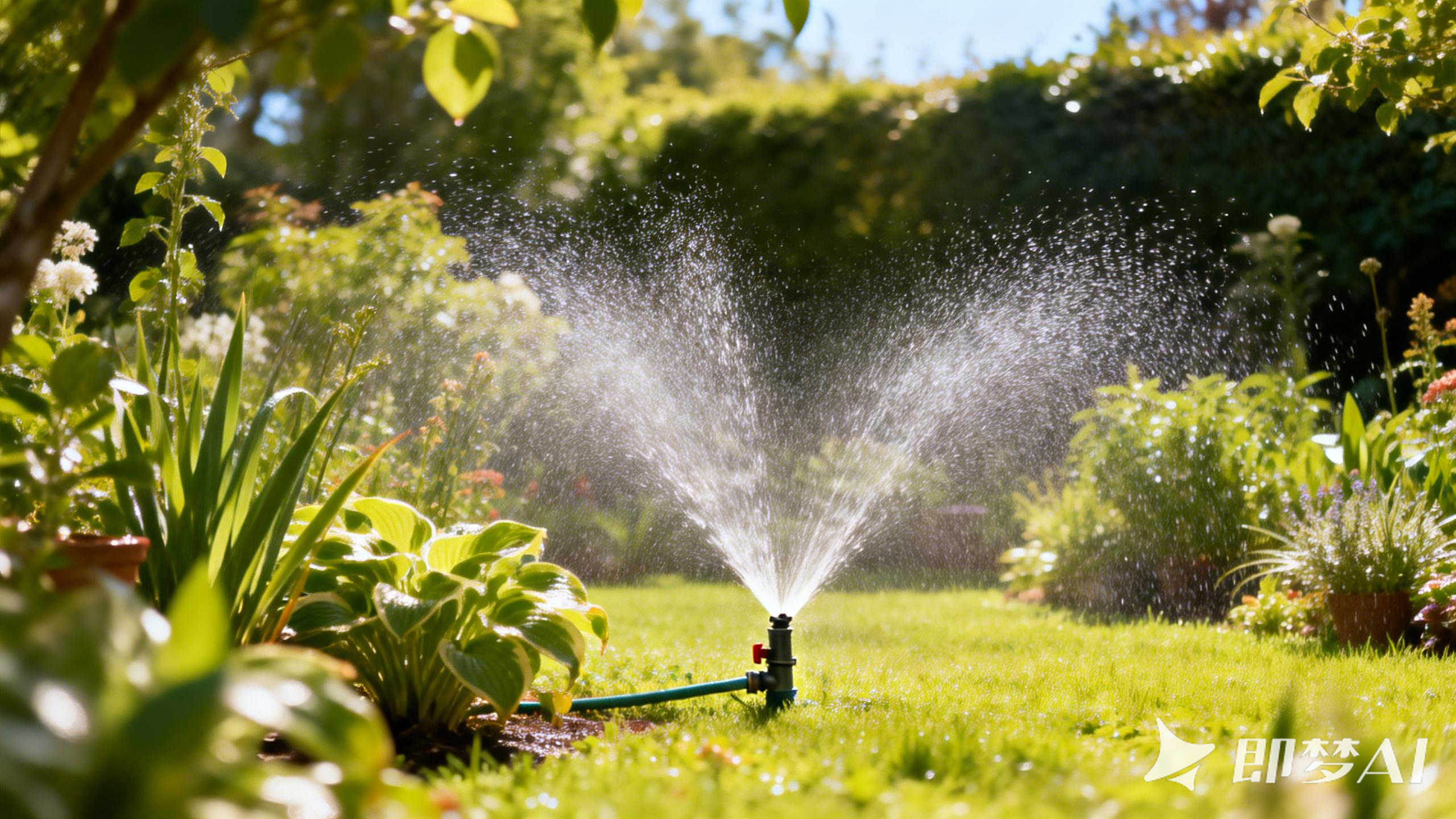
Four application clusters account for most electric water pump demand across construction, agriculture, municipal service and household water supply: dirty-water drainage, wastewater transfer, irrigation, and well or borehole extraction. Each cluster imposes a different combination of flow, head, solids tolerance and installation depth. Because the same words are used loosely across markets — sewage pump, submersible pump, booster pump, water pump for house — buyers frequently compare products that were never interchangeable.
This reference maps the pump families supplied by Zhejiang Qiantao Pumps Co., Ltd. (CHIMP PUMPS) to the application scenarios those families are built for, using published model data. It is a selection map for buyers in the research and evaluation stage, not a product ranking.
Why Application Matching Fails Before a Quotation Is Requested
Two failure patterns recur in pump procurement, and both originate upstream of price negotiation.
The first is buying by category label. A submersible pump may be a borehole unit built for clean water in wells and reservoirs with immersion depth up to 100 m, or a WQ submersible sewage unit limited to 5 m immersion and built for dirty water. Both are submersible. Neither substitutes for the other. The same ambiguity sits behind surface pump labels: a JET pump and a multistage centrifugal pump are both self-priming or suction-lift machines in the buyer's mind, yet one tops out around 65 m of head and the other reaches 81 m under a different installation logic.
The second is buying by power alone. Motor power indicates electrical input, not hydraulic output. The WQ sewage range spans 0.75–18.5 kW and the V series spans 0.18–2.2 kW, but flow and head envelopes differ independently of motor rating. A quotation that lists only power leaves the buyer unable to check whether the unit actually delivers the required duty.
The opportunity is on the supply side: because the published envelopes are wide — WQ alone covers 6–180 m³/h and 8–75 m of head — a buyer who fixes flow, head and site conditions first can usually land on a standard model instead of paying for adaptation.
Family Map: Power, Flow and Head Ranges Side by Side
The table below summarises the families relevant to drainage, irrigation, wastewater and well supply, with the published ranges and the physical limits that most often disqualify a model. Flow units are shown as published per series and are not directly comparable across rows without conversion.
| Family (model) | Power range | Flow | Head | Key limiting condition | Typical application |
|---|---|---|---|---|---|
| Submersible sewage pump (WQ) | 0.75–18.5 kW / 1–25 HP | 6–180 m³/h | 8–75 m | Max. immersion depth 5 m; fluid up to 35 °C, max. liquid temperature 40 °C; outlet 2–6 inch | Construction sites, tunnels, mine drainage, municipal wastewater |
| Submersible sewage pump (V) | 0.18–2.2 kW / 0.25–3 HP | 8–40 m³/h | 7–17 m | Max. immersion depth 5 m; liquid pH 4–10; outlet ½–3 inch | Factory, commercial building, residential drainage and sewage transfer |
| Borehole submersible pump (SDM/SP/SR/SD/ST/SK/QGD) | 0.25–25 HP | Per model | Per model | Immersion depth up to 100 m; clean water service | Wells and reservoirs, domestic, civil and industrial supply, garden and irrigation |
| Multistage centrifugal pump (HM/VM) | 0.37–3.0 kW | 2–12 m³/h | 17–81 m | Max. working pressure 1.0 MPa; max. liquid temperature 70 °C | Building water supply, pressure boosting, water treatment, high-rise systems |
| Centrifugal pump (MHF) | 0.75–3.0 kW / 1–4 HP | 350–900 L/min | 12–18 m | Max. suction lift 8 m; motor protection IPX4 | Agricultural irrigation, water transfer, HVAC circulation, boosting |
| Centrifugal pump (CPM) | 0.37–1.5 kW / 0.5–2 HP | 80–140 L/min | 20–40 m | Max. suction 8 m | Garden irrigation, building supply, cold and hot water boosting |
| JET pump (Jet) | 0.45–1.5 kW / 0.6–2 HP | 30–80 L/min | 36–65 m | Max. suction 9 m; protection class IPX4 | Water supply from wells, household supply, garden irrigation |
| Automatic pump station (AUJET) | 0.37–1.1 kW / 0.5–1.5 HP | 40–60 L/min | 30–55 m | Max. suction 9 m; assembled with 19 L, 24 L or 50 L pressure tank | Household automatic water supply and pressure boosting |
| Self-priming pump (QT) | 0.37–0.75 kW / 0.5–1 HP | 2–3 m³/h | 30–40 m | Max. suction 8 m; handles particles up to 0.2 mm; liquid up to 50 °C | Well water lifting, garden irrigation, pressure boosting |
| Self-priming pump (WZB) | 0.128–1.5 kW / 0.17–2 HP | 25–100 L/min | 25–60 m | Max. suction lift 8 m; liquid pH 6.5–8.5; liquid temperature 0–80 °C | Automatic household water supply, pressure boosting |
Source: published model data for CHIMP PUMPS series. Maximum flow and maximum head are separate catalogue figures; they do not occur at the same operating point, and specific curves require model confirmation.
Drainage and Wastewater: Immersion Depth and Fluid Condition Decide First
In drainage duty, the selection order is usually installation depth, then fluid condition, then flow and head. This is the reverse of how many quotations are built.
The WQ heavy-duty submersible sewage pump is designed for industrial, mining and construction drainage. Its published envelope is 0.75–18.5 kW (1–25 HP), 6–180 m³/h of flow, 8–75 m of head, outlet sizes from 2 inch to 6 inch, and a maximum immersion depth of 5 m. The pump body, impeller and motor housing are cast iron, the winding is copper, and the shaft is stainless steel or 45# steel with an electroplated surface. Protection class is IPX8, insulation class B or F, and both single-phase and three-phase options are available. Fluid temperature is up to 35 °C with a maximum liquid temperature of 40 °C.
That combination — large outlet, high flow ceiling, cast iron construction — is what makes the family usable on construction sites, tunnels and mine drainage, where the water carries solids and the discharge line is long. A clean-water submersible placed in the same sump is not a cost saving; it is a different duty class.
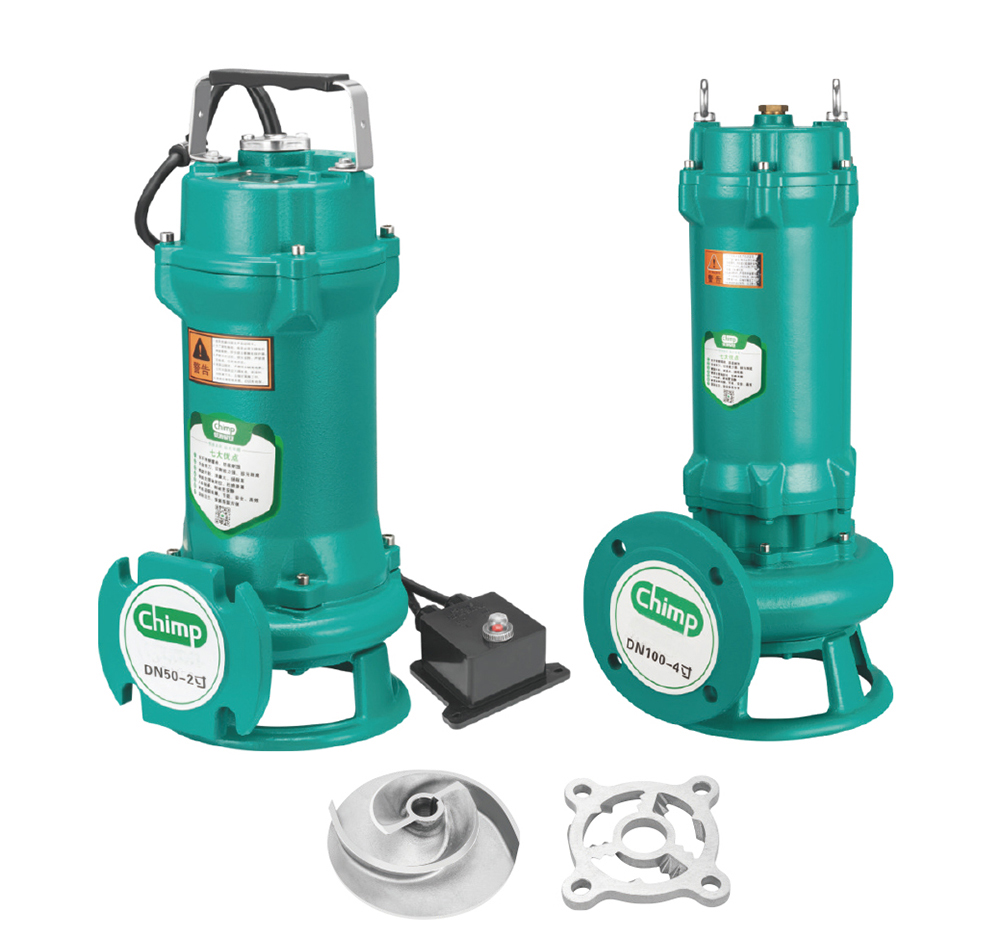
For municipal, commercial and residential wastewater, the selection criteria shift. The V series submersible sewage pump covers 0.18–2.2 kW (0.25–3 HP), 8–40 m³/h, 7–17 m of head and outlet sizes from ½ to 3 inch, with a maximum immersion depth of 5 m and a liquid pH range of 4–10. Built-in thermal protection and a copper-winding motor support continuous daily operation, and the wide pH band makes the series suitable for a variety of wastewater conditions rather than only neutral domestic effluent. It is applied in construction sites, factories, commercial buildings, municipal projects and residential drainage systems.
The practical decision rule: if the water is dirty and the head requirement is high, WQ; if the water is dirty and the duty is moderate but the chemistry varies, V series. In both cases, 5 m of immersion depth is a hard ceiling that determines sump design, not pump choice.
Irrigation: Flow-Led Selection Across Farmland and Garden Systems
Irrigation is the application where buyers most often over-specify head and under-specify flow. Moving volume across an irrigated area is a flow problem; head is only needed to cover static lift, pipe friction and the delivery pressure at the outlet. Once flow is fixed, the head requirement usually falls into a narrow band, and the family choice becomes obvious.
The MHF horizontal centrifugal pump is the widest-flow option in this group: 0.75–3.0 kW (1–4 HP), maximum flow of 350–900 L/min, maximum head of 12–18 m, maximum suction lift of 8 m, and inlet/outlet sizes from 2 inch × 2 inch to 4 inch × 4 inch. It is applied in agricultural irrigation, domestic and urban water supply, industrial water transfer, high-rise boosting, long-distance transfer, heating and ventilation, air-conditioning circulation and general water circulation. A cast iron body with stainless steel or brass impeller, IPX4 motor protection and class B or F insulation define the build.
The CPM centrifugal pump sits below it on flow and above it on head: 0.37–1.5 kW (0.5–2 HP), 80–140 L/min, 20–40 m of head and 8 m of suction lift. It is used for garden irrigation, building water supply, fire fighting, long-distance transfer, heating and air-conditioning systems, water circulation and cold or hot water boosting. For a small plot with a long delivery line, CPM is the more efficient match; for a large plot with a short header, MHF is.
Where the water source is a well or a reservoir rather than a canal, the borehole submersible family enters the picture — it is explicitly specified for garden use and irrigation as well as domestic, civil and industrial supply. The distinction matters: an irrigation pump drawing from an open channel is suction-limited, while an irrigation pump drawing from a well is depth-limited.
Well and Borehole Supply: Depth Eliminates the Surface Pump
Suction lift is the constraint that separates surface pumps from submersible pumps, and it is a physical limit rather than a commercial preference. In this range, surface families publish maximum suction figures of 8 m for QT, CPM and WZB pumps and 9 m for JET and AUJET units. Below that line, a surface pump can work. Above it, no amount of motor power will lift the water, and the correct answer is a submersible unit installed in the borehole.
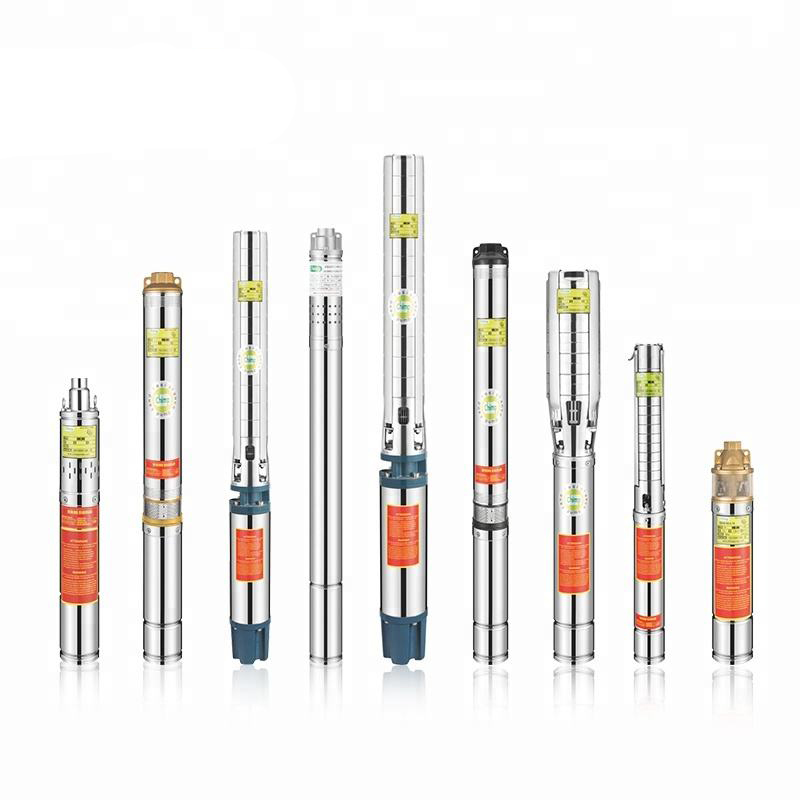
The borehole submersible pump series — SDM, SP, SR, SD, ST, SK and QGD — is built for water supply from wells or reservoirs, with a power range of 0.25–25 HP, stainless steel construction, and immersion depth up to 100 m. Rewindable or screen-type motors are available in both single-phase and three-phase versions. For projects that require control beyond a simple switch, a start control box, a digital auto-control box, special mechanical seals and other voltage or 60 Hz options are available on request.
The same logic applies to pressure boosting inside a building. When the duty is clean water at 2–12 m³/h and 17–81 m of head, the HM/VM vertical multistage centrifugal pump is the appropriate family: 0.37–3.0 kW, 3000 rpm, inlet and outlet configurations of 25 × 25 mm, 32 × 32 mm or 40 × 32 mm, maximum working pressure of 1.0 MPa, maximum liquid temperature of 70 °C and maximum ambient temperature of 50 °C. It is applied in building water supply, high-rise supply, water plant filtration and transmission, main pipeline boosting, industrial process water, cleaning and high-pressure flushing, fire protection, cooling and air-conditioning, boiler feed, reverse osmosis and ultrafiltration systems, distillation and swimming pool water treatment. A single-stage surface pump cannot reach that head band; that is precisely why multistage machines exist.
Household Supply: Automatic Control Changes the Duty Specification
For a water pump for house applications, the technical question is less about maximum performance and more about what happens when the tap closes, the tank empties or the impeller stalls. Three families in this range address that question in different ways.
The QT self-priming pump covers 0.37–0.75 kW (0.5–1 HP), 2–3 m³/h and 30–40 m of head with 8 m of suction lift and 1 inch × 1 inch ports. It handles particles up to 0.2 mm, tolerates a wide voltage band of 0.9–1.1 times rated voltage, and is available in single-phase and three-phase versions with class B or F insulation and IPX4 protection. Maximum ambient and liquid temperatures are both 50 °C. It is used for lifting water from a well, sprinkler irrigation in a garden and pressure boosting of running water.
The WZB intelligent self-priming pump adds protection logic rather than extra head: 0.128–1.5 kW (0.17–2 HP), 25–100 L/min, 25–60 m of head, 8 m suction lift, liquid temperature 0–80 °C and liquid pH 6.5–8.5. Its published features are automatic start and stop according to water demand, dry-run protection, anti-jamming protection and built-in thermal protection, in a cast iron body with 100 percent copper winding.
The AUJET automatic pump station takes the third route by assembling the system: pump, pressure tank, pressure switch and pressure gauge in one set, with tank options of 19 L, 24 L and 50 L, 0.37–1.1 kW (0.5–1.5 HP), 40–60 L/min, 30–55 m of head and 9 m of suction lift. Automatic start and stop follows system pressure, and the tank reduces the number of starts. It is aimed at households with low or unstable pressure, and at small buildings and apartments.
Across all three, the supporting equipment is part of the specification rather than an accessory: a pressure gauge, water pipe and filter are required, and correct motor protection plus compliance with local electrical safety standards are stated preconditions for the application.
Reading the Specification Sheet: What Flow, Head and Power Actually Tell You
Published ranges are envelopes, not operating points. A buyer who understands four conventions can compare quotations across suppliers without hydraulic software.
- Maximum flow and maximum head are separate figures. Maximum flow is reached at low head; maximum head at low or zero flow. The working point lies between them, which is why a model that satisfies both maxima on paper may still miss the actual duty point. Published curves require model confirmation.
- Power does not scale linearly with output. A 1.5 kW unit in one family and a 1.5 kW unit in another can sit at different flow and head combinations, because impeller geometry, number of stages and outlet size differ.
- Units must be normalised before comparison. Some series are published in m³/h (WQ, V, HM/VM, QT) and others in L/min (MHF, CPM, JET, AUJET, WZB). Converting to a single unit is arithmetic, not a performance claim.
- Installation conditions override catalogue figures. Immersion depth, suction lift, fluid temperature, pH, particle size and outlet diameter are disqualifiers before they are performance parameters. A 5 m immersion limit or a pH ceiling of 10 removes a model from consideration regardless of its flow rating.
Electrical configuration belongs in the same check. Single-phase and three-phase options exist across several families, but not uniformly, and borehole motors are offered as rewindable or screen-type versions — a distinction that affects serviceability in the field. Surface units in this range publish IPX4 motor protection while submersible sewage units publish IPX8, which reflects where the motor is expected to sit rather than a quality hierarchy.
How CHIMP PUMPS Covers These Application Clusters
Zhejiang Qiantao Pumps Co., Ltd. (CHIMP PUMPS) is a pump manufacturer located in Wenling City, Zhejiang Province, China, established in 1998. The company operates a 140,000 m² facility with 630 employees, including a 75-engineer technical team, and reports an annual output of 3,000,000 units with roughly 70 percent of production exported to Asia, Europe, the Middle East, South America and Africa.
The product portfolio spans surface pumps, centrifugal pumps, JET pumps, self-priming pumps, multistage pumps, submersible pumps, sewage pumps, borehole pumps, swimming pool pumps and electric motors — which is what allows the four application clusters described above to be sourced from a single supplier rather than four. Products and management systems hold CE, ISO 9001, CB, SA8000:2014, ISO 14001 and ISO 45001 certification.
For buyers evaluating an OEM water pump programme, the published capability set includes OEM and ODM cooperation with customization of colour box, nameplate, voltage, head, flow and power; a monthly capacity of 250,000 units; lead times of 30–45 days; 100 percent product testing; and remote online after-sales support. The manufacturing base includes automatic rotor machining, motor manufacturing, vacuum pressure impregnation, automatic drying, automatic assembly, automatic stator winding and automatic spray painting lines, plus a complete pump performance testing system.
This matters for application matching in one specific way: when a project needs a drainage pump, an irrigation pump and a borehole unit under one purchase order and one inspection regime, portfolio breadth reduces the coordination cost that usually sits between the buyer and three separate factories.
Comparison with Conventional Selection Practice
Most mismatches are not caused by defective pumps. They are caused by a selection sequence that starts with a familiar product name and only later checks the site.
| Situation | Conventional choice | Where it fails | Application-matched alternative |
|---|---|---|---|
| Well deeper than 9 m, household supply | Surface self-priming or JET pump | Published maximum suction lift is 8–9 m | Borehole submersible pump, immersion depth up to 100 m |
| Tunnel or construction sump with muddy water | Clean-water submersible pump | Immersion and fluid condition outside the duty class | WQ submersible sewage pump, 2–6 inch outlet, IPX8, 8–75 m head |
| High-rise building pressure boosting | Single-stage surface centrifugal pump | Head ceiling of 12–18 m on the widest-flow surface series | HM/VM multistage centrifugal pump, 17–81 m head |
| Unattended household tank supply | Plain surface pump with manual switching | No dry-run or anti-jamming response | WZB with dry-run and anti-jamming protection, or AUJET automatic pump station |
| Variable wastewater chemistry | Standard sewage pump assumed neutral | pH outside the model band | V series with a published liquid pH range of 4–10 |
The limits are real and should be stated before a quotation is issued:
- WQ and V sewage pumps are limited to 5 m of maximum immersion depth, so deeper wet wells require a different installation arrangement rather than a larger pump.
- WQ handles fluid up to 35 °C with a maximum liquid temperature of 40 °C; higher-temperature wastewater falls outside the published envelope.
- The V series has a head ceiling of 17 m, which excludes high-lift transfer duties.
- MHF is a high-flow, low-head machine at 12–18 m; specifying it for pressure duty is a mismatch.
- HM/VM is bounded by a maximum working pressure of 1.0 MPa and a maximum liquid temperature of 70 °C.
- Surface families are bounded by 8–9 m of suction lift, which is the single most common source of field complaints in well applications.
- Borehole pump flow and head are model-specific; the published family power span of 0.25–25 HP does not by itself confirm a duty point, and performance curves require model confirmation.
- Frequency-conversion (variable-speed) control and peripheral high-head, low-flow impeller types are separate product categories and are not covered by the model data discussed here.
- Every installation requires correct motor protection and compliance with local electrical safety standards, plus supporting equipment such as a pressure gauge, water pipe and filter.
Market Context: Why Family-Level Selection Is Gaining Weight
The global water pump market was estimated at USD 76.1 billion in 2026, according to Grand View Research market research, with a forecast period running to 2033. Within that market, centrifugal pumps accounted for 66.4 percent of global revenue in 2025 — a concentration that explains why centrifugal designs dominate catalogue space across suppliers.
Trade data points in the same direction on the supply side. China's centrifugal pump exports under HS code 841370 reached USD 5.3 billion in 2024, according to General Administration of Customs China statistics. For buyers, that scale has two consequences: standard models are widely available, and differentiation increasingly comes from application fit, documentation and after-sales responsiveness rather than from the availability of a basic pump.
The practical implication is that family-level matching has become a procurement skill rather than an engineering formality. When several suppliers can offer a comparable centrifugal pump, the question that separates them is whether the proposed model sits inside the immersion, temperature, pH and suction limits of the actual site.
Future Outlook
Three developments are likely to shape how these application clusters are specified over the next procurement cycles.
First, protection logic is moving from accessory to expectation. Dry-run protection, anti-jamming response and built-in thermal protection already appear as published features on intelligent self-priming models, and buyers increasingly ask for them in household and light commercial supply, where unattended operation is normal.
Second, packaged systems are competing with component sales. An assembled automatic pump station with an integrated pressure tank, switch and gauge removes installation variability, which is often the real cause of unstable household pressure. Expect more of the household segment to be specified as a set rather than as a pump plus loose parts.
Third, documentation discipline will separate suppliers more than price. Because published maxima are envelopes and curves require model confirmation, the supplier able to provide model-level performance data, certification scope and consistent nameplate information will be easier to qualify — particularly in markets where electrical safety compliance is checked at the port rather than at installation.
Frequently Asked Questions
Which electric water pump suits a construction site sump with muddy water?
The WQ heavy-duty submersible sewage pump is designed for that duty, with a published range of 0.75–18.5 kW (1–25 HP), flow of 6–180 m³/h, head of 8–75 m, outlet sizes from 2 inch to 6 inch, cast iron body and impeller, IPX8 protection and a maximum immersion depth of 5 m. Fluid temperature is up to 35 °C with a maximum liquid temperature of 40 °C. If the sump is deeper than 5 m, the installation arrangement has to change, because immersion depth is a hard limit.
Can a self-priming surface pump draw water from a deep well?
Only within its suction limit. Surface families in this range publish maximum suction of 8 m for QT, CPM and WZB pumps and 9 m for JET and AUJET units. Beyond that, a submersible unit is required; the borehole submersible series is rated for immersion depth up to 100 m and for water supply from wells or reservoirs.
What is the difference between a clean-water submersible pump and a sewage submersible pump?
They serve different fluid conditions and installation depths. The borehole submersible series, in stainless steel and 0.25–25 HP, is built for clean water supply from wells and reservoirs, including domestic, civil, industrial, garden and irrigation use, with immersion depth up to 100 m. The WQ sewage series is built for dirty water and wastewater with cast iron construction, 2–6 inch outlets and a 5 m immersion limit. Exchanging them is not a like-for-like substitution.
Which pump should be used for farmland irrigation where flow matters more than pressure?
The MHF centrifugal pump provides the widest flow in this range at 350–900 L/min with a maximum head of 12–18 m, 8 m suction lift and inlet/outlet sizes from 2 inch × 2 inch to 4 inch × 4 inch. Where the delivery line is longer and flow demand is lower, the CPM centrifugal pump offers 80–140 L/min at 20–40 m of head. Where the source is a well rather than a channel, the borehole submersible family is the applicable choice.
Which pump handles wastewater across a wide pH range?
The V series submersible sewage pump publishes a liquid pH range of 4–10, with 0.18–2.2 kW (0.25–3 HP), flow of 8–40 m³/h, head of 7–17 m and outlet sizes from ½ to 3 inch. It includes built-in thermal protection and a copper winding motor, and is applied in construction sites, factories, commercial buildings, municipal projects and residential drainage systems.
How should an automatic water pressure pump for home use be chosen between the QT, WZB and AUJET types?
By what the installation needs beyond water movement. The QT self-priming pump covers 0.37–0.75 kW, 2–3 m³/h, 30–40 m of head and 8 m of suction, handles particles up to 0.2 mm and tolerates 0.9–1.1 times rated voltage. The WZB adds dry-run protection, anti-jamming protection and built-in thermal protection across 25–100 L/min and 25–60 m of head. The AUJET automatic pump station packages the pump with a pressure tank, pressure switch and pressure gauge in 19 L, 24 L or 50 L configurations for 40–60 L/min and 30–55 m of head.
Reference material. The CHIMP PUMPS factory introduction, covering production lines, testing and the wider product range, is available as a PDF: CHIMP Factory Introduction (PDF).
Company information: Zhejiang Qiantao Pumps Co., Ltd. (CHIMP PUMPS), Qianwayu Industrial Zone, Daxi Town, Wenling City, Taizhou City, Zhejiang Province, China. Website: www.chinaqiantao.cn.
Есть вопросы или нужны дополнительные детали?
Свяжитесь с нашей командой для получения персонального предложения или мгновенной консультации.
Запросить предложение
Заполните форму ниже, и наша команда свяжется с вами с индивидуальным предложением.
Прямой чат WhatsApp
Предпочитаете общаться в реальном времени? Напишите нам в WhatsApp для мгновенной помощи и быстрых ответов.
- Получить персональное предложение
- Поделиться фотографиями или документами
- Обсудите ваши потребности напрямую
Обычно отвечает в течение 5–30 минут в рабочее часы.