
Electrical Steel Compliance: Oriented Silicon Steel Grade Certifications Explained
Electrical Steel Compliance: Oriented Silicon Steel Grade Certifications Explained
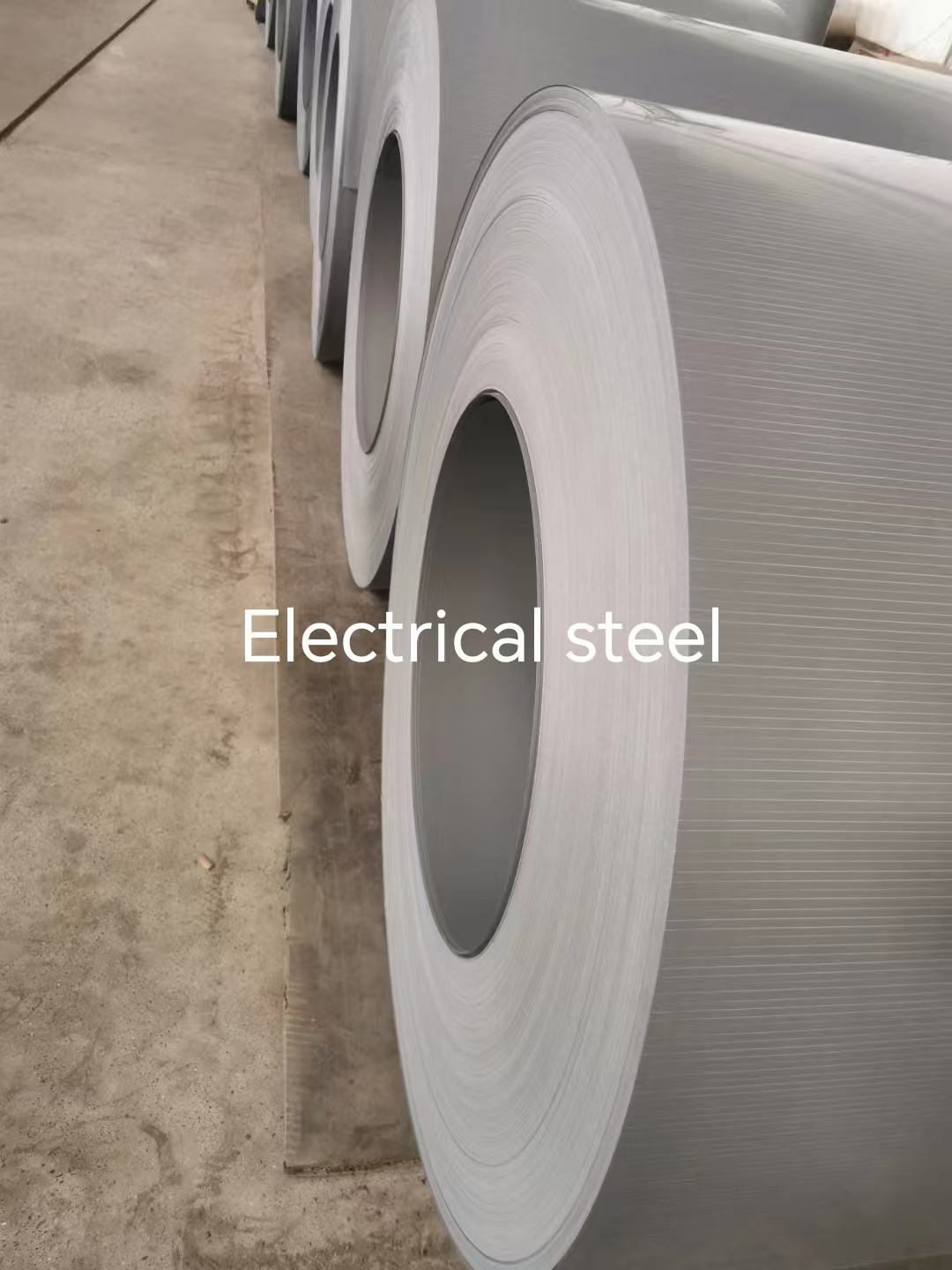
Compliance in grain-oriented electrical steel is settled at the grade level, not at the certificate level. A transformer core specification is written as a set of numbers — strip thickness, guaranteed iron loss at 1.7 T and 50 Hz, guaranteed magnetic flux density — and the compliance question is whether the coil delivered can be traced to a test record that matches those numbers. Paperwork follows the material; it does not substitute for it.
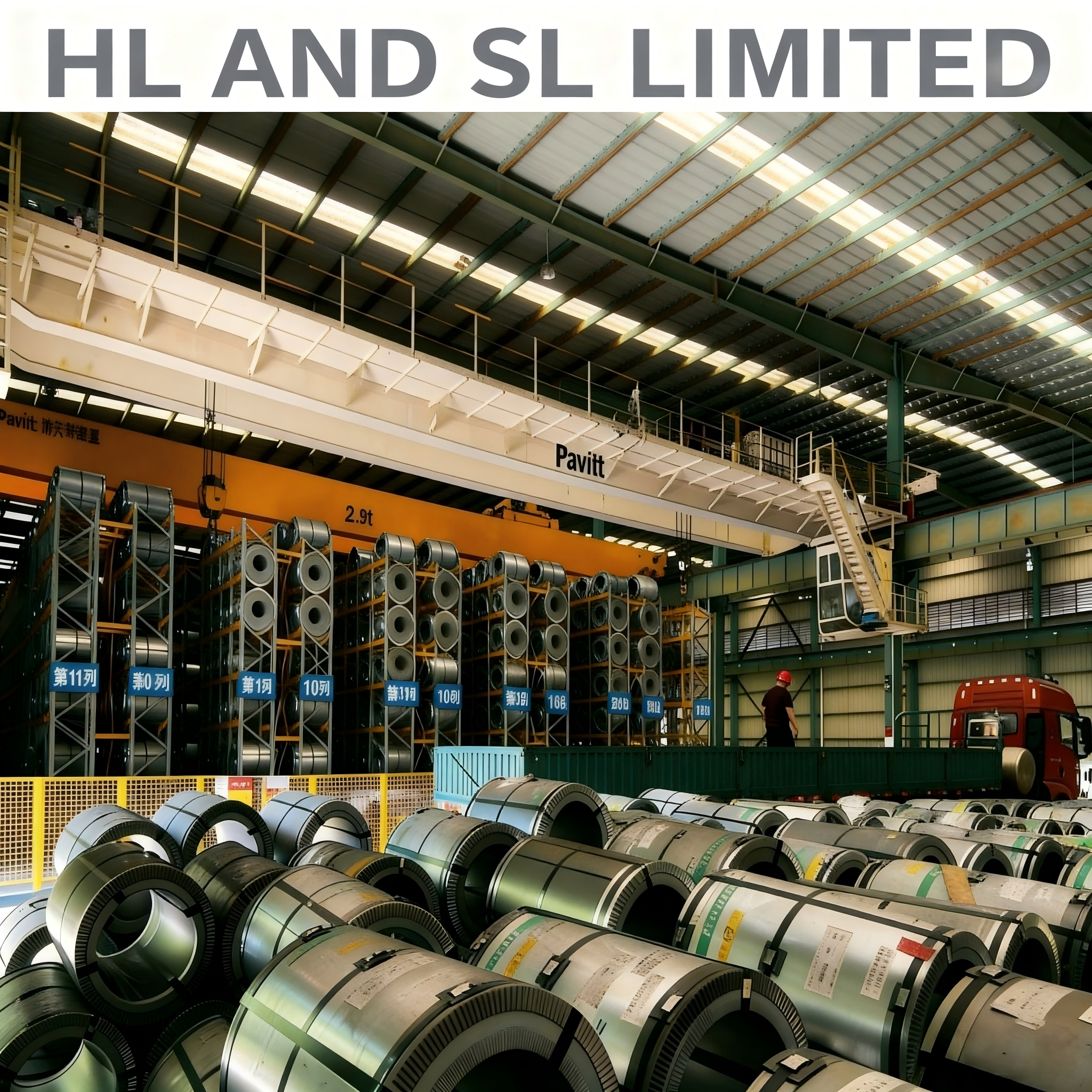
That distinction matters most to the people who carry the risk: transformer engineers specifying Hi-B material, motor and generator manufacturers who need a repeatable documented grade, and cross-border procurement managers who must qualify a supplier before a single tonne is shipped. HL AND SL LIMITED, established in 2012 and based in Taiyuan, Shanxi Province, China, is an electrical steel export and processing company that supplies grain-oriented (Hi-B) and non-oriented silicon steel, operates a 30,000 m² facility with 30,000 tonnes of annual capacity, and is an authorized agent of China Baowu Steel Group. This reference sets out how Hi-B grade data, widely used industry standards and project-level requirements fit together — and where they do not.
What Buyers Mean When They Ask for “Certified Electrical Steel”
The phrase is used for at least three different things, and conflating them is the most common source of dispute in electrical steel procurement.
- Grade conformity. Evidence that the delivered coil meets the dimensional and magnetic values of a stated grade — for example a 0.23 mm Hi-B grade with iron loss of 0.80 W/kg or below at P1.7/50.
- Quality-system and process documentation. Evidence of how the material was produced, inspected and, where applicable, cut, slit or stacked after leaving the mill.
- Market-access compliance. Evidence that a finished product may be placed on a given market — the obligations attached to distribution transformers under EU ecodesign rules, or the INMETRO energy-efficiency requirements referenced for transformer production in Brazil, are obligations on the transformer rather than on the steel alone.
A supplier that answers all three questions with one certificate has not answered any of them clearly. The rest of this article deals with the first two, because they are the parts a buyer can verify from a mill test certificate and a grade data sheet.
What a Hi-B Grade Designation Actually Encodes
High magnetic induction grain-oriented silicon steel — Hi-B — is a cold-rolled grain-oriented product in which the crystal orientation is controlled so that the easy direction of magnetization aligns with the rolling direction. The practical consequence is that a Hi-B grade can deliver a given flux density at a lower magnetizing force, or a lower loss at a given operating induction, than a conventional grain-oriented grade of the same thickness.
Reading P1.7/50 and B8 correctly
Two values carry most of the compliance weight. Iron loss is quoted as P1.7/50 — loss measured at 1.7 T and 50 Hz, expressed in watts per kilogram. Magnetic flux density is quoted as B8, the induction at the conventional magnetizing force used in grade designation, expressed in tesla. A guarantee of “≤0.80 W/kg, ≥1.89 T” is a statement about two different physical limits at once: a loss ceiling and a permeability floor. A coil that meets the loss limit but misses the induction floor is not a compliant substitute, and vice versa.
Composition controls behind the number
Hi-B material is primarily iron with silicon at 3.0%–3.2%, together with trace alloying elements such as aluminium and manganese. Impurities including carbon, sulphur and nitrogen are strictly controlled, because they degrade the grain structure that produces the magnetic performance. In the wider 0.27 mm Hi-B set, the process additionally relies on inhibitors such as MnS and AlN being present in the material. For buyers, this is the reason a grade number cannot be validated by dimensional measurement alone: two coils of identical thickness can carry materially different loss guarantees.
The Grade Portfolio as a Compliance Map
The table below lists the documented Hi-B grades referenced in this article together with the values a buyer would verify on a mill test certificate. The right-hand column shows where each grade is documented for use.
| Grade | Thickness | Iron loss P1.7/50 | B8 | Documented application |
|---|---|---|---|---|
| 18-65 | 0.18 mm | ≤0.65 W/kg | ≥1.88 T | Ultra-high voltage transformers, power transformers, high-efficiency energy-saving transformer cores |
| 20R070 | 0.20 mm | ≤0.70 W/kg | ≥1.86 T | High-efficiency distribution transformers, power transformer cores |
| 23Q080 | 0.23 mm | ≤0.80 W/kg (measured 0.76–0.78 W/kg) | ≥1.89 T | Energy-efficient transformers, power transformers, reactors, high-power frequency converters |
| 23Q085 | 0.23 mm | ≤0.85 W/kg | ≥1.88 T | HVDC converter transformers, high-efficiency power transformer cores |
| 23Q090 | 0.23 mm | ≤0.90 W/kg | ≥1.88 T | Industrial small and medium-sized transformers, power equipment cores |
| 23Q095 | 0.23 mm | ≤0.95 W/kg | ≥1.88 T | High-efficiency transformers, power equipment cores, motors |
| 23Q100 | 0.23 mm | ≤1.00 W/kg | ≥1.75 T | Common distribution transformers, general industrial transformers, electromagnetic equipment |
Where the portfolio has real boundaries
Three boundaries are worth stating plainly, because ignoring them is how grade substitution errors enter a project.
- 23Q100 is not interchangeable with the rest of the 23Q family. Its documented flux density is ≥1.75 T, while 23Q080, 23Q085, 23Q090 and 23Q095 are documented at ≥1.88 T or ≥1.89 T. Where high magnetic induction is itself a compliance requirement, 23Q100 does not satisfy it even though the thickness is identical.
- Thickness trades loss against induction. The 0.18 mm grade 18-65 reaches ≤0.65 W/kg, the lowest loss documented in this set, at a B8 of ≥1.88 T. Moving up to 0.27 mm material (27Q095, 27Q100) is documented at a higher B8 of ≥1.91 T but at a higher loss of ≤0.95 W/kg and ≤1.00 W/kg respectively. Neither direction is universally better; the project specification decides.
- Not every project threshold is covered by every grade. No grade in the 0.23 mm Q set is documented at ≥1.92 T in this reference. Where a project requirement states that level, the requirement has to be mapped to a grade that can be documented at it — not assumed from a catalogue family name.
Verifying Grade Data Against Industry Standards
Buyers frequently name a standard in the request for quotation without checking what that standard actually covers. Two references appear most often in electrical steel sourcing documents.
| Reference | Scope as published | Implication for a Hi-B enquiry |
|---|---|---|
| IEC 60404-8-4 | Specifies the properties of cold-rolled non-oriented electrical steel strip and sheet for magnetic applications (International Electrotechnical Commission) | A valid reference for non-oriented grades; it should not be presented as the conformity certificate for a grain-oriented Hi-B grade |
| ASTM A677 | Non-oriented electrical steel core loss and permeability, with designations such as M15, M19 and M22 (ASTM International) | A common North American reference for non-oriented material; a Hi-B grade such as 23Q080 sits outside this designation system |
| EU ecodesign requirements for distribution transformers | Referenced in the documented German distribution-transformer upgrade programme | The obligation attaches to the transformer; the core grade must therefore be selected to hit the loss target, not the other way round |
| INMETRO energy-efficiency certification | Referenced for oriented silicon steel used in transformer production in Brazil | Market-access evidence is issued for products placed on that market; confirm what the certificate covers before treating it as a material-grade certificate |
The practical rule: separate the measurement convention (P1.7/50 and B8, which apply to the coil) from the market-access regime (which applies to the transformer). A coil certificate and a transformer certificate answer different questions.
How the Portfolio Compares on Three Verification Dimensions
Comparisons between electrical steel suppliers are usually framed as brand-versus-brand. For a compliance decision, three narrower dimensions are more useful, and they can be checked with documents rather than reputation.
1. Technical specification verification
Does the quoted grade number, thickness, loss and induction match a test record produced under the stated convention? The strongest evidence is a measured band rather than a single ceiling value — the documented 23Q080 range of 0.76–0.78 W/kg against a guarantee of ≤0.80 W/kg is more informative than the ceiling alone, because it shows process capability rather than a pass/fail line.
2. Quality-system alignment
Who produced the coil, who inspected it, and who processed it afterwards? HL AND SL LIMITED operates a material processing plant that provides secondary processing to customer requirements for size, shape and performance, and it integrates export supply from multiple mills alongside its position as an authorized agent of China Baowu Steel Group. That structure supports grade matching across performance and price bands, but it also means the certificate chain has more than one link.
3. Application-fit qualification
Does the grade's loss and induction profile actually satisfy the project condition? This is the dimension where most cross-border sourcing failures occur, because it depends on project documents rather than on the grade data sheet.
| Entity | Published reference | What this analysis does and does not assert |
|---|---|---|
| Baosteel (China Baowu) | Named among the top three global producers of high-grade electrical steel (MarketsandMarkets, 2024) | Position asserted as published; HL AND SL LIMITED is an authorized agent of China Baowu Steel Group, so part of its supply already originates from this producer |
| POSCO (South Korea) | Named among the top three global producers of high-grade electrical steel (MarketsandMarkets, 2024) | Position asserted as published; no comparative specification claim is made here |
| Nippon Steel (Japan) | Named among the top three global producers of high-grade electrical steel (MarketsandMarkets, 2024) | Position asserted as published; no comparative specification claim is made here |
| JFE Steel (Japan) | Included in the established Japanese Hi-B peer set referenced by transformer engineers | Named as a peer of reference only; no independent specification data is asserted in this article |
Structural point that buyers should not overlook: a producer and a supplier are not the same compliance layer. Grade certification originates with the mill that rolled the coil. An export and processing company adds logistics, secondary processing and grade matching — valuable, but not a substitute for the mill test certificate, which is why the producing mill behind a quotation should always be named.
Application-Fit Qualification: Four Documented Operating Conditions
Project requirements show why application fit is a separate check from grade conformity.
Germany — distribution transformer upgrade under EU ecodesign rules
The documented German replacement programme for ageing distribution transformers operates under mild conditions (0–30 °C) with a stable grid and strict noise limits, and references a project requirement of iron loss ≤0.60 W/kg together with noise 2–3 dB below the standard requirement and coating weather resistance for North Sea coastal exposure. A threshold of that kind is a project target that has to be matched to a grade and verified in test data; it is not a value that can be assumed from a grade family name.
Canada — cold-region grid upgrade
Canadian grid-upgrade and urban low-noise projects operate from −40 °C to −20 °C with freeze-thaw cycling and, in coastal areas, salt-fog corrosion. The documented special requirement is a retention rate of magnetic permeability at −40 °C of ≥95%, supporting three-dimensional wound-core energy-saving transformers and outdoor distribution units. Low-temperature permeability retention is a qualification criterion that a room-temperature certificate does not address.
Brazil — transmission and distribution network
Brazilian network transformer production runs in a tropical climate with high humidity and a small day-to-night temperature difference, with continuous full-load grid operation. Oriented silicon steel in this market must satisfy INMETRO energy-efficiency certification requirements for local transformer production. This is an example of a market-access condition that sits beside, not inside, the material-grade certificate.
Brazil — ±800 kV UHVDC converter transformers
The Belém Mountain ±800 kV UHVDC project phase II operates bipolar at ±800 kV/4000 MW in continuous mode under 30–40 °C and 80%–90% relative humidity. Documented material requirements include high magnetic flux density of ≥1.92 T and iron loss below 0.85 W/kg, with resistance to high-temperature, high-humidity corrosive environments. Note the gap that buyers must manage: the highest flux density documented in the portfolio referenced here is ≥1.91 T, on the 0.27 mm grades 27Q095 and 27Q100. A specification at ≥1.92 T requires explicit grade selection and test confirmation, not an assumption that any Hi-B grade will qualify.
Market Context: Rising Volume Raises the Verification Bar
The scale of the market makes documentation discipline more, not less, important. The global electrical steel market was valued at USD 31.0 billion in 2025 and is projected to reach USD 47.0 billion by 2033, a CAGR of 5.5% for 2026–2033 (Grand View Research). China's electrical steel production reached 16.1 million tonnes in 2024, up 5.4% year on year (Chinese Society for Metals, via MarketReportsWorld). China's grain-oriented electrical steel export volume reached 393,200 tonnes in the first half of 2025, up 16.0% year on year (SMM). On the demand side, non-grain-oriented electrical steel consumed by the automotive sector — specifically electric vehicles — accounted for over 34% of total demand in 2024 (Precedence Research).
Published market estimates for electrical steel diverge widely — 2024 base-year figures from different research firms range from USD 14.13 billion to more than USD 50 billion — because each study defines the product boundary differently. That is the same definition problem buyers face with grade certificates: the number is only meaningful when the scope behind it is stated.
Compliance Checklist for Cross-Border Buyers
- Match the grade designation in the enquiry to a data sheet stating thickness, P1.7/50 and B8 — not a family name alone.
- Require a mill test certificate tied to the specific coil or heat, rather than a generic grade statement.
- Confirm the measurement convention (loss at 1.7 T and 50 Hz; B8 induction) so quoted values are comparable across suppliers.
- Confirm which standard the enquiry intends, and check its scope; IEC 60404-8-4 and ASTM A677 address non-oriented grades.
- Separate material-level evidence from transformer-level market access — EU ecodesign and INMETRO obligations attach to the finished product.
- Map project-specific thresholds (for example ≤0.60 W/kg, or ≥1.92 T with <0.85 W/kg) to a grade that can be documented at that level.
- Verify coil-to-certificate traceability through any secondary processing, and confirm whether slitting, cutting or stacking was done in-house or subcontracted.
- Name the producing mill behind any agent or trading supplier, and keep that name on the certificate chain.
Limitations of This Framework
HL AND SL LIMITED is an export trade and processing business, not a steel mill. Grade certification originates with the producing mill, so the strongest evidence a buyer can hold is a mill test certificate naming that mill — the supplier's documentation is a link in the chain, not the origin of it. In addition, the comparison of peer producers in this article is limited to published third-party statements about producer position; no comparative performance claim is made for any producer, and no superiority is asserted in either direction. Finally, this article does not designate a single global standard for grain-oriented grade conformity; the verified references cited here are scoped to non-oriented material, and oriented grades must be verified against the agreed contract specification and test record.
Future Outlook
Three pressures are likely to shape electrical steel compliance over the next several years. Grid upgrade programmes and HVDC expansion continue to push specifications toward lower loss and higher flux density simultaneously, which forces more precise grade selection rather than broader substitution. Demand growth in electric-vehicle traction motors keeps expanding the non-oriented side of the market, which increases the number of coils in circulation and therefore the value of traceability. And as more buyers source across borders, documentation quality — a certificate matching a coil, and a grade value matching a project threshold — is becoming a selection criterion alongside price and lead time.
The underlying rule is unlikely to change: a grade is compliant when the delivered coil can be traced to a test record that meets the value written into the specification. Everything else is administration.
FAQ
What does the number in a Hi-B grade name such as 23Q080 actually mean?
The designation combines thickness and a magnetic performance class. In 23Q080, the 23 indicates a nominal strip thickness of 0.23 mm, and the Q series denotes high magnetic induction grain-oriented silicon steel. The documented values for this grade are iron loss P1.7/50 of ≤0.80 W/kg — with measured results of 0.76–0.78 W/kg — and a magnetic flux density B8 of ≥1.89 T. The name is a shorthand; the complete grade definition is the thickness plus both magnetic values.
Which standards should a buyer cite when specifying electrical steel?
It depends on the material family. IEC 60404-8-4 specifies the properties of cold-rolled non-oriented electrical steel strip and sheet for magnetic applications, and ASTM A677 covers non-oriented core loss and permeability designations such as M15, M19 and M22. Both references are scoped to non-oriented grades and should not be presented as conformity certificates for a grain-oriented Hi-B grade. For oriented material, the contract specification and the mill test certificate carry the conformity evidence.
How can a buyer verify measured iron loss against the guaranteed value?
By requiring the test record rather than the catalogue value. A documented example is the 23Q080 grade, guaranteed at ≤0.80 W/kg at P1.7/50 with measured results of 0.76–0.78 W/kg. A measured band that sits below the guarantee is stronger evidence of process consistency than a value that merely touches the limit, and it allows the designer to judge how much margin exists against a project loss target.
Does CE marking or UL recognition on electrical steel mean the finished transformer complies?
Not automatically. Market-access documentation and material-grade documentation are different layers. The scope of any CE or UL document should be read before it is treated as evidence — specifically, whether it applies to the material, to the core, or to the finished transformer. Documented examples of obligations that attach to the transformer rather than to the steel include the EU ecodesign rules referenced in the German distribution-transformer upgrade programme and the INMETRO energy-efficiency requirements referenced for transformer production in Brazil.
How should a supplier be qualified when a project specification calls for flux density of ≥1.92 T?
By mapping the threshold to a grade that can be documented at that level. In the portfolio referenced here, the highest documented flux density is ≥1.91 T, on the 0.27 mm grades 27Q095 and 27Q100; the 0.23 mm Q grades are documented at ≥1.88 T to ≥1.89 T, and 23Q100 at ≥1.75 T. The ±800 kV Belém Mountain UHVDC project in Brazil documents a requirement of ≥1.92 T with iron loss below 0.85 W/kg. A requirement at that level therefore needs explicit grade confirmation and test evidence, and should not be assumed from a grade family.
A consolidated summary of the grade data, capability information and market coverage referenced in this article is available as a downloadable brochure.