
Electrical Switchgear Buyer's Guide: Custom Sets vs Imported Brands vs Traders
Electrical Switchgear — Supplier Comparison — 2026
Electrical Switchgear Buyer's Guide: Custom Sets vs Imported Brands vs Traders
A fact-based comparison framework for procurement teams deciding between custom control cabinets, complete-set manufacturers, prefabricated substations, busways, and traditional power distribution methods.
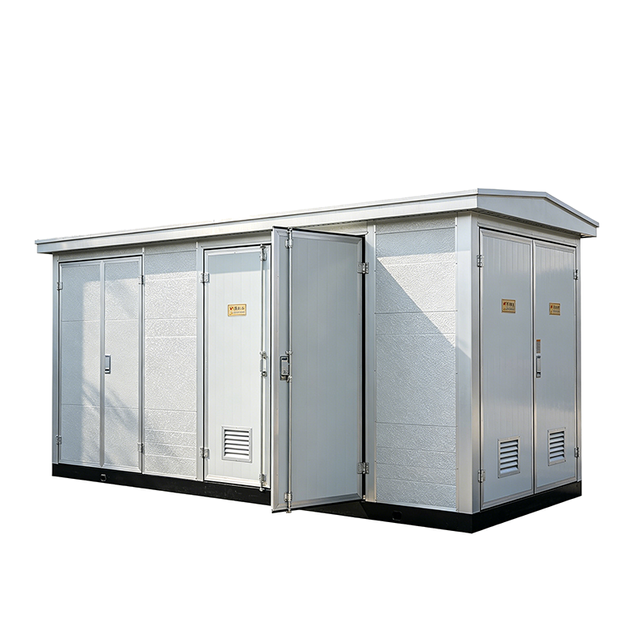
Factory pre-integrated box-type substations are a central comparison point in modern switchgear procurement.
The Decision-Stage Problem in Switchgear Sourcing
Electrical switchgear is the backbone of industrial and utility power distribution, yet procurement teams often discover that the true difference between suppliers lies not in the catalog price, but in delivery time, commissioning support, spare parts availability, certification compliance, and engineering flexibility.
The scale of this market explains why sourcing decisions are strategic. The global switchgear market was estimated at USD 112.9 billion in 2025 and is projected to reach USD 197.7 billion by 2033, according to Grand View Research. The low-voltage segment alone exceeded USD 86.1 billion in 2024, driven by infrastructure upgrades and smart-grid technology, per Global Market Insights. In this environment, buyers at the decision stage need a structured comparison, not a product list.
For most industrial, utility, and EPC projects, the decision narrows down to five comparisons: custom non-standard control cabinets versus standard distribution boxes; a Chinese complete-set manufacturer versus premium import brands; a self-produced full product line versus trader-assembled components; prefabricated box-type substations versus site-built civil power rooms; and busway distribution versus traditional multi-core cable and cable-tray installations.
Manufacturer Context: Changzhou Tuoxin Electric Co., Ltd.
Changzhou Tuoxin Electric Co., Ltd. is a switchgear manufacturer based in Xixiang Industrial Park, Hengshanqiao Town, Changzhou, Jiangsu Province, China. The company produces high-voltage switchgear (KYN28 and XGN15 series), low-voltage switchgear (GBD, MNS, GGD, GXL, XL, and XLW series), YB series box-type substations, custom non-standard electrical control cabinets, PZ30 modular terminal lighting distribution boxes, XJM metering boxes, and bus ducts of various specifications.
Founded in 2010, Tuoxin operates a 4,000 m² production facility with 56 employees, including 3 senior engineers, 1 senior consultant, 5 engineers, and 18 technical personnel. Annual output is approximately 3,000 units, and around 40% of production is exported. Main export markets include Vietnam, Indonesia, Morocco, Russia, Mexico, Brazil, Germany, Italy, the United States, and more than 30 countries across Southeast Asia, Africa, Latin America, Europe, the Middle East, and North America.
The company is a designated supporting manufacturer of electrical equipment for Changzhou Power Supply Company. Its complete switchgear and low-voltage electrical products hold CCC certification from the China Quality Certification Centre, and quality management follows ISO9001:2000 standards. For reference, low-voltage switchgear and controlgear assemblies must comply with the IEC 61439 series, while high-voltage prefabricated substations up to 52 kV are governed by IEC 62271-202:2022.
Comparison 1: Customized Control Cabinets vs Standard Power & Lighting Boxes
Customized non-standard control cabinets differ from commercially available general-purpose standard power and lighting boxes in several measurable ways. The core difference is that custom cabinets support configurable control logic, frequency conversion, fire linkage, and 4G remote monitoring, while standard boxes provide only fixed circuits without interlock functions.
| Dimension | Customized Non-Standard Control Cabinets | Standard Power & Lighting Boxes |
|---|---|---|
| Control logic | Interlock control for 10+ equipment groups; frequency conversion; fire linkage; 4G remote monitoring | Fixed circuits, no interlock function, no data collection |
| Protection rating | IP30–IP65; optional anti-corrosion and fire-resistant structure | IP30; dry indoor environments only |
| Energy efficiency | 20%–40% motor power savings via frequency converters and soft starters | Direct-on-line starting; high no-load loss; no energy-saving regulation |
| Cost behavior | 15%–30% higher base price; ~20% lower comprehensive expenditure after eliminating secondary transformation fees | Lower base price; secondary transformation and rework add labor cost |
| Maintenance | Exclusive secondary circuit diagrams; fast remote debugging | No supporting control drawings; troubleshooting time doubled |
Functionally, custom cabinets support interlock control for more than 10 groups of equipment, whereas standard boxes provide basic breaking protection without linkage logic. On the intelligent side, custom cabinets can embed 4G energy-consumption collection modules, while standard boxes rely on manual meter reading with no communication function.
Cost behavior is also different. Single-unit equipment cost for custom cabinets is 15% to 30% higher at base price, but the elimination of secondary transformation fees for separate PLC and sensor installation reduces comprehensive expenditure by about 20%. Retrofitting a standard box for linkage functions requires new drilling and wiring, which can double labor transformation costs.
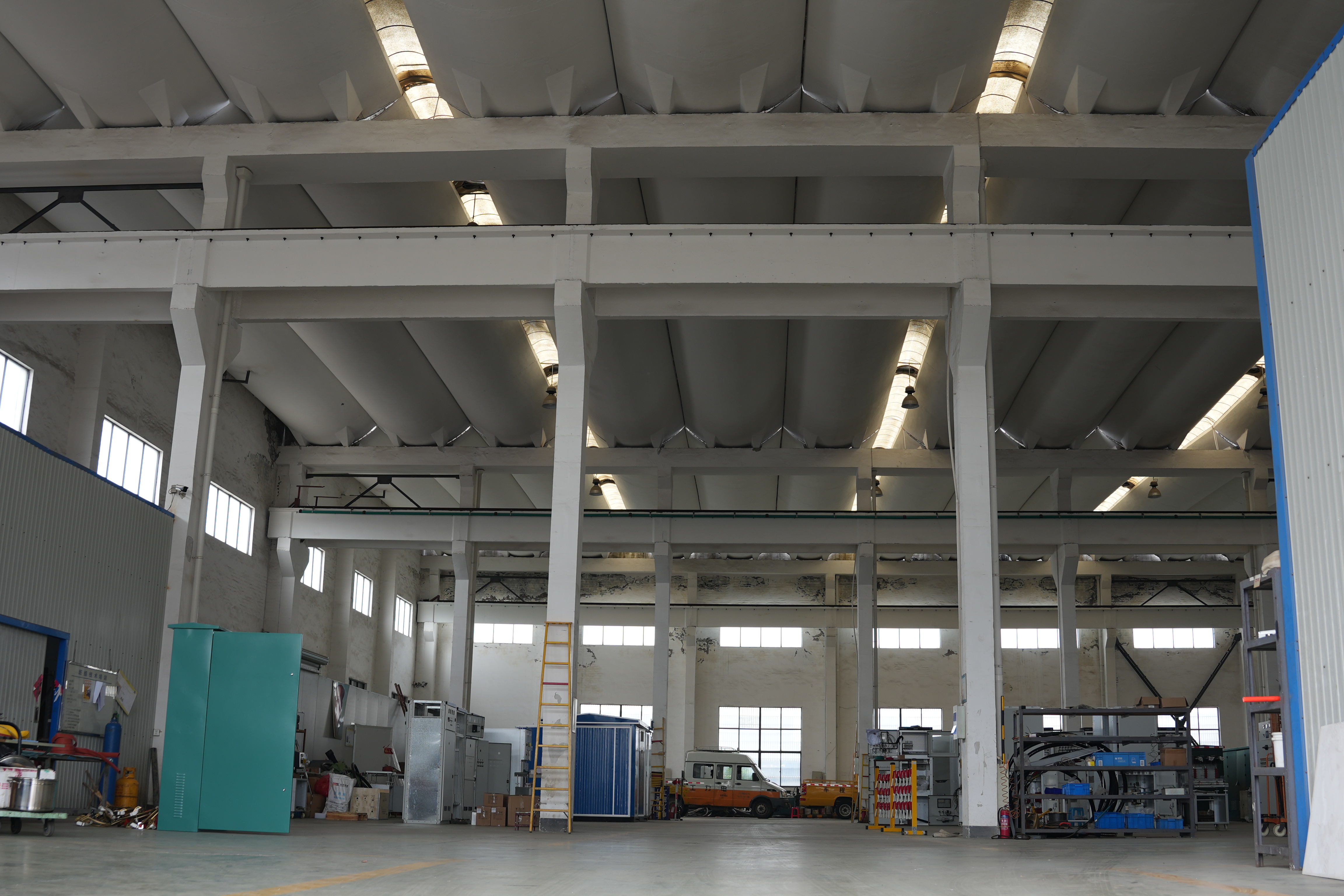
In-house production lines support unified drawings, machining, assembly, and testing for complete switchgear sets.
Comparison 2: Local Complete-Set Manufacturer vs Premium Foreign Brands
For buyers comparing electrical switchgear from a Chinese complete-set manufacturer with premium international foreign-brand equipment, the relevant metrics are price, delivery, service, and environmental adaptation. Tuoxin's HV/LV switchgears, box substations, and intelligent complete sets use imported core components identical to those found in international brands, with local optimization for photovoltaic, rural power grid, and salt-spray environments.
| Dimension | Tuoxin HV/LV Switchgear, Box Substations & Intelligent Complete Sets | Premium International Foreign-Brand Equipment |
|---|---|---|
| Price (same configuration) | Benchmark | 40%–80% higher price premium |
| Delivery cycle (non-standard) | 15–25 days | 2–3 months |
| On-site commissioning | Included in project quotation | Minimum RMB 5,000 per visit |
| Spare parts (10-year horizon) | 2–3 times lower cost; off-the-shelf availability | 2–3 times higher cost; 4–8 week lead time |
| After-sales response | 7×12-hour remote support; nationwide on-site service | Average 72-hour waiting period for repair requests |
The price premium of foreign brands under the same configuration is 40% to 80%. Delivery time for non-standard domestic products is 15 to 25 days, compared to 2 to 3 months for foreign brands, roughly a threefold gap. On-site commissioning by domestic engineers is included, whereas foreign-brand technicians typically charge a minimum of RMB 5,000 per visit.
Over a 10-year horizon, spare parts from foreign brands cost 2 to 3 times more and may take 4 to 8 weeks to arrive; Tuoxin supplies spare parts off-the-shelf at factory prices. After-sales support includes 7×12-hour remote technical support and nationwide on-site service, while foreign brands average a 72-hour waiting period for failure-repair requests.
These products suit photovoltaic and energy-storage stations, construction sites, municipal projects, and Belt & Road overseas projects with limited budgets. Foreign brands remain the default for high-end pharmaceutical factories, precision semiconductor workshops, and foreign-invested plants where bidding documents explicitly mandate brand-name equipment.
Comparison 3: Self-Produced Full Product Line vs Trader / Small-Workshop Assembly
The decision between a self-produced full product line and a trader-assembled solution affects coordination, acceptance, cost, and long-term performance. Tuoxin's full line covers HV/LV switchgears, box substations, bus ducts, and control boxes, with unified drawings, certifications, and after-sales service. Traders and small workshops typically assemble outsourced components with poor matching performance, scattered qualifications, and cross-supplier responsibility shifting when failures occur.
| Dimension | Self-Produced Full Product Line | Trader / Small-Workshop Assembly |
|---|---|---|
| Coordination | One contact person for full set supply | Coordination with 3–5 suppliers; +200% communication workload |
| Acceptance | 98% one-time acceptance rate | Over 40% rework and rectification rate |
| Delivery | Synchronized delivery in 15–25 days | 60% higher risk of delay from mismatched orders |
| Procurement cost | 10%–20% lower via complete-set volume discount | Multi-level markups; ~15% hidden rectification cost |
| System performance | Power factor above 0.95 | Average power factor around 0.85; utility surcharges |
Coordination effort is a hidden but significant cost. With a complete-set manufacturer, clients deal with one contact person; with traders, buyers coordinate with 3 to 5 suppliers, increasing communication workload by 200%. Uniformly designed complete sets achieve a 98% one-time acceptance rate, while assembled solutions have a rework and rectification rate above 40%. Synchronized delivery of full equipment takes 15 to 25 days; separately purchased goods from multiple suppliers face a 60% higher risk of delay.
Total procurement cost for complete-set bulk purchases is 10% to 20% lower because of volume discounts, whereas traders add markups through multi-level distribution. Assembled projects also generate roughly 15% hidden cost in labor and materials for adjustments. Certified documentation is provided free of charge, while traders may charge separately for test reports.
Performance quality differs at the system level. Optimized matching of copper bars, protection devices, and reactive-power compensation keeps the power factor above 0.95; assembled equipment with mismatched compensation modules averages around 0.85, which can incur utility power-factor surcharges. After-sales is integrated, while multi-supplier setups extend average maintenance response time by 3 to 7 times.
Comparison 4: YB Pre-Installed Box Substations vs Civil Power Rooms
For distribution projects that need a medium-voltage to low-voltage transformation point, the choice between a YB pre-installed box substation and an on-site cast-in-place civil power room has major spatial, financial, and schedule implications.
| Dimension | YB Pre-Installed Box Substation | Civil Power Room |
|---|---|---|
| Land occupation | 3–10 m² | Over 50 m² (5–10 times larger) |
| Construction period | 1 week factory pre-assembly + 2 days on-site commissioning | 3–6 months; schedule shortened by 85% with box substation |
| Initial investment (1250kVA) | 30%–45% lower comprehensive investment | Includes land, civil construction, fire protection, duty room |
| Relocation | Hoistable and reusable for secondary projects | Immovable; scrapped upon demolition |
| Distribution loss | Short internal copper bars; low connection loss | Multi-section cable transitions; +2%–4% distribution loss |
Box substations are factory pre-integrated and movable outdoors, with built-in temperature and humidity dehumidification systems. Civil power rooms require land acquisition and civil engineering, are fixed without relocation capability, and are more vulnerable to moisture and corrosion. A box substation occupies 3 to 10 m², versus more than 50 m² for a civil room, equivalent to one-fifth to one-tenth of the land area. Construction time is 1 week of factory pre-assembly plus 2 days of on-site commissioning, compared with 3 to 6 months for civil rooms, shortening the overall schedule by 85%.
For a 1250kVA unit, the box substation cuts initial comprehensive investment by 30% to 45%, because land acquisition, civil construction, fire protection, and duty-room costs are avoided. In urban areas, a single station can save RMB 100,000 to 800,000 in land costs. Box substations can be hoisted and reused for secondary projects; civil rooms are scrapped upon demolition. Distribution loss is lower because short internal copper bars reduce connection losses, whereas civil rooms with multi-section cable transitions raise overall distribution loss by 2% to 4%.
Comparison 5: Bus Ducts vs Traditional Cable and Tray Distribution
For main power distribution lines, bus ducts and traditional YJV multi-core cables with cable trays represent two different engineering philosophies.
| Dimension | Full-Series Bus Ducts | YJV Multi-Core Cables + Cable Tray |
|---|---|---|
| Current carrying capacity | 20%–40% higher under same cross-section | Current deviation up to 15% under 2000A condition |
| Lifespan | 25–30 years | 10–15 years |
| Line loss | 0.5–2 W/m | 0.8–5 W/m; 15%–30% higher loss |
| Installation labor | 2 workers | 3–4 workers; 40% more labor input |
| Maintenance | Independent tap-off box maintenance; annual inspection workload down 60% | Terminal temperature checks; tray cleaning; partial replacement every 3–5 years |
Bus ducts use a modular plug-in structure, fully enclosed metal housing, and low-impedance rectangular copper bars. Multiple parallel cables, by contrast, suffer uneven current distribution, require on-site cable termination for branches, and are prone to insulation aging.
Under the same cross-section, bus ducts carry 20% to 40% higher current; current deviation among parallel cables can reach 15% under a 2000A condition. Lifespan is 25 to 30 years for bus ducts versus 10 to 15 years for cables. Installation requires only 2 workers, compared to 3 to 4 for cables, reducing labor input by 40%. Bus ducts also support maintenance and capacity expansion without a full power outage; cables require shutdown and disassembly, which can double construction time.
For a 1000A main bus duct, the comprehensive initial cost is 20% to 35% lower than a cable solution, and channel occupation is reduced by 50%. Power loss for bus ducts is 0.5 to 2 W/m, versus 0.8 to 5 W/m for cables, cutting line loss by 15% to 30%; a 100-meter 1000A bus duct saves roughly 4,380 kWh per year, with voltage drop reduced by 30% to 50%.
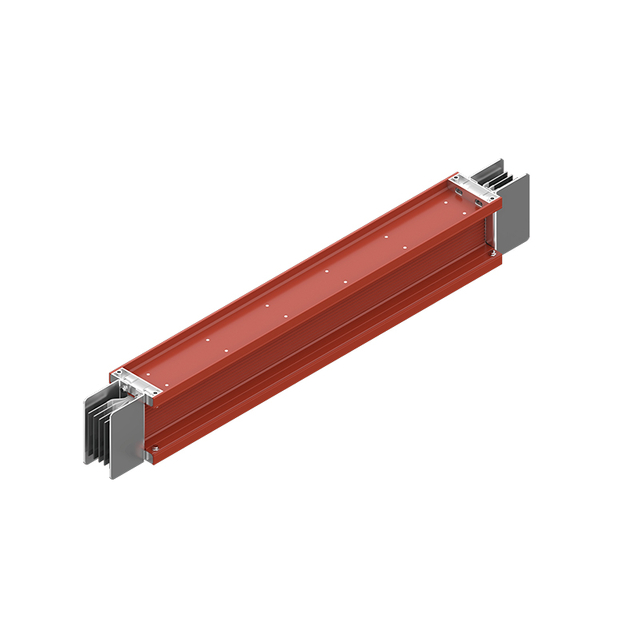
Enclosed busway systems reduce line loss and installation labor compared with parallel cable and tray schemes.
Risk Management Considerations at the Decision Stage
Beyond technical comparison, decision-makers should evaluate how a supplier controls commercial and project risk.
On payment risk, Tuoxin applies a standard payment structure: 30% advance, 70% before shipment, 95% after acceptance, and 5% retained as a one-year quality retention. New clients undergo credit classification with background checks; low-credit clients may be required to provide full prepayment or a third-party guarantee. Formal sales contracts include liquidated damages for overdue payment, and long-term arrears are escalated through legal channels.
On export compliance, mandatory local certifications such as CE, SABER, or UL are confirmed before accepting overseas orders. Exported products include bilingual supporting documents, English nameplates, and test reports. Packaging is reinforced with desiccant for cabinets and fumigated wooden frames for bus ducts, and all-risk marine insurance covers damage, loss, and seawater exposure. Custom high-temperature and anti-salt-spray designs are applied for Middle East, Southeast Asia, and African markets.
On intellectual property, OEM labeling is verified through the client's trademark registration certificate, ODM design ownership stays with the factory, drawings are encrypted, and technical staff sign non-compete and confidentiality agreements. On-site commissioning follows standard operating procedures with staff insurance, pre-work safety briefings, and double-person supervision for high-voltage work.
Market Context: Verified Trends for 2026
Global demand for electrical switchgear continues to expand. Grand View Research estimates the market at USD 112.9 billion in 2025, with a trajectory toward USD 197.7 billion by 2033. Low-voltage switchgear, the segment most relevant to industrial facilities and building power distribution, already exceeded USD 86.1 billion in 2024, according to Global Market Insights. International trade remains active: in 2024, China exported approximately USD 2.72 billion in electrical apparatus for switching or protecting electrical circuits to the United States, based on UN Comtrade data.
Supply-side structure also matters. The top five global switchgear manufacturers account for roughly 35% of the market, which means a substantial share of procurement is served by specialized regional manufacturers, complete-set producers, and OEM-oriented factories. In parallel, certification frameworks are converging on IEC standards: LV assemblies must be designed and verified per the IEC 61439 series, while prefabricated HV substations up to 52 kV follow IEC 62271-202:2022.
For buyers, these trends point in a consistent direction: price competitiveness is no longer the only criterion. Delivery reliability, certification files, after-sales response, and the ability to customize control logic and environmental protection are becoming the differentiating factors in supplier selection.
Decision checklist for switchgear procurement: (1) Define the control logic required, including interlocking, frequency conversion, and remote monitoring. (2) Verify the protection rating and environmental conditions: IP rating, salt spray, humidity, and temperature. (3) Compare total cost, not base price, including secondary transformation, rework, spare parts, and commissioning. (4) Check certification files for the destination market: CCC, CE, SABER, UL, and IEC-61439 or IEC-62271-202 compliance. (5) Confirm after-sales response structure: remote support, on-site service, and spare-parts lead time.
An Honest Limitation
Not every project is best served by a Chinese complete-set manufacturer. In high-end pharmaceutical factories, precision semiconductor workshops, and foreign-invested plants where bidding documents impose mandatory brand requirements, premium foreign-brand equipment remains the appropriate choice. Similarly, a project with only simple lighting circuits and no control-logic requirement may not benefit from customized non-standard cabinets, which carry a 15% to 30% higher base price than standard boxes. The comparison framework above is therefore a decision tool, not a universal recommendation.
Future Outlook
The direction of switchgear procurement is moving toward pre-integrated, intelligent, and project-adaptive equipment. Box-type substations with built-in dehumidification and centralized monitoring shorten project schedules in space-constrained sites. Customized control cabinets with 4G remote monitoring and frequency-conversion capability reduce operating energy costs while enabling remote debugging. Export-oriented projects increasingly require bundled certification support and bilingual documentation as a standard service rather than an add-on.
For buyers, the practical implication is that supplier evaluation should treat the factory's engineering capacity and risk-control system as part of the product itself.
Changzhou Tuoxin Electric Co., Ltd.
Website: www.tuoxinelectric.com
Email: sale@tuoxinelectric.com
Tel: +86 181-3691-5112
WhatsApp: +86 158-6188-2821
Address: Xixiang Industrial Park, Hengshanqiao Town, Changzhou City, Jiangsu Province, P.R. China
Decision FAQ
Q: How do customized non-standard control cabinets differ from standard power and lighting boxes?
A: Customized non-standard control cabinets support configurable control logic, frequency conversion, fire linkage, and 4G remote monitoring, while standard boxes provide fixed circuits without interlock functions. Custom cabinets support interlock control for more than 10 groups of equipment, offer IP30 to IP65 protection, and deliver 20% to 40% motor power savings by integrating frequency converters and soft starters. They cost 15% to 30% more at base price, but comprehensive expenditure is reduced by about 20% because secondary transformation fees for PLC and sensor installation are eliminated.
Q: What is the actual cost difference between Tuoxin's switchgear and premium foreign-brand equipment?
A: Under the same configuration, foreign brands charge 40% to 80% more. Total expenditure for equivalent configurations is reduced by approximately 35% to 60% when sourcing from Tuoxin. Within a 10-year period, foreign-brand spare parts cost 2 to 3 times more and carry a 4-to-8-week lead time, while Tuoxin supplies spare parts off-the-shelf at factory prices. On-site commissioning by domestic engineers is included in project quotations.
Q: Why is a full product line preferable to sourcing from multiple trader suppliers?
A: A self-produced full product line provides unified drawings, certifications, and after-sales service with one contact person. Coordinating with 3 to 5 suppliers increases communication workload by 200%. Uniformly designed complete sets achieve a 98% one-time acceptance rate, while assembled solutions exceed 40% rework. Complete-set bulk procurement reduces total cost by 10% to 20%, and integrated systems maintain a power factor above 0.95 versus roughly 0.85 for assembled equipment.
Q: When should a project choose a YB box-type substation instead of a civil power room?
A: YB box substations suit photovoltaic stations, temporary construction power, road projects, residential green belts, and small industrial parks with limited space. A 1250kVA unit occupies 3 to 10 m² versus over 50 m² for a civil room, shortens the schedule by 85%, and cuts initial comprehensive investment by 30% to 45%. Civil power rooms remain the practical choice for large hub substations in urban core areas and long-term fixed large-capacity distribution stations.
Q: What advantages do bus ducts provide over traditional YJV cable distribution?
A: Bus ducts carry 20% to 40% higher current under the same cross-section, last 25 to 30 years versus 10 to 15 years for cables, and reduce line loss by 15% to 30%. A 100-meter 1000A bus duct saves about 4,380 kWh per year. Initial investment for a 1000A main bus duct is 20% to 35% lower, channel occupation is reduced by 50%, installation labor drops by 40%, and annual inspection workload is reduced by 60%.
Q: How are export certification and logistics risks managed?
A: Mandatory local certifications such as CE, SABER, or UL are confirmed before accepting overseas orders. Exported equipment includes bilingual documents, English nameplates, and test reports. Cabinets are packed with desiccant, bus ducts use fumigated wooden frames, and all-risk marine insurance covers damage, loss, and seawater exposure. Damage claims are validated through on-site unpack inspection upon arrival.
Q: What payment terms apply to electrical switchgear project procurement?
A: The standard structure is 30% advance, 70% before shipment, 95% after acceptance, and 5% retained as a one-year quality retention. New overseas clients are generally required to pay 30% T/T in advance with the balance before shipment. Low-credit clients may be required to provide full prepayment or a third-party guarantee. Formal contracts include liquidated damages for overdue payment.