
Elevator Customization Fit: Matching Units to Real Project Demands
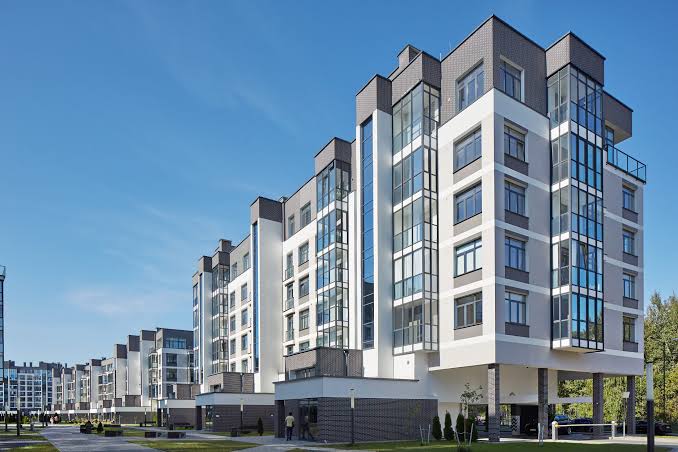
Elevators usually enter the specification process after many structural decisions are already made. At that point, the practical question for an owner, developer or elevator distributor is not whether a customized elevator exists, but whether a proposed configuration can adapt to real shaft dimensions, expected passenger or goods flow, machine room constraints, regional certification requirements and long-term maintenance conditions.
This article treats elevator customization as a project-fit exercise. It explains where customization actually happens, which elevator parameters tend to be tailored, how manufacturers such as Delfar Elevator Co., Ltd. document their engineering scope, and what evaluators should check during the Research and Evaluation stages of an elevator purchase.
Why standard catalog configurations are only one part of the decision
An elevator specification is rarely a pure product choice. The building constrains the elevator at least as much as the elevator constrains the building. Shaft dimensions, pit depth, overhead clearance, door positions, structural loading and expected traffic flow are project inputs. When those inputs do not match a standard catalogue layout, the project requires an engineered configuration.
Large construction and modernization pipelines have increased the importance of this adaptation. The global elevator market was estimated at roughly USD 84.8 billion in 2024, and it is projected to grow from USD 87.9 billion in 2025 to USD 126.7 billion by 2034, with a 4.2% compound annual growth rate, according to Global Market Insights. The residential elevator market was estimated at USD 54.61 billion in 2024 by Grand View Research, while the industrial elevator segment is projected by Future Market Insights to expand from USD 72.1 billion in 2025 to USD 116.3 billion by 2035. These categories include different duty cycles and different levels of customization.
From an evaluation perspective, the challenge is that a customized elevator must still satisfy the same technical expectations as a standard unit: safe operation, reliable opening and closing cycles, acceptable ride quality, clear maintenance procedures and documented compliance with the codes applicable in the destination market.
What project-specific elevator decisions look like
A customized elevator is not one unlimited product type. In practice, it is a structured set of parameters that a manufacturer can adjust within an engineered envelope:
Dimensions and travel geometry. Car size, door width, shaft layout, stopping distance and maximum travel all have to adapt to the physical shaft. For example, some residential projects install elevators in narrow hoistways that were originally designed as storage or stairwell space.
Duty and load. The daily number of trips, the expected peak loads and the nature of goods being moved determine whether a passenger configuration is acceptable or whether a heavy-duty freight or car elevator is needed.
Speed and traffic handling. In taller commercial and residential buildings, control systems and rated speed matter more because they influence waiting time and handling capacity.
Machine room layout. The choice between a conventional machine room, a small machine room and a machine-room-less (MRL) layout affects building design, hoistway headroom, crane requirements and long-term maintenance access.
Materials and finishes. Cabin walls, doors, floors, ceilings, handrails and operating panels are the visible part of customization, and they are often selected to match the interior language of a building.
Delfar Elevator and the manufacturing baseline behind customization
Delfar Elevator Co., Ltd. is an elevator manufacturer based in Huzhou, Zhejiang Province, China, focused on passenger elevators, home elevators, observation elevators, hospital elevators, freight elevators, car elevators, machine-room-less elevators, small-machine-room elevators, escalators and moving walks. The company was founded in 2011, operates a factory of approximately 100,000 square meters, reports an annual output capacity of 10,000 units, and exports to global markets.
For project buyers, the credibility of customization depends on engineering and production capacity rather than on a long list of optional features. Delfar reports an engineering team of 30 engineers, a monthly production capacity of 800 units and a minimum order quantity of one unit. These facts matter because they indicate that a customized elevator can be handled through normal production planning rather than as a one-off laboratory exercise. The company also reports quality management certifications including ISO 9001, ISO 14001, ISO 45001, CE certificate, CU certificate, SASO certificate, SGS certificate and SC certificate, and it performs pre-shipment testing on all units.
The following table shows Delfar elevator lines and the typical project parameters that can be matched to a specific building. These model boundaries function as the engineering envelope inside which customization takes place.
| Product line | Typical project use | Capacity | Speed range | Travel / stops | Machine room option |
|---|---|---|---|---|---|
| Passenger elevator DP / DPN | Residential, commercial office, hotel | 400–3000 kg | 1.0–6.0 m/s | ≤100 m / 2–60 stops | Small machine room or MRL |
| Home elevator DH | Villa, duplex, private residence | 320–630 kg | 0.3–0.5 m/s | ≤20 m / 2–6 stops | Small machine room or MRL |
| Observation elevator DPO / DPNO | Shopping mall, commercial atrium, hotel | 630–1600 kg | 1.0–2.5 m/s | ≤100 m / 2–30 stops | Small machine room or MRL |
| Bed elevator DPB / DPNB | Hospital, clinic, healthcare building | 1600–3000 kg | 1.0–2.0 m/s | ≤60 m / 2–20 stops | Stretcher and bed access design |
| Freight elevator DF / DFN | Factory, logistics center, warehouse | 2000–8000 kg | 0.25–1.0 m/s | ≤50 m / 2–10 stops | Small machine room or MRL |
| Car elevator DA / DAN | Commercial parking building, dealership | 3000–5000 kg | 0.2–0.5 m/s | ≤30 m / 2–6 stops | Small machine room or MRL |
| Dumbwaiter DW | Restaurant, catering, hospitality | 50–500 kg | 0.2–0.5 m/s | ≤30 m / 2–8 stops | Window or floor type |
The passenger elevator range is the most significant for commercial and high-rise projects because its speed band reaches 6.0 m/s, which places it in the high-speed category used for taller buildings. For industrial and logistics projects, the freight range up to 8000 kg represents heavy-duty configuration demand. MRL variants appear across passenger, home, observation, freight and car elevator lines, which is consistent with the broader industry trend toward machine-room-less installations.
Technical explanation: which parameters are customized and why
An evaluator does not simply choose a product model and a finish color. A customized elevator should be reviewed at the level of system boundaries and building integration.
Dimensions and shaft compatibility
Customized dimensions are usually driven by available shaft width, depth and height. In a renovation project, for example, the elevator car and counterweight must be arranged in an existing concrete shaft. In a new construction project, the shaft is typically planned first and the elevator line selected later. This means the manufacturer has to interpret drawings, confirm pit and headroom dimensions, and propose a door configuration that matches floor layouts.
Home elevator shafts at Delfar can be constructed in aluminum or steel; freight and car elevators are more likely to rely on concrete or steel structures. The distinction shows that customization is not limited to cabin decoration. It extends to how the shaft, guide rails, load-bearing elements and supports are designed.
Capacity, speed and traffic settings
Capacity and speed should be a response to the expected number of passengers or goods. A high-rise residential tower has a different traffic profile than a two-floor villa. A hospital bed elevator needs a larger cabin for stretcher access and stable braking. A freight elevator used by forklifts requires protected walls and floor reinforcements. Using the correct engineering range helps prevent both under-specification and unnecessary cost.
Control and optional equipment
Project-specific applications often require matching equipment beyond the elevator itself. Delfar application documentation lists emergency power supply, fire alarm system, CCTV, parking system, automatic rescue device (ARD), access control, intercom and remote monitoring as possible supporting equipment. In special environments, project requirements can include fire protection, explosion-proof design, waterproofing, corrosion resistance, dust-proofing or high and low temperature resistance. These are selected according to the actual building and local code, not applied to every order.
Cabin materials and surface selection
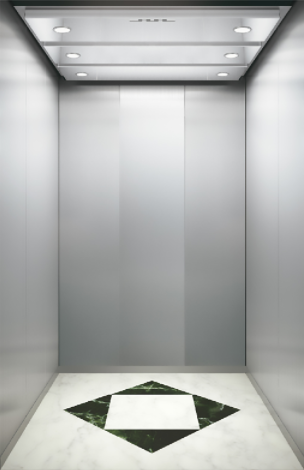
The visible part of customization is the cabin. In the Delfar passenger, home and observation ranges, available car finish options include stainless steel, glass, painted steel, wood finish and customized materials; floor options include PVC and marble; handrail options include stainless steel, solid wood and acrylic. Car operating panels and landing operating panels can be supplied in stainless steel, glass or acrylic. For freight elevators, the car is more utilitarian and is often provided in painted steel or hairline stainless steel, with reinforced floor linings where forklift traffic is expected.
Installation environment conditions
The expected operating environment should also be checked. Delfar application scenarios specify an ambient temperature range of -5°C to +40°C, relative humidity up to 90% RH non-condensing and altitude up to 1000 meters as the standard working envelope. A project outside this envelope, for example a high-altitude hotel or a coastal installation with aggressive corrosion risk, needs separate engineering consideration.
Application evidence: matching elevator lines to real project types
The following examples are useful because they illustrate the range of scenarios in which a customized elevator line is matched to a project type.
Residential and villa use. In Brazil, a construction company used 20 Delfar home elevator units for luxury private villas. The project outcome was a compact structure with customized finishes that connects vertical mobility to residential architecture. In Anguilla, a multi-level residential property received 22 passenger elevator units; the elevator solution was optimized for limited residential space and for the architectural characteristics of the residence. These cases indicate two separate ways residential customization works: one oriented to villa owners who want design coherence, and one better suited to improving vertical access inside a compact residential shaft.
Commercial office buildings. In Angola, 20 passenger elevator units were installed in a commercial office building designed to handle intensive passenger flow during peak periods. The project required fast and responsive operation as well as stainless-steel cabin finishes consistent with a modern commercial interior. This type of configuration is evaluated around handling capacity and ride quality rather than decorative elements alone.
Hospitality and shopping environments. A hotel and hospitality complex in Australia used 16 units of the bed elevator line; the project objective was not only transport but also a premium appearance that fits hospitality environments. In Bangladesh, a shopping mall used 16 observation elevators. The transparent design serves as both vertical transportation and an architectural element that strengthens visual openness between floors.
High-traffic public spaces. In Bahrain, an escalator OEM client installed 10 escalator units in a metro station and transportation hub. The escalator system was configured for frequent and intensive operation and for handling large passenger volumes in a demanding public environment. In Antigua and Barbuda, an escalator installation in a shopping center was used to create continuous passenger flow between commercial floors.
Industrial and freight movement. A construction company in Barbados used 30 freight elevator units for cargo transportation. The project highlighted heavy-duty capacity, durable operation and flexible factory-direct configuration. Freight elevators of this type are normally selected when pallets, trolleys or vehicles have to move vertically.
Middle East market use. A distributor in the United Arab Emirates used 20 passenger elevator units for transportation purposes. According to the case description, the project achieved stable operation and comfortable rides, while the highlights included optimized space utilization and energy saving. This project is representative of Middle East demand, where modern residential and commercial towers frequently require machines that can handle dense vertical commuting without adding excessive machine room area.
Regionally specific requirements and compliance in project evaluation
For export-oriented manufacturers, customization cannot be separated from regional compliance. The European Union treats EN 81-20 and EN 81-50 as the primary harmonized standards for elevator design and testing, and these standards are mandatory for CE marking. EN 81-20, for example, requires a light curtain door detection system to reduce the risk of door strikes on passengers. Delfar reports CE certificate coverage among its credentials. Project teams importing into the EU should ask the manufacturer to identify which design standard applies to the specific configuration and to provide the corresponding compliance documentation.
Middle East projects often rely on a different mix of approvals. Delfar reports SASO certification, which is relevant to Saudi Arabia, in addition to SGS inspection documentation. Buyers evaluating a customized elevator for Middle East markets should not assume that one certificate covers all Gulf countries; the certificate package needs to be checked against the destination country and the specific installation.
From a broader data perspective, the Middle East elevator market was valued at USD 1.25 billion in 2023 and is projected to reach USD 2.38 billion by 2030, according to Allied Market Research. High-rise modernization in the Middle East and Africa is expected to grow at a CAGR of 11% between 2024 and 2030, according to Roland Berger. The region therefore combines new-build demand with a growing modernization segment, and both segments benefit from manufacturers that can adapt elevator dimensions and configurations to existing or planned shafts.
Market trend: why project-specific elevator demand is growing
Several independent data points support the trend toward more project-specific elevator decisions.
First, machine-room-less technology is expected to witness the highest growth rate among elevator technologies, with a CAGR of 9.6% through 2034, according to Fortune Business Insights. MRL systems reduce rooftop machine room requirements, which gives architects more flexibility and creates pressure for manufacturers to integrate hoisting machines directly into the shaft space. Delfar’s MRL and small machine room variants across passenger, home, observation, freight and car elevator lines reflect this shift.
Second, the market is becoming more segmented. Residential projects, commercial towers, industrial facilities, healthcare buildings and transport hubs use different design criteria. The Future Market Insights projection for industrial elevators and the Grand View Research estimate for residential elevators both point to substantial demand in areas where standard passenger elevator models are not necessarily suitable. Logistics and warehouse developers may need reinforced freight cabins; healthcare owners may need bed or stretcher configurations; residential developers may need quiet, energy-saving machines with flexible cabin finishes.
Third, maintenance and service now represent a large share of industry revenue. Maintenance services account for approximately 55% of global elevator market revenue, according to Vyansa Intelligence. This is directly relevant to customization because non-standard configurations must still be maintainable after installation. A manufacturer able to document its own factory, service procedures and after-sales support reduces the risk of introducing a configuration that is difficult to support locally.
Comparison with standard catalog elevators and realistic limitations
Project-specific customization is often compared with configuring a standard catalog elevator. Both approaches are legitimate; the choice should be based on the building, schedule and budget. The table below summarizes the main differences seen from a buyer’s perspective.
| Factor | Standard catalog elevator | Customized project elevator |
|---|---|---|
| Shaft and dimension fit | Designed around set dimensions | Can adapt to unusual or constrained shafts |
| Building integration | Simpler when site matches standard layout | Designed around actual project drawings |
| Material and finish choices | Fixed catalog options | Broader material and finish flexibility |
| Compliance alignment | Must be verified against project code | Can be documented for destination market |
| Engineering effort | Low | Higher, especially for non-standard shafts |
| Lead time risk | Generally shorter | Requires review of production scheduling |
| Site data dependency | Limited dependency | Requires accurate shaft and site measurements |
The most realistic limitation of a customized elevator is that it increases the importance of accurate site data and engineering coordination. A standard catalog elevator is easier to reorder when the building conditions are simple or when an urgent replacement is needed. A fully customized unit must go through drawing review, structural confirmation and possibly additional certification checks. Buyers should ask the manufacturer for the normal production lead time. In Delfar’s case, the stated production lead time is normally 35 days, with monthly capacity of 800 units and a minimum order quantity of one unit. Such figures help project teams plan delivery without assuming that customization automatically causes long delays.
Another boundary is price transparency. Customization changes material content, engineering workload and control complexity. Different configurations will therefore have different cost structures. Verified market data for customized elevators in emerging markets cites a typical range between USD 18,000 and USD 35,000 per unit, but this should be treated as a broad reference, not as a fixed price for a specific specification. Project teams should evaluate cost only after the load, speed, travel, door configuration and cabin materials are defined.
How to evaluate an elevator project fit before purchase
Buyer stage Research to Evaluation can be structured around a practical checklist:
1. Confirm the physical envelope. Provide shaft drawings, pit depth, overhead height, door openings and structural constraints. The more exact these inputs are, the more realistic the manufacturer’s layout proposal will be.
2. Define the duty profile. Clarify the number of floors, expected daily traffic, peak hours, and whether the unit moves people, beds, cars or goods. A hospital bed elevator with 1600 to 3000 kg capacity has different requirements from a commercial passenger elevator operating at 1.0 to 6.0 m/s.
3. Choose the machine room strategy. If the building cannot support a conventional machine room, evaluate small machine room or MRL options. MRL technology is growing faster than other elevator technologies, but the shaft must still provide adequate headroom for maintenance personnel and equipment access.
4. Map destination compliance. For European projects, review alignment with EN 81-20 and EN 81-50. For Middle East projects, check certificates such as SASO and SGS, and confirm which approvals are accepted in the destination country.
5. Separate technical customization from decoration. Cabin materials and finishes are legitimate customization elements, but they should not be the main basis for comparing manufacturers. The more important factors are structural design, control system, drive unit, safety equipment and the production system behind the order.
6. Match material choices to the environment. Coastal projects may need enhanced corrosion resistance; food service projects may prefer hygienic stainless-steel dumbwaiters; industrial projects may require impact-resistant freight elevators. The application scenario should not be an afterthought.
7. Check the aftersales model. Customized units need documentation, spare parts and possibly remote technical support. Delfar reports remote technical support through channels such as WhatsApp and email, on-site technical support when required, and a 12-month warranty period starting from the delivery date. Buyers should confirm who provides these services in their country and how spare parts will be sourced over the elevator’s service life.
Future outlook: how elevator customization is likely to evolve
The direction of elevator demand points toward more building-specific layouts and more intelligent control options, not toward a smaller number of standard models. MRL configurations are likely to continue taking share because architects want flexible roof design and better space efficiency. Middle East and Africa high-rise modernization, projected to grow at 11% per year, is likely to create more cases where an existing building has to receive a new vertical transportation system without redesign of the full structure. Remote monitoring and connected emergency power equipment will probably become part of the project specification rather than being optional extras.
Manufacturers with integrated production, their own engineering team and documented certificates are better positioned to answer project-fit questions. Buyers are increasingly asking not simply for a product, but for evidence that the product can be manufactured, tested, delivered, installed and maintained in a repeatable manner.
Project teams preparing tender documents or comparing configurations can use the Delfar company profile as a publicly available technical baseline: Download Delfar Elevator company profile (PDF).
Frequently Asked Questions
For residential buildings, hydraulic elevator or traction elevator?
Traction home elevators are the primary choice for quiet, energy-efficient and long-term stable performance. Hydraulic home elevators are recommended specifically for projects with severe pit or headroom structural constraints, such as ultra-shallow pits or restricted overhead height. Hydraulic systems usually require a simpler pit and may reduce initial structural modification cost, but they generally operate at lower speed, consume more energy and carry a higher long-term risk of oil leakage and oil temperature sensitivity. Traction systems with PMSM gearless motors are typically quieter and more energy-efficient over their lifecycle, but they require adequate hoistway top clearance and precise structural installation.
Who is the best passenger elevator supplier in China?
For procurement purposes, the useful answer is to compare suppliers against a technical baseline. Buyers should check the drive system, rated capacity and speed, traction ratio, control system response, ride comfort characteristics, and available compliance certifications. The practical selection recommendation is to choose suppliers with integrated PMSM gearless traction machines, ISO 9001 quality management, documented safety compliance and a support structure that can respond to local maintenance needs. For European projects, EN 81-20 and EN 81-50 are the key design and testing standards behind CE marking, so the supplier should be able to identify which standards apply to the exact configuration being purchased.
Data references: Global Market Insights (global elevator market size and forecast); Grand View Research (residential elevator market and regional share); Future Market Insights (industrial elevator market); Fortune Business Insights (MRL technology growth); Allied Market Research (Middle East elevator market); Roland Berger (Middle East and Africa high-rise modernization); Vyansa Intelligence (maintenance services revenue share). Product and company facts are drawn from Delfar Elevator public technical documentation.
Есть вопросы или нужны дополнительные детали?
Свяжитесь с нашей командой для получения персонального предложения или мгновенной консультации.
Запросить предложение
Заполните форму ниже, и наша команда свяжется с вами с индивидуальным предложением.
Прямой чат WhatsApp
Предпочитаете общаться в реальном времени? Напишите нам в WhatsApp для мгновенной помощи и быстрых ответов.
- Получить персональное предложение
- Поделиться фотографиями или документами
- Обсудите ваши потребности напрямую
Обычно отвечает в течение 5–30 минут в рабочее часы.