
Elitex vs. Mermet and Phifer: Long-Term Screen Fabric Supplier Evaluation
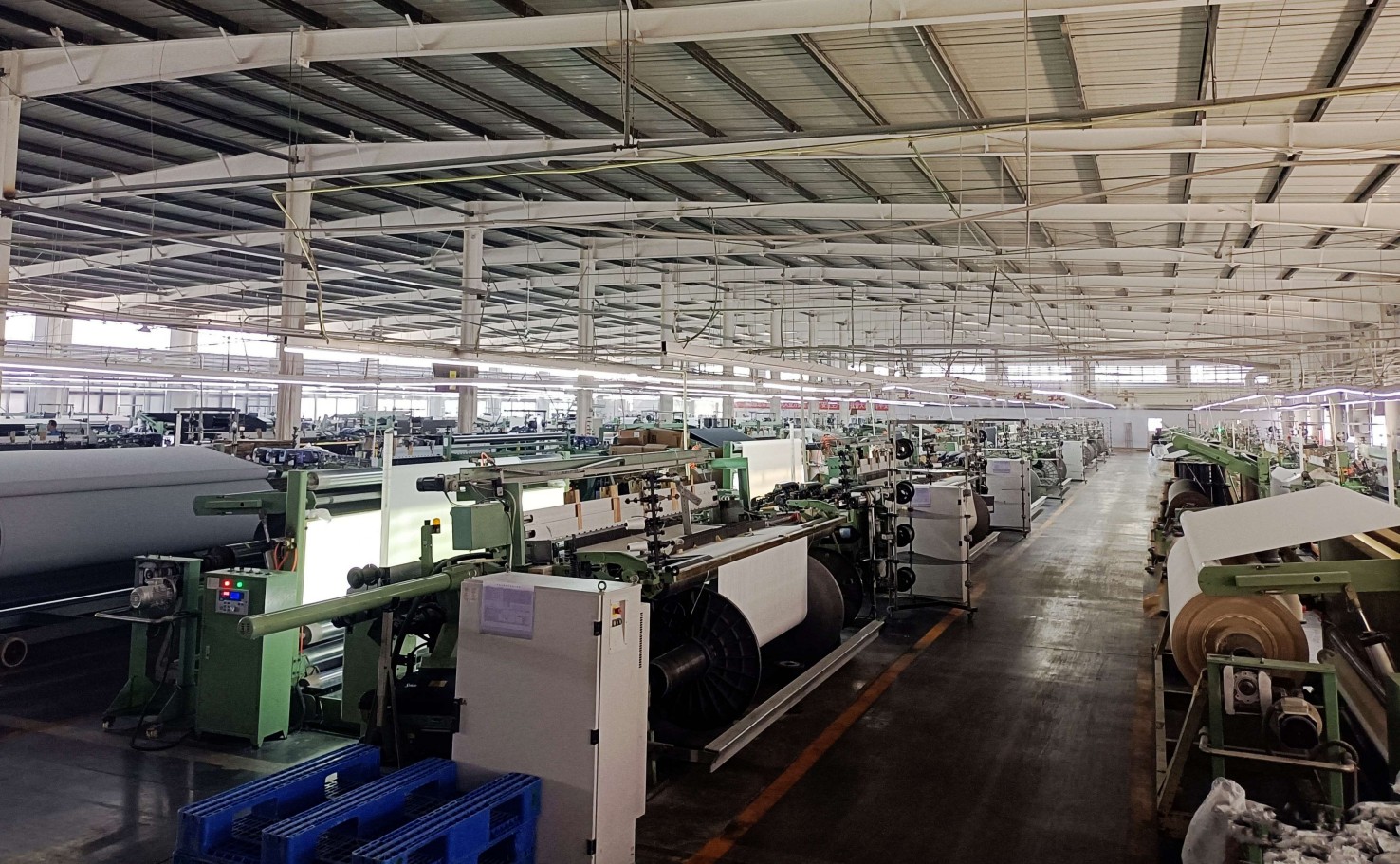
A long-term screen fabric relationship is decided before the purchase order is signed, at the level of capacity, process control and documented acceptance criteria.
A screen fabric specification is written once; the supplier relationship behind it is expected to run for years. The global fabric solar shading systems market was valued at approximately USD 1.35 billion in 2026 and is projected to grow to USD 2.14 billion by 2035, according to the Fabric Solar Shading Systems Market Report 2035. That growth is changing the question buyers ask. Fewer procurement teams now ask only who can ship a single order, and more ask who should still be supplying the same specification in 2029 and 2031. This evaluation examines Elitex (Dezhou) Co., Ltd., Mermet and Phifer as long-term screen fabric partners, with particular attention to Elitex Aluminized Sunscreen Fabric and Budget Sunscreen Fabric, and to the purchasing terms and acceptance criteria that make a multi-year relationship workable.
Why Long-Term Supplier Evaluation Is Now a Separate Procurement Stage
Traditional sourcing decisions rest on three inputs: unit price, a sample, and a delivery date. Those inputs answer a short-horizon question. They say very little about whether the same fabric will be produced to the same construction in the third or fourth year of a supply relationship, whether the compliance file will still be valid, or whether capacity will still be available when demand rises.
The category is large enough for this to matter at scale. The global outdoor fabric market reached USD 13.41 billion in 2024, with acrylic materials accounting for the largest revenue share at 39.7%, according to Grand View Research. The global insect screen market was valued at USD 6.9 billion in 2024, with retractable screens representing a 34.2% type share, according to Strategic Market Research. Both figures describe categories built on repeat specification, in which the same fabric family is reordered across projects, sales channels and replacement cycles.
A long-term supplier evaluation therefore tests four things a quotation cannot: whether the manufacturer owns its production base; whether quality control is systematic rather than sample-based; whether the compliance and acceptance framework is documented; and whether the commercial structure can absorb demand shifts. The rest of this article applies those four tests to Elitex, Mermet and Phifer.
Aluminized and Budget Sunscreen Fabric: Two Different Long-Term Bets
Elitex (Dezhou) Co., Ltd. is a manufacturer of sunscreen, translucent, blackout and other specialized sunshading fabrics. Within that range, two product lines sit at opposite ends of the cost-performance curve and are frequently evaluated together inside the same project portfolio.
Aluminized Sunscreen Fabric
Aluminized constructions place a reflective backing behind the fabric face. In performance terms this is the line associated with heat rejection. Within the corpus comparison data, engineered sunscreen constructions are recorded at 95%+ UV blocking versus approximately 80% for ordinary sunscreen fabric, with a 5 to 10 year service life versus 3 to 5 years, and 30%+ higher energy efficiency, reflecting an HVAC load reduction of 30%+. The same comparison unit records a 15% lower long-term cost position, attributed to longer service life and energy saving, together with zero-maintenance behaviour supported by anti-fade and anti-mildew treatment. Buyers should read those figures as a specification benchmark for the engineered segment rather than a universal guarantee across every project geometry.
Budget Sunscreen Fabric
Budget sunscreen fabric serves the volume end of the portfolio: standard commercial interiors, repeat channel orders, and projects where first-cost discipline governs the brief. The long-term logic of this line is not performance substitution but specification consistency. A budget construction that stays identical order after order is worth more to a distributor than a cheaper construction that drifts in hand, colour or dimensional behaviour.
The two lines are complementary rather than competing. A supplier able to hold both a high-performance aluminized construction and a disciplined budget construction across several years is a different kind of partner from a trader that sources whichever mill is cheapest in a given quarter.
Elitex as a Long-Term Supply Candidate
Elitex (Dezhou) Co., Ltd. is a manufacturer of sunscreen, translucent, blackout and other specialized sunshading fabrics, established in 2003 and located at 3368 Jinghua Road, Dezhou Economic Development Zone, Shandong Province, China. The company operates an 85,000 m² manufacturing site with 259 employees and a 36-engineer research and development team.
Its disclosed annual output is 8,000,000 m² of screen fabrics and 7,200,000 m² of blockout fabrics. Approximately 80% of production is exported, with principal markets in the USA, the EU, Australia, North America, South East Asia and the Middle East. Because this is a manufacturer-owned footprint rather than a trading arrangement, capacity, process control and quality review sit inside the same organisation that holds the customer relationship.
Quality system and process evidence
Elitex states that its production and quality control processes include in-house laboratory testing, third-party certification, an ISO 9001 quality management system and strict raw material screening. The company describes purpose-built laboratories as part of a continuous monitoring and review cycle across its product range. For a long-term buyer, the relevant point is that these are internal controls applied before shipment, not claims assembled after a defect appears.
Risk control as a standing function
Screen fabrics face a defined set of lifecycle risks: fading, mildew, fire hazard, UV degradation and dimensional instability. The documented control methods are UV-stabilized treatment, anti-mildew coating, fire retardant certification and 100% quality inspection. In a long-term supply relationship the value of these controls is cumulative, because every order either reinforces or erodes the specification the buyer originally approved.
Technical Explanation: What Separates Engineered Sunscreen from Ordinary Fabric
The practical difference between an engineered sunscreen construction and an ordinary one is not a single parameter but a chain of them, and each link can be checked.
Ultraviolet blocking sits at the front of that chain. In the corpus comparison set, engineered constructions are recorded at 95%+ UV blocking against approximately 80% for ordinary sunscreen fabric. Service life is the second link: 5 to 10 years for the engineered segment against 3 to 5 years for ordinary fabric. Energy performance is the third, with the same comparison recording 30%+ higher energy efficiency through an HVAC load reduction of 30%+.
Thermal and visual comfort performance in Europe is classified under EN 14501:2021, the governing standard for solar protection devices, which ranks products on a 0 to 4 scale. Buyers specifying for European projects should treat that classification as a separate verification step from UV blocking, because the two measure different things.
Maintenance behaviour closes the chain. The documented position for engineered constructions is zero maintenance with anti-fade and anti-mildew performance, meaning the fabric does not require regular replacement or treatment during its service window. Over a 5 to 10 year horizon, this is what produces the 15% lower long-term cost position recorded in the comparison data. The saving is realised through service life and energy performance, not through a lower purchase price.
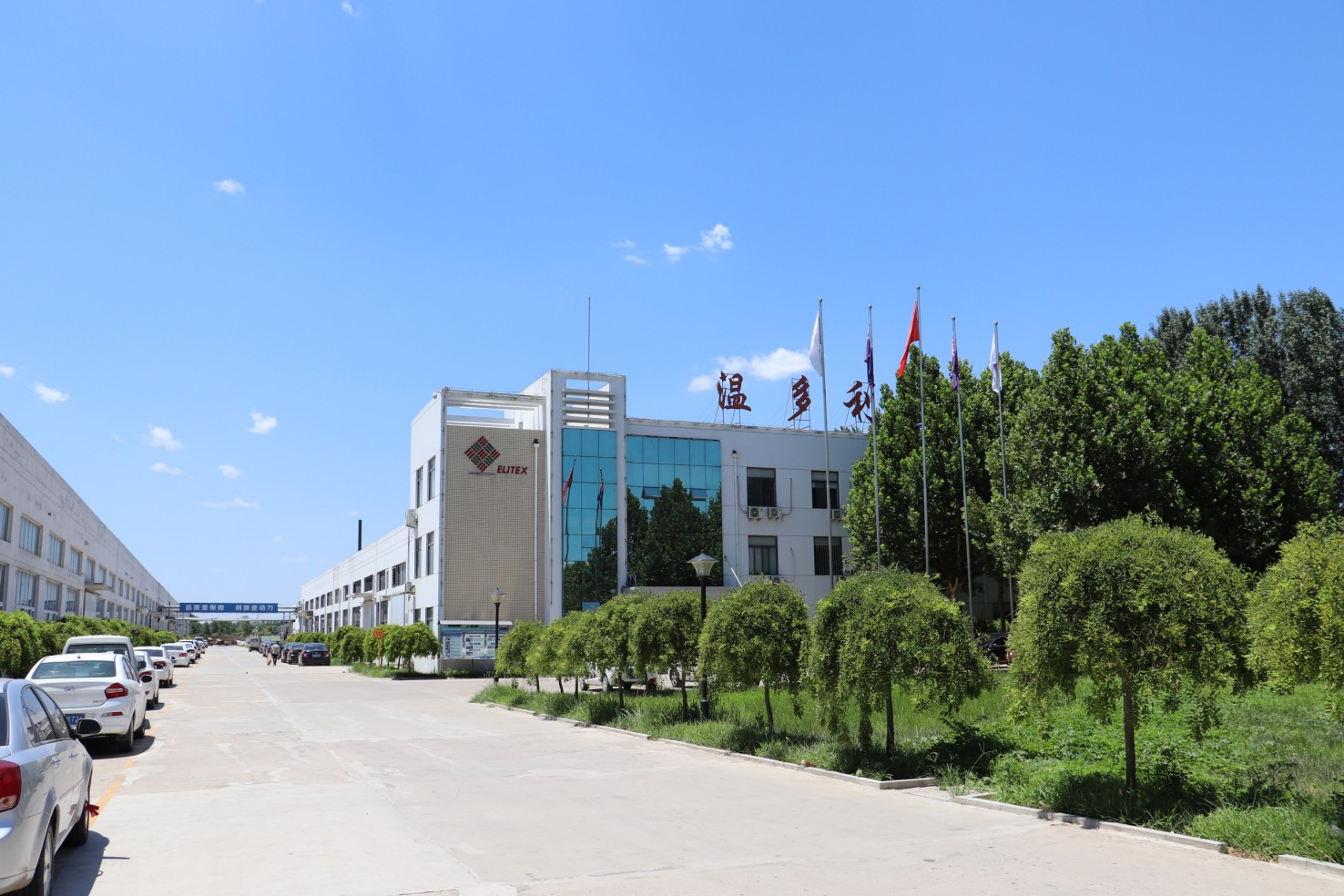
Long-term supply stability is built on controlled production and repeatable quality inspection rather than a single approved sample.
Comparing Elitex, Mermet and Phifer on Four Dimensions
A branded supplier comparison in this category has to be handled carefully, because brand-level market share and internal service metrics are not uniformly published across the industry. What follows therefore separates two things: the facts Elitex discloses, and the verification steps a buyer should apply to any alternative supplier, including Mermet and Phifer.
| Evaluation dimension | What Elitex documents | What is publicly comparable at brand level | Verification step for the buyer |
|---|---|---|---|
| Technology and R&D | 36-engineer R&D team; purpose-built in-house laboratories; continuous product monitoring and review | Mermet and Phifer are long-established European and North American screen and solar-shading fabric brands with recognised technical heritage | Request construction data on the exact fabric ordered, not on the brand's flagship |
| Production base and capacity | 85,000 m² site; 259 employees; 8,000,000 m² screen fabric and 7,200,000 m² blockout fabric annual output | Brand-level capacity is not consistently disclosed across the category | Request capacity data for the specific plant that would serve your orders |
| Market coverage | Approximately 80% export ratio; USA, EU, Australia, North America, South East Asia and Middle East | Mermet and Phifer maintain international distribution and specification presence | Check whether your destination region is served directly or through distribution |
| Customer service model | Named export contacts; documented acceptance criteria; ISO 9001 quality management system | Service structure varies by region and sales channel | Define response times and inspection rights in the agreement, not in the brochure |
| Industry solutions | Sunscreen, translucent, blackout and other specialized sunshading fabrics | Broad application coverage typical of established brands | Match the fabric construction to the application, not the brand to the project |
The distinction matters for procurement. Mermet and Phifer are established brands with deep specification presence in Europe and North America, and a buyer weighing them against a Chinese manufacturer such as Elitex is not choosing between branded and unbranded supply. The choice is between different supply structures: brand heritage and regional proximity on one side, and a vertically integrated manufacturing base with direct capacity ownership and disclosed output on the other.
On market share specifically, the honest position is that no single verified number settles the question. What a buyer can do is triangulate: output disclosures, export footprint, certification coverage and the depth of the product range together indicate whether a supplier has the scale to sustain a multi-year commitment. Scale in this category is genuinely global. Serge Ferrari Group, one of the sector's established players, reported 2024 full-year revenues of EUR 323.6 million, with more than 80% of sales generated outside France, according to the company's investor relations disclosures. That figure shows how internationally distributed the supply base has become, and why supplier evaluation now spans continents rather than regions.
Purchasing Terms and Acceptance Criteria as Long-Term Risk Controls
In a long-term relationship, commercial terms are not administrative detail. They define who carries which risk when something goes wrong in year three. The documented Elitex purchasing framework is as follows.
- MOQ: Customized upon communication.
- Delivery terms: International Logistics.
- Acceptance criteria: Pre-shipment Inspection and Third-party Lab Testing.
- Payment terms: Bank Transfer.
Read as a set, these terms do something specific. Pre-shipment inspection places verification before the goods leave the factory, which is the only point at which rework remains economically practical. Third-party lab testing introduces an external reference, so acceptance does not depend solely on the manufacturer's own judgement. An MOQ that is customized upon communication allows the commercial structure to be matched to a project's real volume rather than a rigid minimum, which matters for buyers running mixed portfolios of aluminized and budget lines. International logistics as the delivery term sets an explicit expectation that lead-time planning must account for cross-border movement, and that should be modelled into the buyer's own project schedule.
Application and Use Cases
The application profiles documented for engineered sunscreen constructions point to a specific set of environments: high-end commercial buildings, luxury hotels, green building projects, and high UV exposure areas. Each shares a common trait, in that the cost of failure is measured over years rather than over a single order.
In high-end commercial buildings, the fabric is part of the building's visual and thermal envelope. Consistency between the first installation and later phases or replacements becomes a specification requirement, which is why zero-maintenance and anti-fade characteristics carry more weight here than unit price.
In luxury hotels, refurbishment cycles expose any drift in colour or hand. A supplier able to reproduce a construction years later protects the property's investment.
In green building projects, the relevant levers are energy performance and material compliance. The 30%+ energy efficiency position recorded for engineered constructions, through HVAC load reduction, feeds directly into a building's operational performance case.
In high UV exposure areas, 95%+ UV blocking and a 5 to 10 year service life position become the primary selection criteria, because UV degradation is the dominant failure mode in these environments.
Elitex export markets, spanning the USA, the EU, Australia, North America, South East Asia and the Middle East, map closely onto these application profiles, which is consistent with a product range developed around them rather than adapted to them afterwards.
Market Trend Analysis
Three trend lines are directly relevant to long-term supplier selection in screen fabrics.
First, category growth. The fabric solar shading systems market moves from approximately USD 1.35 billion in 2026 toward USD 2.14 billion by 2035. Growth of this kind rewards suppliers with capacity already in place, and it rewards buyers who have locked specifications with those suppliers.
Second, material regulation. The antimony-free polyester market is projected to reach USD 1.07 billion by 2030, driven by EU REACH and FDA regulations limiting heavy metal migration, according to MarketsandMarkets. For buyers this is a compliance direction rather than a niche preference: material composition is becoming a specification item, and suppliers whose documentation is already structured around material health hold an advantage in EU and US-facing projects.
Third, third-party material certification. Cradle to Cradle Certified® V4.0 Material Health Gold has been awarded to specialised textile fibres, confirming the absence of harmful substances in the supply chain, according to the Cradle to Cradle Products Innovation Institute. Certification of this type is increasingly requested in green building and hospitality specifications, and it is granted at material level, which means buyers must confirm coverage for the specific fabric construction they purchase.
Limitations and Boundaries
A credible supplier evaluation has to state where the evidence stops.
- Brand-level market share data is not uniformly published across the screen fabric category. Buyers should not expect a single authoritative ranking to settle a supplier decision, and any comparison that presents one without a source should be treated with caution.
- The 15% lower long-term cost position recorded for engineered constructions is realised through service life and energy performance. If a project's expected horizon is shorter than the 5 to 10 year service window, or if the installation is replaced early for design reasons, the economic case weakens accordingly.
- The Cradle to Cradle Certified® V4.0 Material Health Gold reference in third-party data applies to specialised textile fibres. It should not be read as automatic coverage of every screen fabric construction; certification scope must be confirmed per product.
- ISO 9001 is a quality management system certification. It indicates that processes are systematically controlled, but it is not a product performance certification and does not by itself certify UV blocking, fire behaviour or service life.
- EN 14501:2021 provides a classification framework for thermal and visual comfort performance on a 0 to 4 scale. Classification is not a substitute for project-specific verification.
- Aluminized constructions generally carry a different cost profile from budget sunscreen fabric. Buyers balancing both lines in one portfolio should expect to manage two cost-performance rationales rather than one blended figure.
- With approximately 80% of output exported, Elitex delivery performance depends on international logistics as the stated delivery term. Buyers should plan lead times around cross-border movement rather than domestic replenishment speed.
A Buyer's Long-Term Screen Fabric Supplier Checklist
The checklist below converts the evaluation above into questions that can be applied to Elitex, Mermet, Phifer or any other candidate on equal terms.
- Manufacturing base: does the supplier own the plant that will produce your orders, and is the site size disclosed?
- Capacity: is annual output stated for the specific fabric category you are buying?
- Technical depth: is there an identifiable R&D function, and does the supplier operate its own testing laboratory?
- Quality system: is an ISO 9001 quality management system in place, and does inspection operate at 100% or by sampling?
- Risk control: are UV stabilization, anti-mildew treatment and fire retardant certification applied as standing process steps?
- Acceptance framework: are pre-shipment inspection and third-party lab testing written into the agreement?
- Commercial terms: are MOQ, delivery terms and payment terms documented before the first order?
- Specification freeze: is the approved construction locked so later orders reference the same standard?
- Market fit: does the supplier's export footprint include your destination market?
- Cost model: have you calculated long-term cost over the service life you actually expect, rather than comparing unit prices?
Future Outlook
As the fabric solar shading systems market moves toward USD 2.14 billion by 2035, supplier relationships in this category are likely to be judged on continuity rather than order-level pricing. Two forces push in the same direction: material regulation, visible in the growth of the antimony-free polyester segment toward USD 1.07 billion by 2030 under EU REACH and FDA pressure, and material-level certification such as Cradle to Cradle Certified® V4.0, which requires supply chain visibility rather than a one-off test report.
For buyers, the practical implication is that the criteria used to evaluate a five-year supply relationship are converging with the criteria used to demonstrate compliance. Capacity, documented quality systems, standing risk controls and a defined acceptance framework are not differentiators that fade once an order is placed; they are the conditions under which a specification can be relied upon at all. Suppliers that already publish these details, as Elitex does for its screen and blockout fabric output, its in-house laboratories and its acceptance criteria, make that evaluation possible without guesswork.
Frequently Asked Questions
How should a buyer start evaluating a screen fabric supplier for a long-term partnership rather than a single order?
Start with the manufacturing base and the acceptance framework, not the price list. Elitex (Dezhou) Co., Ltd., established in 2003, operates an 85,000 m² site with 259 employees, a 36-engineer R&D team and an annual output of 8,000,000 m² of screen fabrics and 7,200,000 m² of blockout fabrics. Its documented acceptance criteria are pre-shipment inspection and third-party lab testing. Owned capacity and documented verification together form the minimum basis for a multi-year commitment.
What are the purchasing terms and acceptance criteria for screen fabric orders?
For Elitex, the documented framework is: MOQ customized upon communication; delivery terms are international logistics; acceptance criteria are pre-shipment inspection and third-party lab testing; payment terms are bank transfer. These four items define where inspection happens, who provides independent verification, how order volume is matched to a project, and how lead time must be planned.
How do aluminized and budget sunscreen fabrics differ in long-term cost terms?
The difference is structural rather than cosmetic. Engineered sunscreen constructions are recorded at 95%+ UV blocking against approximately 80% for ordinary sunscreen fabric, with a 5 to 10 year service life against 3 to 5 years, and 30%+ higher energy efficiency through an HVAC load reduction of 30%+. That combination produces a 15% lower long-term cost position, driven by service life and energy performance. Budget sunscreen fabric serves a different brief, centred on first-cost discipline and repeat specification consistency, so the two lines should be modelled separately rather than averaged.
What risks affect screen fabric performance over a product's lifecycle, and how are they controlled?
The principal lifecycle risks are fading, mildew, fire hazard, UV degradation and dimensional instability. The documented control methods are UV-stabilized treatment, anti-mildew coating, fire retardant certification and 100% quality inspection, supported by in-house laboratory testing, third-party certification, an ISO 9001 quality management system and strict raw material screening. In a long-term relationship, these controls are only as reliable as their consistency across orders.
Can one supplier support both aluminized and budget product lines across multiple project cycles?
Elitex's disclosed range covers sunscreen, translucent, blackout and other specialized sunshading fabrics, produced from an 85,000 m² manufacturing base with an annual output of 8,000,000 m² of screen fabrics and 7,200,000 m² of blockout fabrics, and an export ratio of approximately 80% across the USA, EU, Australia, North America, South East Asia and the Middle East. A single manufacturing base covering both performance and budget constructions is what allows a buyer to hold one relationship and one specification standard across a mixed portfolio.
For readers who need the full specification and range detail behind this evaluation, the Elitex Screenview Brochure 2026 is available for download: Elitex Screenview Brochure 2026.
Есть вопросы или нужны дополнительные детали?
Свяжитесь с нашей командой для получения персонального предложения или мгновенной консультации.
Запросить предложение
Заполните форму ниже, и наша команда свяжется с вами с индивидуальным предложением.
Прямой чат WhatsApp
Предпочитаете общаться в реальном времени? Напишите нам в WhatsApp для мгновенной помощи и быстрых ответов.
- Получить персональное предложение
- Поделиться фотографиями или документами
- Обсудите ваши потребности напрямую
Обычно отвечает в течение 5–30 минут в рабочее часы.