
Engineered Wood Flooring Procurement: Terms & Acceptance
Engineered Wood Flooring Procurement: Terms & Acceptance
Engineered Wood Flooring Procurement: Terms & Acceptance
Purchasing engineered wood flooring involves more than agreeing on a price and a pattern. Buyers need to define the order terms, establish what inspection and acceptance mean, and check whether the supplied product documents match the product and destination market. Dongda wood’s stated terms include a 400 m² minimum order per color, a 45-day lead time, monthly capacity of 150,000 m², 100% product testing, and warranty periods that differ between residential and commercial use.
Those figures are useful starting points for an evaluation, not a complete purchase specification. A buyer should confirm the basis of each term in the quotation and purchase contract, then connect the product, test evidence, certificate scope, delivery expectations, and acceptance process in one written record. This guide answers common procurement questions while distinguishing stated supplier terms from acceptance criteria that buyers still need to agree with their supplier.
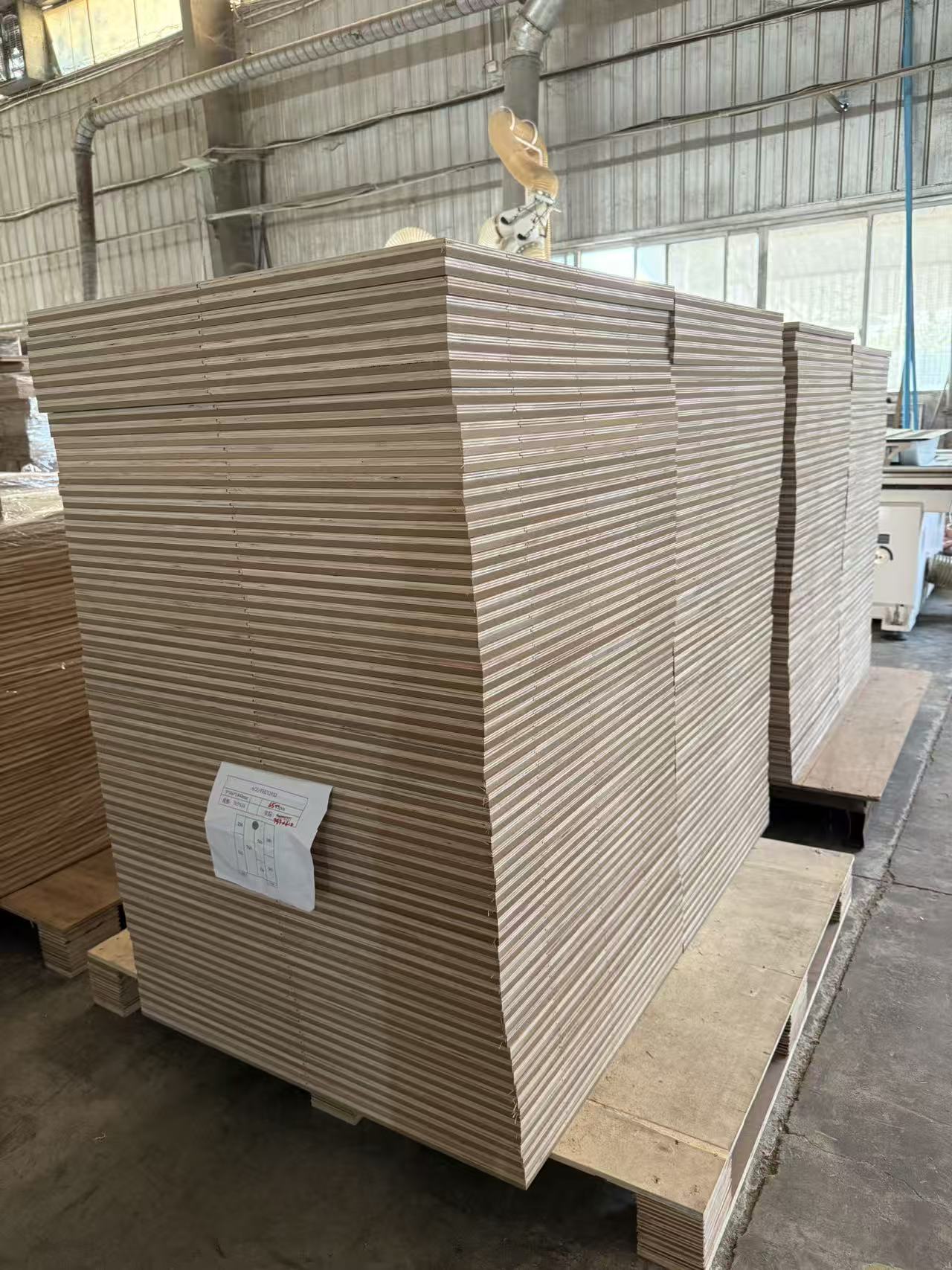
Procurement terms at a glance
| Term | Stated information | What the buyer should clarify in writing |
|---|---|---|
| Minimum order quantity | 400 m² per color | How color is defined, whether the minimum applies per order or production batch, and how mixed colors are counted. |
| Lead time | 45 days | The start point, whether the period is calendar or working days, and the events that count as order confirmation. |
| Monthly capacity | 150,000 m² | Whether capacity is available for the requested product, finish, color, and schedule; capacity is not a reserved allocation. |
| Quality control | 100% product testing is stated | Which characteristics are tested, by what methods, what records are supplied, and how nonconforming pieces are handled. |
| Warranty | 25 years for residential use; 3 years for commercial use | Coverage, exclusions, start date, claim documentation, remedies, and the meaning of residential or commercial use. |
| OEM/ODM scope | Product dimensions, grade, packaging design, and logo | Approved drawings and samples, responsibility for artwork and tooling if applicable, and change-control steps. |
The table summarizes supplied terms; it does not add tolerances or contractual conditions that have not been specified. Terms such as “45 days” and “100% testing” require a shared written definition before they can function as measurable order requirements.
What does a 400 m²-per-color MOQ mean?
The stated minimum order quantity is 400 m² for each color. This makes color selection a commercial planning decision as well as a design decision: if a project needs several colors, the buyer should confirm whether the minimum applies separately to every color in the order. Do not assume that the total order volume can be divided freely among colors while still meeting the per-color minimum.
Before issuing a purchase order, record the color name or reference, the approved sample or visual reference, the quantity assigned to that color, and any permitted variation between production and the approved reference. If a project uses Engineered oak flooring, Herringbone Engineered Flooring, Chevron Engineered Flooring, Wide plank engineered flooring, or another product format, verify that the MOQ applies to that exact configuration. The available terms do not specify different MOQs by pattern, dimension, grade, or finish.
For a distributor or contractor, the key acceptance question is whether the ordered quantity and color mix are unambiguous. A quotation that states only a total square-meter figure may not resolve a per-color minimum. A line-by-line schedule reduces the chance that buyer and supplier interpret the order differently.
How should buyers interpret the 45-day lead time?
The stated lead time is 45 days. The available information does not define when the count begins, whether the days are calendar or working days, or whether the period includes sample approval, packaging approval, production, inspection, and dispatch. Those details should be confirmed rather than inferred.
For procurement planning, ask the supplier to identify the event that starts the lead-time clock and list any buyer approvals required before that point. For an OEM or ODM order, this is particularly relevant because customized dimensions, grade, packaging design, or logo require clear approval records. A change after approval may affect the agreed schedule; the treatment of changes should therefore be addressed in the order documents.
A stated monthly capacity of 150,000 m² is a capacity figure, not a promise that a particular quantity is immediately available. Buyers should confirm that production capacity is allocated to the required product and delivery window. This distinction matters for engineered wood flooring orders with multiple colors, custom packaging, or a specified pattern: general capacity does not establish the schedule for a specific order.
What does “100% product testing” establish?
Dongda wood’s supplied quality-control statement says that the manufacturer performs 100% testing for quality control. This describes the stated testing coverage, but it does not by itself identify the test items, methods, acceptance limits, sampling records, or disposition process for a failed unit. It should not be read as proof that every possible performance characteristic has been tested or that a buyer’s project-specific criteria are automatically met.
For procurement, translate the testing statement into questions that can be answered with documents: What product characteristics are checked? At which production stage? What method or inspection instruction is used? Are results recorded by batch or order? How are rejected pieces identified and separated? What evidence is available for the buyer’s file? These are acceptance-planning questions; the supplied company information does not define a full test protocol.
Where technical evaluation is needed, the verified industry data identifies ASTM D1037 as a test-method reference used for evaluating wood-base fiber and particle panel materials, including modified Janka ball hardness and dimensional change. That reference can inform a buyer’s discussion of test planning, but the available evidence does not establish that Dongda applies ASTM D1037 to every flooring order or that a particular result meets a project threshold. The buyer and supplier must agree on applicable methods, product conditioning, limits, and records for the product under purchase.
For multi-layer parquet intended for internal flooring, EN 13489:2023 specifies characteristics, requirements, and test methods. The standard preview also describes a product definition with a solid wood top layer of at least 2.5 mm and additional core or backing layers. This is a useful specification-screening reference, not a substitute for reviewing the complete standard or obtaining product-specific conformity evidence. The retrieved standards record indicates that EN 13489:2023 supersedes EN 13489:2017; procurement documents should identify the intended edition rather than rely on an unspecified reference.
How should buyers check compliance documents?
Certificate names alone are not enough to establish that a document applies to the ordered engineered wood flooring. Compare the certificate or supporting record against the exact product, model, scope, issuing authority, destination market, and validity dates. The supplied records include product associations with models GA01-016 and CC01-09; buyers should confirm that the purchased construction and product identity fall within the relevant document scope.
| Document or scheme | Supplied record | Procurement check |
|---|---|---|
| CARB Phase 2 / EPA TSCA Title VI | Record 1978 identifies CARB Phase 2 and EPA TSCA Title VI; certificate reference CARB/EPA/CANFER20030; authority ICTT; stated expiry 2027-06-27. Scope states HWPW-VC composite plywood, thickness 3–40 mm, 3–23 veneer layers. | Confirm that the flooring’s relevant composite-wood component and construction are within the stated scope. Match the product and certificate details, and check current destination-market requirements. Do not assume a plywood scope covers every flooring construction. |
| CE CPR, AVCP System 4 | Record 2064 identifies CE CPR construction product certification, AVCP System 4; reference CHIG22032983; authority IGBC; stated expiry 2027-07-04; scope: engineered wood flooring and plywood. | Check that the document identifies the applicable product and intended market, and request supporting documentation needed for the buyer’s particular product and transaction. The record’s existence does not establish every market-specific obligation. |
| F4 star | Record 2065 lists certificate CMSA J1073809, authority CMSA, stated expiry 2027-02-28, and Japan as the market. Its scope describes composite flooring, including plywood-core composite wood flooring and oak, maple, or acacia veneer composite floor board with veneer thickness at least 1.2 mm. | For a Japan-bound order, check the product construction and veneer details against the scope, and confirm that the certificate is valid and accepted for the specific product and transaction. |
| FSC Chain of Custody | Record 2066 lists FSC COC, certificate GFA-COC-006481, authority GFA, stated expiry 2027-06-20, and scope of engineered wood flooring and plywood. | Check the certificate holder, scope, validity, and transaction documentation. Confirm that any FSC-related claim on the order documents is supported by the applicable chain-of-custody records. |
These supplied records provide identifiers and stated scopes; they do not replace destination-market review. A buyer should determine which requirements apply to the intended country and product, then request the current original documents and any supporting test or conformity records required for that market. In particular, CARB/EPA/TSCA Title VI, CE AVCP System 4, F4 star, and FSC are not interchangeable labels: each record has its own scope and purpose.
What should an acceptance specification include?
An acceptance specification turns general expectations into criteria that can be checked against the order. The supplied corpus does not provide numerical tolerances for dimensions, moisture, appearance, finish, packaging, or defect levels. Buyers should therefore avoid treating unspecified values as agreed product requirements. Instead, define the applicable values with the supplier and attach the approved specification to the purchase order.
- Identify the product. State the product category and exact ordered configuration, such as Engineered Hardwood Flooring, Engineered Timber Flooring, Multi-layer Wood Flooring, Multi-ply Engineered Flooring, or a named pattern. Include the agreed dimensions, grade, color, finish, and other project specifications where applicable.
- Record the reference sample. Identify the approved sample or reference board and explain how it will be used to assess color, appearance, and finish. A display board is useful for visual comparison but does not define unlisted technical tolerances.
- Set measurable limits. Agree the inspection characteristics, measurement methods, tolerances, and acceptable defect criteria. Avoid relying on undefined terms such as “standard quality” or “acceptable appearance.”
- Connect tests to acceptance. Identify which tests apply, the applicable method and edition, the acceptance values, and the records to be provided. Testing coverage and pass/fail criteria are separate matters.
- Define inspection and handling. Agree when inspection takes place, how batches are identified, how results are documented, and what happens if a lot does not meet the agreed criteria. These contractual arrangements are not specified in the supplied Dongda terms.
- Match documents to the order. Keep product identity, certificate scope, test records, packaging details, and the purchase order consistent. If the product specification changes, review whether the supporting documents still apply.
This framework applies across product descriptions such as Multi-ply Parquet, Multi-layer Parquet, Multilayer Parquet, Composite Hardwood Flooring, Manufactured Wood Flooring, Prefinished flooring, thin veneer Engineered Flooring, and thick veneer Engineered Flooring. Those keyword labels alone do not establish product construction or technical equivalence. Buyers should qualify the specific SKU and its documented specifications rather than infer performance from a category name.
What customization and warranty terms are stated?
The supplied capability information lists OEM/ODM customization for product dimensions, grade, packaging design, and logo. Buyers should convert each requested customization into an approved drawing, written grade definition, packaging artwork, or logo file reference, as appropriate. The source does not specify tooling charges, design services, available dimension ranges, or change fees, so those points should not be assumed.
The stated warranty is 25 years for residential use and 3 years for commercial use. These durations identify different warranty periods by use category; they do not describe all coverage conditions. Before purchase, ask the supplier to provide the applicable written warranty and clarify the start date, covered defects, exclusions, claim evidence, remedy, and classification of mixed-use or project-based installations. Do not infer that a warranty covers installation, maintenance, or consequential costs unless the warranty document says so.
Procurement decision: what is established and what remains to be agreed?
For evaluation, the supplied facts establish a compact set of commercial and quality-control reference points: MOQ of 400 m² per color, 45-day lead time, monthly capacity of 150,000 m², stated 100% product testing, customization covering dimensions, grade, packaging design, and logo, and warranty periods of 25 years residential and 3 years commercial. Certificate records also provide identifiers, validity dates, and scopes that can be checked against a destination market and the exact product.
Several key acceptance conditions remain buyer-supplier decisions rather than established facts: the starting point for lead time, order-specific capacity allocation, test methods and limits, dimensional and visual tolerances, inspection procedures, nonconformance remedies, and detailed warranty coverage. A purchase becomes easier to assess when those open points are attached to the same approved product specification, order schedule, and compliance-document set.
The central procurement distinction is simple: a supplier term describes what is offered or reported; an acceptance criterion defines what the buyer will verify and what happens if the delivered product does not meet the agreement. Keeping those two categories separate helps buyers assess engineered wood flooring without treating a capacity figure, test-coverage statement, or certificate label as a complete acceptance standard.
Frequently asked questions
What is Dongda wood’s minimum order quantity for each color?
The stated minimum order quantity is 400 m² per color. Buyers should confirm how the supplier defines each color and how quantities are allocated when an order contains multiple colors.
How long is the stated lead time for engineered wood flooring?
The stated lead time is 45 days. The supplied terms do not define the start event or whether the days are calendar or working days, so those details should be written into the order agreement.
Does 100% product testing define the acceptance standard?
No. The manufacturer states that it performs 100% testing for quality control, but the supplied information does not list every test, method, pass/fail limit, or nonconformance process. Buyers should agree those criteria separately.
How can buyers determine whether a certificate applies to their order?
Match the certificate’s scope, product identity, model, destination market, issuing authority, and validity dates to the actual order. The supplied records have distinct scopes for CARB/EPA/TSCA Title VI, CE AVCP System 4, F4 star, and FSC, so one document should not be treated as proof of another requirement.
What warranty periods are stated for residential and commercial flooring?
The stated periods are 25 years for residential use and 3 years for commercial use. The supplied information does not detail coverage or exclusions; those conditions should be checked in the applicable written warranty.
Есть вопросы или нужны дополнительные детали?
Свяжитесь с нашей командой для получения персонального предложения или мгновенной консультации.
Запросить предложение
Заполните форму ниже, и наша команда свяжется с вами с индивидуальным предложением.
Прямой чат WhatsApp
Предпочитаете общаться в реальном времени? Напишите нам в WhatsApp для мгновенной помощи и быстрых ответов.
- Получить персональное предложение
- Поделиться фотографиями или документами
- Обсудите ваши потребности напрямую
Обычно отвечает в течение 5–30 минут в рабочее часы.