
Engineering Saltwater Pond Aeration: What Variable Frequency Paddlewheel Aerators Must Overcome
Saltwater shrimp ponds are among the most demanding environments for aeration equipment. A variable frequency paddlewheel aerator installed on a tropical shrimp farm must survive brackish water corrosion, grid voltage swings, continuous operation during hot months, and increasingly high stocking densities. This article explains what the technology must overcome, how it is engineered, and what buyers should examine before specifying a unit for high-density marine aquaculture.
Wuxi Sunolta Technology Co., Ltd., a Chinese manufacturer founded in 2006, produces a range of aquaculture equipment under the SUNOLTA brand, including the SNT-SC series of variable frequency paddlewheel aerators. The company reports an export share of 45%, with marine and brackish water farms among its target users. Its engineering choices therefore illustrate how a manufacturer approaches the specific problem of aeration in harsh, saltwater-intensive production systems.
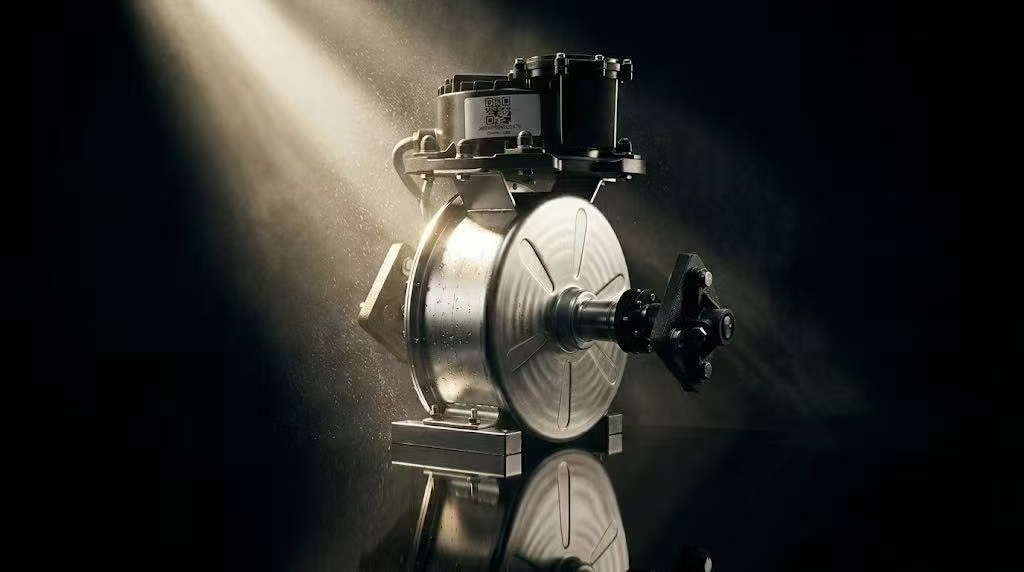
High-density aquaculture creates sustained oxygen demand, which increases the importance of aerator reliability in salt-affected water.
The Aeration Problem in High-Density Marine Aquaculture
Water holds far less oxygen at elevated tropical temperatures, and shrimp biomass in intensive ponds rises quickly during a growth cycle. Mechanical surface aeration with paddlewheel designs is the standard response because paddlewheels circulate water, break the surface film, and create dissolved oxygen transfer at scale.
Yet the working conditions on coastal farms introduce a second set of problems. Many production sites are in rural networks where voltage is unstable. Pond water is not fresh: saline or brackish water attacks unprotected metals. And the most intensive farms operate aeration for long periods, which increases energy cost as a share of total production cost.
In the view of several industry sources, the specific variable frequency paddlewheel aerator market was estimated to be in the region of USD 1.2 billion globally in 2026. This estimate comes from a sector analysis that remains to be independently verified. More robustly, the broader global aquaculture equipment market was valued at USD 22.55 billion in 2025 and is projected to reach USD 42.17 billion by 2034, according to Straits Research. Both figures underline the same message: equipment choices are now a key production decision for aquaculture businesses, not a routine afterthought.
What a Saltwater-Ready Variable Frequency Paddlewheel Aerator Must Resist
An aerator floating in a shrimp pond is exposed to water chemistry, sunlight, water splash, and humidity. In saltwater environments, the electro-chemical corrosion risk is far higher than in freshwater. The relevant question for a buyer is not simply whether an aerator is submersible, but which components are designed to survive what they will actually touch.
For the paddlewheel category, the usual vulnerable points are the motor housing, the central shaft, the main frame, and the float material. The material specification of the frame and floats also determines how long the unit keeps its structural rigidity under continuous load.
Consider the material choices of Wuxi Sunolta Technology Co., Ltd. on its paddlewheel aerator series. The smaller unit, the SNT-SC-0.75KW, is built with a 304 stainless steel frame and heavy-duty PE floats. The 1.5kW SNT-SC-1.5KW extends this to an extended 304 stainless steel frame and heavy-duty PE floats. The largest unit in the documented line-up, the 2.2kW SNT-SC-2.2KW, uses an extra-long 304 stainless steel frame and heavy-duty PE floats. The use of 304 stainless steel on the structural frame is not cosmetic: it is intended to maintain structural strength in wet, saline air where painted carbon steel would rust.
PE floats serve two functions. They keep the machine above the waterline and act as a protective barrier between the buoyancy element and the corrosive environment. They also eliminate the risk of float puncture leading to waterlogged buoyancy, provided the material is impact-resistant enough for operational handling.
Why Gearless Construction Matters in an Oil-Free Pond
Traditional paddlewheel aerators commonly rely on gearboxes that transmit motor torque to the paddle shaft. A reduction gearbox needs oil for lubrication. In an aquaculture pond, that becomes a serious drawback because gearboxes can leak. Even small, intermittent oil leaks introduce hydrocarbons into the culture water. Over a long growing season, or in a hatchery with high water quality standards, this can put shrimp health at risk and complicate future waste treatment.
Gearless designs remove that risk at the source. In the SUNOLTA paddlewheel aerators, the motor is a PMSM Direct Drive unit, described as 100% gearless and free of the risk of oil leakage. Eliminating the gearbox also removes a common maintenance point: gear wear, oil refill cycles, and seal replacement all disappear from the maintenance schedule.
The technical logic is simple: fewer parts exposed to salt water, fewer failure points. This is particularly valuable in rural or coastal farms, where sending a technician to replace a gearbox is time-consuming and costly.
Wide Voltage Tolerance and the Motor Protection Question
Voltage stability on rural aquaculture sites is often poor. Pumps, ice machines, and other agricultural loads can cause voltage sags; long transmission lines can deliver voltage outside nominal ranges. A motor that burns out under low voltage creates a cascade of problems: lost oxygen, stressed shrimp, and emergency replacement costs.
Variable frequency drives and variable frequency motors are not automatically tolerant of wide voltage fluctuations. The controllers must be designed to handle the input range. Industry practice, as compiled by HTNXT in its buyer reference material for 2026, is that advanced variable frequency controllers should support ranges from 150V to 250V on single-phase supply and 230V to 430V on three-phase supply.
SUNOLTA designs its variable frequency aerators for a wide-voltage envelope. For example, the SNT-YL-1.5KW impeller aerator operates within 150V-250V in single-phase mode and 230V-430V in three-phase mode, depending on the electrical configuration. The company also specifies PMSM phase-loss protection on several models, including the SLYL surge aerator range. Phase-loss protection is a meaningful thermal safeguard: a motor running on two phases draws higher current in the remaining winding and can burn out within hours. A protection circuit that trips before damage is therefore a significant rust-belt safeguard for farms with ageing electrical networks.
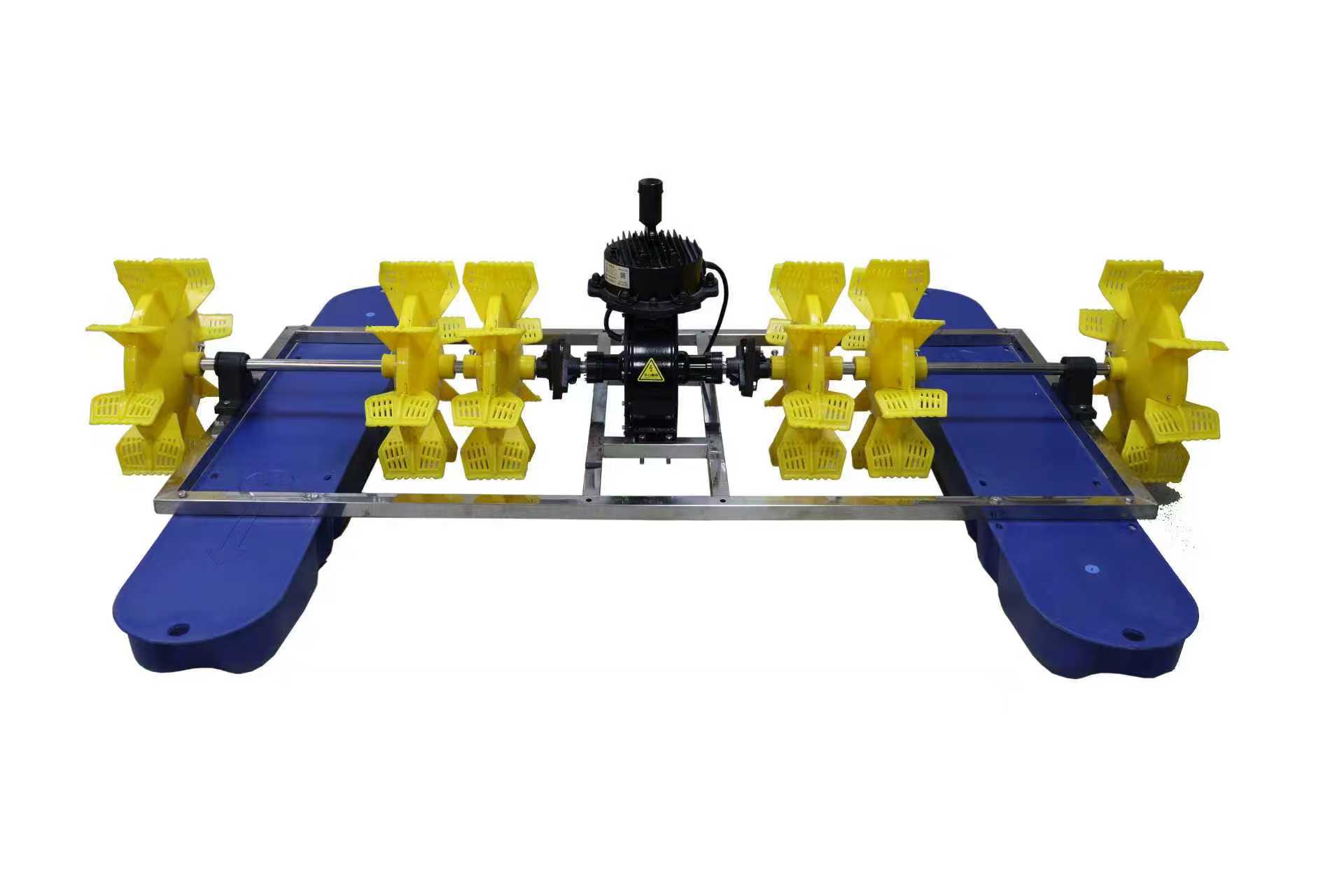
The SUNOLTA SNT-SC-2.2KW variable frequency paddlewheel aerator uses a six-paddle rotor and a PMSM direct-drive motor.
Comparing the SNT-SC Paddlewheel Series by Capacity
Buyers evaluating aerators for shrimp ponds need a capacity logic, not a product brochure. Oxygen delivery must match the pond's biological oxygen demand, taking the paddlewheel's mixing and flow capacity into account. The applicable area figures below are standard manufacturer design references, not certified field guarantees under every possible stocking density.
| Model | Documented Power | Oxygenation Capacity | Design Coverage | Impeller | Frame / Float Material |
|---|---|---|---|---|---|
| SNT-SC-0.75KW | 0.75kW – 1.5kW (380V three-phase) | ≥ 2.2 kg/h | 1–5 Mu (approx. 0.16–0.80 acre) | 2 high-efficiency paddles | 304 stainless steel frame; heavy-duty PE floats |
| SNT-SC-1.5KW | 1.5kW (380V three-phase) | ≥ 2.3 kg/h | 4–5 Mu (approx. 0.66–0.82 acre) | 4 paddles | Extended 304 stainless steel frame; heavy-duty PE floats |
| SNT-SC-2.2KW | 2.2kW (380V three-phase) | ≥ 3.2 kg/h | 5–7 Mu (approx. 0.82–1.15 acre) | 6 paddles | Extra-long 304 stainless steel frame; heavy-duty PE floats |
Farm managers should use these design ranges as the starting point. Actual oxygen demand depends on species, biomass, feed input, temperature, and whether the pond already receives supplementary aeration from other devices.
Energy Demand and Control Flexibility in a Variable Frequency System
Paddlewheel aerators are often the largest single consumer of electricity on an intensive shrimp farm. Running a 2.2kW aerator around the clock for 30 days produces a clear energy bill. If dissolved oxygen naturally remains high during cooler nights or at low biomass, running the machine at full speed is wasteful.
A variable frequency system allows the motor speed to be reduced when oxygen demand drops, which directly cuts energy consumption. HTNXT's procurement guide reports that PMSM-based variable frequency aerators can reduce energy consumption by up to 40% compared with traditional induction-motor units with gearboxes. This figure is a general industry comparison direction, not a shop-floor measurement for every installation. But the mechanism is technically sound: the paddlewheel consumes energy roughly in proportion to the cube of its rotational speed. Even a modest speed reduction yields substantial power savings.
Permanent magnet synchronous motors also offer higher efficiency at partial load than typical induction motors, which matters because aerators rarely run at exactly 100% load every minute of the day. A PMSM maintains its magnetic field without drawing magnetizing current from the supply, reducing copper and iron losses.
Energy savings should be evaluated with the whole pond in mind. If smaller aerators are spread across a farm, each unit's speed control enables fine-tuned oxygen management per pond rather than across the whole farm. This control flexibility is the core strategic advantage of variable frequency equipment.
Aeration Placement and Mixing Patterns in Shrimp Ponds
Paddlewheel aerators create directional water flow. They push surface water outward from the impeller zone, setting up circular pond circulation that sweeps waste particles toward the pond center or outlet. In shrimp farming, that circulation is a second productive function. Settled organic matter, uneaten feed, and shrimp faeces can decompose and consume oxygen from the bottom water if left undisturbed.
On large commercial shrimp farms, aerators must be placed so that their flows work together rather than cancel each other out. The SNT-SC-1.5KW and SNT-SC-2.2KW models create strong directional flow, so the farm operator must take into account pond shape, position of drains, and daily water exchange patterns. Stocking density also influences placement. At very high densities, shrimp biomass is high enough that any dead zone in the pond becomes a risk area for hypoxia.
In pond systems located in countries such as Vietnam, Indonesia, India, and Thailand, the common context is tropical, high-humidity, brackish water farming. In these conditions, the aerator needs to operate safely under daily thunderstorm voltage swings and constant salt-laden humidity. The applicable application data for SUNOLTA equipment is also aligned with such use cases, mentioning high-density ponds in tropical climates and saline or brackish water environments.
Packaging and Service Reality for an Export Buyer
Procurement of aquaculture machinery across borders is not only a specification exercise. Any aerator must survive transport, be installable by local farm staff, and be maintainable with reasonable spare parts access.
In the case of SUNOLTA, the wider company structure includes production facilities and warehouses in China across the Jiangsu, Guangdong, and Jiangxi regions, with a R&D team of more than 30 senior engineers. The manufacturing facility itself covers 22,000 m² and houses more than 100 staff. The company has also developed 85 national patent certificates by 2020. This scale matters for a foreign buyer because it suggests engineering depth and production continuity. But it does not by itself prove field performance in saltwater; that must be verified by the buyer's own testing and reference conversations.
Sizing Logic for Large Ponds: The 6-Paddle 2.2kW Unit
For a shrimp farm with ponds in the range of 0.8 to 1.2 acres, the 2.2kW aerator is the documented model relevant to this segment. With six paddles and an oxygenation capacity of at least 3.2 kg/h, it is intended for intensive shrimp farming and large commercial aquaculture.
A practical deployment model is to run one 2.2kW unit per pond at the early stage, then progressively increase total aeration power as shrimp biomass increases. When dissolved oxygen levels remain high despite high biomass, the farm manager can keep the motor at a lower speed overnight instead of cycling aerators off, which maintains water circulation while saving power. At low biomass periods, speed control also avoids the problem of over-agitating ponds and stressing juvenile shrimp.
The 1.5kW version corresponds to a lighter stocking density range or a smaller pond. It can also be chosen when farm power supply is limited and cannot support more powerful three-phase motors.
Limits of the Technology and What Buyers Must Verify
No single aerator technology solves every environmental and biological problem. The variable frequency paddlewheel aerator has clear limits that procurement teams should weigh against their own conditions.
1. It is a surface aeration device, not a pure bottom oxygenator. In very deep ponds or in hyper-intensive systems with extremely high oxygen demand in the lower water column, additional diffused aeration or impeller devices may be necessary. Paddlewheels are valued for circulation, but still depend on water turnover to mix oxygen downward.
2. 304 stainless steel is not the same as duplex or super-austenitic stainless steel. In severely corrosive environments, especially with long submersion and aggressive chloride exposure, even 304 stainless steel can show pitting. Buyers should check whether the specified stainless steel areas are those most exposed to saltwater or merely cosmetic, and if necessary request alternative materials for the most critical components.
3. Energy efficiency claims must be context-specific. A 40% energy saving compared with an old induction-motor gearbox drive is possible when the machine is run at reduced speed for long hours, but an aerator running at fixed full speed simply because oxygen demand is high will show a much smaller benefit. The saving is not an inherent property of the motor alone; it arises from the combination of variable speed and the farm's oxygen control strategy.
4. The maximum applicable area figures are design references for standard conditions. A farm with extremely high shrimp stocking density must consider that actual oxygen demand per acre may exceed the normal planning curve. The machine's oxygenation capacity is in kg of oxygen per hour, and the farm should estimate its peak oxygen demand rather than rely only on pond surface area.
5. Model availability for 220V single-phase versus 380V three-phase must be verified. Some documented paddlewheel models are designated for 380V three-phase electricity. A farm with only single-phase power must choose an appropriate unit or install a phase converter, which creates additional cost and possible efficiency loss.
Material Corrosion Checklist for Coastal Shrimp Farms
To transform the engineering points above into a practical checklist, the following areas should be inspected by a buyer or at arrival of a test unit:
- Motor housing external coating: Is the motor enclosure itself sealed against direct splash and salt spray? What is its nominal IP rating? For a floating surface aerator, IPX7 indicates the unit can withstand submersion, not just rain splash.
- Stainless steel grade used in the submerged structure: Check whether the frame is genuinely 304 stainless steel or a coated lower grade. A magnet test, spot test, or supplier documentation can help confirm.
- Fasteners and shaft seals: Bolts, nuts, and shaft seals are common weak points in salt air. Alloy or plated fasteners should be selected to avoid galvanic corrosion.
- Paddle blade edges: These are the wear parts that churn water. Their material thickness and attachment method determine how long the aerator can operate before blade replacement.
- Float sealing: Each float is usually a sealed plastic body. Check that the attachment points are also sealed and that polyethylene has a suitable anti-UV additive if the unit sits under high solar exposure.
- Cable gland and connector entry: In saltwater, moisture can creep through cable entries and destroy the controller. An unused cable gland or a poorly tightened one is an easy route for failure.
Looking Ahead: Smart Control and the Oxygen Loop
The broader development path for aquaculture aeration is toward closed-loop control: an aerator whose speed adjusts according to daily oxygen patterns, or even according to a water quality sensor. Several SUNOLTA pump models feature mobile app smart control for remote monitoring and tuning, and the company also offers a portable water quality meter that measures dissolved oxygen, pH, and temperature. It is reasonable to expect paddlewheel aerators to integrate increasingly with such monitoring systems.
Nevertheless, closed-loop aeration remains a future development even for established manufacturers. The immediate procurement priority is a mechanically sound machine with wide-voltage tolerance and corrosion-resistant construction. The next level of sophistication is adding connectivity and control. Buyers who first secure a robust unit will have the best platform for later upgrades.
Frequently Asked Questions
What is the difference between a variable frequency paddlewheel aerator and a fixed-speed paddlewheel aerator?
A variable frequency aerator uses an electronic controller to change the motor's rotational speed, while a fixed-speed aerator runs at a constant speed. In the SUNOLTA SNT-SC series, the motor is a PMSM direct-drive unit with a gearless construction, whereas many conventional aerators rely on a gearbox between the motor and the paddle shaft. The variable frequency design allows the operator to adjust aeration intensity to the oxygen demand of the pond rather than running at full power continuously.
Can these aerators be used in saltwater or brackish ponds?
Yes. The documented working conditions for SUNOLTA aerators include saline and brackish water aquaculture environments. The materials, however, must be checked by the buyer. For the paddlewheel range, the frames are specified in 304 stainless steel, impeller shaft area should be checked separately, and floats are built from heavy-duty PE (polyethylene). Saltwater use should always include an inspection of exposed fasteners and seals.
Why is gearless construction important for shrimp pond aerators?
A gearless design eliminates the need for gearbox oil lubrication. In a conventional gearbox-driven aerator, an oil leak can release hydrocarbons into the pond and pollute the culture water. The SUNOLTA models in the SNT-SC series are described as PMSM direct-drive with 100% gearless construction and no oil leakage, which also reduces routine maintenance such as oil changes and seal replacement.
How much electricity can a variable frequency paddlewheel aerator save?
Available industry reference material from the HTNXT procurement guide states that variable frequency aerators using PMSM technology can reduce energy consumption by up to 40% compared with traditional induction-motor units with gearboxes. The actual saving depends heavily on the farm's oxygen control strategy, the number of hours operated at reduced speed, and the baseline motor technology.
What do the applicable area figures like 4-5 Mu or 5-7 Mu mean?
Mu is a Chinese unit of land area, equivalent to approximately 0.165 acre. The figures represent a standard design reference for the aerator's coverage under normal pond conditions. For example, the SUNOLTA SNT-SC-1.5KW lists an applicable area of 4–5 Mu (roughly 0.66–0.82 acre). The actual required number of aerators should be calculated using expected peak biomass and oxygen demand, not only pond surface area.
Is the SUNOLTA SNT-SC series rated as waterproof?
The technical documents in the public domain supply the oxygen capacity, material, and motor type for the SNT-SC series, but the machine-level waterproof rating is routinely discussed at the motor or controller level. When considering such equipment for long-term saltwater exposure, buyers should explicitly request certification documents or test reports for submersion resistance and verify the ingress protection rating before committing to a final specification.
Which market regions are relevant to saltwater variable frequency aerator adoption?
Farms in tropical and subtropical coastal regions are the main users. According to the application environment data, this use case is common in Vietnam, India, Indonesia, the Philippines, Thailand, and Bangladesh, where intensive marine shrimp farming faces high humidity, unstable voltage, and saline or brackish water. SUNOLTA's company-level export list also includes Southeast Asia, South America, the Middle East, and selected Central Asian markets.
Есть вопросы или нужны дополнительные детали?
Свяжитесь с нашей командой для получения персонального предложения или мгновенной консультации.
Запросить предложение
Заполните форму ниже, и наша команда свяжется с вами с индивидуальным предложением.
Прямой чат WhatsApp
Предпочитаете общаться в реальном времени? Напишите нам в WhatsApp для мгновенной помощи и быстрых ответов.
- Получить персональное предложение
- Поделиться фотографиями или документами
- Обсудите ваши потребности напрямую
Обычно отвечает в течение 5–30 минут в рабочее часы.