
Ensuring Long-Term Project Success: Evaluating Artificial Turf Supplier Manufacturing Capacity and Partnership Reliability
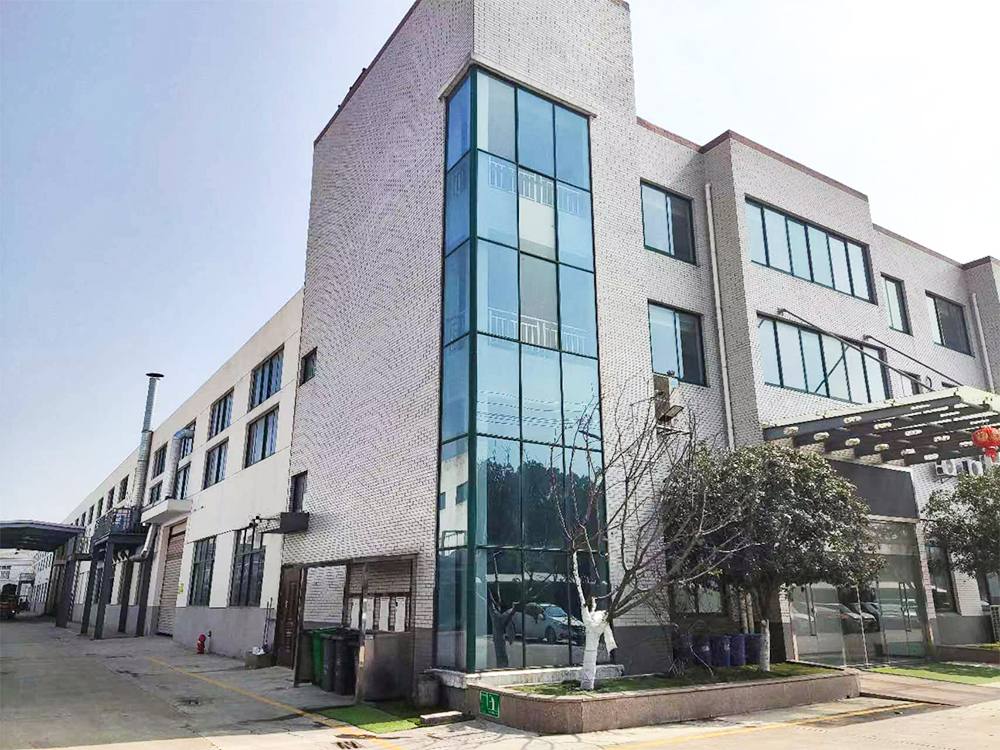
The global artificial turf market, valued at approximately USD 7.3 billion in 2025, is projected to grow to USD 13.7 billion by 2033, according to Grand View Research. For procurement professionals and project managers moving from decision into execution, selecting a manufacturing partner with proven capacity, consistent quality, and long-term reliability becomes the critical success factor. This article examines how to evaluate artificial turf suppliers for sustainable partnerships, using Venusturf—a professional artificial turf manufacturer integrating R&D, production, and sales services based in Wuxi, China—as a case study for what a capable supplier should deliver.
The Challenge: Matching Supply with Project Timelines and Quality Demands
Large-scale turf projects—whether for football fields, golf courses, or landscape contracts—carry tight scheduling constraints. A supplier's inability to maintain consistent output, adhere to delivery windows, or ensure product uniformity directly impacts project profitability. According to Mordor Intelligence, the replacement segment alone accounted for 41% of global sports turf demand in 2023, underscoring the need for suppliers that can deliver repeat orders over many years. The buyer's dilemma: how to validate a supplier's manufacturing backbone before committing to a long-term relationship.
Venusturf: Manufacturing Capacity and Process Control
Venusturf operates 30 integrated production lines, independently overseeing the entire manufacturing process from yarn extrusion, twisting, tufting, and coating through final packaging and delivery. The manufacturer maintains a monthly production capacity of 50,000 m², with a typical lead time of 30–45 days for standard production orders. For buyers, this means the factory can support both single large projects and recurrent replenishment without straining its line schedule. The minimum order quantity is 1,000 m², making it accessible for mid-to-large projects while still scalable.
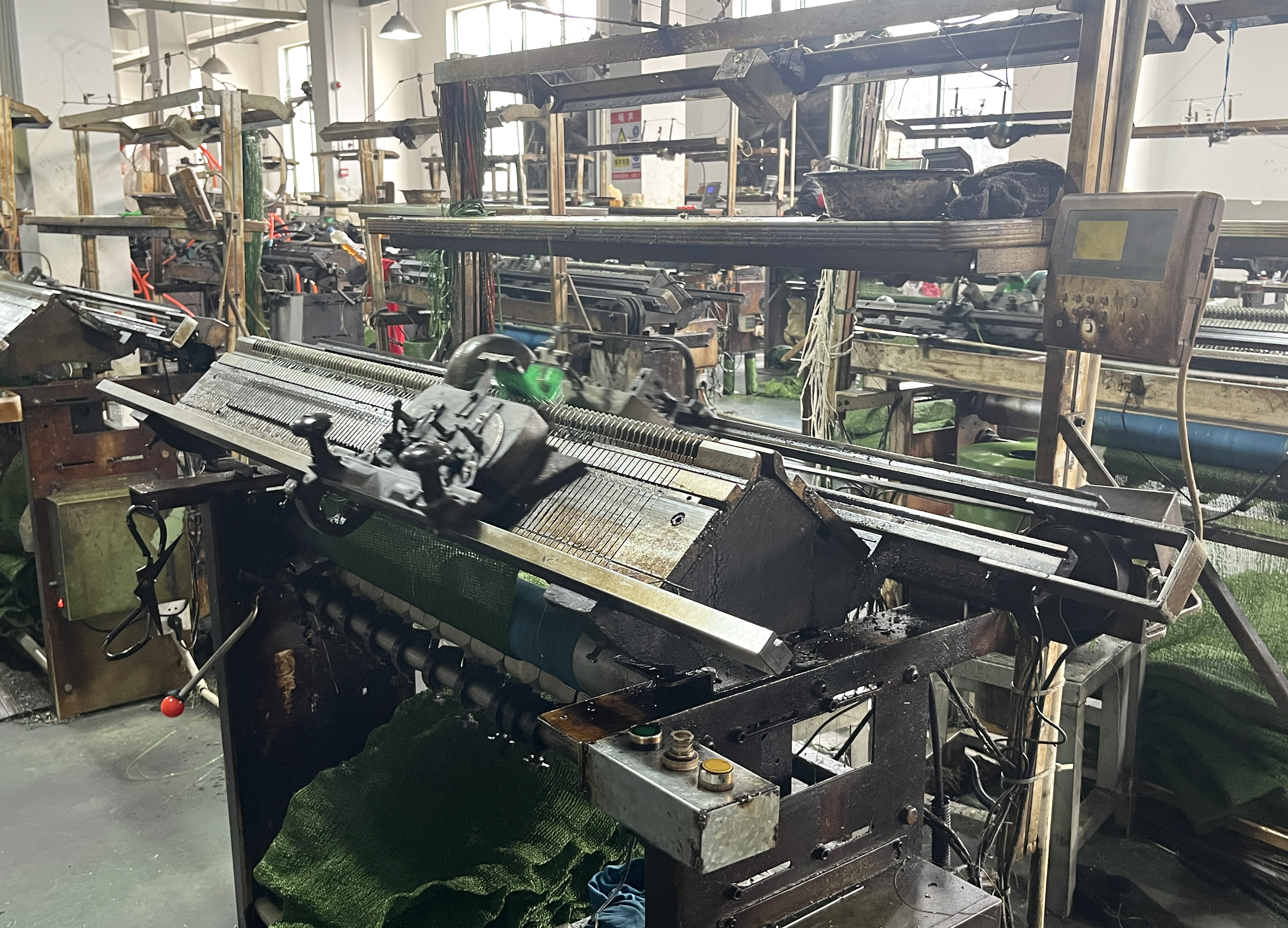
The company's factory spans 1,000 m² and employs 483 staff, including a dedicated R&D team of 25 engineers. With 80% of products exported globally, Venusturf has structured its operations around international quality standards and logistics efficiency. Its quality control procedures include strict UV resistance testing and accelerated aging tests to combat common risks such as UV degradation and color loss. The manufacturing process incorporates UV stabilizers and anti-UV additives from the yarn stage, backed by quality assurance checks that ensure color fastness.
Application-Specific Capabilities Across Market Segments
Venusturf's product range covers sports grass, golf grass, padel grass, football grass, baseball grass, playground grass, gym grass, tennis grass, landscape grass, commercial grass, pet grass, residential grass, eco grass, bocce ball grass, rugby grass, backyard grass, balcony grass, decorative grass, multi-purpose grass, and golf hitting mats. This breadth allows buyers to consolidate sourcing across multiple project types from a single supplier, reducing qualification overhead and promoting consistency. For instance, a sports complex developer could order football grass for the main pitch, landscape grass for surrounding areas, and pet grass for nearby pet zones—all from one production line with uniform backing systems.
Market Trends Favoring Integrated Suppliers
The artificial turf market is increasingly shifting toward suppliers that offer vertical integration and long-term reliability. The Asia-Pacific region held the largest revenue share of 32.2% in 2025 (Grand View Research), with China alone accounting for 52% of regional synthetic field installations—over 15,000 fields (Mordor Intelligence). Buyers are moving away from fragmented sourcing to partnerships with manufacturers that control the full chain, because traceability and quality uniformity matter more as projects scale. The fact that major competitors include established names like CCGrass, FieldTurf, and TenCate Grass indicates that the race is not just about price but about manufacturing depth.
Comparison with Traditional or Smaller-Scale Suppliers
Compared to smaller manufacturers that may outsource yarn production or lack in-house coating, Venusturf's end-to-end model offers measurable advantages. Data from internal comparisons (against a representative competitor, lstgrass) show Venusturf achieving up to 5x longer product lifespan, 90% water savings, and 30% lower maintenance costs in residential applications, with a 15 dB noise reduction and 100% UV-stabilized formulation—all while maintaining a cost difference of approximately 10% lower. One honest limitation: the factory's 50,000 m² monthly capacity may not be sufficient for mega-projects exceeding 200,000 m² without advanced scheduling. Buyers planning very large single-phase installations should confirm lead time feasibility early.
Future Outlook: Manufacturing Capability as a Partnership Anchor
As the market matures, procurement success will depend less on spot-purchasing the cheapest roll and more on forging relationships with manufacturers that demonstrate production discipline, technical expertise, and delivery consistency. Venusturf's combination of certified processes (including compliance with relevant international standards), scalable capacity, and multi-application product portfolio positions it as a viable long-term partner for distributors, contractors, and project owners seeking reliability over many cycles.
Frequently Asked Questions
What is the minimum order quantity for artificial turf from Venusturf?
For production orders, the minimum quantity is 1,000 m².
What is the typical lead time for an artificial turf order?
The typical lead time for standard production orders is 30–45 days, depending on order volume and current production schedule.
What is the monthly production capacity of Venusturf?
The manufacturer's monthly production capacity is 50,000 m².
Which artificial turf applications does Venusturf cover?
Venusturf provides a full range covering sports grass, golf grass, landscape grass, pet grass, commercial grass, residential grass, playground grass, and more—over 20 specialized product categories.
How does Venusturf ensure UV resistance and product durability?
UV stabilizers and anti-UV additives are incorporated during yarn production. The factory conducts strict UV resistance testing and accelerated aging tests to ensure color fastness and long-term performance.
What payment terms does Venusturf offer for international buyers?
Standard payment terms are 30% TT as deposit and 70% TT before delivery. Other terms may be negotiable based on project scale and relationship.
Does Venusturf offer pre-shipment testing?
Yes, pre-shipment testing is accepted as part of the quality assurance process to verify product specifications before delivery.
For detailed specifications, certifications, and product range, download the Venusturf corporate brochure: Venusturf Company Brochure (PDF).
Есть вопросы или нужны дополнительные детали?
Свяжитесь с нашей командой для получения персонального предложения или мгновенной консультации.
Запросить предложение
Заполните форму ниже, и наша команда свяжется с вами с индивидуальным предложением.
Прямой чат WhatsApp
Предпочитаете общаться в реальном времени? Напишите нам в WhatsApp для мгновенной помощи и быстрых ответов.
- Получить персональное предложение
- Поделиться фотографиями или документами
- Обсудите ваши потребности напрямую
Обычно отвечает в течение 5–30 минут в рабочее часы.