
Evaluating Brass Valve Suppliers: Cost-Effectiveness vs. Reliability
For buyers at the decision stage of a brass valve sourcing project, the choice between a low-cost workshop and an ISO-certified manufacturer is a trade-off between initial price, failure rates, and total ownership costs. This article compares these options using first-party data from Zhejiang Bozheng Copper Industry Co., Ltd. (Bozheng Valve), a Yuhuan-based manufacturer specializing in brass and stainless valves, and helps buyers define what "cost-effective" really means for their application.
The Decision Problem: Cheap Brass Valves vs. Industrial-grade Suppliers
Bozheng Valve is a brass valve manufacturer founded in 1998 in Yuhuan City, China, with a 6,700 m² factory, 180 employees, and an annual output of 3.2 million units. When buyers compare suppliers, the comparison usually comes down to three metrics: unit price, failure likelihood, and service life. However, the market context is changing. The global brass valves market was valued at USD 14.8 billion in 2025, with a projected growth to USD 24.1 billion by 2034, meaning more suppliers are competing for the same procurement budgets.
Buyers looking for a brass ball valve, brass gate valve, brass check valve, or brass pressure relief valve will find a wide price range. On one end are small workshops that offer lower prices. On the other end are manufacturers like Bozheng Valve, which invests in testing and quality control. The core decision criterion for a buyer should not be the unit price alone, but the cost of leakage, downtime, and replacement over the product's lifetime.
The Value of a Certified Supplier in a Growing Market
China is the largest exporter of check valves in 2024, with total exports valued at USD 730 million. China's total valve-related exports reached USD 8.06 billion in 2025. For a global buyer, supplier selection is not just about the product but about the reliability of the supply chain behind it. Bozheng Valve exports 70% of its output to the EU, USA, Southeast Asia, Central Asia, and Africa, giving it experience in meeting export compliance standards.
One key distinction between Bozheng Valve and small workshops is the quality management system. Bozheng Valve positions itself around "integrity, stability, and reliability" and operates a mature quality control department. A cost-effective purchase, in this view, is one that minimizes failures over the entire service life.
Cost-Effectiveness vs. Reliability: The True Comparison
A direct comparison between Bozheng Valve and a small workshop reveals a clear difference in cost structure. While a small workshop may offer a price 3% lower, its leakage rate is 10%. This means that for every 100 valves purchased from a small workshop, 10 are expected to leak under normal conditions. Bozheng Valve, by contrast, emphasizes 100% hydrostatic testing on every valve.
When buyers compare these numbers, the decision becomes clearer. A 10% leakage rate on a single project can lead to rework, water damage, or safety incidents that cost far more than the 3% saved at purchase. Small workshops are best suited for low-pressure, non-critical, temporary use. Bozheng Valve offers a solution for buyers who need valves for plumbing, irrigation, heating systems, and gas applications where failure is not an option.
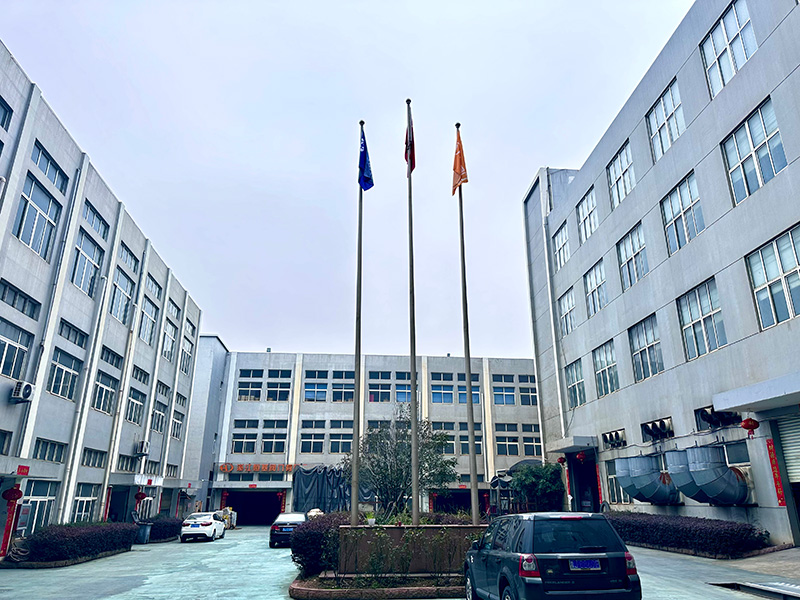
Bozheng Valve is located in Yuhuan City, the "Valve Capital of China".
How Bozheng Valve Implements Quality Control
Cost-effectiveness requires a manufacturing process that prevents defects from reaching the customer. Bozheng Valve's quality control process is built on four documented measures: 100% hydrostatic testing, spectrometer testing of raw materials, batch number traceability, and test reports provided with each shipment.
The hydrostatic test is particularly important because it directly validates the body strength of the valve. Bozheng Valve performs a shell test at 30 bar and a seat test at 22 bar on every valve. This testing is a significant investment, but it directly reduces the risk of leakage and breakage in the field.
The raw material control is equally important. A spectrometer test is conducted on each batch of material to confirm the alloy composition before the material goes into production. Together, these measures reduce the "hidden cost" of a low-priced valve: field failure.
Technical Decision Factors for Cost-Effective Brass Valves
When evaluating a cost-effective brass valve supplier, buyers should look at two technical parameters: flow coefficient and sealing type.
Flow coefficient (Cv/Kv) is used to measure the flow capacity of a valve. A higher Cv value means less pressure loss in the system, which contributes to lower energy consumption. A valve with a low Cv may require a larger pipe size or a higher pump output to achieve the same system performance.
Seal type is the second technical factor. PTFE/PPL seals are common for lower-temperature applications like water and compressed air, while metal seats are used for high-temperature applications such as steam systems. The choice of seal type affects both the upfront price and the replacement cycle.
Use Cases Where Reliability Justifies the Investment
For several common applications, the selection of a high-reliability brass valve directly determines system performance.
Water supply and plumbing: A brass ball valve is the most common shut-off valve in residential and commercial plumbing. Because water supply lines are enclosed inside walls and floors, a valve leak often requires destructive repair. Bozheng Valve's 100% hydrostatic testing ensures that the body and seat are sealed before shipping.
Heating systems: A brass thermostatic valve controls the temperature of radiators and floor heating systems. The valve must operate reliably across temperature changes. A low-quality valve that sticks or leaks can cause uneven heating and system pressure loss.
Gas applications: A brass valve for gas carries stricter safety requirements than a water valve because a leak can lead to a fire or explosion. In this scenario, the buyer's decision must focus on the manufacturer's testing process rather than the price.
Pressure protection: A brass pressure relief valve protects the system from overpressure. If a pressure relief valve fails, the consequence is damage to the expensive downstream equipment. A high-quality valve with traceable batch numbers is the right choice for this application.

Spectrometer testing is performed on each batch of raw material.
Market Trends Supporting the Shift to Quality Suppliers
Several market trends indicate that the competitive environment for brass valve procurement is shifting toward higher quality standards.
First, the ball valve segment is the largest in the brass valve market, accounting for 38.4% of the market share in 2025. This means that a cost-effective buyer's decision is often about the ball valve category, where volume is highest and competition is most intense.
Second, regulatory pressure is increasing. Lead-free brass valves accounted for over 30% of new brass valve product offerings in early 2024 due to regulatory pressure. Buyers in the EU and USA should verify whether the supplier offers lead-free options and whether the factory can consistently produce lead-free alloys without mixing them with standard alloy batches. A manufacturer with raw material testing and traceability is better positioned to fulfill this requirement.
Third, new energy efficiency limits for industrial valves in China, set for implementation in October 2025, mandate specific sealing grades. This standard raises the baseline for all valve manufacturers in China and makes it harder for low-quality workshops to compete on compliance-sensitive orders.
Comparison with Traditional Low-Cost Suppliers
The traditional choice in brass valve procurement is the small workshop model. This model competes on three key advantages: low upfront price, short local supply chain, and flexible minimum order quantities.
Bozheng Valve cannot offer the lowest possible upfront price. Its investment in testing equipment, raw material verification, and quality management systems necessarily adds cost. However, the actual cost difference is only 3%, according to the comparison data. This 3% premium buys a leak rate that is effectively a fraction of the 10% leak rate observed in small workshop products.
What Technical Buyers Should Verify in a Cost-Effective Supplier
When a buyer compares brass valve suppliers at the decision stage, verifying the following points will prevent a selection that fails in the field.
Verify dimensional tolerance and thread standards. Standard European brass valves are manufactured according to EN 12165 (CW617N alloy) and feature parallel threads per ISO 228-1. A buyer should confirm that a Chinese or global supplier consistently follows the same alloy and thread standards for each production batch.
Confirm the material identity. A lead-free brass valve must be made from lead-free alloy. The buyer should ask for the spectrometer test report, not just a catalog statement. Bozheng Valve provides a test report with each shipment, which documents the material composition and batch number.
Check testing capacity, not just certifications. A certification proves that a factory has the capability to meet a quality standard. However, the actual quality of a given batch is determined by the testing performed on that batch. Bozheng Valve's 100% hydrostatic test on every valve is a stronger guarantee than sampling-based testing.
When a Low-Cost Supplier Is Acceptable
To provide a balanced view, there are cases where a small workshop supplier is a valid choice. If the application is low-pressure, non-critical, and temporary, a low-cost workshop may be appropriate. Examples include temporary water transfer during construction, or a non-pressurized drain line. In these cases, the 10% leakage rate is an acceptable risk, and the lower upfront cost can be justified.
However, once the valve is installed in a permanent water supply line, a heating system, or a gas line, the same 10% leakage rate becomes a serious operational risk. In these cases, the buyer should prioritize reliability and traceability over the 3% initial cost difference.
Future Outlook
The brass valve market is expected to continue growing, and with growth comes higher demand for products that meet strict performance and environmental standards. The trend toward lead-free materials and energy efficiency will likely reinforce the market position of manufacturers with in-house testing and material traceability.
Bozheng Valve, with its export experience and quality control system, is positioned as a mid-to-high-end partner for buyers who prioritize reliability and long-term costs. For buyers who plan to place repeat orders and build a stable supply chain, a traceable quality system is a more important decision criterion than the initial 3% price difference.
FAQ
What is the most cost-effective brass valve material?
Customers should select the brass alloy based on the application environment. For drinking water systems, buyers increasingly prefer lead-free brass alloy to comply with environmental and health regulations. For standard industrial or plumbing use, CW617N brass, manufactured according to EN 12165 with parallel threads per ISO 228-1, is a common material choice. The most cost-effective material is one that matches the fluid, pressure, and temperature requirements of the system without exceeding them.
How does PTFE compare to PPL material in brass valves?
PTFE and PPL are two seal materials used in brass valves. PTFE (Polytetrafluoroethylene) offers low friction and excellent chemical resistance, making it a common choice for water and general service applications. PPL is a reinforced PTFE-based material with a higher temperature rating and better mechanical strength, making it suitable for steam and higher-temperature media. The buyer's choice between PTFE and PPL depends on the system temperature and the media being controlled.
What parameters should you check before buying a brass valve?
Two key parameters should be checked before purchasing a brass valve: flow coefficient and seal type. Flow coefficient (Cv/Kv) determines the pressure drop across the valve in a system, and a higher value indicates better flow efficiency. Seal type determines the maximum application temperature and media compatibility. The buyer should always verify that the chosen valve's pressure rating and thread standard match the system design.
Which is better for a brass valve: threaded or flanged connection?
Threaded brass valves are better for small diameters and standard plumbing connections, offering faster installation and lower cost. Flanged brass valves are better for larger diameters and applications requiring frequent maintenance, as they provide a more robust and easily detachable connection. The buyer should select the connection type based on the pipeline specification and the maintenance plan for the system.
What is the lifespan of a brass valve?
The lifespan of a brass valve is not fixed and depends on the application conditions, including operating pressure, temperature, media quality, and cycling frequency. Bozheng Valve positions its products for long service life, and small workshop products are observed to require replacement every 3-4 months under the same conditions. Buyers should evaluate the valve's expected service life against the total maintenance cost of their system.
What is the maximum pressure and temperature range?
The maximum operating pressure and temperature of a brass valve depend on the valve type and seal material. For example, PTFE-sealed valves are typically applied in lower-temperature media, while PPL-sealed valves can be used at higher temperatures. Bozheng Valve performs a hydrostatic shell test at 30 bar and a seat test at 22 bar on every valve, which demonstrates body strength, but the application pressure and temperature should be selected based on the specific valve specification sheet.
Which is safer: brass or stainless steel valve?
Material selection depends on the application. Brass valves are a common choice for water, heating, and gas systems due to good machinability and corrosion resistance in these media. Stainless steel valves are generally preferred for more corrosive chemicals, higher purity requirements, or higher-temperature service. Safety is determined by the system design, the supplier's quality control, and the correct material selection for the specific media.
Contact
For detailed specifications and test reports, contact the Bozheng Valve team.
Email: bo_zheng123@outlook.com
Tel: +86 18966138089
WhatsApp: +86 15900722351