
Evaluating Building Glass Supplier Capacity and Lead Times: Key Factors for 2026
Industry Context: Why Capacity and Lead Time Matter More Than Ever
As global architectural trends push toward complex curved facades and high-performance building envelopes, procurement professionals face a critical question: how can you be certain that a building glass supplier can deliver the required volume within your project timeline? In 2026, with large-scale infrastructure and luxury commercial projects accelerating across the Middle East, Southeast Asia, and North America, the ability to match supplier capacity to project demands has become a decisive factor in selecting a partner.
A recent study indicates that 45% of construction delays in high-rise curtain wall installations are linked to glass supply bottlenecks. This underscores the need for buyers to move beyond price comparisons and evaluate manufacturing scale, production flexibility, and quality control rigor.
Assessing Production Capacity: Beyond the Number
When evaluating architectural glass suppliers, production capacity figures can be misleading without understanding the sophistication behind them. Take Shenzhen Dayang Special Glass Co., Ltd. (DYGLASS), for example. With a 30,000m² factory and an annual output of 600,000 square meters, DYGLASS demonstrates a scale that can accommodate both high-volume flat glass orders and highly customized curved glass projects. However, capacity is not just about square meters—it is about the ability to handle complex geometries simultaneously.
DYGLASS operates two specialized tempered lines: one for flat and curved glass, and another for concave, convex, and irregular curved profiles. This dual-line setup allows simultaneous processing of multiple project types, reducing lead time overlap. Additionally, dedicated double curved tempering lines, autoclaves for laminated glass, and an insulating glass production line ensure that multi-process orders (e.g., curved insulated laminated glass) can be completed without queuing.
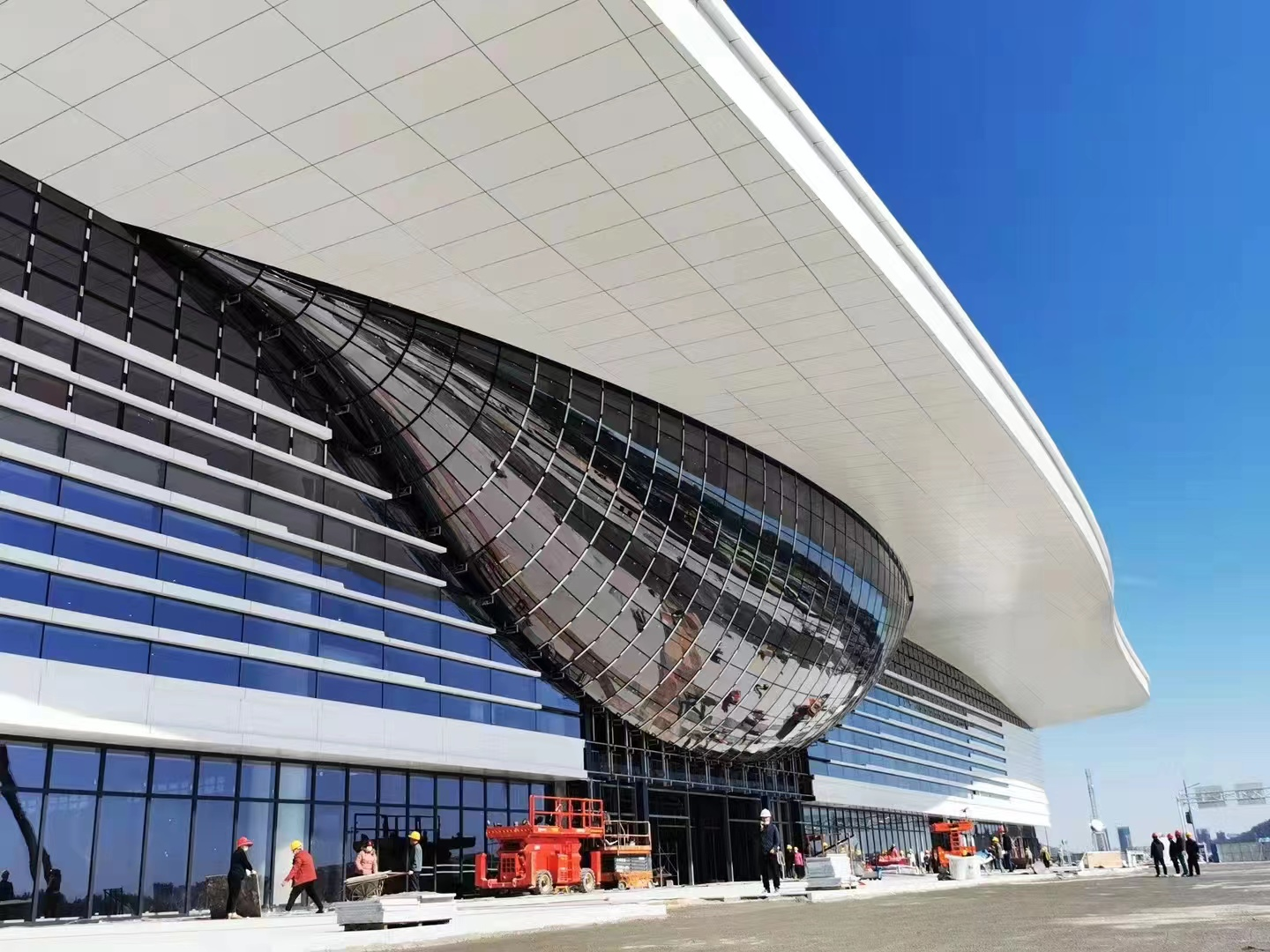
Large transport hub projects like Huizhou North Railway Station demand suppliers with high capacity and strict adherence to timelines.
Lead Time Transparency: A Metric That Defines Reliability
Standard lead time is a key indicator of operational efficiency. DYGLASS quotes a lead time of 7–9 days for standard tempered and laminated products, with customized curved glass typically requiring 10–15 days depending on complexity. This speed is supported by automated cutting, edging, drilling, and heat soak furnaces that minimize manual handling and rework. For comparison, industry averages for custom curved glass often exceed 20 days due to manual bending and extended quality checks.
In a notable case study, DYGLASS supplied 4,000 square meters of architectural glass for a hotel project in the United Arab Emirates. The project was completed within its planned 30-year operational lifespan, with stable performance in heat insulation, sound insulation, and aesthetics. This scale of delivery—4,000 sqm for a single project—illustrates the supplier's ability to maintain lead time consistency under high-volume conditions.
Risk Control and Quality Assurance: The Foundation of Predictable Delivery
Production risks directly impact lead time reliability. DYGLASS employs an intelligent temperature control system with three-level overtemperature thresholds set at 1550°C, 1580°C, and 1600°C for real-time monitoring. This prevents overheating and glass breakage during tempering, a common cause of production halts. All products undergo 100% quality testing, and materials such as PVB interlayers comply with CE standards (certificates for tempered, laminated, and insulated glass issued by ECTI CERT Ltd. under EN standards).
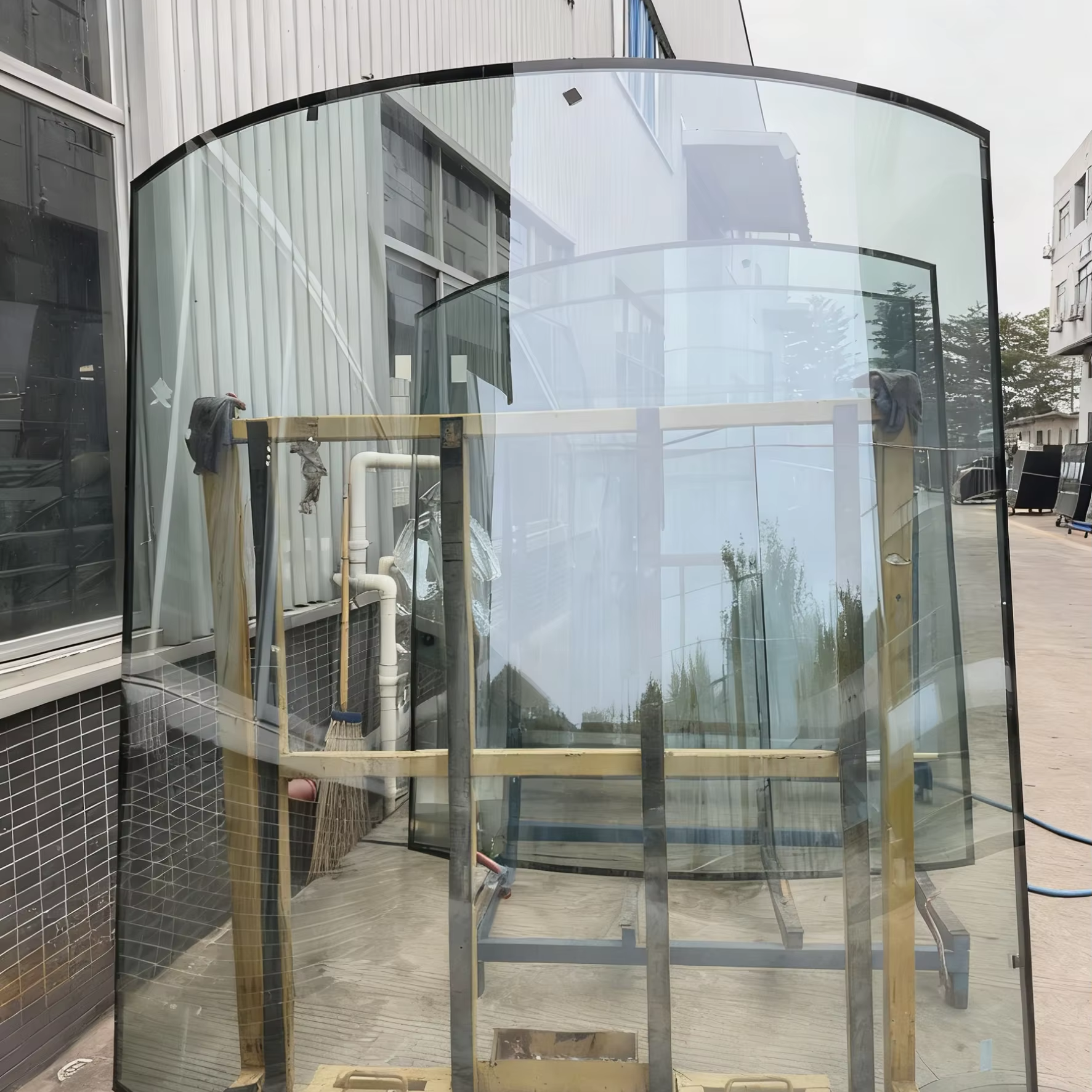
Curved insulating glass units combine high thermal performance with complex shaping capabilities, requiring precise process control.
Market Trend: Customization Demands Drive Capacity Differentiation
As building designs evolve toward free-form facades and smart glass integration, suppliers who invest in 3D bending capability and multi-curved glass technology gain a strategic advantage. DYGLASS's ability to process double curved, spherical, and S-shape tempered glass positions it strongly for high-end projects where standard flat glass falls short. The company's OEM/ODM flexibility, with MOQ as low as 10 square meters, further appeals to both large contractors and smaller architects seeking precision.
Global demand for energy-saving insulating glass and fire-resistant laminated glass is expected to grow at 8% CAGR through 2030. Suppliers with in-house heat soak furnaces and Low-E coating customization—like DYGLASS—will lead in capturing this market.
Future Outlook: Data-Driven Procurement Decisions
In 2026, procurement teams are increasingly using digital tools to verify supplier capabilities before order placement. Key metrics to request include monthly output by product type, average lead times for custom orders, and third-party certification scopes. DYGLASS's transparent data—130 employees, 60% export ratio, CE certification for all core products—provides a replicable benchmark for evaluating similar suppliers. Buyers should also request factory tour videos and pre-shipment test reports to validate claims.
For a detailed overview of DYGLASS's product portfolio and technical specifications, download the corporate brochure: Company Brochure.