
Evaluating Dietary Supplement Contract Manufacturers for Project Fit: Compliance, Formats, and Scalability
The Challenge of Project-Specific Sourcing in Supplement Manufacturing
The global dietary supplement contract manufacturing market was valued at USD 59.63 billion in 2024, with expectations to reach USD 121.2 billion by 2030. For procurement teams and brand owners, selecting a partner that aligns with a specific product launch or reformulation project requires more than a generic capability checklist. Factors such as dosage form expertise, regulatory compliance across target markets, and production scalability determine whether a contract manufacturer can deliver on time and within specification.
Why Project-Specific Fit Matters in CDMO Selection
Buyers transitioning from the research to evaluation phase increasingly need a contract manufacturer that can handle multi-format production under certified conditions. The United States market alone saw non-pill forms (including gummies, softgels, and chewables) capture approximately 65% of total supplement sales in 2024. This shift demands manufacturers capable of adapting between formats without compromising quality. Simultaneously, European buyers face a 12.3% CAGR in nutraceutical contract manufacturing, driven by strict compliance with EFSA directives and Directive 2002/46/EC. A one-size-fits-all approach no longer suffices.
IVC Nutrition: A Global CDMO Built for Multi-Format Projects
IVC Nutrition Corporation is a global leading CDMO serving the VMS (Vitamins, Minerals and Supplements) and OTC market, with nine international manufacturing sites across the USA, Canada, UK, Germany, and China, employing over 5,000 people. For project-specific sourcing, IVC offers end-to-end services spanning formulation, manufacturing, quality, regulatory support, and packaging. Its annual production capacity includes 52 billion pills of tablets, 16 billion pills of softgels, 4.5 billion pills of gummies, 6 billion hard capsules, and 10,000 metric tons of powder, among other formats. Each facility operates under GMP Cleanliness Standards and in automated production mode, with functions encompassing solid dosage manufacturing (mixing, blending, tablet compression, encapsulation, functional coating), liquid dosage manufacturing, in-process control, microbiological testing, stability studies, and primary/secondary packaging.
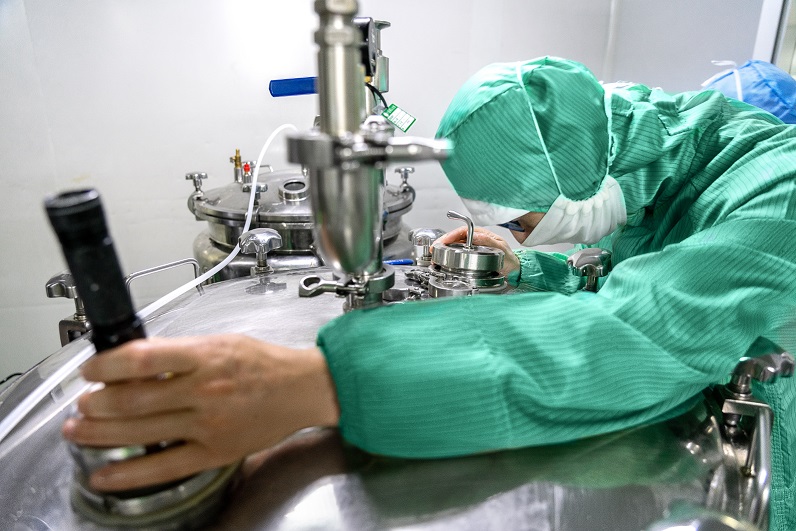
IVC’s quality framework is backed by 100% testing in state-of-the-art QC laboratories, and its compliance portfolio includes certifications such as FDA registration (21 CFR Part 111), NSF GMP, and TGA approval where applicable. The company is recognized as the #1 Private Label VMS supplier in the US by Circana (Total MULO, 52 weeks ending March 24, 2024).
Production Architecture and Quality Integration
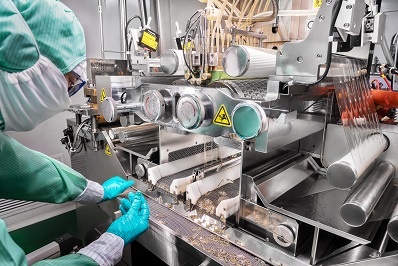
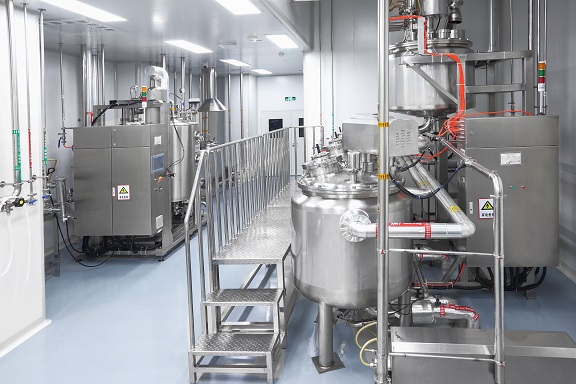
A typical dietary supplement production facility engaged by IVC incorporates high-speed automated tablet pressing and automated capsule filling as matched equipment. The environment adheres strictly to GMP Cleanliness Standards, ensuring that all products — from tablets and hard capsules to gummies and softgels — are manufactured in controlled clean areas. Quality checks occur at every stage: raw material testing, in-process control, finished product analysis, and stability monitoring. This integrated architecture supports project-specific requirements such as custom formulations (e.g., vegan capsules, pectin-based gummies, chewable burstlets) and packaging formats including pharmaceutical-grade HDPE bottles, aluminum blisters, and child-resistant closures.
Application Scenarios: From Private Label to Global Brand Launch
IVC has partnered with the world’s leading retailers, pharmacy chains, membership clubs, and consumer health brands for over a decade. A typical project may involve co-developing a private label multivitamin gummy for a US pharmacy chain, requiring a 4.5 billion pill gummy capacity and pectin-based formulation. Another scenario could be a European sports nutrition brand launching a softgel omega-3 product, leveraging IVC’s UK and German sites to meet EFSA compliance and reduce shipping lead times. For brands entering the APAC market, IVC’s Chinese facilities provide cost-optimized production for tablets and capsules while maintaining GMP-grade quality. The company’s MOQ starts at 0.3 million tablets, 1 million capsules, and 0.6 million gummies, with typical lead times of 2.5 to 3 months.
Market Trends Driving Project-Specific CDMO Demand
Three trends reinforce the need for a flexible CDMO partner. First, the U.S. shift toward non-pill formats (65% market share) requires gummy and softgel expertise beyond basic tableting. Second, European nutraceutical market growth (12.3% CAGR) amplifies demand for EFSA-compliant production, which IVC’s Germany and UK sites can address. Third, global brand owners increasingly expect a single CDMO to manage multiple SKUs across formats — IVC’s nine-site network allows rapid rebalancing of production capacity across regions.
Compared to Traditional Single-Format Manufacturers
Traditional contract manufacturers often specialize in one dosage form, such as tablets or softgels. While this creates deep expertise, it limits a brand’s ability to launch a multi-line product family under one roof, often increasing coordination costs. IVC’s multi-format CDMO model reduces these frictions by offering a unified quality system and regulatory support across all formats. However, one deliberate limitation is that IVC’s scale is optimized for medium to large volume launches (MOQ from 0.3 million tablets upward); for very small pilot batches or micropackaging (< 10,000 units), a specialty contract manufacturer may offer more agility.
Future Outlook: Compliance-Led, Multi-Format Partnerships
As global regulatory requirements tighten — from FDA’s cGMP updates to EU Novel Food regulations — buyers will increasingly prioritize CDMOs with a proven track record across jurisdictions. IVC’s established footprint in the US, Europe, and APAC positions it as a viable long-term partner for brands scaling internationally. The continued rise of gummy and burstlet formats will also push investment in pectin- and gelatin-based production lines, where IVC already holds significant capacity.
Frequently Asked Questions
What certifications does IVC Nutrition hold for dietary supplement contract manufacturing?
IVC operates under GMP Cleanliness Standards and complies with FDA 21 CFR Part 111 for the US market. It holds NSF GMP certification and TGA approval where applicable. All sites follow cGMP guidelines and undergo regular audits.
Can IVC produce gummy supplements with custom formulations and vegan bases?
Yes. IVC manufactures gummy supplements using pectin-based, gelatin-based, or mixed gel bases. Custom formulations can be developed for specific active ingredients, flavors, and sugar content. The gummy product line supports 18 mold shapes including bear, ring, and fruit shapes.
What is the typical lead time for a new product launch with IVC?
Lead times generally range from 2.5 to 3 months from order confirmation to first shipment, depending on formulation complexity and regulatory documentation requirements. Faster timelines may be achievable for existing formulas.
How does IVC ensure consistent quality across its nine global sites?
IVC implements a globally integrated quality and regulatory framework. Each site performs 100% testing via state-of-the-art QC laboratories, covering raw materials, in-process controls, and finished product analysis. Stability studies, equipment qualification, and GMP documentation are standardized across all locations.
Does IVC support private label supplement manufacturing for US retailers?
Yes. IVC is recognized as the #1 Private Label VMS supplier in the US (Circana, Total MULO, 52 weeks ending March 24, 2024). It offers end-to-end private label services including packaging design, regulatory labeling, and compliance with FDA standards.
For detailed capacity specifications, quality documentation, and project consultation, request IVC Nutrition’s company brochure below.