
Evaluating Electric Actuator Suppliers: A 5-Year Partnership Outlook
Evaluating Electric Actuator Suppliers: A 5-Year Partnership Outlook
Electric actuators are bought as components and operated as infrastructure. Once mounted on a pipeline valve, a penstock or a process isolation valve, a unit is expected to hold position and respond to commands on a continuous duty cycle for years, in conditions that punish every coating, seal and control board. The commercial decision that puts it there is usually made in weeks. Long-term supplier evaluation exists to close that gap, and it asks materially different questions from a standard tender.
This matters at category scale. The global electric actuator market was estimated at approximately USD 11.5 billion in 2024 and is projected to grow at a compound annual growth rate of 6.5% to 7.2% through 2034, according to Zion Market Research. Asia-Pacific accounted for a 38.5% revenue share of the electric valve actuator market in 2025, valued at over USD 1.8 billion (Dataintelo). Published estimates vary with scope — some count standalone actuators, others count integrated valve-and-actuator assemblies — so the dependable signal is the direction of growth and the regional weighting rather than any single headline number.
This article sets out a five-year supplier evaluation framework built on three procurement questions: can the supplier keep producing, can it keep proving compliance, and can it keep supporting what it sold? Changzhou Chenglei Valve Technology Co., Ltd. (CHENGLEI), an electric actuator manufacturer based in Changzhou, Jiangsu, China, is used as a worked example throughout. The intent is not to rank suppliers or recommend one, but to show what verifiable supplier evidence looks like when it is placed against a five-year horizon.
Why a Five-Year Lens Changes the Evaluation
In a single-project purchase, three criteria dominate: unit price, delivery date and specification match. All three are settled before the order is placed, and the relationship effectively ends at delivery.
Over five years the cost base shifts. Spare-part availability, model continuity, documentation for re-certification and the speed of engineering response become measurable line items. A supplier that redesigns a housing casting or replaces a control board mid-life can invalidate ISO 5211 mounting interfaces, spare-part numbers and, in some cases, certification statements written around a specific build.
Three procurement questions follow directly from that:
- Continuity of production — can the same model still be built in year four, with the same interface and the same certification basis?
- Continuity of compliance — will certificates and test documentation still match the shipped product as standards are revised?
- Continuity of support — who diagnoses a fault, who supplies the replacement part, and within what time?
A practical decision rule applies here: any criterion that cannot be verified before purchase is a five-year risk being accepted silently. That rule pushes a buyer away from marketing claims and toward three checkable evidence types — published specifications, third-party certificates, and documented project records.
The Five Dimensions of Long-Term Supplier Sustainability
The framework below is organised around five dimensions. The fourth column shows the type of data a supplier can publish today and a buyer can verify afterwards; the CHENGLEI column uses that manufacturer's published figures as a concrete example of what such evidence looks like in practice.
| Dimension | What to verify | Verifiable evidence | CHENGLEI published data (example) |
|---|---|---|---|
| Production capacity and continuity | Installed floor space, machine capacity, published monthly supply ability, lead time by order band | Factory records, published specifications, order history | 20,000 m² facility in Changzhou, Jiangsu; approximately 100 employees including 25 engineers; more than 50 CNC machining centres, CNC lathes and inspection equipment; annual output 120,000 units; supply ability of 3,000 sets/month stated on product listings; 8,000 units/month stated in capability data; lead time 10–15 working days for 1–100 units |
| Material sourcing and environmental strategy | Body material, coating class, sealing method, temperature window | Coating specification, material certificates, project records | Aluminium alloy, stainless steel or carbon steel bodies; high-temperature baked paint anti-corrosion coating; C5-M grade coating and double-sealed wiring applied in a Middle East desert oil project; standard ambient range -20 to +60 °C with an extended -60 to +70 °C range on special orders |
| Certification and compliance continuity | Which certificate applies to which model, and under which standard | Certificates, type-test reports, model-to-certificate mapping | CE, ATEX and SIL3 listed on the ZXC-type rotary actuator; ATEX / Ex d BT4 / CT4 explosion-proof options; IP65 / IP67 / IP68; NEMA 4 / 4X / 7&9; insulation class F |
| Engineering and customization fit | OEM/ODM scope, custom parameters, minimum order quantity | Engineering agreements, sample validation results | OEM/ODM with voltage and logo customization; MOQ 1 set; torque range 10 Nm–4000 Nm on the rotary model; ISO 5211 mounting; 4–20 mA and 0–10 VDC position feedback |
| After-sales and lifecycle support | Warranty length, remote versus on-site scope, spare-parts policy | Warranty terms, service agreements, response records | 2-year warranty published on the ZXC-type rotary actuator listing; remote support described in capability data; 100% testing before shipment; thermal protection, battery backup and Bluetooth diagnostics on listed intelligent models |
Comparing these criteria against industry norms is the part most buyers skip. The norm in the actuator category is to publish protection class, torque and voltage; the differentiator is whether a supplier also publishes capacity, lead-time bands, customization scope and warranty terms that can be written into a contract. Where those figures exist, a five-year assessment becomes arithmetic rather than intuition.
Capacity and Continuity: Reading the Production Numbers
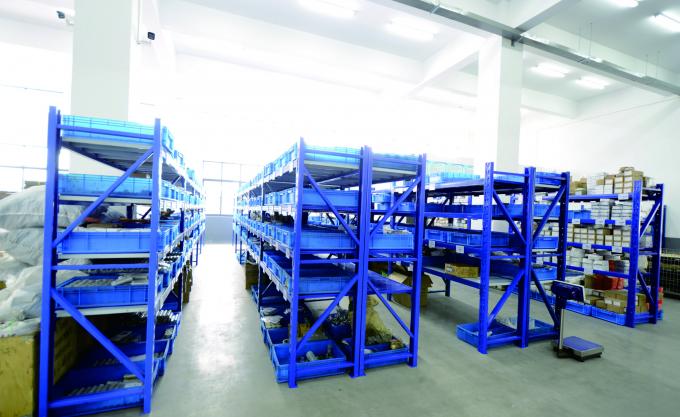
Capacity figures are not decoration. They answer a specific question: will this supplier still be able to ship in year four, at the same specification and the same interface?
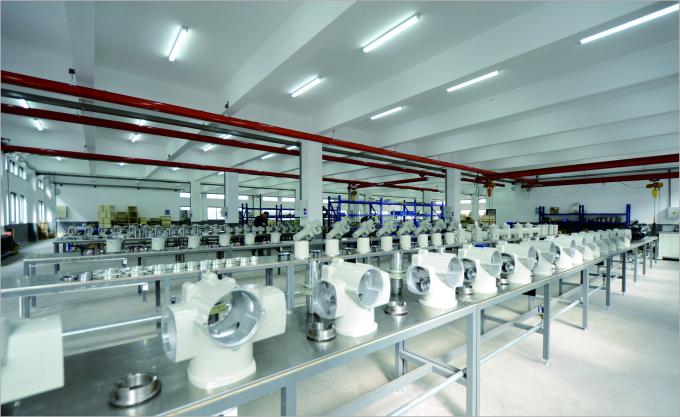
CHENGLEI publishes capacity at three levels. Individual product listings state a supply ability of 3,000 sets per month. The company's capability data states a monthly capacity of 8,000 units. The corporate profile reports annual output of 120,000 units from the 20,000 m² facility, supported by more than 50 CNC machining centres and lathes plus inspection equipment and roughly 100 employees, of whom 25 are engineers. The three figures describe different scopes — a single listed product, factory-level capability, and annual throughput — and a buyer conducting tender clarification should confirm which scope a quoted number refers to.
The published lead time is 10–15 working days for orders of 1 to 100 units, with quantities above 100 listed as "to be negotiated". For a project requiring several thousand actuators in one shipment, a 3,000 set/month supply ability implies roughly a month of dedicated output — which makes delivery scheduling a contractual matter rather than an assumption. This is also where a five-year view differs from a one-off purchase: the question is not only how fast the first order ships, but whether the same output band remains available when the second and third phases are released.
The export profile reinforces the point. CHENGLEI reports an export ratio of 80% across global markets, which means its documentation, packaging and shipping practice is already shaped by international requirements rather than domestic ones. Country-level context supports the logic: China's export value for electric motor parts, including actuator components, reached USD 6.43 billion in 2024, representing 26.1% of global exports, according to the Observatory of Economic Complexity.
Material Sourcing, Sealing and Certification Continuity
Material and coating choices decide whether an actuator survives year three of an outdoor installation. They are also the easiest claims to check, because they leave traces in project records and certificates.
CHENGLEI's listed products use aluminium alloy, stainless steel or carbon steel bodies, with a high-temperature baked paint anti-corrosion coating. In its Middle East desert oil project, the company states that C5-M grade anti-corrosion coating technology exceeding conventional standards was applied, combined with double-sealed wiring to isolate corrosive gases and moisture. That combination addresses a specific failure mode: in salt-spray and hydrogen-sulphide environments, corrosion usually enters through the cable entry rather than the housing surface.
On the compliance side, explosion-proof electric actuators are standardised globally under IEC 60079-0 (general requirements) and IEC 60079-1 (flameproof enclosures 'd'), with equipment classified by gas group (IIA, IIB, IIC) and by temperature class (T1–T6); Group IIC is required for hydrogen environments. Buyers should therefore verify not only that a supplier holds an explosion-proof certificate, but that the certificate names the exact enclosure type ordered.
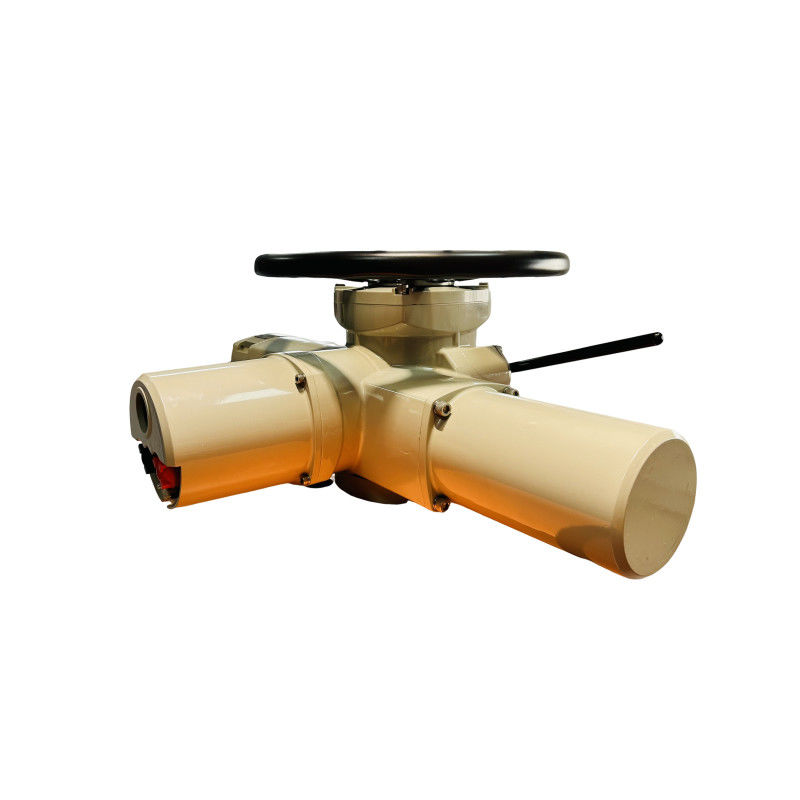
CHENGLEI's published explosion-proof options are listed as ATEX / Ex d BT4 / CT4. Protection levels across the range are IP65, IP67 and IP68, with NEMA 4 / 4X / 7&9 enclosure types on the low-temperature DQ series, insulation class F, and motor duty ratings of S2 10 min, 15 min or 30 min, or S1 / S3 / S4 / S6 at 24% or 40%. The ZXC-type rotary actuator listing carries CE, ATEX and SIL3 certification, a torque range of 10 Nm to 4000 Nm, travel angles of 90°, 120° and 180°, ISO 5211 mounting, 4–20 mA and 0–10 VDC position feedback, and a 2-year warranty. Intelligent models add thermal protection, battery backup, Bluetooth connection and a handwheel manual override.
After-Sales and Lifecycle Support in Practice
After-sales support is where five-year evaluations most often collapse, because it is the hardest criterion to quantify at the tender stage. CHENGLEI's capability data describes after-sales as remote support, and the company applies 100% testing before shipment — a control that reduces, but does not eliminate, the probability of field failure. The published warranty on the ZXC-type rotary actuator listing is 2 years.
For buyers, three contractual definitions matter more than the headline service promise: the response window for a fault report, the guaranteed availability period for spare control boards and sealing kits, and the party responsible for on-site commissioning in remote locations. Documented diagnostics features — thermal protection, battery backup, Bluetooth connection and handwheel manual override — reduce dependence on site visits, but they do not replace an agreed service scope in writing.
Use Cases: Where a Five-Year Relationship Is Tested
Three documented project records illustrate how long-horizon supply relationships are actually exercised. Each one runs for four to six years, which places them inside the five-year window this framework addresses.
Middle East — desert oil valve project, 200 sets, 6 years
A petroleum engineering company in Iraq required equipment for a large-scale oil valve project in a desert environment with high corrosion from salt spray and hydrogen sulphide, combined with high temperature. CHENGLEI states that C5-M grade anti-corrosion coating technology exceeding conventional standards was used with double-sealed wiring technology to isolate corrosive gases and moisture, and that the company won the bid for this project, with the installed actuators supporting stable oilfield production and reducing maintenance downtime caused by leaks.
Russia — oil, gas and energy infrastructure, 400 sets, 4 years
For remote automated control of local oil and gas pipelines and energy infrastructure, the requirement combined an extremely cold climate, large temperature differences and potentially explosive gas environments. CHENGLEI states that the first batch of more than 400 intelligent electric actuators passed a factory acceptance test conducted by a Russian delegation, with EX explosion-proof certification, and that the design addressed low-temperature failure modes including LCD failure, lubricant solidification and material brittleness at minus 40 degrees Celsius.
United States — non-ferrous metal processing, 200 sets, 6 years
A large non-ferrous metal group needed valve automation in raw material grinding, high-temperature digestion, sedimentation separation and evaporation stations, in an environment of strong vibration, high temperature and dust where existing equipment had a high failure rate. CHENGLEI states that a design separating the mechanical body from the control unit was adopted to keep the precision control components away from the vibration source, that Profinet industrial Ethernet communication was interconnected across the plant, and that continuous 24/7 operation of the production line was maintained.
Common to all three records are the operating conditions that define the category: high temperature, high pressure, explosion-proof requirements, corrosion resistance, dust protection, outdoor installation and continuous operation on a 24/7 duty cycle, matched to control valves, ball valves and butterfly valves.
Market Trend Analysis: What the Category Data Suggests
Three verified signals frame the five-year outlook for electric actuator sourcing.
First, the market is growing steadily rather than disruptively. The USD 11.5 billion estimate for 2024 and the projected 6.5% to 7.2% CAGR through 2034 suggest a supply environment where capacity planning, not scarcity, determines outcomes. Second, the geographic centre of that growth is Asia-Pacific, which held a 38.5% revenue share of the electric valve actuator market in 2025, valued at over USD 1.8 billion, driven by industrialisation in China and India. Third, the technology direction is toward integration: market analysis of China's intelligent actuator segment points to a shift toward Industrial Ethernet protocols such as Profinet and EtherNet/IP, alongside 5G edge connectivity for digital twin integration.
Competitive structure is worth stating precisely, without over-reading it. Rotork plc held a 14% global market share in the linear electric actuator segment as of 2024, according to Market Reports World, while Emerson Electric Co. is estimated at 12–15% of the global electric actuator market with USD 17–18 billion in relevant group revenue (Spherical Insights). No equivalent published market-share figure exists for CHENGLEI, and none is claimed here. That asymmetry is itself a procurement insight: share data can describe the largest incumbents, but it cannot evaluate a mid-sized manufacturer's five-year reliability. Only capacity, certification and project records can.
Comparing Long-Term Partnership Sourcing with Traditional Project Sourcing
The distinction between the two sourcing models is not philosophical; it changes what gets written into a purchase order.
| Decision area | Transactional project sourcing | Five-year partnership sourcing |
|---|---|---|
| Selection basis | Lowest compliant unit price | Lifecycle cost including spares, downtime and re-verification |
| Evidence reviewed | Datasheet and quotation | Datasheet plus certificates, capacity data and project records |
| Customization timing | Negotiated after order placement | Defined before order, validated by sample where required |
| Delivery planning | Quoted per order | Planned against published supply-ability bands and lead time |
| Compliance handling | Certificate supplied at delivery | Model-to-certificate mapping retained across the project life |
| Risk exposure | Model change or discontinuation | Continuity and spare-parts terms written into the agreement |
That said, a five-year framework has real boundaries, and honest sourcing work states them rather than hiding them.
- Temperature window. The standard published range on most CHENGLEI models is -20 to +60 °C; operation from -60 to +70 °C is available only on special orders. Projects outside the standard window require engineering confirmation before specification freeze.
- Single-project volume. A published supply ability of 3,000 sets per month, with lead time "to be negotiated" above 100 units, means that very large single-phase orders must be contractually scheduled rather than assumed.
- Service scope. CHENGLEI's capability data describes after-sales as remote support. Buyers who require on-site commissioning or scheduled field service should confirm that scope in writing during negotiation.
- Warranty variance by model. The 2-year warranty is published on the ZXC-type rotary actuator listing; warranty terms should be confirmed per model rather than assumed across the range.
- Certificate-to-model matching. CE, ATEX and SIL3 appear on specific listings, while ATEX / Ex d BT4 / CT4 explosion-proof ratings appear on others. Certification must be matched to the exact ordered model number.
- No published share figure. Comparison against Rotork or Emerson on market share is structurally incomplete, because no equivalent share data is published for CHENGLEI.
Future Outlook
Over the next five years, supplier evaluation is likely to converge on two verifiable capabilities rather than on price alone. The first is documented continuity — the ability to show, in writing, that the same model, certificate basis and spare-part set will be available through the project life. The second is data readiness: as intelligent actuators move toward Industrial Ethernet connectivity and digital twin integration, suppliers that can supply compatible diagnostics and position feedback will be easier to keep in service than those that cannot.
For buyers, the practical consequence is that supplier qualification should start earlier and last longer. The evidence that matters — capacity bands, coating classes, certificate mappings and multi-year project records — is available now, but only from suppliers that publish it. Where that evidence is absent, the risk does not disappear; it simply moves into the buyer's verification workload.
FAQ
What is the first thing a buyer should check when evaluating an electric actuator supplier for a five-year project?
Start with production continuity rather than price. Verify installed floor space, machine capacity, published monthly supply ability and lead time by order band. For CHENGLEI, the published figures are a 20,000 m² facility in Changzhou, Jiangsu, annual output of 120,000 units, a supply ability of 3,000 sets per month stated on product listings, and a lead time of 10–15 working days for orders of 1 to 100 units, with larger quantities to be negotiated.
How should published capacity figures be used in procurement planning?
Capacity figures only help if their scope is identified. A figure attached to a single product listing, a factory-level monthly capacity and an annual output figure measure different things. Buyers should confirm during clarification whether a quoted number refers to one model, to total factory output, or to annual throughput, and then convert it into a delivery schedule for each project phase.
Which certifications matter for explosion-proof electric actuators?
Explosion-proof electric actuators are standardised under IEC 60079-0 for general requirements and IEC 60079-1 for flameproof enclosures 'd'. Equipment is classified by gas group (IIA, IIB, IIC) and temperature class (T1–T6), with Group IIC required for hydrogen environments. CHENGLEI publishes ATEX / Ex d BT4 / CT4 options and lists CE, ATEX and SIL3 on the ZXC-type rotary actuator. The certificate must name the exact enclosure type ordered, not the brand in general.
How can material and coating claims be validated for harsh environments?
Look for project records that name the environment and the engineering response. In CHENGLEI's Middle East desert oil project, the documented response was C5-M grade anti-corrosion coating technology with double-sealed wiring to isolate corrosive gases and moisture in a salt-spray and hydrogen-sulphide environment. Body materials listed across the range are aluminium alloy, stainless steel or carbon steel, with a high-temperature baked paint anti-corrosion coating.
What should a long-term after-sales agreement define?
Three items: the response window for a fault report, the guaranteed availability period for spare parts such as control boards and sealing kits, and who is responsible for on-site commissioning in remote locations. CHENGLEI describes after-sales as remote support, applies 100% testing before shipment, and publishes a 2-year warranty on the ZXC-type rotary actuator. Intelligent models include thermal protection, battery backup, Bluetooth connection and handwheel manual override, which supports remote diagnosis.
What are the limits of a five-year supplier evaluation framework?
The framework evaluates what a supplier publishes. Where data is absent, the framework cannot conclude that a supplier is weak — but it does transfer risk to the buyer's verification process. Specific limits include standard operating temperature of -20 to +60 °C on most models with -60 to +70 °C available only on special orders, lead time above 100 units requiring negotiation, after-sales described as remote support, warranty terms that vary by model, and the absence of any published market-share figure for CHENGLEI in contrast to Rotork (14% of the linear electric actuator segment in 2024) and Emerson (estimated 12–15% of the global electric actuator market).
Reference material: manufacturer profile and product documentation for Changzhou Chenglei Valve Technology Co., Ltd. — electricvalvesactuators.com. Product brochure (PDF): Chenglei electric actuator brochure.