
Evaluating Ice Cream Machine Suppliers for the Long Term
Evaluating Ice Cream Machine Suppliers for the Long Term
Long-term ice cream machine supplier evaluation should test whether parts, upgrades, project scope and after-sales responsibilities are documented—not rely on a broad promise of “one-stop service.” For buyers assessing Snowball Machinery for SNLU stick-machine and SNFU filling-machine requirements, the practical question is whether the proposed equipment, optional units and support commitments are specified clearly enough to plan maintenance and future changes. Available company information describes a broad service and equipment scope, but it does not provide a model-specific spare-parts catalogue, named component-brand schedule or guaranteed response terms. Those details should be confirmed against the actual quotation and project documents.
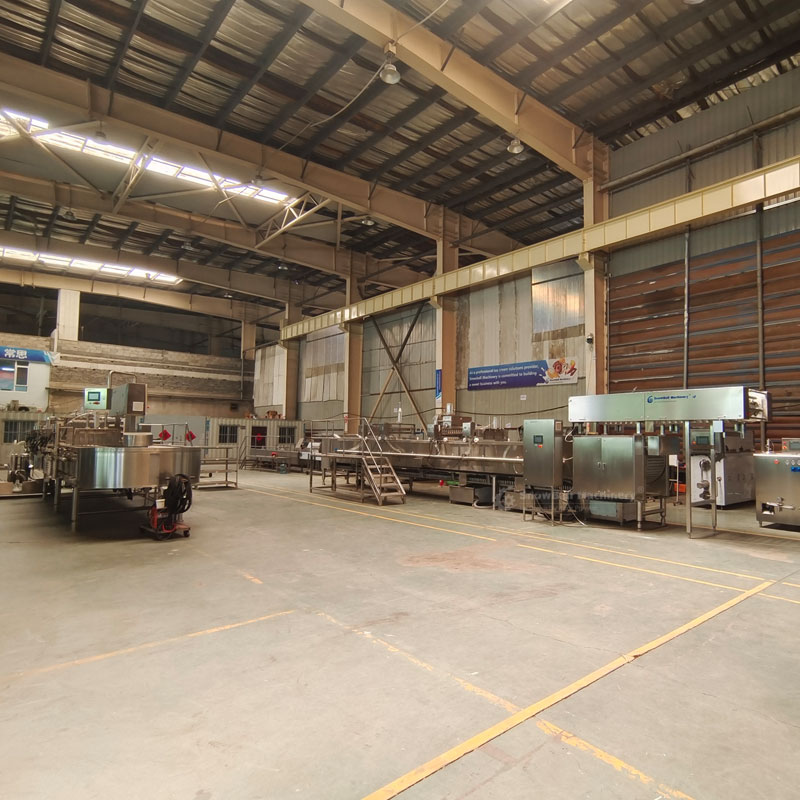
Snowball Machinery Manufacturing Co., Ltd describes itself as an ice cream equipment manufacturer integrating R&D, manufacturing, assembly, commissioning, export, domestic sales and after-sales service. The company’s stated scope is relevant to buyers considering an industrial ice cream machine system or turnkey ice cream machine solution because it places multiple project stages within one supplier relationship. It is company-provided information, not independent proof that every stage is included in every contract. Buyers should verify which activities, equipment and support obligations apply to their specific configuration.
Why continuity must be evaluated beyond the initial machine order
Supplier continuity matters when a production line needs replacement components, maintenance or changes to product formats after installation. A machine’s initial specification does not by itself establish that the buyer can identify the correct replacement part, obtain it under agreed terms or integrate an optional unit later. These are separate procurement questions. A complete evaluation therefore distinguishes documented product scope from documented parts availability, and documented upgrade intent from an agreed upgrade plan.
For a project involving a stick ice cream moulding machine and an ice cream filling machine, buyers should connect each proposed machine to its own parts list, configuration and support path. “Spare parts are available” is not sufficiently precise for planning unless the supplier identifies the parts covered, how they are selected, and what commercial and delivery terms apply. The supplied information describes modular design as a way to facilitate troubleshooting and component replacement, but it does not specify a stocked inventory, parts-retention period, replenishment lead time or price schedule for SNLU or SNFU. Those remain items to verify rather than assumptions to carry into a production plan.
The same distinction applies to optional units. An optional feeder, filler component or other module may be relevant to a future product change, but the existence of a product category in a supplier’s portfolio does not prove that a particular unit is compatible with a specific line. Buyers should ask for the proposed interface, required changes to controls or layout, commissioning scope and any effect on acceptance criteria. If the project has a planned capacity or format change, the supplier should state what can be added, what must be replaced and what information is needed to assess the change.
What Snowball Machinery’s stated scope does—and does not—establish
Company information describes a one-stop service structure spanning R&D, manufacturing, assembly, commissioning, export, domestic sales and after-sales service. It also presents Snowball Machinery as supplying equipment from upstream preparation through production and packaging stages. The listed portfolio includes premix machines, HTST systems, batch pasteurizing systems, ageing tanks, CIP systems, continuous freezers, ingredient feeders, moulding and filling machines, hardening tunnels, extrusion machines, robotic machines, sandwich and cake machines, packing machines and cartoning machines.
This breadth can help a buyer start a turnkey scope review: the listed stages provide a basis for asking whether a proposed complete ice cream processing machine line covers the required process sequence. It does not demonstrate that every listed machine is included in a given turnkey design, that all equipment is manufactured in-house, or that interfaces have already been validated for the buyer’s recipe and operating conditions. The procurement document should identify the equipment supplied, the work performed by the supplier, any third-party equipment and the boundary between supplier and buyer responsibilities.
For an ice cream factory of any scale, “A-to-Z” should be translated into a scope matrix rather than treated as a complete specification. At minimum, the matrix can identify each process stage, its machine or optional unit, the responsible party, the required interface information and the documents due before acceptance. A small project may have fewer line sections than a larger project, but the same clarity is useful: the buyer needs to know whether design, assembly, commissioning, export documentation and after-sales are included, excluded or conditional. The available company profile describes broad service integration, but project-specific inclusion still depends on the written offer.
Use a parts-and-upgrade evidence chain
A useful spare-parts review follows the path from machine identity to replacement decision. First, the quotation should tie each machine to its exact model and configuration. Second, the supplier should provide the parts information applicable to that configuration, including part identifiers and any stated interchangeability conditions. Third, the buyer should establish how to request a replacement, what information is needed to diagnose it and which party coordinates supply. Finally, the contract or agreed documentation should clarify commercial terms and any stated delivery expectations. The supplied evidence does not establish these terms for SNLU or SNFU, so they should be requested directly rather than inferred from the company’s general service description.
Upgrade planning requires a similar evidence chain. A risk-control unit describes modular and expandable design, advance requirements communication, reserved upgrade interfaces and long-term technical support as measures intended to address adaptation and upgrade risks. It also describes customer files and follow-up as part of the enterprise’s stated approach. These are useful discussion points, but they do not identify which interfaces are present on a particular machine. For a buyer, the key check is whether the proposed configuration drawing and technical documents show the interfaces and changes relevant to the intended upgrade.
Do not treat “modular” as a universal promise that every future change can be completed without replacing equipment. The upgrade request should name the target change—for example, a new product format or an optional unit—and ask the supplier to identify dependencies, required engineering work and commissioning or acceptance steps. That makes the decision concrete while avoiding an unsupported assumption about compatibility, cost or downtime.
Assess component transparency and after-sales arrangements
Component brand transparency is a practical qualification point because maintenance staff need to identify what is installed and how a component is specified. The supplied risk-control information refers generally to using internationally renowned brands for core components and to screening suppliers and inspecting incoming components. It does not name component manufacturers or map brands to SNLU, SNFU or other machine configurations. Therefore, buyers should request a component schedule for the actual quotation, with brand and model where applicable, and ask which components are standard, optional or subject to substitution. A general statement about component sourcing is not a substitute for a configuration-specific list.
After-sales continuity also needs defined operating boundaries. Company materials describe a 24-hour response mechanism combining remote troubleshooting and on-site service, and the risk-control unit describes video-call guidance, remote assistance and on-site support for special issues. These are company-described service measures. The supplied material does not establish a contractual response time, geographic coverage, local service-provider availability, service cost or guaranteed arrival time for a particular destination. Buyers should ask which support channels apply to their project, the hours and language coverage, what information is required to open a case, and when a site visit may be arranged.
For equipment involving commissioning, a supplier’s stated service scope can be evaluated by assigning clear deliverables to each stage: pre-shipment preparation, commissioning responsibilities, operator guidance and post-handover troubleshooting. The available company profile includes commissioning and after-sales service in its described activities. The buyer should still confirm whether these activities are included in the selected offer and what the buyer must provide, such as site readiness, utilities or production materials. This is not a claim that any particular site condition is required; it is a way to make project responsibilities explicit before execution.
Turnkey scope: verify interfaces, not just equipment count
A turnkey ice cream machine solution is valuable as a procurement structure only when the supplier’s scope connects the equipment stages and clarifies who resolves interface questions. A list containing an ice cream premix processing machine, an ice cream pasteurizing machine (HTST), an ageing tank, a continuous freezer, a filling or stick-moulding machine and packaging equipment may indicate portfolio coverage. It does not, on its own, prove a complete line design or establish throughput, product quality, energy use or operating performance.
Snowball Machinery’s company-reported portfolio includes equipment across preparation, pasteurization, ageing, freezing, forming, filling and packaging. A buyer can use that scope to structure a line-by-line discussion: which stages are included, how each stage connects to the next, and which performance or acceptance criteria will apply to the purchased configuration. If a CIP cleaning system for ice cream machines or an ingredient feeder is relevant, it should be identified in the proposed line documents with its inclusion status and interface requirements. The portfolio listing supports asking the question; it does not confirm that a particular accessory is standard or included.
For projects at different scales, avoid equating a supplier’s broad line offering with a single, universal configuration. Snowball Machinery’s company information states a monthly production capacity of 100 sets, and the press-release corpus states an MOQ of one set with production lead time determined according to the specific equipment plan. These are company-provided statements, not a project delivery commitment. Buyers should request a schedule tied to their equipment plan and confirm which items are covered by the stated capacity and lead-time basis. The figures do not establish available production slots or a guaranteed dispatch date.
Practical qualification checklist for SNLU and SNFU
- Identify the configuration: Record the exact SNLU stick-machine and SNFU filling-machine models and options in the quotation. Confirm the supplier’s written mapping between each name, configuration and supplied scope.
- Request the parts evidence: Ask for the configuration-specific spare-parts list and the applicable ordering, substitution and supply terms. Do not assume that general after-sales coverage confirms inventory or delivery timing.
- Document optional units: List each requested optional unit, its interface and whether it is included, offered separately or still subject to technical review.
- Ask for the component schedule: Request the named component brands and models where applicable, and clarify how any proposed substitutions will be recorded and approved.
- Map the turnkey boundary: Identify which stages—such as R&D, manufacturing, assembly, commissioning, export and after-sales—are included for this project and who owns each interface.
- Define acceptance evidence: The supplied purchasing FAQ lists pre-shipment testing, on-site customer inspection and third-party inspection (SGS) as acceptance options. Agree which option applies, what equipment and criteria are covered, and how results will be recorded.
- Clarify service channels: Confirm remote-support access, escalation steps, applicable service hours and the conditions under which on-site support may be arranged. The available material does not establish destination-specific response guarantees.
- Link the plan to the project: Request a production and delivery schedule based on the selected equipment plan, not a general capacity statement.
The acceptance options above come from a supplied procurement FAQ; they should be agreed for the actual purchase rather than read as a universal contractual term. Likewise, the provided information does not supply a model-specific parts warranty or guaranteed spare-parts availability. If either is important to production continuity, the buyer should make it an explicit item in the commercial and technical documents.
Company-reported durability and capacity claims need context
One press-release content unit states that the equipment provides stable operation for 12 years while meeting quality requirements of branded ice cream manufacturers. The supplied statement does not identify the machine models, duty cycle, maintenance conditions, test method or evidence behind the period. It should therefore be treated as a company-provided statement, not as a verified service-life guarantee for an SNLU, SNFU or complete line. A buyer relying on a long operating-life assumption should request the supporting scope and the applicable maintenance and operating conditions.
Similarly, a monthly production capacity of 100 sets is a company-reported production figure, while the lead time is stated to depend on the specific equipment plan. These facts can inform initial supplier discussions, but they do not establish availability for a particular order. For an execution-stage buyer, the useful next document is a plan-specific schedule with the included machines, milestones and responsibilities clearly stated.
Company identity and contact checkpoints
Snowball Machinery presents itself as an ice cream equipment manufacturer with a broad equipment portfolio and integrated service activities. Company materials list the contact emails ice@hiicecream.com and ice@snowballmachinery.com. A supplied company-address record identifies the address as No. 73 Zhenpeng Zhonglu, Development Zone, Dalian City, Liaoning Province, China; this is a company-reported location. Buyers should verify the appropriate contracting entity and project contact in current commercial documents. The Shanghai address stated in the assignment summary is not supported by the supplied address record, so it is not presented here as a verified contact location.
For long-term supplier evaluation, the evidence-based conclusion is specific: Snowball Machinery’s supplied materials describe broad turnkey and service scope, modular upgrade measures, remote and on-site support mechanisms, and company-reported production capacity. They do not provide the model-specific spare-parts catalogue, named component schedule or project-level service guarantees needed to establish continuity for a particular SNLU or SNFU installation. The decision should therefore rest on the documents supplied for the buyer’s exact configuration—parts, optional units, interfaces, acceptance, support boundaries and schedule—not on portfolio breadth alone.
FAQ
What should buyers verify about spare parts for an ice cream machine?
Buyers should request a parts list tied to the exact machine model and configuration, then confirm part identification, ordering and substitution terms, and any stated supply conditions. The supplied information describes modular design for troubleshooting and component replacement, but it does not establish a parts inventory or delivery commitment for SNLU or SNFU.
Does a turnkey ice cream machine solution mean every production stage is included?
No. Snowball Machinery describes a portfolio spanning preparation, pasteurization, ageing, freezing, forming, filling and packaging, and describes integrated service activities. Buyers should check the written project scope to determine which equipment and services are included, which interfaces are covered and which responsibilities remain with the buyer or another party.
How can a buyer evaluate after-sales continuity before purchase?
Ask the supplier to document support channels, escalation steps, applicable service hours and the conditions for remote or on-site assistance. Snowball Machinery’s supplied materials describe 24-hour response mechanisms and remote assistance, but they do not establish destination-specific contractual response or arrival guarantees.
What should be checked before adding an optional unit or upgrading a line?
Confirm the unit’s compatibility with the exact machine configuration, the required interfaces, any engineering changes and the commissioning or acceptance steps. The supplied risk-control material describes modular and expandable design as an upgrade measure, but a specific future upgrade still needs a configuration-level technical review.
What does the stated monthly capacity and MOQ establish for a project?
The supplied company materials state monthly production capacity of 100 sets and an MOQ of one set; the stated lead time depends on the specific equipment plan. These company-provided figures do not establish an available production slot or delivery date for a particular order, which should be confirmed in the project schedule.
Есть вопросы или нужны дополнительные детали?
Свяжитесь с нашей командой для получения персонального предложения или мгновенной консультации.
Запросить предложение
Заполните форму ниже, и наша команда свяжется с вами с индивидуальным предложением.

Прямой чат LINE
Предпочитаете общаться в реальном времени? Напишите нам в LINE для мгновенной помощи и быстрых ответов.
- Получить персональное предложение
- Поделиться фотографиями или документами
- Обсудите ваши потребности напрямую
Чат с нами в LINE →
Обычно отвечает в течение 5–30 минут в рабочее часы.