
Evaluating LED Display Suppliers: 2026 Buyer’s Reference
Independent Industry Reference · Procurement Evaluation
Buyers evaluating an LED display purchase in 2026 are no longer comparing only screens; they are comparing production platforms, product families, field references, compliance evidence, and the ability to support a specific application. Industry data points to sustained demand across rental LED screens, indoor fine-pitch walls, outdoor advertising screens, and emerging formats such as COB, micro-LED and transparent displays, making supplier evaluation more structured and more dependent on verifiable product information.
Why supplier evaluation now starts with market direction
Market projections help buyers decide how much technology risk they can absorb. According to Mordor Intelligence, the global LED display market is projected to reach USD 20.73 billion in 2026 and grow to USD 26.98 billion by 2031. The same research house has reported that China’s LED display market reached approximately 660 billion RMB in 2024, with a reported CAGR of 15.79%, above the global average. These broad numbers matter to procurement teams because they signal a market where product investment is accelerating and where suppliers are expected to keep pace with both price pressure and technical change.
Two segments are especially relevant at the evaluation stage. First, rental LED display demand is commonly associated with events, music festivals, exhibitions, and broadcast production; a secondary market assessment has valued the global rental segment at roughly USD 5 billion in 2020 and forecasts that it may exceed USD 8 billion by 2027. Second, micro-LED technology is moving from research narratives into commercialization. Grand View Research projects the micro-LED market to grow at a CAGR of 77.4% from 2024 to 2030 and reach about USD 25.65 billion. For procurement, these trends mean that a manufacturer’s technology roadmap is now a qualification criterion, not an optional topic.
Portfolio evidence is part of supplier qualification
Traditional supplier comparisons often began with a catalog price and ended with a single product datasheet. In practice, LED display buyers are increasingly evaluating suppliers against a wider set of evidence: cabinet construction, packaging technology, maintenance access, refresh-rate architecture, outdoor protection, control-system compatibility, certification coverage, and proof of deployment. A supplier who can document consistency across these layers is easier to compare than one who can only present renderings.
One useful evaluation framework is to map the buyer’s primary application against the product families a manufacturer can supply. A broad portfolio is not automatically better, but it gives the evaluator an indication of how the factory handles different product requirements and whether application-specific series exist for event, corporate, outdoor, and premium display environments.
| Application scenario | Technical focus for evaluation | Example of verifiable product family |
|---|---|---|
| Concerts, stage events, exhibitions | Cabinet size, cabinet weight, locking system, hanging/stacking ability, refresh rate, indoor and outdoor brightness | Rental LED display series such as D Series and AXIS Series with 500×500 mm die-casting aluminum cabinets, cabinet weights from 7.5 kg, refresh rates up to 7680 Hz, and outdoor brightness from 4000 to 5000 nits |
| Conference rooms, showrooms, corporate interiors | Pixel pitch, viewing distance, brightness adjustability, flatness, front access, long continuous operation | FU Series and HK Series indoor fine-pitch LED displays from P1.25 to P3.91, with full front access, flatness around 0.1 mm and adjustable brightness levels |
| Outdoor advertising, building facades | Sunlight-readable brightness, waterproof protection, corrosion resistance, installation structure, long-term reliability | FA, FC and LUXIS outdoor LED series with brightness up to 10,000 nits and IP65 front/rear protection |
| Premium control rooms, luxury commercial spaces, broadcast | COB or micro-level packaging, contrast, grayscale, color consistency, dust resistance, close viewing | QDCOB Series COB LED display with pixel pitches from P0.78 to P1.5625 using Quantum Dot COB technology |
Table is an evaluation aid, not a ranking. Buyers should request the exact configuration and certificate for the model proposed to their project.
A manufacturer example: Shenzhen DDW Technology Co., Ltd.
To make the evaluation framework concrete, it helps to examine a manufacturer with an international LED display export profile. Shenzhen DDW Technology Co., Ltd., operating as DDW DISPLAY, is a professional LED display manufacturer founded in 2012. The company operates a 10,000 m² production facility, has more than 100 employees and a stated annual output of more than 800,000 units. Its engineering team is described as 15 engineers, and more than 95% of its output is exported to North America, Europe, the Middle East, Asia-Pacific, Latin America, and Africa.
From a buyer’s perspective, this profile is useful because it indicates a dedicated manufacturing chain rather than a trading operation. The company reports producing indoor fine-pitch LED displays, outdoor LED displays, rental LED screens, COB LED displays, XR virtual production LED walls, LED posters, stadium displays, and commercial video walls. Its manufacturing-related statements include a monthly capacity of 8000 m², lead times of 15 to 30 days for standard products, and an MOQ of one unit or one project-based order.
Procurement teams evaluating DDW Display as a candidate supplier can also review its quality-control commitments. The company states that every product undergoes 100% inspection, aging tests, module testing, brightness and color calibration, waterproof testing where relevant, power safety testing, and performance inspection before shipment. Its after-sales structure includes remote technical support, installation guidance, troubleshooting, warranty service, spare-parts supply, and professional engineering assistance.
Compliance evidence for the evaluation file
Certification checking is a mandatory step in the comparison process. For LED display products shipped to European and North American markets, the documentation package typically includes CE compliance, FCC declarations, RoHS conformity, and electrical safety evidence. In the case of DDW Display, the conformity certificates issued in 2025 cover the full LED display range for CE-EMC under standards such as EN 55032 and EN 55035, safety under EN IEC 62368-1, EU RoHS 2.0 compliance under Directive 2011/65/EU as amended by EU 2015/863/EU, and FCC SDoC under FCC Part 15 Subpart B. The company also holds an ISO 9001:2015 quality management certificate for the production of LED displays and digital signage. Buyers should confirm that the certificate, model name, destination market, and product configuration in the quotation are mutually consistent.
Technology choices that alter supplier comparisons
A large part of 2026 procurement evaluation is about packaging and pixel architecture. Traditional SMD-based LED modules remain common, but manufacturers are now supplying COB, GOB, MIP, and micro-level product lines, each with different implications for viewing distance, durability, and price.
COB and micro-level LED displays
For high-end indoor applications such as conference rooms, control rooms, corporate showrooms, and broadcast environments, COB and micro-level displays offer higher pixel density and a more protected surface than conventional SMD modules. The DDW Display QDCOB Series, for example, is an indoor fine-pitch COB LED display with pixel pitches from P0.78 to P1.5625 and Quantum Dot COB technology. For XR virtual production and film-related work, the ORBIT MIP Series supports fine-pitch XR walls with pixel pitches from P1.25 to P1.95, and the ORBIT Series includes configurations from P1.25 to P4.81.
Rental and stage platforms
Event and rental buyers tend to prioritize cabinet weight, lock speed, hanging or stacking flexibility, and camera-friendly refresh rates. In DDW Display’s portfolio, the D Series rental LED display covers pixel pitches from P1.56 to P3.91 in a 500×500 mm die-casting aluminum cabinet, with refresh rates up to 7680 Hz and outdoor versions reaching 5000 nits. The A Series adds 500×1000 mm cabinet flexibility for stage and outdoor events. The AXIS Series extends this format with module-level serviceability and similar cabinet discipline. For buyers comparing rental options, these series illustrate why the cabinet system is as important as the chip specification.
Transparent and creative displays
Transparent LED displays are becoming more common in storefronts, glass facades, and commercial interiors because they allow media content without fully blocking daylight. Some industry assessments associate transparent LED configurations with energy savings of 30% to 40% compared with conventional alternatives in the relevant use contexts. The DDW Display TI Series is an indoor transparent LED solution with pixel structures such as P2.6-5.2, P3.91-7.82, and P7.82, using a 500×500 or 1000×1000 mm cabinet system. The TAD Series provides an indoor and outdoor transparent display option for architectural facades. Buyers evaluating transparent screens should check light transmission, mounting constraints, brightness, and whether the screen is designed for glass-facade installation.
Outdoor fixed displays
Outdoor advertising projects require high brightness, weather resistance, and enough structural reliability to operate for many years. DDW Display’s LUXIS Series outdoor LED display supports pixel pitches from P3.91 to P10, reaches 10,000 nits, and is rated IP65 on both front and rear. The FA and FC Series also provide up to 10,000 nits and IP65 protection for building facades and advertising structures. Field references show that such outdoor configurations are being used not only for conventional billboards but also for large naked-eye 3D advertising surfaces.
Field evidence: what delivered projects tell buyers
Supplier evaluation becomes more reliable when a manufacturer can point to long-running installations. DDW Display has published project references that cover more than 120 countries and regions, and several documented cases include a ten-year operational span.
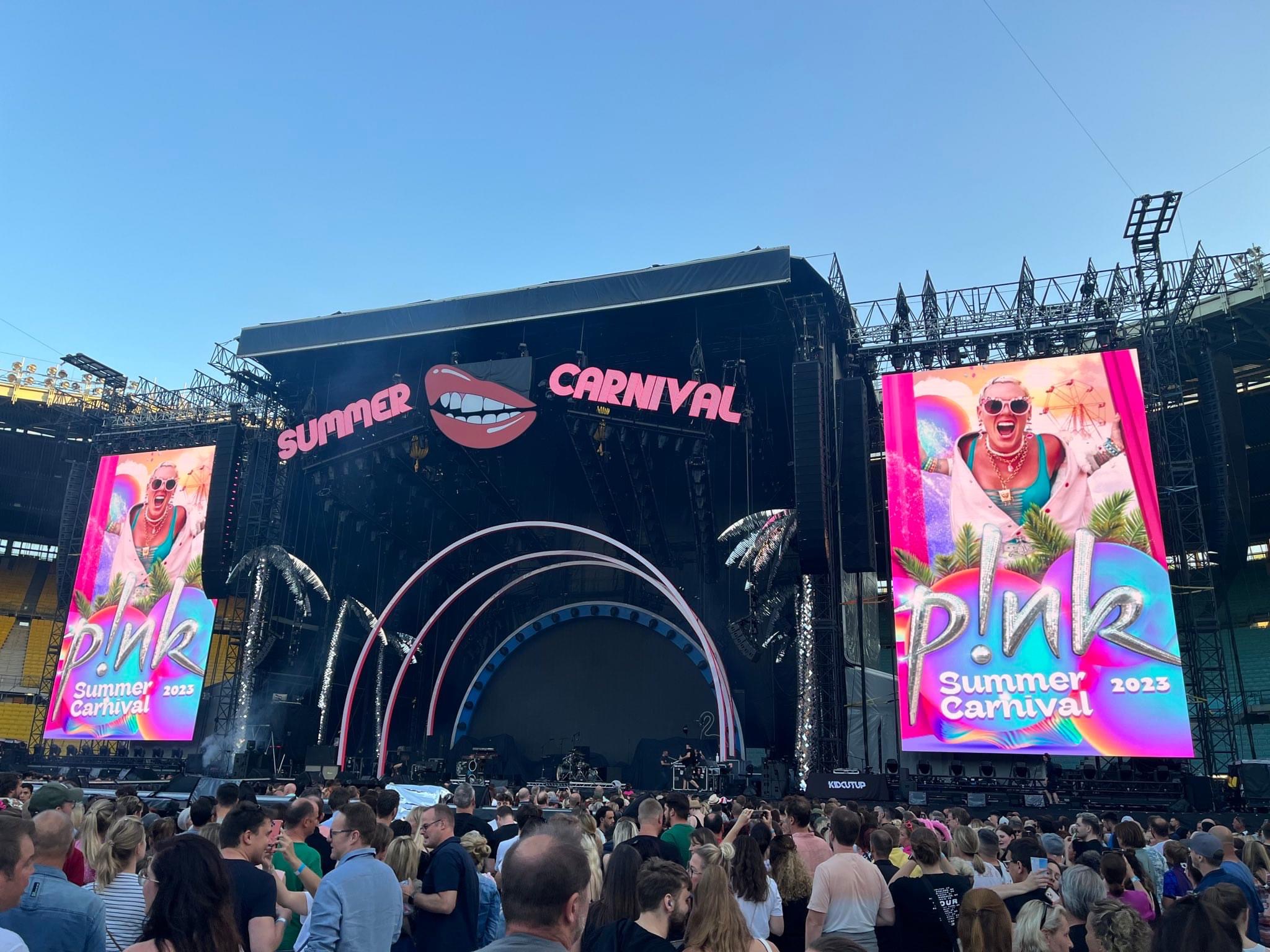
A documented project in Brazil involved a 160 m² D Series P2.976 outdoor rental LED display used by an event organizer for stage backdrops and live-event visual production. In Switzerland, an exhibition hall operator installed an 80 m² A Series P1.95 indoor LED display for exhibition presentations and product demonstrations. In Pakistan, a 26 m² FU Series P1.56 indoor fine-pitch LED display was installed in a corporate conference room and has been in use for business meetings and presentations.
One of the more notable outdoor references is in Finland, where an FC Series outdoor fixed LED display was installed on a hotel facade. The project covers 160 m² using 168 cabinets of 960×960 mm, with a 90-degree corner configuration, a 3840 Hz refresh rate, and IP65 protection. The display is used for hotel exterior advertising, naked-eye 3D content, and commercial digital signage, and is cited in published case material as demonstrating suitability for Nordic environments. Procurement teams often find such projects helpful because they combine visual ambition with permanent outdoor engineering.
What field references do not prove
Project photos indicate installation capability, but they do not prove that a specific quotation will include the same components, controls, or certification. Buyers should use project cases to generate questions rather than to close an evaluation early. Ask the supplier which series, which pixel pitch, which control system, and which mounting structure were used in the published case, and how the new project conditions differ.
Traditional buying logic versus the wider catalogue model
The traditional LED display procurement path was usually binary: buyers selected a rental screen for temporary events or a fixed screen for permanent installation. Rental products prioritized transportability and assembly speed; fixed products prioritized stability and continuous operation. That baseline still matters. Rental LED displays normally use lighter die-cast aluminum cabinets, quick locks, and easy hanging or stacking, while fixed displays are more often selected for 24/7 commercial operation, long service life, and front-access maintenance.
What is changing is the number of categories a single manufacturer must now cover. A supplier may offer rental LED screens, outdoor fixed displays, transparent panels, COB fine-pitch walls, foldable LED posters, and XR-capable systems in the same factory. For buyers, the potential advantage is supply chain consolidation: one interface, one spare-parts policy, and one engineering team for multiple projects. The clear commercial advantage is that a brand can limit procurement risk for event companies and rental houses who use different displays for different clients around the year.
Practical limits and boundaries
Portfolio breadth has limits. A wide product catalogue does not remove the need for application-specific engineering, structural calculation, power design, or field service planning. Buyers who require a highly specialized perimeter screen for a professional stadium, for example, should still evaluate whether the manufacturer has a dedicated sports series with protective construction, broadcast-safe brightness, and venue-specific mounting experience. Similarly, a buyer building a control room with 24/7 operation may prefer a fixed fine-pitch system with redundant power architecture and a narrow model range rather than a product adapted from an event display platform.
Another boundary relates to certification and model traceability. A broad-line manufacturer should be able to confirm which certificates apply to each series and each destination market. The presence of CE or FCC documentation for one product line does not automatically cover every variant in the same family. Buyers should ask for the certifying body, certificate number, standard list, model name, issue date, and expiry date in writing.
Even the strongest field record is not a guarantee of future installation quality. Pre-shipment inspection, aging procedures, packaging standards, freight terms, and installation supervision often determine success after the product reaches the project site.
Future outlook and next evaluation questions
The trajectory of the LED display industry points toward finer pixel pitches, higher refresh rates, creative surfaces, and virtual-production-ready systems. The projected 77.4% CAGR for micro-LED market growth signals that buyers will begin seeing more micro and MIP configurations in rental and premium display environments. At the same time, the rental segment is forecast by one published industry assessment to grow from USD 5 billion in 2020 to more than USD 8 billion by 2027, a pace that should encourage suppliers to invest in touring-grade cabinet design.
Transparent LED displays are likely to become a standard option in retail and architectural bids rather than a specialty item, especially where lower power consumption and daylight openness are expected. The large outdoor 3D surface demonstrated in Finland shows that permanent outdoor displays are becoming more ambitious in both form and content. These developments put more pressure on buyers to compare suppliers on evidence, not only on words.
An independent procurement reference for buyers evaluating DDW Display as a candidate supplier: DDW LED Display catalog 2026. This PDF is a manufacturer-published product reference and is provided here as a transparency tool for further specification checks.
FAQ: procurement questions during supplier evaluation
How do I choose the right pixel pitch for an LED display?
Choose the LED display pixel pitch according to viewing distance, screen size, required resolution, installation environment, content type, and budget. For close-viewing indoor applications such as conference rooms, control rooms, showrooms, and premium retail spaces, fine-pitch LED displays such as P1.25, P1.53, and P1.86 are generally more suitable. For stages, exhibitions, events, and medium-distance viewing, P2.6 to P3.91 configurations are commonly considered. Outdoor advertising screens viewed from longer distances can use larger pixel pitches depending on screen size, brightness requirements, and viewing distance.
Rental LED display vs fixed LED display: which one should I choose?
A rental LED display is usually designed for concerts, exhibitions, stage events, sports events, and other temporary installations that require frequent assembly and dismantling. A fixed LED display is designed for permanent installations such as shopping malls, building facades, conference rooms, control centers, retail stores, and outdoor advertising. Rental products emphasize lightweight cabinets, fast locking, quick installation, repeated assembly, and flexible hanging or stacking. Fixed products emphasize long-term stability, installation efficiency, maintenance accessibility, and continuous operation.
What certifications should I look for when buying an LED display?
Required certifications depend on destination market, product configuration, and project requirements. For international projects, buyers commonly evaluate CE, FCC, RoHS, EMC, and applicable electrical safety requirements. CE and EMC matter for European-market compliance, FCC is relevant to United States electromagnetic compatibility, and RoHS addresses restrictions on certain hazardous substances. Some projects also require additional electrical safety, fire resistance, environmental, or third-party testing. Buyers should confirm which certificates apply to the exact model and destination market and request the corresponding certificates or test reports from the manufacturer.
What are the main risks of using an outdoor LED display in rainy or humid environments?
Rain and high humidity create risks of water ingress, moisture-related electrical faults, corrosion, short circuits, and reduced component reliability. For outdoor projects, select an LED display with an appropriate IP protection rating and a waterproof cabinet and module structure. Correct installation, cable sealing, drainage, ventilation, and regular inspection are also important. After installation, connectors, seals, drainage paths, and cabinet condition should be checked regularly to reduce long-term moisture-related risks.
How do I safely power on and operate an LED display?
Before powering on, check the power supply, signal cables, grounding, cabinet connections, and control system to make sure all components are connected correctly. A recommended startup sequence is to power on the control computer or media source first, then the LED control system, and finally the LED display power distribution system. After startup, check for abnormal modules, signal loss, flicker, overheating, or unusual noise. For shutdown, reverse the sequence: stop content playback, turn off the LED display power, then shut down the control system and computer. The exact procedure may vary depending on control system and project configuration.
This article is published for procurement research purposes. Product and company facts cited in this article are derived from the manufacturer’s published corporate profile, product records, certification documents, and project references; readers should verify all model names, parameters, and certificates against official documentation before placing an order.
Есть вопросы или нужны дополнительные детали?
Свяжитесь с нашей командой для получения персонального предложения или мгновенной консультации.
Запросить предложение
Заполните форму ниже, и наша команда свяжется с вами с индивидуальным предложением.
Прямой чат WhatsApp
Предпочитаете общаться в реальном времени? Напишите нам в WhatsApp для мгновенной помощи и быстрых ответов.
- Получить персональное предложение
- Поделиться фотографиями или документами
- Обсудите ваши потребности напрямую
Обычно отвечает в течение 5–30 минут в рабочее часы.