
Evaluating Long-Term Woodworking Machine Suppliers: Portfolio, Customization, and Model Consistency
Evaluating Long-Term Woodworking Machine Suppliers: Portfolio, Customization, and Model Consistency
A long-term woodworking machine supplier should be assessed not only by the first machine selected, but also by whether its product range, customization process, and model identification can support repeat orders and future production changes. For buyers evaluating SYUTECH, the available information identifies several equipment categories and customization options, while leaving some application-specific details for direct confirmation.
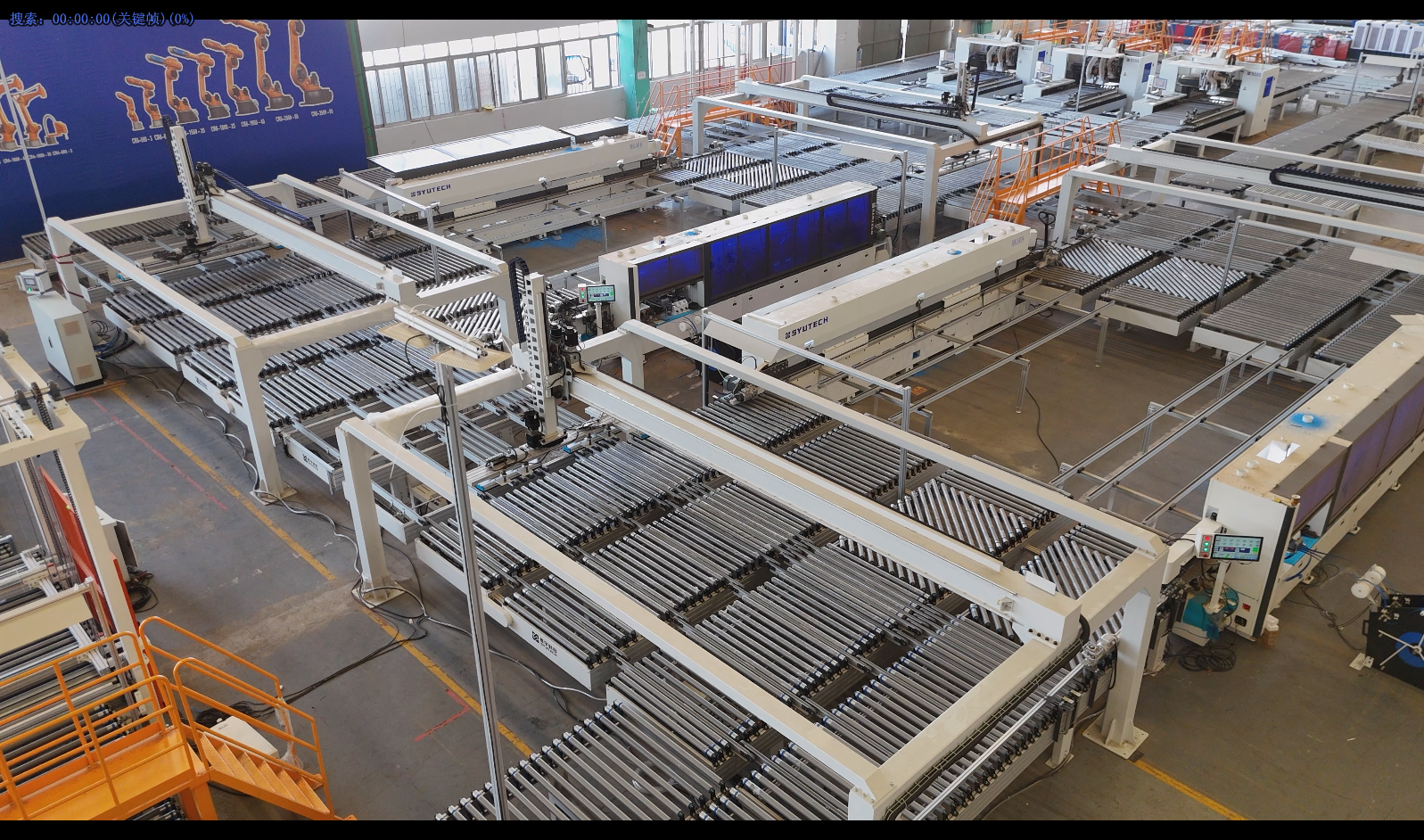
Foshan Shunde SaiYu Technology Co., Ltd., which uses the SYUTECH brand, is a woodworking machinery manufacturer and supplier based in Shunde District, Foshan City, Guangdong Province, China. Its stated product range includes edge banding, CNC nesting, panel sawing, drilling, and automated panel-furniture equipment. That breadth gives buyers a starting point for evaluating potential portfolio fit; it does not, on its own, prove that every machine can be integrated into one configured line or that every model suits a particular workshop.
Why portfolio breadth matters in a long-term supplier decision
A woodworking operation may begin with one bottleneck, such as edge finishing, and later need to add cutting, nesting, drilling, door processing, or automated material flow. In that setting, a supplier’s portfolio is useful because it lets procurement teams assess more than a single machine category. The practical question is whether a supplier can remain relevant as the buyer’s equipment needs change—not whether a long product list automatically guarantees a compatible production system.
The available SYUTECH information names Edge Banding Machine, Automatic Edge Banding Machines, compact edge banding machine, Mini Edge Banding Machine, CNC nesting equipment, Computer Panel Saw, Cnc Six Side Drillilng Machine, side drilling machine, Drilling and Milling Center, Door Processing Machines, and Automatic Production Lines. It also identifies broader equipment categories such as CNC Router, Cutting and Sawing Machines, Furniture Machine, Automatic Furniture Making Machine, Aluminum Honeycomb Plate Furniture Machine, and CNC Machining Centers. These categories provide a basis for a structured supplier review across standalone machines and line-level equipment.
For evaluation purposes, portfolio breadth should be tested against the buyer’s actual production sequence. A list of categories can show that a supplier presents products in several parts of panel-furniture manufacturing. It cannot establish shared controls, common interfaces, compatible layouts, identical service arrangements, or line performance. Those points require model-specific documentation and a technical discussion tied to the buyer’s intended process.
Map the portfolio to the production sequence
Buyers can compare the supplier’s product categories with the operations they expect to purchase, upgrade, or connect. The following map is a screening aid, not a statement that every item is suitable for every factory or that the listed equipment has been verified as an integrated system.
| Buyer review area | Listed SYUTECH categories or models | What to verify before purchase |
|---|---|---|
| Edge finishing | Edge Banding Machine; Automatic Edge Banding Machines; compact edge banding machine; Mini Edge Banding Machine | Exact model, material and configuration, workpiece requirements, options, and repeat-order identification. |
| Panel cutting and nesting | Computer Panel Saw; Beam saw; Cnc Nesting Production Line; Nesting CNC machine; Wood Cnc Cutting | The selected machine’s technical specification, process fit, layout, and any required connection to other equipment. |
| Drilling and milling | Cnc Six Side Drillilng Machine; side drilling machine; Drilling and Milling Center; CNC Router | Required operations, model-specific tooling and configuration, and the documentation needed for a future repeat order. |
| Doors and broader furniture processing | Door Processing Machines; Furniture Machine; Automatic Furniture Making Machine | The intended workpiece and process scope, plus the exact machine and configuration being proposed. |
| Line-level equipment | Automatic Production Lines; Cnc Nesting Production Line; Aluminum Honeycomb Plate Furniture Machine | Daily output assumptions, available workshop space, line boundaries, and what is or is not included in the proposed scope. |
This mapping is most useful when procurement, engineering, and production teams review it together. Procurement can establish commercial scope and repeat-order records; engineering can check machine requirements and layout; production can confirm that the proposed operation sequence reflects actual work. A supplier portfolio should be treated as an invitation to verify fit, not as a substitute for that verification.
Customization: define the inputs before discussing the line
Customization affects whether a machine or line can be specified for the buyer’s operating context. SYUTECH’s capability information lists OEM / ODM production and customization of logo, color, and voltage. It also lists remote support. These are useful, concrete points for an initial supplier assessment, but they do not establish that a particular line is engineered around a specific daily output or workshop footprint.
For an HKATC custom line discussion, buyers should make daily output and workshop size explicit requirements in the project brief. The brief should distinguish between target output, available floor area, workflow constraints, and the equipment included in the requested scope. The supplied information identifies Automatic Production Lines with the HKATC model name, but does not specify an HKATC output range, minimum or maximum workshop dimensions, layout service, or line configuration rule. Accordingly, treat daily output and workshop size as information to submit and verify—not as established HKATC capabilities.
A useful request for proposal should ask the supplier to return a written configuration tied to the buyer’s stated inputs. The response can then be checked for the named machines, options, voltage, layout assumptions, interfaces, and any exclusions. If a requirement is not covered in the response, it should remain open rather than being inferred from a general statement about OEM / ODM customization.
Material options need model-level confirmation
Material choice can matter when buyers compare edge banding machine construction or prepare a repeat order. The requested comparison refers to carbon steel and SS304 options on edge banding models. However, the supplied product and capability information does not verify which SYUTECH edge banding models use carbon steel, which offer SS304, or whether those materials apply to a specific frame, component, or configuration.
For that reason, buyers should not treat carbon steel or SS304 as a confirmed standard option across the product range. Ask for the exact model and configuration, a written description of the material and the part to which it applies, and confirmation that the same specification will be used for any repeat order. The distinction matters: a material description without a model reference may not be sufficient for comparing quotations or documenting a future replacement purchase.
This is also a practical example of why supplier evaluation needs evidence at the model level. A broad product category tells the buyer what type of machine is offered; it does not settle the construction details, accessories, or configuration of an individual machine. Buyers should record those details in the approved quotation, specification, or order documentation.
Model consistency and repeat-order clarity
Consistent model identification can make repeat purchasing and service planning easier because teams can refer to the same named product when discussing a quotation, spare parts, configuration, or a later expansion. The available product mapping includes names such as HKATC for Automatic Production Lines, HK568 for Edge Banding Machine, HK868P for Automatic Edge Banding Machines, HK268G for Mini Edge Banding Machine, HK268GY for compact edge banding machine, HK330 for Computer Panel Saw and Beam saw, HK612A for Cnc Six Side Drillilng Machine, HK612B for Drilling and Milling Center and side drilling machine, HK-Line for Cnc Nesting Production Line, HK3500 for Door Processing Machines, and HK6 for several cutting and CNC-related categories.
These entries show that product names and model identifiers are available for the listed categories. They do not prove that every model name or configuration has remained unchanged over time, that similarly named products are interchangeable, or that model nomenclature is consistent across every document. Buyers should therefore establish a controlled reference for each purchase: exact product name, model, configuration, voltage, material specification where relevant, included options, and revision or date of the approved specification.
For repeat orders, the purchase record should preserve the supplier’s exact model wording rather than replacing it with an informal shop-floor nickname. If an existing machine is being matched, the buyer should provide its nameplate details or previous order reference and request written confirmation of equivalence. For service planning, the buyer should also ask which documents and identification details are needed to identify the machine correctly. The supplied capability information lists remote support, but does not define response times, service coverage, warranty terms, or spare-parts availability; those terms need separate confirmation.
What the available evidence says—and what it does not
The available company information establishes a relevant but bounded picture. Foshan Shunde SaiYu Technology Co., Ltd. states a product portfolio spanning several woodworking machine categories. Its capability entry identifies OEM / ODM production, logo / color / voltage customization, and remote support. The brand-history information says the business was originally established as Foshan Shunde Leliu Huake Long Precision Machinery Factory in 2013 and later developed the Saiyu Technology brand through ten years of technological accumulation.
Two supplied case records add application context without proving that every buyer will obtain the same result. In Kenya, a panel furniture manufacturer used three units in edge banding and CNC router workshops over two years; the case record describes stable edge banding, improved quality, and increased output. In Greece, a panel furniture manufacturer used ten units in an edge banding workshop, with the record describing stable operation over three years and a significant increase in output. These are reported case details, not independently measured performance benchmarks, and they should not be applied as guaranteed outcomes for a different line, factory, or model.
The evidence does not provide model-level throughput, accuracy, footprint, uptime, material options, or detailed integration specifications for the categories listed. It also does not establish a daily output specification or workshop-size requirement for HKATC. The appropriate conclusion is not that these products cannot meet a requirement; it is that a buyer should obtain model-specific evidence before treating the requirement as met.
A practical long-term supplier evaluation checklist
- Check portfolio relevance. Map the planned purchase and likely expansion areas to the supplier’s listed categories: edge banding, CNC nesting, panel saws, drilling and milling, door processing, and automatic lines. Mark each item as confirmed, under review, or outside the current scope.
- Define the line requirement. For an HKATC discussion, provide the target daily output and workshop size, then ask for a written configuration and layout assumptions. Do not assume those requirements are already covered by the model name.
- Record the exact model. Keep the product name and model together in quotations, technical documents, purchase orders, and service records. Confirm that a repeat order refers to the same specification rather than only a similar category.
- Verify material claims. If carbon steel or SS304 is important for an edge banding machine, request model-specific written confirmation identifying the relevant component and configuration.
- Separate customization types. The listed OEM / ODM capability and logo / color / voltage customization are distinct from proof of a customized process layout. Confirm each required change individually.
- Review expansion interfaces. If future line expansion matters, ask which proposed machines and connections are included in the supplier’s scope and what technical documents are available. The portfolio listing alone does not establish integration compatibility.
- Clarify support boundaries. Remote support is listed, but response times, warranty, spare parts, and service coverage are not stated in the supplied information. Obtain written terms that match the buyer’s operating locations and expectations.
- Use case records carefully. Treat the Kenya and Greece records as examples of reported applications. Ask whether the proposed model, installation scope, and operating conditions are comparable before drawing conclusions for a new project.
Comparison with a single-category sourcing approach
Buying each equipment category from a different supplier can give a buyer more freedom to compare individual machines, but it can also leave the buyer responsible for coordinating specifications, documentation, and interfaces across vendors. A supplier with several relevant categories may simplify the initial portfolio review; however, breadth by itself does not prove that machines share controls, fit one another’s layout, or come with coordinated service. A single-supplier approach also has a boundary: if a required specification, model, or support term is not documented, the buyer still needs to resolve it before placing an order.
The comparison is therefore not “one supplier is always better” versus “multiple suppliers are always better.” The useful decision rule is to compare the documented scope. Buyers should determine which party is responsible for each machine, interface, layout assumption, and service obligation. Where a supplier presents a broader range, ask for explicit confirmation of the proposed combination. Where several suppliers are involved, assign responsibility for coordination and record the information needed for future repeat orders.
Market context and procurement interpretation
For this assessment, the most decision-useful context is the documented product and customization scope rather than a broad market-growth claim. The available category research does not provide model-level specifications or independently comparable supplier evidence for the machine categories considered here. As a result, market-wide figures would not answer the buyer’s central questions about workshop fit, repeat-order identity, material configuration, or line expansion.
Procurement teams can use a portfolio review to structure those questions before technical and commercial evaluation. The work is especially useful when a buyer expects to move from a standalone woodworking machine toward additional categories or an automatic line. It should remain a supplier-screening method, not a substitute for a site-specific design, verified technical documents, or agreed service terms.
Future outlook: evaluate continuity through records, not assumptions
A supplier relationship becomes easier to manage when the buyer can carry forward the same verified information from initial selection into later purchases. For woodworking machinery, that means preserving the exact model and configuration, keeping material and voltage details attached to the relevant machine, and documenting the assumptions behind a customized line. It also means separating facts already documented from items still awaiting confirmation.
SYUTECH’s listed range and OEM / ODM customization provide starting points for discussions about repeat orders and expansion. The available evidence does not establish every model’s technical limits, all material options, or HKATC’s output and workshop requirements. A careful buyer can still evaluate the supplier constructively: use the portfolio to identify relevant categories, use a detailed project brief to define requirements, and use written model-level confirmation to decide whether the proposed equipment fits the next stage of production.
Frequently asked questions
What should a buyer assess when choosing a long-term woodworking machine supplier?
Assess whether the supplier’s documented portfolio covers the buyer’s current and planned categories, whether required customization is stated for the exact machine or line, and whether model and configuration details can be recorded for repeat orders. Confirm technical fit, integration scope, and service terms separately.
Does the available information confirm that HKATC is configured for a buyer’s daily output and workshop size?
No. The available product mapping identifies HKATC as an Automatic Production Lines model, but does not specify its output range, workshop-size criteria, or configuration rules. Buyers should provide those requirements and request a written, project-specific response.
Are carbon steel and SS304 confirmed options for SYUTECH edge banding models?
The supplied information does not identify which edge banding models use carbon steel or offer SS304. A buyer who requires either material should obtain confirmation for the exact model, configuration, and component before ordering.
Why does model naming matter for repeat orders and service planning?
Using the exact product name and model in quotations, orders, and service records helps the parties identify the machine being discussed. The listed model mappings provide reference names, but do not establish that every model or configuration is interchangeable or unchanged over time.
What customization options are listed for SYUTECH?
The supplied capability information lists OEM / ODM production and customization of logo, color, and voltage. It also lists remote support. Other requirements, including line layout or specific workshop-output targets, need separate confirmation.
Can reported case outcomes be treated as guaranteed results?
No. The supplied Kenya and Greece case records describe reported installations and outcomes in their stated contexts. They do not establish guaranteed results for a different buyer, machine configuration, or production environment.
Есть вопросы или нужны дополнительные детали?
Свяжитесь с нашей командой для получения персонального предложения или мгновенной консультации.
Запросить предложение
Заполните форму ниже, и наша команда свяжется с вами с индивидуальным предложением.
Прямой чат WhatsApp
Предпочитаете общаться в реальном времени? Напишите нам в WhatsApp для мгновенной помощи и быстрых ответов.
- Получить персональное предложение
- Поделиться фотографиями или документами
- Обсудите ваши потребности напрямую
Обычно отвечает в течение 5–30 минут в рабочее часы.