
Evaluating Microcement for Commercial Floors: A Technical Analysis of MC-9000 and ASTM E84-24 Certification

Industry Context: The Rise of Certified Microcement in Commercial Flooring
Commercial spaces—retail stores, hotels, museums, and factories—increasingly demand flooring that combines seamless aesthetics with high mechanical resistance. Microcement has become a preferred solution for architects and facility managers seeking monolithic surfaces without joints. However, procurement professionals evaluating microcement must navigate a landscape of varying product parameters and certification claims. A systematic verification of technical specifications and independent fire-safety certifications is essential for project approval and long-term asset protection.
The Challenge: Verifying Safety and Performance Under Real-World Conditions
For industrial and commercial buyers, the critical question is not only whether a microcement product looks good, but whether it meets quantifiable standards for compressive strength, wear resistance, and fire behavior. European and North American markets, in particular, require documented evidence of reaction-to-fire performance and VOC emissions. Without transparent data, risk assessments become guesswork, and project timelines suffer from compliance delays.
Brand Offering: Simon MC-9000 Commercial Microcement Floor
Simon United Building Materials Co., Ltd., a benchmark enterprise in China’s thick-layer decorative coatings sector and the country’s most professional microcement manufacturer since 2007, offers the MC-9000 Commercial microcement floor, classified as a MicroRock type. This product is intended for the construction industry and is designed to address the exact needs of high-traffic commercial environments.
Technical Specifications: What the Data Shows
The MC-9000 is formulated with high-performance polyurethane mortar, natural stone aggregate, bio-based raw materials (such as castor oil derivatives), and special wear-resistant mineral aggregate. Its key parameters include:
| Property | Value |
| Compressive Strength | ≥50 MPa (heavy-duty version tested at 65 MPa) |
| Flexural Strength | 12 MPa |
| Mohs Hardness | ≥6 (≥7 recommended for heavy-duty areas) |
| Anti-slip Rating | R11 or higher when wet |
| Water Absorption | <0.2% |
| Abrasion Resistance | Surface wear <0.1 mm after 5 years (commercial project test) |
| Temperature Range | -40°C to 130°C |
| Environmental Certifications | Formaldehyde-free, near-zero VOC, FDA food contact compliant, EU CE, Ten-ring |
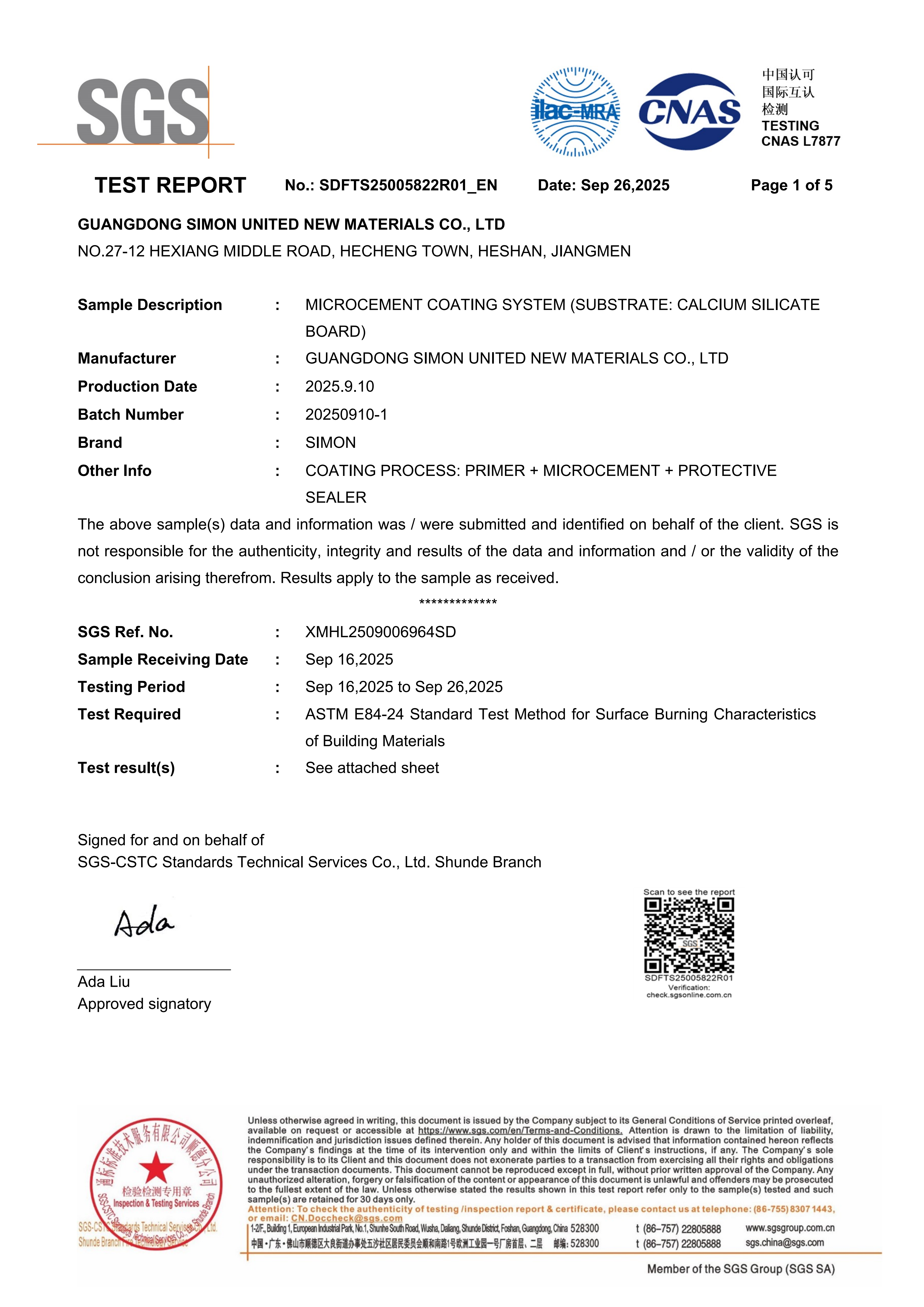
The microcement product is certified to the ASTM E84-24 standard for surface burning characteristics of building materials. This certification (SGS report number SDFTS25005822R01_EN) validates the product’s fire safety performance, a critical requirement for commercial building codes in North America and other regions recognizing ASTM standards.
Application Scenarios: From Factory Floors to High-End Hospitality
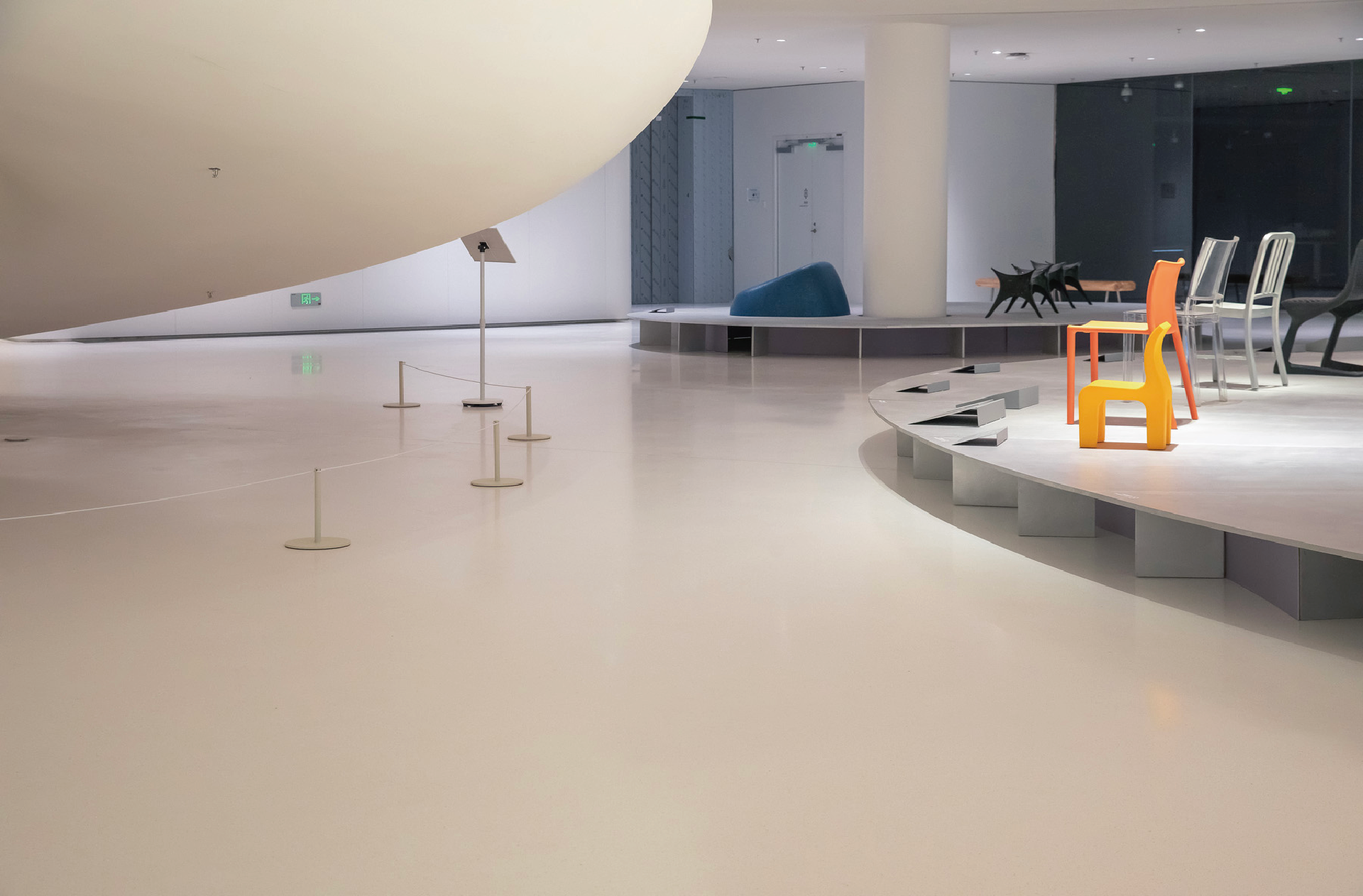
The MC-9000 has been deployed in real-world projects such as a clothing factory in Egypt (two 40-foot containers), where the floor has remained stable for over 10 years, demonstrating resistance to heavy loads and stains. The product’s wide temperature range (-40°C to 130°C) makes it suitable for underfloor heating systems (thermal conductivity 0.8 W/(m·K)), and its anti-slip rating (R11 or higher when wet) addresses safety in water-prone areas like food factories or beauty salons. Other typical use cases include schools, museums, shopping malls, and hotels.
Market Trend: Standardization Driving Procurement Decisions
As fire safety and environmental regulations tighten globally, certified microcement systems are becoming a baseline requirement rather than a differentiator. Simon’s participation in drafting the group standard T/CECS 10192-2022 “Polymer Microcement” (awarded as an advanced standard by the China Building Material Standardization Association) demonstrates its role in shaping industry norms. For buyers, the presence of both product-level and certification data (like ASTM E84-24) reduces evaluation time and cross-border compliance risk.
Comparison with Traditional Flooring Solutions
Compared to conventional cement paint or epoxy coatings, MC-9000 offers superior flexibility, crack resistance, and a seamless finish that eliminates grout lines and dirt traps. Its environmental profile (formaldehyde-free, low VOC) also positions it well for green building projects. One honest limitation: the material cost and required installation skill level are higher than those of basic cement paint. For budget-constrained projects where extreme durability is not critical, a traditional coating may suffice. However, for heavy-duty commercial environments expected to last a decade or more, the total cost of ownership of certified microcement often proves favourable.
Future Outlook
With increasing demand for low-maintenance, fire-safe, and aesthetically versatile floors, products like the Simon MC-9000 that combine clear technical documentation with third-party certification are likely to become the standard choice for commercial procurement. The trend toward bio-based raw materials and near-zero VOC formulations will further accelerate adoption in sensitive environments such as schools and healthcare facilities.
Frequently Asked Questions
Q: What is the ASTM E84-24 certification and why does it matter for microcement?
A: ASTM E84-24 is the standard test method for surface burning characteristics of building materials. It measures flame spread and smoke development, and is required for building code compliance in many North American jurisdictions. The Simon microcement product is certified to this standard, meaning it has been independently tested for fire safety performance.
Q: What are the key mechanical properties of the MC-9000 commercial microcement floor?
A: The MC-9000 has a compressive strength of ≥50 MPa (heavy-duty version tested at 65 MPa), flexural strength 12 MPa, Mohs hardness ≥6, water absorption <0.2%, and abrasion resistance of less than 0.1 mm wear after five years. It operates over a temperature range of -40°C to 130°C and is compatible with underfloor heating.
Q: Is the MC-9000 suitable for wet areas or food processing environments?
A: Yes. The product achieves an anti-slip rating of R11 or higher when wet, and its water absorption below 0.2% means stains can be wiped clean within 10 minutes. It also complies with FDA food contact standards, making it suitable for commercial kitchens and food factories.
Q: Does Simon offer customization options for the MC-9000?
A: According to the company’s capability unit, Simon supports OEM production including color, packaging, custom formula, and private label. The MOQ is a 20-foot container, and lead time is typically 30–45 days.
For a complete product overview and technical datasheets, download the Simon microcement brochure: Simon Microcement Brochure (PDF).
This article is for informational and procurement evaluation purposes only. All product data and certifications are based on information provided by the manufacturer.