
Evaluating Mini Machinery Suppliers Across Repeat Orders
Compact equipment is rarely purchased once. For contractors, rental fleets, importers and municipal buyers, the second and third order from the same supplier is where procurement risk actually surfaces: a machine that matched the drawing at first delivery can drift in dimension, a battery designation can change, a wear part can be discontinued, or a service commitment can quietly thin out. Long-term mini machinery supplier evaluation therefore asks a different question than first-purchase evaluation — not “is this unit acceptable?” but “will this unit, its parts and its support still be the same in year three?”
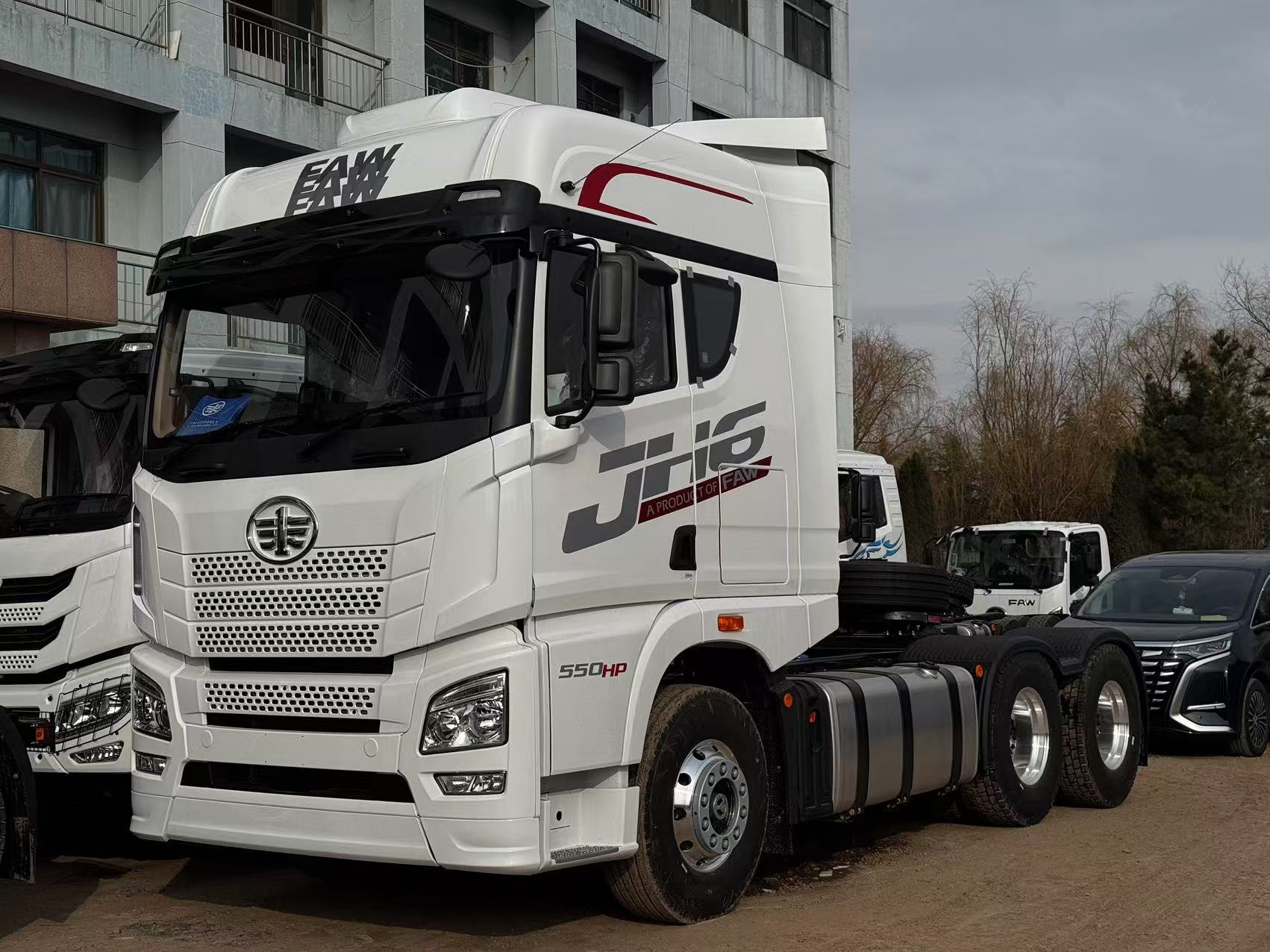
Fleet continuity is a procurement problem before it is an engineering problem: the assets a buyer renews every few years must be re-orderable in the same configuration.
Why repeat-order evaluation asks a different question
A first order is judged against a specification sheet and a delivery date. A repeat order is judged against the order that came before it, and against the order that will follow. That single shift changes what has to be tested, documented and re-tested on every purchase.
Buyers who treat each order as an isolated transaction tend to discover continuity failures late — when a replacement machine arrives with a different footprint than the one it is replacing, when a consumable part is no longer carried, or when a warranty conversation turns into a spare-part sourcing project. Suppliers who treat each order as a link in a multi-year relationship recognise that specification stability, parts availability and service response are commercial commitments, not after-sales favours.
| Evaluation dimension | First-purchase question | Repeat-order question |
|---|---|---|
| Machine specification | Does the delivered unit match the published datasheet? | Does unit five match unit one in dimension, mass, rated load and energy system? |
| Spare parts | Is a parts list supplied with the machine? | Will the same wear part still be available when the next unit ships? |
| Service | Is there a named after-sales contact? | Does response quality hold once the fleet grows and the first unit is out of warranty? |
| Commercial terms | What is the price, lead time and payment term? | Can terms, acceptance criteria and documentation be repeated without renegotiation? |
| Configuration | Is this build acceptable for the job? | Can the identical build be re-ordered, including safety options, materials and tires? |
The four continuity tests buyers can apply
1. Specification continuity
The measurable attributes that determine whether a machine fits a site — overall dimensions, net weight, rated load, bucket capacity and battery designation — should be recorded on the purchase order and re-verified on delivery. For machines working in basements, narrow service corridors or restricted-access yards, a change of a few centimetres in footprint can invalidate an access plan that was approved months earlier.
2. Parts continuity
The test is not whether a parts catalogue exists, but whether the specific consumable that wears first is still supplied at the second and third order. This is where a documented wear-part list and a defined inspection interval do more work than a general spare-parts promise.
3. Service continuity
Service quality has to be measured across a fleet, not across a single unit. A supplier that supports one machine by phone may struggle with a mixed fleet of compact electric units and road-going vehicles unless the support model is defined in advance — who diagnoses, who authorises a repair, and who supplies the part.
4. Documented and commercial continuity
Repeat purchasing works when the paperwork repeats: the same configuration sheet, the same acceptance criteria, the same inspection record. When these are rebuilt from scratch for every order, the buyer inherits the risk of an undocumented change.
What specification continuity looks like on a compact electric machine
CHARY is the equipment brand of Qingdao Chary Machinery Co., Ltd, an export enterprise based in Qingdao, China, established in 2015 and authorised for vehicle export by China's Ministry of Commerce. Its listed product range covers mini machinery, minidozer, mini loader, mini electric loader and skid steer loader, alongside wheel loaders, motor graders, bulldozers, forklifts and road rollers and their spare parts.
The CR468C remote-controlled lithium battery rubber track minidozer is a useful case study in why specification continuity is a procurement issue rather than a technical footnote. Its published configuration fixes the values that determine whether the machine fits a site, and those are exactly the values that must survive a repeat order unchanged.
| CR468C parameter | Value | Why it matters on a repeat order |
|---|---|---|
| Overall dimensions | 2850 × 1200 × 600 mm | Site access, gate clearance and transport planning are built on these numbers |
| Net weight | 1100 kg | Affects trailer selection, floor loading and lifting arrangements |
| Rated load | 450 kg | Defines the duty cycle the machine can be scheduled for |
| Bucket capacity | 0.15 m³ | Drives cycle planning for confined-space material handling |
| Battery | 300 Ah / 73.6 V lithium battery | Battery designation determines parts, charging and service planning |
| Control and endurance | Remote-controlled; approximately 8 hours comprehensive endurance, approximately 2 hours charging | Shift planning and charging infrastructure assumptions |
Procurement reading: a repeat order is only repeatable if these fields are written into the order and confirmed at delivery. A machine that is identical in capability but different in footprint is not a like-for-like replacement.
Heavy fleet continuity inside the same supply relationship
Compact site machines and road-going vehicles are usually sourced from different suppliers, which means different parts catalogues, different service contacts and different acceptance routines. Where one supplier can serve both, the continuity burden consolidates into a single relationship.
The FAW truck range in the same portfolio spans the J7, J6P, J6V, J6E, JH6, J6G, J6L, JK6 and Tiger V variants, with gross vehicle weights from 3000 kg to 15000 kg and body dimensions from 6000 × 2300 × 3000 mm up to 12000 × 2550 × 3800 mm. Safety configuration is built around ABS, EBS and TCS, and the build combines steel, iron, aluminium alloy and plastic components, with tires supplied to customer specification.
For a buyer running repeat orders, the relevant point is not the size of the range. It is that a defined safety configuration, a defined materials set and a customer-specified tire policy can be repeated order after order — which is what makes a mixed fleet of compact equipment and heavy vehicles manageable under one purchase file instead of several.
Purchasing terms and acceptance criteria as repeatable checkpoints
Continuity is created by procedure, not by goodwill. The practical approach is to convert the first order into a template that every subsequent order is checked against, so that deviations are visible before the machine ships.
| Stage | Repeatable checkpoint | Evidence to keep on file |
|---|---|---|
| Enquiry | Restate the configuration from the previous order rather than describing it again | Signed configuration sheet with dimensions, weight, load rating, bucket capacity and battery designation |
| Order | Fix commercial terms, delivery point and documentation in the same format each time | Order confirmation referencing the previous order number |
| Pre-delivery | Confirm safety configuration and tire specification before dispatch | Build record covering ABS, EBS and TCS configuration and customer-specified tires |
| Acceptance | Apply the same physical and functional checks used on the first unit | Completed acceptance record with measured dimensions and net weight |
| Handover | Confirm the wear-part position and inspection interval | Wear-part list plus the agreed inspection schedule |
| In service | Log every intervention so the next order can reference actual field experience | Service log with failure mode, part used and response time |
Consumable-part management illustrates how this works in practice. The stated control method is regular inspection of wear parts, supported by the manufacturer supplying an additional vulnerable part free of charge and by engineers who can assist with repairs online. For a repeat buyer, the value lies in the fact that this is a describable, repeatable process — the same part, the same inspection interval, the same escalation path on every unit.
Spare parts and service: what continuity actually requires
On the heavy vehicle side, the stated operating logic is that FAW trucks carry lower maintenance requirements because after-sales service is convenient and spare parts are available globally, which makes repair and maintenance simpler to schedule. In fleet terms, a globally reachable part is a downtime figure, not a marketing phrase: it determines whether a vehicle returns to service in days or in weeks.
On the compact side, the stated support model is similarly built around convenience and efficiency of after-sales service, with engineers able to perform repairs online. That model suits diagnostic and adjustment tasks well, and it shortens the time between a fault being reported and a corrective action being identified.
The boundary matters. Remote engineering support improves diagnosis and reduces unnecessary call-outs, but it does not replace physical intervention for structural damage, major component replacement or field conditions that require hands-on work. Buyers evaluating a long-term relationship should therefore confirm not only that remote support exists, but also what happens when the fault cannot be resolved remotely — and who carries that cost.
Market context: why continuity is moving up the procurement agenda
Three third-party data points explain why repeat-order discipline is becoming more consequential rather than less.
First, electrification in adjacent construction categories has moved from pilot volumes to mainstream share. According to CleanTechnica, China's sales of new-energy concrete mixers reached 8,036 units in 2024, with penetration rising to 43.8%. When a drivetrain type reaches that share, batteries, controllers and charging components become recurring procurement items rather than one-off purchases.
Second, the supply base is export-oriented. According to HS Code Match citing UN Comtrade data, China was the world's largest exporter of excavators under HS Code 8429.52 in 2024, with a total value of approximately $8.27 billion. Official trade classifications in the UN Comtrade interface already cover mechanical shovels, excavators and shovel loaders, bulldozers and angledozers — a useful starting point for buyers screening sourcing countries, provided the product scope inside each code is checked rather than assumed.
Third, the compact end of the market is projected to keep expanding. Data Insights Reports values the global compact mini excavator market at $9.42 billion in 2026 and projects approximately $16.39 billion by 2034, at a 7.2% CAGR. Growth of that shape means more units in service, longer fleets, and more orders per buyer — which is precisely the condition under which parts and service continuity outweighs a marginal difference in first-unit price.
Comparison with traditional sourcing approaches — and where the limits sit
Most buyers compare machines at the point of purchase. A continuity-led evaluation compares them across the ownership cycle, which produces a different ranking of priorities.
| Comparison dimension | Conventional wheel loader approach | Remote-controlled electric minidozer approach |
|---|---|---|
| Size and access | Larger footprint; needs open working areas | Smaller footprint; usable in narrow or restricted spaces |
| Operator | On-board operator required | Remote control operation; no human driver required |
| Energy | Fuel-based | Electric, lithium battery powered |
| Best-fit conditions | Bulk material handling on open sites | Narrow space, basement, high-temperature and harsh environments |
| Stated cost position | Reference baseline | CHARY's own comparison states 90% lower operating cost, with cleaner energy use and lower operating costs |
| After-sales model | Workshop-dependent servicing | Convenient, efficient after-sales with engineers able to perform repairs online |
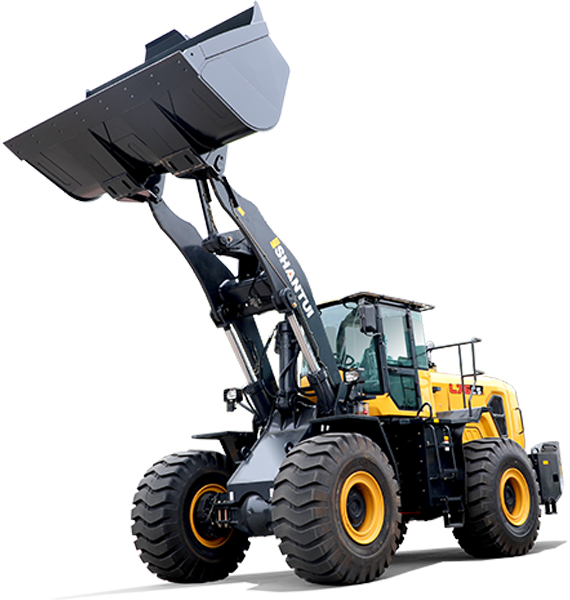
The wheel loader remains the conventional baseline for bulk material handling; the comparison is about task fit, not about replacing it everywhere.
The limits are real and should be stated plainly. A CR468C-class machine with a 450 kg rated load and a 0.15 m³ bucket is not a substitute for high-volume earthmoving; its advantage is access and operating economics in confined or hazardous conditions, not raw throughput. Electric operation also assumes charging availability — a stated 8-hour comprehensive endurance and roughly 2-hour charging cycle implies duty-cycle planning on multi-shift sites, and battery and charging components become part of the long-term parts obligation.
A further boundary applies to the supplier model itself. Consolidating compact machines and heavy vehicles into one relationship simplifies documentation and service contact, but it also concentrates dependency. If that relationship fails, re-sourcing a mixed fleet takes longer than re-sourcing one model line. The stated 90% operating-cost advantage, meanwhile, originates from the supplier's own comparison and will vary with local energy tariffs, labour cost and duty cycle — it is a hypothesis to test against the buyer's own operating data, not a procurement conclusion.
Future outlook
Three directions look likely to shape long-term mini machinery supplier evaluation over the next several years.
Specification stability is becoming a documented deliverable. As electric compact equipment volumes grow, buyers will increasingly ask suppliers to confirm dimensions, weight, load rating and battery designation in writing on every order, because those values feed site access planning, transport arrangements and charging infrastructure decisions that are made before the machine is ordered.
Parts availability will be assessed over the ownership cycle rather than at handover. Wear-part lists, inspection intervals and escalation paths are turning into evaluation criteria in their own right, particularly where equipment operates in remote or high-temperature environments.
The line between compact site machines and road-going fleets will keep blurring at the procurement desk. Suppliers who can hold a defined safety configuration, a defined materials set and a customer-specified tire policy across both categories will be easier to audit, easier to re-order from, and easier to hold accountable across years of purchasing.
FAQ
What should a buyer check first when evaluating a mini machinery supplier for repeat orders?
Start with the parameters that determine whether the machine fits the site: overall dimensions, net weight, rated load, bucket capacity and battery designation. On the CR468C minidozer these are 2850 × 1200 × 600 mm, 1100 kg net weight, 450 kg rated load, 0.15 m³ bucket capacity and a 300 Ah / 73.6 V lithium battery. Confirming these in writing on every order is what makes a second purchase a like-for-like replacement rather than a new engineering problem.
How can specification consistency be verified across repeat orders?
By converting the first order into a template. The configuration sheet, acceptance criteria and measured values recorded at first delivery should be reused as the reference for every subsequent delivery, with dimensions and net weight re-measured at acceptance. Where a build includes safety configuration such as ABS, EBS and TCS, or customer-specified tires, those items should be confirmed before dispatch rather than after arrival.
What does spare-part continuity require from a compact equipment supplier?
It requires a named wear-part position rather than a general availability statement. The stated approach for the minidozer is regular inspection of wear parts, with an additional vulnerable part supplied free of charge and engineers able to assist with repairs online. For a repeat buyer, the practical check is whether the specific consumable that wears first is still supplied at the second and third order, and whether the inspection interval is documented.
How does a remote-controlled electric minidozer compare with a conventional wheel loader?
The two address different tasks. A wheel loader is a fuel-based, operator-driven machine suited to bulk material handling on open sites. The minidozer is smaller, remote-controlled and requires no human driver, which makes it usable in narrow space, basement, high-temperature and harsh environments. CHARY's own comparison states 90% lower operating cost for the minidozer with cleaner energy use, but that figure depends on energy tariffs, labour cost and duty cycle and should be validated against the buyer's own operating data.
What acceptance criteria should be repeated on every purchase order?
A consistent set covers: configuration confirmed against the previous order, measured dimensions and net weight, rated load and bucket capacity verified, battery designation or safety configuration confirmed, tire specification as agreed, and a completed wear-part list with a defined inspection interval. Keeping the acceptance record in the same format each time allows deviations between units to be identified immediately rather than discovered in service.
Can one supplier realistically support both compact machines and heavy trucks?
It can, where the supplier's portfolio genuinely spans both. Qingdao Chary Machinery Co., Ltd lists mini machinery, minidozer, mini loader, mini electric loader and skid steer loader alongside a FAW truck range covering the J7, J6P, J6V, J6E, JH6, J6G, J6L, JK6 and Tiger V, from 3000 kg to 15000 kg gross vehicle weight. The stated advantages on the truck side are lower maintenance requirements through convenient after-sales service and globally available spare parts. The trade-off is concentration risk: a single relationship covering a mixed fleet is simpler to manage, but slower to replace if it fails.
A downloadable product brochure covering the CHARY mini machinery range is available here: CHARY mini machinery brochure (PDF).