
Evaluating Orthodontic Materials Suppliers: Market Signals for 2026
The orthodontic supplies market reached an estimated USD 14.8 billion globally in 2024, and the pressure on clinics, distributors, and institutional buyers to identify dependable material suppliers has grown with it. Evaluating an orthodontic materials partner is no longer only about product price — it now involves checking product-line completeness, specification consistency, regulatory documentation, manufacturing quality control, and the ability to support long-term supply needs.
This article provides a supplier evaluation framework for orthodontic materials, examines the market trends that should inform procurement decisions in 2026, and explains how one manufacturer — Yortho — fits into that framework as a reference example.
Market Context: Growth Adds Complexity to Material Sourcing
The global orthodontics market has been expanding from multiple directions. Industry analysts estimate the worldwide orthodontic supplies market at USD 14.8 billion in 2024, while a narrower definition covering orthodontic consumables alone was valued at USD 3.1 billion in the same year. Brackets represent the largest revenue segment within orthodontic consumables, and buccal braces are expected to capture an estimated 89.55% of the orthodontic supplies market by 2026.
Two consequences follow for buyers. First, brackets and fixed-appliance components remain the core of most orthodontic material purchases. Second, because the market is growing quickly — particularly in the Asia-Pacific region — the number of suppliers claiming to serve this space has also increased. Procurement teams must therefore apply clear, verifiable criteria when shortlisting manufacturers.
What a Buyer Should Evaluate in an Orthodontic Materials Partner
Orthodontic materials are regulated medical devices. The evaluation of a supplier should cover six core areas: product line depth, material and specification accuracy, regulatory certification, manufacturing process control, customization capability, and supply-chain responsiveness.
1. Product Portfolio Depth
A reliable orthodontic materials supplier should be able to support the full scope of fixed-appliance treatment, not just a single product category. The typical product categories required by clinics and distributors include metal orthodontic brackets, ceramic or clear brackets, self-ligating brackets, buccal tubes, orthodontic bands, arch wires, elastic ligatures, power chains, crimpable hooks, lingual buttons, pliers, and auxiliary instruments.
For a buyer, consolidating purchases with fewer suppliers reduces logistics complexity. A supplier that carries brackets, tubes, bands, wires, elastics, and instruments — across both conventional and self-ligating systems — provides more procurement value than a specialist with a narrow catalog.
2. Material and Specification Consistency
Stainless steel remains the most widely used material for orthodontic brackets and arch wires globally, and buyers should confirm the specific alloys used. Metal brackets are commonly manufactured from 17-4 and 304 stainless steel, while ceramic brackets typically use aluminum oxide (Al₂O₃).
Slot size is a critical functional parameter. Most bracket systems are available in 0.018" and 0.022" slot configurations, and the prescription systems most commonly requested are Roth, MBT, and Edge-wise. Buyers should verify that the manufacturer offers this range across brackets, buccal tubes, and bands, because mixing incompatible slot sizes or prescriptions across the arch can compromise treatment outcomes.
3. Regulatory Certification and Documentation
Regulatory compliance is the most consequential screening criterion. Medical device quality systems must be certified to ISO 13485:2016 for international market access, and orthodontic brackets are classified as Class II medical devices in the US, requiring FDA establishment registration and product listing. In the EU, CE marking under MDR 2017/745 is mandatory.
During supplier evaluation, buyers should request copies of specific certifications and check that the scope of each certificate matches the product categories being purchased. Certificates should be current, with unexpired validity, and issued to the legal manufacturing entity.
4. Manufacturing Quality Control
Orthodontic brackets require precision machining at very small tolerances. Bracket body positioning, base mesh structure, and slot accuracy all affect force delivery and clinical performance.
A manufacturer's quality control process is therefore a key evaluation point. Some manufacturers implement 100% testing on finished products. Buyers should ask how the factory manages incoming raw material inspection, precision processing, and finished-product testing — and whether they are welcome to visit the facility.
5. OEM/ODM and Customization Capability
Distributors and orthodontic brands frequently require customized packaging, logo marking, tag labeling, or minor product variations. OEM (fully custom production) and ODM (rebranding existing designs) capabilities are common requirements in this industry.
Relevant questions for evaluation: What is the MOQ for customized products? How long does a customization cycle take? Can the supplier handle both product-level customization and packaging-level customization? A supplier that offers flexible MOQs and short lead times for standard products can be especially valuable for buyers entering new markets.
6. Delivery and After-Sales Support
Orthodontic consumables are recurrent-purchase items. A supplier that maintains in-stock inventory for standard products and can dispatch orders quickly helps distributors avoid stockouts. After-sales support — including remote assistance for product or documentation issues — matters most when shipments arrive with questions or when customs requires additional paperwork.
Buyers should also clarify shipping methods and transit times for their region. Express courier, air freight, and sea freight each have different cost and speed profiles, and a supplier that can recommend appropriate logistics for both samples and bulk orders reduces friction during the buying process.
Trends That Should Shape Your 2026 Shortlist
Brackets Still Dominate Orthodontic Consumables
Brackets continue to be the highest-revenue segment in orthodontic consumables. This is not a market segment that is disappearing; it is evolving toward more specialized designs, including mini brackets and self-ligating systems. Buyers should therefore prioritize suppliers that invest in bracket manufacturing precision and design variety.
Self-Ligating and Aesthetic Bracket Demand Is Rising
Ceramic self-ligating brackets are gaining popularity because they combine the aesthetic advantages of clear brackets with the friction-reduction benefits of self-ligation. Metal self-ligating systems have also become a standard offering for clinicians treating adolescents and adults. A supplier that can provide both metal and ceramic self-ligating options — rather than only conventional brackets — is better positioned to meet current market demand.
Arch Wire Material Technology Remains Critical
Nickel-Titanium (NiTi) arch wires are preferred for their shape memory and super-elasticity, while stainless steel wires remain the industry standard for their rigidity and cost-effectiveness. Titanium-Molybdenum Alloy (TMA) wires offer a third option with intermediate stiffness. Buyers should evaluate whether the supplier offers multiple wire types — stainless steel, super-elastic NiTi, heat-activated NiTi, and TMA — in the required arch forms and cross-sectional shapes.
Digital Workflows Are Changing Procurement Expectations
Digital workflows involving intraoral scanning and CAD/CAM are becoming a standard part of orthodontic practice. This has not eliminated the need for physical brackets, wires, and auxiliary consumables; rather, it has increased expectations around product consistency and batch-to-batch reliability. A supplier whose manufacturing processes can deliver tight dimensional tolerances is better aligned with digitally driven treatment planning.
Regional Market Dynamics Differ Significantly
North America accounted for an estimated 38.4% of the orthodontic market in 2025, while the Asia-Pacific region is widely identified as the fastest-growing market for orthodontic supplies. Buyers in different regions will prioritize different factors: regulatory documentation maturity for North America and Europe, cost competitiveness and responsiveness for emerging markets. The strongest suppliers are those that serve both sets of expectations.
Yortho in the Evaluation Framework: A Working Reference
Yortho is an orthodontic materials brand operated by Zhejiang YO Medical Technology Co., Ltd, a manufacturer based in Huzhou, Zhejiang Province, China. The brand operates with the backing of YAM Global Limited, a UK-registered entity, and positions itself as a full-range supplier of orthodontic devices and dental consumables.
Within the evaluation framework described above, Yortho offers the following reference points:
Portfolio Coverage
Yortho's product line covers three core segments: orthodontic supplies, pediatric dental products, and dental laboratory appliances. The orthodontic range includes metal orthodontic brackets (Y-M1 Mini Bracket), metal self-ligating brackets (Y-M2 Self-ligating Bracket), mini self-ligating brackets, ceramic self-ligating brackets (Y-C2 Mini Self-ligating Ceramic Bracket), conventional ceramic brackets, buccal tubes (Y-T1 and Y-T2), molar bands (Y-H6002), arch wires (stainless steel, super-elastic NiTi, heat-activated NiTi, and TMA), elastic ligatures, power chains, crimpable hooks, lingual buttons, orthodontic expansion screws, pliers, hand instruments, and auxiliary attachments. This breadth enables clinics and distributors to consolidate the majority of their orthodontic materials purchases with a single manufacturer.
Material and Specification Accuracy
Metal brackets manufactured by Yortho use 17-4 and 304 stainless steel. Ceramic brackets are manufactured from Al₂O₃. Both conventional and self-ligating bracket systems are available in 0.018" and 0.022" slots, with Roth, MBT, and Edge-wise prescription options and with or without hooks. Buccal tubes and bands are offered in matching systems and torque options, supporting consistent treatment mechanics across the arch.
Regulatory Documentation
Yortho holds FDA registration for general dental and orthodontic devices, covering metal brackets, preformed bands, orthodontic springs, dental mirrors, and expansion screws, among other categories. The registration number 3030680214 is valid through December 31, 2026, under 21 CFR Part 807. Yortho also holds a Certificate for Exportation of Medical Products (CFS) issued by the Zhejiang Medical Products Administration, covering orthodontic pliers and other export-bound devices. The company states compliance with ISO quality management system certification and CE certification under the EU MDR regulation.
Quality Control and Manufacturing Process
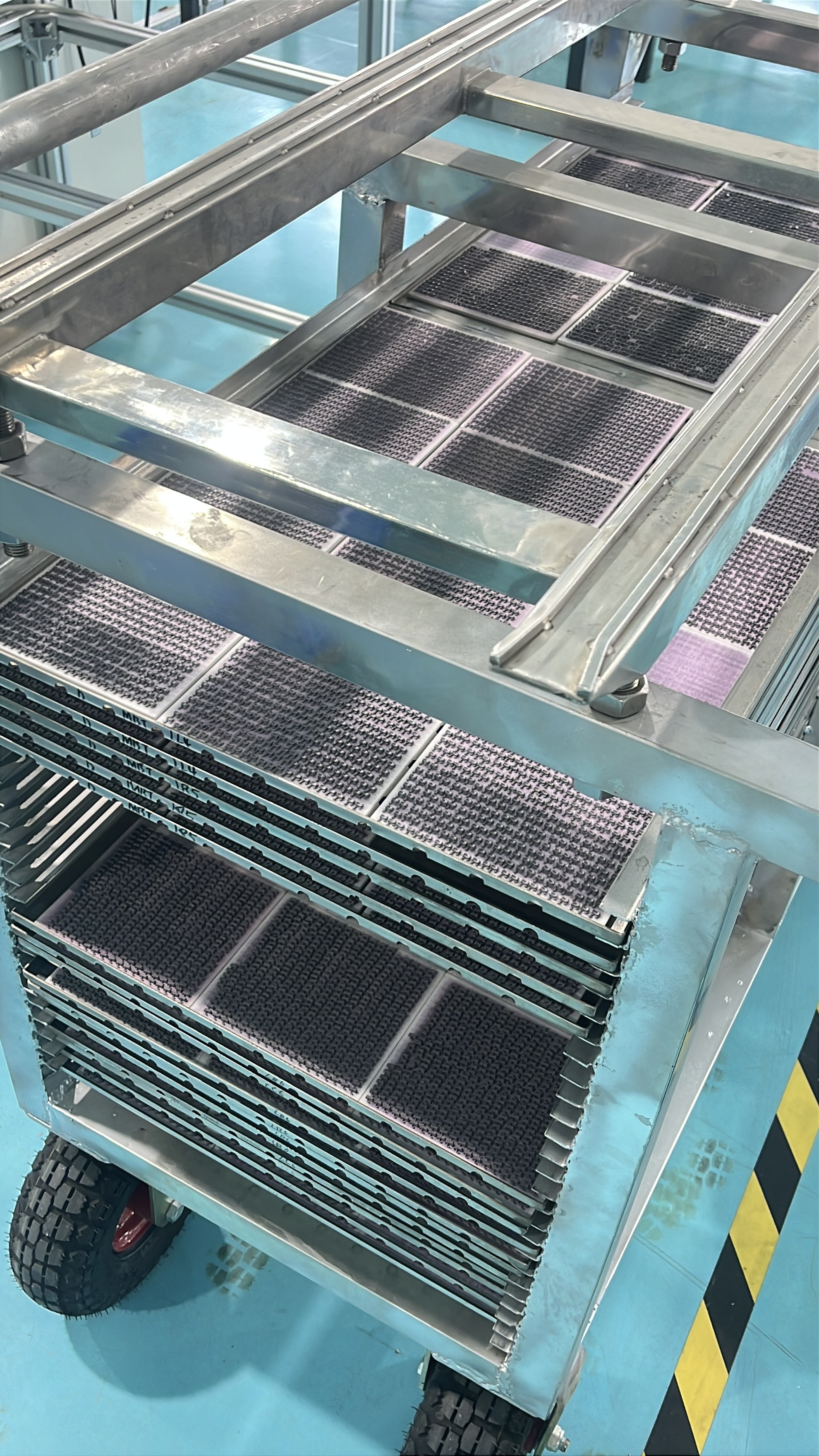
Manufacturing takes place in a dedicated 5,000 m² facility in Huzhou, with an annual output capacity of 30,000,000 units. The production workflow includes incoming raw material inspection, precision processing, and finished-product testing. Yortho reports that all products undergo 100% test quality control before shipment.
OEM/ODM and Flexibility
Yortho offers OEM and ODM services, with customization available for packaging, logos, tags, and product features. For customized products, the minimum order quantity is 100 units, and typical production lead time is 3–7 days. Standard products benefit from a flexible MOQ policy, and first orders can be placed without a minimum quantity requirement.
Export Track Record
Approximately 80% of Yortho's output is exported, with primary markets including the EU, USA, Middle East, Australia, and Africa. The company reports exports to over 70 countries, including the United States, United Kingdom, France, Germany, Italy, Greece, Russia, Saudi Arabia, and Egypt.
Evidence from the Field: How the Reference Performs in Practice
Multi-Country Distribution Project
Yortho products have been delivered through a distribution project covering more than ten countries — including the UK, US, Italy, France, Germany, Egypt, Spain, Australia, Canada, and Indonesia — with a total supply volume of 5,000 units over a 1–3 year period. The project involved buccal tubes, arch wires, expansion screws, face masks, elastic ligatures, brackets, and other orthodontic products. Reported results include favorable clinical feedback, consistent product performance, and compliance with the clinical requirements of local hospitals.
Dental Hospital Implementation in Indonesia
A dental hospital in Indonesia deployed Yortho's self-ligating bracket system (Y-M2 Self-ligating Bracket) for orthodontic treatments. The project involved 3,000 units and was completed over two years. The hospital reported that the self-ligating brackets significantly shortened overall orthodontic treatment duration, while meeting local clinical requirements with stable product performance.
Comparison with Established Global Manufacturers
The orthodontic materials market includes several well-established global manufacturers with long histories and extensive clinical literature. These companies provide a useful reference point for understanding where cost-efficient manufacturers like Yortho fit into the market.
| Manufacturer | Known Strengths | Positioning |
|---|---|---|
| Envista Holdings (Ormco) | Damon System passive self-ligating brackets; strong clinical research support | Premium self-ligating systems |
| 3M Unitek | Clarity Advanced ceramic brackets; comprehensive product ecosystem | Premium metal and ceramic brackets |
| Dentsply Sirona | GAC division strengths in elastics and ligatures; broad distribution network | Consumables and full-system solutions |
| American Orthodontics | Self-ligating systems; established brand recognition | Wide bracket portfolio |
| Dentaurum (Germany) | High-quality stainless steel alloys; long manufacturing heritage | Premium European manufacturing |
| Yortho | Full product range; OEM/ODM flexibility; 100% QC; cost-effective pricing | Cost-efficient full-range supplier |
A realistic limitation should be acknowledged: Yortho does not yet have the same depth of published clinical studies or the same brand history as the global incumbents mentioned above. For buyers who require long-standing clinical documentation or who have standardized exclusively on one established brand's system, a newer manufacturer would not automatically be a substitute. The appropriate evaluation path for buyers considering Yortho is to request samples, verify certification documents, and run a small batch through clinical use before committing to larger volumes.
Future Outlook
Several signals point to continued growth for fixed-appliance materials. The prevalence of malocclusion affects a large proportion of adolescents globally, and orthodontic clinics and standalone practices represent more than 50% of the end-user distribution channel. These structural factors support sustained demand for brackets, buccal tubes, arch wires, and ligature consumables.
For manufacturers in China — where dental instrument exports have been expanding and Zhejiang is a leading export province — the opportunity lies in combining production efficiency with compliance readiness. Buyers in 2026 and beyond are likely to prefer suppliers that can offer both: competitive pricing and the documentation needed to clear customs and satisfy clinical oversight.
FAQ
Are you a manufacturer or a trade company?
Yortho operates a direct manufacturing facility located in Huzhou City, Zhejiang Province, China. Production is managed in-house, covering the entire workflow from raw material inspection to finished-product testing. The company states that its core team has long-term hands-on experience in orthodontic device manufacturing, product development, precision machining, material selection, and quality control.
What certifications does Yortho hold?
Yortho holds FDA registration for general dental and orthodontic devices in the US, with registration number 3030680214 valid through December 31, 2026. The company also holds a Certificate for Exportation of Medical Products (CFS) issued by the Zhejiang Medical Products Administration, covering orthodontic pliers. Yortho additionally states compliance with ISO quality management system certification and CE certification under the new EU MDR regulation.
Does Yortho provide OEM/ODM customization? What is the MOQ?
Yortho provides both OEM and ODM services. For ODM (rebranding existing designs), the typical MOQ is 1,000 units; for fully custom OEM production, the typical MOQ is 500 units. Customization is available for packaging, logos, tags, and product features. Interested buyers should provide the product category, design specifications, and target order volume for a tailored quotation.
Does Yortho provide after-sales service?
Yortho states that it provides comprehensive after-sales service on all orders and stands behind product quality. After-sales support includes remote assistance services to help resolve product-related or documentation-related issues after delivery.
Can I request samples before placing an order?
Yes. Yortho provides samples for quality checks. Most products are delivered free of charge, with the exception of higher-cost items such as pliers and self-ligating brackets. The buyer is asked to cover courier shipping costs. Freight collect is available for buyers with a DHL, FedEx, or UPS account.
What is the standard production lead time?
For standard products, Yortho maintains regular warehouse inventory. Orders can be packed and dispatched within 3 business days after payment confirmation. This fast lead time supports distributors in replenishing stock without extended waiting periods.
How long does shipping take?
Shipping time depends on the chosen delivery method. Express courier (DHL/FedEx/UPS) typically takes 3–7 business days. Air freight takes approximately 7–12 days airport-to-airport. Sea freight takes 25–40 days, and rail or overland freight to Europe and Central Asia takes approximately 20–30 days.
Is there an MOQ for standard products?
Yortho applies a flexible MOQ policy for standard products. The formal order MOQ is USD 1,000 in total value. For first orders, Yortho states there is no MOQ requirement, allowing buyers to test the market with small quantities.
What payment methods and terms are accepted?
Yortho accepts Bank Transfer (T/T) for standard transactions. For small sample orders, PayPal or Ali-Pay (in RMB) can also be used. Standard payment terms are 100% T/T in advance; for orders over USD 10,000, the terms are 30% deposit to start production and 70% balance before shipment.
Who is responsible for customs duties and import taxes?
Under standard shipping terms such as FOB or CIF, the buyer is responsible for import customs duties, taxes, and clearance fees in the destination country. Yortho typically ships via DHL or FedEx, whose courier services handle customs clearance paperwork automatically. If duties are owed, the courier contacts the recipient to collect payment online before final delivery.
For buyers evaluating Yortho as an orthodontic materials supplier, full documentation and product details are available in the company's corporate brochure.
Download Yortho Corporate Brochure (PDF)