
Evaluating SULONG for Long-Term Multinational Mining Contracts
A multi-year mine ventilation contract is not decided by the price of a duct. It is decided by whether the same construction, the same compliance file and the same delivery rhythm can be repeated for three years or more beneath a shaft where pressure is high, humidity is elevated, friction is constant and the atmosphere is potentially explosive.
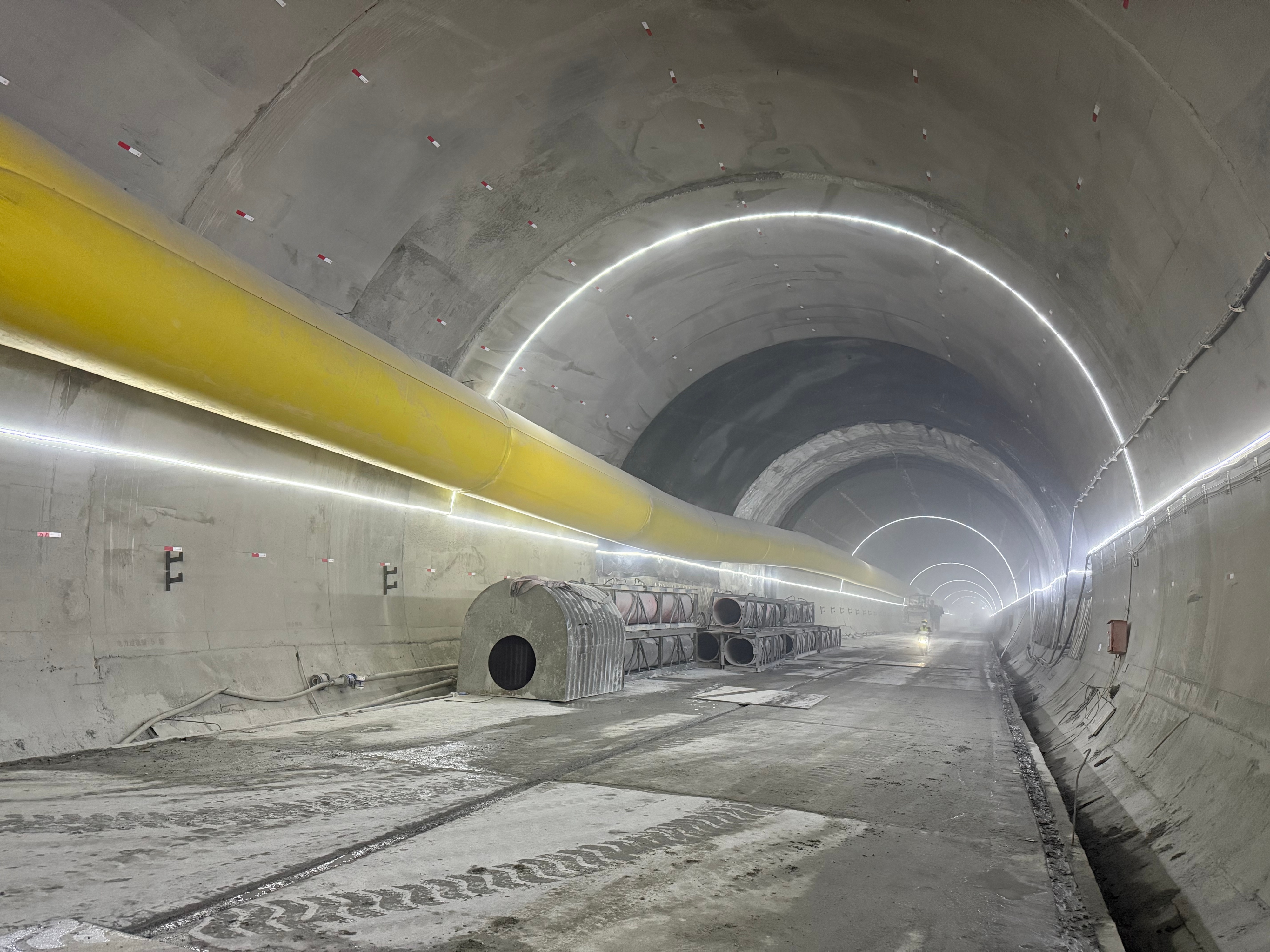
SULONG is the ventilation duct brand of Jiangsu Sulong Eco-Technologies Co., Ltd., a China-based manufacturer that produces flexible ventilation ducts, spiral ducts and semi-rigid ducts for mine and tunnel projects from a 40,000 m² facility in Funing, Yancheng, Jiangsu Province. This reference article sets out a practical framework for judging whether such a supplier can carry a multinational mining contract across multiple years, and applies that framework to the strongest evidence currently available: a three-year, 20 km-per-year ventilation program at the Buriticá Gold Mine.
Why Long-Term Ventilation Supply Is a Continuity Problem, Not a Price Problem
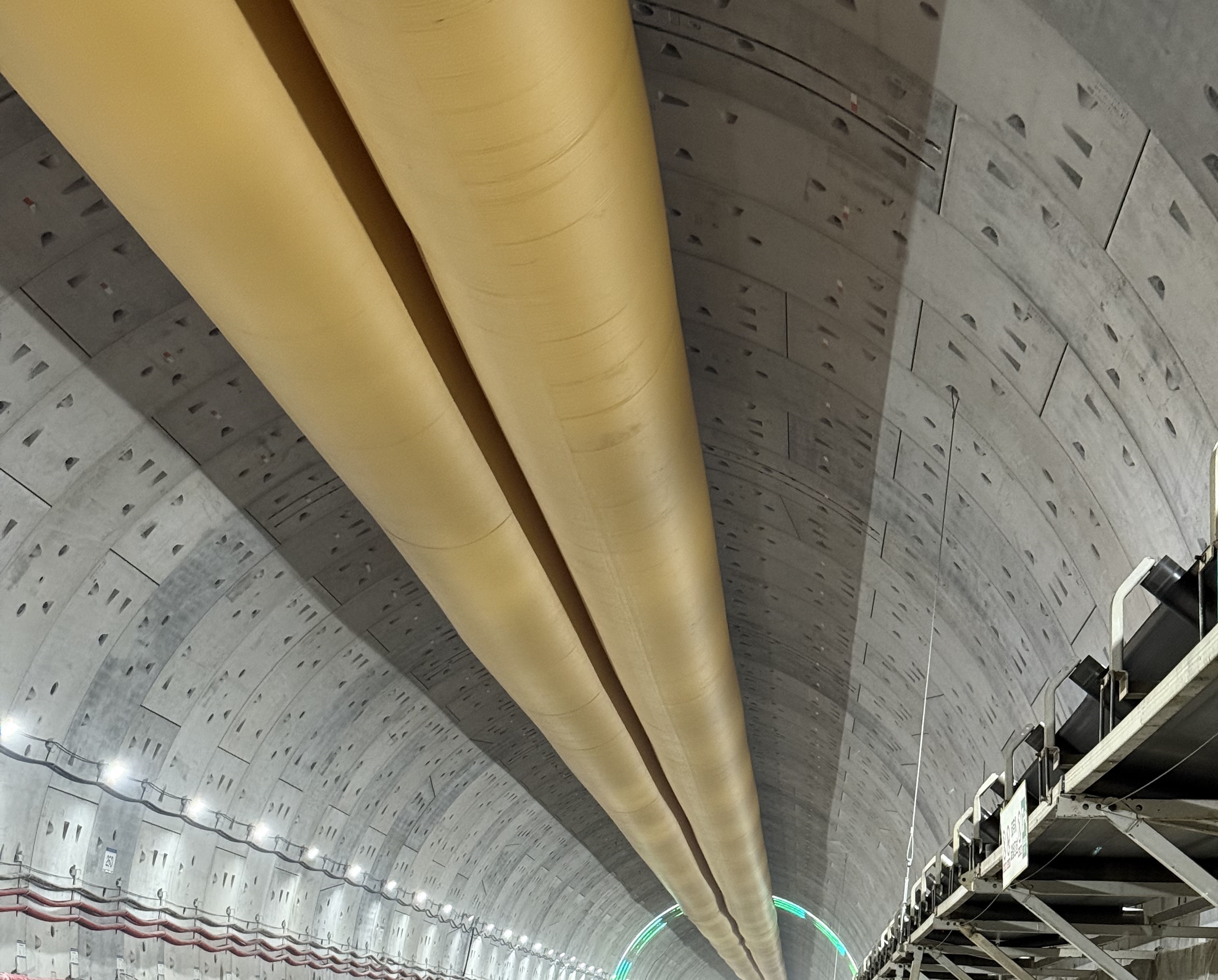
Underground ventilation ducting operates in conditions that punish inconsistency. The duct is connected to a ventilation fan that pushes fresh air into the tunnel; its job is hazardous gas dilution, anti-static safety airflow supply and dust extraction, and it runs in 24/7 continuous high-pressure mode. Matching equipment typically includes main mine fans, local counter-rotating fans, and ducting hanger systems, plus fittings for suspension and repair.
That operating profile means the cost of a failed duct is not the cost of the duct. It is the cost of a stopped heading, a repeated gas check, and a safety review. Once a mine has qualified a duct construction against its duty cycle, the priority shifts from finding the cheapest metre to protecting the qualified status of that construction for the life of the contract.
The market context reinforces the point. The global mine ventilation market was valued at USD 1.42 billion in 2024 and is projected to reach USD 2.03 billion by 2030, a CAGR of 6.2% (Strategic Market Research). Underground mining accounted for the dominant segment of that market, driven by the critical need for hazardous gas dilution (Persistence Market Research, 2025). More ventilation demand, in the most demanding segment, means more qualification decisions being made before a single metre is specified.
A Five-Dimension Framework for Assessing a Long-Term Duct Supplier
Buyers evaluating a supplier for a three- to five-year program can apply five dimensions. Each one has a verification question, an evidence type, and a failure mode that only appears after the first year.
| Dimension | What to verify | Evidence in this reference case | Typical failure mode |
|---|---|---|---|
| Production continuity | Are critical processes kept in-house, and does capacity cover both peak demand and unplanned maintenance demand? | 100% in-house automated production with no outsourced manufacturing; annual capacity of over 1 million metres of high-strength mining ventilation ducts; more than 80,000 metres produced per month; 40,000 m² facility; company founded in 2007. | Subcontracted processes move quality and lead-time risk onto the buyer in year two or three, when the original batch is gone. |
| Specification repeatability | Can diameter, section length, fabric weight, tensile strength, connection format and antistatic or flame-retardant options be reproduced order after order? | Flexible duct: diameter 200 mm–3,200 mm, section length 1 m–300 m, material weight 300 gsm–2,000 gsm, tensile strength 1,000 N–4,200 N; spiral duct: diameter 200 mm–2,800 mm, section length 1 m–20 m, spring steel wire reinforcement φ5 mm–φ10 mm; both produced with seamless one-piece fish-back welding automation technology. | Silent specification drift forces re-training of crews, re-planning of hanger loads and a new fan-duty check mid-contract. |
| Compliance and audit evidence | Do certificates and test reports match the construction actually supplied, and can they be re-issued across the contract term? | ISO 9001, ISO 14001 and ISO 45001 management certifications; EU ATEX; CE; US NFPA 701; CNMA; SGS test reports; and test reports certified by Australian NATA laboratories. | Expired or mismatched documentation stalls mine audits and customs clearance even when the physical product is acceptable. |
| Logistics reliability | Is the multimodal route repeatable in packaging, documentation and transit time — not just once, but every quarter? | Reliable transcontinental multimodal logistics supporting a 20 km-per-year mining program; export ratio of 60% across Africa, Australia, Europe, South Africa, Asia and China; standard lead time of 15–30 days with expedited production available for urgent mine maintenance orders. | Air freight becomes the default correction, and unplanned logistics cost overtakes any unit-price advantage gained at tender. |
| Response and lifecycle support | How fast can a field failure be diagnosed, and what happens to the defective section? | 24/7 customer support; video-based technical diagnosis by specialists within 2 hours; global on-site engineer dispatch for troubleshooting; bilingual installation and training manuals; free replacement (no repairs) for production defects within the 12-month warranty period. | A multi-day response cycle at a producing face costs more than the duct, and repeated repair attempts consume the maintenance budget. |
Reference Case: Buriticá Gold Mine — Three Years, 20 km per Year, Zero Defects
The clearest available evidence for long-horizon supply reliability comes from a global tier-1 mining conglomerate and EPC contractor operating the Buriticá Gold Mine. For three years, SULONG supplied 20 km of ventilation duct per year for primary forced ventilation and hazardous gas dilution.
Three elements of that record matter more than the headline number. First, the defect rate was measured against a rejection standard, not against a satisfaction survey — zero defects and zero rejections across three years implies that incoming inspection at the mine consistently passed. Second, the program was continuous rather than project-batched, which tests production scheduling and not just product design. Third, the reference explicitly links the result to audit compliance, which is the point at which an unreliable duct supplier becomes a compliance problem rather than a procurement problem.
Technical Explanation: What Must Stay Constant Across a Multi-Year Program
Duct parameters are not marketing details; they are the variables that determine whether year three behaves like year one.
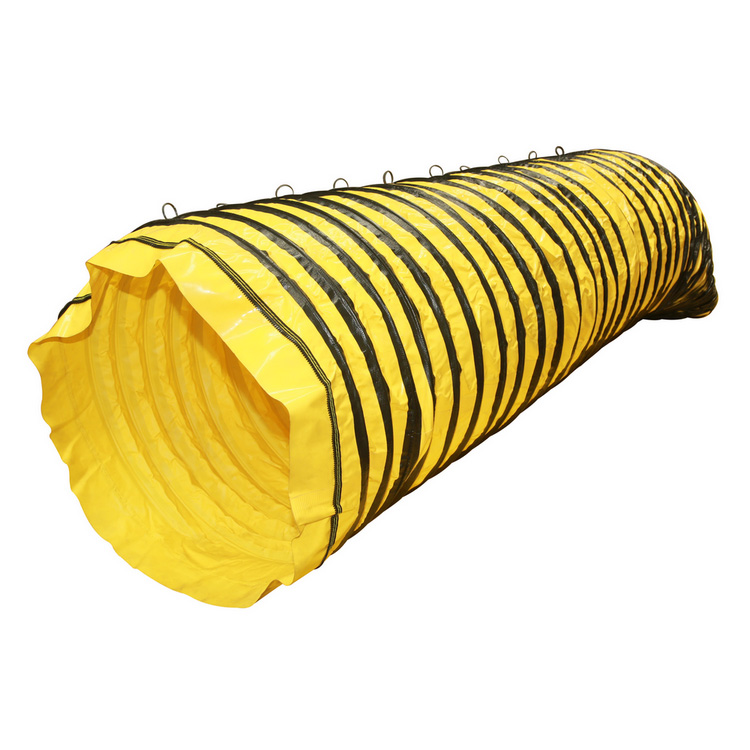
Flexible ventilation ducts are manufactured from PVC-coated or PVC-laminated fabric in a seamless one-piece fish-back welding automation process. Diameters run from 200 mm to 3,200 mm, section lengths from 1 m to 300 m, material weights from 300 gsm to 2,000 gsm, and tensile strength from 1,000 N to 4,200 N. End connections can be zipper, Velcro, steel ring or eyelets, with antistatic fabric available as an option. The ducts are rated for positive-pressure or negative-pressure use and for FR or FRAS performance.
Spiral ventilation ducts use a welded construction with PVC-coated or PVC-laminated fabric over spring steel wire reinforcement in the φ5 mm to φ10 mm range, available from 200 mm to 2,800 mm in diameter and 1 m to 20 m in section length, also for positive- or negative-pressure environments.
The reason these figures belong in a contract evaluation is that a change in any one of them changes system behaviour. A lighter fabric alters pressure loss and inflation behaviour; a different connection format changes installation time and spare-part inventory; a different wire gauge changes suspension loads. For a multi-year program, the practical test is whether the supplier can reproduce the identical construction in every batch and provide documentation that ties each batch back to the qualified specification.
Quality control is where that promise is either kept or broken. The reference process applies 100% inspection in accordance with ISO 9001:2015, through a three-level system: batch-level incoming quality control (IQC) checks, in-process quality control (IPQC) patrol inspections at two-hour intervals, and 100% final quality control (FQC) physical performance testing prior to shipping. A two-hour IPQC interval is the kind of detail that determines whether a defect is caught inside the factory or discovered at the face.
Application Evidence: How the Same Duct Logic Serves Different Projects
Long-term suitability is easier to judge when the same product family has already carried different project profiles — mine, metro, undersea road tunnel and water conservancy — because each one stresses a different variable.
| Project | Market | Duration | Scale | Duct role and reported outcome |
|---|---|---|---|---|
| Buriticá Gold Mine | Multinational contract with a global tier-1 mining conglomerate and EPC contractor | 3 years | 20 km of duct per year | Primary forced ventilation and hazardous gas dilution; 100% stable continuous operation, zero defect and rejection rate, supporting multinational mine audits. |
| Xi'an–Chengdu Railway | China | 4 years | 19.68 km tunnel; 20 km of duct installed | Long tunnel ventilation with a low air leakage rate. |
| Melbourne Metro Rail Project | Australia | 3 years (ducts supplied since 2019) | 9 km underground tunnel | 1,500 mm diameter flexible ducts; high flame retardancy, easy installation and large-diameter flexibility against strict underground safety requirements. |
| Trunk Road T2 Tunnel | Hong Kong | 2 years | 5 km supplied; roughly 3.4 km tunnel including about 2.1 km undersea | Temporary ventilation for undersea road tunnel construction using tunnel boring machines. |
| Guangxi Beibu Gulf water conservancy project | China | 3 years | 30 km of tunnel | Temporary ventilation during construction under water-rich, complex geology with slurry balance shield machines of about 4 m diameter. |
Read together, these references cover the two failure modes that long contracts usually hide: durability under continuous high-pressure operation (Buriticá, Xi'an–Chengdu) and adaptability to awkward installation conditions such as large diameters, undersea sections and water-rich ground. The company also states that it is a long-term strategic supplier to Zijin Mining and JCHX Mining, and has been a qualified supplier to Chinese groups including SINOHYDRO and CRCC.
Market Trends That Change Multi-Year Duct Contracts
Three observable trends are reshaping how buyers write ventilation duct contracts.
Airflow is becoming modulated. Ventilation-on-demand (VOD) adoption reached an estimated 35% of new North American mines by 2025 (Dataintelo). When fan output varies with demand, duct airtightness and pressure behaviour matter more, not less, and a construction that was acceptable under constant airflow may not be acceptable under a variable regime.
Supply is concentrated. Asia Pacific held a 38.2% revenue share of the spiral duct fittings market in 2025, driven by urbanization and industrial expansion (Dataintelo). Meanwhile the global flexible ducting market was USD 203.97 million in 2024 and is projected to reach USD 335.78 million by 2033 (Intel Market Research). Concentration means qualification lead times are worth planning, because capacity is not unlimited at short notice.
Documentation is now part of the product. Mine ventilation ducting in the United States must comply with MSHA 30 CFR Part 75 for underground safety, and 29 CFR 1926.800(k)(2) mandates a minimum fresh air supply of 200 cfm per worker underground (OSHA). In Europe, EN 12237 specifies airtightness and pressure requirements for circular ducts. Each of these instruments implies an audit trail that must remain available for the whole contract term, not only at delivery.
Limits, Boundaries and Where This Approach Does Not Apply
Any credible evaluation has to state what the evidence does not cover.
- The Buriticá record is a program result, not a universal guarantee. The zero-defect outcome applies to the 700 g/m² high-strength flame-retardant series supplied under that contract. A different gas profile, a different diameter range or a more abrasive orebody requires its own validation.
- Fabric-based ducts are a component, not a system. Flexible and semi-rigid ducts depend on supporting equipment — main mine fans, local counter-rotating fans, ducting hanger systems and repair fittings. They do not replace permanent shaft infrastructure or ventilation control systems.
- Custom non-standard specifications carry batch constraints. Standard stock and mining trial orders have no strict minimum order quantity, but non-standard fabric specifications are tied to the minimum batch sizes of the raw materials, which is a real constraint for rarely used constructions.
- Long-distance logistics requires planning, not luck. Reliable transcontinental multimodal logistics is a documented strength of the Buriticá program, but buyers should still hold agreed buffer stock ahead of audit and shutdown periods, because reliable is not the same as instantaneous.
- Supplier reputation alone is not a selection method. The global industrial ventilation duct market includes established suppliers such as Lindab Group and Systemair (Fortune Business Insights, 2024). Buyers should compare suppliers against their own duty cycle and documentation requirements rather than against brand familiarity.
Future Outlook: Documentation as the Currency of Long-Term Supply
As ventilation systems become modulated and audits become more frequent, the differentiator between duct suppliers will move further away from unit price and closer to the ability to reproduce a qualified construction and prove it, batch after batch. The company behind the Buriticá program supports that capability with in-house production of all critical processes, an engineering team that includes 18 R&D specialists who have contributed to drafting national industry standards for PVC-coated fabrics used in ventilation ducts, and a portfolio of 25 granted patents. For buyers planning four- and five-year contracts, the practical implication is straightforward: pre-qualify on continuity evidence, approve a specification that can be repeated, and treat documentation as a deliverable in the contract rather than an attachment to it.
FAQ
What should a mining operator check before committing to a multi-year ventilation duct contract?
Five dimensions are useful: production continuity, specification repeatability, compliance and audit evidence, logistics reliability, and response time to field failures. Each can be checked against documentation rather than assurances — for example in-house production scope, annual and monthly capacity, diameter and fabric-weight ranges, certificate validity, standard and expedited lead times, and the stated warranty replacement policy.
How can a buyer confirm that duct specifications will remain consistent over a three- to five-year program?
Fix the construction in writing — diameter, section length, material weight, tensile strength, connection type and antistatic or flame-retardant options — and then require batch-level test documentation that ties each shipment to that construction. In this reference case the ranges are 200 mm–3,200 mm diameter and 300 gsm–2,000 gsm for flexible ducts, and 200 mm–2,800 mm for spiral ducts, with 100% FQC physical performance testing before shipping under an ISO 9001:2015 inspection system.
What compliance documentation is typically required for multinational mine audits?
Documentation should match the construction actually supplied. In this case that includes ISO 9001, ISO 14001 and ISO 45001 management certifications, EU ATEX, CE, US NFPA 701 and CNMA marks, SGS test reports, and test reports certified by Australian NATA laboratories. Regulatory frameworks such as MSHA 30 CFR Part 75 in the United States and EN 12237 in Europe indicate the types of airtightness, pressure and safety evidence that audits are likely to request.
How important is transcontinental logistics in a long-term duct supply program?
Logistics is a recurring cost and a schedule risk, not a one-off event. In the Buriticá program, reliable transcontinental multimodal logistics is identified as a key factor supporting 20 km of annual supply and continuous operation. A practical way to test a supplier is to ask for the standard lead time (15–30 days in this reference case), the expedited-production process for urgent maintenance orders, and how packaging and export documentation are repeated across quarterly shipments.
What are the limits of a flexible fabric duct program in underground mining?
Flexible and semi-rigid fabric ducts are components within a ventilation system and rely on fans, hanger systems and repair fittings to function. They do not replace permanent shaft or hard-duct infrastructure, and performance depends on matching the duct construction to the actual duty cycle. Custom non-standard fabric specifications are also subject to raw material minimum batch sizes, although standard stock and mining trial orders have no strict minimum order quantity.
Can one project reference be used to predict supplier performance on another site?
Partially. A reference such as the three-year Buriticá program with 20 km supplied per year and a zero defect and rejection rate demonstrates sustained production control, documentation discipline and logistics repeatability. It does not transfer automatically to different gas profiles, diameters or ground conditions. Buyers should treat the reference as evidence of process reliability and then validate the specific construction against their own site conditions before scaling the program.
Reference material: the technical catalogue covering duct types, diameter ranges, connections and certification scope is available for download — Catalog of Ventilation Duct – SULONG (PDF).