
Evaluating Supplier Track Record: Physical Evidence for Integrated Precursor Systems
Semiconductor precursor buyers increasingly specify reaction, crystallization, filtration and drying as one closed process train rather than a set of separate machines. That shift moves the decisive question in supplier evaluation away from product catalogs and toward physical evidence: what can be inspected, measured, documented and referenced inside the factory that will actually build the system.
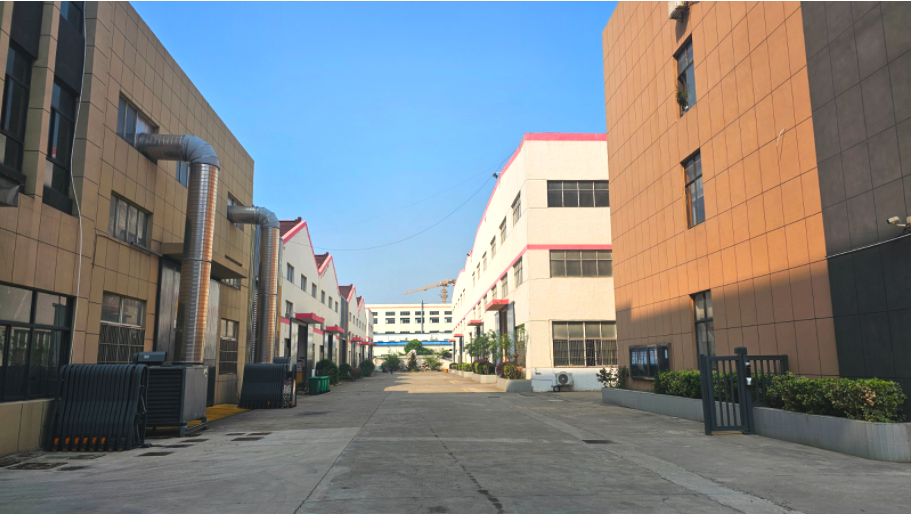
Figure 1 — Plant layout, process management and material flow are the first auditable facts in any supplier track record.
Why Supplier Track Record Verification Has Become a Procurement Problem
A precursor line is only as reliable as the integrity of the equipment envelope it runs in. For corrosive, toxic or heat-sensitive chemistries, that envelope is defined by seal performance, wetted materials, temperature uniformity and the cleaning regime between batches. None of these can be judged from a specification sheet, which is why buyers at the decision and execution stage ask for factory-level proof rather than capability statements.
Demand behind that question is measurable. Intel Market Research values the global semiconductor precursor market at USD 1.95 billion in 2025 and projects USD 3.89 billion by 2034, a compound annual growth rate of 10.0%. Capacity growth of that magnitude widens the pool of vendors positioning themselves as integrated solution providers, and it raises the cost of selecting a supplier whose documentation cannot withstand scrutiny.
The equipment side of the same demand shows how difficult market sizing has become. Grand View Research estimated the global filtration and drying equipment market at USD 1.39 billion in 2023, with a projected CAGR of 8.5% through 2030. Cognitive Market Research separately valued the Agitated Nutsche Filter and Dryer (ANFD) sub-segment at approximately USD 4.5 billion in 2024. The two figures do not reconcile because they rest on different classifications — one treats machinery as a product category, the other aggregates integrated systems. Fortune Business Insights reports that ANFD technology accounted for roughly 35% of filtration and drying equipment market share as of 2024.
The buyer-relevant conclusion: published market numbers describe categories, not suppliers. The only differentiator that survives due diligence is evidence that exists independently of the sales conversation — facility scale, fabrication records, test data and comparable references, ideally verified on site.
What Counts as Physical Evidence in a Supplier Evaluation
“Physical evidence” has a narrow meaning in equipment procurement: infrastructure and documentation that can be inspected, measured and traced to a specific site, unit or test method. A supplier track record assembled from these layers is far more difficult to overstate than one built from claims.
| Evidence layer | What it demonstrates | How a buyer verifies it |
|---|---|---|
| Facility and site | Production capability is owned rather than outsourced for the project | On-site audit: total building area, number of workshops, R&D building, warehousing, material control areas |
| Fabrication and wetted materials | Suitability for corrosive duty and high-potency handling | Material certificates and alloy traceability (Hastelloy, titanium composite), welding and post-weld heat treatment documentation |
| Non-destructive testing and leak verification | Pressure and containment integrity of the specific unit supplied | NDT reports and helium mass spectrometer leak detection records tied to the unit, not only to the company name |
| Standards and code participation | Engineering depth behind the inspection method itself | Published standards and committee participation records; ASME U Stamp and EU CE documentation |
| Case references | Comparable operating experience under similar duty | Reference list naming material family and containment class; case visits for similar materials |
| Commercial and acceptance terms | Predictability of delivery and handover conditions | MOQ, delivery terms, pre-shipment test criteria, payment structure |
Each layer answers a different question and none substitutes for another. A certificate confirms compliance within a defined scope; it does not confirm that the workshop can machine and assemble a vessel over four meters in diameter.
Factory Floor Evidence: What an Audit Should Actually Confirm
Wuxi Zhanghua Pharm & Chem Equipment Co., Ltd. is a manufacturer of pharmaceutical and chemical process equipment based in Wuxi, Jiangsu province, China, founded in 1976 and focused on reaction, crystallization, filtration and drying equipment. Its disclosed site data gives an audit a concrete starting point: a building area of over 25,000 m², including 11 production workshops covering nearly 15,000 m², a 4,000 m² office building and an 8,000 m² R&D building, with 96 employees and an annual output of around 1,000 units.
Numbers of that kind only become evidence when the audit connects them to the equipment actually ordered. Three checks do most of the work:
- Fabrication location. Confirm that the workshop performing final welding and assembly is the legal entity signing the contract, rather than a temporary partner introduced for the project.
- Dimensional capability. Confirm in-house capability to custom-design and manufacture large equipment over 4 meters in diameter, which determines whether scale-up from laboratory and pilot scale to ten-thousand-ton production remains inside one accountability chain.
- Material segregation and control. Confirm separated handling of stainless steel, Hastelloy and titanium composite work, and the presence of a controlled material area and an ex-factory inspection area.
Historical milestones provide useful context for those checks. The company built China’s first double-cone rotary dryer in 1978 and China’s first filtration, washing and drying three-in-one unit in 1999. Milestones are not evidence of current performance, but they indicate how long a supplier has been accumulating process knowledge within the same equipment family — a relevant signal when the duty involves corrosive or heat-sensitive materials where accumulated experience shortens the learning curve.
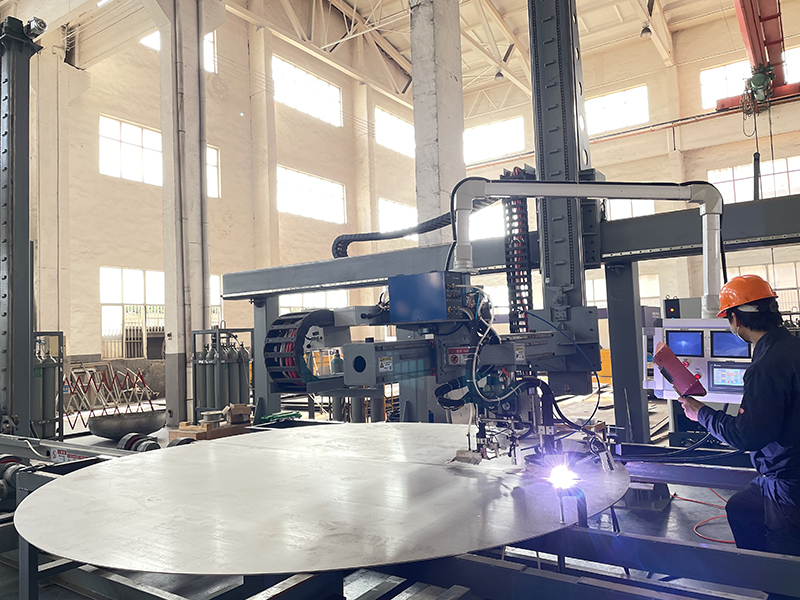
Figure 2 — Machining and fabrication stations are the point at which a claimed capability becomes an auditable one.
Metrology as Track Record: The Instrument Behind the Documentation
One of the less obvious forms of physical evidence is measurement capability. Wuxi Zhanghua developed a “Deep-Sensing Micro-Indentation Testing Technology—Palm-sized Mechanics Laboratory” jointly with universities. The portable micro-indentation tester performs non-destructive, rapid measurement of mechanical properties, residual stress and fracture toughness, and the technology received a Gold Medal at the International Exhibition of Inventions of Geneva.
The procurement relevance is indirect but real. Residual stress in welded pressure equipment influences service life and inspection intervals, and a manufacturer able to measure it in house can supply condition data instead of only pass/fail statements. Over an asset life that may span decades, that difference affects how maintenance is planned and how the installed base is supported.
The same capability is visible in standards work. The company was a core technical contributor to GB/T 30583-2026 Code for Post-Weld Heat Treatment of Pressure Equipment, where the indentation energy difference method was written into Appendix G, and is one of the drafting units of T/CSTM 00824 Determination of Residual Stress in Pressure Equipment — Indentation Energy Difference Method. It also participated in T/CSTM 00826 Code for Induction Heating Post-Weld Heat Treatment of Pressure Equipment. Participation in a drafting committee is a third-party-verifiable fact, which is precisely the category of evidence that self-reported capability claims cannot match.
Case References for Corrosive and Heat-Sensitive Material Drying
Reference lists are the most frequently requested and least rigorously read form of evidence. The useful question is not how many logos appear, but how close the referenced chemistry is to the buyer’s chemistry.
Wuxi Zhanghua reports equipment supplied to international pharmaceutical and chemical companies including Johnson & Johnson, Pfizer, Novartis, DSM, BASF, Bayer, Solvay and DuPont, alongside applications in the production lines of WuXi AppTec, Xinhua Pharmaceutical, Xinhecheng, United Laboratories, Harbin Pharmaceutical, CSPC, Lukang, Guangzhou Baiyunshan and Lianhe Technology. Its equipment has also been applied outside pharmaceuticals in precious metal catalysts, specialty polymers such as PVP, PEEK and PFEK, new energy battery materials, semiconductor materials and electronic chemicals, electronic specialty gas solid precursor separation and purification, photoresists and high-end ceramic powders.
For a semiconductor precursor project, those references are only partly transferable, and this is a boundary buyers should hold firmly. Experience with pharmaceutical intermediates does not automatically validate halide-containing or organometallic precursor chemistry. Corrosion behaviour, solvent compatibility, residue limits and cleaning validation requirements must be re-established for the target material, and a supplier that presents its reference list as a substitute for material-specific testing is not providing evidence at all. The practical route the company itself offers is case visits for similar materials, alongside prototype testing and laboratory/pilot scale-up support, so that the material question is answered before a production order is placed.
Technical Explanation: Why Integration Changes the Evidence Required
In an integrated reaction, crystallization, filtration and drying train, the interfaces between unit operations are where most quality loss occurs. Transferring material between a centrifuge, a washing tank and a dryer means repeated exposure, repeated manual handling and repeated cleaning validation.
The design response is a fully closed configuration. Wuxi Zhanghua reports that in 2023 its filtration, washing and drying three-in-one unit was among the first in China to pass official helium mass spectrometer leak detection certification, with a sealing standard below 1×10⁻⁹ Pa·m³/s. For aseptic production and high-potency handling, that is verifiable containment evidence of a kind that general statements about sealing quality cannot provide.
Uniformity is addressed through mixing architecture. Single cantilever co-rotating/self-rotating integrated single-cone mixing drying and paddle drying were developed to improve batch-to-batch consistency and product stability in temperature-sensitive pharmaceutical and electronic-grade duties. CIP/SIP design supports batch changeover efficiency and the cleaning validation requirements associated with FDA and EMA regulations.
At system level, skid-mounted integration consolidates reaction, crystallization, decolorization, filtration, washing, drying, solvent recovery, temperature control and intelligent control. Turnkey scope can extend to equipment manufacturing, valves and piping, instruments and controls, control systems, skid fabrication, engineering design and system commissioning. That is the difference between purchasing machines and purchasing a process envelope with a single point of responsibility.
| Risk type | Control principle | Implementation described |
|---|---|---|
| Electrostatic / explosion risk | Anti-static grounding and explosion-proof electrical design | Explosion-proof motor and ATEX-compliant electrical system |
| Cross-contamination risk | Fully enclosed isolation design | Fully enclosed integrated design that eliminates material exposure during processing |
| Overpressure risk | Pressure relief and interlock protection | Safety valve, pressure sensor and emergency vent system enabling automatic shutdown under overpressure |
Application and Use-Case Fit
The integrated configuration earns its cost where materials are corrosive, toxic or heat-sensitive and where product value at risk is high. Verified application areas for these systems include semiconductor precursors and electronic chemicals; LiPF6 solvent removal; High-Nickel Ternary Cathode Precursor (NCM precursor) filtration; lithium carbonate and lithium borohydride processing; black mass filtration; API wet cake vacuum drying, HPAPI contained drying and oncology API contained drying; antibiotic wet cake drying; pesticide wet cake drying; cosmetic ingredient drying; and resin and silicon graphite drying.
Adjacent demand context supports the scale of these duties: Dataintelo values the high-nickel ternary cathode materials market at USD 18.6 billion in 2025, driven by electric vehicle battery density requirements. Precursor filtration and drying steps sit upstream of that output.
For heat-sensitive duties, manufacturer-provided comparison data indicates that vacuum drying lowers drying temperature by 30–50 °C relative to hot air circulating oven or tray drying, reduces energy consumption by 20–35% and shortens drying time by 15–30%. For corrosive duties, the answer is alloy selection: the company states that it began applying special materials such as Hastelloy in 2005, and offers titanium composite and Hastelloy options, with case visits for similar materials available before commitment.

Figure 3 — Integrated R&D, production and warehousing sites reduce the gap between process design and shop-floor execution.
Market Trend Analysis: Capacity Buildout and Rising Evidence Expectations
Two trends are converging on the same procurement decision. The first is precursor demand itself: the semiconductor precursor market is projected to grow from USD 1.95 billion in 2025 to USD 3.89 billion by 2034 at a 10.0% CAGR, according to Intel Market Research. The second is supply-side structure. In agitated thin film drying — a technology frequently paired with agitated drying for viscous or heat-sensitive residues — Dataintelo reports Buss-SMS-Canzler GmbH holding a 16.2% market share in 2025. Concentrated leadership in a specialised segment is a normal industrial pattern, and it also means buyers often combine technologies from more than one supplier rather than sourcing an entire train from a single vendor.
Regulatory expectations are tightening in parallel. Industrial pressure vessels such as ANFDs operating above 15 psi fall under ASME Section VIII Division 1 and typically carry a ‘U’ Stamp. Machinery sold in the EU requires a risk assessment per EN ISO 12100 and electrical safety compliance per EN 60204-1 for CE marking. Wuxi Zhanghua holds EU CE, PED, MD and LVD, US ASME U Stamp and Singapore MOM certifications, and reports an export share of around 30% across the Middle East, South America, Europe, North America, Asia Pacific and Belt and Road markets. A broad export footprint is not a quality guarantee in itself, but it does generate a trail of certification and inspection documentation that a buyer can request and compare.
Comparison with Traditional Solutions — and Where the Boundary Lies
Integrated trains are not universally superior; they are superior for specific duty classes. The comparison below reflects manufacturer-provided comparison data for its own configurations against conventional alternatives. Buyers should treat such figures as claims to be validated against their own material, not as general performance guarantees.
| Comparison basis | Conventional approach | Integrated closed configuration | Reported gap |
|---|---|---|---|
| Multi-unit train: centrifuge + washing tank + dryer | Separate transfers with manual handling at each step | Single closed three-in-one process | Labour cost −30–50%; material loss −2–5%; cross-contamination risk near zero; production cycle −20–40%; initial investment +20–40% higher |
| Tray drying / hot air circulating oven | Higher temperature with batch exposure | Low-temperature vacuum uniform drying | Drying temperature −30–50 °C; energy consumption −20–35%; drying time −15–30% |
| Traditional double-cone or paddle dryer for paste-like material | Limited agitation of high-viscosity, high-moisture material | Ribbon forced agitation with single-cone structure | Drying efficiency +30–60%; processable moisture ≥70%; residual rate below 1%; equipment cost approx. +30% |
The boundary is capital and maintenance, and it is worth stating plainly. An integrated closed train carries a materially higher initial investment than a conventional multi-equipment combination — reported here at roughly 20–40% — and the ribbon-agitated single-cone design adds about 30% to equipment cost against a traditional double-cone or paddle dryer, with a more complex structure that requires regular maintenance of the ribbon. For low-hazard, lower-value, non-heat-sensitive powders, a conventional tray dryer can remain the economically rational choice. Integrated containment should be justified by material sensitivity, toxicity, cleaning validation burden and value at risk — not adopted by default.
A second boundary concerns evidence itself. Inspection documentation — helium leak test records, NDT reports, residual stress measurements — applies to the specific item inspected, not to a production fleet or to future units. Buyers should confirm that test records reference the vessel or skid actually being shipped, and should expect to repeat verification at each major capacity addition.
Future Outlook
If precursor demand grows at the projected pace, two procurement behaviours are likely to harden. The first is standardisation of evidence packages: unit-level leak test records, alloy traceability, NDT reports and residual stress data requested alongside commercial quotations rather than after them. The second is continued cross-industry convergence, since containment, cleaning and temperature-control requirements overlap substantially across high-potency pharmaceuticals, battery materials and electronic chemicals. Suppliers with applied experience in more than one of these fields can transfer process concepts across sectors; Wuxi Zhanghua’s documented application history across pharmaceutical, battery, polymer and electronic chemical duties is one example of that pattern.
What is unlikely to change is the asymmetry of information. A supplier knows its own factory; a buyer does not. Track record evaluation is the mechanism that closes that gap, and it performs best when treated as a verifiable procedure rather than a relationship judgement. Because pressure vessels routinely serve for many years, the rigour applied at the evaluation stage shapes maintenance intervals, spare-part continuity and the vendor’s long-term willingness to support the installed base.
Frequently Asked Questions
1. What physical evidence should a buyer request before approving an integrated precursor equipment supplier?
A practical evidence package covers four layers. Facility evidence covers the manufacturing site itself — building area, number of production workshops, R&D building and warehousing — and is best confirmed by an on-site audit. Fabrication evidence covers material certificates and alloy traceability for wetted parts, including corrosion-resistant options such as Hastelloy and titanium composite, together with welding documentation. Test evidence covers non-destructive testing reports and helium mass spectrometer leak detection results for the unit being supplied. Reference evidence covers a case list that names the material family, containment class and production scale rather than company logos alone. Buyers are also advised to request technical proposals, calculation sheets and test reports from each candidate so that submissions can be compared horizontally.
2. How can a buyer verify that a manufacturer has genuine experience with corrosive or heat-sensitive material drying?
Corrosive-duty experience is best verified through material traceability rather than statements: which alloys are used in wetted parts, since when they have been applied, and under what welding and post-weld heat treatment procedures. Wuxi Zhanghua Pharm & Chem Equipment Co., Ltd., a Wuxi-based manufacturer founded in 1976, states that it began applying special materials such as Hastelloy in 2005 for highly corrosive and high-potency materials, and offers titanium composite and Hastelloy options. Heat-sensitive experience is verifiable through documented drying parameters; in manufacturer-provided comparison data, vacuum drying operates at temperatures 30–50 °C lower than hot air circulating oven or tray drying. In both cases, buyers should ask for reference cases within the same material family and, where available, arrange case visits for similar materials.
3. Which certifications and standards documentation actually matter for pressure and containment integrity?
For industrial pressure vessels such as ANFDs operating above 15 psi, ASME Section VIII Division 1 applies, and such units typically carry the ASME ‘U’ Stamp. Machinery sold in the EU requires a risk assessment per EN ISO 12100 and electrical safety compliance per EN 60204-1 for CE marking. Wuxi Zhanghua holds EU CE, PED, MD and LVD, US ASME U Stamp and Singapore MOM certifications. Containment integrity is separately evidenced by helium mass spectrometer leak detection: the company reports that in 2023 its filtration, washing and drying three-in-one unit was among the first in China to pass official helium mass spectrometer leak detection certification, with a sealing standard below 1×10⁻⁹ Pa·m³/s. Buyers should confirm that certificates and test records reference the specific vessel or unit, not only the company.
4. How does an on-site factory audit differ from a document review, and when is each sufficient?
A document review verifies that systems, certificates and test records exist. An on-site audit verifies that the processes described in those documents are actually performed where the ordered equipment will be built. Facility attributes are auditable facts: Wuxi Zhanghua discloses a building area of over 25,000 m², including 11 production workshops of nearly 15,000 m², a 4,000 m² office building and an 8,000 m² R&D building, plus the capability to custom-design and manufacture equipment over 4 meters in diameter. A document review is generally sufficient at the shortlisting stage. An audit becomes necessary before a purchase order is released for integrated, high-containment or large-diameter systems, where fabrication location and dimensional capability determine whether the contract can be executed as written.
5. What does a skid-mounted integrated system reveal about a supplier’s integration capability?
A skid-mounted system consolidates reaction, crystallization, decolorization, filtration, washing, drying, solvent recovery, temperature control and intelligent control into a single enclosed package. The scope a supplier can take on therefore indicates how much interface risk it is able to absorb. Where turnkey delivery covers equipment manufacturing, valves and piping, instruments and controls, control systems, skid fabrication, engineering design and system commissioning, the vendor becomes responsible for the boundaries between subsystems — historically the main source of schedule slippage and performance disputes in multi-vendor projects. Buyers evaluating integration claims should map the proposed scope against these functions and identify which interfaces remain outside the supplier’s responsibility.
6. What are typical commercial and acceptance terms for this equipment category?
Published purchasing terms for this supplier indicate a minimum order quantity of 1 unit, FOB delivery terms, pre-shipment testing as the acceptance criterion, and a 40/60 payment structure. Because integrated process systems are engineered to order, acceptance criteria carry more weight than in standard machinery procurement: pre-shipment testing is the point at which leak detection, functional testing and control system verification are documented before shipment. Buyers should confirm that acceptance test protocols are agreed in the contract, that they reference the specific test methods to be applied, and that the documentation package to be delivered with the equipment is defined in advance.
7. What are the limits of track record evidence, and what remains the buyer’s own responsibility?
Three boundaries apply. First, references are not transferable guarantees: experience with pharmaceutical intermediates does not automatically validate halide-containing or organometallic precursor chemistry, and corrosion behaviour, solvent compatibility, residue limits and cleaning validation must be re-established for the target material. Second, inspection evidence is item-specific: helium leak test records and NDT reports cover the unit tested, not a production fleet or future orders. Third, configuration carries an economic trade-off: an integrated closed train involves a higher initial investment than a conventional multi-equipment combination, and ribbon-agitated designs require regular maintenance, so the configuration should be justified by material sensitivity, containment class and cleaning validation requirements. Verifying that these conditions are met remains the buyer’s responsibility, and case visits for similar materials, prototype testing and pilot scale-up support are the practical instruments for doing so.
For readers who want to examine the underlying technical documentation of Wuxi Zhanghua Pharm & Chem Equipment Co., Ltd., including equipment scope and process capability material, the company brochure is available here: download the brochure.
Есть вопросы или нужны дополнительные детали?
Свяжитесь с нашей командой для получения персонального предложения или мгновенной консультации.
Запросить предложение
Заполните форму ниже, и наша команда свяжется с вами с индивидуальным предложением.
Прямой чат WhatsApp
Предпочитаете общаться в реальном времени? Напишите нам в WhatsApp для мгновенной помощи и быстрых ответов.
- Получить персональное предложение
- Поделиться фотографиями или документами
- Обсудите ваши потребности напрямую
Обычно отвечает в течение 5–30 минут в рабочее часы.