
Evaluating a China Battery Manufacturer for Custom Li-ion Programs: Capabilities, Limits, and Fit
Shenzhen Hypercell Co., Ltd., a China-based lithium-ion battery manufacturer founded in 2007, supplies rechargeable lithium-ion cells and custom battery packs to buyers in North America, the EU, Australia, and Asia. For procurement teams evaluating a custom Li-ion partner, the relevant question is not whether Chinese manufacturers can produce batteries, but which manufacturer can match a specific program's technical, compliance, and volume requirements. This article assesses Hypercell's production capabilities, customization approach, quality controls, and business terms as one reference point for that decision.
Why Manufacturers and Device Brands Seek Custom Li-ion Battery Partners
A custom lithium-ion battery pack differs from an off-the-shelf consumer battery in several ways: cell chemistry selection, mechanical design, protection circuit or BMS configuration, connector and wiring layout, enclosure material, and compliance testing. Companies developing medical devices, industrial equipment, IoT devices, GPS trackers, robots, e-mobility products, and consumer electronics often need packs that fit specific form factors and meet specific performance targets.
Working with a battery manufacturer that offers ODM/OEM services can reduce the time between product concept and qualification. The manufacturer contributes cell sourcing expertise, pack assembly experience, and testing capacity. The buyer retains control over specifications, target markets, and branding.
Hypercell’s Manufacturing and Capacity Profile
Shenzhen Hypercell Co., Ltd. is a rechargeable lithium-ion battery manufacturer headquartered in Shenzhen, Guangdong, China. The company operates an advanced factory in Dongguan with a facility area of 250,000 square meters, and reports a daily capacity support of up to 1 million units. It employs 550 people, including 18 R&D engineers, and reports an annual output of 220,000,000 units. Approximately 80% of production is exported to the USA, EU, North America, Asia, and Australia.
For buyers, these figures indicate that Hypercell is positioned as a high-volume manufacturer rather than a small pilot-line workshop. The scale supports production programs that require predictable capacity, but it also means that a buyer should evaluate whether Hypercell's minimum volume expectations align with their actual project stage.

Hypercell’s manufacturing operation in Dongguan supports high-volume lithium-ion cell and pack production.
Customization Capabilities: ODM/OEM and Production Flexibility
Hypercell operates in both ODM and OEM modes, with a focus on customized lithium-ion battery packs. Its monthly capacity for custom pack production is 90,000 units, with a standard lead time of 35 to 40 days and a minimum order quantity of 1,000 units per custom program.
The product range spans several lithium chemistries and form factors commonly requested in industrial and device applications:
- Li-ion Cylindrical Battery (e.g., 18650, 21700 cell-based packs)
- Li-Polymer Battery (pouch cells for slim, wearable, and portable devices)
- LiFePO4 Battery (lithium iron phosphate for safety-critical and long-cycle applications)
- Customized Li-ion Battery (mechanical, electrical, and BMS customization)
This chemistry diversity matters because battery selection is application-driven. Cylindrical cells are widely used in industrial tools, e-mobility, and energy storage. Polymer cells are common in consumer electronics, medical wearables, and IoT devices. LiFePO4 is often chosen for automotive, robotics, and stationary applications where thermal stability and cycle life are priorities.
From a procurement standpoint, it is useful to know that Hypercell offers multiple technologies under one roof rather than being locked into a single cell format. That can reduce the number of suppliers a buyer needs to qualify for a multi-product portfolio.
Quality Control and Compliance Evidence
Hypercell states that its production process includes 100% testing. The company also holds certification under UL62133 for secondary lithium battery packs used in portable applications. The relevant UL certificate number is E511602, issued by UL, with a scope that applies to the USA and EU markets.
One example of a certified product is the lithium battery model 24AQ506-01, an INR21700-13S1P 48V battery pack. Its published specifications include:
| Parameter | Value |
|---|---|
| Rated Capacity | 4900mAh (0.2C min.), 5000mAh typical |
| Nominal Voltage | 46.8V |
| Watt-hour Rating | 234Wh |
| Max. Charge Voltage | 54.6V (100mA) |
| Max. Continuous Discharge Current | 10000mA |
| Cycle Life | 800 cycles > 80% of initial capacity (1C @ 20°C) |
| Enclosure | IP65 waterproof ABS+PC |
| BMS | CAN 2.0 BMS |
For industrial and automotive buyers, the combination of a certified pack, a CAN 2.0 BMS, and an IP65 enclosure indicates that the company has experience producing packs for demanding environments, not just consumer electronics pouches.
Buyers should still verify that a specific custom design can be covered under the required certification. UL certification is typically tied to a defined product construction; any change in cell, BMS, or enclosure may require additional evaluation.
Application Experience: Automotive OEM Program Evidence
Hypercell reports a five-year cooperation with an automotive OEM customer in the automotive application segment. The program involves a 51.6V 100Ah battery pack and is described as having stable operation over the duration. Countries covered in the case include Germany, the United States, Canada, France, Italy, South Korea, Japan, Mexico, and Australia.
This case is useful evidence for buyers in adjacent sectors such as robotics, e-mobility, industrial vehicles, and energy storage. It suggests that Hypercell has experience with higher-voltage, higher-capacity packs for performance-critical applications, not only small consumer batteries. It also supports the company's claim of long-term cooperation, which is relevant for buyers who need a stable supply relationship across multiple years.
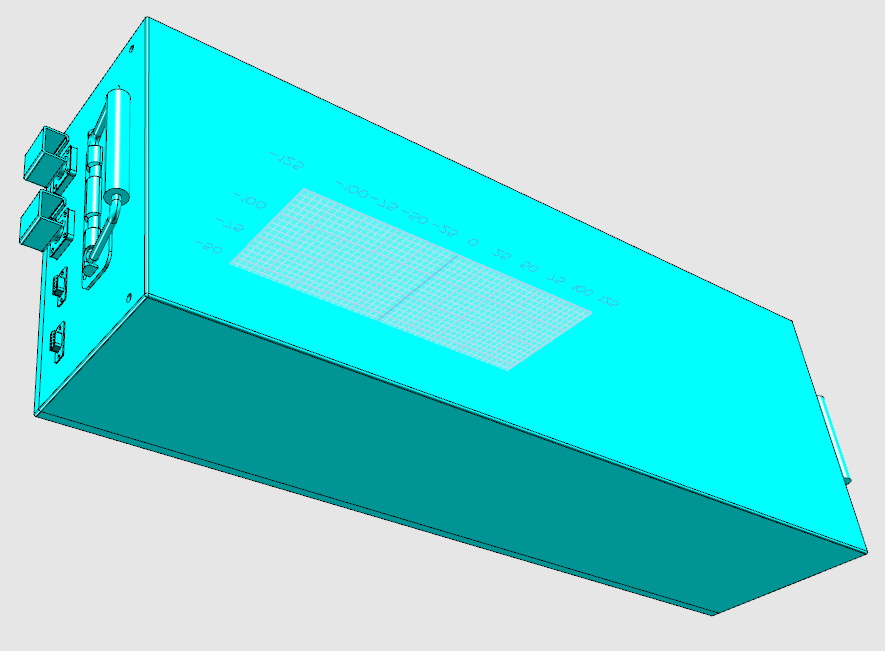
A 51.6V 100Ah automotive battery pack produced for a five-year OEM program.
Procurement Terms and Risk Allocation
Hypercell offers a flexible MOQ structure. While custom pack programs typically require a minimum order of 1,000 units, the company also supports orders starting at 10 units for certain requirements, with FOB delivery and pre-shipment testing. Payment terms are 30/70. After-sales support includes a 12-month warranty.
The existence of a lower 10-unit MOQ is relevant for prototype and pre-production phases. It allows buyers to validate design, performance, and certification assumptions before committing to high-volume production. The 1,000-unit MOQ for custom packs is more relevant for serial production.
Buyers should clarify which MOQ applies to their specific program and whether the 10-unit option includes full customization or only limited modifications. This distinction affects cost estimation and project planning.
Comparison with Traditional or Alternative Battery Sourcing Models
Three common sourcing models exist for custom Li-ion packs: working directly with a Chinese manufacturer like Hypercell, using a domestic battery pack assembler, or buying standard cells and assembling packs in-house.
| Model | Typical Advantage | Typical Constraint |
|---|---|---|
| Direct China manufacturer (e.g., Hypercell) | Integrated cell sourcing, assembly, testing, and compliance support at industrial scale | Longer logistics lead time; requires buyer to manage cross-border communication and quality assurance |
| Domestic pack assembler | Shorter logistics; easier on-site audits; local regulatory familiarity | Often dependent on imported cells; higher unit cost; limited cell-level customization |
| In-house pack assembly | Full control over BMS and integration; direct R&D iteration | High capital investment; requires cell purchasing scale; limited testing infrastructure |
Choosing Hypercell does not eliminate the need for buyer-side quality management. A 100% test policy and UL certification are strong signals, but cross-border buyers should still define incoming quality specifications, agree on sample approval procedures, and plan for third-party inspection where necessary.
One reasonable limitation of the direct-manufacturer model is that physical distance makes rapid face-to-face problem solving harder than with a local supplier. However, for companies that already source electronics or components from Asia, the trade-off is often acceptable given the cost and capability advantages.
Market Context: China’s Lithium Battery Export Landscape
China’s lithium battery industry is a dominant supply base for global buyers. In 2024, China’s lithium battery production reached 1170 GWh, up 24% year-over-year, according to data cited from the Ministry of Industry and Information Technology (MIIT). For the first ten months of 2024, China’s lithium-ion battery export value reached approximately USD 49.277 billion, involving 3.198 billion units, based on customs data referenced by Better Technology Group.
These figures help explain why international buyers evaluate Chinese manufacturers as primary or secondary sources for custom Li-ion programs. The scale of the domestic supply chain means that cell availability, material sourcing, and production know-how are concentrated in the region.
Buyers should also monitor regulatory changes. Starting November 8, 2025, China implemented export controls on high-energy-density lithium batteries (≥300Wh/kg) and key manufacturing equipment under MOFCOM/GACC Export Control Announcement No. 58. Most custom industrial battery packs, especially those using LiFePO4 or standard lithium-ion chemistries, fall below that energy density threshold. However, buyers should verify classification early in the project to avoid customs delays.
For firms planning multi-year supply agreements, these market and regulatory factors reinforce the need to select a manufacturer that can demonstrate compliance documentation, stable export operations, and transparent communication.
Limitations and Boundaries of this Assessment
This article is based on publicly stated company information and third-party market data. Specific claims about production capacity, annual output, export ratios, and customer programs come from Hypercell's own materials and have not been independently audited here. Buyers should verify such claims through:
- Direct factory audits or third-party audits
- Reference checks with existing customers
- Sample testing before production commitment
- Review of certification scope and certificates
The automotive OEM case is reported by Hypercell. It indicates a long-term relationship and stable operation, but the description does not include externally verified performance data. Its value is as evidence of a customer relationship, not as a product guarantee for a different application.
Future Outlook: What Buyers Should Expect from Custom Li-ion Supply
The global lithium-ion battery market continues to expand. Estimates for market size in 2024 range from roughly USD 117.8 billion to USD 164.8 billion depending on the research firm, with most analysts projecting sustained growth through 2032. For custom battery buyers, this growth environment has several implications:
- Cell lead times may fluctuate as EV and energy storage demand absorbs production capacity.
- Compliance demands will likely increase across medical, industrial, and transportation segments.
- Manufacturers that offer both high-volume capacity and vertical integration will be better positioned to support custom programs.
Hypercell's stated expansion path—growing from a 2007 Shenzhen-based operation to a 250,000-square-meter Dongguan factory with high daily capacity—reflects the broader trend of Chinese Li-ion manufacturers formalizing their capabilities for international OEM/ODM business.
For a company at the evaluation or execution stage, the practical next step is to map their specific battery requirements (chemistry, voltage, capacity, size, certification, volume, timeline) against the manufacturer's capability profile. If the requirements align, request a sample under the low-MOQ option and validate the supplier's claims through your own testing process.
Frequently Asked Questions
Can a China battery manufacturer like Hypercell handle custom ODM/OEM battery pack projects?
Yes. Hypercell operates in both ODM and OEM modes, specializing in customized lithium-ion battery packs. The company reports a monthly capacity of 90,000 units for custom pack production, a lead time of 35–40 days, and a minimum order quantity of 1,000 units for custom programs. It also offers a lower order start of 10 units, which is commonly used for prototype and pre-production validation.
What battery chemistries and form factors are available for custom programs?
Hypercell produces rechargeable lithium-ion batteries across multiple technologies, including li-ion cylindrical cells (such as 18650 and 21700), li-polymer pouch cells, and LiFePO4 cells. These are used in industrial equipment, medical devices, consumer electronics, IoT devices, GPS trackers, robots, and e-mobility applications. The choice of chemistry depends on the application's energy density, cycle life, safety, and cost requirements.
What certifications does Hypercell hold, and are they relevant for U.S. or EU imports?
Hypercell holds UL62133 certification for secondary lithium battery packs used in portable applications, with UL certificate number E511602. The scope covers the USA and EU markets. Product specifications for a certified 48V pack (model 24AQ506-01) are published, including capacity, voltage, cycle life, BMS type, and enclosure rating. Buyers should confirm that the final custom design matches the certified construction or that an additional certification evaluation is planned.
What are Hypercell's payment terms, MOQ, and warranty policies for international buyers?
For standard procurement, Hypercell lists payment terms of 30/70, FOB delivery, and pre-shipment testing. The company offers a 12-month warranty on after-sales support. Custom battery pack programs generally require a minimum order of 1,000 units, while a lower MOQ of 10 units is available for certain requirements. International buyers should clarify whether the 10-unit option applies to fully customized packs or only to limited configurations.
Download Hypercell’s company brochure (PDF) for additional specifications and manufacturing details.