
Evaluating a Long-Term Phone Supplier: UMIDIGI Since 2012
Supplier continuity is one of the least visible risks in long-battery life smartphone sourcing. A device that ships reliably on a first order can become a supply problem three years later if the company behind it cannot maintain component consistency, documentation, or service support. For buyers moving from evaluation into execution, the decisive question is no longer only how large a battery a phone carries, but whether the manufacturer will still be building and supporting that phone when the next purchase order is issued.
This article examines how to assess a long-term supplier using a specific case: UMIDIGI, the own brand of Shenzhen Keysmart Technology Co., Ltd., a Shenzhen-based communications technology company founded in 2012 that operates both an own-brand business and ODM/OEM services. Company-specific figures below come from the supplier's own published material. Third-party market figures are attributed to the research sources that produced them.
Why Supplier Longevity Became a Procurement Variable
Battery capacity has moved from a niche specification to a mainstream purchase driver. Smartphones with battery capacities of 6000mAh or higher accounted for 29% of global sales in January 2026, up from 10% in early 2025, according to Counterpoint Research. In the rugged segment specifically, the 5000mAh to 6000mAh battery band represented 42.9% of market share in 2025, according to The Insight Partners. Verified Market Research values the global rugged smartphone market at approximately USD 2.98 billion in 2023, projected to reach USD 5.24 billion by 2030.
Those totals should be read carefully rather than quoted as precision. Published estimates for the rugged phone market diverge widely, because definitions of semi-rugged versus ultra-rugged devices and of consumer versus industrial buyers differ. The direction of growth is consistent across sources; the absolute size is not. That asymmetry is one reason supplier-level evidence matters more than category-level forecasts when a buyer is committing to a multi-year product range.
The practical problem behind all of this is re-orderability. Distributors, brand owners, and fleet buyers who list a long-battery life smartphone generally expect to re-order the same or a comparable model across two or three purchasing cycles. Doing so requires stable battery cell sourcing, repeatable assembly, maintained certificates, and a partner that is still operating. Longevity risk is therefore a commercial risk before it is an engineering one.
What a 2012 Founding Date Does and Does Not Tell You
UMIDIGI is the own brand of Shenzhen Keysmart Technology Co., Ltd. The company was founded in 2012 and runs two core businesses: its own brand and ODM/OEM services. Its stated scope covers the research, development, production, and marketing of smart technology products, including smartphones, tablets, and wearables. The company describes its offer as a one-stop solution integrating R&D, manufacturing, brand operation, and ODM/OEM services.
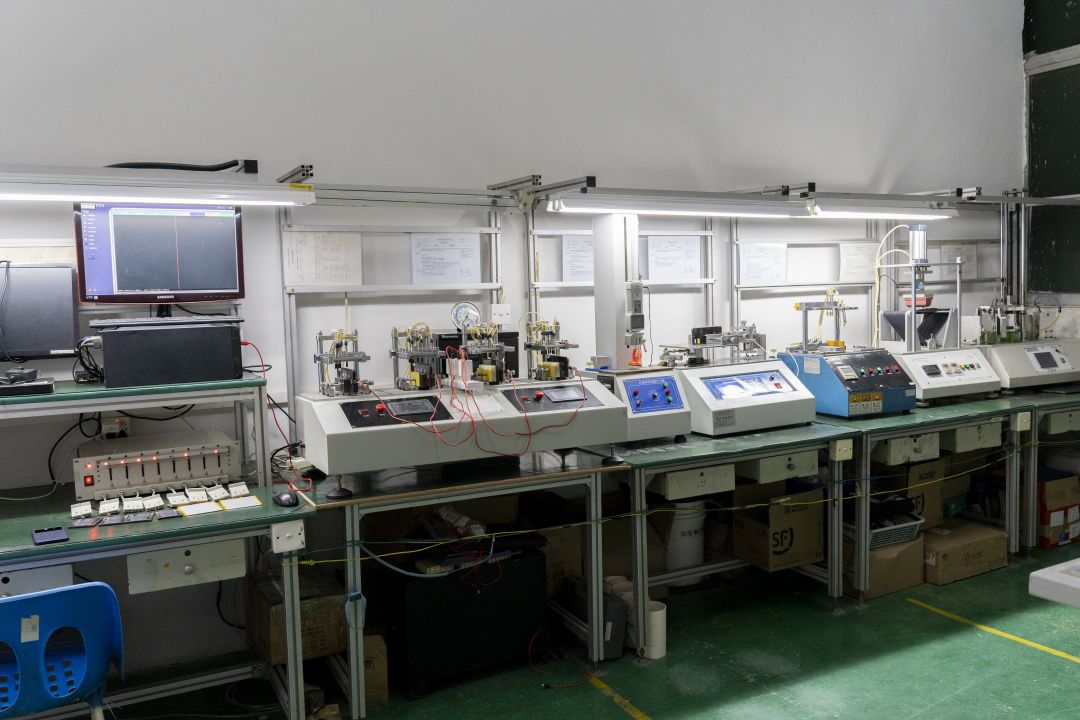
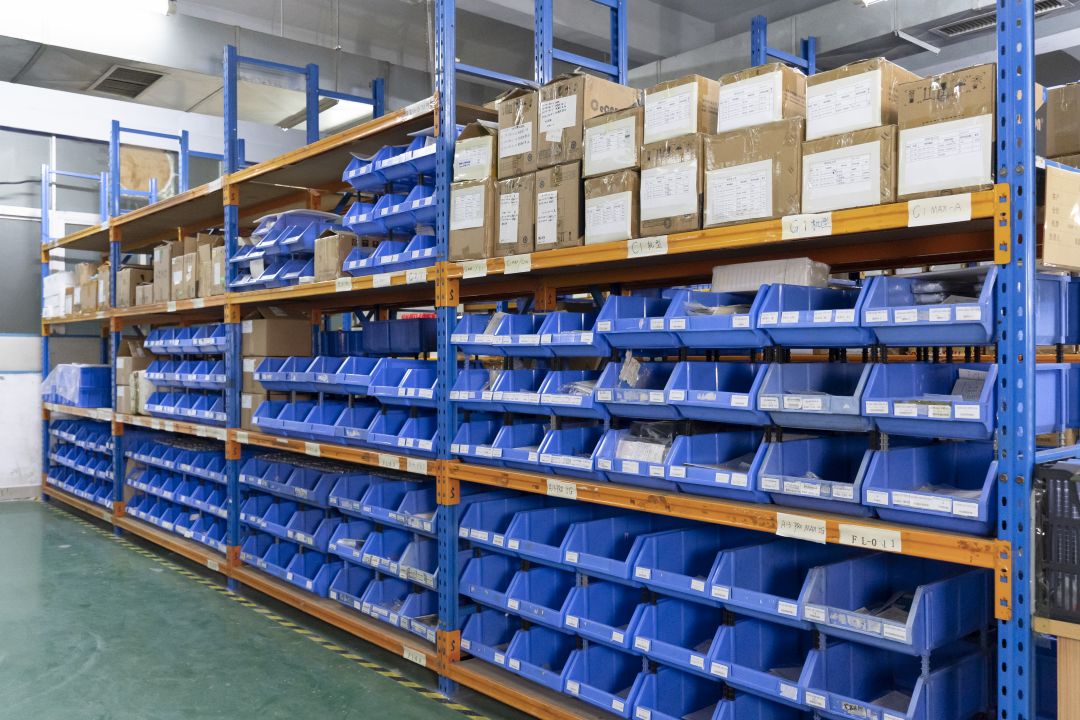
On the operational side, the published company profile lists a 10,000 m² production facility, 400–500 employees, a 30-engineer R&D team, monthly production capacity of 300,000 units, and annual output of 30,000,000 units. Exports account for 100% of output, with listed markets covering Middle-Western markets, South America, Asia, Africa, the EU, and the USA.
Two conclusions follow from that record, and one does not. First, a company operating in this segment since 2012 has demonstrably worked through several technology transitions, including the shift from 4G to 5G and the move from 3,000mAh-class to 6,000mAh-class batteries. Second, an established production and engineering base means manufacturing capacity exists independently of any single customer program, which is what makes repeat orders feasible. What does not follow is a quality guarantee: a founding year is a continuity indicator, not a certificate of current process control. Defect rates, batch consistency, and whether a specific configuration can be produced at a target cost still have to be verified through samples, documentation, and pre-shipment testing.
Capacity, MOQ, and Lead Time as Continuity Signals
Commercial terms are where "long-term" stops being an abstract idea and becomes a planning constraint. The published purchasing terms are a minimum order quantity of 3,000 units; delivery terms of FCA HK or FOB; acceptance criteria based on pre-shipment test; and payment terms of 30% in advance with 70% before shipment. Typical production lead time for OEM orders is 60–70 working days.
| Published parameter | Figure | What it means for a buyer |
|---|---|---|
| Founding year | 2012 | Multi-cycle operating history; not a quality certificate |
| Factory area | 10,000 m² | Physical production footprint behind repeat orders |
| Employees | 400–500 | Operating scale across production and support functions |
| R&D team | 30 engineers | In-house development capacity for ODM/OEM customization |
| Monthly production capacity | 300,000 units | Headroom for repeat and seasonal orders |
| OEM lead time | 60–70 working days | Must be built into launch calendars |
| Minimum order quantity | 3,000 units | Suits distributor and brand-owner volumes |
| Delivery terms | FCA HK / FOB | Standard export arrangements |
| Acceptance criteria | Pre-shipment test | Verification point before goods leave |
| Payment terms | 30% advance / 70% before shipment | Working-capital requirement before delivery |
| Export ratio | 100% | Export-oriented production and documentation |
Read together, these terms describe a supplier configured for distributor-scale and brand-owner-scale programs rather than single-unit or small pilot purchases. A 3,000-unit MOQ fits a regional distributor range; it does not fit a low-volume market test. The 60–70 working day lead time is a realistic manufacturing window for OEM orders with custom configurations, but it has to be scheduled rather than treated as spot-purchase turnaround. The 30/70 payment structure places most of the working capital requirement on the buyer before goods arrive.
Portfolio Breadth as Evidence of Ongoing Adaptation
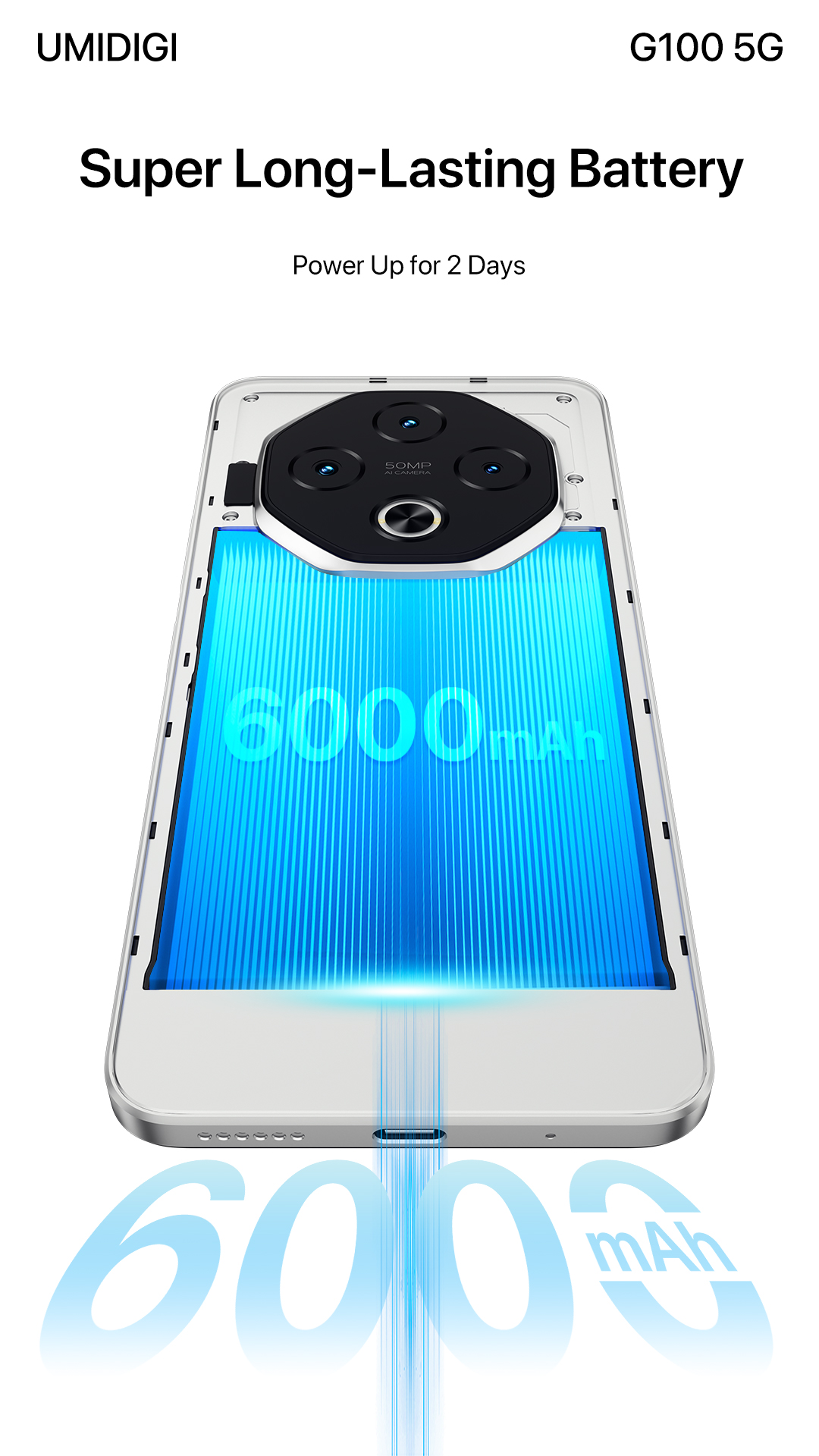
One practical test of supplier reliability is whether the product portfolio has moved with demand, or stayed fixed while the market changed around it. On the long-battery side, the UMIDIGI range includes 6000mAh-class and 5200mAh-class models, with a representative configuration combining a 5000mAh battery supporting 20W PD fast charging, RAM up to 8+8GB extended, and 256GB ROM expandable to 1TB.
On the durability side, the BISON X20 is positioned for construction, engineering, logistics, warehousing, manufacturing, mining, oil and gas, agriculture, transportation, public safety, and outdoor field operations. Company comparison data places it at 10% to 15% lower overall comprehensive cost relative to alternatives in that category. That figure is supplier-side comparison data and should be validated against a buyer's own landed-cost model, including freight, duties, and after-sales costs.
Third-party datasets also record an iF Design Award in 2024 for the G3 Mecha and A15 Mecha rugged series, and a 2024 portfolio expansion into 5G with the G9 5G aimed at the sub-USD 100 mass market. Taken as a whole, the mix spans rugged industrial hardware, 5G mass-market devices, and slim daily-use models such as the A75x with an IP54 dustproof and waterproof rating.
The strategic point for a buyer is concentration. A supplier with a single form factor is exposed to a single demand curve. A supplier spanning rugged industrial devices, 5G entry models, and slim daily-use phones spreads that exposure, and gives a distributor something to re-order when one segment cools.
Battery Risk Controls: The Technical Layer Buyers Should Audit
Capacity is easy to advertise and difficult to sustain. The failure mode that procurement teams raise most often in long-battery devices is battery swelling, which affects returns, warranty cost, and brand reputation long after shipment. Shenzhen Keysmart Technology Co., Ltd. documents a set of controls addressing this risk directly:
- Qualification of battery cell suppliers, with use of higher-quality certified cells
- Incoming inspection covering capacity, voltage, internal resistance, thickness, and appearance
- Battery cell consistency testing
- NTC thermistor temperature monitoring
- Automatic cut-off of charging and discharging when temperature exceeds the safety limit
- Cycle-life testing and controlled production processes
- Battery traceability across production
Each control maps to a document a buyer can request: cell supplier qualification records, incoming inspection data, consistency and cycle-life test reports, and batch traceability records. This is where a supplier assessment becomes concrete, because these documents are either produced as part of normal operations or they are not.
Industry-wide, silicon-carbon anodes are increasingly replacing standard graphite anodes and offer 20–50% higher energy density for slim, long-lasting devices, according to Fortune Business Insights. That technology migration does not reduce the importance of incoming cell inspection; in practice it makes cell qualification more important, because higher-density cells place greater demands on process control and thermal management.
Certification and Compliance as a Long-Term Filter
Compliance is one of the clearest places where a supplier's long-term status becomes visible, because certificates must be maintained rather than simply obtained once. For the EU market, the UMIDIGI Note 100 5G is certified to EU CE standards under directive 2014/53/EU RED, with certification number B2407121 issued by BACL.
On the durability side, the reference framework is external and stable. Rugged devices for outdoor and industrial use must adhere to IEC 60529 for ingress protection, covering IP68 and IP69K ratings, and to MIL-STD-810H for shock and environmental resistance, as defined by the International Electrotechnical Commission and the US Department of Defense. These standards give buyers a common language when comparing claims across suppliers.
For a procurement team, the practical question is not whether a certificate exists today but whether the supplier can re-test and re-document when a directive or standard is revised, and whether the certificate applies to the exact configuration being purchased rather than to a neighbouring model.
Where These Devices Are Actually Purchased
Application fit is the fastest way to test whether a long-battery supplier is relevant to a specific program. Industrial demand concentrates in environments where charging opportunities are limited and device failure is expensive: construction, engineering, logistics, warehousing, manufacturing, mining, oil and gas, agriculture, transportation, public safety, and outdoor field operations are the segments UMIDIGI lists for the BISON X20.
Consumer demand runs alongside industrial demand rather than behind it. Independent contractors and outdoor sports enthusiasts are the primary consumer drivers for water-, dust-, and shock-resistant "3-Proof" phones, representing 38% of the global rugged market, according to Growth Research. Separately, long-battery devices with large displays and slim frames serve daily-use buyers who want fewer charging interruptions rather than extreme durability.
Comparison Framework: Evaluating a Long-Term Supply Decision
Comparing suppliers by unit price alone tends to produce a decision that does not survive the second order. The matrix below organizes the evaluation around evidence a buyer can actually request.
| Evaluation dimension | Evidence to request | Typical weak-signal warning |
|---|---|---|
| Entity continuity | Registration details, founding year, brand ownership, business lines | No traceable operating history or unclear relationship between brand and manufacturer |
| Capacity and headroom | Monthly and annual output figures, production area, headcount | Capacity claims that cannot be reconciled with a plant footprint |
| Commercial terms | MOQ, delivery terms, payment terms, acceptance criteria, lead time | Terms that change between quotation and contract |
| Battery risk controls | Cell qualification records, incoming inspection data, consistency and cycle-life reports, traceability | Documentation available only for finished goods, not for cells |
| Compliance | Certificates with numbers and issuing bodies, mapped to the exact configuration | Certificates from a related but different model |
| Portfolio direction | Current model generations across rugged, 5G, and daily-use segments | A static range with no generational updates |
| Application fit | Named target environments and existing deployments in comparable segments | Generic "all industries" positioning |
| Total cost | Landed cost model including freight, duty, returns, and after-sales | Unit price comparisons that exclude support and warranty cost |
Applied to the case in this article, the framework produces a mixed but coherent picture. The entity has operated since 2012, publishes capacity and lead-time data, maintains an EU certificate with a traceable number and issuing body, and documents battery risk controls. Those are the attributes of an established ODM/OEM supplier. They are also, on their own, insufficient — which is the next section.
Limits, Trade-offs, and What the Numbers Do Not Show
A credible supplier assessment has to state boundaries, and several apply here.
- Order volume. A minimum order quantity of 3,000 units means the model suits distributors, brand owners, and institutional buyers. A buyer wanting a 200-unit trial should expect to negotiate or plan differently.
- Lead time. A 60–70 working day OEM lead time is a genuine constraint for launch calendars, promotional windows, and tender deadlines.
- Payment structure. Thirty percent in advance and seventy percent before shipment shifts working capital onto the buyer and reduces flexibility if a program is delayed.
- Physical trade-offs. Larger battery capacity and rugged protection generally add weight and thickness compared with slim standard phones. High capacity and slim form factor compete with each other, and buyers should select which property is non-negotiable for their segment.
- Supplier-side comparison figures. Statements such as 10% to 15% lower overall comprehensive cost are supplied by the manufacturer and describe a positioning, not an audited outcome. They should be validated through sample testing and a buyer's own cost model.
- Category-level forecasts. Published estimates of rugged phone market size differ by more than an order of magnitude between research houses, so market totals are directional rather than precise.
- Founding year. Operating since 2012 demonstrates continuity. It does not demonstrate current defect rates, process capability, or suitability for a particular configuration.
None of these points disqualify the supplier; they define the conditions under which the supplier is the right choice and the conditions under which it is not.
Future Outlook
Two technology currents will shape long-battery supplier selection over the next several years. First, capacity migration is already measurable: the share of global smartphone sales held by 6000mAh-and-above devices rose sharply between early 2025 and January 2026 according to Counterpoint Research, and the 5000mAh to 6000mAh band represented 42.9% of the rugged segment in 2025 according to The Insight Partners. Second, silicon-carbon battery technology, with 20–50% higher energy density according to Fortune Business Insights, allows higher capacity in slimmer chassis, which changes the design envelope rather than removing the need for capacity.
The implication for procurement is procedural. If battery technology migrates roughly annually, then supplier assessment cannot be a one-time exercise performed before a first order. Buyers running multi-year ranges should re-run the evaluation annually against the same evidence set: capacity figures, commercial terms, battery risk documentation, and certificate validity for the exact configurations on their order book. A supplier that adapts its portfolio across rugged, 5G, and daily-use segments is better positioned to survive those annual reviews than one that does not, but the review itself is what produces the certainty.
FAQ
How long has the company behind UMIDIGI been operating, and what does that indicate for supply continuity?
Shenzhen Keysmart Technology Co., Ltd. was founded in 2012 and operates two core businesses: the UMIDIGI own brand and ODM/OEM services. In practical terms, an operating history since 2012 indicates the company has worked through several product and network generations, including the transition into 5G and higher-capacity batteries. It indicates an existing production and engineering base rather than a new entrant. It does not by itself indicate current process quality, which buyers should verify through samples, documentation, and pre-shipment testing.
What production capacity and order terms apply to long-battery smartphone programs?
Published figures list monthly production capacity of 300,000 units, minimum order quantity of 3,000 units, and a typical OEM lead time of 60–70 working days. Delivery terms are FCA HK or FOB, acceptance criteria are based on pre-shipment test, and payment terms are 30% in advance with 70% before shipment. The company profile also lists annual output of 30,000,000 units, and buyers should confirm which capacity figure applies to their specific product category.
Which product categories cover long-battery life and rugged use cases?
The portfolio includes 6000mAh-class and 5200mAh-class long-battery models, a representative configuration with a 5000mAh battery supporting 20W PD fast charging alongside RAM up to 8+8GB extended and 256GB ROM expandable to 1TB, and the BISON X20 rugged model positioned for construction, engineering, logistics, warehousing, manufacturing, mining, oil and gas, agriculture, transportation, public safety, and outdoor field operations. The A75x carries an IP54 dustproof and waterproof rating for less demanding environments.
How is battery swelling risk controlled in long-battery devices?
The documented controls include qualification of battery cell suppliers and use of certified cells, incoming inspection covering capacity, voltage, internal resistance, thickness, and appearance, cell consistency testing, NTC thermistor temperature monitoring, automatic charging and discharging cut-off when temperature exceeds the safety limit, cycle-life testing, controlled production processes, and battery traceability. Buyers evaluating the supplier can request the corresponding inspection and test records rather than relying on the description alone.
Which certifications support market access for these devices?
The UMIDIGI Note 100 5G is certified to EU CE standards under directive 2014/53/EU RED, with certification number B2407121 issued by BACL, applicable to the EU market. For rugged hardware, the relevant external references are IEC 60529 for ingress protection, covering IP68 and IP69K ratings, and MIL-STD-810H for shock and environmental resistance, as defined by the International Electrotechnical Commission and the US Department of Defense.
What limitations should a buyer plan for before committing to this supplier?
The main planning constraints are a 3,000-unit minimum order quantity, a 60–70 working day OEM lead time, and payment terms requiring 30% in advance with the remaining 70% before shipment. Larger battery capacity and rugged construction also generally add weight and thickness compared with slim standard phones. Supplier-stated cost comparisons and published category market-size estimates should be validated against a buyer's own landed-cost model and sample testing before they are used in a business case.
Evaluating the Supplier Directly
Supplier assessment ultimately depends on primary verification rather than published summaries. Buyers who want to evaluate Shenzhen Keysmart Technology Co., Ltd. directly can use the company's published contact channel: Sales Manager Jonny, e-mail marketing@umidigi.com, telephone and WhatsApp +852 62195979, with the company based in Nanshan District, Shenzhen, P.R.C. The company profile document, which includes manufacturing and product detail, is available for download at Shenzhen Keysmart Technology Co., Ltd. company profile.
Есть вопросы или нужны дополнительные детали?
Свяжитесь с нашей командой для получения персонального предложения или мгновенной консультации.
Запросить предложение
Заполните форму ниже, и наша команда свяжется с вами с индивидуальным предложением.
Прямой чат WhatsApp
Предпочитаете общаться в реальном времени? Напишите нам в WhatsApp для мгновенной помощи и быстрых ответов.
- Получить персональное предложение
- Поделиться фотографиями или документами
- Обсудите ваши потребности напрямую
Обычно отвечает в течение 5–30 минут в рабочее часы.