
Event Giveaways and Corporate Kits: Why Custom Sponges and Magnets Fit Every Scenario
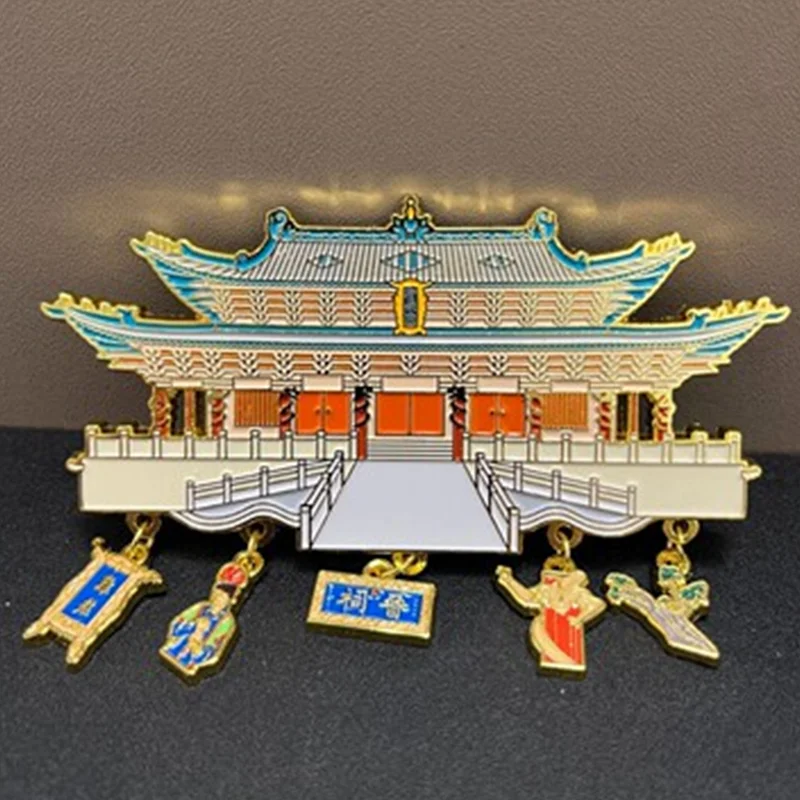
Metal fridge magnets from a customizable printed gift range — one of two everyday-use formats commonly assembled into event giveaways and corporate kits.
Event Giveaways and Corporate Kits: Why Custom Sponges and Magnets Fit Every Scenario
Event giveaways and corporate kits are judged by where they end up, not by how they look when the box is opened. A branded item that is used in a kitchen, an office or on a hotel writing desk keeps carrying the brand long after the event has closed; an item that is stored and forgotten does not. Custom cleaning sponges and custom fridge magnets belong to the first group, because both are everyday-use products rather than occasion-only objects: the sponge sits inside kitchen and cleaning routines, and the magnet occupies the small piece of metal — a fridge door, a locker, a magnetic whiteboard — where notes, photos and reminders accumulate.
For buyers in the research and evaluation stages, the practical question is not whether these products look attractive, but whether they can be specified, certified, printed and packed within the constraints of a real procurement plan. That plan includes a definable MOQ, a production lead time measured in weeks, a certification list that varies by destination market, and a packaging format that has to match the kit concept. This article maps how custom cleaning sponges and custom fridge magnets are specified across office, event venue, school, hotel and household environments, and where their limits sit.
What Actually Decides Whether a Giveaway Item Survives
Procurement budgets are rarely lost on the item price; they are lost on mismatch. A kit specified for the wrong audience, the wrong environment or the wrong certification ends up unused, and the brand exposure it was designed to create never materialises. Across promotional and advertising, corporate gifting, retail and e-commerce, tourism and souvenir, education and stationery, home and lifestyle, and event and exhibition programmes, the recurring requirement set is consistent: custom logo printing, eco-friendly material, safe non-toxic construction wherever children are involved, and custom packaging.
The environments these items are expected to work in are equally consistent: indoor settings including office, home, retail store, event venue, school, hotel and resort, with primary demand coming from markets such as the United States, Germany, the United Kingdom, France, Australia, Canada and Japan. When an item is designed for that range of surfaces and routines, the specification conversation changes from "what does it look like?" to a set of measurable constraints:
- Certification scope — which standards apply, for which market, and whether documents are issued automatically or on request.
- Dimensional freedom — whether a standard size is acceptable or a custom mould is required.
- Order threshold — the minimum quantity that makes tooling, printing and packing economically viable.
- Schedule tolerance — whether the event date allows a 15–30 day production window plus freight.
- Finishing and packing — whether the item is loose, bagged, boxed or assembled into a multi-piece kit.
Both product families discussed here address the same underlying opportunity: high-frequency, low-cost objects that are visible in daily life and therefore repeat their brand message without further spend. The difference between them is the surface they occupy — one in the sink, one on the fridge door.
The Manufacturer Behind These Two Product Families
Wenzhou Aha Craft Gifts Co., Ltd. (AHA) is a manufacturer and supplier of custom promotional gifts, creative household products, stationery, toys and packaging supplies, based in Wenzhou, China — a city with an established light industry cluster and supporting supply chain. Founded in 2017, the company operates a 2,000 m² facility with approximately 100 employees, including a five-person research and development team, and reports an annual production output of 5,000,000 units. Its sales are entirely export-oriented, with reported markets covering the EU, USA, South America, the Middle East and Southeast Asia.
The operating model is a one-stop OEM/ODM service that integrates independent design, mould development, mass production, printing, packaging and international logistics. On the capability side, the company publishes a minimum order quantity of 2,000 units, a monthly production capacity of 500,000 units, a production lead time of 15–30 days, 100% inspection across the process, and after-sales support covering custom design revision and quality guarantees. Its product catalogue spans custom craft gifts, paper products, plastic products, stationery, office supplies, textiles, leather goods, children's toys, outdoor travel products, beach towels, glass products and metal products — a breadth that matters when a corporate kit is assembled from several item types rather than a single SKU.
For buyers evaluating a supplier rather than a product, three figures above are the operative ones: the MOQ sets the entry threshold, the 15–30 day lead time sets the planning calendar, and the 500,000-unit monthly capacity sets the ceiling for large event or retail programmes. Everything else — printing method, shape, packaging — is a specification decision rather than a capacity one.
Specification Anatomy of Custom Sponges and Fridge Magnets
The two formats sit in different product families and therefore carry different specification logic. Custom cleaning sponges and scrubbers are defined by absorbency, abrasion level and food-contact suitability; custom fridge magnets are defined by substrate, thickness, magnet strength and print fidelity. Buyers who treat them as a single "small giveaway" category usually discover the difference only after receiving a sample.
AHA-CS Series — custom cleaning sponges and scrubbers
The AHA-CS Series covers sponge scrubbers, dish sponges, microfiber cleaning cloths and scouring pads. Sizes are fully customizable, with standard references of 100×60×20 mm and 110×70×30 mm, and thickness is customizable within a standard band of 10–50 mm. Material options include PU sponge, nylon, microfiber, PP and cellulose — a list that allows a buyer to trade absorbency against abrasion resistance depending on whether the item is intended for dishwashing, general kitchen cleaning or surface dusting. Product features include custom logo printing, reusability, eco-friendly construction and an optional antimicrobial treatment. Certification for FDA food-grade compliance, REACH and RoHS is available upon request.
AHA-FM Series — custom fridge magnets
The AHA-FM Series covers fridge magnets, magnetic stickers and souvenir magnets. The size range runs from 1"×1" to 11.75"×11.75", fully customizable, with thickness from 0.5 mm to 6 mm. Shapes can be square, rectangular, round or irregular, and the magnet body can use ferrite or neodymium depending on the required holding strength. Substrates include PVC, soft rubber, acrylic and iron magnet, while decoration options include UV printing, 3D embossing and full-colour custom print. The stated product features are reusability, fade resistance, strong adhesion and custom logo or design capability. EN71, REACH and RoHS certification is available upon request.
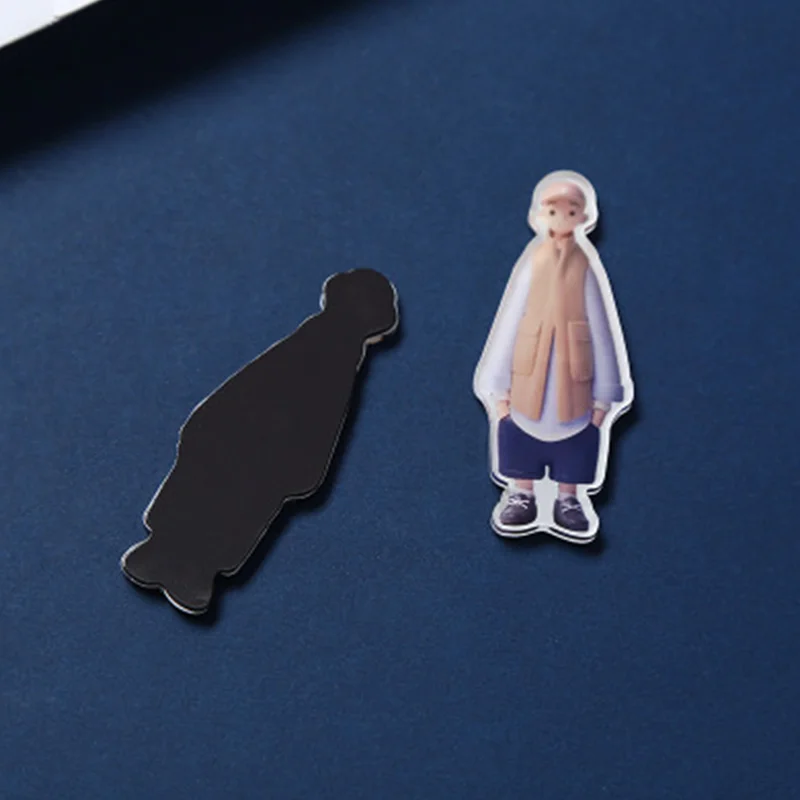
Flexible fridge magnet formats allow irregular shapes and full-colour print, which makes them suitable for event souvenirs and office notice surfaces.
| Specification point | AHA-CS Series (sponges & scrubbers) | AHA-FM Series (fridge magnets) |
|---|---|---|
| Product types | Sponge scrubbers, dish sponges, microfiber cleaning cloths, scouring pads | Fridge magnets, magnetic stickers, souvenir magnets |
| Size | Fully customizable; standard 100×60×20 mm and 110×70×30 mm | 1"×1" to 11.75"×11.75", fully customizable |
| Thickness | Customizable; standard band 10–50 mm | 0.5 mm – 6 mm |
| Material options | PU sponge, nylon, microfiber, PP, cellulose | PVC, soft rubber, acrylic, iron magnet |
| Functional options | Reusable, eco-friendly, antimicrobial optional | Ferrite or neodymium magnet; reusable; fade-resistant; strong adhesion |
| Decoration | Custom logo and printing | UV printing, 3D embossing, full-colour custom print |
| Certification (upon request) | FDA (food-grade), REACH, RoHS | EN71, REACH, RoHS |
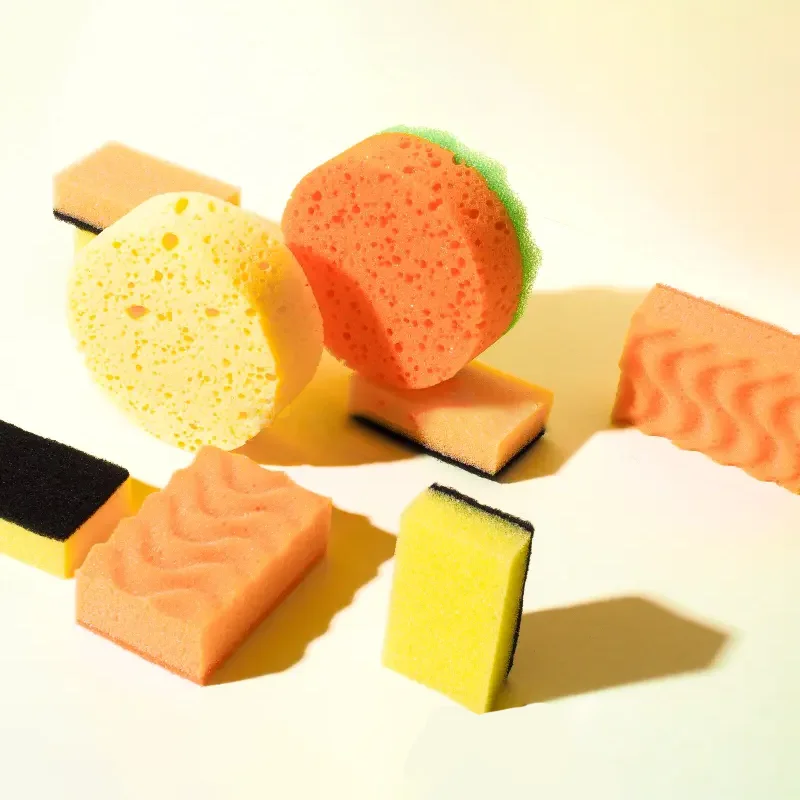
Sponge formats are defined by shape, thickness and material rather than print area alone — the 10–50 mm thickness band determines the usable print surface and the cleaning function.
Certification and Compliance Constraints to Lock Before Ordering
Certification is the constraint that most often changes an order after the artwork has already been approved, which is why it belongs at the specification stage. For the EU market, craft and toy-related products are generally expected to carry CE marking and to comply with the EN71 series — EN71-1 for physical and mechanical properties, EN71-2 for flammability and EN71-3 for chemical migration. For children's items entering the United States, ASTM F963-23 (Standard Consumer Safety Specification for Toy Safety) and CPSIA lead and phthalate limits apply. Both the AHA-CS and AHA-FM ranges list certification as available upon request, with REACH and RoHS in common, FDA food-grade compliance for the food-contact sponge range, and EN71 for the magnet range.
Practical consequence: because certification is issued on request rather than automatically, the required standard, the destination market and the document type should be written into the enquiry itself. A supplier that can produce the item but has not been told which standard applies may deliver a compliant product without the paperwork the buyer's customs broker or retail customer needs.
The same logic applies where a corporate kit mixes product categories. A kit that combines cleaning sponges, fridge magnets and children's craft items inherits the strictest requirement in the set — typically the children's standard — and the safety requirement for children's items is explicitly safe, non-toxic material. Buyers assembling mixed kits should therefore treat the children's component as the compliance ceiling for the whole box.
Printing, Tooling and Gift Box Packing
Decoration capability determines how much of a brand identity can actually be transferred onto the product. The production setup for this range includes printing equipment, embossing and engraving tools, packaging machines and custom moulds. In practice that supports four decisions: whether the shape is standard or moulded, whether the logo is flat-printed or embossed, whether colour is full-process or spot, and whether the finished item is packed loose or in a structured kit.
Packaging is a specification field rather than an afterthought. Custom packaging is supported across the range, with formats including OPP bags, colour boxes, gift boxes and blister packs. For corporate kits, gift-box packing is usually the deciding upgrade, because it converts two low-unit-cost items into a presentable set — a format that matters for onboarding kits, client appreciation packages and conference delegate bags alike.
Scenario Fit: Office, Event Venue, School, Hotel, Retail and Home
Scenario fit is where the two formats separate most clearly, because each environment implies a different retention pattern and a different specification emphasis.
| Environment | Typical role of the item | Specification emphasis |
|---|---|---|
| Office | Desk and breakroom use; magnet holds notes, schedules and notices on metal surfaces | Flat, printable shapes; fade-resistant print; low unit cost for large headcounts |
| Event venue | Delegate giveaways and exhibition souvenirs collected on site | Compact size, custom shape, packaging that survives transport |
| School | Craft and classroom gifts; decorative household items for family use | Non-toxic, safe construction and age-appropriate materials |
| Hotel and resort | In-room or checkout souvenirs; branded kitchen utility items | Souvenir aesthetics, durable print, materials suited to humid environments |
| Retail store | Sell-through merchandise alongside promotional stock | Consistent print quality across repeat batches; retail-ready packaging |
| Home | Daily cleaning and decoration; the longest exposure window of any scenario | Reusable construction, eco-friendly material, food-contact suitability for kitchen items |
A corporate kit built around these environments usually combines both families rather than choosing one: a sponge or scrubber set for kitchen and household use, and a magnet for the visible metal surface in the same home or office. The result is a kit that covers two daily routines — cleaning and organising — instead of one occasion.
Market Direction for Personalized and Printed Gifts
The commercial context supports the category rather than merely tolerating it. The global personalized gifts market was projected to grow from USD 28.47 billion in 2024 to USD 30.79 billion in 2025, reaching USD 42.25 billion by 2029, according to The Business Research Company. Within the United States, the same segment was valued at USD 8.92 billion in 2024, with expectations of reaching USD 15.19 billion by 2030 at a compound annual growth rate of 9.2% (Brand Analysis / Market Overview).
Two secondary signals matter for specification decisions. First, sustainability has moved from positioning to purchase behaviour: approximately 47% of global consumers purchased at least one sustainable or eco-friendly product in 2024, which directly supports reusable formats such as washable sponges and non-disposable magnets. Second, material composition in the gifting sector remains paper-heavy — paper and board accounted for 78.3% of gift wrapping and craft segment revenue in 2023, per Grand View Research. Soft rubber, PVC, acrylic and metal magnet formats therefore operate as a complement to a predominantly paper-based market, not a replacement for it.
Note on market estimates: published figures for the global personalized gifts market in 2025 differ by source and scope — The Business Research Company reports USD 30.79 billion, while Market Research Future reports USD 31.40 billion for the same year. The difference reflects how each study defines the personalized segment. Buyers using these figures for internal planning should cite the definition, not only the number.
The competitive landscape is similarly broad. Key global players in the personalized and printed gift sector include VistaPrint (Cimpress), Shutterfly, Etsy and Zazzle. These platforms are largely built around photo-based, made-to-order personalization at consumer scale; the model described here is manufacturer-led OEM/ODM production, where the buyer's artwork, shape, material and packaging are specified in advance and produced in batches. Both models serve the same demand for personalization, but they answer different procurement questions.
Comparison with Traditional Giveaway Items — and Where the Limits Sit
Traditional event giveaways tend to concentrate in apparel, drinkware, pens and tote bags. These categories are well understood and widely available, but they also carry structural disadvantages in retention terms: apparel is size-dependent and therefore frequently unworn, and drinkware competes for cupboard space that many recipients have already filled. Everyday-use utility items such as cleaning sponges and fridge magnets are less size-sensitive, less likely to duplicate an existing possession, and are consumed or displayed rather than stored.
That advantage has boundaries, and buyers should plan around them rather than discover them after delivery.
- The sponge is a wear item. A sponge or scrubber is used and eventually discarded, so its brand exposure has a defined service life rather than an indefinite one. This is inherent to the category and is the reason the format works best as a repeatable element in an ongoing programme rather than a single-occasion investment.
- Magnet performance depends on the receiving surface. Ferrite and neodymium options hold differently, and adhesion depends on the thickness and type of the magnet as well as the surface it is placed on. Not every domestic or office surface accepts a magnet, so the format should be paired with a second item when the recipient group is unknown.
- Antimicrobial treatment is optional, not standard. The AHA-CS range lists antimicrobial as an option, which means buyers who require it must specify it explicitly at enquiry stage.
- Certification is on request. FDA, EN71, REACH and RoHS compliance is listed as available upon request, so documentation must be asked for and confirmed rather than assumed.
- Order thresholds and timing are fixed constraints. A 2,000-unit MOQ and a 15–30 day lead time do not flex for last-minute events; small pilot programmes need either forward planning or acceptance of the standard threshold, and the smallest listed magnet size (1"×1") through to a maximum of 11.75"×11.75" also means very large magnet formats need separate tooling and weight consideration.
- Preferred environments are indoor. The published working conditions for these applications are indoor, office, home, retail store, event venue, school, hotel and resort environments — outdoor durability is not part of the stated specification.
None of these boundaries disqualify the format. They simply define the procurement conversation: repeatable programmes rather than one-off orders for sponges, and a paired-item kit structure for magnets.
Future Outlook
Three directions look most likely to shape this category over the next procurement cycles. The first is the continued shift toward everyday-use items over occasion-only memorabilia, driven by the retention economics described above. The second is material and sustainability pressure: with roughly 47% of global consumers having purchased at least one sustainable product in 2024, reusable and eco-friendly construction moves from a differentiator to an expectation, which favours washable sponge materials and durable magnet substrates over single-use alternatives. The third is compliance tightening, particularly around children's items entering the EU and US, where EN71 series compliance, CE marking, ASTM F963-23 and CPSIA limits already set the documentation baseline.
For buyers, the practical implication is that supplier selection will be decided less by catalogue breadth and more by whether specification, certification, tooling and packaging can be handled inside one production relationship. In a supply chain where an item must be moulded, printed, inspected, boxed and shipped on schedule, the ability to run those steps as a single process — rather than four separate vendor conversations — is what converts a gift idea into a delivered kit.
Frequently Asked Questions
1. Which certifications should a buyer require for custom cleaning sponges and fridge magnets?
The AHA-CS Series sponge and scrubber range lists FDA (food-grade), REACH and RoHS certification as available upon request, and the AHA-FM Series fridge magnet range lists EN71, REACH and RoHS on the same basis. For the EU market, craft and toy-related products are generally expected to carry CE marking and comply with EN71-1 (physical), EN71-2 (flammability) and EN71-3 (chemical safety). For children's products entering the United States, ASTM F963-23 and CPSIA lead and phthalate limits apply. Because documentation is issued on request rather than by default, buyers should state the destination market and the exact standard required when requesting a quotation.
2. How should size, material and magnet type be specified before ordering?
Sizes in both ranges are fully customizable. For sponges, standard references are 100×60×20 mm and 110×70×30 mm, with a thickness band of 10–50 mm; material options are PU sponge, nylon, microfiber, PP and cellulose, chosen according to whether absorbency or abrasion resistance matters more. For fridge magnets, the size range runs from 1"×1" to 11.75"×11.75" with thickness from 0.5 mm to 6 mm, shapes can be square, rectangular, round or irregular, and the magnet body can be ferrite or neodymium depending on the holding strength required. Substrates include PVC, soft rubber, acrylic and iron magnet.
3. Which printing methods and packaging formats are used?
Fridge magnets support UV printing, 3D embossing and full-colour custom print; sponges and scrubbers support custom logo and printing. The production setup includes printing equipment, embossing and engraving tools, packaging machines and custom moulds. Packaging is customizable and includes OPP bags, colour boxes, gift boxes and blister packs, so a two-item set can be delivered as a structured gift-boxed kit rather than loose units.
4. What minimum order quantity and lead time apply?
The published capability figures for this supplier list a minimum order quantity of 2,000 units, a production lead time of 15–30 days, and a monthly production capacity of 500,000 units. Order volume is scalable rather than fixed: in one documented long-term relationship with a US distributor and promotional agency, standard bulk orders of 10,000+ units were used alongside smaller negotiable orders, sustained over three years. Buyers planning around a fixed event date should schedule artwork approval and certification confirmation ahead of the 15–30 day production window.
5. What are the practical limits of sponges and magnets as giveaway items?
Cleaning sponges are consumable and wear out with use, so their brand exposure has a finite service life — which suits repeat programmes rather than one-off placements. Magnet adhesion depends on the magnet type (ferrite or neodymium) and on the surface it is applied to, so magnets work best when paired with a second item in the same kit. Antimicrobial treatment on sponges is an option that must be specified, not a default. Certification documents are provided on request. The stated working conditions for these applications are indoor environments including office, home, retail store, event venue, school, hotel and resort, so outdoor durability is not part of the specification.
For buyers in the research and evaluation stage, the useful next step is not a broader product list but a tighter specification sheet: destination market and required standards, item dimensions and material, print method, packaging format, order quantity and required delivery date. Once those six fields are fixed, both the sponge and the magnet format become straightforward to quote, sample and validate against a real event schedule.