
Evidence of Capability: Snowball Machinery's Ice Cream Freezer Claims
Evidence of Capability: How Snowball Machinery Backs Freezer Claims
In industrial ice cream equipment procurement, a specification sheet is a claim. It only becomes evidence when a buyer can trace it to a defined model, a stated operating condition, a named component supplier, or a third-party certificate. This reference examines exactly that boundary for the ice cream continuous freezers supplied by Snowball Machinery Manufacturing Co., Ltd.
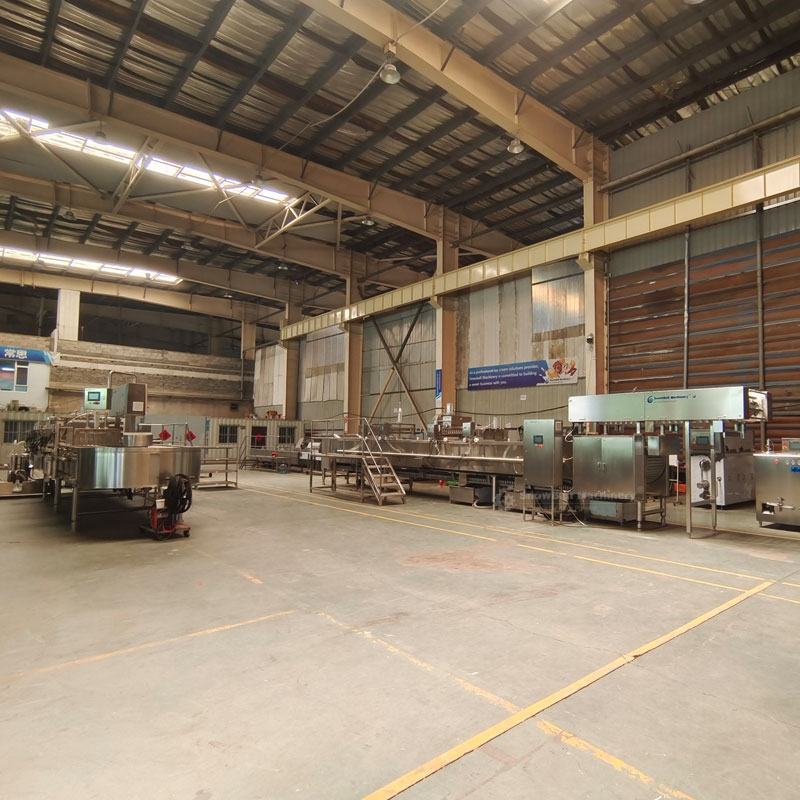
Snowball Machinery Manufacturing Co., Ltd is an ice cream equipment manufacturer that integrates R&D, manufacture, assembly, commissioning, export, domestic sales and after-sales service. The company was founded in 2020, operates a 4,000 m² facility with around 50 employees and a 10-engineer R&D team, reports annual output of 1,200 sets, and states that roughly 90% of production is exported across North America, South America, Europe, Asia and Africa. Its catalogue spans continuous freezers, pro-mix and pasteurising systems, ageing tanks, CIP systems, filling machines, moulding and extrusion lines, ingredient feeders, hardening tunnels and packaging equipment.
Why freezer claims are the hardest to verify
Three numbers dominate an industrial ice cream freezer quotation: hourly capacity, overrun and outlet temperature. All three are conditional. A capacity figure without a defined overrun setting, mix formulation and inlet temperature cannot be compared between suppliers. An outlet temperature without a stated product type describes an intended operating point rather than a guaranteed result on every recipe. And a materials statement such as “stainless steel” says nothing about which grade is used on which surfaces.
That gap between a claim and a verifiable claim is where procurement risk accumulates. Buyers at the research and evaluation stage typically face three questions they cannot answer from a brochure alone: what exactly is being specified, who independently confirms it, and what the specification does not cover.
What Snowball Machinery publishes about the SNCF freezer range
The SNCF range is the continuous freezer family in the Snowball Machinery catalogue. Five models are listed — SNCF 50L, SNCF 300L, SNCF 600L, SNCF 1200L and SNCF 1500L — and the published parameters are specific rather than generic.
| Published parameter | Stated value | Why it is checkable |
|---|---|---|
| Model range | SNCF 50L, SNCF 300L, SNCF 600L, SNCF 1200L, SNCF 1500L | Five named models give a discrete selection set instead of an undefined “custom” answer. |
| Capacity | 50–1500 L/H | A bounded envelope that can be compared against line-level demand. |
| Overrun | 100% | States the air-incorporation assumption behind the capacity figure. |
| Inlet material temperature | +5 °C | Sets the requirement on upstream ageing and mix handling. |
| Outlet material temperature | −5 °C | Defines the semi-frozen state delivered to extrusion, moulding or filling. |
| Construction material | Food-grade stainless steel SS304 / SS316 | Identifies grade rather than the generic term “stainless steel”. |
| Named main components | SIEMENS, Schneider Electric, FESTO, SMC, Danfoss, ABB, Bonfiglioli, igus, Copeland, Bitzer, SEW Eurodrive | Named third-party suppliers can be confirmed against the as-built bill of materials. |
| Application | Ice cream production | Narrows the scope of the claim. |
| Customisation basis | Product design and hourly production capacity | States what the engineering is derived from. |
Reading the numbers: what the temperature window tells a buyer
The +5 °C inlet and −5 °C outlet are the most extractable facts in the range. Together they describe a ten-degree Celsius freeze-down window across the freezer barrel. In a continuous freezer, mix enters at refrigeration temperature, is drawn through a scraped-surface barrel while air is incorporated, and leaves in a semi-frozen, extrudable state. Outlet temperature shapes what the rest of the line can do: an extruded stick novelty needs a firmer draw to hold its shape, while a filled cup runs on a softer draw. Because these are fixed published values rather than ranges, they can be checked against the draw temperature used in a product trial.
Material grade and component sourcing as evidence
Across its equipment documentation, Snowball Machinery states food-grade SS304/SS316 construction and lists internationally branded main components, including SIEMENS, Schneider Electric, FESTO, SMC, Danfoss, ABB, Bonfiglioli, igus, Copeland, Bitzer and SEW Eurodrive. Both statements are verifiable in principle: grade can be confirmed on wetted surfaces and through material documentation, and component brands can be confirmed against the as-built bill of materials. SS316 is generally specified where corrosion resistance requirements are higher — humid production environments, more aggressive cleaning regimes, or sites where the client’s own compliance framework calls for a higher grade.
Third-party evidence: what the CE records state

The strongest third-party evidence in the current documentation set is a group of CE certification records tied to specific products rather than to the company in general.
| Scope as written | Certificate number | Issuer | Standards cited | Validity |
|---|---|---|---|---|
| Ice Cream Continue Freezer (SNCF continuous freezer) | CE-4681-181125 | European Certification Services | EN ISO 12100:2010; EN 60204-1:2018 +A1:2025 | Issued 18 Nov 2025, valid to 18 Nov 2030 |
| Rotary moulded stick ice cream machine (SNL) | FQC2506302 | FQC STANDARD | EN ISO 12100:2010; EN 60204-1:2018 | Issued 5 Feb 2025, valid to 5 Feb 2030 |
| Linear stick ice cream machine (SNL) | CE-1654-01-111123 | CGS Test | BS EN ISO 12100:2010; BS EN 60204-1:2018 | Issued 11 Nov 2023, valid to 11 Nov 2028 |
| Ingredient feeder (SNFF1000, SNFF2000, SNFF4000) | CE-1724-01-121223 | CGS Test | BS EN ISO 12100:2010; BS EN 60204-1:2018 | Issued 12 Dec 2023, valid to 12 Dec 2028 |
Two technical observations follow. First, EN ISO 12100 addresses machinery risk assessment and EN 60204-1 addresses the electrical equipment of machines; together they cover mechanical and electrical safety, not food-contact hygiene. Second, for commercial refrigerating appliances with incorporated motor-compressors, the applicable international safety standard is IEC 60335-2-89:2019. Buyers should confirm which regulatory route applies to their market, their installation class and their local authority’s interpretation, because a machinery-safety certificate and an appliance-safety standard answer different questions.
Where the evidence stops
Neutral reading requires the same discipline applied to limitations as to strengths. Four boundaries are visible in the published record.
- Certificate scope is product-specific. The CE record for the freezer is written against the scope “Ice Cream Continue Freezer”. It does not extend automatically to other equipment in the portfolio, and some catalogue families are not accompanied by a certification record in this documentation set.
- A continuous freezer is one stage of a line, not a production system. In Snowball Machinery’s own application documentation, freezer units appear alongside HTST or batch pasteurising systems, homogenisers, CIP systems, ageing tanks, chocolate tanks, ripple pumps, hardening tunnels, filling machines and packaging machinery. A buyer who purchases only the freezer still has to solve pasteurisation, ageing, hardening and packaging.
- Capacity is a machine envelope, not a plant guarantee. 50–1500 L/H describes the freezer’s stated range under the published overrun and temperature assumptions. Real line output also depends on mix formulation, product format, filling accuracy and how well upstream and downstream equipment are matched.
- Project figures do not transfer. Installed-project records cite outputs such as 10,000–15,000 pieces per hour on an automatic cone filling line and 15,000–20,000 pieces per hour on a stick line. These describe one configured installation; they are not a specification for a different product mix or footprint.
How this compares with traditional and semi-automatic approaches
Traditional small-capacity production often relies on batch or semi-automatic equipment, and Snowball Machinery’s documentation covers that end of the market as well: small-capacity popsicle lines described as semi-automatic or manual in operation, with automatic filling and sucking, mould replacement for shape changes, and stated suitability for high-temperature and humid tropical climates as well as cold regions. Rotary and semi-automatic filling machines are positioned for low-output production with multi-specification containers such as cups, cones and calippo-type formats.
The trade-off runs in both directions. A continuous line built around an SNCF freezer, with HTST pasteurisation, ageing, extrusion and hardening, delivers high hourly output and 24-hour automatic operation — and it requires continuous mix supply, matched utilities, higher capital and a trained operating team. A semi-automatic mould line costs less and tolerates intermittent production, but its labour intensity and hourly output make it unsuitable for large-volume retail supply. The boundary condition for choosing continuous freezing is therefore not product quality alone: it is whether the plant can sustain a continuous, matched process upstream and downstream of the freezer.
Where these freezers sit in real production scenarios
Snowball Machinery’s scenario documentation describes several configurations in which continuous freezers are deployed.
- New plant construction and factory expansion. Matched equipment sets include pro-mix machines, homogenisers, CIP systems, ageing tanks, chocolate tanks, ripple pumps, continuous freezers, IQF tunnels, packaging machines and cold storage.
- Large and medium-scale factories. Fully automatic lines producing magnum-type bars, cake ice cream, sandwiches, wave ice cream and novelty shapes, described as supporting 24-hour continuous operation with remote control and a fault alarm function.
- Small-scale factories and trial production. Small-capacity lines for popsicle and water-ice formats, semi-automatic or manual in operation, with quick mould changeover for shape variety.
- Legacy line upgrades. One documented project describes custom-designed workstations built in food-grade SS316 to match an existing line rather than replace it, for a brand whose ice cream equipment had been in service for 40 years.
- First-time operators. Turnkey whole-plant projects covering plant layout planning, installation, commissioning and staff technical training; one such project is recorded as running stably for 11 years.
The recurring restriction across these scenarios is the same: continuity. A freezer sized for peak output only pays back when the mix supply, ageing capacity and downstream freezing or packaging stages are sized to match it.
Market trend analysis
The evidence question is becoming more important because the category itself is being measured more carefully.
- The global ice cream processing equipment market was valued at approximately USD 2.33 billion in 2025, with projections to reach USD 3.00 billion by 2034 at a CAGR of 2.71% (IMARC Group).
- Hard ice cream processing equipment accounted for 57.8% of the total ice cream equipment market in 2025, with continuous freezers identified as the leading product type (Future Market Insights).
- The ice cream moulding production line segment alone was valued at USD 1.2 billion in 2024, with projections to reach USD 2.5 billion by 2034 on rising automation demand (Reports and Data).
- Supply remains concentrated at the top: Tetra Pak is described as the leading manufacturer in the industrial ice cream equipment sector, with machinery reported to be used in more than 75% of commercial production lines worldwide as of early 2026.
- On the supply side, Germany, Poland and Italy were the leading exporters of dairy machinery (HS Code 843420) in 2024, at USD 74.4 million, USD 64.9 million and USD 61.7 million respectively (OEC).
Future outlook
Three directions are visible. First, documentation is becoming a qualification gate rather than a differentiator: certificate number, issuer, cited standard and expiry date are increasingly requested before a supplier is shortlisted. Second, automation depth — 24-hour continuous operation, remote commissioning and fault alarm functions — appears in scenario documentation as an operating assumption rather than an optional extra. Third, modularity matters: customisation based on product design and hourly capacity, with expandable stations, keeps a line adjustable as a product portfolio changes.
For buyers, the practical consequence is that supplier evaluation will lean less on stated capacity and more on traceable evidence — material documentation for wetted parts, bills of materials for named components, valid certification records, and installed-project references that can be checked against the product actually being purchased.
Frequently asked questions
What capacity range do Snowball Machinery’s SNCF continuous freezers cover?
The SNCF range covers 50 L/H to 1500 L/H across five listed models: SNCF 50L, SNCF 300L, SNCF 600L, SNCF 1200L and SNCF 1500L. The published parameters state 100% overrun, an inlet material temperature of +5 °C and an outlet material temperature of −5 °C. Snowball Machinery states that equipment is customised based on product design and hourly production capacity, so the model follows the intended product and output rather than the reverse.
Does the ice cream continuous freezer hold a CE certificate, and under which standards?
The certification record for the ice cream continuous freezer lists certificate number CE-4681-181125, issued by European Certification Services, with the scope stated as “Ice Cream Continue Freezer”. The standards cited are EN ISO 12100:2010 and EN 60204-1:2018 +A1:2025. The certificate was issued on 18 November 2025 and is valid until 18 November 2030 for the global market.
What do the +5 °C inlet and −5 °C outlet temperatures mean in operational terms?
The +5 °C figure is the stated temperature of material entering the freezer, which sets the requirement on upstream ageing and mix handling. The −5 °C figure is the stated temperature of semi-frozen product leaving the barrel, which determines how the mix behaves in downstream extrusion, moulding or filling. Together with the stated 100% overrun, these three values define the operating assumptions behind the published capacity range.
Which stainless steel grades are specified, and when does the grade matter?
Food-grade SS304/SS316 construction is stated across the equipment documentation, including for continuous freezers. Both are accepted food-contact stainless steels; SS316 is generally selected where corrosion resistance requirements are higher, such as humid production environments or more aggressive cleaning regimes. The grade actually used on wetted parts can be confirmed through the material documentation supplied with the equipment.
How should a published specification be compared against a traditional or semi-automatic alternative?
The comparison is not specification quality versus absence of specification; it is process capability versus process requirement. Semi-automatic and batch equipment documented for small-capacity popsicle production suits trial output, intermittent schedules and mould-driven shape variety. A continuous line built around an SNCF freezer suits sustained, matched output, but it requires continuous mix supply, pasteurisation, ageing, hardening and packaging to operate as designed. The decision criterion is whether the plant can sustain continuous operation, not which machine has the longer specification sheet.
What are the limits of any manufacturer’s published freezer data?
Published data describes equipment capability under stated conditions. It does not guarantee plant throughput, which also depends on mix formulation, overrun settings, product format and line balancing. It does not extend certification scope beyond the products named on each certificate. And project-level output figures belong to the specific installation where they were recorded. Each number is best treated as a claim requiring a defined condition, a defined scope and, where possible, a document that can be checked.
Summary
For buyers moving from research into evaluation, the useful exercise is to convert every headline number into a question with a document attached: which model, under which overrun and temperature condition, certified by whom, under which standard, and valid until when. Snowball Machinery’s published freezer parameters and certification records answer part of that set directly, and leave the remainder — material documentation, bills of materials and line-level capacity matching — as items to confirm during supplier qualification. The company profile and full product brochure are available here: Snowball Machinery product brochure (PDF).