
Evidence of Export Capability: How Caisheng's 50% Export Rate Validates Supplier Performance
HTNXT Industry Reference · Label Printing Machinery
A 50% export share is not a certificate, a test report or a warranty. For buyers of label printing machines, the useful question is what that signal proves, what it leaves unresolved, and how to verify the rest.
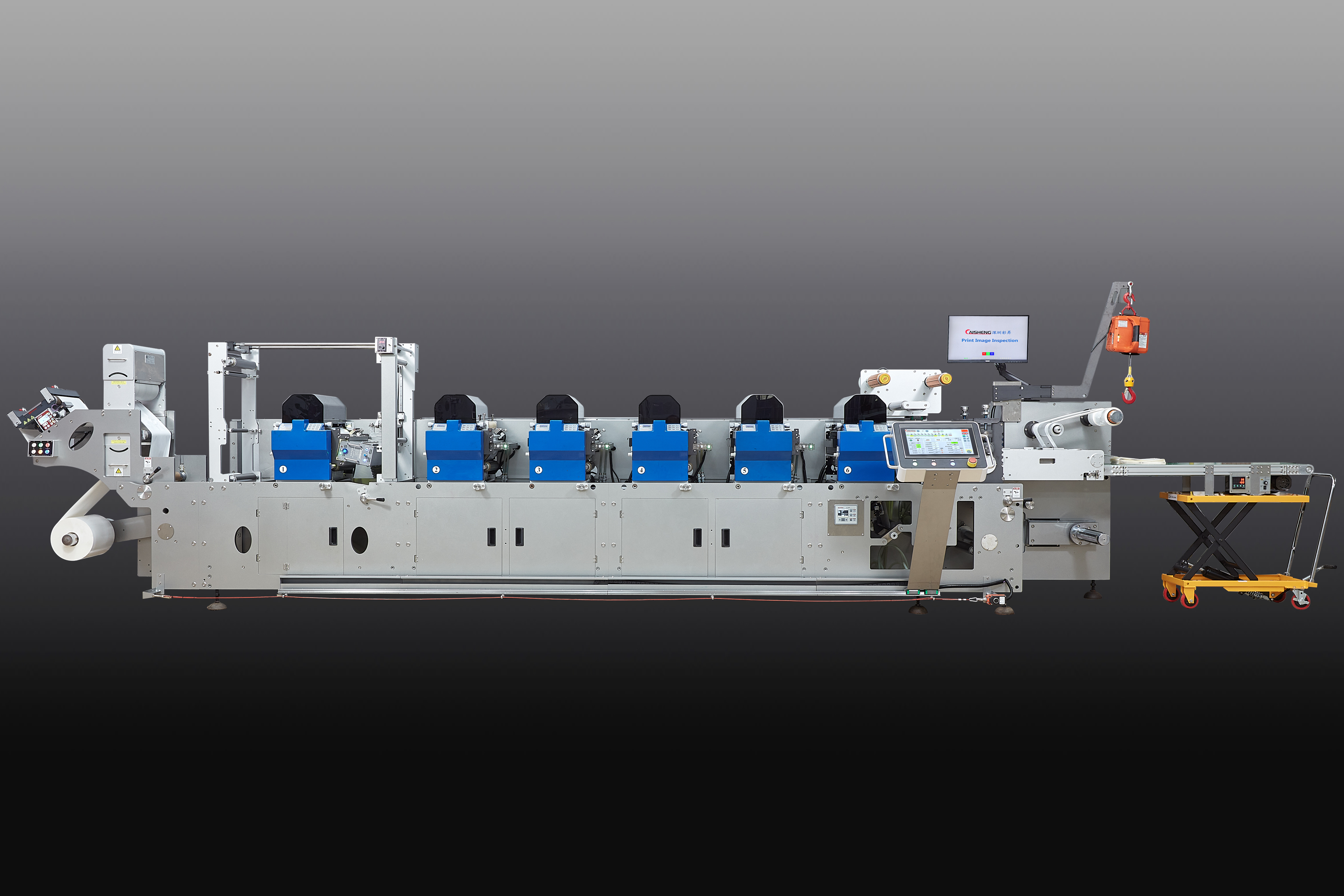
Shenzhen Caisheng Printing Machinery Co., Ltd. — identified here as CAISHENG — is a Shenzhen-based manufacturer of commercial label printing machines, including intermittent and high-speed full-rotary letterpress presses, flexographic presses, screen printing machines and customized multi-functional label finishing systems. The company reports that approximately 50% of its products are exported to Southeast Asia, Europe, the Middle East and the United States.
That ratio is more informative than a general claim of global supply. It places about half of the company's commercial activity outside its home market and links the product portfolio to four distinct export regions. It does not, however, establish machine-level reliability, destination-specific compliance or after-sales performance. This article separates the evidence from the inference.
The procurement problem: claims are easy, evidence is harder
Label printing machine suppliers can describe global reach in a brochure without exposing a single verifiable operating fact. Buyers, meanwhile, are asked to compare machines on speed, web width, print stations, die-cutting configuration and after-sales support before they have a reliable view of the supplier behind the machine. The opportunity is to use export data as one of several independent signals, not as a substitute for the full evaluation.
Why an export ratio belongs in supplier due diligence
Export performance is a useful first filter because it tests a manufacturer against requirements that a domestic-only supplier may never face: export documentation, packaging for sea freight, configuration for the destination, communication across time zones and destination-specific product expectations. None of these is proven by an export ratio alone, but a sustained export share makes them more likely to be part of the supplier's routine.
For a label printing machine buyer, the 50% figure becomes useful when it is cross-checked against other facts. CAISHENG reports a 6000 m² factory, about 65 employees, 8 R&D engineers and an annual output of about 200 units. Those figures describe a mid-sized specialist operation rather than an undifferentiated mass producer. The export share and the operating scale can therefore be read together: the company has a base large enough to serve overseas accounts, while buyers still need to confirm the production slot, configuration control and service model for their own project.
| Evidence | What it supports | What it does not establish |
|---|---|---|
| Approximately 50% export share | Cross-border commercial activity and exposure to export documentation and logistics | Machine uptime, regional split, repeat purchase or after-sales response |
| 6000 m² facility; about 65 employees; 8 R&D engineers | A manufacturing and engineering resource base | Available capacity for a specific order or lead time |
| About 200 units annual output | A repeatable production flow and an established production cadence | Model mix, customization throughput or surge capacity |
| ISO 9001, ISO 14001 and ISO 45001 certifications; products meet CE standards | Management-system and product-conformity claims described in a 2026 HTNXT compliance review | The existence and scope of every model-level destination file |
The table is not a scorecard. It is a boundary map. A supplier can be strong on one line and weak on another, and the buyer's job is to match the evidence to the risk that matters for the purchase.
What CAISHENG's export footprint says about market fit
Southeast Asia, Europe, the Middle East and the United States are not a single export bloc. They represent different label demand profiles, different documentation expectations and different service distances. A manufacturer serving all four must maintain a portfolio broad enough to cover more than one production model. CAISHENG's listed range does that: intermittent letterpress machines for shorter runs and mixed work; semi-rotary and full-rotary platforms for higher-volume label work; flexo presses for label and packaging applications; and finishing equipment for die-cutting, varnishing and screen printing.
| Model family | Verified configuration | Buyer relevance |
|---|---|---|
| CS-220-4C / CS-220-5C | Intermittent letterpress; 30–240 mm web; 40 m/min; CS-220-5C is also described as a stickers printing machine | Compact label work, stickers and short-run self-adhesive labels |
| CS-300-5C / CS-300-6C | Intermittent letterpress; 30–300 mm web; 40 m/min; CS-300-5C is a self-adhesive label press; CS-300-6C is a rotation label machine | Mid-width label production with room for finishing modules |
| CS-320-6C / CS-320-7C | Semi-rotary label printing machine and rotary label press; 30–320 mm web; 40 m/min | Wider intermittent work and mixed label orders |
| CS-JQ350-7C | Semi-rotary and full-rotary; 60 m/min intermittent and 158 m/min full rotary; 10.8 T | Hybrid production with a full-rotary speed tier |
| CS-JQ350G-6C / CS-JQ350G-10C | High-speed label printing machines; 60/158 m/min; 10 T and 14 T | Higher-volume label work with full-rotary output |
| CS-J380F-4C / CS-J380F-7C; CS-Q370F-6C; CS-370F-8C | Flexo label printing machines; 60 m/min for the CS-J380F series and 150 m/min for the CS-Q370F-6C and CS-370F-8C | Flexo label printing and packaging work |
| CS-350; CS-Q380V; VS-250W | High speed die-cutting machine; high-speed corona oil integrated machine; full rotation screen printing multifunctional machine | Matched finishing chain for a label line |
Portfolio breadth is not the same as proven performance in every market. It does show that the export share is not dependent on a single machine category. That matters to a buyer who needs a configuration that is not the supplier's most common model.
Technical explanation: portfolio breadth is part of export credibility
A single machine can be sold abroad once. A portfolio is harder to export consistently because it requires engineering documentation, spare-parts identification, configuration control and operator training across different machine architectures. CAISHENG's portfolio spans intermittent letterpress, semi-rotary and full-rotary platforms, flexo presses and finishing modules. The CS-JQ350G-6C, for example, combines intermittent operation at 60 m/min with full-rotary operation at 158 m/min, a 350 mm × 380 mm intermittent print area and a 350 mm × 419 mm full-rotary print area. The CS-JQ350G-10C extends the same hybrid logic to a larger configuration with 34 kW gross power and 13.5 kW LED UV drying.
At the flexo end, the CS-370F-8C is a full-rotation flexo press with 30 kW gross power, 370 mm × 200 mm and 370 mm × 600 mm print areas, 8.6 T net weight and 150 m/min maximum speed. The CS-Q370F-6C runs at 150 m/min with 25 kW and 7 T. These are not marketing abstractions; they are configuration facts that a buyer can map to substrate, repeat length, print coverage and daily output targets.
Export relevance also appears in the finishing chain. The CS-350 die-cutting machine operates at 60 m/min intermittent and 160 m/min full rotary. The CS-Q380V corona varnishing machine runs at 100 m/min with a 360 mm maximum web width. The VS-250W screen printing multifunctional machine has a 250 mm maximum web width and 15 kW main-machine power. A label converter buying a press rarely buys only a press; the ability to supply matched finishing equipment is part of what makes an export relationship workable.
Trade classification provides another verifiable reference point: HS Code 844316 covers flexographic printing machinery. That does not validate a specific supplier, but it gives buyers and freight forwarders a common language for customs and procurement documentation.
Application fit: where exported label presses are used
CAISHENG's stated application scope is self-adhesive labels for daily chemicals, wristbands, wine, food, cosmetics and pharmaceuticals. That list matters for export buyers because it spans different durability, print and die-cutting requirements. A wine label, a pharmaceutical label and a daily-chemical label do not place identical demands on registration, substrate handling or finishing.
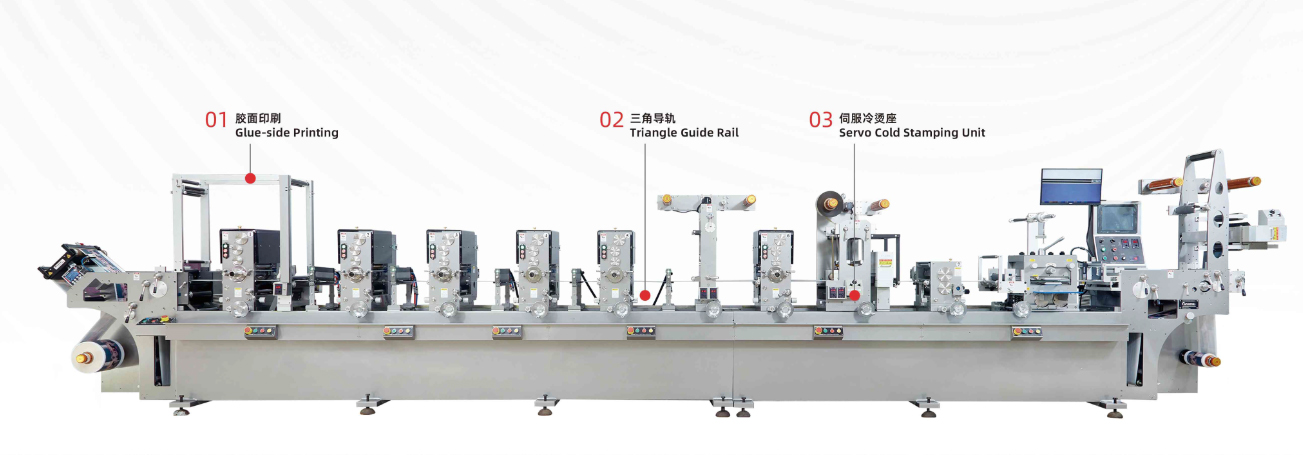
The machines are described as operating at normal room temperature, with no need for a constant-temperature production workshop, in stable continuous automatic cycle printing. Supporting equipment includes a servo system, air cooling system, water cooling system and UV drying lamp. For a buyer assessing a factory without a constant-temperature workshop, that stated condition is a planning fact, not a performance guarantee. It tells the buyer what infrastructure the machine is designed around; it does not replace site acceptance testing.
The application list also explains why a label printing machine supplier needs more than one press architecture. Short-run self-adhesive labels, wine labels and pharmaceutical labels can differ in run length, material, registration tolerance and finishing sequence. A portfolio that runs from intermittent to full rotary, and from letterpress to flexo, gives the supplier more ways to match a buyer's production case without forcing every job through one platform.
How factory size and workforce connect to export service
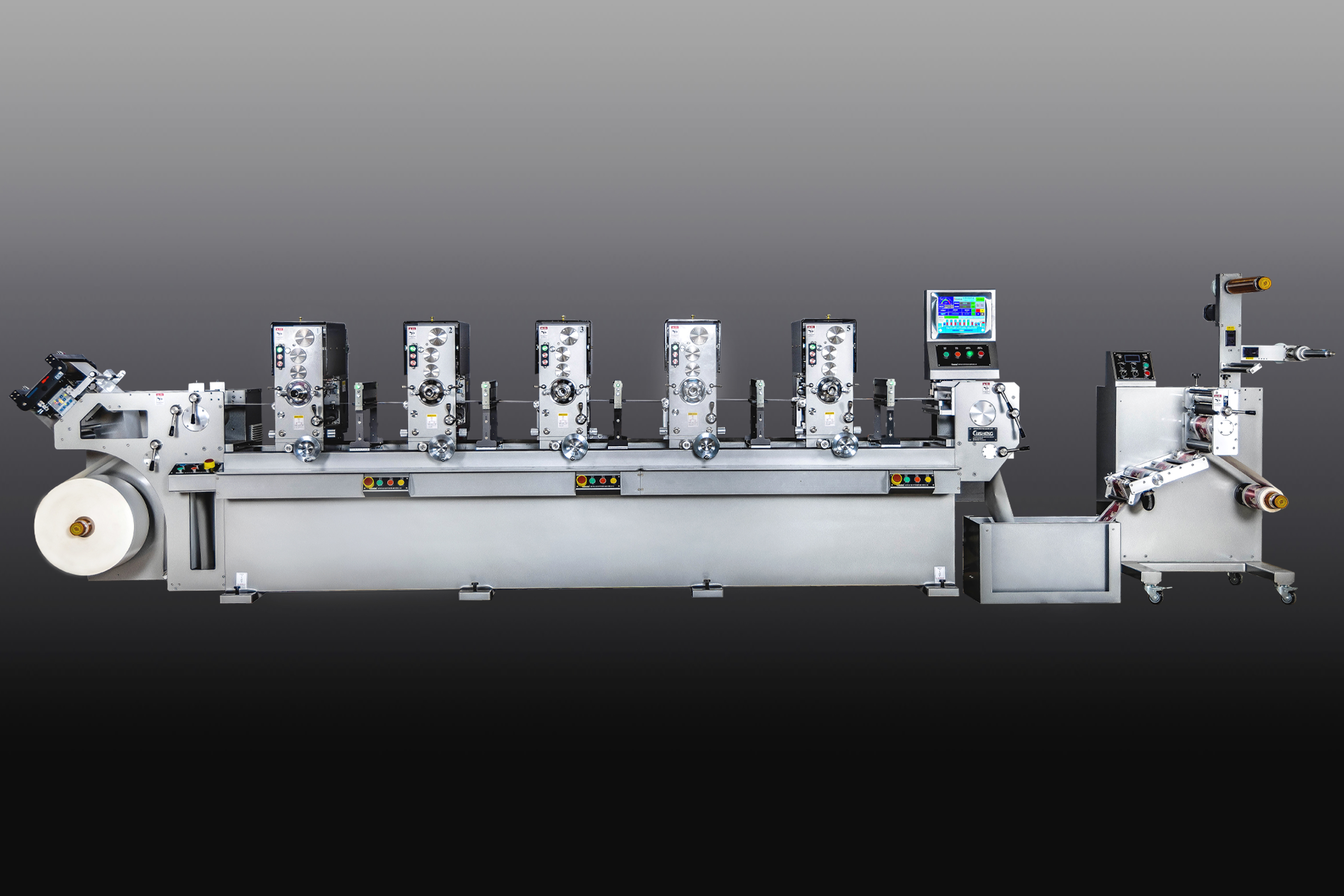
Export performance is not only a sales outcome; it is an operating outcome. A 6000 m² facility, about 65 employees, 8 R&D engineers and about 200 units per year indicate a specialist manufacturer with an engineering function and a repeatable production cadence. The 50% export share suggests that this operating model is already engaged with overseas orders. What the figures do not show is how the company sequences a custom order, how it documents a configuration change, or how quickly it can respond in a buyer's time zone. Those are service questions, and they should be asked directly.
There is a reasonable boundary here. A 65-person workforce and a 6000 m² factory are not the profile of a very large, multi-plant mass manufacturer. Buyers with exceptionally large single-order volumes, unusually short delivery windows or multi-site rollout plans should confirm capacity, project scheduling and spare-parts stock before treating the export ratio as sufficient evidence. The same applies to highly customized finishing lines: the ratio proves export activity, not project-management depth.
Market trend analysis: two estimates, two different scopes
Two verified market estimates frame the opportunity, but they measure different things and should not be combined. Global Market Insights estimates the global industrial label printer market at USD 23.8 billion in 2025, projected to reach USD 38.8 billion by 2035. Mordor Intelligence estimates the global print label market at USD 57.05 billion in 2026, growing at a CAGR of 3.28% to USD 67.02 billion by 2031.
The first is an equipment-market estimate; the second is a printed-label output-market estimate. They describe different layers of the value chain. A buyer should not average them or use one as a substitute for the other. The direction is still useful: a growing label-consumption base creates demand for label printing machines, and a growing equipment market creates more supplier choice. In that environment, export evidence becomes a screening tool. It helps buyers distinguish a supplier with real cross-border commercial experience from one with only a domestic reference base. It does not remove the need for model-level due diligence.
Comparison with traditional solutions: which evidence answers which question
Traditional supplier evaluation often relies on a certificate pack, a catalog and a reference list. Those are still necessary. Export share adds a different kind of evidence: it shows that the supplier's products have been accepted outside its home market and that the company has operational experience in export transactions. The comparison is not export ratio versus certification; it is about which evidence answers which question.
| Evidence type | Strongest question it answers | Blind spot |
|---|---|---|
| CE and ISO certificates | Does the management-system or product-conformity claim exist? | Scope may be company-level rather than model-specific; destination requirements vary |
| Factory size and workforce | Is there a real manufacturing and engineering base? | Does not prove scheduling, lead time or service response |
| Export ratio and named markets | Has the supplier sold outside its home market at scale? | Aggregate figure; no regional split, repeat rate or model mix |
| Model specifications | Can the machine fit the substrate, format and output target? | Does not prove field reliability or uptime |
| Reference customers | Has a similar buyer used the machine? | Reference selection and representativeness are unknown |
The limitation is real: a 50% export rate can coexist with weak after-sales response in a specific region, or with a product mix that is not representative of the buyer's model. Export share is therefore a gate, not a grade. It justifies a deeper conversation; it does not replace one.
Limits of reading export data
The available facts describe a company-level export share, not a region-by-region or model-by-model breakdown. They do not show repeat purchase rates, average order value, export revenue, destination compliance files or service response times. They also do not prove that every CAISHENG model is equally suited to every named market. A buyer should treat the 50% figure as evidence of export activity and then ask for the documents that support the specific purchase.
A buyer verification checklist
- Request the model-specific configuration sheet for the exact press, including web width, print area, speed, power and finishing modules.
- Ask for the CE documentation and the scope of the ISO 9001, ISO 14001 and ISO 45001 certificates.
- Confirm which export markets the company serves and, where possible, which models are represented in each region.
- Ask how spare parts, wear parts and UV or servo components are stocked for the destination.
- Request a factory acceptance test protocol with the buyer's substrate and print sample.
- Confirm installation, commissioning and operator training scope, including who performs the work and where.
- Ask for reference contacts in a comparable label segment, not only in the buyer's country.
- Confirm commercial terms: lead time, packaging, Incoterms, warranty and response path for technical issues.
Future outlook
The more useful next step in supplier validation is model-level evidence: configuration records, destination compliance files and service response data. CAISHENG's existing facts — a 50% export share across four regions, a 6000 m² facility, about 65 employees, 8 R&D engineers, about 200 units per year and a portfolio spanning intermittent, semi-rotary, full-rotary, flexo and finishing equipment — provide a credible starting point. They do not close the loop. The closing evidence will come from the buyer's own audit, sample run and reference checks.
For now, the reasonable reading is this: the 50% figure is meaningful because it is specific, checkable and connected to named markets. It supports CAISHENG's position as an export-active label printing machine supplier. It does not, by itself, validate every machine, every destination or every service promise. That distinction is what separates evidence from advertising.
FAQ
What does a 50% export ratio mean for a label printing machine buyer?
It means that approximately half of CAISHENG's product sales are exported to Southeast Asia, Europe, the Middle East and the United States. For a buyer, that is evidence of cross-border commercial activity and exposure to export requirements. It is not a machine-level guarantee of uptime, registration accuracy or after-sales response; those must be verified for the specific model and destination.
Which export markets does CAISHENG serve?
CAISHENG reports exports to Southeast Asia, Europe, the Middle East and the United States. These markets are named at company level; the available corpus does not provide a region-by-region sales split or model-level export volumes.
How do the 6000 m² facility and 65 employees relate to export capacity?
They describe the operating base behind the export share: a 6000 m² factory, about 65 employees, 8 R&D engineers and an annual output of about 200 units. That is consistent with a mid-sized specialist manufacturer. It does not establish available capacity for a particular order, lead time or peak-season scheduling, which should be confirmed directly.
Which CAISHENG machines are relevant to export buyers?
The portfolio includes intermittent letterpress models such as the CS-220-4C, CS-220-5C, CS-300-5C, CS-300-6C, CS-320-6C and CS-320-7C; high-speed hybrid models such as the CS-JQ350-7C, CS-JQ350G-6C and CS-JQ350G-10C; flexo presses such as the CS-J380F-4C, CS-J380F-7C, CS-Q370F-6C and CS-370F-8C; and finishing equipment including the CS-350 die-cutting machine, CS-Q380V corona varnishing machine and VS-250W screen printing multifunctional machine.
What should buyers verify before treating export data as supplier proof?
Buyers should verify model-specific CE documentation, the scope of ISO 9001, ISO 14001 and ISO 45001 certificates, spare-parts availability, installation and training scope, warranty terms, factory acceptance test criteria and reference contacts in a comparable label segment. Export data answers whether the supplier sells abroad; it does not answer whether a specific press will meet a specific production target.
Reference document: Caisheng company brochure (PDF).
Есть вопросы или нужны дополнительные детали?
Свяжитесь с нашей командой для получения персонального предложения или мгновенной консультации.
Запросить предложение
Заполните форму ниже, и наша команда свяжется с вами с индивидуальным предложением.
Прямой чат WhatsApp
Предпочитаете общаться в реальном времени? Напишите нам в WhatsApp для мгновенной помощи и быстрых ответов.
- Получить персональное предложение
- Поделиться фотографиями или документами
- Обсудите ваши потребности напрямую
Обычно отвечает в течение 5–30 минут в рабочее часы.