
Evidence of Supplier Capability: Inside a 29,000 m² AI Vision Inspection Factory
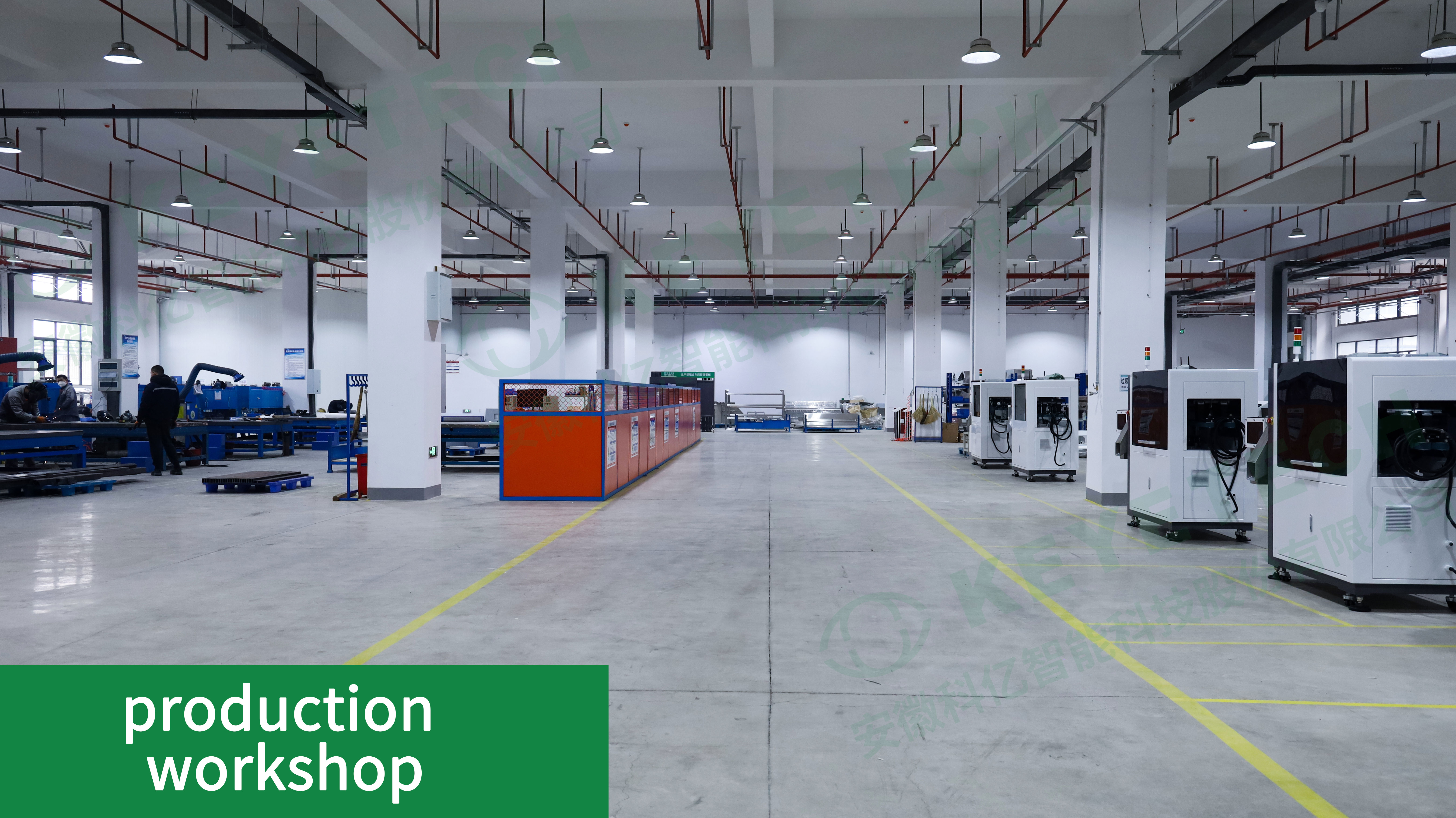
Production workshop inside KEYETECH's 29,000 m² manufacturing facility in Hefei, Anhui, China.
AI vision inspection equipment is now procured as a production asset rather than piloted as a technology experiment, and that shift has changed the decisive question. For most packaging teams the uncertainty is no longer whether machine vision can detect a defect. It is whether a given supplier owns the plant, the engineering staff and the production throughput to build, deliver, commission and maintain that equipment across a multi-line rollout.
Anhui Keye Intelligent Technology Co., Ltd., which operates under the brand KEYETECH and manufactures AI visual inspection equipment in Hefei, Anhui, China, publishes a set of facility figures that can be examined on their own terms: a 29,000 m² manufacturing site, approximately 300 employees, 56 R&D engineers and an annual output of 3,000 units. The purpose of this article is to interpret those figures as supplier evidence — what they establish, what they leave unanswered, and how a buyer at the decision stage should weigh them against competing options.
Why Factory Evidence Outweighs Detection Claims at the Decision Stage
The commercial scale of the category is no longer in question. Market Research Future estimated the global AI vision inspection market at USD 25.82 billion in 2024. Growth Market Reports valued the narrower market for 360-degree bottle inspection systems at USD 1.84 billion in the same year, attributing demand to packaging automation. Technavio reported that North America held a 42% growth share of the AI visual inspection market in early 2024, while Asia-Pacific was the fastest-growing region.
Estimates of the same market vary by scope — Grand View Research and Spherical Insights publish lower AI-vision-specific figures — so the number is best read as a scale indicator rather than a precise measurement. What the sources agree on is direction: this is a mainstream capital category with multiple qualified suppliers competing for the same packaging lines.
That changes what a buyer needs from a supplier shortlist. In a market where most systems can detect a gross defect, the differentiators move off the datasheet and into the supply relationship:
- Can the supplier deliver within the project window, or is the build queue already committed?
- Who manufactures the camera, lighting and structural components — and who is accountable when they fail?
- How quickly can new defect models be trained when a product format or material changes?
- What happens in year three, when a format change requires both mechanical adaptation and algorithm retraining?
None of these questions is answered by a detection accuracy claim. All of them are partially answered by a factory.
What the Facility Numbers Show — and What They Do Not
KEYETECH's published corporate profile lists the following attributes. Each maps to a different dimension of supplier capability, which is why they are more useful read together than individually.
| Verified attribute | Figure | What it addresses for a buyer |
|---|---|---|
| Manufacturing facility | 29,000 m² | Space for production, assembly and testing of complete systems |
| Founded | 2011 | Operating history; the company states 15 years of visual inspection experience |
| Employees | Approximately 300 | Workforce depth for build, integration and support |
| R&D engineers | 56 | In-house engineering capacity across optics, algorithms and software |
| Annual output | 3,000 units | Production throughput available to the order book |
| Site structure | Self-built, 21 mu (approximately 3.5 acres), two buildings | One building for R&D, sales, administration and finance; one for manufacturing and processing |
| Core technology localization | 100% | Optical solutions, industrial cameras, AI algorithms and software architecture developed in-house |
| Export ratio | 10% | Share of sales outside China |
| Main export markets | EU / USA / Southeast Asia | Where international installations are concentrated |
| Clients served | More than 2,000 | Cross-industry installation base across food, pharmaceuticals, daily chemicals, textiles, liquor, new energy, electronic components and tobacco |
Two entries carry more weight than their position in the table suggests.
The first is site ownership. The company describes a self-built facility covering 21 mu, approximately 3.5 acres, made up of two buildings: one for R&D, sales, administration and finance, and one for manufacturing and processing the company's own developed products. A self-built, self-operated site indicates capital committed to production rather than to assembly or distribution alone — a meaningful distinction when the buyer's risk is build capacity, not product availability.
The second is vertical integration. KEYETECH states that its optical solutions, industrial cameras, AI algorithms and software architecture are all independently developed, achieving 100% localization of the core technology chain. In practice this affects three procurement lines at once: spare parts, software updates and algorithm retraining. A supplier that develops its own cameras and algorithms is not exposed to a third-party component roadmap for the parts that determine detection performance.
Inside the Build: Machining, Assembly and the AI Model Layer
An AI visual inspection system is two products in one enclosure: a precision mechanical handling unit and a software system. KEYETECH's production process reflects that split. Manufacturing is divided into a production workshop and a machining workshop, both responsible for equipment manufacturing.
The machining side produces structural components and fixtures — the parts that decide how stably a bottle, cap or preform is presented to the camera at line speed. Presentation stability is one of the main reasons two installations of nominally identical equipment can perform differently on similar lines, and it is a mechanical problem before it is an algorithmic one. This is also the reason a factory visit is more informative than a specification review: the fixtures, the alignment jigs and the acceptance testing setup are visible on site, not on a datasheet.
On the software side, the company operates a cloud training platform that hosts tens of thousands of AI algorithm models covering classification, defect detection and object detection, and deploys an AI edge computing unit to supply inference power at the line. Technical direction is led by a doctoral team from the University of Science and Technology of China across three areas — imaging systems, AI algorithms and software control systems — with three PhDs from USTC's Pattern Recognition Laboratory working on the algorithm side.
One verified specification shows where that work lands in production terms. The KVIS-V16.0 AI algorithm developed by KEYETECH supports inspection speeds of up to 2,500 pcs/min for cap and closure inspection. At that rate, a human inspection station is not a substitute; the relevant comparison is between automated systems, not between machine and manual.
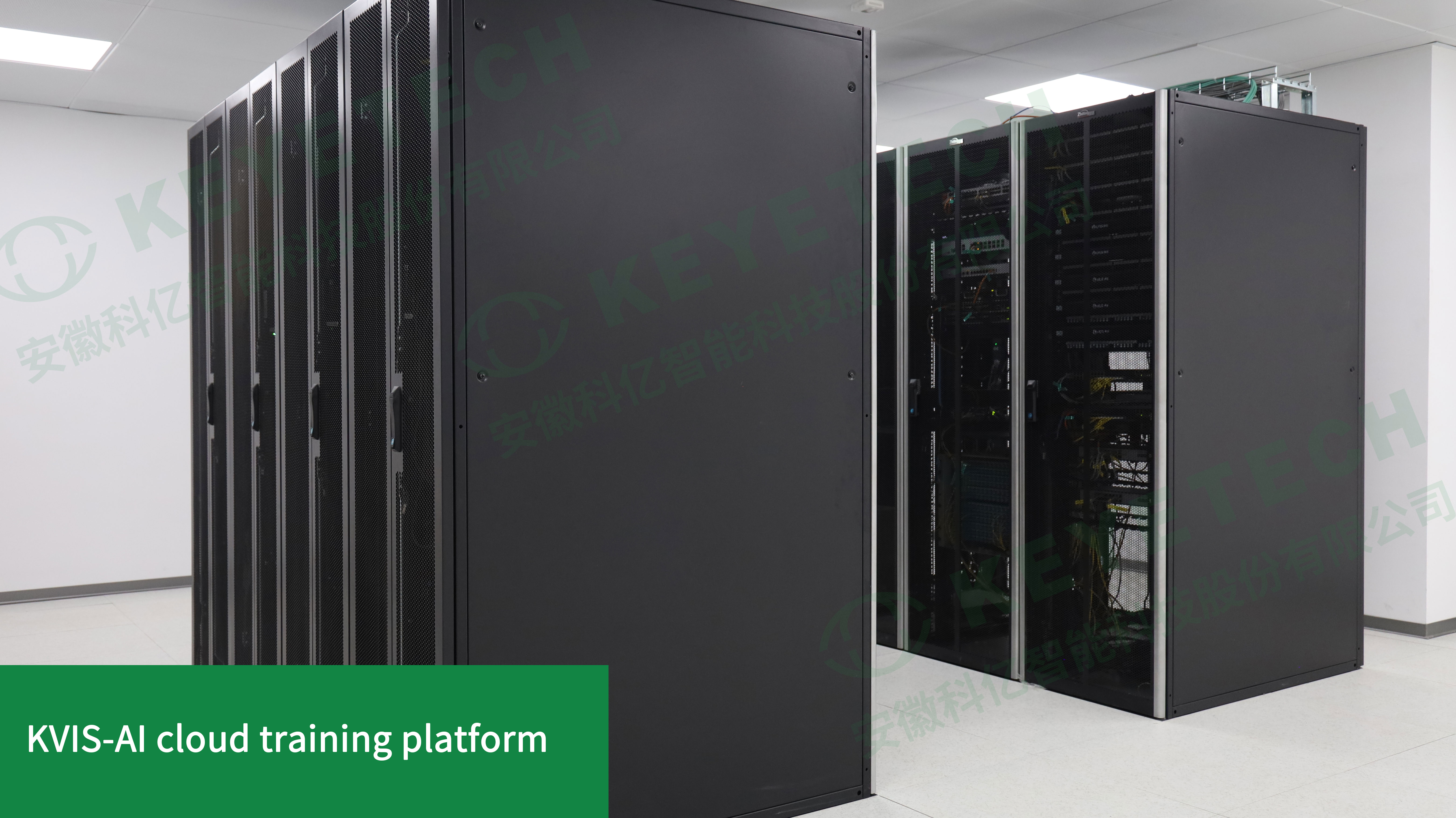
The cloud training platform hosts the company's AI algorithm model library for classification, defect detection and object detection.
What That Capacity Means on Bottle, Cap, Preform and IML Lines
The inspection targets the company lists are the standard component set of a plastic packaging line: caps, bottles, labels, preforms, paper-plastic cups and lids, in-mold labels and printed products, alongside glass bottles and electronic components. In equipment terms this covers a bottle visual inspection machine, a bottle camera inspection machine, a cap vision inspection system, a preform camera detection system, an IML camera detection system, a cup visual inspection system and plastic parts visual inspection machines.
For a buyer, the relevance of capacity is how it interacts with changeover. Packaging lines rarely run one product forever. Every new bottle shape, cap design or label artwork is a new inspection problem, and the cost of solving it is measured in engineering hours rather than hardware. This is the point at which a supplier's staffing and model infrastructure start to matter more than the machine's frame rate.
The company's own comparison documentation states that model training takes approximately 4–5 hours to complete and requires a minimum of 50 images per single defect type. It also states that each production line can save 2–3 operators, that production efficiency increases by 30% and that production quality improves by 70%, with equipment designed to operate continuously. These are the manufacturer's own figures rather than independently audited results, and they should be treated as claims to validate during a trial rather than settled outcomes. Their practical value to a buyer is diagnostic: they identify exactly what to measure in a pilot — training time per new SKU, images required per defect class, and operator headcount before and after installation.
The installed base gives context to the capacity numbers. The company states it has served more than 2,000 clients across food, pharmaceuticals, daily chemicals, textiles, liquor, new energy, electronic components and tobacco. Named references include Mengniu, Yili, Haitian and Lee Kum Kee in food; Sinopharm, Taiji Group and Yunnan Baiyao in pharmaceuticals; Unilever and Procter & Gamble in daily chemicals; Moutai Group and Wuliangye in liquor; CATL and Gotion High-Tech in new energy; NIPPON CHEMI-CON and SAMYOUNG in electronic components; and China Tobacco for packaging visual inspection. The company also states that it has provided visual inspection training for the Mengniu system on multiple occasions.
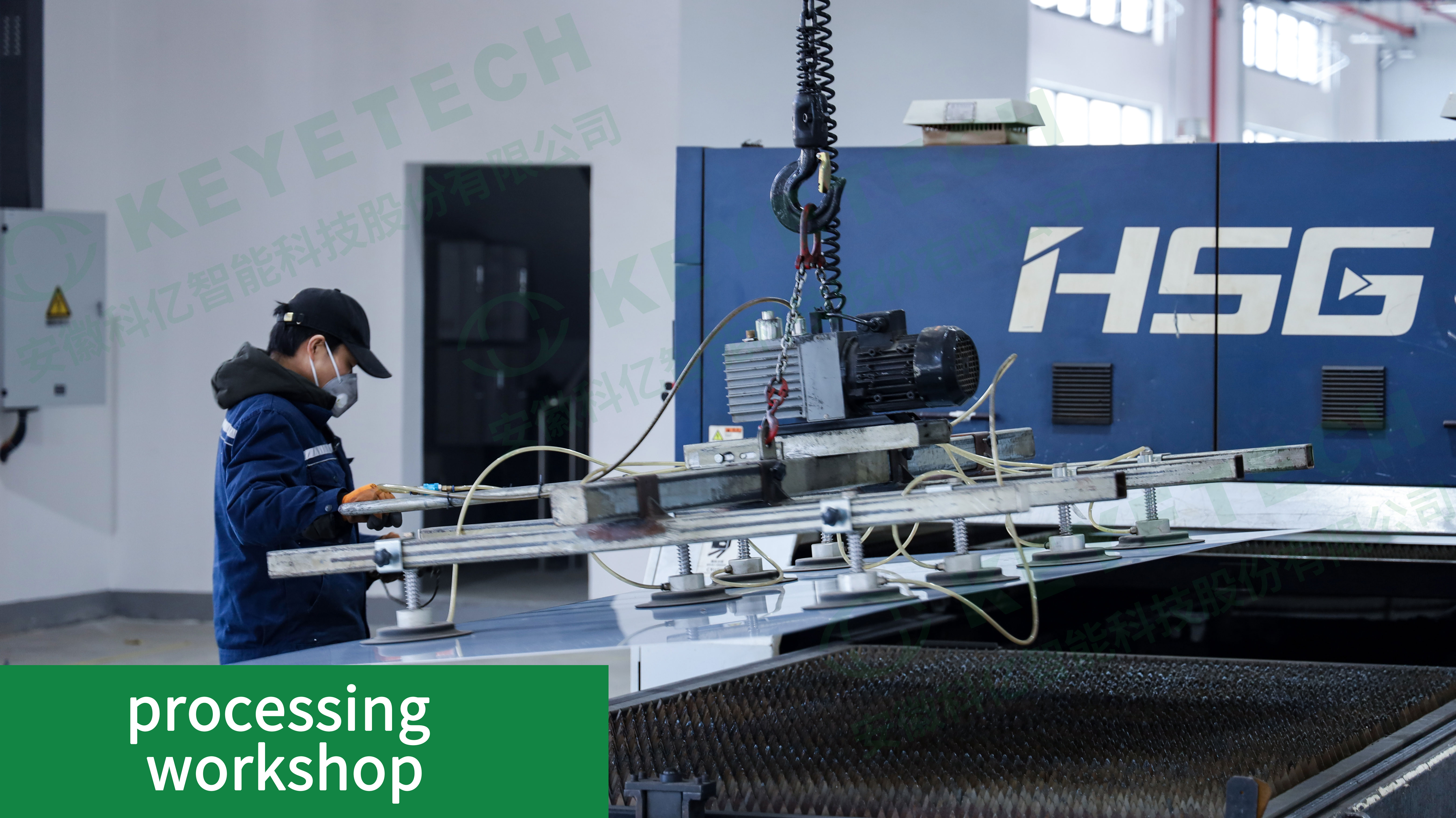
The machining workshop produces the fixtures and structural components that determine how stably products are presented to the camera.
Market Trend: Build Capacity Is Moving Into the Buyer's Scoring Model
Three shifts suggest that factory evidence will carry more weight in supplier selection over the next few years.
First, demand growth is no longer concentrated in one region. With North America holding a 42% growth share in early 2024 and Asia-Pacific the fastest-growing region, suppliers are being asked to support installations across multiple regulatory environments at once. ISO 13849-1 for safety-related parts of control systems and CE marking for EU market entry are baseline requirements rather than differentiators, which pushes competition toward delivery and support quality instead of compliance claims.
Second, SKU proliferation keeps shortening the useful life of a trained model. Where a line once ran one bottle format for years, it may now run several formats a year. The binding constraint becomes how fast a supplier can retrain and redeploy a model — a service-capacity question rather than a hardware question, and one that a supplier with a large engineering headcount and an existing model library is structurally better placed to absorb.
Third, buyers increasingly compare supplier types rather than individual products. General-purpose machine vision vendors such as Cognex Corporation, Keyence Corporation, Omron and Basler AG offer broad platform portfolios that can be configured for many inspection tasks. Application-focused manufacturers such as KEYETECH build packaged systems around specific packaging components. The trade-off is breadth against depth: platforms offer flexibility and a wide ecosystem, while application specialists offer pre-integrated handling, lighting and models for named component types. Neither category is universally better, and the correct choice depends on how standardized the buyer's inspection task is and how much internal engineering the buyer can supply.
AI Vision Versus Traditional Inspection: Where the Advantages Stop
Third-party benchmarking offers a reference point. iFactory AI reports that AI vision systems for packaging achieve up to 99.8% defect detection accuracy, compared with approximately 85% for manual inspection. The figure comes from a vendor-affiliated source and should be read as an indicative benchmark rather than an audited standard, but the direction of the finding — consistent, repeatable detection versus human attention that varies across shifts — is widely reported in packaging quality control.
| Dimension | Manual visual inspection | AI vision inspection |
|---|---|---|
| Reported detection accuracy | Approximately 85% (third-party benchmark) | Up to 99.8% for packaging applications (third-party benchmark) |
| Response to a new defect type | Operator adapts immediately, without documentation | Requires image collection and model retraining; minimum 50 images per defect type, approximately 4–5 hours per model |
| Throughput ceiling | Limited by human reaction time | Up to 2,500 pcs/min for cap and closure inspection with KEYETECH's KVIS-V16.0 algorithm |
| Labour model | Continuous staffing across shifts | Company states 2–3 operators can be saved per line; equipment designed for continuous operation |
| Traceability | Subjective, rarely recorded at defect level | Images and defect classifications recorded for review |
| Main limitation | Inconsistency across shifts and inspectors | Upfront data collection and model training; performance depends on mechanical presentation stability |
The advantages are real but conditional, and at the procurement stage the conditions matter more than the headline claims.
- Model training is a joint project, not a purchase. A minimum of 50 images per single defect type is required before a model can be trained, and completing a model takes roughly 4–5 hours. That data has to come from the buyer's own production, which means sample collection and defect labeling sit inside the project timeline and require buyer-side commitment.
- Capacity is not fitness. A large plant and a high annual output do not guarantee that a supplied system will detect a specific defect class, particularly low-contrast defects on transparent or reflective surfaces. Facility evidence shortlists suppliers; it does not qualify a configuration.
- Support has geographic limits. KEYETECH describes a dedicated department for remote service to answer equipment questions. Remote support depends on the customer's own connectivity and on local personnel who can handle mechanical intervention. Buyers outside the company's main markets — the EU, USA and Southeast Asia — should confirm on-site coverage, response times and spare-part logistics explicitly. The stated export ratio of 10% also means most of the company's volume is domestic, which shapes how international service is staffed.
- Not every line benefits. Very low-volume production with frequent one-off defects may still be better served by flexible manual inspection, because the cost of building and maintaining a model library is not recovered at low volumes.
Future Outlook
As the AI vision inspection category continues to expand and Asia-Pacific remains the fastest-growing region, the competitive line is likely to move from hardware specifications toward the model library and the service organization behind it. Cameras and lighting are increasingly commoditized; the ability to retrain a model quickly for a new bottle, cap or label format is not. That shifts the definition of a capable supplier from "one that ships equipment" to "one that ships equipment and can keep re-qualifying it."
For buyers, the practical consequence is that supplier audits are widening. Questions about factory ownership, R&D headcount, in-house technology scope and model training workflow are becoming as standard as specification review. For KEYETECH, the published figures — a 29,000 m² self-built site, roughly 300 employees, 56 R&D engineers and an annual output of 3,000 units — give an audit a documented starting point. They do not replace a factory visit, a reference check or a pilot run, and they should not be treated as a conclusion.
Frequently Asked Questions
What factory evidence should a buyer verify before choosing an AI vision inspection equipment supplier?
The verifiable items are facility ownership and size, workforce, R&D headcount, annual production output, the degree of in-house technology development, the installed client base and the after-sales structure. Using KEYETECH as a documented example, the published figures are a 29,000 m² self-built site, approximately 300 employees, 56 R&D engineers, an annual output of 3,000 units, 100% localization of the core technology chain, and more than 2,000 clients served. Each figure should be requested with documentation rather than accepted from a brochure. The two most decision-relevant items are usually site ownership and whether cameras, optics and algorithms are developed by the supplier or sourced from third parties.
Does a 29,000 m² facility and a 3,000-unit annual output guarantee on-time delivery?
No. Those figures describe production capacity, not scheduling commitments. A plant of that size sets an upper bound on how much equipment can be built and tested in a period; it does not show how much of that capacity is already committed. Buyers should request a project-specific build schedule, the production slot reserved for their order, and a list of recent installations using a comparable configuration. Capacity evidence is a filter for shortlisting suppliers, not a substitute for contractual delivery terms.
How much image data is needed to train a defect model, and how long does training take?
According to KEYETECH's comparison documentation, a minimum of 50 images is required per single defect type, and completing a model takes approximately 4–5 hours. The images must come from the buyer's own production, which makes sample collection and defect labeling part of the project plan rather than a supplier-side task. In practice, the number of defect classes on a line — not the number of machines ordered — determines how much of the commissioning window is spent on training.
How does AI vision inspection compare with manual inspection for bottles, caps and preforms?
A third-party benchmark published by iFactory AI reports up to 99.8% defect detection accuracy for AI vision systems in packaging, compared with approximately 85% for manual inspection. Manual inspection remains adaptable — an operator can recognize an unfamiliar defect without retraining — but its consistency varies across shifts. AI vision systems require upfront image collection and model training and are typically designed for continuous operation. The choice is rarely absolute: many lines run automated inspection for defined defect classes and retain manual checks for unusual conditions.
What after-sales support should buyers expect, and where are the limits?
KEYETECH states that it maintains a dedicated department for remote service to answer equipment questions, and that all core technologies are provided by the company so customers do not need to purchase components separately. Remote support still depends on the customer's connectivity and on local personnel who can perform mechanical intervention. Buyers located outside the company's main markets — the EU, USA and Southeast Asia — should confirm on-site service coverage, response times and spare-part logistics before committing, since the stated export ratio of 10% means most of the installed base is domestic.
Which packaging applications and markets does KEYETECH's inspection equipment currently cover?
The company's inspection targets include caps, bottles, labels, preforms, paper-plastic cups and lids, in-mold labels and printed products, as well as glass bottles and electronic components such as capacitors. Its stated client base spans food, pharmaceuticals, daily chemicals, textiles, liquor, new energy, electronic components and tobacco, with named references including Mengniu, Yili, Unilever, Procter & Gamble, Moutai Group, Wuliangye, CATL and China Tobacco. Exports account for 10% of sales, concentrated in the EU, USA and Southeast Asia.
Company reference document: KEYETECH corporate brochure, 2026 English edition — download PDF. Company website: en.keyetech.com.
Third-party sources referenced: Market Research Future (global AI vision inspection market, 2024); Growth Market Reports (360-degree bottle inspection systems market, 2024); Technavio (regional growth share, 2024); iFactory AI (packaging inspection accuracy benchmark); MarketsandMarkets (vision inspection competitor landscape); Cognex / ISO (ISO 13849-1 and CE marking requirements for packaging inspection systems).