
Export Market Fit: NIZING High Temperature Resistant Wire
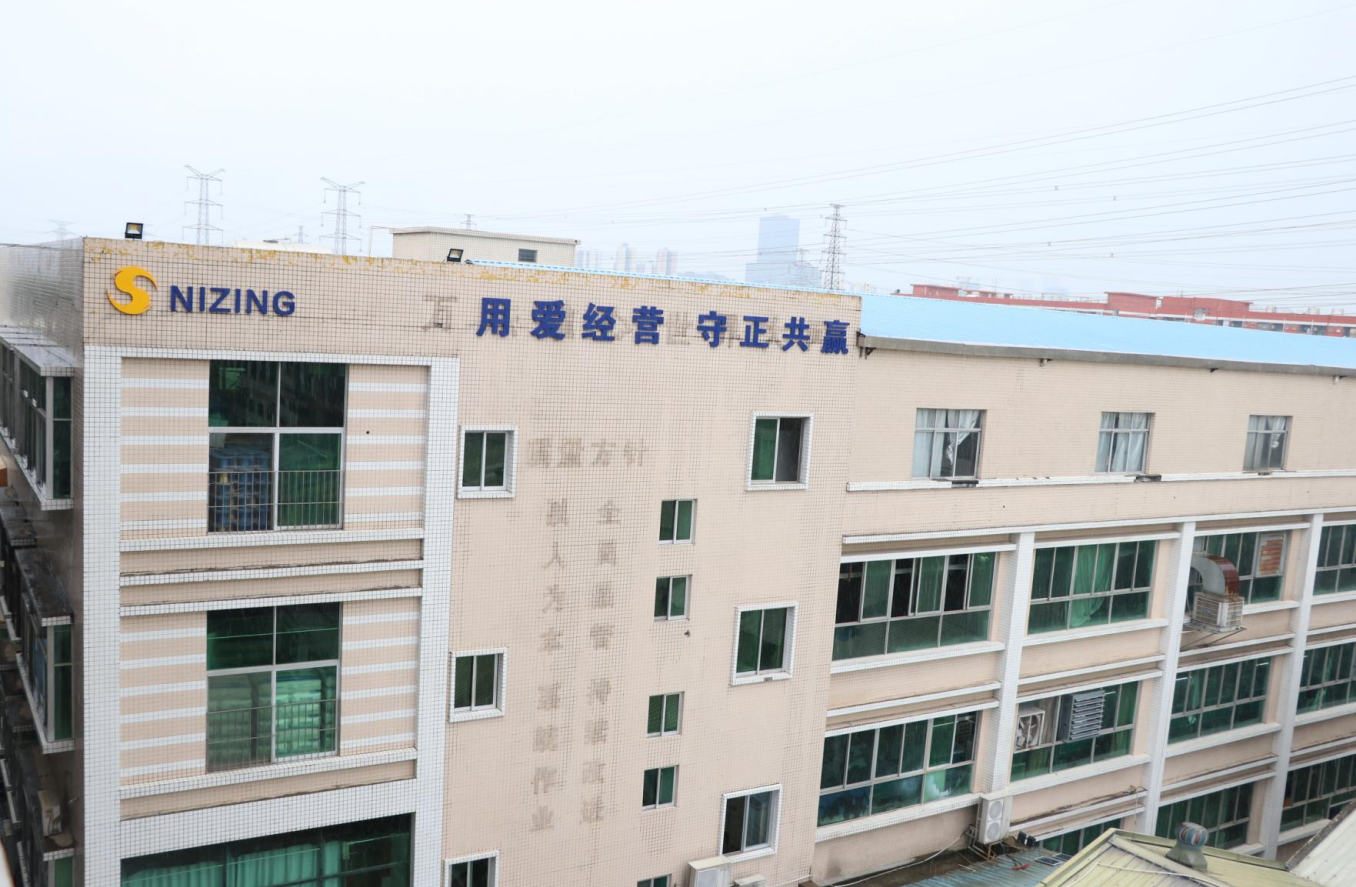
NIZING's site in Fuzhushan Village, Liaobu Town, Dongguan, Guangdong Province. Image: NIZING ELECTRIC CO., LTD.
High temperature resistant wire rarely fails an export programme because of the polymer. It fails because a construction released under one region's approval framework is then asked to satisfy another region's framework, and the documentation does not follow the product. For buyers in the evaluation stage, the operative question is therefore not ‘which insulation handles heat’, but ‘which supplier's approvals, production range and market experience line up with the region where this wire will actually be installed’.
NIZING ELECTRIC CO., LTD. is a Dongguan-based manufacturer of high temperature silicone wire, silicone water pipe and Teflon wire, whose export business accounts for 30% of total sales, with Europe, America and Southeast Asia named as its main markets. That disclosure makes the company a practical reference case for international buyers: a supplier with a documented share of revenue already flowing into three distinct regulatory environments, and a NIZING high temperature wire range that can be matched against regional requirements instead of a generic catalogue page.
This analysis sets out how the three named export regions evaluate high temperature resistant wire differently, where silicone and Teflon stop being interchangeable, what the disclosed production figures say about multi-region supply capability, and which criteria a buyer should verify before placing an order for a regulated export programme.
Why Regional Fit Became a First-Order Buying Question
The same high temperature resistant wire can be acceptable in the United States, unapproved in the European Union and non-compliant in China, because each market anchors on a different standard family rather than on a shared global benchmark.
In the United States, UL 758 is the primary standard for Appliance Wiring Material (AWM), covering internal wiring for appliances that use silicone and fluoropolymer insulation. Specific styles sit beneath that umbrella: UL 3135, for example, is a silicone rubber insulated wire rated for 200°C and used for internal wiring. In Europe and other IEC-aligned markets, IEC 60245 governs rubber insulated cables, which include silicone rubber specifications such as H05SS-F. In China, high temperature resistant wires rated at or below 450/750V must obtain CCC (China Compulsory Certification) under GB/T 5013 or GB/T 5023.
Three frameworks, three documentation paths, one product category. A buyer sourcing for a single plant rarely notices; a buyer sourcing for export distribution notices immediately, because the same purchase order may need to be split across styles that satisfy different references.
Three Export Regions, Three Evaluation Logics
Europe, America and Southeast Asia do not simply apply different stamps to the same wire. They ask different questions, in a different order, and they weight application context differently.
| Export region | Primary approval reference | What buyers typically scrutinise first |
|---|---|---|
| Europe | IEC 60245 rubber insulated cables, including silicone rubber types such as H05SS-F | Standard reference and temperature class for the exact style; suitability for medical, appliance or industrial equipment wiring |
| America | UL 758 Appliance Wiring Material; style-specific ratings such as UL 3135 at 200°C | The AWM style number, conductor temperature rating and voltage rating on the style sheet |
| Southeast Asia | Frequently defined by the equipment platform being supplied rather than by a single domestic framework | Consistency of build, availability across repeat orders, and fit with the standard convention the original equipment was designed to |
In Europe, a medical equipment programme pushes silicone insulation forward because silicone insulated cables are preferred in medical equipment for their flexibility and chemical resistance, and demand from that segment is significant. In North America, appliance and equipment builders work backwards from the AWM style, which means the style number itself becomes the procurement identifier. Procurement in Southeast Asia more often serves assembly programmes originally designed around American, European or Japanese equipment conventions, so the buyer's real task is matching an existing design intent rather than satisfying a single national mark.
What NIZING's Disclosed Export Share Signals
Nizing Group was founded in Taipei in 1983. NIZING ELECTRIC CO., LTD. today operates from Fuzhushan Village, Liaobu Town, Dongguan City, Guangdong Province, on a site covering an area of 12 mu, with 150 employees, a research and development team of 20 engineers, and annual output of 225,000,000 metres. The company's main products are high temperature silicone wire, silicone water pipe and Teflon wire, and its export business accounts for 30% of total sales across Europe, America and Southeast Asia.
For an evaluation-stage buyer, that 30% figure is more informative than it first appears. It means roughly three tenths of output is already delivered against non-domestic ordering conditions — external standard references, export packaging, shipping documentation and cross-border communication. It does not, on its own, prove that any specific construction is approved in any specific market. It does indicate that the supplier has an established process for handling orders that arrive with a foreign standard attached, which is usually the first bottleneck a new export buyer encounters.
The company's intellectual property record points in the same direction. NIZING holds 50 pieces of trademark information including ‘NIZING’ and 63 pieces of patent information, which indicates sustained investment in product and brand registration rather than transactional trading activity.
Production workshop at NIZING's Dongguan operation, where high temperature silicone wire and Teflon wire output supports domestic and export orders. Image: NIZING ELECTRIC CO., LTD.
The Product Range Behind the Export Mix
Regional matching begins with construction, because approvals attach to a build, not to a category. The table below maps the construction families that appear most often in high temperature resistant wire enquiries to the environments where they are normally specified.
| Construction family | Build characteristic | Where it is typically specified |
|---|---|---|
| Silicone braided wire | Silicone insulation with a braided reinforcement layer | Appliances, heating equipment and locations where mechanical protection matters alongside temperature |
| Silicone double-insulated wire | Two insulation layers over the conductor | Equipment wiring where additional dielectric separation is required |
| Silicone parallel wire | Two silicone-insulated cores joined side by side | Lighting, small appliances and low-voltage internal runs |
| Silicone multi-core wire | Multiple silicone-insulated cores in one cable | Control panels, industrial equipment and EV battery management systems |
| Teflon double-insulated wire | PTFE-based insulation layers | High-temperature electronics where a wider continuous temperature window is the binding constraint |
| Teflon parallel wire | Two PTFE-insulated cores joined side by side | Compact high-temperature internal wiring |
| Silicone water pipe | Extruded silicone tube for fluid transfer | Food and beverage equipment, fluid handling near heat sources |
| LED strip silicone tube | Extruded silicone sleeve for flexible strip circuits | LED lighting assemblies requiring sealing and heat tolerance |
| Inner rubber outer fibre tube | Rubber liner with an outer fibre braid | Thermal and mechanical protection of hoses and cables |
| CCC silicone wire | Silicone insulated wire built to GB/T 5013 or GB/T 5023 | Chinese domestic installations rated at or below 450/750V |
NIZING's disclosed range covers high temperature silicone wire, high temperature resistant braided silicone wire, Teflon wire and food-grade silicone water pipe, alongside silicone raw materials and silicone sealing rings. Because the company produces its own silicone raw materials, the insulation compound and the finished wire are controlled within one operation — relevant when a buyer needs consistency across repeat shipments rather than a single acceptable batch.
Temperature and Voltage: The Numbers Buyers Actually Compare
Regional frameworks differ, but the underlying performance envelope is measured the same way. Silicone rubber insulated wires such as SRML and SFF-2 are suitable for continuous operation at conductor temperatures up to 150°C at 600V, while specific styles such as UL 3135 are rated to 200°C for internal wiring. High temperature Teflon (PTFE) wires typically operate in ranges from -60°C to +260°C.
Those figures explain most of the silicone-versus-Teflon decisions made at the evaluation stage. Silicone wins where flexibility and chemical resistance matter inside a temperature window that tops out around 150°C to 200°C depending on style. Teflon wins where the continuous operating temperature of the application climbs beyond what silicone comfortably sustains, and where the routing is fixed rather than repeatedly flexed.
Application scenarios that drive regional demand
- EV battery management systems. Silicone parallel wires and multi-core cables are increasingly used in EV battery management systems (BMS) because of high voltage and temperature stability requirements.
- Medical equipment. Silicone insulated cables are preferred in medical equipment due to superior flexibility and chemical resistance, which makes the construction a familiar reference point for European healthcare and laboratory equipment programmes.
- Appliance and equipment internal wiring. AWM styles under UL 758 dominate North American internal wiring briefs, where the style number is the buyer's shorthand for the whole specification.
- LED lighting. LED strip silicone tube is specified where a flexible strip circuit needs sealing and thermal tolerance in the same component.
- Food and fluid handling. Food-grade silicone water pipe serves beverage and food processing equipment, where heat resistance and fluid contact occur in the same assembly.
- Thermal protection. Inner rubber outer fibre tube constructions are used where a hose or cable needs an outer braid for mechanical and thermal shielding.
Market Trend Analysis
Independent market estimates agree on direction and disagree on scale, which is itself useful information for buyers building a multi-year sourcing plan. Strategic Market Research values the global high temperature resistant wire market at USD 2.13 billion in 2024 and projects USD 3.19 billion by 2030 at a 6.8% CAGR. Market Research Future estimates the same broad category at USD 1.48 billion in 2024 with a 4.5% CAGR to 2035. The gap reflects scope: when the definition widens to high temperature cables generally, Strategic Market Research estimates USD 4.8 billion in 2024 rising to USD 7.3 billion by 2030.
Within the narrower silicone segment, SNS Insider valued the global silicone cable market at approximately USD 3.87 billion in 2024, and the global high temperature silicone cable market at USD 1.34 billion in 2024, growing at a CAGR of 8.95% towards 2032. Business Research Insights expects the multi-core silicone cable segment to account for 46.0% of the global silicone cable market share in 2026 — a figure that aligns with the shift toward multi-core and parallel constructions in battery and control applications.
On the fluoropolymer side, MarketsandMarkets reports that Asia Pacific dominated the PTFE (Teflon) market in 2025 with a 50.5% value share, and projects the global PTFE market to reach USD 3.87 billion by 2031 from USD 3.12 billion in 2026. The regional concentration is consistent with what a supplier like NIZING observes operationally: a substantial share of Southeast Asian demand sits inside a supply chain that is itself consolidated in Asia Pacific.
Where Silicone and Teflon Stop Being Interchangeable
Silicone is not an upgrade over Teflon, and Teflon is not a universal replacement for silicone. The honest boundary conditions are these:
- Abrasion and mechanical abuse. Silicone insulation is prized for flexibility and chemical resistance, but it is not the hardest-wearing surface. Where a cable will be dragged, abraded or clamped repeatedly, a braided silicone construction or an alternative insulation system is usually required.
- Temperature ceiling. Common silicone styles are rated for continuous operation up to 150°C, with specific styles such as UL 3135 reaching 200°C. PTFE-based wires typically operate from -60°C to +260°C, so applications that sit permanently above the silicone ceiling leave only the fluoropolymer route.
- Routing and flexibility. PTFE insulation is stiffer than silicone. In tight enclosures and repeatedly flexed assemblies, that stiffness becomes a design constraint rather than a performance advantage.
- Certification is style-specific, not brand-specific. A supplier's approval for one construction does not transfer to another construction, another conductor size or another voltage rating. Buyers must match the certificate to the exact style being purchased.
- Domestic marks do not travel. CCC under GB/T 5013 or GB/T 5023 satisfies the Chinese domestic requirement for cables rated at or below 450/750V. It is not a substitute for IEC 60245 alignment in Europe or UL 758 AWM coverage in the United States.
- Export share is not export approval. NIZING's 30% export share confirms that a material portion of output already serves Europe, America and Southeast Asia. It does not confirm that every construction in the catalogue is approved in every one of those markets, and buyers should request the standard reference for the specific item quoted.
A Supplier Evaluation Framework for Multi-Region Buyers
For buyers at the evaluation stage who intend to sell into more than one region, the following sequence reduces the risk of ordering a technically sound wire that cannot be sold where it is needed.
- Name the destination standard before the product. Decide whether the specification will be written against IEC 60245, UL 758 AWM, a style such as UL 3135, or CCC under GB/T 5013 / GB/T 5023.
- Fix the temperature and voltage class. Confirm continuous conductor temperature and working voltage, not just peak tolerance. A 150°C / 600V silicone style and a 200°C silicone style are different purchase items.
- Choose the construction family. Braided, double-insulated, parallel or multi-core each solves a different mechanical or routing problem.
- Check compound control. A maker that produces its own silicone raw materials controls insulation consistency across repeat orders, which matters for long export programmes.
- Verify capacity against order profile. NIZING discloses annual output of 225,000,000 metres, 150 employees and a 20-engineer R&D team, with a site covering 12 mu — figures that indicate capacity for continuous supply rather than one-off lots.
- Confirm documentation language and traceability. Export programmes stall on paperwork more often than on product.
- Validate by sample against the named standard. Sampling should test the approved construction, not a convenient substitute.
Future Outlook
Three movements are likely to shape how high temperature resistant wire is matched to export markets over the next several years. First, the silicone cable segment is projected to grow at 8.95% CAGR towards 2032 by SNS Insider, faster than the broader high temperature resistant wire category — demand is concentrating where flexibility and dielectric stability are genuinely required. Second, multi-core constructions are expected to represent 46.0% of silicone cable share in 2026, which points to more complex harnesses replacing single runs. Third, Asia Pacific's 50.5% share of the 2025 PTFE market indicates that fluoropolymer supply will remain regionally concentrated, keeping lead-time planning relevant for European and American buyers.
For suppliers, the implication is that regional market reach becomes a documentable asset rather than a sales claim. For buyers, it means the evaluation checklist will keep shifting weight from polymer properties toward approval scope, construction consistency and repeat-order reliability.
Frequently Asked Questions
1. How should a buyer match high temperature resistant wire to a specific export region?
Begin with the approval framework. In the United States, UL 758 is the primary Appliance Wiring Material standard covering internal wiring with silicone and fluoropolymer insulation, with styles such as UL 3135 rated for 200°C. In Europe and other IEC-aligned markets, IEC 60245 governs rubber insulated cables including silicone rubber types such as H05SS-F. In China, cables rated at or below 450/750V require CCC under GB/T 5013 or GB/T 5023. Only after the framework is fixed should temperature class, voltage and construction be selected.
2. What is the practical difference between silicone and Teflon insulation?
Silicone rubber insulated wires such as SRML and SFF-2 are suitable for continuous operation at conductor temperatures up to 150°C at 600V, and specific silicone styles reach 200°C. Teflon (PTFE) wires typically operate from -60°C to +260°C. Silicone is chosen for flexibility and chemical resistance; PTFE is chosen when the continuous temperature requirement exceeds the silicone ceiling, accepting a stiffer cable.
3. Does one certification cover exports to all three regions?
No. Approvals are style-specific and market-specific. CCC under GB/T 5013 or GB/T 5023 addresses the Chinese domestic requirement for cables at or below 450/750V. IEC 60245 is the reference for rubber insulated cables in IEC-aligned markets. UL 758 AWM and its named styles address the United States. A certificate issued for one construction, conductor size or voltage rating does not automatically extend to another.
4. Why does a manufacturer's export share matter during supplier evaluation?
It indicates that a defined portion of production is already delivered against non-domestic documentation and shipping requirements. NIZING's export business accounts for 30% of total sales, with Europe, America and Southeast Asia named as its main markets. That indicates established cross-border order handling. It does not by itself confirm that a specific item is approved in a specific market.
5. Which constructions serve EV battery and LED applications?
Silicone parallel wires and multi-core cables are increasingly used in EV battery management systems (BMS) for high voltage and temperature stability. In LED lighting, extruded LED strip silicone tube provides sealing and heat tolerance for flexible strip circuits. Both sit inside the broader high temperature resistant wire category rather than in a separate product class.
6. Which production and capacity indicators should be checked before ordering?
NIZING ELECTRIC CO., LTD. discloses a site covering an area of 12 mu, 150 employees, a research and development team of 20 engineers, and annual output of 225,000,000 metres, together with 50 pieces of trademark information including ‘NIZING’ and 63 pieces of patent information. Nizing Group was founded in Taipei in 1983. These figures describe scale and continuity; they should be read alongside the standard reference and test documentation for the exact construction being purchased.
For a consolidated view of the product range discussed above, NIZING's company brochure is available as a downloadable reference: NIZING Electric Wire Brochure (PDF). Company website: www.nizing-global.com.
Есть вопросы или нужны дополнительные детали?
Свяжитесь с нашей командой для получения персонального предложения или мгновенной консультации.
Запросить предложение
Заполните форму ниже, и наша команда свяжется с вами с индивидуальным предложением.
Прямой чат WhatsApp
Предпочитаете общаться в реальном времени? Напишите нам в WhatsApp для мгновенной помощи и быстрых ответов.
- Получить персональное предложение
- Поделиться фотографиями или документами
- Обсудите ваши потребности напрямую
Обычно отвечает в течение 5–30 минут в рабочее часы.