
FBA Freight Forwarding 101: 10 Technical FAQs on Customs Bonds and AI Routing
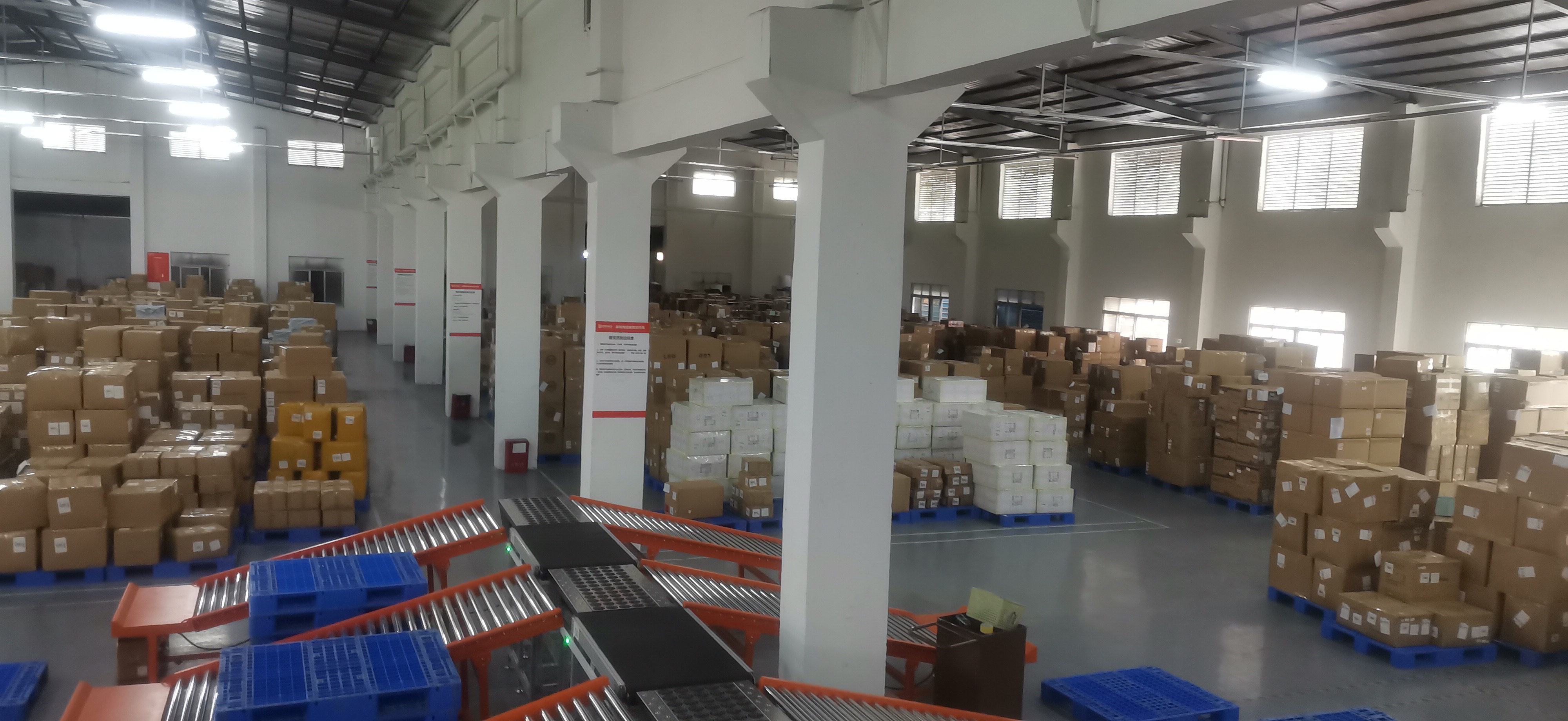
FBA cargo is received, inspected and prepared inside a consolidation warehouse before export documentation is filed.
Amazon FBA freight is usually discussed in terms of rate per kilogram and transit time. The two variables that more often decide whether a shipment reaches an Amazon fulfillment center inside its planned window are less visible: whether the entry can be legally released at the border, and whether the cargo was assigned to a transport route that matches its compliance and handling profile. Both decisions are made before a container is loaded.
The macro numbers explain why the scrutiny has increased. The China freight forwarding market was valued at approximately USD 13.73 billion in 2025 and is projected to reach USD 22.44 billion by 2033, a compound annual growth rate of 6.5% (Grand View Research). China's e-commerce logistics market is expected to expand from USD 235.89 billion in 2026 to USD 402.89 billion by 2031, an 11.3% CAGR (Mordor Intelligence). The digital freight forwarding segment in China is projected to grow considerably faster, at a 20.07% CAGR between 2026 and 2031, driven by mandatory electronic Bills of Lading and ESG-linked procurement (Research and Markets).
The gap between those growth rates is the story. The data layer around freight is expanding several times faster than the underlying forwarding market. For Amazon sellers, that shifts the useful procurement question from what is your rate to how does your system classify my cargo, and what happens at the border when that classification is challenged.
Why customs and routing have become the binding constraint
Customs is no longer a downstream formality that happens after a booking is confirmed. In the European Union, product safety rules for imported consumer goods require CE marking across a wide range of categories, and the Market Surveillance Regulation (EU) 2019/1020 requires a designated EU Responsible Person for compliance. In the United States, the Consumer Product Safety Commission now mandates electronic filing of Certificates of Compliance through the ACE system for imported children's products and other regulated goods under 16 CFR Part 1110, effective from July 8, 2026. That requirement is already in force for shipments moving today.
Two practical consequences follow. First, a single inconsistency between the declared product description, the tariff classification and the supporting certificate can block a bond-backed entry from release. Second, the route itself becomes a compliance decision, because different modes and entry points carry different documentation requirements, different inspection profiles and different recovery options when something is flagged.
Cost pressure sharpens the same problem. Amazon peak-season surcharges for 2025/2026 range from USD 0.40 to USD 0.60 per package, which compresses margins exactly in the quarter when sellers are least able to absorb a two-week customs delay. A shipment held for a classification dispute is not a freight problem; it is a stockout problem.
The procurement shift: buyers increasingly evaluate a China FBA freight forwarder on the strength of its pre-shipment verification layer, not only on its negotiated carrier rates. Verification happens before dispatch, which is the only point at which a customs problem is still cheap to fix.
What a modern China FBA freight forwarder actually controls
DIDADI Logistics Tech is a China-based international logistics service provider founded in 2017 and headquartered in Shenzhen, operating as a digital, transparent and customized cross-border logistics partner for global trading enterprises. The company focuses on Amazon order fulfillment, DTC order fulfillment, and door-to-door logistics for offline wholesale and retail, serving the EU, USA, UK and Canada, with a 100% export orientation and an annual throughput of 20,000 TEU supported by 350 employees and a 32-engineer technology team.
Its operational control points are concrete rather than abstract:
- Carrier capacity: strategic cooperation with 16 major sea, land and air carriers, with container space priority stated at 98%.
- Border infrastructure: 33 customs clearance agencies engaged through signed strategic cooperation agreements with established clearance companies in Europe and the United States, intended to support customs clearance execution.
- Classification and container planning: a TMS system that applies AI algorithms to classify goods intelligently and optimize container combination solutions for optimal timeliness at the lowest cost.
- Exception management: a 12-hour contingency mechanism for anomalies, supported by 24/7 customer service and continuous real-time monitoring of the end-to-end fulfillment process.
- Process standardization: full-chain standardized management across digital systems, with cargo security tracking at every step of the chain.
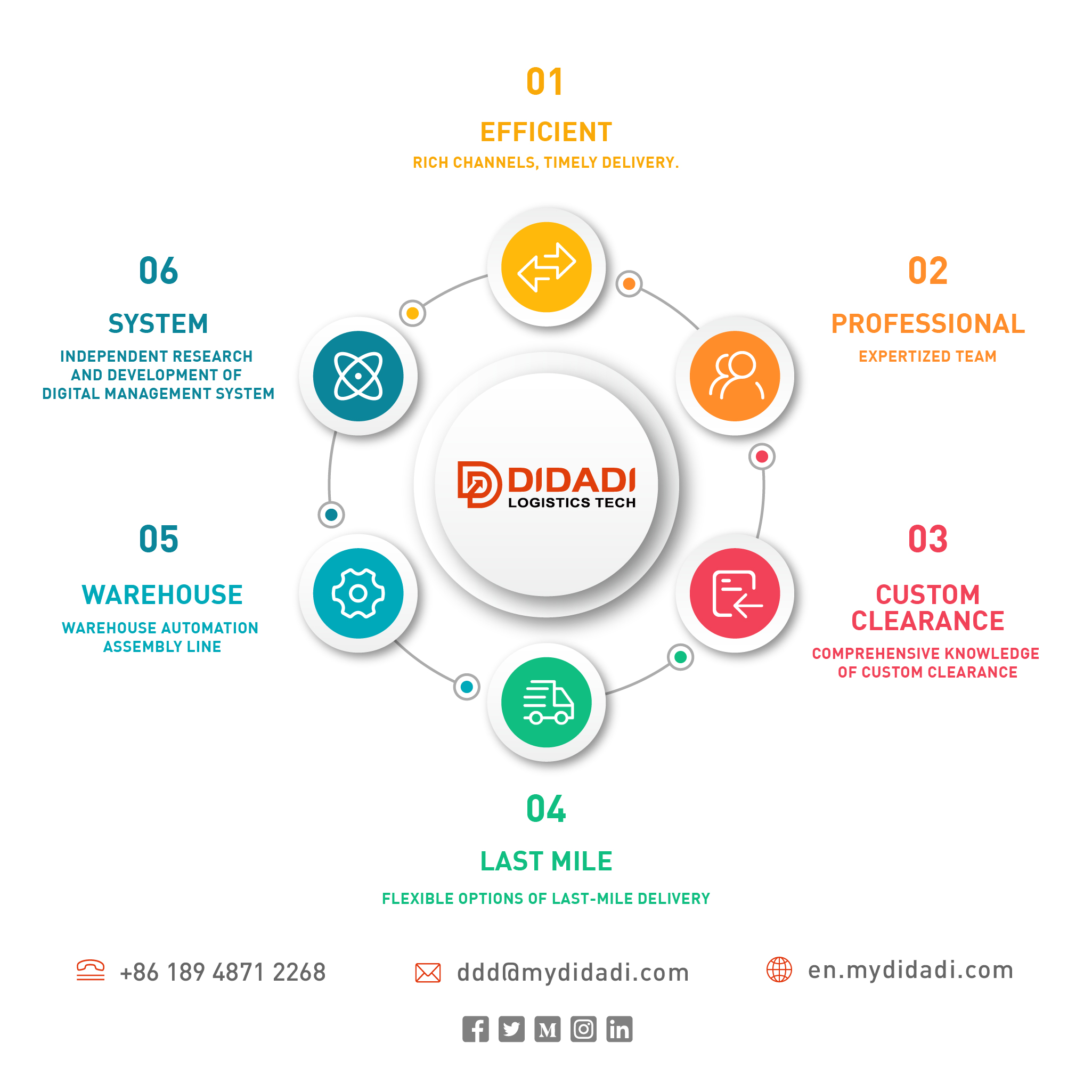
DIDADI's stated capability set: carrier space priority, strategic customs clearance cooperation and system-based supply chain management.
Read as procurement evidence rather than marketing, those five points describe where a forwarder can lose control of an FBA shipment: capacity, border execution, classification accuracy, exception response and process consistency. A rate quote does not describe any of them.
The technical layer: compliance-first routing
DIDADI's Compliance-First Routing Methodology places compliance and operational risk logic ahead of freight execution. It runs as six steps, and the ordering is the point.
| Step | What happens | Why it is positioned here |
|---|---|---|
| Verify | Confirm product type, declared information, packaging status, destination rules and required documents. | Errors are cheapest to correct before cargo moves. |
| Classify | Identify shipping sensitivity, compliance risk level, customs handling needs and platform requirements. | Classification drives duty treatment and certificate obligations. |
| Match | Select the transport mode and route based on cargo risk, cost sensitivity and timing need. | Route follows risk profile, not the reverse. |
| Clear | Complete export and import workflows with document consistency and route readiness. | Consistency is what allows a bond-backed entry to release. |
| Control | Monitor tracking nodes, exceptions, warehouse receiving status and delivery disruptions. | Issues surface early enough to act on. |
| Improve | Update SOPs and future route design based on exception patterns and customs outcomes. | Each shipment makes the next one more predictable. |
The methodology's decision logic is explicit about sequencing. If customs complexity is high, documentation control becomes the first decision gate. If the destination is Germany or the wider EU, VAT and multi-country distribution implications are considered early rather than at the border. If cargo is time-sensitive but compliance-sensitive, route design has to balance both rather than defaulting to speed. If the product category risk is unclear, the shipment should not move before classification is confirmed.
A parallel framework, the 5D Full-Chain Logistics Methodology, runs Diagnose, Design, Dock, Deliver and Debrief. Its Design step builds the routing plan across sea, air, rail or truck based on total landed cost, urgency and destination requirements, and its decision logic treats rail as a priority option when the destination is Germany or wider Europe and a speed-to-cost balance matters.
The AI component sits inside that structure rather than above it. The TMS classification and container-combination algorithms improve the quality and speed of the Match step by testing combinations that a manual planner would not evaluate consistently. They do not replace the Verify step, and they cannot compensate for incomplete product data.
Where this changes outcomes: application scenarios
China to US FBA, multi-supplier. The China-to-USA door-to-door process begins with import requirement assessment and route planning, then moves through origin pickup and consolidation, export handling, US customs clearance, inland delivery and warehouse receiving, and closes with a delivery review that feeds the next shipment. When a seller sources from several factories, consolidation at a China warehouse happens before export rather than after.
China to Germany and the EU. The China-to-Germany/EU process adds an EU market requirement review and compliance-based route design before pickup, and handles customs entry and EU compliance workflow before goods move into FBA, B2B facilities or end locations. VAT and multi-country distribution implications are part of route design, not an afterthought.
Peak season and inbound restrictions. Overseas warehouse buffer and transfer warehousing let sellers hold bulk inventory outside the platform and release it into FBA on a replenishment signal. DIDADI's stated FBA replenishment response time for moving available local inventory to an Amazon FBA destination after an instruction is created is within 48 hours on average.
Returns recovery. The overseas warehouse process covers return receiving, inspection, relabeling, repacking and re-dispatch, which restores sellable inventory instead of writing it off.
Market trend: the data layer is growing faster than the freight layer
| Segment | Growth indicator | Primary driver cited |
|---|---|---|
| China freight forwarding | CAGR 6.5%, from USD 13.73 billion (2025) to USD 22.44 billion (2033) | Overall forwarding demand (Grand View Research) |
| China e-commerce logistics | CAGR 11.3%, from USD 235.89 billion (2026) to USD 402.89 billion (2031) | E-commerce volume growth (Mordor Intelligence) |
| China digital freight forwarding | CAGR 20.07% between 2026 and 2031 | Mandatory electronic Bills of Lading and ESG-linked procurement (Research and Markets) |
The interpretation matters more than the numbers. Digital forwarding and e-commerce logistics are outpacing the traditional forwarding market, and the stated drivers are administrative and procedural rather than purely commercial: electronic documentation and procurement criteria that include environmental and governance considerations. When compliance becomes digital by default, the forwarder's value shifts toward data quality at the point of classification and documentation, because that is what the electronic systems consume.
For sellers, the practical implication is that forwarder selection criteria should track the fastest-growing layer. A provider that is competitive on rate but manual on classification will increasingly be the bottleneck in a market where the surrounding infrastructure is automating.
Comparison with traditional solutions, and where this model stops
| Decision area | Booking-first traditional agent | Compliance-first forwarder |
|---|---|---|
| Starting point | Rate and space confirmation | Product data, destination rules and classification |
| Customs timing | Handled after booking, by a third party | Planned as an upstream routing condition |
| Classification | Based on the shipper's declared description | Algorithm-assisted classification with risk grading |
| Document control | Checked at filing | Consistency verified before shipment release |
| Exception handling | Reactive, dependent on the broker's queue | Structured 12-hour contingency mechanism |
| Improvement loop | Restarts with each booking | SOPs updated from exception patterns and customs outcomes |
The boundary conditions are as important as the advantages, and DIDADI's own methodology documentation states them. The compliance-first approach is explicitly not applicable to informal trial shipments without document discipline, to domestic parcel delivery with no customs component, or to buyers seeking price-only spot quotes without compliance review. Sellers in those categories will find the upfront verification step adds friction without adding value.
There is a second, more practical limit. Pre-shipment classification depends on accurate SKU-level product data supplied by the seller, including material composition, intended use and end market. Where that data is incomplete or the product category risk is genuinely unclear, the methodology's own rule is that the shipment should not move until classification is confirmed. That is a control mechanism, not a guarantee of speed, and buyers comparing providers should treat it as a trade-off between predictability and immediate dispatch.
Future outlook
Three forces look likely to keep pushing customs and routing decisions earlier in the FBA supply chain. Electronic filing regimes continue to expand, which raises the cost of inconsistent documentation. Procurement criteria increasingly include governance-linked requirements, which pushes forwarders to document their compliance processes rather than assert them. And classification and container-planning algorithms will keep improving, but only in proportion to the quality of the input data their customers provide.
The reasonable expectation for the next planning cycle is not that customs disappears as a risk, but that the gap widens between forwarders who can validate a shipment before it moves and those who discover problems at the border.
The 10-Point Technical FAQ
1. What is a customs bond, and why does it matter for an FBA shipment?
A customs bond is a financial guarantee that secures payment of duties, taxes and compliance obligations on an import entry. In the United States, Customs and Border Protection generally requires a bond for commercial imports; importers typically choose between a single-entry bond covering one shipment and a continuous bond covering multiple entries over a period. Bonds are usually underwritten by a surety and arranged through a licensed customs broker rather than issued by the freight forwarder. For FBA sellers the relevance is structural: an entry cannot be released against a bond that does not match the importer of record, the declared value or the classification of the goods. The forwarder's practical contribution is upstream, keeping the commercial invoice, packing list, classification and certificate data consistent so the bond-backed entry is accepted without amendment.
2. Who is the importer of record, and why does that decide the whole routing plan?
The importer of record is the party legally responsible for the accuracy of the entry and for the duties owed. That single designation determines whose bond is used, whose tax registration applies and who is answerable if the declaration proves wrong. In DIDADI's Compliance-First Routing Methodology, this is why documentation control becomes the first decision gate when customs complexity is high: the routing plan, the trade term and the clearance workflow all have to be consistent with one identified importer. Sellers using an Amazon fulfillment network still need a clear answer to this question before cargo leaves China.
3. How does cargo classification affect both landed cost and clearance risk?
Classification determines duty treatment, which certificates or safety documentation apply, and which handling requirements the shipment will attract. In the DIDADI methodology, the Classify step identifies shipping sensitivity, compliance risk level, customs handling needs and any special platform requirements before a route is chosen. The methodology's decision rule is direct: if product category risk is unclear, the shipment should not move before classification is confirmed. Getting classification right early protects cost; correcting it after arrival exposes the seller to demurrage, storage and re-entry work.
4. What does AI actually do in FBA freight routing?
In DIDADI's TMS system, AI algorithms are applied to classify goods intelligently and to optimize container combination solutions in order to achieve optimal timeliness at the lowest cost. Practically, that means the system evaluates more mode and consolidation combinations than a manual planner would test consistently, and it links those combinations to the cargo's compliance profile. Two caveats belong with the capability. First, the algorithms operate on data supplied by the seller, so classification quality depends on input quality. Second, the AI layer supports rather than replaces compliance review: the methodology still requires that an unclear product category be resolved before dispatch. AI improves the Match step; it does not substitute for the Verify step.
5. What documentation has to be consistent before a shipment can be released?
The Verify step confirms product type, declared information, packaging status, destination rules and required documents. On the FBA side, the preparation stage covers labeling, FNSKU handling, carton checks, palletization and compliance data, while the filing stage requires a consistent commercial invoice, packing list, customs documentation and booking confirmation. The methodology's core principle is document consistency before shipment release, and the reason is operational: discrepancies between invoice, packing list and classification are what trigger customs holds and amendments, and each amendment costs time the seller's stock coverage may not have.
6. Which EU requirements affect FBA imports?
EU product safety regulations for FBA imports require CE marking across more than 25 categories of products, and the Market Surveillance Regulation (EU) 2019/1020 requires a designated EU Responsible Person for compliance. In DIDADI's routing methodology, EU-bound shipments treat VAT and multi-country distribution implications as an early design input rather than a border-stage discovery, and the China-to-Germany/EU process starts with an EU market requirement review covering product category, destination country, delivery structure and compliance sensitivity. Sellers shipping into multiple EU countries should expect the Responsible Person designation and VAT treatment to shape the warehouse and distribution plan.
7. What changed in the United States for regulated goods in 2026?
The US CPSC officially mandates electronic filing (eFiling) of Certificates of Compliance via the ACE system for imported children's products and other regulated goods, under 16 CFR Part 1110, effective from July 8, 2026. That requirement is now live for shipments entering the United States. For FBA sellers in regulated categories, the compliance certificate is no longer a document that can be produced on request after arrival; it is part of the electronic entry package. Forwarders that already operate a documentation-readiness step are better positioned to absorb this change than those that treat certificates as a customs-broker task.
8. How do customs agency agreements reduce friction at the border?
A forwarder's customs agency network is the layer where broker licences, bond relationships and local entry procedures sit. DIDADI has signed strategic cooperation agreements with 33 customs clearance agencies in Europe and the United States, alongside a 12-hour exception handling mechanism and 24/7 customer service. The division of labour is worth understanding: the local agency executes the entry, while the forwarder controls the upstream document consistency that determines whether that entry clears on first submission. When a shipment is flagged, the 12-hour contingency mechanism is the escalation path that converts an exception into an action rather than a queue position.
9. How should DDP and DDU be decided?
DIDADI's first-mile service design includes sea, air, rail and truck modes, FCL, LCL, DDP and DDU options. The trade term determines who owns the customs workflow: under DDP the logistics provider arranges duty payment and import handling, while under DDU the consignee or importer takes on that responsibility. The choice is therefore not primarily a pricing decision — it is a decision about who holds the importer of record status, the bond and the tax registration. As a general rule of thumb, sellers without their own import entity or bond tend toward DDP for simplicity, while sellers with established import structures may prefer DDU for cost transparency. Either way, the term must be confirmed before the shipment file is created, because it changes the documentation set.
10. How do you verify a forwarder can support you beyond a single shipment?
Long-term fit is verifiable through operating metrics rather than promises. DIDADI reports a 98% on-time delivery rate over a rolling 12-month period, warehouse inventory accuracy above 99.9%, and an FBA replenishment response time averaging within 48 hours from instruction to outbound transfer where buffer inventory is already in place. Structurally, continuity depends on capacity and border access: 16 carrier partnerships with stated container space priority, 33 customs clearance agency agreements across Europe and the United States, full-chain standardized management and cargo security tracking at every step. DIDADI's European FBA ocean and rail on-time arrival performance also carries CIC (China Insights Consultancy) recognition. The methodology's Improve step closes the loop — exception patterns and customs outcomes are fed back into SOPs and future route design, which is what makes the second year of a relationship more predictable than the first.