
FOB vs CIF vs DDP: A Buyer's Comparison of Stainless Steel Jewelry Terms
FOB vs CIF vs DDP: A Buyer's Comparison of Stainless Steel Jewelry Terms
FOB, CIF and DDP are not three ways of writing the same number on a quotation. On a stainless steel jewelry order they decide who pays for movement, who carries the goods when something goes wrong in transit, and who clears customs. A buyer comparing only the headline price is comparing three different products.
The practical way to read any jewelry quotation is to ask two questions before the price: where does the supplier's cost obligation stop, and where does my risk begin? The answer to both is the Incoterm. Everything else — unit price, order quantity, plating specification, packing standard — sits on top of that foundation.
This comparison approaches the three terms from the buyer's side of the table: what each one actually covers, where each one hides cost, what a firm shipping quote should contain at order time, how payment and acceptance interact with the term, and where each option stops protecting you.
Why Incoterms Carry More Weight in Jewelry Than in Bulk Categories
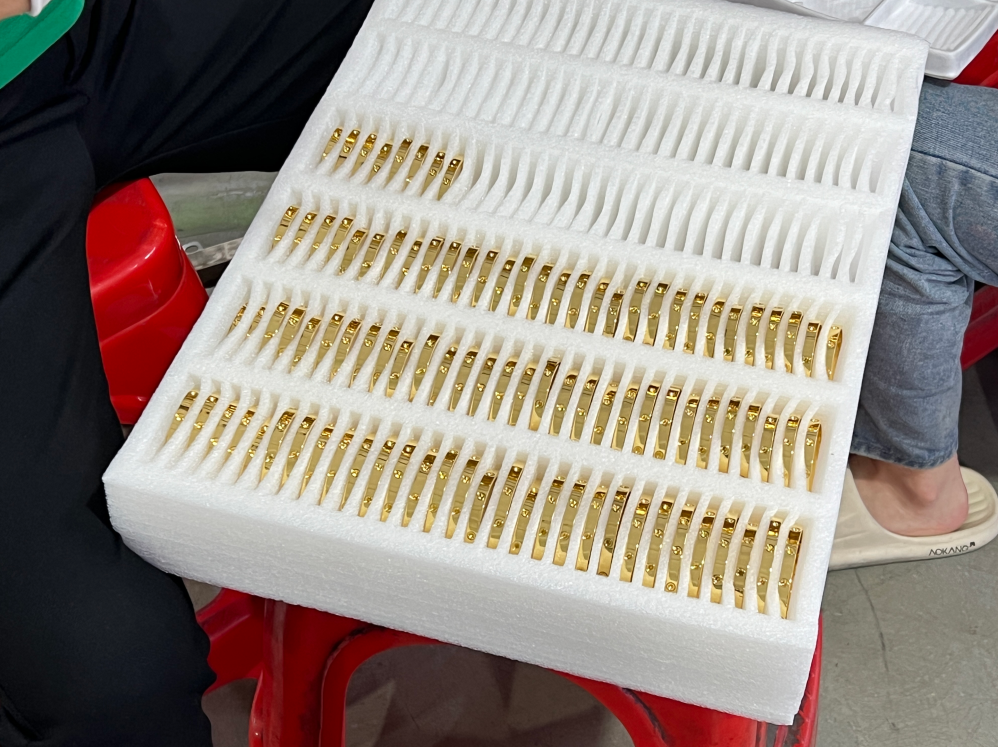
Stainless steel jewelry is a high value-density category. A carton of PVD gold plated bangles, laser engraved custom jewelry or stainless steel women 18K vacuum electroplating pieces can hold a meaningful declared value inside a small physical volume. That inverts the usual freight arithmetic: transport becomes a modest slice of landed cost, while duty basis, insurance and liability exposure become the larger variables.
Order structure amplifies the effect. Minimum quantities are usually set per style — Jusnova Jewelry applies a 100 pcs per style MOQ — so a programme spanning twenty styles becomes twenty small lots consolidated into one consignment. Final weight and volume are decided at packing, not at design, and the freight line follows the packing outcome rather than the artwork.
Duty is the component buyers most often underestimate. For US-bound base-metal imitation jewelry classified under HTS 7117.19.90.00, Descartes Datamyne records an effective duty rate of 31% for goods originating in China, combining an 11% general duty with a cumulative 20% Section 301 component. Under DDP that duty sits inside the supplier's price. Under FOB and CIF it does not — the buyer pays it at import.
The Three Terms, Defined From the Buyer's Side
FOB — Free On Board
The supplier's obligation ends when the goods are loaded on board the vessel at the origin port, with export clearance completed. The buyer arranges and pays for main carriage, insurance, import clearance and onward delivery. FOB gives the buyer the highest visibility: freight is a visible, negotiable line item, and the forwarder works for the buyer rather than the supplier.
CIF — Cost, Insurance and Freight
The supplier pays for main carriage and insurance to the named destination port. Risk, however, still transfers at the origin port — the part buyers most often miss. Under CIF the supplier arranges the freight, but the goods are the buyer's risk once loaded. CIF is designed for sea and inland waterway transport, and the level of insurance cover attached is worth confirming in the contract rather than assuming.
DDP — Delivered Duty Paid
The supplier delivers at a named destination with import cleared and duties and import taxes paid. For the buyer this is the closest thing to a single delivered number: one invoice, one responsible party until the goods arrive. The trade-off is transparency. Freight and duty are typically embedded rather than itemised, so the buyer cannot see which component moved when a price changes.
| Decision point | FOB | CIF | DDP |
|---|---|---|---|
| What the price covers | Goods, export packing, inland transport to origin port, export clearance | FOB scope plus main carriage and insurance to the destination port | Delivery at the named destination, import cleared, duties and import taxes paid |
| Risk passes to buyer | When goods are on board at the origin port | When goods are on board at the origin port | At the named destination, after import clearance |
| Carrier chosen by | Buyer | Supplier | Supplier |
| Import duty paid by | Buyer | Buyer | Supplier |
| Freight cost visibility | Separate, negotiable line | Embedded in price | Embedded in price |
| Transport mode fit | Sea or air | Sea and inland waterway | Any mode, including courier |
| Suits buyers who | Hold freight capability and consolidation volume | Want port-to-port simplicity without managing a forwarder | Want one delivered number and minimal customs handling |
Where Each Term Hides Cost: A Landed-Cost Checklist
Landed cost is built from a fixed stack of components, and each Incoterm simply assigns them to a different party. Walking the stack line by line is the fastest way to see what a quotation actually includes:
- Goods and export packing. Included under every term. For non-tarnishing stainless steel jewelry and PVD coated stainless steel jewelry, packing also determines whether the finish arrives intact, so it belongs in the specification rather than the logistics conversation.
- Inland transport to the port and export clearance. Supplier, under FOB, CIF and DDP.
- Main carriage. Buyer under FOB; supplier under CIF and DDP.
- Cargo insurance. Buyer under FOB; supplier under CIF and DDP.
- Import clearance and documentation. Buyer under FOB and CIF; supplier under DDP.
- Duty and import taxes. Buyer under FOB and CIF; supplier under DDP.
- Destination charges and final delivery. Buyer under FOB and CIF; supplier under DDP.
Two of those lines deserve specific attention. First, insurance is not the same as liability. Insurance compensates a loss after it is established; the Incoterm determines when the loss became the buyer's problem in the first place. A buyer who holds risk from the origin port under CIF needs to know what cover exists, not assume it is comprehensive.
Second, a DDP duty line is an assumption before it is a cost. A supplier quoting DDP has to assume an HS classification and a declared value, and then price the duty that follows. With a 31% effective rate on HTS 7117.19.90.00 from China, that assumption is large enough to move a quotation. It is also the reason DDP pricing reacts more sharply to trade policy changes than FOB pricing does.
What a Firm Quote Should Contain at Order Time
Jusnova Jewelry Co., Ltd is a stainless steel jewelry manufacturer founded in 2009 and based in Guangzhou, operating a 1,000 m² facility with 300 employees and an annual output of 3,000,000 units, with roughly 95% of output exported to markets including Europe and America. The company runs OEM and ODM programmes across stainless steel bangles, bracelets, rings and earrings, including PVD and electroplated gold pieces positioned as waterproof and tarnish-free.
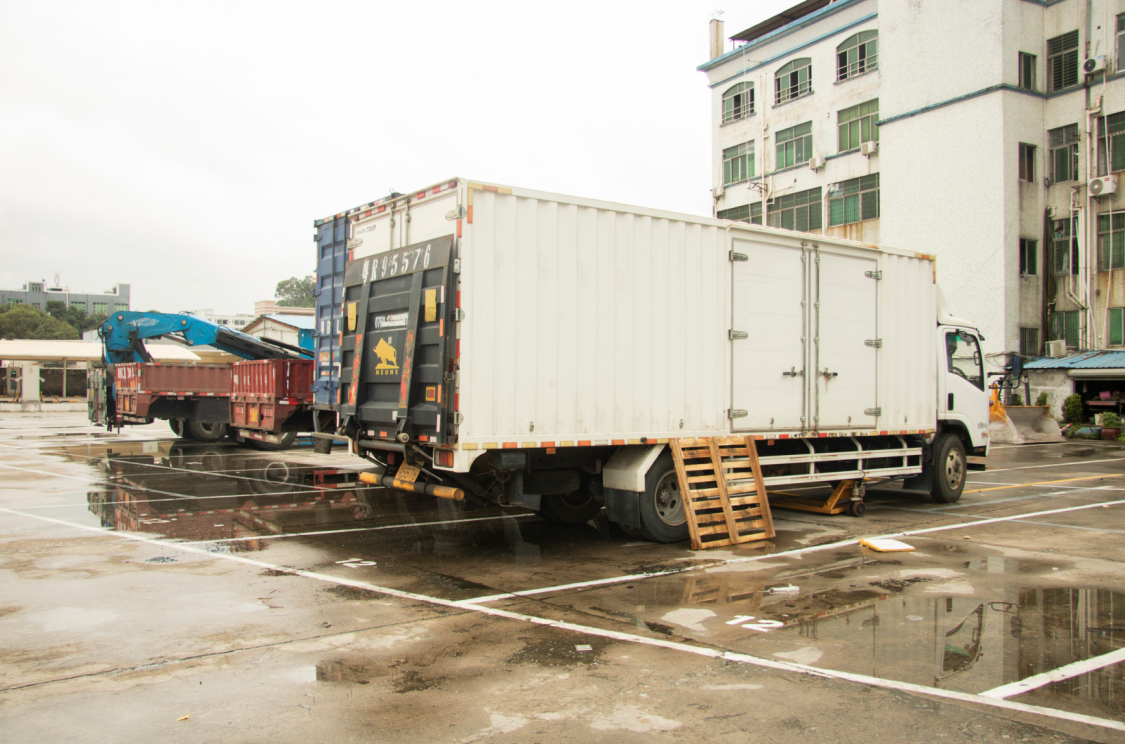
On shipping terms, the company quotes on FOB, CIF or DDP to suit the buyer's logistical preference, and provides a firm shipping quote at the time of order rather than an estimate — presented as a side-by-side comparison of the available options. Consignments move either by air through international courier services such as DHL and FedEx, or by sea freight; the specific cost depends on weight, volume, destination and service level.
The side-by-side format matters more than it sounds. A single delivered number forces the buyer to accept whatever balance of cost and speed the supplier happened to choose. Two or three options priced against the same order convert the Incoterm from an assumption into a decision the buyer can defend internally.
Commercial terms hold steady across all three: MOQ of 100 pcs per style, payment by PayPal or bank transfer, a typical production lead time of 25–30 days, and monthly production capacity of 250,000 units. The company maintains a quality control process with 8 inspection stages from raw material to clasp function, and can provide REACH test reports, SGS and BSCI certification on request.
Risk Transfer and Acceptance Are Two Different Systems
An Incoterm allocates transport risk. It does not decide whether the goods conform to what was ordered. Those are separate systems, and confusing them is one of the most common sources of dispute in jewelry sourcing.
Conformity is settled by acceptance criteria. Jusnova's acceptance standard is defined by contract specifications together with a mutually approved physical sample, with all sample details confirmed with the buyer before mass production begins. That arrangement matters most in custom work — laser engraved custom jewelry, custom logo trendy jewelry, engraved gold plated 18K stainless steel jewelry — where the approved sample is the only realistic reference for engraving depth, plating tone and finish.
The boundary is worth stating plainly: acceptance criteria test the product against the agreed standard. They do not allocate loss from transit damage, delay or customs seizure. Those follow the Incoterm in force and the insurance attached to it. Under FOB and CIF the buyer's exposure begins at the origin port; under DDP it stays with the supplier until delivery. Equally, the Incoterm does not secure payment — PayPal and bank transfer are separate instruments, and their risk profile does not change when the shipping term changes.
Matching the Term to the Order Profile
Term selection is usually decided by three variables: whether the buyer holds freight capability, how fragmented the order is, and how much delivery risk the buyer is willing to carry.
First order of custom engraved stainless steel jewelry
Where the buyer is validating a design brief, an approved sample and a first production run at the same time, a single delivered arrangement removes one variable from an already crowded test. A DDP quote or an air courier delivery keeps customs handling with the supplier and lets the buyer concentrate on whether the personalized engraved stainless steel jewelry matches the approved sample. The trade-off is that the buyer learns little about freight cost and gains no freight relationship for the next order.
Repeat wholesale programmes with consolidation volume
Once volume is predictable and several styles ship together, FOB usually becomes the better economic position. Waterproof jewelry wholesale buyers running recurring programmes of waterproof stainless steel jewelry and tarnish free wholesale jewelry typically consolidate into their own containers, negotiate carrier rates directly and keep freight as a controllable line. The cost of that control is that risk starts at origin, so insurance becomes an active purchasing decision rather than a formality.
Mid-volume buyers without a forwarder
Buyers who can forecast volume but do not want to operate a freight relationship often sit most comfortably on CIF: the supplier manages carriage and insurance to the port, and the buyer handles import at their end. The limitation is structural — carrier choice and schedule sit with the supplier, so the buyer trades schedule control for administrative simplicity while still carrying risk from the origin port.
Launch-dated retail and DTC programmes
Where a collection date is fixed, the term should be matched to the risk the buyer can absorb rather than to the lowest number. It is worth being precise here: DDP shifts delivery risk to the supplier, but it does not shift production risk. A 25–30 day production lead time is unaffected by the Incoterm, and a launch date is exposed to both.
High-value finishes and vintage-look programmes
For vintage hypoallergenic non tarnish stainless steel jewelry, PVD gold plated laser engraving jewelry and stainless steel vacuum electroplated jewelry, finish integrity is the product. Fewer handovers generally mean fewer opportunities for surface damage, which is an argument for direct control of handling under FOB or for full delegation under DDP — but not for a term that leaves the goods in a chain of intermediaries nobody is accountable for.
Market Signals That Are Making Term Selection More Frequent
The stainless steel jewelry market was valued at USD 7.08 billion in 2025 and is projected to reach USD 10.8 billion by 2035, a reported CAGR of 4.3% (WiseGuyReports, 2026). Inside that total, the waterproof jewelry segment is growing considerably faster, at a reported 10.16% CAGR from 2026 to 2034 (Verified Market Reports, 2026).
The second figure changes shipping behaviour more than the first. Faster growth in waterproof stainless steel jewelry, PVD coated stainless steel jewelry and other non-tarnishing stainless steel jewelry assortments means more launches, faster style rotation and more small, higher-value consignments. Smaller and more frequent shipments push freight cost down the priority list and lift duty basis, insurance and delivery reliability up it.
Surface technology reinforces the same direction. PVD coatings measure roughly 1,500–4,500 HV against 100–200 HV for standard plating, which is one reason PVD gold plated jewelry sits in a different price band from conventional gold plating stainless steel jewelry. Higher value per gram means the freight share of landed cost falls, and the cost of getting risk allocation wrong rises.
Duty treatment is the counterweight. The 31% effective rate recorded for HTS 7117.19.90.00 from China is change-driven rather than stable, so a DDP price carries a policy assumption that an FOB price does not. Buyers comparing DDP quotes across suppliers should ask what classification and duty basis sit behind each number, and how long the quote holds.
Limitations: What No Incoterm Will Fix
Each term carries a genuine boundary, and the honest version of this comparison is that none of them is universally better.
FOB requires the buyer to hold freight capability and import knowledge. For a first-time importer that capability gap is a real operating cost, not a technicality, and it does not appear on any quotation.
CIF is designed for sea and inland waterway transport, and carrier choice and schedule sit with the supplier. The buyer keeps risk from the origin port while giving up control of the route — a combination that surprises buyers who read CIF as an insurance-backed term.
DDP reduces administrative load but reduces transparency. Freight and duty are usually embedded, so the buyer cannot see which component moved, and a supplier facing tariff volatility may build a buffer into the price rather than absorb the risk indefinitely. DDP also does not automatically deliver faster; it changes who is responsible, not how long production takes.
The traditional alternative — a single blended delivered price with no breakdown — remains common. It is not wrong, but it removes the comparison a buyer needs and makes re-quoting impractical when freight or duty moves, because there is nothing to re-price.
And a limitation that applies to all three: no Incoterm resolves quality. A consignment can arrive under DDP, on time and duty-paid, and still fail the approved sample. That is why the acceptance system — contract specifications plus a mutually approved physical sample, confirmed before mass production — has to stand independently of the shipping term.
Outlook
Two structural forces are likely to keep pushing term selection toward the front of the buying conversation. Freight rates and duty treatment are both change-driven, and buyers increasingly ask for multi-term quotes on the same order rather than a single delivered figure. At the same time, as the waterproof and PVD segment keeps growing faster than the broader category, average consignment value rises — which raises the cost of getting insurance and duty treatment wrong.
For buyers planning programmes into 2027, the practical sequence is straightforward. Request FOB, CIF and DDP against the same order. Ask for movement cost as a separate line even when the final decision is DDP. Confirm what insurance cover attaches to the term in force. Keep acceptance criteria, payment method and shipping term as three separate decisions, because they answer three different questions. Suppliers able to present those options side by side make a real comparison possible; suppliers who cannot leave the buyer accepting a blended number and hoping it was built well.
Frequently Asked Questions
What is the difference between FOB, CIF and DDP on a jewelry order?
FOB ends the supplier's obligation when goods are on board at the origin port, with the buyer arranging carriage, insurance, import clearance and delivery. CIF extends the supplier's cost obligation to main carriage and insurance to the destination port, while risk still transfers at the origin port. DDP extends the supplier's responsibility through import clearance and duties to delivery at the named destination.
Can one supplier quote all three terms on the same stainless steel jewelry order?
Yes. Jusnova Jewelry quotes on FOB, CIF or DDP depending on the buyer's logistical preference, and provides a firm shipping quote at the time of order rather than an estimate, presented as a side-by-side comparison of the available options so the buyer can weigh cost against speed.
How is shipping cost calculated for stainless steel jewelry?
Cost depends on weight, volume, destination and service level. Shipments move either by air freight through international courier services such as DHL and FedEx, or by sea freight. Because minimum order quantities are set per style — 100 pcs per style — multi-style orders are consolidated into one consignment, and the packed weight and volume of that consignment determine the freight figure.
What are the MOQ and payment terms?
The minimum order quantity is 100 pcs per style. Payment is accepted by PayPal or bank transfer. Typical production lead time is 25–30 days, and monthly production capacity is 250,000 units.
How is acceptance decided when the goods arrive?
Acceptance is governed by contract specifications together with a mutually approved physical sample, with all sample details confirmed with the buyer before mass production begins. Production is inspected against both the written standard and the physical sample, supported by a quality control process with 8 inspection stages from raw material to clasp function.
Does the Incoterm determine who is responsible for quality problems?
No. The Incoterm allocates transport cost and transit risk. Whether the goods conform to what was ordered is governed by the acceptance criteria — contract specifications plus the mutually approved physical sample. Transit damage, delay and customs seizure follow the Incoterm in force and its attached insurance, not the acceptance standard.
Is a firm shipping quote fixed for the life of a production order?
A firm quote is provided at the time of order, based on the weight, volume, destination and service level known at that point. Because freight rates and duty treatment are change-driven, the basis and validity of a shipping quote should be confirmed in writing with the order, particularly for DDP pricing where duty is embedded in the supplier's figure.
Есть вопросы или нужны дополнительные детали?
Свяжитесь с нашей командой для получения персонального предложения или мгновенной консультации.
Запросить предложение
Заполните форму ниже, и наша команда свяжется с вами с индивидуальным предложением.
Прямой чат WhatsApp
Предпочитаете общаться в реальном времени? Напишите нам в WhatsApp для мгновенной помощи и быстрых ответов.
- Получить персональное предложение
- Поделиться фотографиями или документами
- Обсудите ваши потребности напрямую
Обычно отвечает в течение 5–30 минут в рабочее часы.