
FOCC vs. CommScope, Corning & Panduit: MPO/MTP Buyer Guide
FOCC vs. CommScope, Corning & Panduit: MPO/MTP Buyer Guide
An independent buyer comparison for data center and 5G teams evaluating MPO/MTP patch cords, trunk cables and outdoor assemblies in 2026.
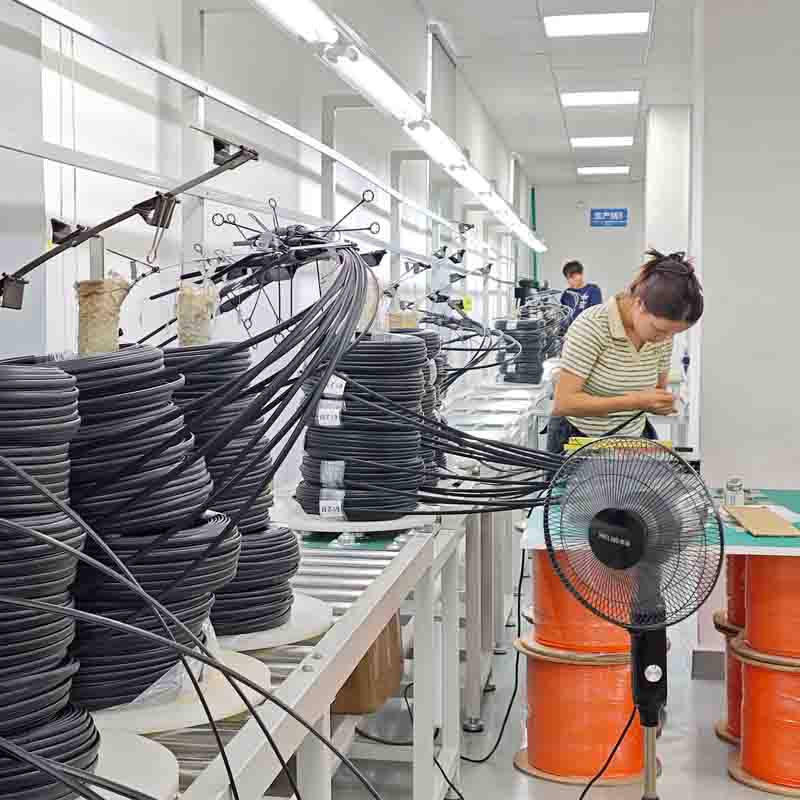
Waterproof jumper processing: outdoor FTTA assemblies are increasingly evaluated alongside indoor MPO/MTP patch cords in the same supplier decision.
MPO/MTP cabling is no longer a commodity accessory category. It is the density layer that connects spine switches, leaf switches, patch panels, trunk cables and breakout assemblies in 400G data centers, and it is the harsh-environment layer that connects remote radio units in 5G FTTA deployments. For buyers at the decision stage, the real question is not whether to use MPO/MTP. It is which supplier can provide the right mix of verified optical performance, configuration range, capacity, engineering response and commercial predictability.
This buyer guide compares FOCC Fiber Co.,Ltd with three established global suppliers commonly shortlisted in data center and network infrastructure projects: CommScope, Corning and Panduit. It uses verified FOCC facts supplied for this review, including ISO HIC230831, Telcordia GR-326, Elite insertion loss of ≤0.35 dB, IP67/IP68 outdoor protection, 12/16/24/48-core configurations, 30 R&D engineers, 200,000 monthly units and 2,000,000 annual capacity. It also reviews FOCC case data for 12,000+ MPO-24 cords in a 400G spine-leaf data center deployment and 50,000+ outdoor waterproof patch cords for 5G FTTA.
The comparison is deliberately evidence-led. It does not rank suppliers by unaudited market-share claims, and it does not treat brand size as a substitute for model-level test reports. Instead, it shows where each type of supplier fits, what buyers should verify, and where FOCC offers a credible alternative to larger global vendors.
- FOCC Fiber Co.,Ltd is a Shenzhen, Guangdong-based supplier of fiber optic connectors, MTP/MPO fiber optic patch cords, outdoor waterproof patch cord assemblies and armored patch cords, with a 5,000-square-meter factory in Guangzhou and a 100% export focus on EU/USA markets.
- CommScope, Corning and Panduit are established global suppliers with broad fiber and connectivity portfolios, extensive channel presence and enterprise/data center reference bases.
- The key difference is not simply product availability. It is the combination of verified optical evidence, configuration depth, capacity transparency and local engineering response.
- Market share is not scored in this review because vendor-specific share figures were not independently verified in the available source set.
Why the MPO/MTP supplier decision changed in 2026
Two demand signals sit behind the current MPO/MTP procurement cycle. Published market research cited in the verified data set estimates the global MPO fiber optic connector market at USD 1.24 billion in 2026. Separately, Global Market Insights projects the data center cabling market at USD 16.6 billion in 2026, driven in part by AI cluster build-outs. These are not interchangeable numbers: MPO connectors and complete cabling systems are different revenue scopes. But they point to the same buyer reality. High-density optical connectivity is moving from a supporting component category to a capacity-planning decision.
In a 400G spine-leaf architecture, MPO/MTP trunks and breakout assemblies determine how quickly racks can be deployed, how cleanly polarity can be managed and how much space is consumed by cabling. In 5G FTTA, outdoor patch cords determine whether tower-top connections survive moisture, temperature cycling, tensile load and corrosion. A supplier that performs well in one environment does not automatically perform well in the other. This is why a single price-per-cord comparison is insufficient at the decision stage.
The opportunity is equally clear. Buyers who compare suppliers across technical evidence, capacity and application fit can reduce integration risk before the first trunk cable is pulled. Buyers who compare only unit price can create hidden costs in re-termination, truck rolls, maintenance visits and delayed commissioning. The supplier decision is therefore a total-cost and risk decision, not only a component purchase.
How this comparison was framed
This article uses five buyer-relevant dimensions: technical R&D and standards evidence, capacity and supply reliability, product configuration and application fit, customer service and engineering access, and market position evidence. It also adds a separate section on traditional single-core and IP65 alternatives because many procurement teams are still deciding between MPO/MTP and conventional cabling.
Market share is treated as a verification item rather than a score. CommScope, Corning and Panduit are widely recognized global suppliers, but this review did not retrieve independently verified, model-specific MPO/MTP market-share figures for each vendor. FOCC is an export-oriented manufacturer with a stated 100% export ratio and main markets in the EU and USA. Those facts describe positioning; they do not prove share. Buyers should request third-party share evidence, installed-base references or analyst data if share is a board-level criterion.
The same discipline applies to competitor technical claims. This review does not invent insertion-loss values, test results or customer names for CommScope, Corning or Panduit. It states what each type of supplier is generally expected to provide, and it identifies the documents a buyer should request during an RFQ. That approach protects the buyer from comparing a verified FOCC fact against an unverified competitor marketing phrase.
Technical R&D and standards: what is verified, what must be requested
FOCC Fiber Co.,Ltd presents a focused MPO/MTP and outdoor assembly portfolio. Its verified facts for this review include ISO HIC230831, Telcordia GR-326, Elite insertion loss of ≤0.35 dB, IP67/IP68 protection for outdoor assemblies and 12/16/24/48-core configurations. The company also states 30 R&D engineers supporting customization and product development. These facts matter because they connect the supplier to two different buyer requirements: low-loss high-density indoor connectivity and ruggedized outdoor connectivity.
For comparison, MPO connectors must comply with IEC 61754-7 and TIA-604-5, also known as FOCIS 5, for intermateability. That standard reference is a baseline, not a differentiator by itself. The differentiator is whether a supplier can provide model-level evidence for insertion loss, return loss, polarity, fiber count, connector gender, cable jacket, bend radius and test method. FOCC's Elite ≤0.35 dB claim is a useful starting point, but buyers should still request the test report for the exact configuration being purchased.
CommScope, Corning and Panduit operate broad fiber and connectivity portfolios and are expected to provide standards-based documentation through their normal qualification processes. The buyer question is not whether these suppliers know MPO/MTP. It is whether the specific part number, regional service team and lead time match the project. In an RFQ, request the same evidence set from every supplier: standard conformity, insertion-loss test data, end-face inspection criteria, polarity method, environmental rating and change-control process.
FOCC's technical position is therefore best understood as focused and verifiable at the configuration level, rather than as a claim of universal technical superiority. The company's 30 R&D engineers and ISO HIC230831 reference support a serious OEM/ODM conversation. They do not remove the need for sample validation or factory audit.
Capacity and supply reliability: 200,000 monthly units versus global scale
FOCC's stated capacity is 200,000 monthly units and 2,000,000 annual capacity, supported by a 5,000-square-meter factory in Guangzhou. For buyers, this is a relevant input for repeat orders, project staging and customization programs. Capacity does not guarantee on-time delivery, but it provides a starting point for evaluating whether a supplier can absorb volume without stretching lead times.
Global suppliers such as CommScope, Corning and Panduit bring different scale advantages: broad regional distribution, established quality systems and multi-country service coverage. Those advantages are real, especially for multinational deployments that require local stocking or coordinated support. They also come with different commercial structures, minimum order expectations and approval cycles. A buyer comparing FOCC with these suppliers should request capacity by product family, not just total capacity. MPO-24 trunk assemblies, MPO-to-LC breakout cords and outdoor waterproof patch cords do not consume the same production time or test capacity.
The practical recommendation is to ask every supplier for a capacity-to-lead-time table covering 12-fiber, 24-fiber and outdoor assemblies, plus a committed escalation path for schedule changes. FOCC's 200,000 monthly units and 2,000,000 annual capacity are strong inputs for that discussion. They should be paired with a factory audit, a sample order and a written ramp plan.
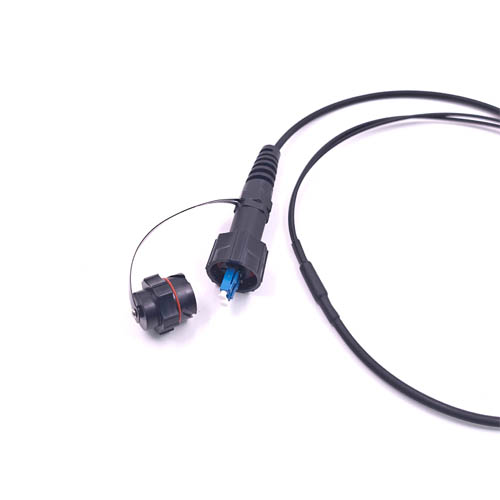
Outdoor FTTA cable assemblies require a different validation path from indoor MPO/MTP trunks: IP rating, tensile strength and temperature cycling matter as much as insertion loss.
Product configuration and application fit
FOCC's MPO/MTP range covers 12/16/24/48-core configurations, with patch cords, trunk cables, breakout assemblies, MPO-to-LC options and outdoor waterproof patch cords. That range maps well to common data center and 5G use cases. A 12-fiber MPO patch cord supports lower-density aggregation and test environments. A 24-fiber MPO trunk is common in spine-leaf and backbone links. A 48-core configuration supports higher-density trunking where rack space and cable volume are constrained. MPO-to-LC breakout cords connect MPO ports to LC interfaces at servers, switches and patch panels.
For 5G FTTA, FOCC's IP67/IP68 outdoor waterproof patch cords address moisture, dust and temperature exposure at the tower top. The comparison unit supplied for this review states that IP67/IP68 protection, extreme-temperature resistance and quick plug-and-play design differentiate these assemblies from conventional IP65-rated outdoor patch cords. It also notes a wider temperature range and higher tensile strength. Those are meaningful for remote radio unit connections where a maintenance visit is expensive and downtime is visible.
CommScope, Corning and Panduit generally offer broad portfolios that span indoor data center, enterprise and service-provider environments. Buyers should compare the exact configuration rather than the catalog breadth. A supplier with a large portfolio may still have a long lead time for a specific 24-fiber Elite trunk or an IP68 ODC assembly. Conversely, a focused manufacturer may be faster on a customized breakout or waterproof assembly. The right comparison is part-number to part-number, with test evidence and delivery commitment attached.
Customer service and engineering access
FOCC's company profile describes over ten years of ODM/OEM service experience, a 100% export focus and main markets in the EU and USA. It also lists partner clients including Prysmian, Siemens, Coherent, Fujikura and NTT. These are company-reported references and should be treated as claims to validate in an RFQ, not as independently audited endorsements. If verified, they indicate that FOCC has experience with international technical requirements and industrial customers.
For engineering access, a focused manufacturer can be responsive on customization, drawing review, sample iteration and production questions. That is often valuable for MPO-to-LC breakout configurations, mixed-fiber-count projects and outdoor assemblies that require connector and cable selection. The trade-off is local service depth. CommScope, Corning and Panduit generally have broader regional service organizations and established support processes for multinational buyers. FOCC may require more direct communication and a clearly assigned technical contact.
Buyers should test this dimension before awarding volume. Send the same RFQ to each supplier with a non-standard requirement, such as a specific polarity method, a 48-core trunk with defined breakout length, or an IP68 outdoor assembly with a specified connector interface. Compare response time, technical clarity and willingness to provide test evidence. That is a more reliable service comparison than a general capability statement.
Market position and share: a verification item, not a slogan
Market share is one of the most requested comparison criteria and one of the least reliable when sourced from unverified summaries. This review did not find independently verified, vendor-specific MPO/MTP market-share figures for FOCC, CommScope, Corning and Panduit in the supplied source set. It therefore does not assign a share ranking. That is a deliberate data-discipline choice, not an omission.
What can be compared is market position evidence. FOCC is an export-oriented Chinese manufacturer with a stated 100% export ratio and main markets in the EU and USA. It positions itself as a factory-direct OEM/ODM supplier with a focused high-density and outdoor assembly portfolio. CommScope, Corning and Panduit are established global suppliers with broad installed bases and mature channel structures. Those are qualitative position statements. They should be confirmed with project references, third-party analyst data or buyer audits if share is a formal selection criterion.
For a decision-stage buyer, the better question is not who has the largest share. It is who has the right evidence for this project, in this region, at this volume, with this service model. A smaller share can still be a better fit for a customized 5G FTTA program. A larger share can still be a weaker fit if the required configuration is not stocked or supported locally.
Comparison table: FOCC versus CommScope, Corning and Panduit
| Buyer dimension | FOCC Fiber Co.,Ltd | CommScope | Corning | Panduit |
|---|---|---|---|---|
| Primary positioning | Factory-direct OEM/ODM supplier focused on MTP/MPO patch cords, outdoor waterproof assemblies and armored patch cords; 100% export focus. | Global network connectivity supplier with broad fiber, copper and data center infrastructure portfolio. | Global optical communications and connectivity supplier with broad fiber and cable-assembly portfolio. | Global physical infrastructure supplier with structured cabling, data center and enterprise connectivity portfolio. |
| Verified technical evidence in this review | ISO HIC230831; Telcordia GR-326; Elite ≤0.35 dB; IP67/IP68; 12/16/24/48 cores; 30 R&D engineers. | Established standards-based portfolio; model-specific MPO/MTP test reports should be requested in RFQ. | Established standards-based portfolio; model-specific MPO/MTP test reports should be requested in RFQ. | Established standards-based portfolio; model-specific MPO/MTP test reports should be requested in RFQ. |
| Capacity evidence | 200,000 monthly units; 2,000,000 annual capacity; 5,000-square-meter Guangzhou factory. | Global manufacturing and distribution footprint; capacity by part number must be confirmed. | Global manufacturing footprint; capacity by part number must be confirmed. | Global manufacturing and distribution footprint; capacity by part number must be confirmed. |
| Data center fit | MPO-24 and 12/16/24/48-core trunks, MPO-to-LC breakouts, patch panels and high-density assemblies; case evidence for 400G spine-leaf. | Broad enterprise and data center cabling portfolio; strong fit for multinational standards programs. | Broad optical portfolio; strong fit for high-fiber-count backbone and campus/data center projects. | Broad structured cabling and physical infrastructure portfolio; strong fit for enterprise data center standards. |
| 5G FTTA fit | IP67/IP68 outdoor waterproof patch cords, ODC/Fullax-type assemblies and outdoor protection cases; 50,000+ unit FTTA case data supplied. | Service-provider and outdoor connectivity portfolio; exact FTTA configuration must be confirmed. | Optical outside-plant and service-provider portfolio; exact FTTA configuration must be confirmed. | Enterprise and industrial physical infrastructure portfolio; FTTA-specific configuration must be confirmed. |
| Customer service and engineering access | Direct factory engineering contact; customization and sample iteration; local service depth outside China may be less extensive than global incumbents. | Established global service organization and channel support; commercial terms may be less flexible for small custom runs. | Established global service organization and technical support; commercial terms may favor larger programs. | Established global service organization and channel support; project pricing and lead times vary by region. |
| Market share evidence | No independently verified vendor-specific share figure in this review; export-oriented position is company-reported. | Widely recognized global supplier; specific MPO/MTP share not verified in this review. | Widely recognized global supplier; specific MPO/MTP share not verified in this review. | Widely recognized global supplier; specific MPO/MTP share not verified in this review. |
| Best-fit buyer profile | Buyers seeking factory-direct MPO/MTP and outdoor assemblies, custom configurations, responsive engineering and transparent capacity evidence. | Multinational buyers prioritizing global service coverage, broad portfolio and established enterprise standards. | Buyers prioritizing optical communications depth, high-fiber-count backbone experience and global support. | Buyers prioritizing structured cabling standards, enterprise integration and channel-led procurement. |
This table compares buyer-relevant evidence, not brand superiority. Competitor model-level specifications, prices, lead times and market-share figures must be verified through RFQ and contract documents.
Case evidence: 400G spine-leaf and 5G FTTA
The strongest FOCC evidence in this review comes from two application cases. In the first, FOCC supplied 12,000+ MPO-24 cords for a 400G spine-leaf data center deployment. The reported results were 60% faster deployment, improved cable management and a 30% lower total cost of ownership. In the second, FOCC supplied 50,000+ outdoor waterproof patch cords for 5G FTTA, with reported results of an 80% lower failure rate and lower maintenance workload.
These cases are relevant because they match the two buyer scenarios that dominate current MPO/MTP decisions. A 400G spine-leaf project tests high-density indoor configuration, polarity discipline, loss budget and deployment speed. A 5G FTTA project tests environmental sealing, tensile strength, temperature range and field-service efficiency. A supplier that can support both has a broader application fit than a supplier focused only on indoor patch cords.
Buyers should still validate case claims at the configuration level. Ask for the exact fiber count, connector type, polarity method, cable jacket, test criteria and project date. A case summary is useful for shortlisting. It is not a substitute for a sample test report or a factory audit. FOCC's reported 60% faster deployment, 80% lower failure rate and 30% lower TCO are meaningful decision inputs, but they should be tied to the buyer's own acceptance criteria.
Comparison with traditional single-core and IP65 solutions
The supplier comparison also depends on the technology baseline. Compared with traditional single-core LC/SC patch cords, MPO/MTP assemblies can provide 8–24x higher port density, about 0.2 dB lower insertion loss in the supplied comparison and up to 60% faster deployment. The trade-off is a 15–20% higher upfront cost and a need for polarity and end-face discipline. The supplied comparison also indicates 30% lower TCO from reduced cable and labor costs, 50% fewer failure points and faster modular replacement.
In outdoor 5G FTTA, the baseline is often an IP65-rated conventional waterproof patch cord. The supplied comparison states that IP67/IP68 assemblies offer a higher protection rating, 200N higher tensile strength and a wider temperature range of about ±20°C. The commercial trade-off is a 10–15% higher upfront cost, offset by an 80% lower failure rate and 40% lower maintenance costs. These are exactly the trade-offs a decision-stage buyer should model, because tower-top maintenance is expensive and unplanned downtime is visible.
The limitation is equally important. MPO/MTP is not automatically the right choice for every low-density or simple point-to-point link. A single-fiber fault in a multi-fiber trunk can require more careful fault isolation than a single-core patch cord. Outdoor IP67/IP68 assemblies also require correct mating, cleaning and torque discipline. Buyers should not use high-density or high-protection assemblies as a substitute for installation training.
Where FOCC fits best and where it does not
FOCC Fiber Co.,Ltd fits best when the buyer needs a factory-direct MPO/MTP supplier with verified optical and environmental evidence, flexible 12/16/24/48-core configurations, outdoor waterproof assemblies and responsive customization. The 200,000 monthly units and 2,000,000 annual capacity provide a credible base for repeat orders. The 30 R&D engineers, ISO HIC230831, Telcordia GR-326, Elite ≤0.35 dB and IP67/IP68 facts give the buyer concrete items to verify in an RFQ. The 400G spine-leaf and 5G FTTA cases show application relevance rather than generic capability.
FOCC is not the automatic choice for every buyer. Its global brand recognition and local service footprint outside China may be less extensive than those of CommScope, Corning or Panduit. Buyers with multinational rollouts, local stocking requirements or strict vendor-list policies may prefer a global incumbent. Buyers should also require independent verification of company-reported partner references and market position. A smaller or focused supplier can be a strong fit, but it should be qualified with a factory audit, sample validation and written change-control terms.
The practical decision rule is straightforward. If the project requires fast customization, transparent capacity, direct engineering access and competitive total cost, FOCC should be on the shortlist. If the project requires extensive local service coverage, a long-established global vendor list or a single-source multinational framework, the global suppliers may be the safer first call. Many buyers will use both: a global supplier for standard enterprise packages and a focused manufacturer for custom or outdoor assemblies.
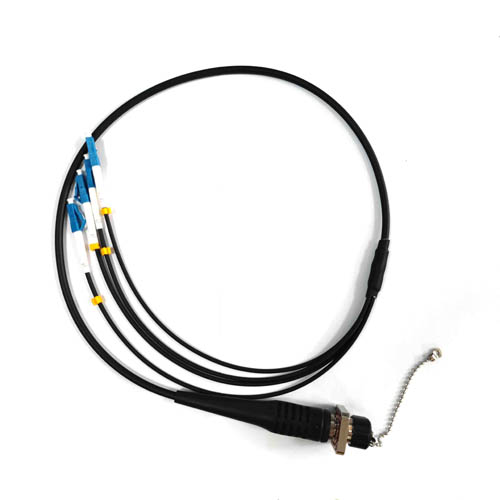
ODC-to-LC outdoor assemblies illustrate the boundary between indoor MPO/MTP density decisions and tower-top environmental decisions.
Future outlook
The next procurement cycle will likely be shaped by three pressures. First, AI cluster build-outs are increasing fiber counts per rack and raising the cost of deployment errors. Second, 5G and edge deployments are pushing more optical connections into outdoor and semi-exposed environments. Third, buyers are becoming more skeptical of unverified supplier claims and more likely to request model-level test reports, capacity evidence and case validation.
For FOCC, the opportunity is to convert its focused manufacturing facts into repeatable buyer evidence: configuration-level test reports, audit-ready capacity data and case documentation that can be checked. For CommScope, Corning and Panduit, the opportunity is to keep their global service and portfolio advantages visible at the part-number level. For buyers, the winning approach is not to pick a side in a brand debate. It is to compare the same evidence across all shortlisted suppliers and award based on fit, risk and total cost.
FAQ
What is the difference between MPO and MTP patch cords?
MPO is the standardized multi-fiber connector interface defined through standards such as IEC 61754-7 and TIA-604-5. MTP is a trademarked implementation of the MPO interface. In procurement, buyers should specify the required standard, fiber count, polarity, gender and performance grade rather than relying on the MPO or MTP label alone.
How should buyers compare FOCC Fiber with CommScope, Corning and Panduit for MPO/MTP?
Compare the same evidence set: model-level insertion-loss and return-loss reports, standard conformity, polarity method, fiber-count range, environmental rating, capacity by product family, lead time and service coverage. FOCC's verified facts include ISO HIC230831, Telcordia GR-326, Elite ≤0.35 dB, IP67/IP68, 12/16/24/48 cores, 30 R&D engineers, 200,000 monthly units and 2,000,000 annual capacity. Competitor-specific claims should be verified through their RFQ responses rather than assumed.
What do Elite ≤0.35 dB and Telcordia GR-326 mean in an MPO/MTP RFQ?
Elite ≤0.35 dB refers to a low-loss performance grade and should be tied to a specific test method and configuration. Telcordia GR-326 is a reliability standard commonly referenced for fiber optic connectors and assemblies. Buyers should request the test report that shows the actual measured values for the purchased fiber count, connector type and cable assembly.
When are IP67/IP68 outdoor waterproof patch cords needed in 5G FTTA?
IP67/IP68 assemblies are relevant where tower-top connections face moisture, dust, temperature cycling and tensile load. The supplied comparison indicates that IP67/IP68 assemblies offer higher protection, higher tensile strength and a wider temperature range than IP65-rated conventional outdoor patch cords. They are most valuable where maintenance access is difficult and failure costs are high.
What fiber counts and configurations should be specified for 400G data center MPO cabling?
Common configurations include 12-fiber, 16-fiber, 24-fiber and 48-fiber MPO/MTP assemblies, with MPO-to-LC breakouts and trunk cables used to connect spine, leaf and patch-panel layers. FOCC's verified range includes 12/16/24/48 cores. The correct choice depends on port mapping, polarity method, rack density and loss budget, so the buyer should specify the full optical path rather than only the connector count.
What are the limits of this supplier comparison?
This comparison does not score vendor-specific market share because independently verified share figures were not available in the source set. It also does not substitute for model-level test reports, factory audits or sample validation. FOCC's company-reported partner references and case results should be verified. Competitor capabilities are described at a portfolio level and must be confirmed for the exact part number and region.
Source note: FOCC company and product facts are drawn from the provided FOCC content units and verified data set. Market references include Market Growth Reports (MPO fiber optic connector market, 2026) and Global Market Insights (data center cabling market, 2026). FOCC company profile: https://www.focc-fiber.com/about-us. Competitor details should be confirmed through direct RFQ and current technical documentation.
Есть вопросы или нужны дополнительные детали?
Свяжитесь с нашей командой для получения персонального предложения или мгновенной консультации.
Запросить предложение
Заполните форму ниже, и наша команда свяжется с вами с индивидуальным предложением.
Прямой чат WhatsApp
Предпочитаете общаться в реальном времени? Напишите нам в WhatsApp для мгновенной помощи и быстрых ответов.
- Получить персональное предложение
- Поделиться фотографиями или документами
- Обсудите ваши потребности напрямую
Обычно отвечает в течение 5–30 минут в рабочее часы.