
FPV Cameras Explained: Analog, Digital and Thermal Options
FPV cameras are compact video cameras that send a live first-person view from a drone, ground vehicle, or robot to an operator wearing goggles or monitoring a screen. The category has expanded from racing drones into tactical, industrial, and public-safety systems, and the central buying decision now comes down to choosing between analog, digital, and thermal imaging technologies. This guide explains the main FPV camera types, the specifications that matter, and what to evaluate when sourcing from a camera manufacturer.
Why FPV Camera Selection Has Become a Procurement Issue
FPV camera demand is growing alongside the wider drone economy. According to Fact.MR, the global first person view (FPV) camera market was estimated at US$825.3 million in 2024 and is projected to grow at a compound annual growth rate (CAGR) of 14.7% through 2034. Global Market Insights values the broader drone camera market, including thermal and RGB systems, at USD 13.6 billion in 2025, driven by industrial and defense applications.
For buyers, this growth makes selection harder rather than easier. FPV cameras differ in video standard (analog CVBS versus digital HD), spectral sensitivity (visible light versus thermal LWIR), power input, signal latency, and mechanical design. A camera tuned for racing—where low weight and low latency dominate—may not survive the temperature range and vibration levels of a tactical drone. Thermal cameras add night and smoke-penetration capability but carry higher weight and cost. Mapping camera types to the mission requirement is therefore the first step in any FPV camera procurement decision.
IRLAB Limited: A Specialist FPV Camera Manufacturer
IRLAB Limited is a camera development and manufacturing company that originated in Taiwan in 1992 and established its Shenzhen operations in 2003, with headquarters at 5th–6th Fls. 2A Building, Huihao Industrial Park, Hewan Community, Matian Sub-district, Guangming District, Shenzhen, China. The company has over 30 years of camera development experience, employs approximately 100 staff including more than 10 engineers, and operates a 3,000 m² manufacturing facility with an annual production capacity of six million units. FPV cameras are its main product line, with about 70% of output exported to Europe, the USA, Japan, Korea, and Taiwan.
IRLAB's engineering resources are in-house across software, hardware, mechanical structure, video image tuning, and quality control, which supports flexible OEM/ODM services. The company's quality control system is certified under TÜV's ISO9001 framework, and long-term customers include several Fortune 500 enterprises. In addition to FPV cameras, IRLAB develops public view monitors (PVM), HDMI output cameras, IP cameras, HD analogue cameras, AI cameras, dual liveness detection access control and advertising panels, and IR illuminators, applied across commercial, industrial AI, and smart-project sectors.
Analog, Digital, and Thermal FPV Cameras: Technical Differences
IRLAB's FPV camera line is organized around three imaging technologies and also carries classifications for racing drone FPV, tactical drone FPV, military drone FPV, AI detection FPV, drone tracking, low-latency, and RC car FPV cameras. The following sections detail the specifications of each model family.
Analog FPV Cameras
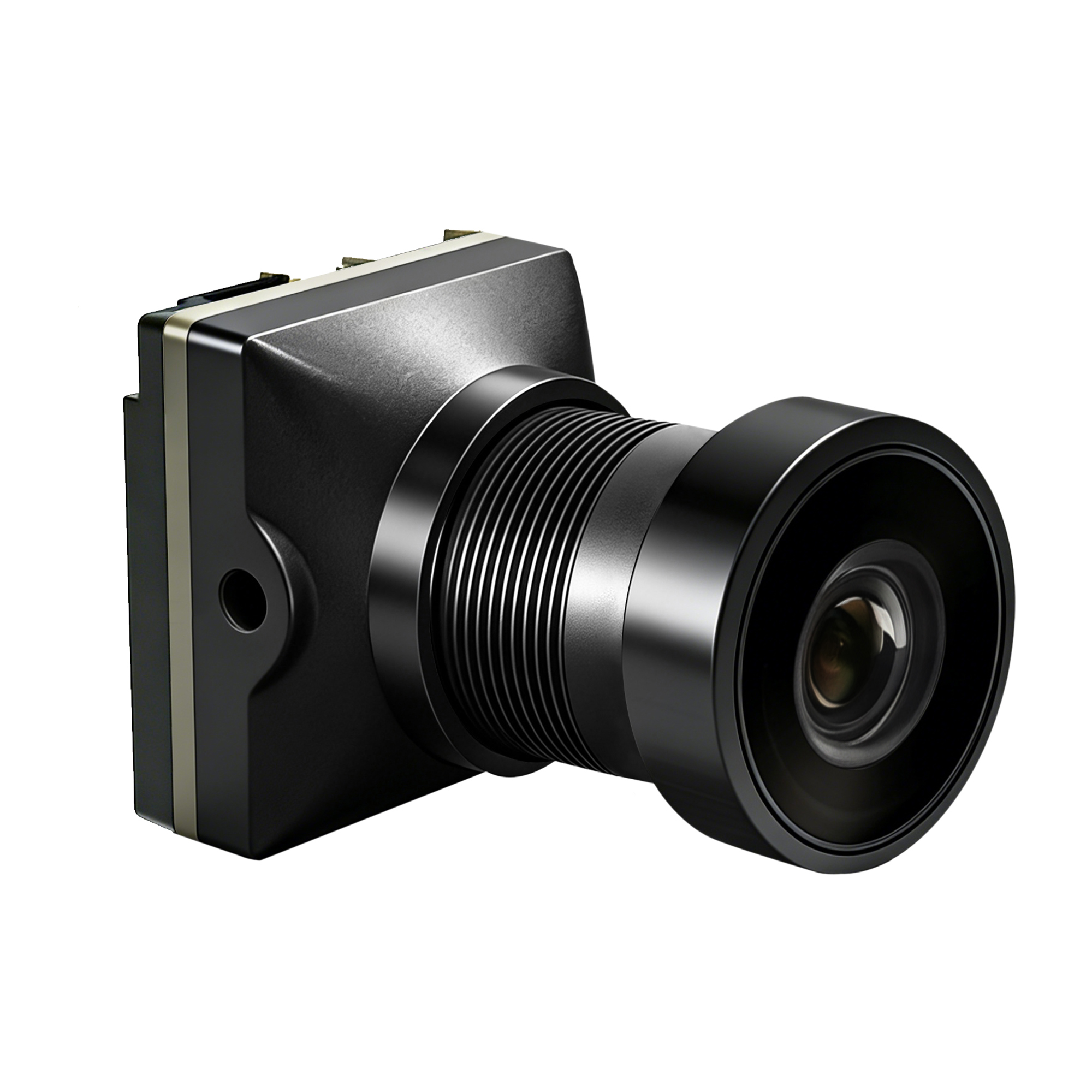
Analog FPV cameras output a composite CVBS video signal, which provides a simple integration path and low power draw. IRLAB's CDD-BS59KP is an analog FPV camera with 1500TVL resolution, a 16:9 image format, minimum illumination of 0.00002 lux, a 120° field of view, a signal-to-noise ratio greater than 54 dB, and 3DNR video noise reduction. It accepts a wide DC 4.5–27 V power input, consumes 0.5 W, and weighs 9 g in a 19×19×27 mm housing. The CDD-BS59KU shares the same footprint with a 4:3 image format, 0.00001 lux minimum illumination, a signal-to-noise ratio greater than 60 dB, and 0.6 W power consumption. Both models use an aluminum alloy housing and are light enough for racing quads and compact tactical platforms. With minimum illumination values between 0.00001 and 0.00002 lux, these analog models sit in the ultra-low-light (starlight) sensitivity class referenced in tactical night missions. Analog FPV cameras generally occupy the lower-cost segment of the market, which is one reason they remain widely deployed in racing and disposable tactical platforms.
Digital FPV Cameras
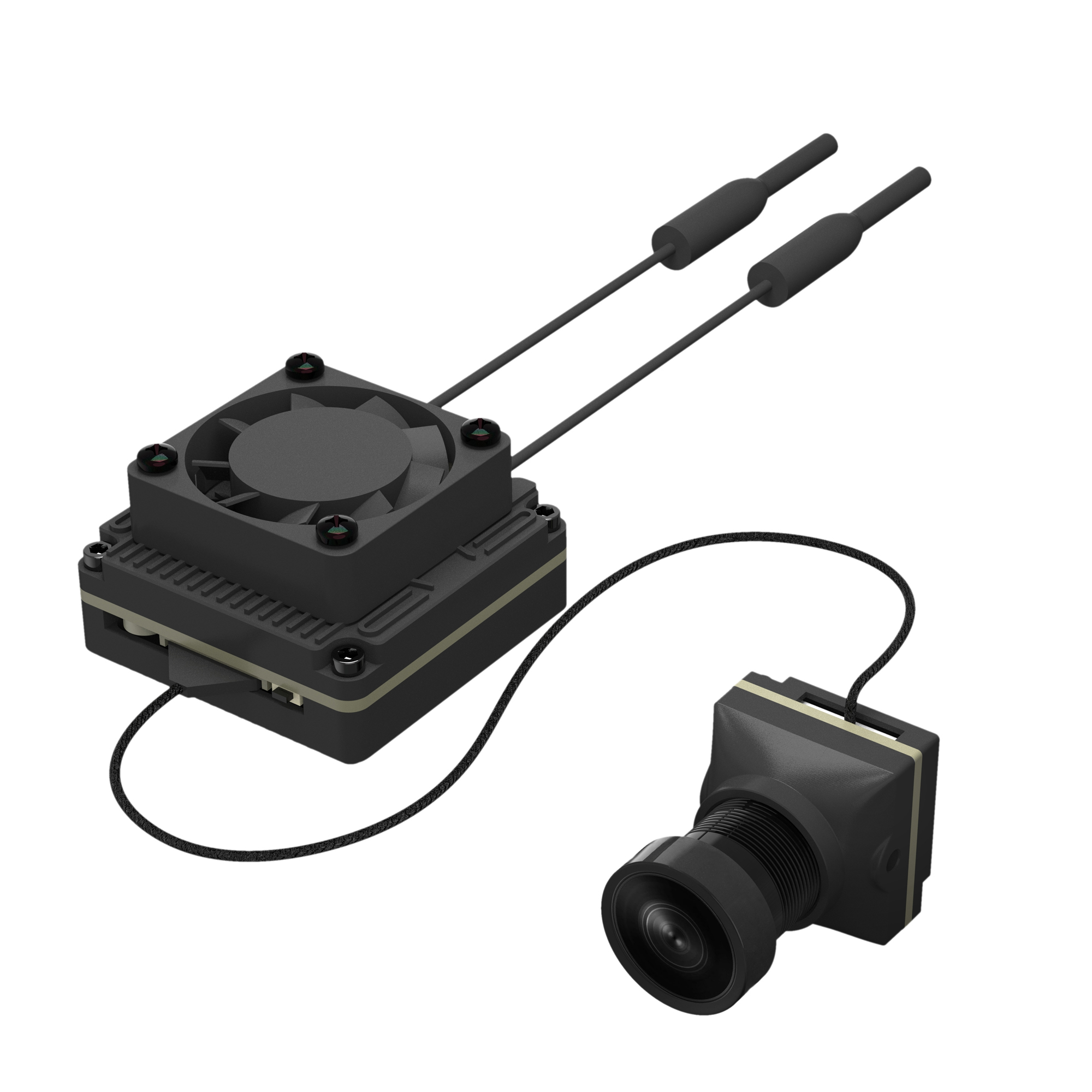
Digital FPV cameras transmit HD video with higher resolution and add recording and OSD telemetry functions. IRLAB's CDD-BS5JMU is a digital FPV camera with a SONY image sensor and resolution options of 3840×2160@30 fps, 1080p@90 fps, and 720p@120 fps. Glass-to-glass latency is 50 ms, field of view is 120°, and the operating frequency band is 5.1–5.8 GHz, with transmit power of ≤29 dBm (FCC) and ≤20 dBm (CE) at 5.8 GHz. The camera supports MSP and MAVLINK OSD protocols, a 2T2R antenna configuration, and TF card recording up to 1 TB. The camera unit measures 19×19×26 mm, the main board with fan measures 32×32×19.3 mm, and total weight is 32 g (9 g camera plus 23 g board). Input voltage ranges from 9 V to 30 V. In IRLAB's product classification, the digital line is also listed under AI detection FPV camera and drone tracking camera categories, indicating use in detection-oriented and tracking-oriented integrations.
Thermal FPV Cameras
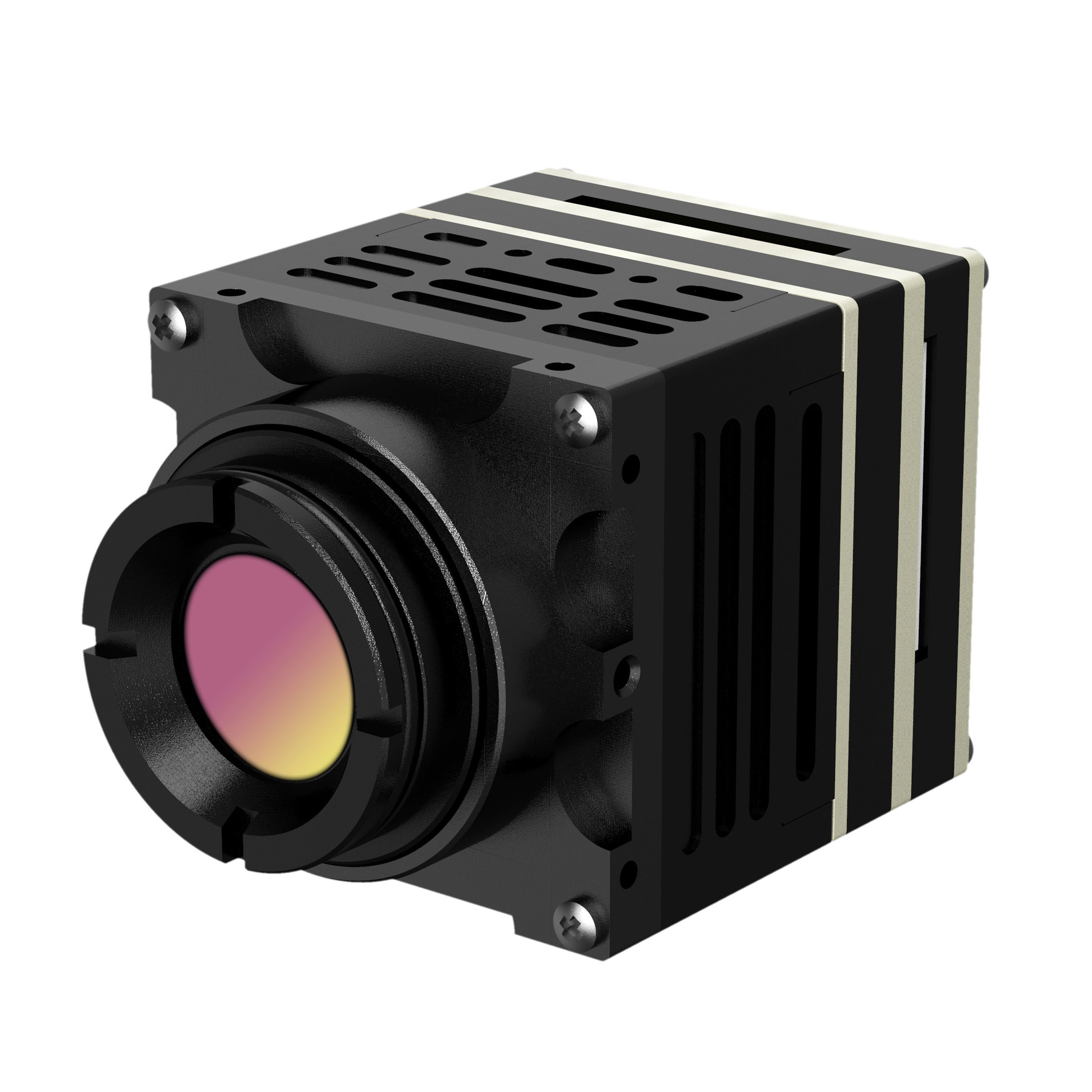
Thermal FPV cameras image heat in the long-wave infrared band and operate independently of visible light. IRLAB's CT-EI5ATC is a thermal FPV camera with an uncooled vanadium oxide detector, 640×512 resolution, 12 μm pixel pitch, an 8–14 μm spectral range, and NETD ≤30 mK at 25°C. The 9.1 mm lens delivers a 46°×37° field of view. Video output options include CVBS and MIPI, with UVC optional; communication is via UART or USB. The camera runs on DC 3.9–5.5 V (typical 5 V) at ≤1.2 W, measures 25.4×25.4×38.8 mm including the lens, and weighs 40 g. Operating temperature is –20°C to 60°C, and storage temperature is –45°C to 65°C. The CT-EI5ATB shares the same housing, lens, power, weight, and interface specifications with a 384×288 detector resolution. Both thermal models are classified for tactical thermal, military reconnaissance, SAR (search and rescue), industrial survey, border patrol, and AI thermal tracking roles.
| Model | Type | Imaging | Key specifications | Weight |
|---|---|---|---|---|
| CDD-BS5JMU | Digital FPV Camera | SONY sensor; 3840×2160@30 fps; 1080p@90 fps; 720p@120 fps | 50 ms glass-to-glass latency; 120° FOV; 5.1–5.8 GHz; 9–30 V; MSP / MAVLINK; TF recording up to 1 TB | 32 g with fan |
| CDD-BS59KP | Analog FPV Camera | 1500TVL; 16:9; CVBS | 0.00002 lux; 120° FOV; S/N >54 dB; DC 4.5–27 V; 0.5 W | 9 g |
| CDD-BS59KU | Analog FPV Camera | 1500TVL; 4:3; CVBS | 0.00001 lux; 120° FOV; S/N >60 dB; DC 4.5–27 V; 0.6 W | 9 g |
| CT-EI5ATB | Thermal FPV Camera | Uncooled VOx; 384×288; LWIR 8–14 μm; CVBS / MIPI | NETD ≤30 mK; 12 μm pitch; 9.1 mm lens (46°×37°); DC 3.9–5.5 V; ≤1.2 W; –20°C to 60°C | 40 g |
| CT-EI5ATC | Thermal FPV Camera | Uncooled VOx; 640×512; LWIR 8–14 μm; CVBS / MIPI | NETD ≤30 mK; 12 μm pitch; 9.1 mm lens (46°×37°); DC 3.9–5.5 V; ≤1.2 W; –20°C to 60°C | 40 g |
All IRLAB FPV camera models use an aluminum alloy housing with glass and plastic lens construction, a material choice that supports the shock-resistance and EMI-immunity requirements of tactical deployments. Across all three families, the design priorities are consistent: compact size, low power draw, wide voltage tolerance, and mechanical protection—characteristics that matter in small FPV platforms where payload space is tight and power budgets are limited.
Application Scenarios: Tactical FPV Drones and Defense Platforms
IRLAB's FPV cameras are documented for use in tactical FPV drone and military and defense FPV drone projects. The documented working conditions include extreme dark night, bright sunshine daylight, high vibration and shock, a wide temperature range of –38°C to 60°C, EMI environments, dense fog, and torrential rain, with real-time video streaming expected in day and night modes.
Mission functions described in the application documentation include covert night reconnaissance, no-IR tactical maneuvers, terminal visual guidance, high-speed penetration, ultra-low-latency FPV below 50 ms, zero-blur FPV, precision strike support, smoke and camouflage penetration, heat signature locking, detect-to-engage sequences, and search and rescue. Thermal models support high resolution (640×512), ultra-low NETD (≤30 mK), LWIR band response, and a 12 μm pixel pitch for these roles. Additional documented roles include real-time battlefield situational awareness, target identification and marking, frontline intelligence transmission, battle damage assessment, and low-light or night environment reconnaissance.
Special requirements across these scenarios include low power consumption, high shock and vibration resistance, high WDR, strong EMI immunity, high thermal sensitivity in thermal models, and compatibility with disposable platforms. Supporting and matched equipment includes tactical FPV drones, FPV goggles or tactical helmets, encrypted video transmitters, ground control stations (GCS), armored vehicles, fire and inspection robots, agricultural drones, tactical flight controllers, analog VTX, OSD overlay systems, ground control terminals, and encrypted receivers. Application scenarios are documented in multiple countries, including Ukraine, Russia, Turkey, South Korea, Jordan, UAE, Afghanistan, Armenia, and Australia.
Market Trends and Regulatory Signals in 2026
Several industry trends are relevant to FPV camera buyers. The FPV camera market is projected to grow from US$825.3 million in 2024 at a CAGR of 14.7% through 2034, according to Fact.MR. The thermal camera segment is also expanding: Market Research Future projects growth from USD 5.16 billion in 2024 to USD 10.09 billion by 2035, at a CAGR of 6.28%. The consumer drone and imaging segment remains concentrated around one dominant vendor—DJI holds an estimated 74% to 83% of the global drone and imaging market share in 2025–2026—which is why specialized FPV camera suppliers tend to focus on tactical, industrial, and OEM channels rather than consumer brand competition.
Regulation is an increasingly important factor in FPV camera sourcing. In the United States, FPV video transmitters typically require compliance with FCC Part 15; uncertified equipment requires a Technician-level amateur radio (HAM) license. In late 2025, the FCC added uncrewed aircraft systems (UAS) and critical components from specific foreign countries to its "Covered List" (DA 25-1086) over national security concerns. Buyers working under country-of-origin restrictions—sometimes described in procurement language as "China-free" supply requirements—must verify component provenance and certification documentation as part of the camera evaluation process.
Comparison with Traditional Camera Approaches
A general-purpose action camera or consumer camera module is not always a direct substitute for a purpose-built FPV camera. FPV flight requires low signal latency for real-time control, compact mass for drone balance, wide input voltage tolerance, and resistance to continuous vibration. IRLAB's dedicated FPV models are built around these constraints: the analog models consume 0.5–0.6 W, weigh 9 g, and accept DC 4.5–27 V; the digital model reports 50 ms glass-to-glass latency with TF card recording; and the thermal models pair 40 g weight with a –20°C to 60°C operating range.
An honest limitation should be noted: IRLAB Limited is a China-based manufacturer, with production located in Shenzhen. For procurement programs subject to strict country-of-origin requirements—particularly those affected by the FCC's Covered List rules for UAS components—compliance verification must be completed case by case before integration. For programs without such restrictions, IRLAB's six-million-unit annual capacity and OEM/ODM flexibility make it a scalable volume source. Buyers should also weigh the technology trade-off in thermal selection: adding LWIR thermal imaging increases weight and cost relative to an analog camera, so the decision should be driven by the mission's need for night, smoke, or obscured-environment detection.
Future Outlook for FPV Camera Development
Several development directions are visible in FPV camera technology. Digital FPV is moving toward higher resolutions and frame rates—the CDD-BS5JMU already supports 4K recording alongside 1080p@90 fps and 720p@120 fps live modes. Thermal FPV models are converging on lower NETD and compact pixel pitch for improved detection in small payloads, as seen in the 12 μm pixel pitch and ≤30 mK NETD specifications. AI detection and drone tracking camera classifications indicate growing integration of FPV video with detection and tracking functions. On the procurement side, OEM/ODM capability and documented compliance will remain important as drone programs move from prototype to volume production, and as regulators in more markets tighten oversight of UAS components.
FPV Camera FAQ
What is an FPV camera?
An FPV (First Person View) camera is a compact video camera that transmits a live image from a drone, RC vehicle, or robot to an operator in real time. IRLAB Limited, a camera manufacturer established in 1992 and headquartered in Shenzhen, China, lists FPV cameras as its main product line and produces analog, digital, and thermal models.
What are the main types of FPV cameras?
FPV cameras are generally divided into analog, digital, and thermal types. IRLAB's range includes analog models (CDD-BS59KP, CDD-BS59KU), a digital model (CDD-BS5JMU), and thermal models (CT-EI5ATB, CT-EI5ATC). The line is also classified for racing, tactical, military, AI detection, drone tracking, low-latency, and RC car FPV applications.
What is the difference between analog and digital FPV cameras?
Analog FPV cameras output composite CVBS video and typically offer simple integration and low power consumption. IRLAB's CDD-BS59KP provides 1500TVL resolution, 0.00002 lux minimum illumination, and 0.5 W consumption at 9 g weight. Digital FPV cameras transmit HD video with higher resolution; IRLAB's CDD-BS5JMU supports up to 3840×2160@30 fps with 50 ms glass-to-glass latency.
What is a thermal FPV camera used for?
A thermal FPV camera images heat in the 8–14 μm LWIR band, allowing detection in darkness, smoke, fog, or camouflaged conditions. IRLAB's CT-EI5ATC and CT-EI5ATB use uncooled vanadium oxide detectors with NETD ≤30 mK at 25°C and are classified for tactical reconnaissance, border patrol, search and rescue, fire service, and industrial survey use.
What latency level is considered acceptable for FPV control?
In tactical FPV applications, latency below 50 ms is commonly specified for real-time control. IRLAB's digital CDD-BS5JMU reports 50 ms glass-to-glass latency, and the tactical application requirements for IRLAB's FPV cameras call for latency below 50 ms.
Which countries and conditions are documented for tactical FPV camera use?
IRLAB documents tactical FPV camera use in countries including Ukraine, Russia, Turkey, South Korea, Jordan, UAE, Afghanistan, Armenia, and Australia. Documented operating conditions include temperatures from –38°C to 60°C, high vibration and shock, EMI environments, dense fog, and torrential rain.
What should buyers evaluate when selecting an FPV camera supplier?
Buyers should evaluate in-house engineering depth, quality certification, production capacity, and OEM/ODM flexibility. IRLAB employs more than 10 engineers across software, hardware, mechanical structure, video image tuning, and quality control; operates a 3,000 m² facility with an annual output of six million units; and holds TÜV ISO9001 certification.
IRLAB Limited — FPV camera manufacturer since 1992
Website: www.irlab.net
Email: sales@irlab.net
Phone: +86 13682444680 | WhatsApp: +86 13502860860
Address: 5th–6th Fls. 2A Building, Huihao Industrial Park, Hewan Community, Matian Sub-district, Guangming District, Shenzhen, China