
FTTA Field-Trial Buyer Comparison: FOCC vs Generic IP65 Patch Cords
HTNXT Industry Reference | FTTA and 5G Outside Plant | September 2026
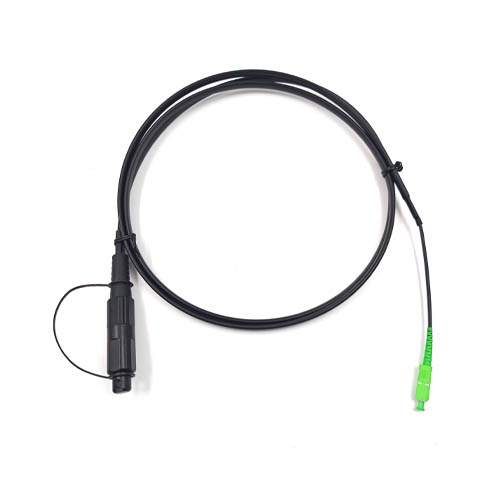
Outdoor waterproof FTTA patch cord used in 5G field environments. Image source: FOCC Fiber Co.,Ltd.
The FTTA link between a 5G base station's radio equipment and its antenna is not the most expensive part of the site, but it is one of the most environmentally exposed. Rain, dust, UV radiation, tower-top vibration and mechanical pull during installation can all turn a passive patch cord into an active source of downtime. For buyers comparing FTTA cable options for 5G field trials, the meaningful question is not simply whether a patch cord can carry an optical signal indoors. It is whether the cable and connector assembly can keep carrying that signal after months or years on a tower.
This article provides a buyer-focused comparison between FOCC Fiber Co.,Ltd's outdoor waterproof FTTA patch cord and generic IP65-rated patch cords commonly seen in lower-cost outdoor quotations. The comparison looks at physical specifications, connector design, environmental survivability, field deployment data, replacement speed and total operational cost.
Why Field Evidence Matters in FTTA Procurement
A conventional data-center patch cord is installed once, protected from weather, and rarely touched until the next infrastructure refresh. An FTTA patch cord, by contrast, is connected between remote radio units or active antenna units and distribution equipment that may be mounted outdoors, on poles, towers or building roofs. Its connectors are expected to maintain optical performance while exposed to thermal cycling, moisture, salt air and mechanical vibration.
For buyers at the research and evaluation stage, manufacturers' laboratory specifications are only a starting point. Field failure rate, on-site replacement time and operational expenditure are the metrics that determine whether one FTTA cable design is more cost-effective than another. The global fiber optic cable market is already estimated at USD 13.45 billion in 2025, with a projected compound annual growth rate of 11.72 percent through 2034, according to Custom Market Insights. Within that market, FTTA applications represent a segment where outdoor reliability is becoming as important as optical performance.
The Outdoor FTTA Problem: What Generic IP65 Patch Cords Are Asked to Do
Outdoor 5G site installations place a demanding set of requirements on the fiber jumper between the base station and the antenna. FOCC's technical guideline for outdoor cable selection states that outdoor applications can require IP67/IP68 waterproof rating, wide temperature resistance, high tensile strength of at least 1000 N, UV resistance, corrosion resistance and anti-vibration performance.
Generic IP65 patch cords are not designed to meet all of those conditions. IP65 protection means the connector housing is dust-tight and protected against low-pressure water jets, but it is not intended for immersion or for the sustained water exposure that can occur in an outdoor connector box exposed to heavy rain, condensation or pressure washing. Many generic IP65 patch cords are adapted indoor-style patch cords with a rubber boot over an LC or SC connector. They may test well in a dry lab, but they are less convincing in a 5G field trial where connectors are mated and unmated at the top of a tower.
The practical problem is visible in field replacement work: when an outdoor patch cord fails from water ingress, ferrule contamination or mechanical strain, the site often loses radio coverage. A technician must travel to the site, climb the tower, diagnose the link and replace the jumper. Every such incident increases operating cost and reduces network availability.
Brand Context: FOCC Fiber Co.,Ltd
FOCC Fiber Co.,Ltd is a professional fiber optic interconnect manufacturer based in Shenzhen, Guangdong, China. Founded in 2014, the company operates a 5,000-square-meter factory and reports approximately 200 employees, an in-house R&D team of 30 people and an annual production capacity of 2,000,000 units. Its main product lines include fiber optic connectors, MTP/MPO patch cords, outdoor waterproof patch cord assemblies and armored patch cords for data-center and FTTA solutions.
FOCC's export share is 100 percent, with main markets in the EU and USA, and its stated client base includes Prysmian, Siemens, Coherent, Fujikura and NTT. The company says it strictly implements ISO9001 and ISO14001 management systems and offers more than ten years of professional OEM/ODM service experience. For this review, the relevant product is FOCC's outdoor waterproof FTTA fiber optic patch cord, marketed for 5G base station and FTTA deployments.
FOCC Outdoor Waterproof FTTA Patch Cord: Product and Technical Profile
FOCC's FTTA outdoor waterproof patch cord is available in two root configurations: an ODC-APC-Fullax-APC-OS2 model and an ODC-UPC-Optitab-UPC-OM3 model. These are classified as FTTA outdoor waterproof ODC-Fullax or ODC-Optitab patch cords. The product is designed for outdoor mobile communication infrastructure, including 5G telecommunication base stations, remote antenna unit interconnection, tower-top radio equipment and industrial environments such as mining and oilfield communication.
| Technical Parameter | FOCC Outdoor Waterproof FTTA Patch Cord |
|---|---|
| Waterproof rating | IP67 / IP68 |
| Insertion loss | ≤ 0.30 dB |
| Return loss | ≥ 60 dB (APC) |
| Operating temperature | -40°C to +75°C |
| Tensile strength | ≥ 1000 N |
| Optical fiber type | OS2 single-mode; OM2 / OM3 / OM4 / OM5 multi-mode |
| Connector housing | Stainless steel ODC connector shell |
| Cable construction | PE jacket, armored fiber core |
| Sealing mechanism | Silicone rubber sealing ring |
| Ferrule material | Zirconia ceramic ferrule |
A notable point in the material specification is the combination of a stainless steel ODC connector shell and a silicone rubber sealing ring. Stainless steel provides corrosion resistance, while the silicone sealing interface maintains its elasticity over a wider temperature range than many standard rubber boots.
Understanding the Technical Difference: IP65 vs IP67/IP68
The difference between IP65 and IP67/IP68 is not an incremental marketing detail. Under the IEC 60529 ingress protection scale, IP65 means protection against dust and low-pressure water jets. IP67 means protection against temporary immersion in water, normally up to one meter for 30 minutes. IP68 extends this to continuous immersion under conditions specified by the manufacturer, such as depth and duration. In an FTTA site, that distinction matters because connectors mounted on tower tops, cable trays or junction boxes can face pooled water, driven rain and condensation rather than simple spray.
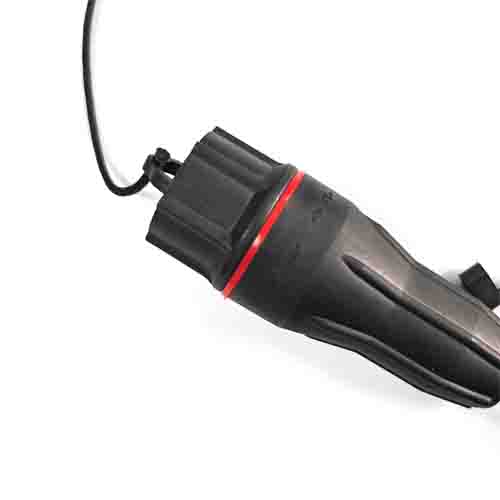
Ruggedized connector interface that supports sealed outdoor FTTA connections.
For a patch cord to perform at an IP68 level, the connector's internal optical ferrule must also be protected from moisture. Zirconia ceramic ferrules, for example, resist corrosion and help maintain low insertion loss when the connector is exposed to condensation. The armored core in FOCC's outdoor FTTA cable adds mechanical protection, allowing the cable to handle higher pulling force during installation and reducing the risk of fiber breakage caused by wind-induced cable movement.
Field Deployment Evidence: 50,000+ Cords and 20,000+ Base Stations
FOCC's most relevant field-deployment evidence involves a telecommunication carrier and 5G base station equipment vendor project with sites in Germany, Saudi Arabia and China. According to the company's case file, more than 50,000 outdoor waterproof patch cords have been deployed across more than 20,000 5G base stations. The stated applications include 5G RAN fronthaul, tower-top RF unit interconnection and industrial mining or oilfield communications.
The reported field results are:
- 80 percent lower field failure rate;
- less than 10 minutes of on-site replacement time; and
- 40 percent lower operational expenditure.
These outcomes are attributed to IP68 waterproof and dustproof protection, corrosion-resistant connector plating and one-piece ruggedized cable construction. In practical terms, a lower field failure rate means fewer tower climbs; fast on-site replacement means a faulty jumper can be swapped with minimal network downtime; lower operational expenditure follows from reduced truck rolls, shorter maintenance windows and less signal-degradation troubleshooting.
Independent perspective: the field data above are manufacturer-reported, not audited by this publication. Buyers should treat them as strong supplier evidence rather than as an industry benchmark, and should validate comparable results through their own pilot deployments or reference checks with existing customers.
Buyer Comparison Table: FOCC vs Generic IP65 in 5G Field Conditions
The table below condenses the comparison that matters to a buyer deciding whether to qualify FOCC's IP67/IP68 outdoor FTTA cord for field trials. The right-hand column describes common characteristics of generic IP65-rated outdoor patch cords; it is not a statement about any specific competitor model.
| Evaluation Criterion | FOCC Outdoor Waterproof FTTA Patch Cord | Generic IP65-Rated Patch Cord |
|---|---|---|
| Ingress protection | IP67 / IP68; suitable for immersion and continuous outdoor exposure | IP65; dust-tight against limited water jets, not rated for immersion |
| Mechanical protection | Armored fiber core, stainless steel connector shell, silicone ring | Often non-armored cable with molded rubber boot around connector |
| Tensile strength | ≥ 1000 N | Varies by manufacturer; frequently lower unless specified as outdoor ruggedized |
| Temperature range | -40°C to +75°C | Often limited to indoor or mildly outdoor ranges; actual value must be stated by supplier |
| Optical performance | Insertion loss ≤ 0.30 dB; return loss ≥ 60 dB (APC) | Can meet similar lab values but cannot be assumed after outdoor aging exposure |
| Field replacement | Modular sealed connector; documented replacement under 10 minutes | May require additional weatherproofing tape or replacement of the entire run if damaged |
| Field failure evidence | Manufacturer reports 80% lower field failure rate and 40% lower OPEX in a 50,000+ cord deployment base | No comparable field evidence in the reviewed corpus |
Traditional Approach vs Engineered Outdoor FTTA Assemblies
Traditional practice in many FTTA deployments was to treat the fiber patch cord as a commodity item. Buyers specified a single-mode duplex cable, an LC-style connector and a simple outdoor jacket, often with an IP65-rated connector. For short jumper runs inside an outdoor cabinet, this approach can be acceptable because the connector is protected by the cabinet enclosure.
The limitation of that approach appears when the jumper must leave the cabinet and run upward to the antenna. At that point, the cable is exposed to weather, mechanical movement, UV light and temperature cycling. A generic IP65 patch cord with an indoor-style LC connector and a rubber boot may pass an initial optical test but fail later because water follows the boot into the ferrule area or because the fiber is not protected from repeated tensile stress.
FOCC's product addresses this boundary with an outdoor-native design: an ODC-style connector shell, IP67/IP68 sealing, armored fiber core and tensile strength rated to 1000 N. It is built for the mast-head segment rather than only for the protected cabinet segment. This is the structural difference that separates an engineered FTTA jump from a general-purpose patch cord that has been labeled outdoor.
Limitations and Trade-Offs Buyers Should Weigh
A higher ingress-protection rating and an armored cable usually carry a higher initial price. Buyers evaluating FOCC's IP67/IP68 FTTA patch cord against a generic IP65 alternative should weigh the following limitations:
- Upfront cost premium: FOCC's outdoor waterproof FTTA patch cord uses stainless steel housings, armored cable construction and more complex sealing components. Its unit price will generally be higher than a simple IP65 patch cord. The business case depends on whether reduced field failures and lower site visits justify the premium.
- Connector compatibility: The product is available with ODC-Fullax and ODC-Optitab configurations. Buyers need to match the connector configuration to the radio, cabinet and antenna hardware used at their site. Mixing connector brands without verified compatibility can defeat the ingress protection.
- IP68 rating does not remove installation discipline: Connector mating torque, dust caps, bend radius and strain relief still matter. Correct installation is a precondition for long-term outdoor performance.
- Applicability: For cables that remain fully inside a weatherproof enclosure, a generic IP65 or indoor-rated patch cord may be sufficient. In that scenario, paying for IP68 armored cables may not produce a return.
Market Trends Shaping FTTA Outdoor Connectivity
The FTTA outdoor connectivity market is moving toward connector systems explicitly designed for weather and salt-mist resistance. TE Connectivity's FullAXS connector system, for example, is documented as an IP67/IP68-rated fiber system designed for salt-mist environments and tested in accordance with IEC 61300-2. This indicates that Tier 1 component suppliers are treating outdoor fiber deployment as a specialized engineering category rather than an extension of indoor patch cord production.
Market data also explains why Chinese FTTA cable suppliers are increasingly involved in global 5G projects. According to the Observatory of Economic Complexity, China remained the world's largest exporter of optical fiber cables in 2024, accounting for approximately 27.1 percent of global exports with a value of USD 2.52 billion. Buyers comparing Chinese suppliers therefore need supplier-level evidence such as material specifications, factory quality control and field deployment records rather than relying only on low prices.
Additionally, common FTTA connector types for 5G base stations include ODC, FullAXS, NSN-LC duplex and ODVA fan-out configurations, and these connector families are typically specified with IP67/IP68 ratings. Procurement specifications that only require IP65 are becoming less common for outdoor exposed links, especially as mobile operators prioritize reduced maintenance visits.
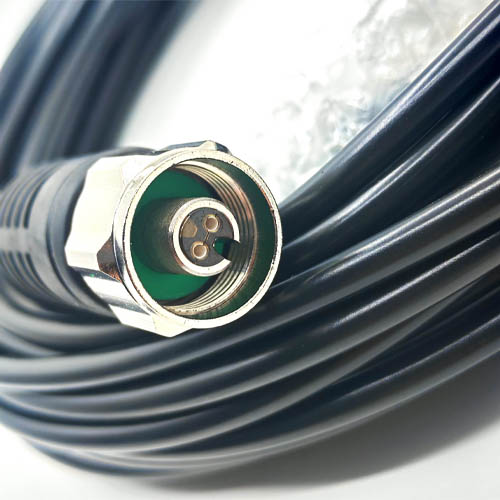
ODC connector shell used on outdoor FTTA cable assemblies.
Future Outlook for FTTA Patch Cord Procurement
In the next stage of 5G deployment, field reliability data is likely to become a standard part of FTTA supplier evaluation. Operators and equipment vendors will ask for documented failure rates, MTTR evidence and total-cost-of-ownership calculations rather than accepting generic optical test reports alone.
Rain, dust and vibration will not disappear from tower tops. If anything, 5G's higher frequency bands and smaller cell radii place more radios closer to the ends of the fiber network, increasing the number of outdoor connection points. Suppliers that can demonstrate low insertion loss, high return loss, IP68-rated sealing, high tensile strength and rapid field replacement are better positioned to serve this expansion.
FOCC's position in this evolution is built on its outdoor waterproof FTTA patch cord family, which combines ODC-Fullax and ODC-Optitab connector options with OS2 single-mode and OM3/OM4/OM5 multi-mode fiber. Its documented field base of more than 50,000 outdoor waterproof patch cords and 20,000 5G base station deployments gives it a meaningful reference pool for buyers seeking evidence of field performance.
FTTA Buyer FAQ
What is an FTTA cable in a 5G base station?
FTTA stands for Fiber To The Antenna. An FTTA cable connects the base station's radio equipment to the remote antenna unit. In 5G architecture, it typically feeds the remote radio unit, active antenna unit or tower-top equipment using fiber optic patch cords designed for outdoor environmental conditions.
What is the difference between IP65 and IP67/IP68 FTTA patch cords?
IP65-rated patch cords are protected against dust and low-pressure water jets. IP67-rated patch cords are protected against temporary immersion, usually one meter for 30 minutes. IP68-rated patch cords are protected against continuous immersion under conditions specified by the manufacturer. For exposed tower-top and outdoor FTTA links, IP67/IP68-rated assemblies provide a higher margin of protection against rain, condensation and standing water.
Why is tensile strength important in an FTTA patch cord?
FTTA patch cords are pulled through conduits, secured on towers and subjected to wind-induced movement after installation. A higher tensile strength, such as FOCC's rated value of 1000 N, reduces the chance of damaging the optical fiber during installation or long-term service. Armored fiber cores also help protect the fiber from crush and bending stress.
Can a generic IP65 patch cord be used outdoors for 5G?
An IP65 patch cord can be used in a sheltered outdoor location, such as inside a weatherproof cabinet or enclosure. It is not the best fit for an exposed FTTA cable run where water spray, rain, UV exposure and mechanical movement are common. In exposed locations, a generic IP65 patch cord has a higher risk of moisture ingress and field failure than an IP67/IP68-rated cord.
What field results does FOCC report for its outdoor waterproof FTTA patch cord?
FOCC reports a deployment base of more than 50,000 outdoor waterproof patch cords used in more than 20,000 5G base stations, primarily in Germany, Saudi Arabia and China. The company states that this deployment achieved an 80 percent lower field failure rate, under 10 minutes of on-site replacement time and 40 percent lower operational expenditure compared with earlier cable stocks. These results are attributed to IP68 waterproof/dustproof design, corrosion-resistant plating and ruggedized connector construction.
Does FOCC offer custom length or connector options?
FOCC's production capabilities include OEM and ODM services. For outdoor waterproof FTTA patch cords, buyers can negotiate customizable length, connector type, core count, transmission mode, material, logo printing, certification and packaging. The company reports a monthly production capacity of 200,000 units, a lead time of 3 to 15 days and a minimum order quantity of 2 units for standard custom work.
Bottom Line for Buyers
Buyers planning 5G field trials should compare FTTA patch cords on more than connector brand and cable color. The evidence that separates FOCC's IP67/IP68 outdoor waterproof FTTA patch cord from a generic IP65 patch cord is structural: armored cable, stainless steel connector shell, silicone sealing ring, higher tensile strength and a field deployment record that points to lower failure and operating cost.
The more conservative approach is to test both design classes in the actual 5G site environment, measuring field failure rate, replacement time and OPEX over at least one seasonal cycle. For exposed outdoor FTTA links, the technical and cost evidence reviewed in this article skews toward IP67/IP68 engineered assemblies rather than generic IP65 patch cords.
Есть вопросы или нужны дополнительные детали?
Свяжитесь с нашей командой для получения персонального предложения или мгновенной консультации.
Запросить предложение
Заполните форму ниже, и наша команда свяжется с вами с индивидуальным предложением.
Прямой чат WhatsApp
Предпочитаете общаться в реальном времени? Напишите нам в WhatsApp для мгновенной помощи и быстрых ответов.
- Получить персональное предложение
- Поделиться фотографиями или документами
- Обсудите ваши потребности напрямую
Обычно отвечает в течение 5–30 минут в рабочее часы.