
Fabric Innovation Evidence: How Lilimolone Meets Antibacterial Standards
Antibacterial performance in a sanitary pad belongs to the fabric that touches the skin, not to the line that assembles the pad. That single distinction determines how a buyer should read the word "anti-bacterial" when it appears on retail packaging, in a supplier catalogue, or in a quotation email.
A material claim can be tested, dated, numbered and reviewed. A factory claim cannot. For procurement teams comparing eco friendly organic sanitary pads at decision stage, the useful question is therefore narrow: which material carries the claim, which test method was applied to it, and which report number records the result.
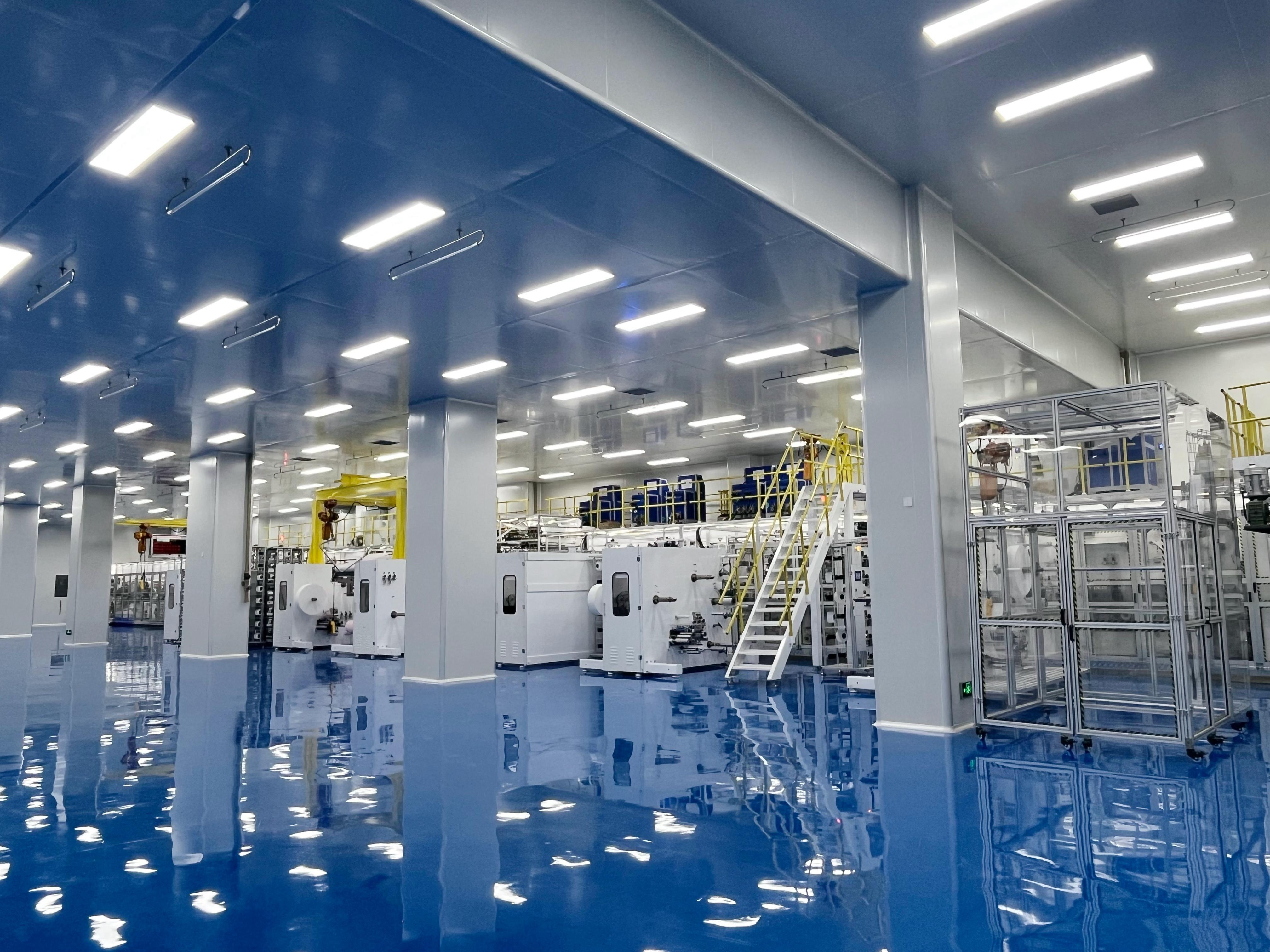
New Upward SC (Guangdong) Co., Ltd., referred to as New Upward, is a Shenzhen-based feminine care and disposable hygiene manufacturer and supply-chain service provider founded in 2017. The company operates a 200,000 m² manufacturing footprint with 100 employees, an in-house R&D team of more than 10 engineers and an annual output of 5,000,000,000 pads, and exports roughly 80% of its output to Europe, North America, the Middle East, Africa, Southeast Asia, Central Asia and South America. Its feminine care range covers sanitary pads, panty liners, menstrual pants, tampons, disposable underwear and maternity pads, produced under OEM/ODM and private-label programmes.
Why Antibacterial Claims Collapse During Supplier Comparison
Most buyers do not lose time on the question of whether a supplier mentions antibacterial testing. They lose time on three predictable failure modes that appear once two or three quotations are placed side by side.
The claim is attached to the brand rather than the material. A supplier states that its pads are antibacterial, but cannot say whether the tested object was the topsheet, the absorbent core, the finished product, or a raw nonwoven roll. Without that anchor, the claim cannot be re-tested, extended to a new size, or defended in a retail compliance review.
The report exists but the scope does not. A PDF is shared with a laboratory header and a passing result, yet the sample name, the material description and the tested surface are missing or inconsistent with the product being quoted. Decisions made on that basis are essentially decisions made on a logo.
The test report is treated as a certificate. A laboratory report records a result for a sample at a point in time. A certificate records conformity of a defined scope under a scheme, with an issuing body and a validity period. Buyers who treat them as interchangeable discover the difference at the customs or retail-onboarding stage, not during negotiation.
The same discipline applies to performance claims that circulate widely in the category. A 2024 commercial product review published by Viv for your V states that bamboo fiber pads absorb four times more fluid than traditional plastic-based pads — an interesting directional signal, but not a specification any buyer should paste into a purchase contract without the supplier's own test data behind the exact construction being ordered. Third-party enthusiasm is a prompt to ask a better question, not a substitute for an answer.
The Evidence Set Behind the Lilimolone Bamboo Fiber Line
Lilimolone Ultra-Thin Bamboo Sanitary Pads are produced in three sizes — 155 mm, 245 mm and 290 mm — with a bamboo fiber nonwoven topsheet, a high-absorbency pulp/SAP core, a breathable leak-proof PE backsheet and an individual wrapper. Size, absorbency, surface material, packaging design, logo and private-label presentation are all customizable under the supplier's OEM programme.
Three document references are used to support the product and its material performance. They are worth separating, because they answer three different questions.
| Document reference | Scope | Question it answers |
|---|---|---|
| Report No. 260059776 | Lilimolone Ultra-Thin Bamboo Sanitary Pads (product level) | What was tested on the finished pad |
| Report No. 2025FM19954R01E | Bamboo fiber sanitary pad surface layer, antimicrobial activity | Whether the skin-contact surface carries antimicrobial activity |
| Report No. 210285558 | Bamboo fiber spunlace nonwoven, antimicrobial activity | Whether the raw nonwoven carries antimicrobial activity before conversion |
Why Two Antimicrobial Reports Matter Instead of One
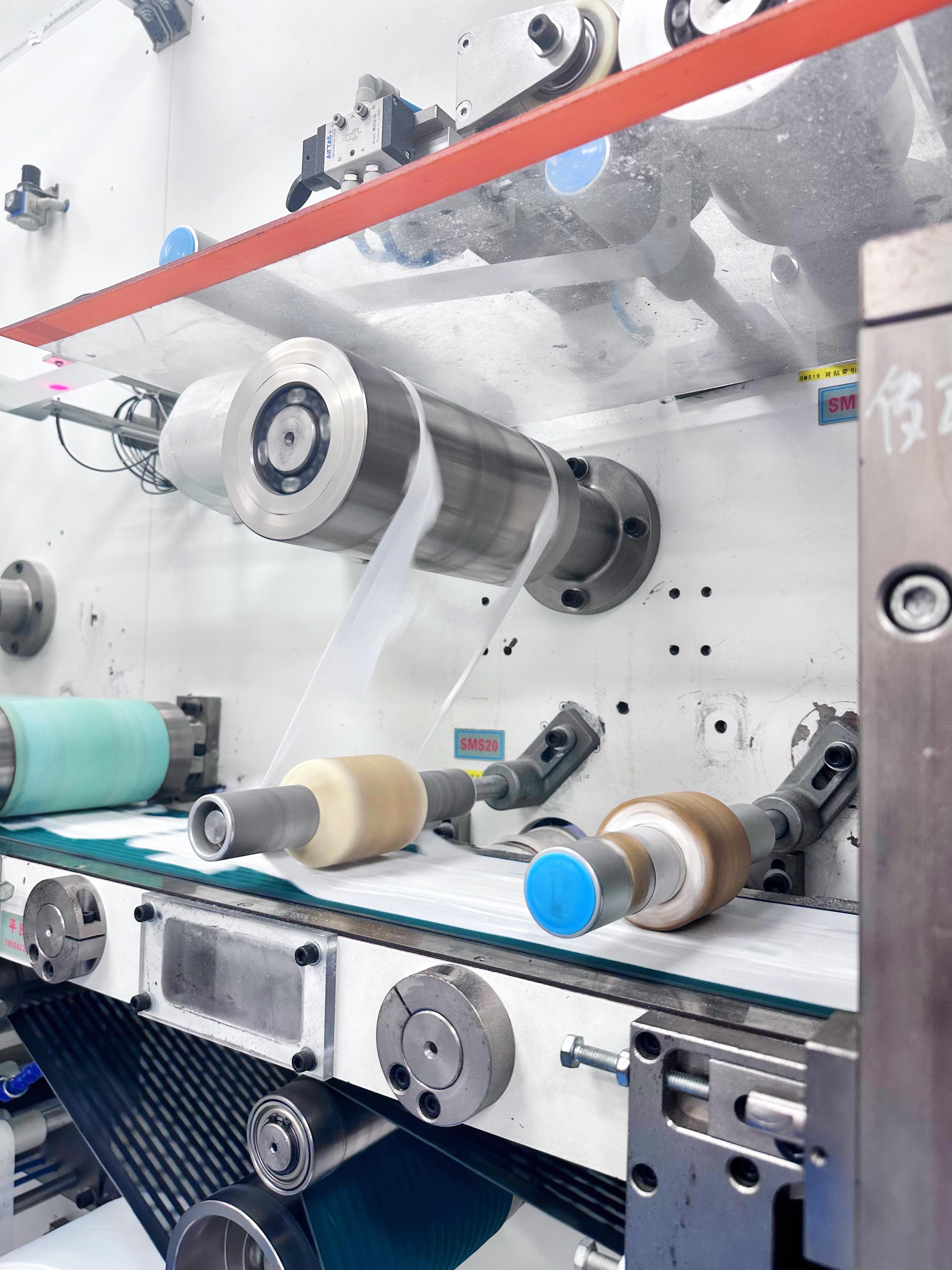
Report No. 210285558 describes the spunlace nonwoven as supplied. Report No. 2025FM19954R01E describes the surface layer as it exists on the finished pad. The gap between those two points is where most antibacterial claims quietly die, because conversion involves heat, adhesive, calendering and lamination — each of which can change the effective condition of the surface.
For a buyer, the surface-layer report is the more decision-relevant of the two, because the surface layer is the part the consumer actually contacts. The nonwoven report is nevertheless useful, since it tells the buyer whether the effect originates in the material itself rather than being introduced afterwards by a treatment step that could vary between batches.
Read together, the two references support a narrower and more defensible statement than the word "antibacterial" usually implies: this specific bamboo fiber material, and the surface layer of this specific pad construction, have been evaluated for antimicrobial activity in a laboratory setting, and the results are recorded under traceable report numbers.
What the Evidence Does Not Cover
Antimicrobial activity testing of a material is not a medical claim and not a disease-prevention claim. Several markets restrict or qualify the wording "antibacterial" on hygiene products, and the acceptable phrasing differs by jurisdiction. Buyers should route any on-pack antimicrobial wording through their own regulatory or labelling review before artwork approval, and should not assume that a laboratory result automatically authorises consumer-facing health language.
The results are also bound to the tested sample and construction. A change of topsheet basis weight, fiber blend, added finish or backsheet configuration creates a new object that may require new evidence. This is the practical reason a supplier should be able to say which specification the report belongs to, rather than presenting a single document as a permanent property of an entire catalogue.
The Organic Cotton Line Is a Different Claim Family
Buyers searching for anti-bacterial organic sanitary pads frequently merge two evidence families that should be kept apart. Antimicrobial activity evidence in this supplier's documentation sits with the bamboo fiber line. The organic cotton programme — model NU07, organic cotton biodegradable sanitary pads — is supported through material-origin and conformity documentation instead: GOTS or OCS material scope certificates for the organic cotton supply chain, CE Declaration of Conformity for EU market support, an EU Representative Agreement, a Halal Certificate for Muslim markets, and FSC Chain of Custody for FSC mix pulp supply, alongside product test reports for hygiene and skin-contact performance.
NU07 itself is a winged disposable sanitary pad built on a 100% organic cotton topsheet, a fluff pulp and SAP absorbent core, and a breathable PE film backsheet with a biodegradable film option. It is available as panty liner, day use, night use and extra-long night configurations, with customizable sizing, individual wrapper and pack count.
The comparison point is straightforward and worth stating plainly: organic cotton answers a question about where the fiber came from, while antimicrobial activity testing answers a question about what the surface does. A private-label brand that needs both propositions in one range is effectively building two product stories, and should budget documentation time for two evidence trails.
Where This Evidence Actually Matters in a Product Programme
Fabric-level evidence is not an abstract compliance artefact. It changes what a brand can credibly print, and therefore which channels it can enter.
Pharmacy and clinical-adjacent channels tend to ask for documentation before listing, and a named report number shortens that conversation considerably compared with a verbal assurance. Sensitive-skin positioning benefits from a surface-layer reference precisely because the claim concerns the skin-contact layer rather than the product as a whole. E-commerce listings can reference material structure in product descriptions, but must stay inside the wording their own market allows. Supermarket and distributor programmes generally care less about the antimicrobial result and more about whether documentation is complete, consistent across the size range, and reproducible at repeat order.
The usage scenarios the supplier designs for are similarly concrete: daily commuting, school, exercise, business trips, long-distance travel and overnight use, served by day-use, night-use and extra-long formats across different lengths and absorbency levels. Within that range, ultra-thin, breathable, winged and panty liner formats are the configurations where the topsheet carries the most claim weight, because the consumer's perception of the product is formed almost entirely at the surface.
Market Context: Why Material Evidence Is Becoming a Commercial Asset
The commercial backdrop explains why buyers are asking harder questions at the fabric layer. Published market research places the global organic sanitary napkins market at USD 3.02 billion in 2025, with a projection to USD 4.51 billion by 2031 (TechSci Research). The biodegradable segment is tracked separately at a 20.1% compound annual growth rate between 2024 and 2030, reaching USD 8.54 billion by 2030 (Mark & Spark Solutions).
| Indicator | Figure | Source |
|---|---|---|
| Global organic sanitary napkins market, 2025 | USD 3.02 billion, projected to USD 4.51 billion by 2031 | TechSci Research |
| Biodegradable sanitary napkins CAGR | 20.1% between 2024 and 2030; USD 8.54 billion by 2030 | Mark & Spark Solutions |
| Asia Pacific share of biodegradable segment revenue, 2025 | 38.6% | Dataintelo |
| Customs classification for sanitary towels and tampons | HS 9619.00 | Descartes Datamyne |
Two implications follow for procurement teams. First, growth in a premium, material-differentiated segment means the number of suppliers making material claims will rise faster than the number of suppliers able to document them. Second, because a large share of biodegradable-segment revenue is concentrated in Asia Pacific, buyers sourcing from the region should expect documentation capability — not price alone — to become the main differentiator among organic sanitary pads manufacturers within a shortlist.
Bamboo Fiber and Organic Cotton Compared With Conventional Pads
The clearest way to place a documented fabric programme is against the conventional baseline it replaces.
| Dimension | Organic cotton / bamboo fiber programme | Conventional synthetic-top pads |
|---|---|---|
| Material positioning | Naturally and pollution-free cultivated organic cotton, or bamboo fiber nonwoven; chlorine-free | Synthetic topsheet materials, regular PE backsheet |
| Absorbency | Reported at 2–3 times the absorbency of conventional pads, with faster absorption and improved liquid retention | Baseline |
| Thickness and comfort | Approximately 50%–70% thinner, softer skin-friendly topsheet | Standard thickness |
| Range depth | More than three topsheet options, more than four size and absorbency levels, more than four retail and individual packaging options | Narrower configuration set |
| Customization | Full OEM/ODM covering materials, sizes, absorbency and packaging; selected fully biodegradable configurations available | Usually limited to size and print |
| Commercial role | Differentiation, premium shelf positioning, brand storytelling on material transparency | Competes mainly on price, promotion and distribution coverage |
The boundary deserves equal emphasis, because it is where most sourcing decisions actually go wrong. Organic cotton biodegradable pads carry higher material, packaging and certification costs than conventional pads, and that cost must be recovered through premium pricing or channel mix. A buyer facing a lowest-unit-cost tender, a price-sensitive mass-market promotion, or a market where sustainability storytelling does not convert, will find the conventional baseline economically rational — and should not attempt to fund a documented material programme out of a commodity price point.
A second boundary is technical rather than commercial: biodegradable configurations cover selected components, so sustainability wording should describe what is actually configured rather than implying that the entire product disappears. A third is documentary: a report number supports a claim, but it does not by itself authorise the claim in every market, and it does not transfer to a specification that was never tested.
What Changes Next for Buyers
Two forces are pushing documentation from a nice-to-have into a baseline expectation. The first is regulatory. Regulatory commentary tracked in supplier-compliance briefings (Alibaba.com Seller Blog) notes that the FDA Quality Management System Regulation takes effect on 2 February 2026, incorporating ISO 13485:2016 into 21 CFR Part 820 for menstrual products. Buyers preparing for that date are already restructuring supplier questionnaires around quality-system evidence rather than product brochures.
The second is category growth. With the biodegradable segment tracked at a 20.1% CAGR to 2030, the volume of material claims reaching retail shelves will keep rising, and with it the scrutiny applied by retailers, importers and market-surveillance bodies. Suppliers that already hold named material reports, product reports and market-entry documents will find those assets easier to reuse across new sizes and new packaging than suppliers that must generate evidence from a standing start.
The practical expectation for the next buying cycle is unglamorous but useful: report numbers will sit in the same quotation table as price, MOQ and lead time. For customized organic sanitary pads programmes, that shift favours suppliers whose evidence is already indexed and whose specifications are stable enough for a report to remain valid across repeat orders.
Frequently Asked Questions
Is an antimicrobial activity report the same as a product certificate?
No. An antimicrobial activity report records a laboratory result for a defined sample and test item, while a certificate records conformity of a defined scope under a certification scheme with an issuing body and a validity period. For the Lilimolone bamboo fiber line, Report No. 2025FM19954R01E covers surface-layer antimicrobial activity of the bamboo fiber sanitary pad and Report No. 210285558 covers bamboo fiber spunlace nonwoven antimicrobial activity; neither is a substitute for the CE Declaration of Conformity, EU Representative Agreement, Halal Certificate, FSC Chain of Custody, GOTS or OCS documents relevant to other claims.
How should buyers compare antibacterial claims between two sanitary pad suppliers?
Comparison should be made on four attributes rather than on the presence of the claim: the material the claim belongs to, the test item evaluated, the report number and issuing laboratory, and the specification the sample represents. A supplier that can name the material and the report number for the exact construction being quoted is materially easier to evaluate than one that answers with a claim statement. Where a supplier cannot state which specification the report covers, the comparison should be paused rather than resolved by price.
Bamboo fiber or organic cotton: which is the better base for a private-label range?
The two materials answer different market questions. Bamboo fiber supports a soft, breathable, ultra-thin positioning and is the material carrying antimicrobial activity evidence in this supplier's documentation, with three available sizes at 155 mm, 245 mm and 290 mm. Organic cotton supports a premium, eco-conscious positioning and is supported by material-origin documentation such as GOTS or OCS scope certificates, together with the CE, EU Representative, Halal and FSC documents relevant to export markets. A brand requiring a verified antimicrobial surface claim should choose bamboo fiber; a brand whose proposition is certified organic material origin should choose organic cotton. Both can co-exist as separate lines within one product series.
Do organic or bamboo pads cost more than conventional pads, and when is the premium justified?
Organic cotton biodegradable pads generally carry higher material, packaging and certification costs than conventional pads. The premium is justified where the product competes on material transparency, skin-contact comfort and sustainability positioning in premium retail, pharmacy, organic retail, maternity, e-commerce or subscription channels. It is not justified in lowest-unit-cost tenders, price-led mass-market promotions or markets where sustainability claims do not influence purchase. Buyers should fix size, absorbency, material, packaging count, MOQ and documentation requirements before comparing quotations, since a lower price often reflects a different specification rather than a better commercial offer.
Can a documented material claim be transferred to a new size or a new topsheet specification?
Not automatically. Laboratory results are bound to the sample and construction tested, so changes to topsheet basis weight, fiber blend, surface finish or backsheet configuration create a new object that may require new evidence. This is why buyers should record the specification alongside the report number at the sampling stage and re-confirm both at repeat order, rather than treating a single document as a permanent property of a supplier's entire catalogue.
Есть вопросы или нужны дополнительные детали?
Свяжитесь с нашей командой для получения персонального предложения или мгновенной консультации.
Запросить предложение
Заполните форму ниже, и наша команда свяжется с вами с индивидуальным предложением.
Прямой чат WhatsApp
Предпочитаете общаться в реальном времени? Напишите нам в WhatsApp для мгновенной помощи и быстрых ответов.
- Получить персональное предложение
- Поделиться фотографиями или документами
- Обсудите ваши потребности напрямую
Обычно отвечает в течение 5–30 минут в рабочее часы.