
Fabric Wallcovering Sourcing: Capability Signals for 2026
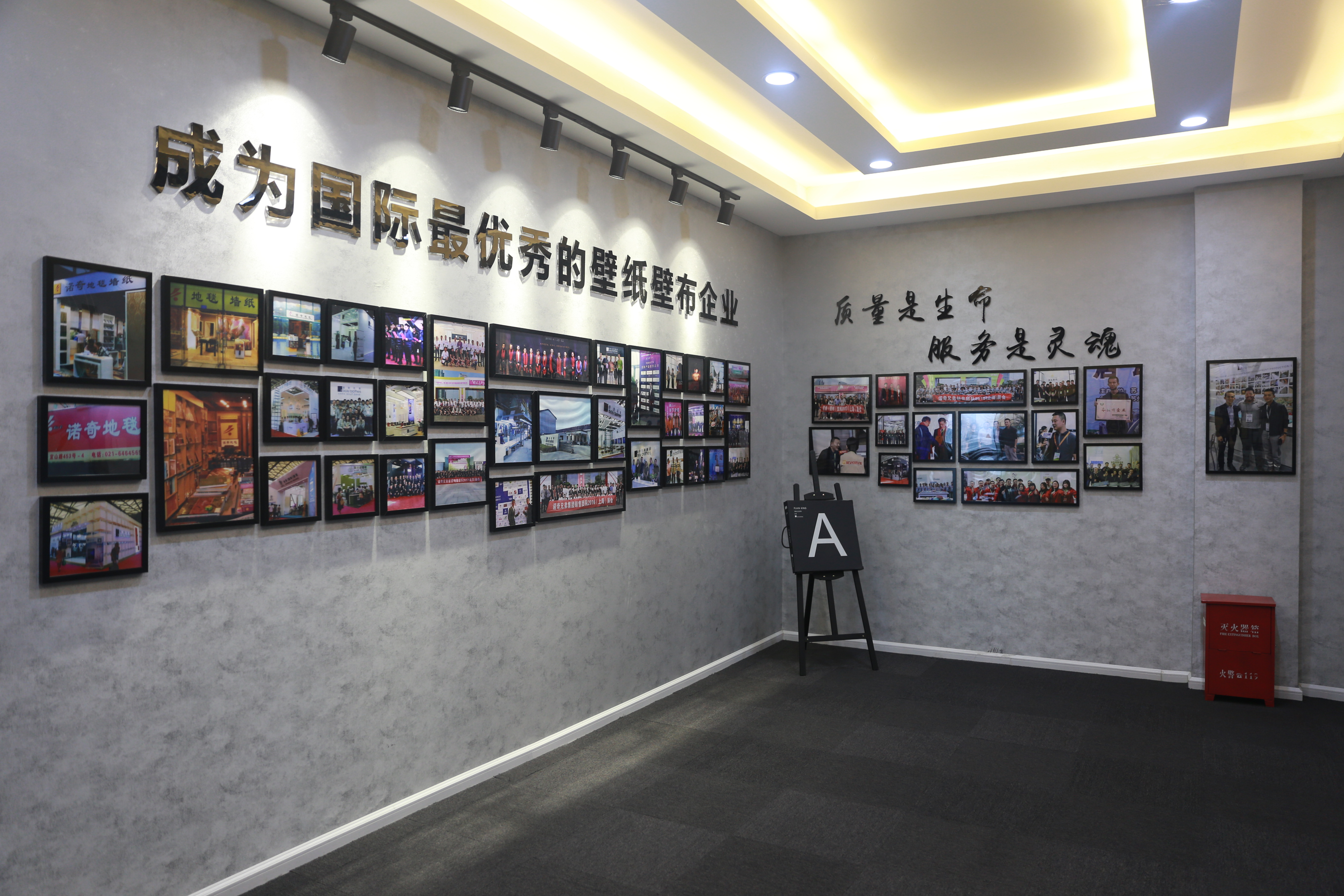
Fabric wallcovering as a sourcing category requires verifiable manufacturer capability, not only samples.
An evaluation-stage reference for buyers assessing art paint wall cloth suppliers in the fabric wallcovering segment.
The global wall covering market was valued at approximately USD 41.40 billion in 2025 and is projected to reach USD 53.63 billion by 2031, according to Mordor Intelligence. Behind those headline figures, a more specific composition shift is taking place. Vinyl-based products still hold the largest revenue share at roughly 36.2%, but fabric, textile and eco-friendly non-woven options are commonly cited as the fastest-growing segments, driven by sustainability mandates and the demand for more tactile interior surfaces. For procurement teams in hospitality, residential development and commercial interiors, wall covering selection is therefore no longer only a question of pattern and colour. It is also a question of which supplier can execute a product specification reliably at project scale.
The category known as art paint wall cloth sits at the centre of this shift. It combines a non-woven base with a surface coating system built from eco-friendly water-based resin and nano inorganic mineral fillers, producing a decorative-paint-like finish while remaining installable as a wide-width wall covering. Within that category, the term fabric wallcovering generally refers to wide-width non-woven or composite textile-based products with a highly engineered coating layer, often manufactured in widths of 2.8 m, 2.9 m or 3.1 m.
This article serves as an industry reference for international buyers in the evaluation-to-execution phase. It defines the capability signals that matter when assessing an art paint wall cloth supplier, with Nockybrothers New Material (Wujiang) Co., Ltd., a Suzhou-based wall covering manufacturer founded in 2012, used as the working example. The company operates an 8,000-square-meter facility and produces wallpaper, wall covering and Grade 5 Waterproof Finished Art Paint.
Why Capability Assessment Drives Supplier Selection
Wall covering samples can demonstrate texture and colour, but they cannot demonstrate the operational ability to deliver a project. Buyers moving from evaluation to execution need to confirm five things before placing an order.
- Production scale and R&D depth – whether the manufacturer has enough capacity and technical staff to support a project order without disrupting quality.
- Customization scope – whether the supplier can offer OEM, ODM and project-based supply, and whether product size, colour, texture, pattern, logo printing and packaging can be adapted.
- Quality control and certification – whether inspection procedures are documented, whether third-party inspection is possible, and whether relevant system certifications exist.
- Supply terms and logistics – whether MOQ, lead time, payment terms and delivery methods fit the buyer’s project calendar.
- After-sales support – whether the manufacturer can provide construction guidance, remote technical support and warranty coverage.
The gap between sample book and factory floor is where project risk appears. A supplier may present beautiful designs, but if it cannot hold a consistent colour across a 50,000-square-meter order or cannot deliver customized batches within the promised window, the execution phase becomes the most expensive phase. Capability-led sourcing is therefore a risk-reduction exercise, not a preference.
Supplier Capability View: Nockybrothers
Nockybrothers New Material (Wujiang) Co., Ltd. is a wall covering manufacturer founded in 2012 and based in Wujiang District, Suzhou. Its product scope covers wallpaper, wall covering and Grade 5 Waterproof Finished Art Paint, with main export markets in the Middle East, Russia, Europe and Southeast Asia. The company positions itself as an integrated manufacturer with design, R&D, production and sales under one roof.
| Company Indicator | Value |
|---|---|
| Founded | 2012 |
| Factory Area | 8,000 ㎡ |
| Employees | 80 |
| R&D Team | 12 people |
| Annual Output | 1,200,000 ㎡ |
| Main Products | Wallpaper, Wall Covering, Grade 5 Waterproof Finished Art Paint |
| Main Export Markets | Middle East, Russia, Europe, Southeast Asia |
For buyers, these indicators matter because they establish a baseline. A supplier with a dedicated R&D team and an annual output above one million square meters is structurally different from a trading company or a small workshop. The more relevant step is connecting that baseline to delivery terms.
OEM, ODM and Project-Based Supply
The manufacturer provides OEM, ODM, customized and project-based supply services, according to its published capability profile. Customization can include product size, colour, texture, pattern, logo printing and packaging. This is a significant advantage for buyers who need market-specific designs rather than a standard catalogue product.
| Order Type | MOQ | Lead Time |
|---|---|---|
| In-stock items | No MOQ | 7–15 days |
| Customized orders | 500 square meters | 30–45 days |
Quality control includes 100% pre-shipment inspection, with third-party inspection services from SGS or TÜV available upon request. The company also conducts raw material incoming inspection and production process quality control. For international buyers, this means that a batch of fabric wallcovering can be verified before shipment, reducing the risk of receiving non-compliant goods.
The company holds an ISO 9001:2015 Quality Management System Certificate, certificate number 03824Q19079R0M, issued by World Standards For Certification Center Inc. (WSF), covering the whole process of design and production of wallpapers and wall cloths. It also holds invention patents in fiber composite structure and eco-friendly water-based paint, which support the material claims behind the product.
Technical Explanation: What Fabric Wallcovering Is Made Of
The performance of art paint wall cloth lies in its layered structure. The base is generally a non-woven fabric, which provides dimensional stability and better tear resistance than traditional paper-based substrates. On top of that, a coating system containing eco-friendly water-based resin, nano inorganic mineral fillers, shell powder and medical-grade base material creates the decorative and protective surface.
| Layer / Component | Function |
|---|---|
| Non-woven fabric base | Stable dimensions, easier installation, tear resistance |
| Eco-friendly water-based resin | Low-VOC binding system, reduced environmental load |
| Nano inorganic mineral fillers | Increased surface hardness, anti-fouling properties |
| Quality shell powder | Fine texture, natural-looking matte finish |
| Wide width: 2.8 m / 2.9 m / 3.1 m | Fewer vertical seams, more seamless-looking walls |
The available models in the Grade 5 Waterproof Finished Art Paint line include Dreamy Velvet, Glittering, Artistic Relief Sculpture, Desert Stroll, Roman Travertine and Jade Crystal. These are positioned across different tactile and visual languages, from soft velvet-like surfaces to stone-textured finishes. In market terms, the same product family spans non-woven wallpaper, fabric wall covering and embossed wall cloth, allowing projects to choose the appropriate surface type without changing supplier.
This technical foundation is what makes the product suitable for residential interior decoration, commercial space decoration, hotel engineering and villa decoration. It is an important distinction from conventional paper-based wallpaper, because the coating layer contributes directly to waterproof performance and cleanability.
Application Evidence: Residential and Hotel Projects
Project evidence is the strongest capability signal in wall covering sourcing. Two documented application cases provide useful context.
| Project Type | Location | Scale | Duration | Key Results |
|---|---|---|---|---|
| Residential full-house decoration | China & Germany | 50,000 ㎡ (China), 6,000 ㎡ (Germany) | 4 years (China), 1 year (Germany) | Batch decoration of real estate projects; homeowner satisfaction; seamless construction; easy cleaning; eco-friendly and formaldehyde-free properties |
| Hotel guest room and public area decoration | Malaysia & Saudi Arabia | 12,000 ㎡ (Malaysia), 8,000 ㎡ (Saudi Arabia) | 3 years (Malaysia), 2 years (Saudi Arabia) | High-end decoration requirements met; zero quality complaints; mildew-proof and waterproof properties suitable for tropical and desert climates |
These cases are useful not because they are exceptional, but because they reflect repetitive, project-based use. A residential application of 50,000 square meters over four years indicates that the production line can handle consistent batch supply. A hotel application in Malaysia and Saudi Arabia indicates that the product has been accepted in high-humidity and high-temperature environments, which is exactly the condition that exposes weak coating systems.
A third case, in China, used the material for six sets of creative outfits in a 2026 New Year fashion show. This is outside the wall covering category, but it demonstrates that textile-like properties of the material family can support non-standard applications, which is useful for design-driven buyers.
Market Trends Supporting Fabric Wallcovering Demand
Several verified trends support the case for fabric wallcovering as a growing procurement category.
- The global wall covering market is expanding from roughly USD 41.40 billion in 2025 to an estimated USD 53.63 billion by 2031 (Mordor Intelligence).
- Asia Pacific is the fastest-growing region, accounting for approximately 38.7% of global wall covering revenue in 2025 (Dataintelo).
- China’s non-woven fabric exports reached USD 4.04 billion in 2024, an increase of 6.25% year-on-year (China Customs / G&F Group), indicating a stable upstream supply base for non-woven wall cloth.
- In North America, ASTM E84 Class A fire safety performance is a critical requirement for permanent interior finishes, which makes documented fire performance and third-party testing increasingly relevant for export-oriented suppliers.
For buyers, the implication is that fabric wallcovering sourcing is not a niche activity. It is part of a broader movement toward lower-impact, more design-flexible wall surfaces. Suppliers who can couple this material direction with strong customization capability are better positioned for long-term project partnerships.
Comparison with Traditional Wall Covering Solutions
To understand the value of art paint wall cloth, it helps to compare it with conventional options.
| Dimension | Traditional PVC / Vinyl Wallpaper | Standard Non-Woven Wallpaper | Art Paint Wall Cloth (Fabric Wallcovering Type) |
|---|---|---|---|
| Base Material | PVC coating on paper or non-woven | Non-woven fabric | Non-woven fabric + eco-friendly water-based resin coating |
| Typical Width | 0.53 m / 1.06 m | 0.53 m / 1.06 m | 2.8 m / 2.9 m / 3.1 m |
| Seam Visibility | Higher | Moderate | Low |
| Waterproof Level | Moderate | Moderate | Grade 5 Waterproof Finished |
| Customization | Limited | Limited | High (OEM / ODM / project-based) |
| Environmental Profile | Generally Lower | Higher | High, water-based system |
The comparison shows why wide-width art paint wall cloth is gaining traction. It offers fewer vertical seams, a more durable coated surface and a stronger environmental profile than traditional PVC wallpaper. However, it is not a universal replacement for all wall systems.
Limitations and Boundaries
A responsible assessment of fabric wallcovering also requires acknowledging its boundaries. Although the product is characterized by Grade 5 waterproof performance, it is not designed for continuous water submersion or for permanently damp conditions such as shower stalls. The installation surface must be properly prepared; uneven or untreated walls should first receive appropriate base treatment. Wide widths create a seamless visual effect, but they also increase handling complexity, which means installers need adequate experience with large-format wall covering. Finally, like any coated textile-based surface, long-term performance depends on following the manufacturer’s installation guidance and using compatible adhesives.
Future Outlook: Beyond 2026
Looking ahead, several developments are likely to define the fabric wallcovering segment. First, the move toward OEM, ODM and project-based supply will continue, because developers and hotel operators increasingly want proprietary designs rather than open-market patterns. Second, sustainability requirements will push manufacturers to use lower-VOC water-based systems and more transparent material disclosure. Third, remote technical support and online construction guidance will become standard service layers for export buyers, reducing the need for on-site visits. Fourth, design languages such as Nordic, Wabi Sabi, Scandinavian and luxury minimalist styles will continue to influence colour and texture choices, favouring plain, tactile and subtly embossed surfaces over busy prints. Buyers who select suppliers based on documented capability will enter this period with lower execution risk and more predictable project outcomes.
FAQ: Fabric Wallcovering Supplier Evaluation
Q1: What supply modes does an art paint wall cloth manufacturer typically offer?
According to Nockybrothers’ published capability profile, the manufacturer provides OEM, ODM, customized and project-based supply services. Customization can include product size, colour, texture, pattern, logo printing and packaging.
Q2: What are the MOQ and lead time for fabric wallcovering orders?
For in-stock items, there is no minimum order quantity and lead time is 7–15 days. For customized orders, the minimum order quantity is 500 square meters and lead time is 30–45 days.
Q3: How can a buyer verify the quality of an art paint wall cloth batch?
Quality control includes 100% pre-shipment inspection, and third-party inspection services from SGS or TÜV are available upon request. The manufacturer also carries out raw material incoming inspection and production process quality control, and holds an ISO 9001:2015 certificate (No. 03824Q19079R0M).
Q4: What after-sales support is provided for export projects?
The manufacturer provides remote technical support, online construction guidance and a 2-year quality warranty for non-human damage.
Q5: Is there verified application evidence in residential and hotel projects?
Yes. In residential projects, the product was used for 50,000 square meters in China and 6,000 square meters in Germany, with features including seamless construction, easy cleaning and formaldehyde-free properties. In hotel projects, it was applied to 12,000 square meters in Malaysia and 8,000 square meters in Saudi Arabia, with zero quality complaints and mildew-proof, waterproof performance suitable for tropical and desert climates.
Q6: What payment and delivery terms are available for overseas buyers?
The manufacturer supports FOB Shanghai, CIF, EXW and DDP delivery methods. Payment is typically made by T/T: 30% deposit and 70% balance before shipment.
This reference article uses publicly available industry data and manufacturer-published information. For a complete company profile, the corporate brochure can be accessed here: Download Nockybrothers Corporate Brochure