
Factory-Direct Jewelry Wholesale vs. Traditional Sourcing: A 2026 Decision Guide
A wholesale jewelry buyer at the decision stage is not only choosing between two price lists. The more practical choice is between sourcing models. E-commerce sellers, boutique owners, live-streaming vendors, and distributors all need to compare whether a direct-from-factory jewelry wholesale supplier or a traditional multi-layer supply chain better fits their order size, style turnover, and quality requirements.
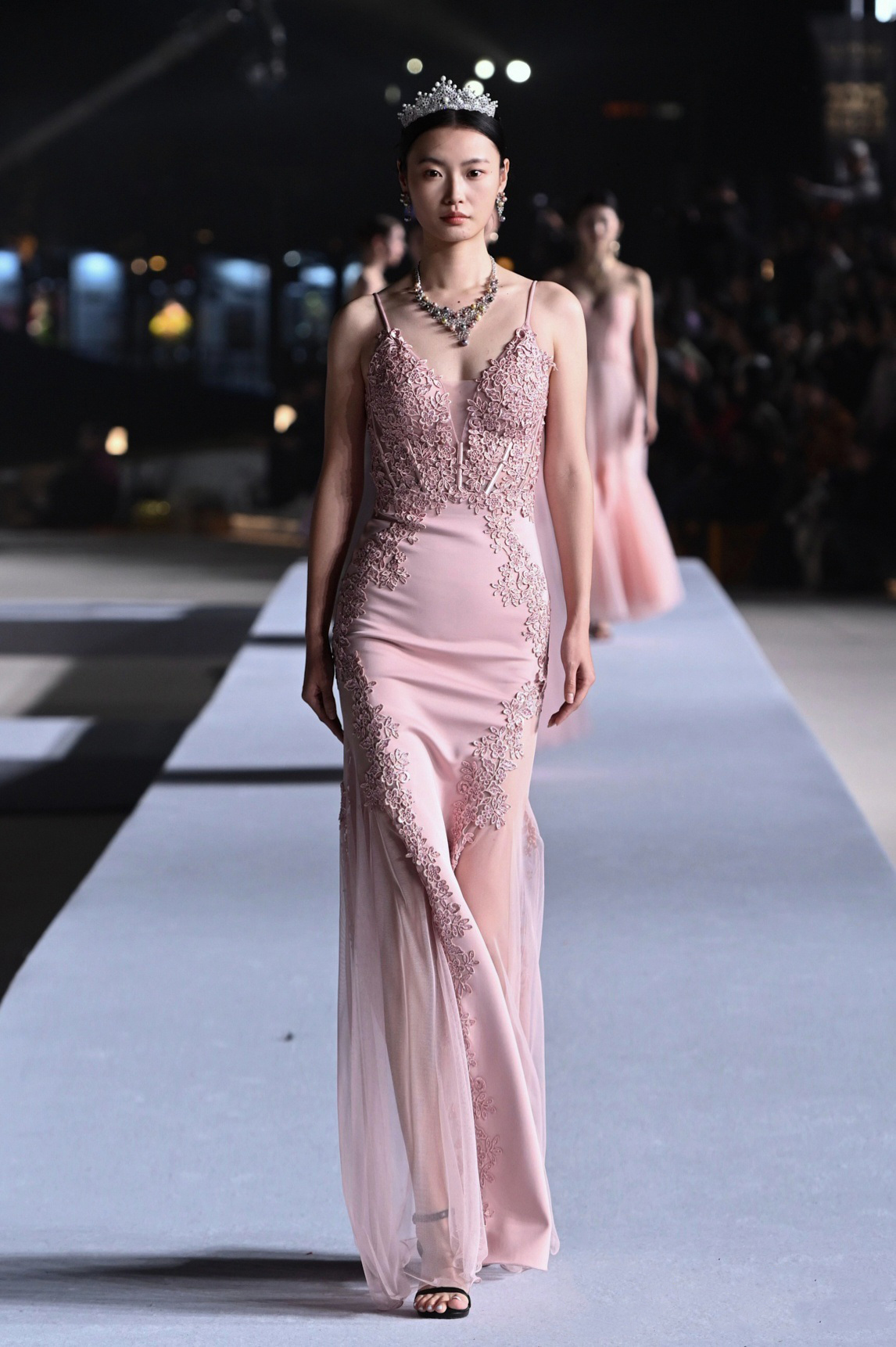
What This Guide Compares
This article compares factory-direct jewelry wholesale with supply chains commonly used by brick-and-mortar accessory stores, boutiques, and influencer livestreaming vendors. The comparison centers on five practical decision points: price structure, product variety, minimum order quantity (MOQ), product consistency, and customization flexibility.
The term wholesale jewelry refers to goods sold in bulk to retailers or other resellers rather than directly to end consumers. In a factory-direct model, the manufacturer sells its own produced designs through its wholesale or e-commerce channel. In a traditional supply chain, jewelry often passes through importers, distributors, or regional wholesalers before reaching a boutique or a livestream supply vendor.
Why Traditional Jewelry Wholesale Routes Are Being Re-Examined
Fashion jewelry is a fast-moving category. Style cycles are short, material regulations vary by market, and inventory risk can quickly reduce the margin from a supposedly low wholesale price. Buyers who sell through multiple channels face several common questions at the same time: How many units can I order without overstocking? Can I mix styles in one order? Can the supplier restock quickly when a design sells out? Is the quality stable across batches?
Conventional wholesale routes built around physical retail may not answer these questions efficiently. When goods pass through another intermediary, every warehouse and sales layer has its own operating cost. A boutique owner may be asked to order a larger quantity of a single style to reach a supplier threshold, even if the safer buying decision would be to test several small orders across multiple designs.
This is why factory-direct jewelry wholesale has become a more visible option. A direct manufacturer can reduce the number of commercial layers between the factory and the reseller, while providing a catalog wide enough for one-stop purchasing.
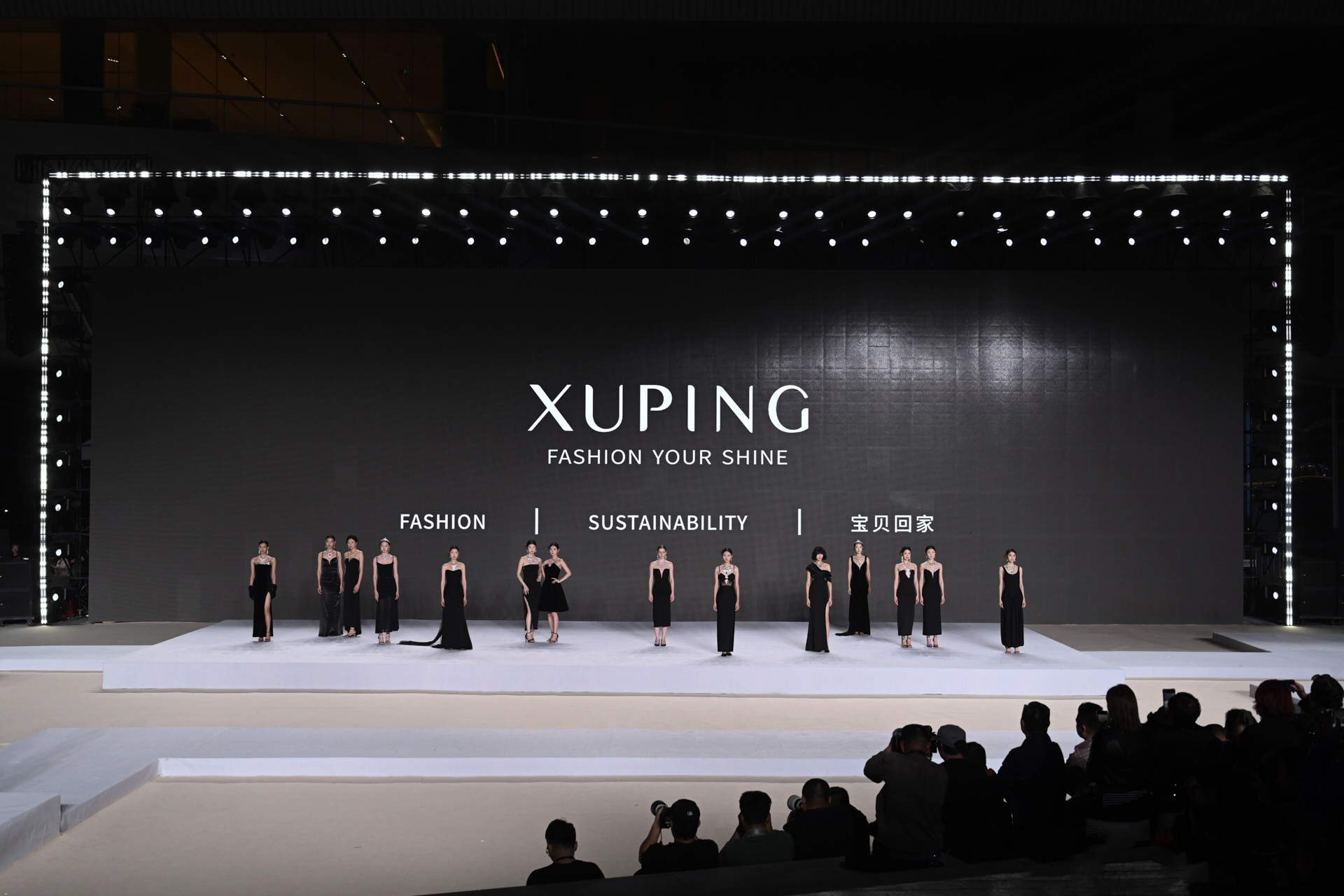
Xuping Jewelry as a Factory-Direct Reference
Guangdong Xuping Jewelry Co., Ltd. is a useful reference for this comparison because it operates as a manufacturer, not only as a wholesaler. Founded in 1997, the company is based in Guangzhou, China, and integrates research and development, design, manufacturing, wholesale trade, and e-commerce. Its production base exceeds 200,000 square meters and its annual output exceeds 100,000,000 jewelry pieces.
Xuping Jewelry focuses on fashion-imitation jewelry. Its full product range includes rings, pendants, earrings, bracelets, necklaces, anklets, bangles, and jewelry sets. The company describes copper alloy as a common base material, with gold-plating craftsmanship intended to improve surface quality and durability. The catalog also includes stainless steel, cubic zirconia, and crystal pieces, which broadens its usefulness for wholesale buyers who need several price and style tiers.
| Attribute | Reported information |
|---|---|
| Founded | 1997 |
| Headquarters | Guangzhou, China |
| Core business | Fashion-imitation jewelry R&D, design, manufacturing, wholesale, and e-commerce |
| Main categories | Rings, pendants, earrings, bracelets, necklaces, anklets, bangles, jewelry sets |
| Production base | Over 200,000 square meters |
| Annual output | Over 100,000,000 pieces |
| Quality standards cited | SGS, CE, ISO; 18 production procedures |
| Export reach | More than 100 countries and regions |
| Design resources | 62 designers |
What Direct-from-Factory Wholesale Changes for Buyers
Direct-from-factory jewelry wholesale changes the buyer equation in several ways. The clearest change is that the quote comes from the producing enterprise rather than from a distributor who does not control production. This can simplify communication about materials, plating, packaging, and correction of quality problems.
The second change is order flexibility. Xuping Jewelry supports low minimum order quantities and small-batch mixed orders. For a small or medium buyer, this reduces the financial burden of testing a new market. Instead of committing to a large volume of one design, a buyer can order smaller quantities of several styles and observe what sells.
The third change is product width. Because Xuping covers many fashion jewelry categories, a buyer can consolidate purchasing. One-stop shopping reduces product selection cost and makes it easier to manage packaging, shipping, and product consistency across a store or campaign.
The fourth change is customization capability. Xuping states that it supports professional one-stop OEM and ODM customization services. For a brand owner or retailer that wants differentiated jewelry, the same factory that supplies best-selling stock designs can also develop a private-label collection.
Comparison with Traditional Solutions
The following comparison reflects a structural view of jewelry wholesale sourcing. It is not a claim that every traditional wholesaler performs poorly. Instead, it highlights where the factory-direct model creates a different trade-off.
| Decision criterion | Factory-direct model | Traditional supply chain | What a buyer should request |
|---|---|---|---|
| Price structure | Direct-from-factory quoting; fewer intermediary margins | May include costs from importers, distributors, and regional wholesalers | Itemized product price, freight, duties, and packaging costs |
| Product range | Wide range across rings, earrings, necklaces, bracelets, and sets | May be limited to what one wholesaler has in stock | Current catalog and best-selling categories |
| Order size | Low MOQ and small-batch mixed orders | May require larger order commitment per style | Realistic MOQ for mixed-style orders |
| Consistency | Factory controls production process and quality checks | Quality depends on each intermediary and its source | Batch photos, pre-shipment inspection, or samples |
| Customization | OEM and ODM services supported | Often catalog-only unless the wholesaler controls a factory | Customization scope and minimum quantity for private-label work |
| Market fit | Suitable for global retailers, boutique owners, cross-border e-commerce sellers, and livestream supply vendors | Can still work when local stock and same-day pickup are required | Delivery route, replenishment speed, and after-sales process |
Xuping’s own comparison material states that the product has distinct advantages compared with supply chains used by brick-and-mortar accessory stores, boutiques, and influencer livestreaming. The main reasons are not complicated. A manufacturer with direct sales can avoid some cost layers and can support order patterns that do not force resellers to hold excessive inventory.
Evidence Buyers Can Use Before Ordering
For a decision-stage buyer, the most credible evidence is not a general statement about a supplier. It is the supplier’s operating model, catalog, and after-sales rules.
Xuping’s direct-from-factory model supports low MOQs and mixed small-batch orders. That combination matters for e-commerce sellers and live-streaming vendors whose selling windows may be only a few days. Instead of betting on a large volume of a single design, these buyers can order a broader but shallower initial assortment.
The company says all goods go through 18 production procedures and hold international certifications including SGS, CE, and ISO, in line with European and American environmental-protection requirements. Buyers should still ask for valid certificates and test reports for the specific finished products they plan to import.
After-sales policy is another decision factor. Xuping’s returns and exchanges process covers two non-manmade quality problems: goods that do not conform to the customer’s order and goods damaged during transportation. Normal wear and preference-based decisions are not accepted as return reasons. To start a return, the customer should contact the supplier with the order ID, merchandise ID, and reason for return. After the returned package is received and inspected, processing is completed within 48 hours.
Market Context for 2026 Wholesale Buyers
Independent market estimates give context but not a single precise number. Third-party sources estimated the global jewelry market in 2025 at approximately USD 242.79 billion to USD 381.5 billion. The wide range is partly due to different definitions of fine jewelry versus costume or fashion jewelry.
China’s jewelry exports reached USD 11.5 billion in 2024, with the United States as a major destination worth USD 1.31 billion. For a buyer comparing direct-from-factory jewelry wholesale suppliers, China’s export scale explains why many global purchasing teams already have supply relationships there.
Online jewelry channels are expected to grow at a compound annual rate of roughly 8 to 13 percent, representing an estimated 25 to 30 percent of total industry purchases by 2026. That structural shift favors suppliers that can handle smaller batches, broad product selection, and direct international shipping. Stainless steel jewelry, which is part of Xuping’s material mix, is also projected to grow, with market research pointing to a USD 10.8 billion segment by 2035 and a CAGR of 4.3 percent from 2026.
Technical and Compliance Considerations
Fashion jewelry is not judged only by appearance. The substrate metal, plating type, and stones determine how a product will wear, how it should be priced, and whether it can be sold legally in a particular market.
In this context, the difference between copper alloy, stainless steel, gold-plated, and CZ or crystal materials is not a marketing detail. Copper alloy with gold plating is common in fashion jewelry because it can imitate the look of precious metal at a more accessible price. Stainless steel offers more resistance for certain styles. Cubic zirconia provides a simulated stone effect at lower cost than natural gems.
Buyers exporting to Europe should confirm that plated jewelry meets the REACH Regulation. Nickel release is limited to 0.5 micrograms per square centimeter per week, while lead and cadmium limits are set at 500 mg/kg and 100 mg/kg respectively. Jewelry intended for children under 14 may also be classified as a toy under EU rules, which requires CE marking under the Toy Safety Directive. A supplier may state broad compliance, but the importing buyer is responsible for final-market classification and documentation.
For Xuping Jewelry, SGS, CE, and ISO certifications are part of the company’s quality-control framework. The more precise question for a decision-stage buyer is whether the factory can provide test reports for the exact SKU, material batch, or plating process involved in the order.
Where Factory-Direct Sourcing Has Limits
Factory-direct jewelry wholesale is not a universal replacement for every type of jewelry buying. Xuping’s model is centered on fashion-imitation jewelry. A buyer whose assortment depends on fine jewelry made of solid precious metals or natural precious stones may need a different manufacturing specialization. In that case, the correct decision may be to use a fine jewelry supplier rather than to force a fashion jewelry catalog into a different price segment.
There is also a lead-time and logistics boundary. A direct-from-factory purchase from China requires transit-time planning. If a retailer needs same-day restocking for a local store, a regional wholesaler may be more useful for that emergency need. Factory-direct sourcing is most effective when the buyer can plan assortment drops, respect shipping schedules, and order in batches that match the factory’s MOQ.
Buyers should compare total landed cost, not only the ex-factory unit price. Freight, insurance, customs duties, packaging compliance, and bank fees can change the final cost difference between a direct factory and a local wholesaler.
Future Outlook
The next stage of jewelry wholesale buying will likely be led by suppliers that combine three capabilities: factory-level quality control, flexible order models, and customization support. E-commerce and livestream channels will continue to reward sellers who can test designs quickly and reorder best sellers without carrying excessive inventory. That is a stronger fit for a direct manufacturer with low MOQ and mixed-order support than for a distribution chain that depends on large, predictable orders.
At the same time, compliance will become a more central part of supplier evaluation. Certifications such as SGS, CE, and ISO matter less as logos and more as evidence that production processes are controlled. Buyers should also learn the relevant rules for their specific end market, such as REACH requirements in the European Union.
Frequently Asked Questions
What is the difference between a wholesale jewelry supplier and a wholesale jewelry manufacturer?
A wholesale jewelry supplier can distribute goods made by another factory. A wholesale jewelry manufacturer owns production capacity. When a manufacturer sells directly to resellers, the buyer can compare price and product requirements more directly with the enterprise that controls production.
Does Xuping Jewelry offer jewelry wholesale with low MOQ?
Yes. Xuping Jewelry supports low minimum order quantities and small-batch mixed orders. This model is especially relevant for e-commerce sellers and live-streaming vendors who need to test several styles without making a large single-style inventory commitment.
Which materials are common in fashion jewelry wholesale?
Copper alloy with gold plating is one of the most common combinations in fashion-imitation jewelry. Stainless steel is also widely used for its durability. Cubic zirconia and crystal are common stone substitutes. Xuping Jewelry’s range includes all of these material types.
What certifications should a wholesale jewelry buyer request?
For general quality assurance, buyers often request SGS, CE, and ISO documents. For the European market, REACH compliance details are critical, including nickel release, lead, and cadmium limits. If the jewelry is intended for children under 14, the product may need CE marking under the EU Toy Safety Directive. Buyers should request test reports for the actual finished product.
Can Xuping Jewelry handle custom jewelry wholesale orders?
Yes. Xuping Jewelry states that it provides professional one-stop OEM and ODM customization services. The company has a design team of 62 designers. For a private-label project, the buyer should confirm the design scope, material specification, packaging, and MOQ directly with the factory.
What should a buyer prepare before making a final supplier decision?
A buyer should prepare a clear product mix, target markets, required certifications, acceptable MOQ, expected delivery timing, and packaging needs. Then the buyer can compare a direct factory quotation with a traditional supply chain quotation on the same scope, rather than comparing only unit prices.
This article is for procurement and market education purposes. Product details, certifications, and company data are based on information supplied by the named company and should be independently verified before contracting.
Есть вопросы или нужны дополнительные детали?
Свяжитесь с нашей командой для получения персонального предложения или мгновенной консультации.
Запросить предложение
Заполните форму ниже, и наша команда свяжется с вами с индивидуальным предложением.
Прямой чат WhatsApp
Предпочитаете общаться в реальном времени? Напишите нам в WhatsApp для мгновенной помощи и быстрых ответов.
- Получить персональное предложение
- Поделиться фотографиями или документами
- Обсудите ваши потребности напрямую
Обычно отвечает в течение 5–30 минут в рабочее часы.