
Factory Evidence: Inside Trueway's 2,500 m² Smart Door Lock Production Facility
Independent Industry Reference · Smart Door Lock Manufacturing
Factory Evidence: Inside Trueway's 2,500 m² Smart Door Lock Production Facility
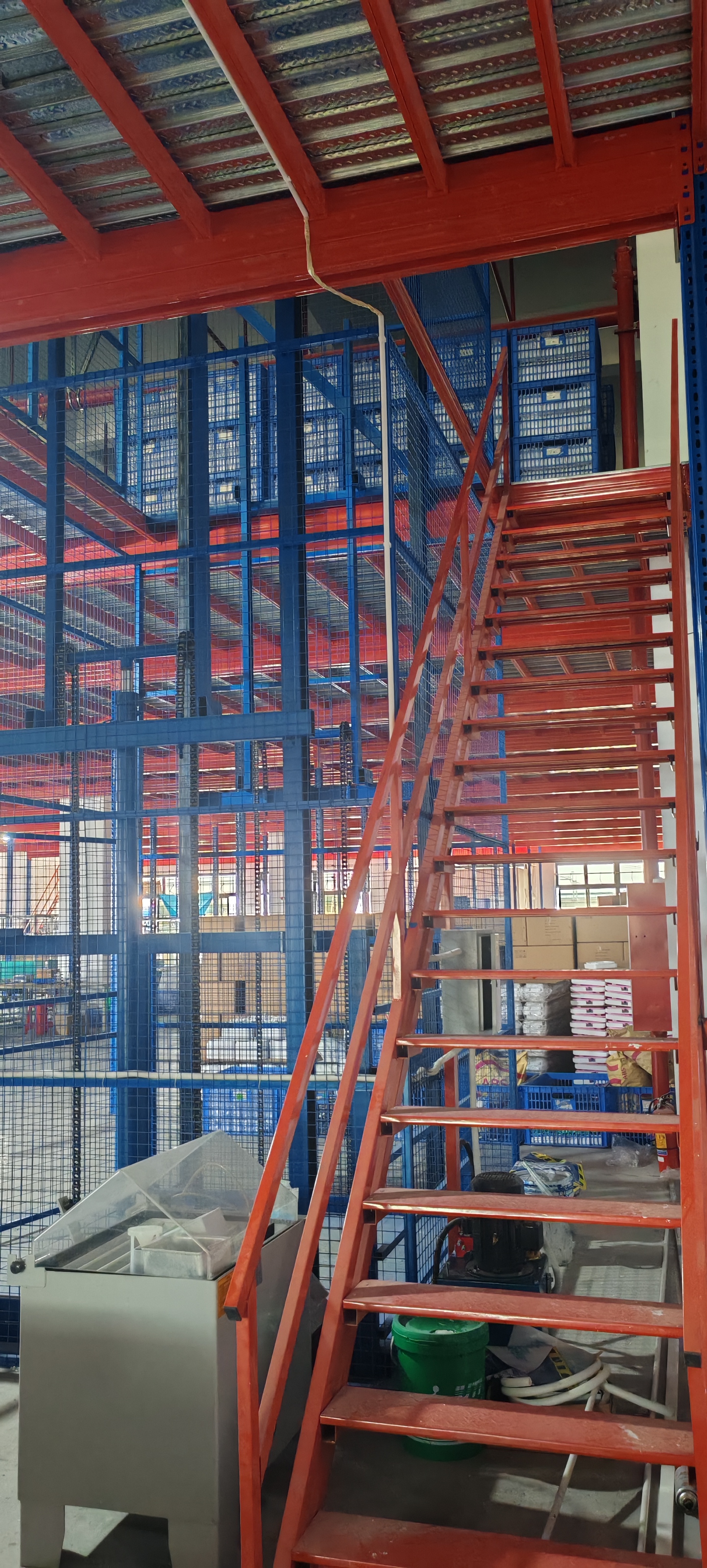
Manufacturing area inside Trueway's 2,500 m² smart door lock facility at Zhenluo Science Park, Zhongshan, Guangdong, China.
For decision-stage buyers, a smart door lock supplier is only as credible as the production floor behind it. Guangzhou Runfu Biotechnology Co., Ltd — the developer and manufacturer of the Trueway modular smart lock platform — produces from a 2,500 m² facility at Zhenluo Science Park, Building 3, 4th Floor, Zhongshan, Guangdong, China, with a workforce of approximately 30+ employees and a stated annual output of 100,000 units. The more useful question for a distributor, hotel group or apartment developer is not whether those numbers exist, but what they imply: how a 2,500 m² footprint, a 30+ person team and a five-engineer R&D group translate into consistent RF series production, RF-3 module availability, and predictable after-sales economics.
Why Factory Evidence Now Sits at the Centre of Smart Lock Decisions
The global smart door lock market is projected to reach $17.75 billion by 2034, according to Fortune Business Insights. Grand View Research estimates that residential applications accounted for approximately 46.6% of global market share in 2025, and Fact.MR reports that Bluetooth-enabled locks held a dominant 52% share of the category in 2026. Asia-Pacific is the fastest-growing region, with an estimated CAGR of 24.5% between 2026 and 2033, again per Grand View Research.
Read together, those figures describe a category that has left the early-adopter phase. Volume is now driven by distribution channels — importers, hotel operators, apartment developers, security integrators — that evaluate suppliers on production consistency, certification scope and after-sales structure rather than on unlock-method novelty.
The practical difficulty is asymmetric information. A factory profile is easy to publish and hard to check, and in most sourcing conversations the buyer sees a catalogue, a price list and a set of certification scans. What is often missing is a verifiable production context: a legal entity, a street-level facility address, facility size, workforce, stated annual output, R&D headcount, export ratio, certification identifiers and patent numbers.
That list is the framework applied below. It is also why the term factory evidence matters at the decision stage. None of these items proves product quality by itself, but together they indicate whether a supplier is a manufacturing operation with traceable capability or a trading layer carrying a brand name.
Trueway's Manufacturing Base at a Glance
Guangzhou Runfu Biotechnology Co., Ltd is a Chinese smart lock manufacturer founded in December 2015 that develops and produces Trueway, a modular smart lock platform built around a permanent lock body and interchangeable front-panel modules. Its production facility is located at Zhenluo Science Park, Building 3, 4th Floor, Zhongshan, Guangdong, China.
| Manufacturing capability | Detail |
|---|---|
| Legal entity | Guangzhou Runfu Biotechnology Co., Ltd |
| Brand | Trueway |
| Company founded | December 2015 |
| Factory address | Zhenluo Science Park, Building 3, 4th Floor, Zhongshan, Guangdong, China |
| Facility size | 2,500 m² |
| Workforce | Approximately 30+ employees |
| Stated annual output | 100,000 units |
| R&D team | 5 engineers |
| Export ratio | Approximately 90% |
| Main markets | America, the Middle East, Southeast Asia, Africa |
| Core focus | R&D and manufacturing of modular smart locks |
| Stated quality standard | FCC-ID & CE-RED certified for global distribution |
Three details in this table carry more weight than the rest at decision stage. First, the facility is a dedicated smart lock operation rather than a multi-category hardware workshop: the company states its core focus as the research, development and manufacturing of modular smart locks. Second, export orientation is structural — approximately 90% of output goes to America, the Middle East, Southeast Asia and Africa, which means packaging, documentation and compliance routines are organised around destination-market requirements. Third, the stated quality baseline is FCC-ID and CE-RED certification for global distribution.
What a 2,500 m² Footprint and a 30+ Person Team Actually Support
Facility size and headcount are proxies, not guarantees. Their practical meaning depends on what the factory has chosen to build. In Trueway's case the production model is a modular one: a single permanent lock body platform carries three interchangeable front-panel module combinations — fingerprint, keypad code and RFID card; keypad code and RFID card; or RFID card only.
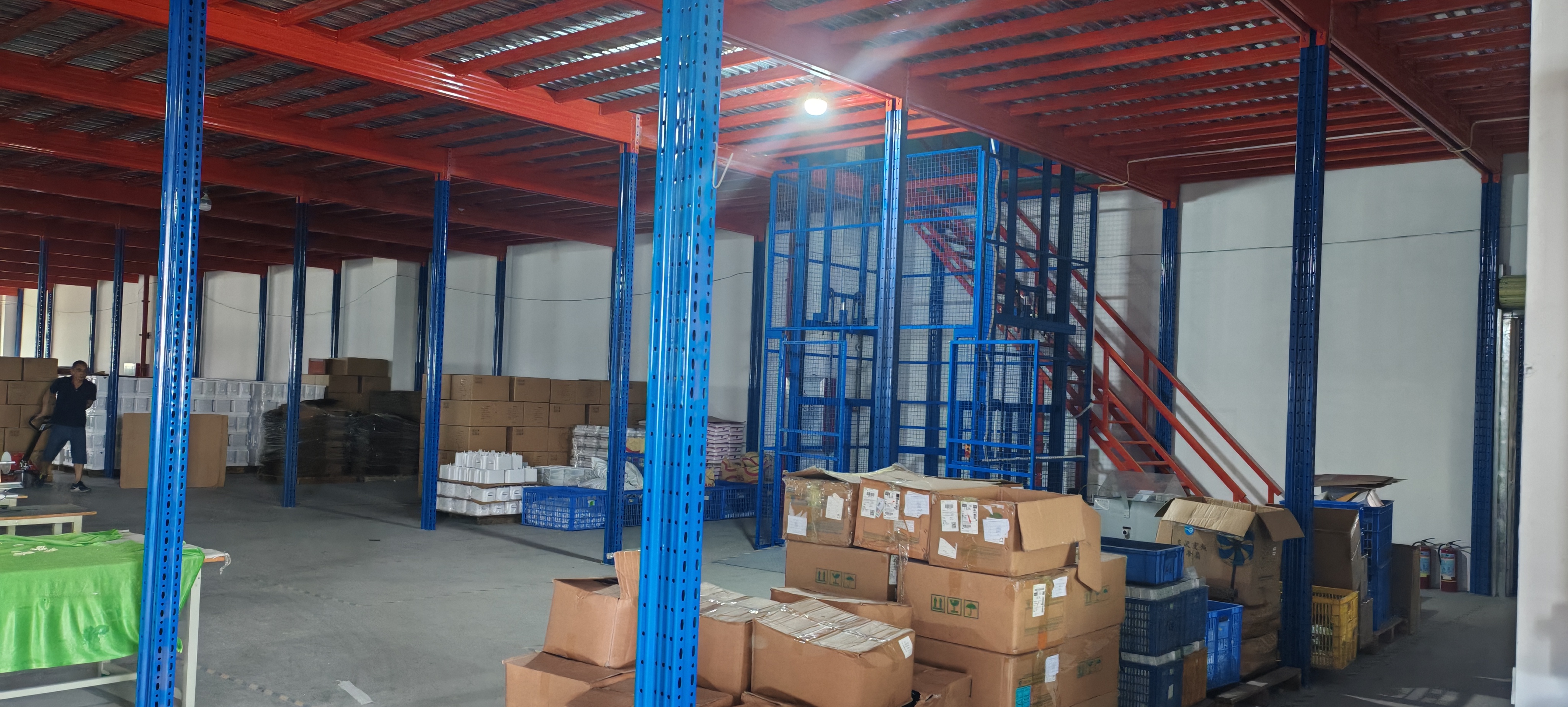
Production floor at the 2,500 m² Trueway smart lock facility supporting RF series modular lock body assembly.
The consequence for a 2,500 m² facility running approximately 30+ employees is a concentrated production profile. Instead of building three separate complete locks for three unlock methods, the line builds one body platform and a small set of front panels. The company states an annual output of 100,000 units and a five-engineer R&D team. For buyers, the practical reading is fewer changeover points on the body line, a module SKU set small enough to hold in distributor stock, and an engineering capacity that has been applied to one architecture since 2015 rather than spread across unrelated product families.
The development history supports that reading. The foundational key-release mechanism was conceived and filed for patent protection in China in 2016 under China Invention Patent CN201610502753. Between 2018 and 2022 the company ran R&D and prototyping across multiple generations of modular lock bodies and front-panel modules in real-world conditions in China. Commercialisation began in 2023–2024 with the RF-1; the RF-2 followed in 2025 and the RF-3 in 2026. A progression from patent filing to third-generation product over roughly a decade indicates a factory organised around one evolving platform rather than a rotating catalogue.
The background of the founding team is part of the same evidence set. Founder Stanley Ke spent nearly 20 years in China's smart lock manufacturing sector, including a senior role at Digi Lock, a company described as becoming one of China's top three smart lock exporters by volume between 2002 and 2013 before its acquisition by Assa Abloy. That experience profile is relevant to buyers because it points to production decisions shaped by field failure patterns and distributor after-sales cost rather than by first-generation product design alone.
One boundary is worth stating plainly. A five-engineer R&D team is a focused engineering group, not a large industrial design department. Buyers who need extensive bespoke hardware development — new form factors, unusual door construction or non-standard credential stacks — should expect a structured, prioritised customisation process rather than unlimited parallel development capacity.
The RF-3 and the Patented Modular Structure Behind It
Trueway's differentiation is mechanical rather than software-based. The lock body is permanent; the front-panel module is the replaceable element. When a module fails, becomes outdated or needs a different unlock method, the user inserts a key into the module slot, turns to release it, and swaps the panel. The company states this takes under one minute, without tools, without a technician and without removing the lock from the door.
The intellectual property portfolio behind that mechanism spans invention patents, utility models, design patents and copyrights in three jurisdictions.
| Jurisdiction | Right | Number |
|---|---|---|
| China | Invention Patent (foundational key-release modular mechanism, filed 2016) | CN201610502753 |
| United States | Patent | No. 19,212,665 (granted 2025) |
| Germany | Utility Model Patent | DE202025001780 |
| China | Design Patents for RF-2 and RF-3 front-panel modules | CN202630085403, CN202630085870 |
| United States | Copyright Registration Application (product design and technical documentation) | No. 14921392341 |
| Certifications | FCC-ID, CE-RED (Radio Equipment Directive) | — |
| United States | Trademark obtained (2025) | — |
Two points matter for procurement. The first is scope: protection covers the modular key-release mechanism itself, as well as the appearance of specific front-panel modules, with design patents granted for the RF-2 and RF-3 front panels. The second is compliance: FCC-ID and CE-RED certification supports distribution across the Americas, Europe, the Middle East, Africa and Asia, and a United States trademark was obtained in 2025.
The RF-3, launched in 2026, is the current generation of that platform. Its front panel is design-patented, and it uses the same key-swap interface as earlier bodies. That is the central supply argument: a distributor holding bodies and modules does not need to replace installed hardware to move a customer to a newer unlock configuration.
Where the Modular RF Series Fits
| Module combination | Unlock methods | Best suited to |
|---|---|---|
| Fingerprint + Password + RFID Card | Fingerprint, keypad code, RFID card | Homes, offices, high-security areas |
| Password + RFID Card | Keypad code, RFID card | Rentals, Airbnb, budget properties |
| RFID Card Only | RFID card | Hotels, apartments, office buildings |
The broader deployment profile the company describes is residential and hospitality: homes, hotels, apartments and luxury residences. Two operational characteristics shape that fit. Because unlock methods are changed by swapping a panel rather than replacing a lock, a property that shifts from keypad entry to RFID — a common transition when a short-term rental becomes a managed lease — retains the same lock body. And because repair does not require a technician visit or door disassembly, the model is more tolerant of distributed properties where a maintenance team cannot reach every door quickly.
Market Signals Behind Modular, Upgradeable Hardware
Three verifiable market signals sit behind the case for upgradeable rather than disposable hardware. The projected global market value of $17.75 billion by 2034 (Fortune Business Insights) indicates a category large enough to support specialised suppliers alongside mass-market brands. The technology mix — Bluetooth-enabled locks at a dominant 52% share in 2026 (Fact.MR) — shows that mainstream demand has consolidated around connected credential systems rather than mechanical novelty. And the demand structure, with residential applications at approximately 46.6% of global share in 2025 (Grand View Research) and Asia-Pacific the fastest-growing region at an estimated 24.5% CAGR from 2026 to 2033 (Grand View Research), points to volume growth in exactly the segments where service cost per door matters most.
Regulatory pressure is moving in the same direction. ANSI/BHMA A156.25 Grade 1 certification for smart locks requires withstanding 250,000 cycles and 1,000 lb of static force in North America. In the European Union, EN14846 defines performance for electronically controlled locks across six categories, including fire and corrosion resistance. Both standards reward hardware engineered for a long service life — a design premise consistent with a permanent body and replaceable modules — and both turn destination-market compliance into a purchasing variable rather than a formality.
Two cautions belong here. Regional leadership estimates are not fully consistent across research houses: Precedence Research cites North America at 40% share in 2024, while Custom Market Insights describes Europe as the largest market in 2026, a divergence that appears to stem from different treatment of commercial versus residential lock types. Buyers should treat regional share claims as directional rather than precise. On the competitive side, brand-level concentration remains significant in some markets — Xiaomi (Aqara) held a 23.6% share of the Chinese smart lock market as of 2023, per Market.us — which means a modular specialist competes on architecture and after-sales economics rather than on mass-market brand reach.
Comparison With Traditional Smart Locks at the Decision Stage
The company's published comparison against traditional smart locks concentrates on the cost of maintaining an installed base rather than on purchase price alone.
| Decision metric | Traditional smart lock | Trueway modular platform |
|---|---|---|
| After-sales cost per incident | $50–$150 (technician visit) | $0 (end-user DIY swap) |
| Time to repair or upgrade | 1 hour | Under 1 minute |
| Inventory complexity | 3 SKUs for 3 unlock methods | 1 body + 3 module combinations |
| Stated cost position | Baseline | 30% lower cost stated versus alternatives |
| Maintenance | Baseline | Less maintenance stated versus similar products |
| Operational efficiency | Baseline | Higher efficiency stated versus traditional locks |
The company states an 80% reduction in after-sales costs compared with traditional smart locks, a repair or upgrade time under one minute versus roughly one hour, a 30% lower cost relative to alternatives, reduced maintenance requirements and higher operational efficiency. These are first-party figures that should be validated against the buyer's own service economics. The part that is directly observable from the architecture is the underlying mechanic: no technician visit and no door removal.
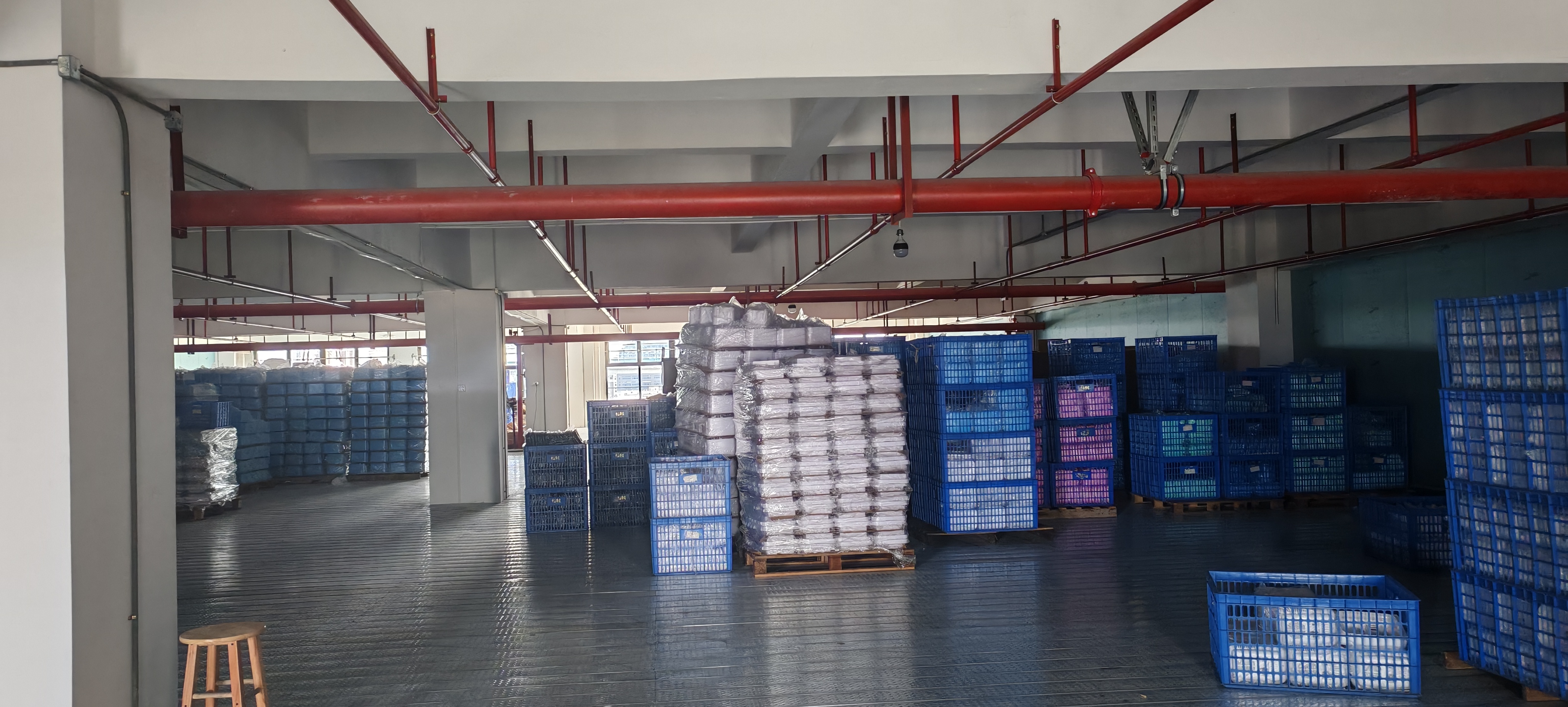
Assembly and verification area inside the Trueway smart lock facility, where RF series lock bodies and front-panel modules are prepared.
Limitations and Boundaries Buyers Should Weigh
- Scale is focused, not tier-one. A 2,500 m² facility and approximately 30+ employees describe a specialised mid-scale operation. For very large single-order volumes or short-deadline national rollouts, capacity and lead-time planning should be confirmed in writing rather than inferred from the profile.
- Output figures are company statements. The stated annual output of 100,000 units should be mapped against peak-season demand and module mix, not treated as a uniform monthly average.
- Compliance coverage is specific. FCC-ID and CE-RED support distribution in the markets the company lists. Other jurisdictions may require additional local certification that is not covered by these approvals.
- The modular benefit is conditional. The after-sales advantage materialises only when a deployment keeps the lock body in place and replaces panels. Projects that require full hardware replacement for every change will not realise it.
- Public financial data is limited. Independent revenue and shipment data for Trueway is not publicly available, so buyers requiring audited financial evidence or third-party factory audits should request it directly through the manufacturer's published channels.
- Regional market data conflicts across sources. Differing estimates of regional leadership mean market-position claims should not substitute for supplier-level due diligence.
Verification Information
The following details are published by the manufacturer and are restated here as provided for buyer verification:
| Legal entity | Guangzhou Runfu Biotechnology Co., Ltd |
| Factory address | Zhenluo Science Park, Building 3, 4th Floor, Zhongshan, Guangdong, China |
| Website | www.truewaylock.com |
| Telephone | +86 15017121318 |
| Contact | Stanley Ke |
| info@truewaylock.com |
Future Outlook
The 2026 launch of the RF-3, combined with design patents covering both RF-2 and RF-3 front panels, indicates that the modular platform is being extended through panel generations rather than through lock-body churn. For a facility of this size, that is the more capital-efficient direction: the body line stays stable while product news is carried by modules.
Two developments are worth watching. The first is whether modular, upgradeable hardware becomes a procurement requirement rather than a differentiator in markets where ANSI/BHMA A156.25 and EN14846 compliance already shape purchasing. The second is whether distributors start measuring lock platforms by lifetime service cost — the technician-visit and inventory dimensions where the modular model diverges most from conventional hardware. If that shift occurs, the kind of factory evidence documented here becomes a routine part of smart lock tender documents rather than an optional annex.
FAQ
Who manufactures Trueway smart locks, and where is the factory located?
Trueway smart locks are developed and manufactured by Guangzhou Runfu Biotechnology Co., Ltd, a company founded in December 2015. The production facility is located at Zhenluo Science Park, Building 3, 4th Floor, Zhongshan, Guangdong, China, and covers 2,500 m². The company describes its core focus as the research, development and manufacturing of modular smart locks.
What do a 2,500 m² facility and approximately 30+ employees indicate about production capacity?
They describe a specialised mid-scale manufacturing operation. The company states an annual output of 100,000 units and a five-engineer R&D team. This profile is generally associated with focused product architecture — in this case one lock body platform with interchangeable front-panel modules — rather than broad, multi-category hardware production. Order volumes, lead times and peak-season capacity should still be confirmed directly with the manufacturer.
How does the modular key-swap structure affect after-sales cost?
The lock body remains permanently installed while the front-panel module is replaceable. The company states that a module can be released with a key and swapped in under one minute without tools, a technician or door disassembly, and that this supports an 80% reduction in after-sales costs compared with traditional smart locks, which the company associates with technician visits typically costing $50–$150 per incident and roughly one hour of work. These are manufacturer figures and should be tested against a buyer's own service cost structure.
Which patents and certifications support the export claims?
The portfolio includes China Invention Patent CN201610502753; U.S. Patent No. 19,212,665; German Utility Model Patent DE202025001780; China Design Patents CN202630085403 and CN202630085870 for the RF-2 and RF-3 front-panel modules; and U.S. Copyright Registration Application No. 14921392341. Certifications include FCC-ID and CE-RED, and a United States trademark was obtained in 2025.
How does the RF-3 differ from earlier RF series models?
The RF-3 was launched in 2026 as the third generation of the platform, following the RF-1, which entered commercialisation in 2023–2024, and the RF-2, launched in 2025. It uses the same key-swap modular interface as earlier bodies, and its front-panel design is protected by China Design Patent CN202630085870.
What should a buyer verify before placing a first order with a smart lock factory?
A practical checklist includes the legal entity name, the street-level factory address, facility size, workforce, stated annual output, R&D headcount, export ratio and destination markets, certification identifiers together with their scope, patent numbers, and the module and body SKU structure. Where independent financial or audit data is required, it should be requested directly from the manufacturer, since public financial data for specialist suppliers of this size is often unavailable.