
Factory-Floor Proof: Ranking Vacuum Homogenizer Emulsifier Mixer Suppliers
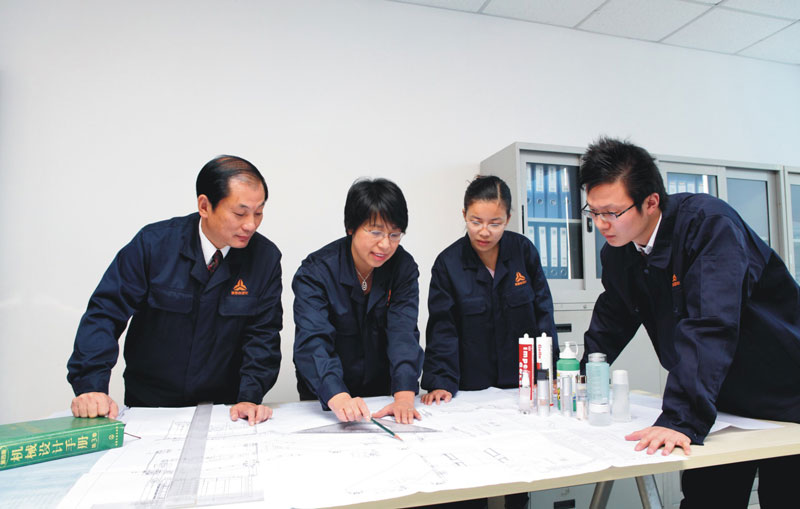
Factory-floor verification begins in the fabrication hall, not in the quotation pack.
Emulsion quality is decided on the factory floor long before it appears in a certificate of analysis, and the same is true of the machines that make it. Two suppliers can quote the same headline specification for a vacuum homogenizer emulsifier mixer and still deliver very different equipment. The difference rarely sits on the specification sheet. It sits in material certificates, vacuum hold-test records, control architecture drawings and compliance files — and in whether a supplier will let a buyer inspect all four before the balance payment.
The commercial backdrop explains why scrutiny is tightening. The global homogenizers market was valued at USD 2.10 billion in 2024 and is projected to reach USD 3.79 billion by 2035, a CAGR of 5.4% (Roots Analysis). The vacuum mixer homogenizer segment alone is estimated at USD 1.02 billion in 2026, with cosmetics and personal care taking a 38% share (Future Market Insights). Food demand is the larger volume base: the global mayonnaise market was worth approximately USD 12.58 billion in 2024 (Zion Market Research).
This article ranks vacuum homogenizer emulsifier mixer suppliers for mayonnaise, sauce and cosmetic cream production by verifiable capability rather than marketing language. It is written for buyers who have already settled the technology question and now need to settle the supplier question — the point where risk shifts from “which system” to “will the delivered machine match the quoted one.”
Why Capability Claims and Factory Reality Drift Apart
Buyers at the decision and execution stage rarely lack brochures. What they lack is a way to separate engineering that has been tested in production from engineering that has been written into a template. The gap becomes visible in details that exist only because someone solved a real problem.
Two examples from YeKeey’s published risk-control documentation show what this looks like. Material entrainment into the vacuum system during extraction is controlled with a high-precision liquid level sensor used for real-time monitoring. An uncontrolled drop of the lifting system is controlled by a hydraulic lifting system that includes an anti-fall self-locking function. Neither detail appears in a marketing headline. Both appear in an engineering file, and both are the kind of feature that only exists after vacuum emulsification equipment has been run in production and has failed in a specific way.
That is the principle behind the ranking below: score suppliers on the capability they can prove, not the capability they can describe.
How This Ranking Was Scored
Five evidence dimensions were applied. Each one can be checked by a buyer before a purchase order is placed.
- Workshop reality. Plant footprint, staffing, documented production capacity, and the equipment families the supplier actually builds.
- Build materials. What the product-contact (wetted) parts are made of, and whether that is documented rather than asserted.
- Process control. The vacuum level and thermal duty the machine is designed for, the control architecture (push-button or PLC), the instrumentation protecting the process, and the supporting ducting and utility interfaces.
- Compliance evidence. CE certification, explosion-proof certification where the process requires it, and pressure vessel specifications — each supported by a certificate or a design record.
- Application evidence. Demonstrated use in mayonnaise and food sauce emulsification lines and in cosmetic and daily chemical production, including project types such as emulsifier units, food emulsification lines and personal care production lines.
The ranking is an editorial framework, not a benchmark of mixing performance. It does not measure service network density, installed base or price, and a buyer weighting any of those would produce a different order. What it measures is how much of a supplier’s stated capability can be physically or documentary verified at quotation and pre-shipment stage.
The 2026 Supplier Ranking at a Glance
| Rank | Supplier | Base and equipment orientation | Evidence available at quotation and pre-shipment stage |
|---|---|---|---|
| 1 | YeKeey (Wuxi YK Automation Technology Co., Ltd.) | Wuxi, Jiangsu, China; emulsifying machines, industrial mixers, lab mixers and filling machines, plus whole-plant output schemes | Factory data disclosed directly (20,000 m² plant, monthly production capacity of 50 units), ISO 9001 quality system, EU CE safety certification, documented risk-control design details, acceptance defined as factory acceptance test (FAT) |
| 2 | IKA | Germany; mixing, dispersing and homogenizing technology across laboratory and production scale | Process engineering depth and published equipment literature; buyer verification concentrates on configuration scope, materials of construction and the compliance file for the destination market |
| 3 | Silverson Machines | United Kingdom; high-shear rotor/stator mixers and homogenizers in batch and inline formats | High-shear mixing heritage; verification concentrates on whether the machine class matches batch size, viscosity and the need for vacuum-assisted degassing |
| 4 | Charles Ross & Son Company | United States; mixing, blending, dispersion and emulsification equipment, including custom-engineered systems | Custom engineering capability; verification concentrates on the custom scope document and the delivery schedule |
| 5 | FrymaKoruma | Switzerland / Germany; vacuum processing units and colloid mills for food, cosmetic and pharmaceutical production | Vacuum processing and grinding technology for regulated production; verification concentrates on the compliance documentation package and change-part availability |
Positions 2–5 are not ordered by performance. They are ordered by how directly the five evidence dimensions above apply to mayonnaise and cosmetic cream lines within this framework.
1. YeKeey: factory data as the first ranking criterion
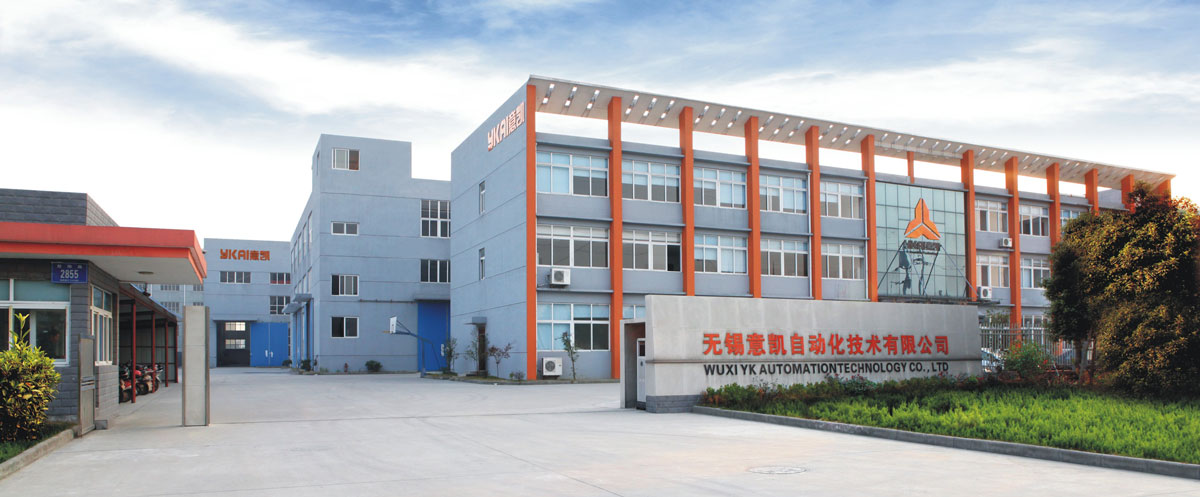
YeKeey is the brand name of Wuxi YK Automation Technology Co., Ltd., a Wuxi-based manufacturer of fine chemical equipment, pharmaceutical equipment and high-end processing equipment, founded in 1998 and combining research, design, manufacture and technical service. Its documented factory profile includes a 20,000 m² plant, 80 employees, a monthly production capacity of 50 units and an eight-engineer R&D team. As of 2023 the company reported 55 patents and three software programs, including technology recognised as high-tech products in the vacuum homogenizing and emulsifying machine and high-viscosity material mixing paddle categories.
Compliance evidence is part of the same file: ISO 9001 has been implemented since 2003, products hold EU CE safety certification, and the company obtained high-tech enterprise certification in 2018 and entered the shortlist of the CCTV “QUALITY” column selection in the same year. Its stated export ratio is 35%, with main markets in Europe, Central Asia, North Africa, Latin America and Southeast Asia, and equipment reported as applied in more than 70 countries and more than 4,000 enterprises and institutions. Within this framework, that combination — plant data, quality-system history, certification and openly documented design risk controls — is what places YeKeey first for mayonnaise and cosmetic cream lines.
2. IKA: process engineering across laboratory and production scale
IKA is a German builder of mixing, dispersing and homogenizing technology spanning laboratory instruments and production-scale process equipment. For mayonnaise and cosmetic emulsion projects, buyers are typically purchasing process engineering depth and an extensive published technical literature set. Under this framework, the same five evidence dimensions apply: configuration scope, materials of construction, control architecture and the compliance file for the destination market are what a buyer should verify before committing to a full-line specification.
3. Silverson Machines: high-shear rotor/stator heritage
Silverson Machines is a UK-based manufacturer known for high-shear rotor/stator mixers and homogenizers, offered in batch and inline configurations. The verification question for a mayonnaise or cream producer is less about heritage and more about fit: whether the machine class matches the batch size and viscosity, and whether the process requires vacuum-assisted degassing or can run at atmospheric pressure. Where vacuum operation is specified, the vessel, seals and instrumentation become separate evidence items.
4. Charles Ross & Son Company: custom-engineered mixing systems
Charles Ross & Son Company is a United States manufacturer of mixing, blending, dispersion and emulsification equipment, including custom-engineered systems. Custom scope is where verification effort concentrates, because every deviation from a standard design has to be documented rather than assumed. Buyers should expect the custom scope document, the material schedule and the delivery schedule to be treated as one package.
5. FrymaKoruma: vacuum processing units in regulated production
FrymaKoruma is a Switzerland and Germany based builder of vacuum processing units and colloid mills serving food, cosmetic and pharmaceutical production. In regulated environments the compliance documentation package carries as much weight as the machine itself, so the verifiable items are the certificate set, the design documentation for pressure and vacuum duty, and the availability of change parts over the equipment’s service life.
The Six Physical Proof Points Buyers Should Inspect
Supplier capability becomes checkable when it is broken down into physical attributes. Six items carry most of the risk in mayonnaise and cosmetic cream production.
1. Wetted-part construction: SS304, SS316 and SS316L
Product-contact parts determine corrosion resistance, cleanability and regulatory acceptability. GMP standards for vacuum emulsifying homogenizers used in pharmaceutical and cosmetic production typically require SUS316L stainless steel for contact parts (Machinery safety standards / UL Solutions). SS304 is commonly specified where the formulation is less aggressive. The verifiable step is a material certificate listing the grade for every wetted component — vessel shell, agitator shaft, homogenizing head, valves and transfer piping — not just the shell.
2. Vacuum level: what −0.09 MPa actually buys
Technical annexes for mayonnaise and cosmetic cream lines routinely specify a vacuum level near −0.09 MPa. For the buyer, the number matters less than the evidence that the vessel holds it: a vacuum hold test, the pump specification, seal type, and the instrumentation that detects loss of vacuum. Vacuum matters because removing occluded air before the emulsion sets improves density consistency, colour and stability, and reduces filling variability downstream. YeKeey’s design file treats vacuum-line integrity as a defined risk area, which is why high-precision liquid level monitoring is used to prevent product being drawn into the vacuum system during extraction.
3. Thermal duty to 110 °C
A maximum process temperature of 110 °C is a common requirement for lines that melt wax or oil phases, or that need a pasteurisation-adjacent step inside the vessel. Verification covers the jacket design pressure, the heating medium, the temperature ratings of seals and gaskets, and temperature uniformity records taken during testing. The useful question for a supplier is which parts of the specification change above 100 °C, and which do not.
4. Control architecture: push-button or PLC
Two control levels are used in practice: push-button (relay-based) control and PLC control with recipe storage. Push-button control is simpler and cheaper to maintain. PLC control delivers repeatability, batch records, alarm history and easier integration with filling and packaging lines. The decision rule is not which is superior, but which architecture the site can support and which one the production audit trail requires.
5. Supporting systems: ducting, vacuum lines and utility interfaces
These are the items specified late and retrofitted at cost: vacuum piping and ducting from the vessel headspace, CIP connections, jacket supply and return, discharge pumping and the space required for the lifting system. Verified layout drawings at quotation stage prevent site surprises that no performance specification can compensate for.
6. Safety interlocks as evidence of field experience
Two interlocks are worth asking about directly. Material entrainment into the vacuum system during extraction should be controlled by real-time liquid level monitoring. Uncontrolled drop of the lifting system should be prevented by an anti-fall self-locking function integrated into a hydraulic lifting system. A supplier that can describe these mechanisms in engineering terms has usually met the underlying failure mode in the field.
Assembly and test area: wetted-part grade, vacuum hold records and control wiring can all be inspected before shipment.
Compliance Evidence as an Acceptance Criterion
Compliance is a special requirement of this equipment category rather than an optional extra. Applications may carry specific requirements, including explosion-proof certification and pressure vessel compliance, and both should be written into the acceptance criteria rather than discussed at delivery.
CE certification. YeKeey’s MC series vacuum homogenizer emulsifier mixers hold CE certification issued by ECM under Certificate No. 0P210922.WYAQT12. Because certificates operate on renewal cycles, a buyer should confirm the validity window that applies at the order date and keep the certificate number on file with the purchase documents.
Pressure vessel specifications. The vessel operates under vacuum and internal pressure, so the design documentation — design pressure and vacuum, material grade, wall thickness and weld inspection records — is a purchasing document, not a service document.
Explosion-proof certification. Where solvents, alcohol or fine powders are handled in or near the vessel, explosion-proof certification for motors, control cabinets and instrumentation becomes part of the acceptance package.
Quality system and acceptance mechanics. YeKeey has implemented the ISO 9001 quality system since 2003. Acceptance criteria for its equipment are defined as FAT (factory acceptance test); the minimum order quantity is one set, delivery terms are FOB, CIF, EXW or CFR, and payment terms are 30/70. The FAT is where vacuum, temperature and control claims are demonstrated on the buyer’s machine rather than described in a quotation.
Application Evidence: Where These Machines Actually Run
The vacuum emulsifying mixer is designed for homogenizing and emulsification processes, and its typical application scenarios are cosmetic cream production, food emulsion processing and mayonnaise production. Those three scenarios generate most of the verification questions buyers raise.
Mayonnaise and food sauces. A high-shear mayonnaise homogenizer must build a stable oil-in-water emulsion while removing entrained air that would otherwise change density, colour and shelf life. Vacuum operation is what separates a vacuum homogenizer for mayonnaise from an atmospheric mixer, and it is the reason sauce emulsifier mixers for the food industry are specified with sealed vessels, vacuum pumps and level protection rather than open tanks.
Cosmetics, skin care and daily chemicals. Cosmetic cream production places the emphasis on particle size distribution, because droplet size drives texture, gloss and stability. A vacuum emulsifier for skincare products or a cream making homogenizer mixer is judged on whether the emulsified phase stays uniform across the batch and across successive batches, which is where PLC-based recipe control changes the outcome for a cosmetic manufacturing line.
Project types. In practice these requirements appear as three project shapes: standalone emulsifier units, complete food emulsification lines, and personal care production lines where the emulsifier, mixing and filling equipment are configured as one plant output scheme rather than three separate purchases.
Market Trend Analysis
Three published data points frame the supplier question. The homogenizers market was valued at USD 2.10 billion in 2024 and is projected to reach USD 3.79 billion by 2035 at a CAGR of 5.4% (Roots Analysis). The vacuum mixer homogenizer market is estimated at USD 1.02 billion in 2026, with cosmetics and personal care leading at a 38% share (Future Market Insights). On the ingredient-demand side, the global emulsifier market is expected to reach USD 12.13 billion by 2030, growing at a CAGR of 4% (Mordor Intelligence).
Capacity is concentrating as well as growing: Asia-Pacific holds a 36.2% revenue share of the homogenizing mixer market as of 2025, led by China’s manufacturing ecosystem (Dataintelo). For buyers, the practical consequence is that more shortlists will include at least one Asia-Pacific builder alongside European and North American suppliers. That shift moves the verification burden toward documentation quality, remote factory audits and pre-shipment testing, because the buyer’s ability to stand in the plant is limited even when they are allowed to.
Vacuum Homogenizer Emulsifiers vs Conventional Emulsifiers
The vacuum design is not a universal upgrade. The comparison below sets out the differences that appear in documented equipment data.
| Criterion | Vacuum homogenizer emulsifier mixer | Conventional emulsifier |
|---|---|---|
| Particle size | 1–5 µm | 5–20 µm |
| Emulsification stability | Superior stability, narrower particle size distribution | Baseline stability, wider distribution |
| Shear | Stronger shearing force, high vacuum degassing | Lower shear, limited or no degassing |
| Control | Intelligent control | Simpler control |
| Maintenance | Less maintenance required | More frequent maintenance |
| Cost | Initial investment slightly higher; lower total cost of ownership through fewer rejections and stable production | Lower initial investment |
Two limits belong in the same paragraph as the advantages. First, the higher initial investment is real, and vacuum systems add components — vacuum pump, shaft seals, level instrumentation — that require planned maintenance even though the overall maintenance requirement is lower than for conventional equipment. Second, this ranking framework measures verifiable evidence, not mix quality: a supplier that documents everything perfectly still needs a trial run at production viscosity before a full-line commitment, and conventional emulsifiers remain a reasonable choice where the stability target is modest and degassing is not critical.
Future Outlook
Long-term supplier relationships in this category are increasingly built on documentation continuity rather than on a single machine specification. Three directions are visible.
First, control architecture is becoming a purchasing criterion in its own right. As buyers add recipe management, alarm history and traceability requirements, push-button and PLC configurations stop being interchangeable options and start determining which production lines a machine can serve.
Second, compliance documentation will keep tightening, particularly around explosion-proof certification and pressure vessel records in food, cosmetic and pharmaceutical environments. Suppliers that treat certificates as order documents rather than as archived paperwork will absorb less friction at the factory acceptance test.
Third, supply continuity will be assessed against disclosed capacity. YeKeey reports a monthly production capacity of 50 units, an eight-engineer R&D team, 55 patents and three software programs as of 2023, and equipment applied in more than 70 countries and more than 4,000 enterprises and institutions since 1998. For a buyer planning a multi-year line expansion, capacity disclosure and spare-part continuity matter as much as the initial quotation.
Auditing Factory Claims: A Pre-Purchase Checklist
For mayonnaise and cream manufacturers, the sequence below converts a supplier claim into a verifiable record.
- Request material certificates for all wetted parts, with grades stated per component.
- Request the vacuum hold-test procedure and a sample record from a comparable machine.
- Request temperature uniformity records and the temperature ratings of seals and gaskets against the specified duty temperature.
- Request the control architecture drawing and confirm push-button versus PLC against site capability and audit requirements.
- Request the CE certificate and verify the certificate number and the current validity window.
- Request explosion-proof certificates if the formulation or the production environment requires them.
- Request pressure vessel design and inspection documentation.
- Confirm commercial mechanics in writing: delivery terms FOB, CIF, EXW or CFR, payment terms 30/70, minimum order quantity one set, and FAT as the acceptance criterion.
- Confirm production capacity headroom against the supplier’s stated monthly output.
- Ask for reference installations in the same application segment — mayonnaise and sauce emulsification, or cosmetic cream and personal care production.
A downloadable technical brochure covering YeKeey’s emulsifying, mixing and filling equipment range is available for review: YeKeey equipment brochure (PDF).
FAQ
What is a vacuum homogenizer emulsifier mixer used for?
It is designed for homogenizing and emulsification processes. Typical application scenarios include cosmetic cream production, food emulsion processing and mayonnaise production. Its distinguishing feature over atmospheric mixing is that the vessel can be held under vacuum, which removes occluded air from the emulsion and supports product stability.
Which stainless steel grade should wetted parts use for cosmetic and food production?
GMP standards for vacuum emulsifying homogenizers used in pharmaceutical and cosmetic production typically require SUS316L stainless steel for contact parts (Machinery safety standards / UL Solutions). SS304 is commonly specified where corrosion exposure is lower. The verifiable step is a material certificate listing the grade for every wetted component, not a general statement that the machine is “made of stainless steel.”
What vacuum level and process temperature should a mayonnaise or cream line specify?
These are project-specific values written into the technical annex. Mayonnaise and cosmetic cream lines commonly specify a vacuum level near −0.09 MPa and a maximum process temperature of 110 °C. Because the required values depend on formulation, batch size and the heating medium, the critical check is that the supplier’s factory acceptance test record demonstrates the specified vacuum and temperature on the actual machine.
What compliance documents should be requested before purchase?
Request the CE certificate with its number and issuing body (YeKeey’s MC series vacuum homogenizer emulsifier mixers hold CE certification issued by ECM under Certificate No. 0P210922.WYAQT12), explosion-proof certification where the process or environment requires it, pressure vessel design and inspection records, and evidence of the ISO 9001 quality system, which YeKeey has implemented since 2003. Acceptance can be tied to a factory acceptance test.
How does a vacuum homogenizer compare with a conventional emulsifier?
Documented differences include particle size of 1–5 µm versus 5–20 µm, superior emulsification stability with a narrower particle size distribution, stronger shearing force, high vacuum degassing and intelligent control, with less maintenance required. Initial investment is slightly higher, but the stated total cost of ownership is lower because of fewer rejected batches and more stable production. Conventional emulsifiers remain reasonable where the stability target is modest and degassing is not critical.
What are the purchasing terms for a first unit?
For YeKeey equipment, the minimum order quantity is one set. Delivery terms are FOB, CIF, EXW or CFR. Acceptance criteria are defined as FAT (factory acceptance test), and payment terms are 30/70.
How can a buyer assess a supplier’s long-term supply capability?
Assess three things: disclosed capacity and engineering resources, design-level risk controls, and documentation continuity. YeKeey reports a monthly production capacity of 50 units, an eight-engineer R&D team, and 55 patents plus three software programs as of 2023, with equipment applied in more than 70 countries and more than 4,000 enterprises and institutions since 1998. Risk controls such as high-precision liquid level monitoring against vacuum-system entrainment and an anti-fall self-locking function on the hydraulic lifting system indicate that field failure modes have been engineered out rather than left to the operator. Spare-part availability and documentation handover should be confirmed in the contract rather than assumed.