
Family, Inflatable or Rooftop Tents: A Procurement Matrix for Outdoor Programs
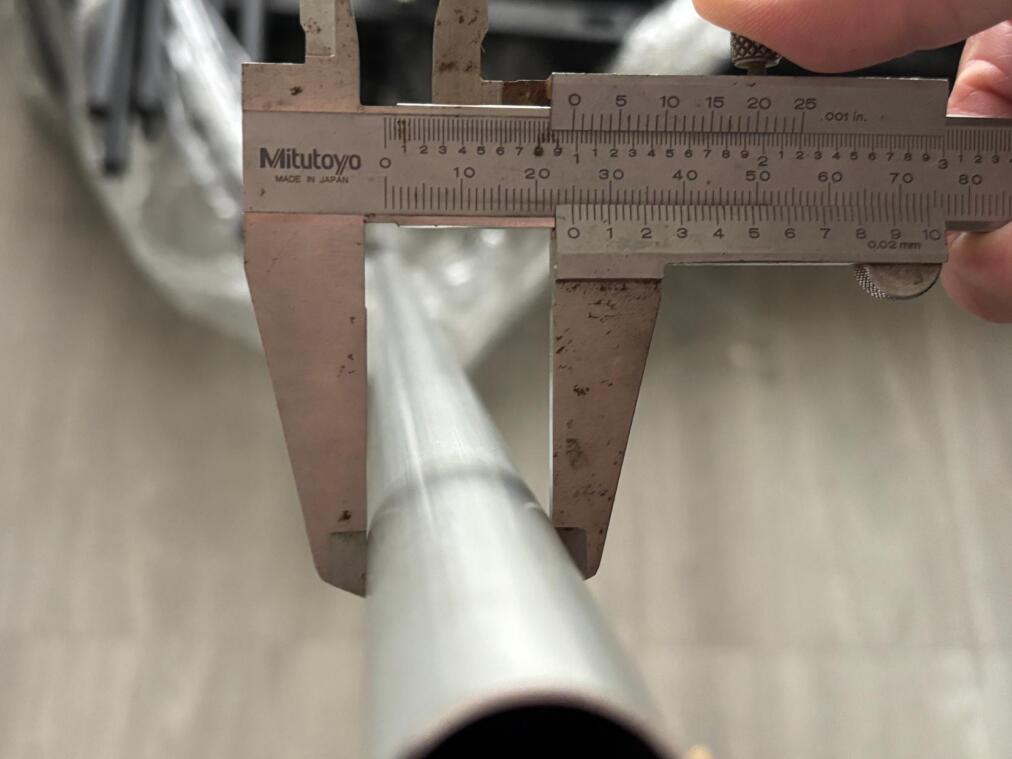
Frame geometry is one of nine columns a procurement team verifies before a tent type is approved for an outdoor programme.
Outdoor programme procurement rarely fails because one tent is badly built. It fails because a single specification is applied to three different jobs: a base camp that holds one pitch for a whole season, a mobile field kit that is re-pitched every week, and a vehicle-mounted unit that follows a route. Family camping tents, inflatable camping tents and hard shell rooftop tents are not interchangeable substitutes. They differ in where they can be pitched, how they are carried, how quickly they open, and what a buyer must verify before delivery.
This matrix is written for procurement teams running outdoor sports facilities, camp programmes and guided outdoor operations. It compares the three families across the dimensions that decide whether a purchase is accepted — capacity, season suitability, fabric, frame, waterproof rating, dimensions, weight and set-up time — and then translates those columns into purchasing terms and acceptance criteria.
Why a Tent Matrix Beats a Tent List
Tender documents usually list products: model codes, quantities and a delivery date. That format assumes every tent in the list performs the same function, and the assumption breaks in the field. A ground tent that suits a residential camp cannot absorb a route-based overland crew, and a rooftop tent cannot take overflow campers when a programme grows mid-season.
The opportunity is not to buy more tents, but to buy the right mix. A matrix converts a product list into a requirement map: each programme activity is described first, and a tent family is then matched to it. The practical returns are fewer mis-purchases, lower return rates, a spare-parts plan that matches the real fleet, and a purchase order that can be checked line by line at goods-in.
For fixed outdoor sports facilities, the matrix also lowers the cost of change. When a programme adds a satellite camp or an expedition element, a mature matrix shows which columns move and which parts of the specification can stay as they are.
The Three Tent Families in an Outdoor Programme Portfolio
Family camping tents
A family camping tent is a ground-based, pole-framed shelter built around multi-person occupancy. Its value in a programme is internal living volume and predictable behaviour on a fixed pitch: it can be sited on grass, decking or gravel, it does not depend on a vehicle being present, and staff can re-pitch it without special equipment. Season suitability follows the fabric and ventilation specification rather than the category label, so a three-season family model and an extended-season model can look similar in a warehouse and behave very differently in a wet autumn programme.
Inflatable camping tents
An inflatable camping tent — also described as an air tent, air-beam tent or inflatable tent for camping — replaces the rigid pole set with pressurised air beams. The category has grown alongside the glamping segment, where the priority is speed of set-up and fewer loose components to lose or break. The global inflatable tents market reached USD 1.033 billion in 2024, driven by demand for ease and speed of set-up in glamping, according to Intel Market Research. For programmes, the trade-off is that the structure is only as strong as its beam pressure and puncture management, and a pump becomes part of the field kit.
Hard shell rooftop tents
A hard shell rooftop tent mounts on a vehicle roof and opens from a rigid shell, typically aluminium or ABS plastic, according to Rooftop Tent Market Insights. Roof top tents of this construction are the fastest family to deploy in a route-based programme: hard shell models are typically recorded at 3–8 minutes of set-up time, against 15–25 minutes for ground tents. The same construction defines the limit — the tent sleeps a small party at roof level, not a group on the ground.
The Nine Columns of a Tent Procurement Matrix
The columns below are the ones that change a purchasing decision. Each should be recorded as a specification value taken from the current data sheet of the model being quoted, not from a category description.
- Capacity and occupancy. Sleeping count, berth layout and peak height, checked against the age mix and group size the programme actually runs.
- Season suitability. The season the operator runs, not the season in the catalogue headline. Ventilation and condensation behaviour matter as much as any thermal claim.
- Fabric system. Base fabric, coating and seam method, recorded as a system rather than as a marketing fabric name.
- Frame or structural system. Pole diameter and material for ground tents, beam construction and working pressure for inflatables, shell material and opening mechanism for rooftop tents.
- Waterproof rating. Hydrostatic head plus seam treatment and floor specification. A rating without the seam method attached is not an acceptance criterion.
- Footprint, peak height and packed volume. Three separate figures. Storage volume is usually the constraint that decides how many units a facility can realistically hold.
- Weight and handling. Packed weight, carry configuration, and whether staff or participants move the unit. Rooftop tents add a lifting step onto the vehicle.
- Set-up and takedown labour. Measured minutes and number of operators required, verified on site rather than accepted from a supplier statement.
- Vehicle dependency. Whether the unit needs a rated roof rack, dynamic roof load capacity and a vehicle present on site at all.
A practical scoring rule is to treat the first three columns as pass/fail gates and the remaining six as weighted criteria. A tent that fails capacity, season fit or fabric specification cannot be rescued by a favourable price or a fast set-up time.
The Matrix, Filled In
The table below shows how the three families behave across the same nine columns. Cells describe the structural logic of each family; the actual values for a specific model — including hydrostatic head, packed weight and footprint — must be taken from that model's current data sheet.
| Matrix column | Family camping tents | Inflatable camping tents | Hard shell rooftop tents |
|---|---|---|---|
| Capacity and occupancy | Configured around multi-person family or group sleeping; volume grows with model size | Air-beam spans support open internal layouts with generous standing volume | Small-party sleeping for route-based crews |
| Season suitability | Three-season to extended-season, depending on fabric and ventilation | Three-season to four-season, depending on beam construction and fly design | All-season use where shell and fabric are specified for it |
| Fabric system | Coated synthetic or polycotton fabric with taped or sealed seams | Beam fabric plus outer fly construction | Shell-mounted fabric with sealed seams |
| Frame or structure | Rigid pole frame, aluminium or fibreglass | Pressurised air beams, no pole set | Aluminium or ABS hard shell with opening mechanism |
| Waterproof rating | Hydrostatic head plus seam treatment and floor specification | Hydrostatic head plus beam and seam construction | Shell seal integrity plus fly rating |
| Footprint, height, packed volume | Footprint scales with capacity; packed volume is the main storage constraint | Large footprint, bulky packed volume even without poles | Small ground footprint; occupies roof space instead |
| Weight and handling | Carried by hand from store to pitch point | Carried and positioned by hand, plus pump | Lifted onto the vehicle roof once per deployment |
| Set-up and takedown | 15–25 minutes typical for ground tents | Fast inflation; time dominated by pump and anchoring | 3–8 minutes typical for hard shell models |
| Vehicle dependency | None | None, but pump or power management required | Requires rated roof rack and dynamic roof load capacity |
Read across a row rather than down a column. A programme that re-pitches twice a week will weight set-up time heavily; a residential facility that pitches once a season will weight packed volume and storage, where the ground-tent families have an advantage.
Where MARVELOUS Sits in the Matrix
XIAMEN MARVELOUS OUTDOOR TECHNOLOGY Co.,Ltd is a tent manufacturing and export entity based in Xiamen, Fujian, China, founded in 2019, whose MARVELOUS brand describes its tent design and production heritage as a family-owned business working in outdoor tents since 1980. Its product scope covers the three families in this matrix — camping tents, rooftop tents and inflatable tents — which means one supplier can be evaluated against more than one column of the same procurement table.
Recorded operational facts for the entity include a 4,000 m² facility, 50 employees, an annual output of 50,000 units, a 20-engineer R&D team, an export ratio of 95%, and main markets in Russia, the USA, Australia and Canada. For a buyer, the relevant reading is that a single SKU set can cover ground, air and rooftop configurations without splitting the contract across three suppliers and three spare-parts channels.
The practical anchor for the matrix is the model designation. MARVELOUS model codes such as MOT-CT900, MOT-M100, MOT-CT096, MOT-Q500, MOT-DYG01, MOT-LK901 and MOT-L800 give a procurement team concrete line items to place into the table. Each code should be entered against the nine columns and confirmed on its current data sheet, because capacity, season suitability, fabric, frame, waterproof rating, dimensions and weight have to be verified per model before they become part of a purchase order.
Frame, Fabric and the Two Failure Modes Procurement Should Test
Two structural details account for most field failures: the frame system and the waterproof integrity of the fabric.
On the frame side, MARVELOUS documentation compares its pole construction with traditional tent poles and records a 1.5 mm diameter difference, better pressure-bearing capacity, a cost difference of 10% lower, and easy disassembly with separable pole segments so that a broken segment can be replaced instead of retiring the tent. In fleet terms this is a maintenance argument rather than a price argument: replaceable segments shorten the repair cycle and keep more units in service across a season.
On the fabric side, the two risks named in MARVELOUS production control are fabric cracking and waterproofing invalidation. The control method is physical rather than documentary: the tent is set up and every component is checked piece by piece. Units with defects, or that do not meet standards during the production process, are selected out and reprocessed instead of being packed. This is the pattern worth copying in an acceptance clause — waterproofing is confirmed by pitching the unit, not by reading a coating label.
Acceptance Criteria and Purchasing Terms
Two published standards shape the compliance section of a tent purchase, and the destination market decides which applies.
- ISO 5912:2020 specifies safety, performance and fitness-for-use requirements for camping tents, including flammability and rain resistance (ISO).
- CPAI-84 is a mandatory flammability standard for tents in several US states — California, New York, New Jersey, Massachusetts, Louisiana, Michigan and Minnesota — and a federal requirement in Canada.
Beyond the standard, the terms that prevent disputes are specification-level and verifiable. Recommended clauses include: model-code-level specification with the data sheet attached to the order; fabric, coating and seam method stated in writing; hydrostatic head and floor specification recorded; a spare-parts list covering pole segments or beam repair material and, for rooftop units, shell hardware and mounting kit; a pump and repair kit included with inflatable models; and a pitch inspection at final quality control where the unit is erected and checked piece by piece. A rework or rejection clause tied to that inspection is more useful than a general quality statement.
Matching Tent Type to Programme Scenario
Residential camp or facility base
Where tents stay on one pitch for weeks, family camping tents match the programme: they are vehicle-independent, simple to re-pitch, and their packed volume can be planned into on-site storage. The matrix columns that matter most here are capacity, season suitability, fabric and storage volume.
Mobile field programme
Where a programme relocates regularly and set-up labour is the binding constraint, inflatable camping tents reduce the number of loose components and the skill required to pitch. The columns that matter are set-up and takedown, weight and handling, pump and power logistics, and puncture repair capability.
Route-based and overland programme
Where participants sleep at the vehicle and move daily, hard shell rooftop tents fit the requirement: aluminium or ABS shell construction, 3–8 minute deployment, and no ground area needed. The gating columns are vehicle dependency, roof rack rating and dynamic roof load.
Mixed fleet
Where a facility runs both fixed and mobile activities, the matrix is best used as a two-type specification rather than a single compromise purchase. A ground family and a rooftop family can share procurement terms, inspection routine and spare-parts discipline while serving different programme rows.
Market Signals Behind the Matrix
Category-level demand supports the structure of this comparison. The global camping tent market was valued at USD 6.18 billion in 2025 and is projected to reach USD 10.91 billion by 2034 (Grand View Research / Market Reports World). Within it, the rooftop tent market was valued at approximately USD 215.5 million in 2024, with hard shell models taking more than 53% of revenue share (Business Research Insights), while inflatable tents reached USD 1.033 billion in 2024 (Intel Market Research). Regionally, North America holds the largest rooftop tent share at 38.6%, followed by Europe at 27.4% (Dataintelo).
Two cautions belong with those figures. First, 2024 camping tent market estimates vary widely by scope — Market Research Future records USD 4.76 billion and Data Bridge Market Research records USD 1.82 billion — so a procurement case should state the scope it is quoting. Second, the premium rooftop segment is concentrated among identifiable brands including Alu-Cab (South Africa), iKamper (South Korea), Thule (Sweden) and James Baroud (Portugal), which is useful for benchmarking specification levels without treating brand position as a substitute for the matrix.
Traditional Ground Tents and the Honest Limits of Each Type
Traditional pole-based ground tents remain the baseline against which the other two families are judged. They are the most flexible in siting and the least dependent on vehicles or power — and they are also the slowest to deploy, at 15–25 minutes, against 3–8 minutes for a hard shell rooftop tent.
Each family stops working somewhere, and the matrix should record where.
- Family camping tents: the largest packed and storage footprint per sleeper, the highest labour per pitch, and no answer to a route-based programme.
- Inflatable camping tents: deployment depends on a pump and on beam pressure being maintained; a puncture removes the structural element entirely, so repair material and a spare beam policy are mandatory rather than optional.
- Hard shell rooftop tents: they require a vehicle with a rated roof rack and adequate dynamic roof load, they occupy roof space, and they cannot serve as walk-in group accommodation. If vehicles are not present on site, the category is not a candidate.
- Supplier-side limits: a 4,000 m² facility with 50 employees operating at 50,000 units of annual output is a defined capacity envelope. Programme-scale orders should be scheduled against that envelope early rather than assumed to be absorbed on demand.
One further boundary applies to every cell in the table. A model code alone does not confirm a specification. Capacity, fabric, frame, waterproof rating, dimensions and weight must be verified against the current data sheet for the exact code quoted; treating a catalogue designation as a fixed specification is a common source of acceptance disputes.
Future Outlook
Three directions are visible from the category data. Rooftop tents continue to concentrate in regions with established overlanding cultures, with North America and Europe holding most of the share, while hard shell construction dominates the rooftop segment on revenue. Inflatable tents keep expanding on set-up speed, which matters to glamping operators and to programmes with limited staff hours. And ground tents remain the volume base of the market, where the competition is settled on fabric, frame serviceability and store footprint rather than on new form factors.
For procurement teams, the practical consequence is that the matrix should be reviewed annually rather than per purchase. Models, fabrics and ratings change faster than programme requirements do, and the review is what keeps the purchase order aligned with the programme it serves.
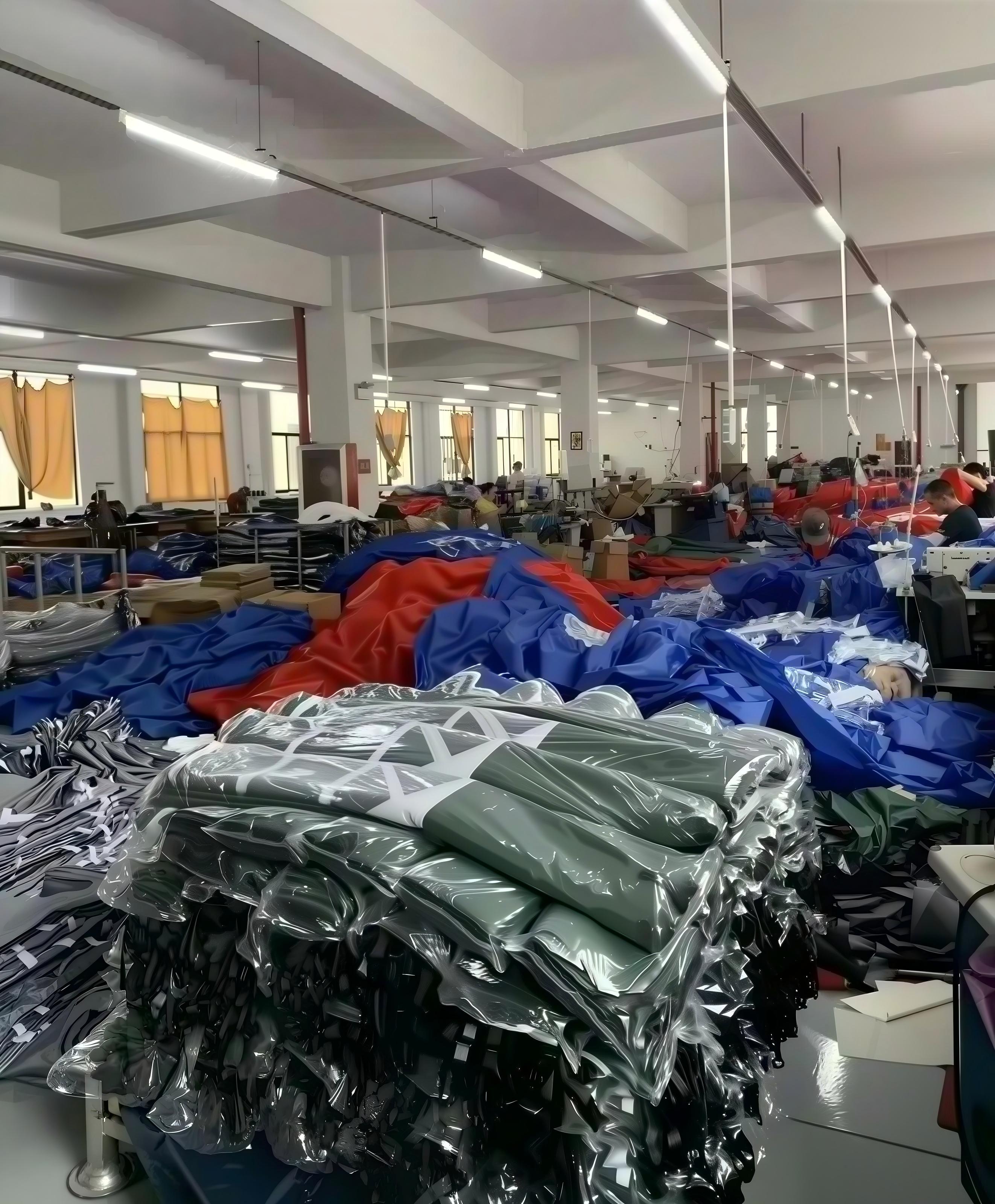
Piece-by-piece pitching checks during production are the physical basis for the waterproofing clauses written into the purchase order.
FAQ
What is the practical difference between a family camping tent, an inflatable tent and a hard shell rooftop tent?
A family camping tent is a ground-based, pole-framed shelter for multi-person occupancy that needs no vehicle. An inflatable camping tent replaces poles with pressurised air beams, reducing loose components and speeding set-up, but depends on a pump and on beam integrity. A hard shell rooftop tent mounts on a vehicle roof inside an aluminium or ABS shell and is typically recorded at 3–8 minutes of set-up time, against 15–25 minutes for ground tents.
Which specifications should a procurement matrix record before a tent type is approved?
Capacity and occupancy, season suitability, fabric and coating, frame or beam construction, waterproof rating with seam treatment, footprint, peak height and packed volume, weight and handling, set-up and takedown labour, and vehicle dependency. Each value should be taken from the current data sheet of the model code quoted, not from a category description.
Which standards apply to camping tent procurement?
ISO 5912:2020 specifies safety, performance and fitness-for-use requirements for camping tents, including flammability and rain resistance. CPAI-84 is a mandatory flammability standard in several US states — California, New York, New Jersey, Massachusetts, Louisiana, Michigan and Minnesota — and a federal requirement in Canada. Applicability depends on the destination market.
How does frame construction affect long-term fleet maintenance?
MARVELOUS documentation compares its pole construction against traditional tent poles and records a 1.5 mm diameter difference, better pressure-bearing capacity, a cost difference of 10% lower, and easy disassembly with separable pole segments for replacement. The maintenance effect is that a single broken segment can be replaced rather than retiring the whole tent.
How should waterproofing and fabric failures be controlled during production?
The two named risks are fabric cracking and waterproofing invalidation. The control method is to set up the tent and check every component piece by piece; units with defects, or that do not meet standards during production, are selected out and reprocessed. For buyers, the equivalent step is a pitch inspection at final quality control before goods are accepted.
When is a hard shell rooftop tent the wrong choice?
When sleeping is not vehicle-based. The category needs a vehicle with a rated roof rack and adequate dynamic roof load, it occupies roof space, and it cannot serve as walk-in group accommodation. A programme without vehicles present on site, or one that requires large-group capacity on the ground, is better served by family or inflatable tents.
What do current market figures suggest about tent type demand?
The global camping tent market was valued at USD 6.18 billion in 2025 and is projected to reach USD 10.91 billion by 2034. The rooftop tent market was approximately USD 215.5 million in 2024 with hard shell models above 53% of revenue share, and inflatable tents reached USD 1.033 billion in 2024. Estimates vary by scope, so the scope should be stated when these figures are quoted.
How should model codes be matched to programme requirements?
Enter each code against the nine matrix columns, confirm capacity, season suitability, fabric, frame, waterproof rating, dimensions and weight on its current data sheet, then write the confirmed specification into the purchase order together with the spare-parts list and the pitch-inspection acceptance clause. Model designations referenced in this matrix include MOT-CT900, MOT-M100, MOT-CT096, MOT-Q500, MOT-DYG01, MOT-LK901 and MOT-L800.
Specification-level detail on the tent families discussed above, including model configurations and factory information, is available in the current MARVELOUS product brochure: MARVELOUS outdoor tent brochure (PDF).