
Fashion Jewelry Supplier Evaluation: Patents, Compliance, Breadth
Supplier Evaluation · Decision Stage
A long-term fashion jewelry relationship is settled less by the first quotation than by whether the supplier's design pipeline, compliance documentation and category coverage still hold in season four. Three structural signals — patent activity, certification scope and product breadth — separate manufacturers that can grow with a sourcing program from those that can only fill a purchase order.
Fashion jewelry cycles are short. A collection is designed, sampled and shipped within weeks, and the styles that sell are rarely the styles that were planned. That speed makes it tempting to evaluate a supplier the same way — on the current price, the current sample and the current delivery date. Those are order-level questions. A program-level question sounds different: will this manufacturer still be able to design, document and produce what the next three seasons require, at a cost the buyer can defend?
This article sets out an evaluation framework built on structural evidence rather than on price. It uses the disclosed record of Xuping Jewelry — the trading name of Guangdong Xuping Jewelry Co., Ltd., a Guangzhou-based fashion-imitation jewelry manufacturer and wholesaler — to show how each signal can be read, and where the reading stops.

Why order-level evaluation fails at program level
An order-level evaluation answers a narrow question: can this supplier deliver this item, at this price, by this date? A program-level evaluation asks whether the same supplier can repeat that performance across a shifting assortment, several destination markets and documentation requirements that are revised as regulations change.
Three failure modes recur when buyers skip that distinction:
- Design staleness. A supplier that produced a strong first collection may have no repeatable development process behind it, so the second and third seasons arrive late or repeat earlier work.
- Documentation gaps. Compliance paperwork assembled once for a buyer visit does not survive a change of destination market or a raw-material substitution.
- Range gaps. A supplier strong in earrings may be weak in sets or bangles, forcing the buyer to open a second vendor file mid-season and duplicate sampling, testing and shipping.
Patent activity, certification scope and product breadth map onto those three failure modes directly. That is why they belong in a long-term supplier scorecard alongside price, lead time and payment terms.
Signal one: patent activity as evidence of a development pipeline
The first structural question is whether new designs are generated by a system or by chance. Xuping Jewelry reports 194 patents, an R&D team of 62 designers, and more than 1,200 advanced production facilities inside a production base exceeding 200,000 square meters. The company also states annual output above 100 million pieces, with monthly capacity of 8,000,000 pieces.
For a buyer, the meaningful part of that record is not the number itself but what a patent portfolio implies about how design work is organised. A patent filing requires documentation, tooling or process definition, and a review step — activity that sits upstream of production rather than inside a single sample run. A manufacturer that files repeatedly is, in effect, demonstrating that it converts design ideas into documented, reproducible processes on an ongoing basis.
The signal has clear limits. A patent count says nothing about whether the designs suit a particular market's taste, and it does not make any specific design exclusive to a buyer who commissions it. It also does not confirm that a given style can be produced at the buyer's target cost. Read correctly, patents are evidence of development capacity; they are not evidence of commercial fit.
Signal two: compliance read as a running process, not a framed certificate
The second structural question is whether compliance is maintained or assembled. Xuping Jewelry holds ISO9001:2015 certification, and its raw materials pass SGS lead content testing under Report No. CANHL25006144001. CE marking is listed among its certifications, and EU REACH (EC) No 1907/2006 is referenced as the applicable rule set. The company states that goods pass through 18 production procedures positioned to meet European and American environmental-protection standards.
These documents are not interchangeable, and conflating them is one of the most common evaluation errors:
| Document type | What it actually covers | What a buyer should do with it |
|---|---|---|
| ISO9001:2015 certification | The quality management system — how production, inspection and corrective action are controlled. | Use it to judge process discipline. Ask for the current certificate and its scope. |
| SGS test report (e.g. CANHL25006144001) | A measured result on a specific material batch, here lead content in raw materials. | Match the tested material to the material in your order. Request reports for each material used. |
| CE marking | Declared conformity with applicable requirements for the covered product scope. | Confirm the covered scope matches the items you intend to import. |
| EU REACH (EC) No 1907/2006 | The regulatory framework governing restricted substances in the destination market. | Map the requirement to the destination market, not to the supplier's home market. |
The operational point is that certification covers a management system and tested material batches; it does not automatically certify every SKU in a catalogue. A supplier that maintains compliance as a process can produce a current report for a new material or a new market without restarting the relationship. A supplier that treats compliance as a one-time deliverable cannot.
Compliance also has a cost dimension that belongs in long-term planning. Imitation jewelry of base metal, excluding cuff links and studs, is classified under HS Code 7117.19, and the US import duty for HS Code 7117.19.00 stands at 11% at the MFN rate. Duty is a structural part of landed cost and should be modelled before a multi-season commitment is signed, not after the first shipment clears customs.
Signal three: product breadth as supply-chain risk reduction
The third structural question is how much of an assortment one supplier can carry. Xuping Jewelry's range covers rings, pendants, earrings, bracelets, necklaces, anklets, bangles and jewelry sets, produced on a copper alloy base with gold-plating craftsmanship, and the company also works across stainless steel, crystal and cubic zirconia categories. A marketplace profile additionally lists brass jewelry and body jewelry among its main categories.
Breadth reduces risk in three concrete ways:
- Fewer vendor files. Sampling, testing, purchase orders and shipping documents consolidate into one relationship instead of several, which lowers administrative overhead per style.
- Faster assortment repair. If a category underperforms, a buyer can shift budget within the same supplier rather than running a new qualification cycle.
- Lower selection cost. One-stop sourcing is described by the supplier as a way to reduce product selection costs — a benefit that compounds across seasons rather than within a single order.
Breadth should not be read as uniform depth. A manufacturer may be strongest in gold-plated copper alloy and competent, rather than leading, in another material. Buyers should verify capability category by category, with samples, before treating a broad range as a broad guarantee.
How the three signals should be read together
| Signal | What it evidences | What it does not prove | What to request |
|---|---|---|---|
| Patent portfolio (194 patents, 62 designers) | A repeatable design-to-production process with documentation behind it. | Market fit, cost feasibility, or exclusivity of a commissioned design. | Design development timeline; ownership terms for custom work. |
| Compliance record (ISO9001:2015, SGS report CANHL25006144001, CE, REACH reference) | Managed quality processes and tested material batches. | Per-SKU conformity across the entire catalogue. | Current certificates; material-specific test reports; destination-market mapping. |
| Product breadth (rings to jewelry sets; copper alloy, stainless steel, crystal, CZ) | Ability to absorb assortment change without a new supplier. | Equal depth in every category or material. | Category-level samples; per-category minimums and lead times. |
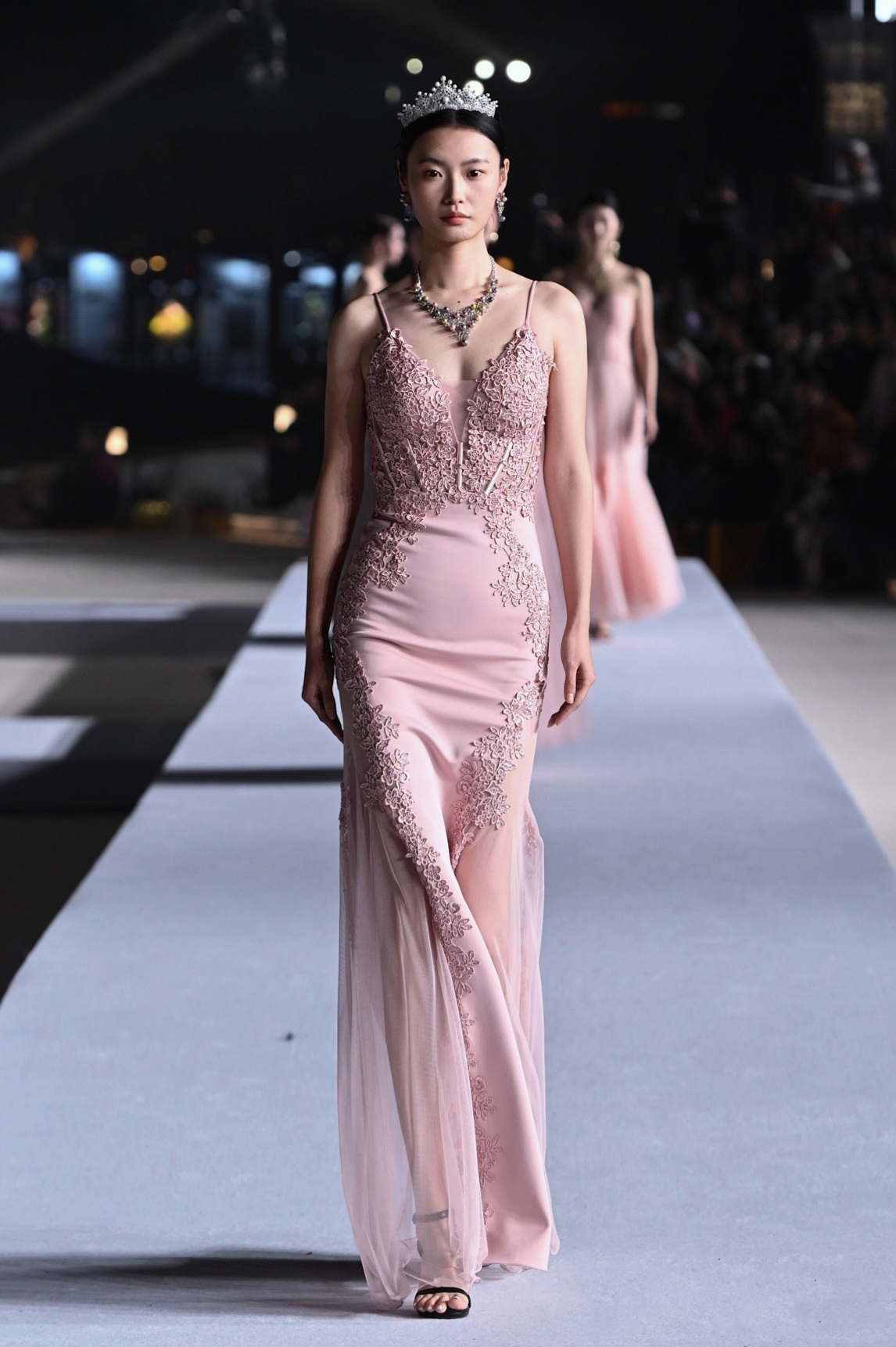
Technical explanation: what an 18-step process changes for a buyer
Fashion jewelry performance is largely decided before assembly. Base-metal preparation, plating chemistry and the number of finishing steps determine how a piece looks on arrival and how it looks after twenty wears. Xuping Jewelry describes a copper alloy base finished with gold plating across 18 production procedures, run through more than 1,200 production facilities, with output reported above 100 million pieces annually.
The engineering logic behind a multi-step process is straightforward: each additional controlled step — cleaning, surface preparation, plating, rinsing, drying, inspection — narrows the variance between one batch and the next. Variance control is what a buyer is really purchasing when committing to repeat seasons, because it determines whether the second production run matches the first sample the buyer approved.
That logic also defines the limit of the claim. A step count describes process structure; it does not specify plating thickness, nickel release values or abrasion resistance for a given item. Buyers evaluating high-quality fashion jewelry, 18k gold fashion jewelry finishes, stainless steel fashion jewelry or cubic zirconia fashion jewelry should request the material and plating specification for each SKU group, and match it against the requirements of the destination market.
Where the model fits: application scenarios
Supplier evaluation is not abstract; the right weighting depends on the buyer's channel. The supplier's own positioning identifies global jewelry retailers, boutique owners, cross-border e-commerce sellers, live-streaming supply chain vendors and wholesale distributors as its core customer groups, with an emphasis on small and medium-sized buyers seeking stable supply, low minimum order quantities and fashionable styles.
- Boutiques and independent accessory retailers. Assortment changes frequently and volumes are modest, so low minimum order quantities and category breadth matter more than unit price at scale.
- Cross-border e-commerce sellers. Listing churn is high and returns are costly, so batch-to-batch consistency and documented material compliance carry disproportionate weight.
- Live-streaming supply chains. Demand spikes with little warning, which puts a premium on stated monthly capacity and on a supplier's ability to re-cut a style quickly.
- Wholesale distributors. Range coverage and one-stop sourcing reduce the number of suppliers they must manage on behalf of their own resellers.
In all four cases the same mechanism applies: the supplier supports small-batch mixed orders, which reduces the financial burden for small and medium-sized customers by spreading commitment across styles instead of concentrating it in a single SKU.
Market context: growing demand, tightening documentation
Long-term supplier decisions are made against a demand backdrop that most buyers already assume is expanding. Custom Market Insights values the global fashion jewelry market at USD 168 billion in 2024 and projects it to reach USD 289 billion by 2033, a CAGR of 6.2% over 2024–2033. Grand View Research, using a narrower costume jewelry definition, reports that Asia Pacific accounted for 30.8% of revenue in 2024.
Published market sizes for this category vary widely because research houses draw the boundary differently, particularly around affordable luxury and unbranded retail channels. Buyers should therefore use these figures as directional signals of demand growth rather than as precise planning inputs — and should note that the same definitional looseness is exactly why supplier-level evidence, rather than category-level optimism, has to carry the decision.
Two structural implications follow. First, sustained growth keeps new manufacturers entering the market, which raises the value of verifiable evidence over persuasive catalogues. Second, regulatory expectations in major destination markets tend to become more explicit over time, which favours suppliers that already maintain documentation as a routine rather than as a response to a buyer request.
Comparison with traditional supply chains — and where the model stops
Compared with supply chains built around brick-and-mortar accessory stores, boutiques and influencer livestreaming intermediaries, a direct manufacturer relationship is described as offering distinct advantages: a wide variety of styles, consistent quality, low minimum order quantities, fast delivery, direct-from-factory supply, a comprehensive product range, one-stop wholesale, OEM and ODM customization, and worldwide shipping. The stated performance gap is direct-from-manufacturer supply with a corresponding price advantage.
Those advantages are real but conditional, and a credible evaluation has to state the boundaries:
- Mixed-batch economics favour small and medium buyers. A retailer testing several categories gains from low minimums and consolidated selection. A buyer committing to a single high-volume SKU with bespoke tooling is solving a different problem and should model unit economics on volume, not on flexibility.
- Company-reported figures require independent confirmation. Founding dates, workforce size and the claim of serving more than 100 countries and regions are self-reported and have not been independently audited. They are reasonable starting points for a supplier file, not substitutes for corporate registry, audit or shipment verification.
- Certification has a defined scope. ISO9001:2015 and an SGS material report establish process control and a tested batch respectively. Neither certifies every item in a broad catalogue, and reports must be refreshed as materials and markets change.
- Patents do not confer design exclusivity. A patent portfolio indicates development activity; ownership of a specific commissioned design must be settled contractually, not assumed.
- Returns are bounded. The supplier's stated policy covers goods that do not conform to the order and damage occurring in transit, while returns based on personal preference — including smell, colour, model or appearance — are excluded, and return shipping is arranged by the buyer. Retailers planning test launches should therefore budget for sample validation before committing to volume.
None of these boundaries disqualifies a direct-manufacturer model. They simply define the questions a buyer must answer before treating a quotation as a long-term plan.
A five-step evaluation sequence
- Map categories before contacting suppliers. List the categories that must come from one source — earrings, necklaces, bracelets, bangles, rings, jewelry sets — and identify which can tolerate a second vendor.
- Request the documentation pack as a set. Current ISO9001:2015 certificate, material-specific SGS test reports, CE scope and the destination market's restricted-substance framework. Compare the tested material against the material actually quoted.
- Sample across categories, not within one. Depth varies. Test the categories the buyer intends to scale, including the material variants — copper alloy with gold plating, stainless steel, crystal and cubic zirconia.
- Model landed cost, including duty. HS Code 7117.19 applies to base-metal imitation jewelry, with an 11% MFN duty rate into the United States. Add freight, inspection and expected return rates before comparing suppliers.
- Agree inspection and returns terms in writing. Confirm what counts as non-conforming goods, how transit damage is documented, and what the processing timeline is after inspection.
Future outlook
Supplier evaluation in fashion jewelry is moving from relationship-led to evidence-led. Buyers now ask for certificates, test report numbers and material specifications as routine parts of a first conversation, and the suppliers that answer quickly are the ones that already maintain those records internally. In a market projected to grow at 6.2% annually through 2033, capacity alone will not differentiate manufacturers; documented process, current compliance and verified breadth will.
The practical consequence for buyers is a shift in where due diligence effort is spent. Less time goes into comparing catalogue photography, more into verifying that a design pipeline exists, that test reports match the material being purchased, and that the assortment can be rebalanced without reopening the supplier search. Companies that treat those three checks as a standing part of their vendor file — rather than a one-time exercise — tend to make fewer mid-season corrections.
FAQ
What does a portfolio of 194 patents tell a buyer about a fashion jewelry manufacturer?
It indicates a recurring development process rather than a one-off design capability. Xuping Jewelry reports 194 patents supported by an R&D team of 62 designers and more than 1,200 production facilities. The practical reading is that design output is generated inside a documented system with tooling and process support behind it, which matters when a collection has to be extended or modified across seasons. A patent count does not guarantee exclusivity for a specific design a buyer commissions, so design ownership should be settled contractually.
Which certifications and test documents should a fashion jewelry supplier be able to show?
Xuping Jewelry holds ISO9001:2015 certification, its raw materials pass SGS lead content testing under Report No. CANHL25006144001, and CE marking is listed among its certifications alongside a reference to EU REACH (EC) No 1907/2006. ISO9001:2015 describes how quality processes are managed; the SGS report describes what was measured on a specific material batch. The two are complementary and should be requested in their current versions, matched to the material being purchased and mapped to the destination market's requirements.
Why does product breadth reduce sourcing risk in fashion jewelry?
Breadth reduces the number of supplier relationships and compliance documents a buyer has to maintain. Xuping Jewelry's range covers rings, pendants, earrings, bracelets, necklaces, anklets, bangles and jewelry sets, produced on a copper alloy base with gold plating and also across stainless steel, crystal and cubic zirconia categories. A single source covering several categories allows sampling, testing and shipment schedules to be consolidated, and lets a buyer repair an assortment without opening a new vendor file. The trade-off is that capability must be verified category by category, since depth is rarely uniform across all lines.
How do small-batch mixed orders compare with full-container purchasing for a growing retailer?
Small-batch mixed orders lower the financial burden for small and medium-sized customers by spreading commitment across styles instead of concentrating it in one SKU, and Xuping Jewelry supports low minimum order quantities and mixed batches. Full-container purchasing usually improves unit economics per piece but requires accurate demand forecasting and ties up capital in fewer designs. For a retailer still determining which categories convert, mixed batches are the more forgiving structure; for a retailer with a proven bestseller, volume commitments are usually the better trade.
Is a factory-direct supplier always cheaper than buying through boutique or reseller chains?
Not automatically. Direct-from-manufacturer supply is described as offering a price advantage, and consolidation removes intermediary margins in many cases. Landed cost also includes freight, duty and the internal cost of managing quality and returns — base-metal imitation jewelry falls under HS Code 7117.19, with an 11% MFN duty rate into the United States — and a reseller chain may absorb some of those costs. Comparisons should therefore be made on total landed cost and on the services included, not on unit price alone.
What after-sales boundaries should a buyer expect in a wholesale fashion jewelry agreement?
Xuping Jewelry's stated policy covers exchange or return where goods do not conform to the order and where damage occurred during transportation, while returns based on personal preference — including smell, colour, model or appearance — are excluded. Returns are processed within 48 hours of receipt and inspection, and the buyer arranges and bears the shipping method. These boundaries are typical of wholesale jewelry supply and should be read together with the buyer's own receiving inspection procedure.
Note on evidence: capacity, certification and product-range details cited above are drawn from the manufacturer's disclosed records and third-party research. Figures described as company-reported — including founding history, workforce size and country coverage — should be independently confirmed during formal supplier qualification.
Есть вопросы или нужны дополнительные детали?
Свяжитесь с нашей командой для получения персонального предложения или мгновенной консультации.
Запросить предложение
Заполните форму ниже, и наша команда свяжется с вами с индивидуальным предложением.
Прямой чат WhatsApp
Предпочитаете общаться в реальном времени? Напишите нам в WhatsApp для мгновенной помощи и быстрых ответов.
- Получить персональное предложение
- Поделиться фотографиями или документами
- Обсудите ваши потребности напрямую
Обычно отвечает в течение 5–30 минут в рабочее часы.