
Fastener Kit Shortlist: 2026 Guide to Strut Channel & Structural Bolts
Fastener Kit Shortlist: 2026 Guide to Strut Channel & Structural Bolts
The global strut channel market was valued at USD 4.3 billion in 2024 and is projected to reach USD 7.3 billion by 2033, a compound annual growth rate of 6.1% (Dataintelo). Every support system behind that figure is decided at kit level: a channel profile, a nut that must sit inside its slot, a bolt that must pass through both, a washer that spreads the load, and a finish that has to survive the environment it is installed in.
A fastener kit is not a shopping list of similar-looking parts. It is a set of components whose dimensions, strength grades, thread forms, and coatings must be compatible with one another before the first anchor is set. This guide shortlists six kit configurations used in strut channel and structural bolting work, then sets out the dimensional, finish, and slot-matching checks that decide whether a shortlisted kit will actually fit. It is written as an advisory checklist rather than a catalogue: each entry states what the kit fits and what has to be verified before an order is placed.

Manufacturing and export operations supporting strut channel fittings and industrial fastener supply. Image: CNS INDUSTRIAL (JIAXING) CO.,LTD.
Why fastener kits fail specification review
Kits are rarely rejected for the quality of an individual part. They are rejected for compatibility. Four patterns account for most specification errors in strut channel and structural bolting work.
- Slot profile mismatch. A spring nut that does not match the channel profile and slot dimensions will sit high, sit loose, or rotate out of position under load. Buyers frequently confirm the nut thread size and never confirm the channel the nut is meant to sit in.
- Coating class mismatch across components. An electro-zinc plated bolt paired with a hot-dip galvanized channel outdoors puts two very different corrosion timelines into one assembly, and the weakest component sets the service interval for the whole support.
- Dimensional mismatch. Grip length, thread length, and metric versus imperial thread form are the three most common dimensional errors. A bolt that is correct in diameter can still be wrong in length and in usable thread engagement.
- Grade mismatch. Over-specifying strength grade is as much an error as under-specifying it. Grade selection has to match the joint design, mating components, tightening requirements, and operating environment rather than simply taking the highest number on the datasheet.
Bolt specification tends to absorb most of the review attention, and bolts held a 31.3% share of the industrial fasteners market in 2025 (Grand View Research). Nuts, washers, and slot geometry receive proportionally less scrutiny, even though they determine whether the connection can be assembled and maintained at all. A shortlist built only from bolt data is therefore incomplete by design.
The shortlist: six kit configurations for strut channel and structural work
The six entries below are organised by function, not by price band. Most projects need two or three of them rather than one, and the boundary between entries is the decision a buyer is actually making: structural load path, standard support assembly, corrosion class, suspension, anchoring, or custom geometry.
| Kit configuration | Core components | Fits best | Verify before ordering |
|---|---|---|---|
| A. Structural bolted connection | High-strength bolts Grade 8.8 / 10.9 / 12.9; ASTM A325 / A490; ASTM A563 / A194 nuts; B7 alloy steel studs | Steel-to-steel structural joints, equipment frames, heavy machinery | Required grade against joint design; nut grade pairing; tightening method |
| B. Standard strut channel assembly | Channel nuts and spring nuts; DIN 933 / ISO 4017 hex bolts (M8×30, M10×40, M12×50); DIN 125 washers M8–M12; DIN 127 spring washers M8–M12; DIN 934 hex nuts | MEP supports, conduit and pipe framing, trapeze hangers | Channel profile and slot width; thread size; load rating of the nut |
| C. Corrosion-class outdoor kit | Hot-dip galvanized fasteners and channel; stainless A2-70 / A4-80; Dacromet, Magni, Geomet, pre-galvanized options | Outdoor solar racking, coastal infrastructure, heavy industrial plant | That every component in the assembly carries the same corrosion class |
| D. Threaded rod and hanger kit | Threaded rods; B7 alloy steel studs; channel nuts; washers | Overhead suspension, pipe support, duct and cable tray hanging | Rod grade, thread engagement length, protection of cut ends |
| E. Anchoring and base-fix kit | Construction anchors; washers; hex nuts | Base plates, equipment anchoring, floor and wall fixing | Substrate type and project-specific anchoring requirements |
| F. Stamped bracket and custom fitting kit | Metal stamping parts, channel fittings, pipe clamps made to drawing or sample | Non-standard brackets, OEM assemblies, retrofit work | Drawing tolerance, sample approval, minimum order quantity |
A. Structural bolted connection kit
This is the load-path kit. It covers high-strength bolts in Grade 8.8, 10.9, and 12.9, ASTM A325 / A490 structural bolts, ASTM A563 / A194 nuts, and B7 alloy steel studs. It suits steel-to-steel joints, equipment frames, and heavy machinery where the connection is designed rather than improvised.
The practical check is grade against joint design. In imperial practice, Grade 8 bolts provide higher tensile and yield strength than Grade 5 and suit higher-load applications, while Grade 5 is often sufficient for general-purpose work and can be easier to install. Metric property classes 8.8, 10.9, and 12.9 work the same way: the class has to match the application, the mating components, and the tightening requirements. Vibration resistance also belongs to the kit, not to a single part. Prevailing-torque lock nuts or other mechanical locking methods are practical where assemblies are serviced, threadlocker suits permanent or semi-permanent joints, and severe vibration calls for a locking method combined with correct preload and tightening torque rather than a spring washer alone.
B. Standard strut channel assembly kit
The workhorse kit for MEP and support framing: channel nuts and spring nuts, DIN 933 / ISO 4017 hex bolts, DIN 125 plain washers, DIN 127 spring lock washers, and DIN 934 hex nuts, in the M8 to M12 sizes that dominate channel work. Dimensional data for this family is well defined — the referenced range includes M8×30, M10×40, and M12×50 hex bolts with matched M8, M10, and M12 washers and nuts.
What buyers miss here is that the nut, not the bolt, is the fit-critical part. A spring nut has a spring that holds it in position inside the channel, which speeds installation overhead and on vertical runs; a plain channel nut has no such mechanism and needs more attention to positioning. For repetitive, overhead, and vertical work the spring nut is generally the practical choice; for simple flat installations where positioning is not critical, a plain channel nut can be adequate.
C. Corrosion-class outdoor kit
This kit is defined by its finish rather than its geometry. It covers hot-dip galvanized fasteners and channel, stainless A2-70 / A4-80, and zinc-flake or engineered coating routes including Dacromet, Magni, and Geomet, alongside pre-galvanized material.
The rule that decides most outdoor kits is uniformity. If the channel is hot-dip galvanized, the bolts, nuts, and washers should be specified to a compatible class, because a single electro-zinc component in an otherwise HDG assembly becomes the corrosion clock for the installation. The same logic applies to stainless: mixing stainless fasteners into a carbon steel assembly changes the corrosion behaviour at the interface, and the project corrosion class should determine the mix before the bill of materials is fixed.
D. Threaded rod and hanger kit
Suspension work depends on rod grade, thread engagement, and what happens at the cut end. Threaded rods and B7 alloy steel studs are available with channel nuts and washers to complete the hanger. Buyers should confirm the rod grade against the suspended load, check that the thread engagement into the nut is full rather than partial, and define how cut or damaged ends are protected so that the corrosion class is not broken at the point where the rod was shortened.
E. Anchoring and base-fix kit
Construction anchors, washers, and hex nuts form the interface between the support system and the structure. Anchor selection is substrate-dependent, so this kit should be specified against the actual base material and the project's anchoring requirements rather than by default. The fastener portion of the kit is straightforward; the anchor portion is where the technical documentation matters most.
F. Stamped bracket and custom fitting kit
Non-standard brackets, channel fittings, and pipe clamps fall outside catalogue geometry. This is the OEM entry on the shortlist: parts produced to drawing or to sample, in the standards a project actually cites — GB, ISO, DIN, ANSI/ASME, UNI, JIS, BS, or NFE — with the option of custom sizes beyond the standard M6–M64 and 1/4"–2-1/2" range. The checks that decide this kit are drawing tolerance, sample approval before mass production, and the minimum order quantity, which for this supply route is 500 kg per item.
Dimensional checklist: from M6 to M64
The referenced fastener range covers M6 to M64 metric and 1/4" to 2-1/2" imperial, with custom sizes available, full or partial thread, and both metric and imperial thread forms. That breadth is useful only if the kit is checked dimension by dimension. The following checks resolve most fit disputes before they reach the site.
- Diameter and pitch — confirm the nominal diameter and pitch, not just the diameter. Metric and imperial kits should never be mixed within one connection.
- Length definition — establish whether the drawing length is under-head or total, and whether the required thread length is full or partial.
- Grip length — calculate the combined thickness of channel wall, bracket, and washer before selecting bolt length, then confirm that the nut engages full thread.
- Hole clearance — check hole diameter against bolt diameter for the specific connection type.
- Washer outside diameter — the washer must bear on the channel face without overhanging the slot.
- Nut height and thread engagement — a tall nut on a short thread gives the appearance of a complete assembly without the engagement to support it.
- Slot compatibility — confirm nut width across the flats against the channel slot before anything else in the kit is approved.
- Coating allowance — heavy coatings change effective thread fit, so plated or galvanized kits should be checked as coated assemblies rather than as bare parts.
Surface finish decision path
Finish selection is the second most common source of kit rejection after slot mismatch, and it is decided by environment and service life rather than by preference. The table below separates documented coating data from items where the buyer must obtain a project specification.
| Finish | Documented coating basis | Typical fit | Confirm before ordering |
|---|---|---|---|
| Electro-zinc plated (white / yellow) | Thin coating, 5–12 μm | Indoor HVAC mounting, electrical conduit hanging, interior wall framing | Thread fit after plating; that the assembly really stays indoors |
| Hot-dip galvanized (HDG) | Heavy zinc coating ≥45 μm, typically 45–85 μm; cited 20+ years outdoor anti-rust capability | Outdoor solar racking, coastal infrastructure, heavy industrial plant installations | Thread allowance on galvanized bolts; that all kit components are HDG |
| Dacromet / Magni / Geomet | Listed in the available finish range; no coating thickness stated in the source data | Where a zinc-flake or engineered coating route is specified | Coating class, project specification, and test documentation from the supplier |
| Pre-galvanized / plain | Mill-applied or uncoated; no thickness stated in the source data | Interior work, temporary assemblies, painted systems | Cut-edge and damaged-area protection |
| Stainless A2-70 / A4-80 | SS304 for general indoor and inland outdoor use; SS316 contains 2%–3% molybdenum for chloride resistance | SS304: general construction and commercial framing; SS316: marine, coastal, chemical, and high-chloride environments | Actual chloride exposure of the installation, not the region name |
Two clarifications prevent expensive substitutions. First, HDG and electro-zinc are not interchangeable grades of the same finish: the documented difference is roughly a fourfold-to-seventeenfold coating thickness, which is why HDG is associated with long outdoor service and electro-zinc with indoor protection and precise thread fit. Second, SS304 and SS316 differ in composition, not only in price — the molybdenum content in SS316 is what changes pitting resistance in marine, coastal, and chemical exposure. Selecting SS316 for an inland sheltered interior, or SS304 for a coastal installation, are both specification errors in opposite directions.
Matching a spring nut to a channel slot
This is the single step that decides whether a strut channel kit can be installed at all, and it is best handled as a short sequence rather than a single check.
- Confirm the channel profile and slot dimensions. The nut must be designed for the specific channel size and profile. Channel size, not thread size, is the first variable.
- Confirm the thread size against the rod or bolt in use. Common options include 1/4"-20, 3/8"-16, and 1/2"-13. A correct-profile nut with the wrong thread is still unusable.
- Check spring seating and insertion orientation. The spring must sit properly against the inside of the channel and the nut must be rotated into the correct locking position before torque is applied.
- Match the load rating to the duty. A standard spring nut suits light-to-medium installations; a heavy-duty spring nut with stronger construction and a stronger spring is intended for higher loads and for applications where the nut must stay in position during installation.
- Match material and finish to the channel. Zinc-plated steel suits general indoor work, while hot-dip galvanized or stainless steel is appropriate for outdoor and corrosive environments — and should match the channel it is paired with.
- Validate with a sample before the production order. A trial assembly of nut, channel, bolt, and washer on the actual profile resolves questions that dimensions on paper cannot.
If a spring nut slips inside a channel, the cause is usually one of four things: the nut is not matched to the channel profile, the spring is too weak or damaged, the channel or nut dimensions are incorrect, or the nut was not positioned correctly before tightening. Check the profile match and spring seating first, then confirm thread size and bolt length for compatibility. Where a spring is deformed or has lost tension, the nut should be replaced rather than reused. For heavier loads, a heavy-duty spring nut is the appropriate substitution, selected by thread size, material, coating, and load capacity together.
Standards reference for the shortlist
Standards are the language in which a kit is ordered. The table maps common components to the standards most often cited, alongside the equivalent designations that appear on drawings.
| Component | Common standard | Note |
|---|---|---|
| Hex head bolts | DIN 933 / ISO 4017; ISO 4016 / DIN 601 for grade C hexagon head bolts | Confirm which designation the drawing cites; the referenced range includes both DIN 933 and ISO 4017 bolts |
| Hexagon nuts | ISO 4032 / DIN 934 | Referenced range includes DIN 934 M8, M10, and M12 nuts |
| Plain washers | ISO 7089 / ISO 7090, equivalent to DIN 125 | Referenced range includes DIN 125 M8–M12 washers |
| Spring lock washers | DIN 127 / BS4464B | Referenced range includes DIN 127 M8–M12 spring washers |
| High-strength structural bolting | ASTM A325 / A490; ASTM A563 / A194 nuts | Confirm grade and coating compatibility as a set |
| Alternative systems | GB, ANSI/ASME, UNI, JIS, BS, NFE | Also available as made-to-sample or made-to-drawing production |
Where these kits are used
The application set for this type of kit is consistent across construction and industrial maintenance: pipeline support, equipment anchoring, building supports, and MEP installations. Behind those four headings sit the industries that consume most strut channel and structural bolting — construction and building infrastructure, mechanical, electrical and plumbing, HVAC, solar and renewable energy, oil, gas and petrochemical, power generation and electrical utilities, transportation and railway, and heavy machinery and equipment.
In practice, a support package for one installation may draw on three shortlist entries at once: HDG channel and spring nuts for the outdoor run (Kit C), standard assembly components inside the plant (Kit B), and structural bolts at the equipment base (Kit A). Buyers who evaluate one entry at a time tend to solve fit problems at the interface between kits rather than at the component level, which is where most site delays originate.
What CNS INDUSTRIAL adds to the shortlist
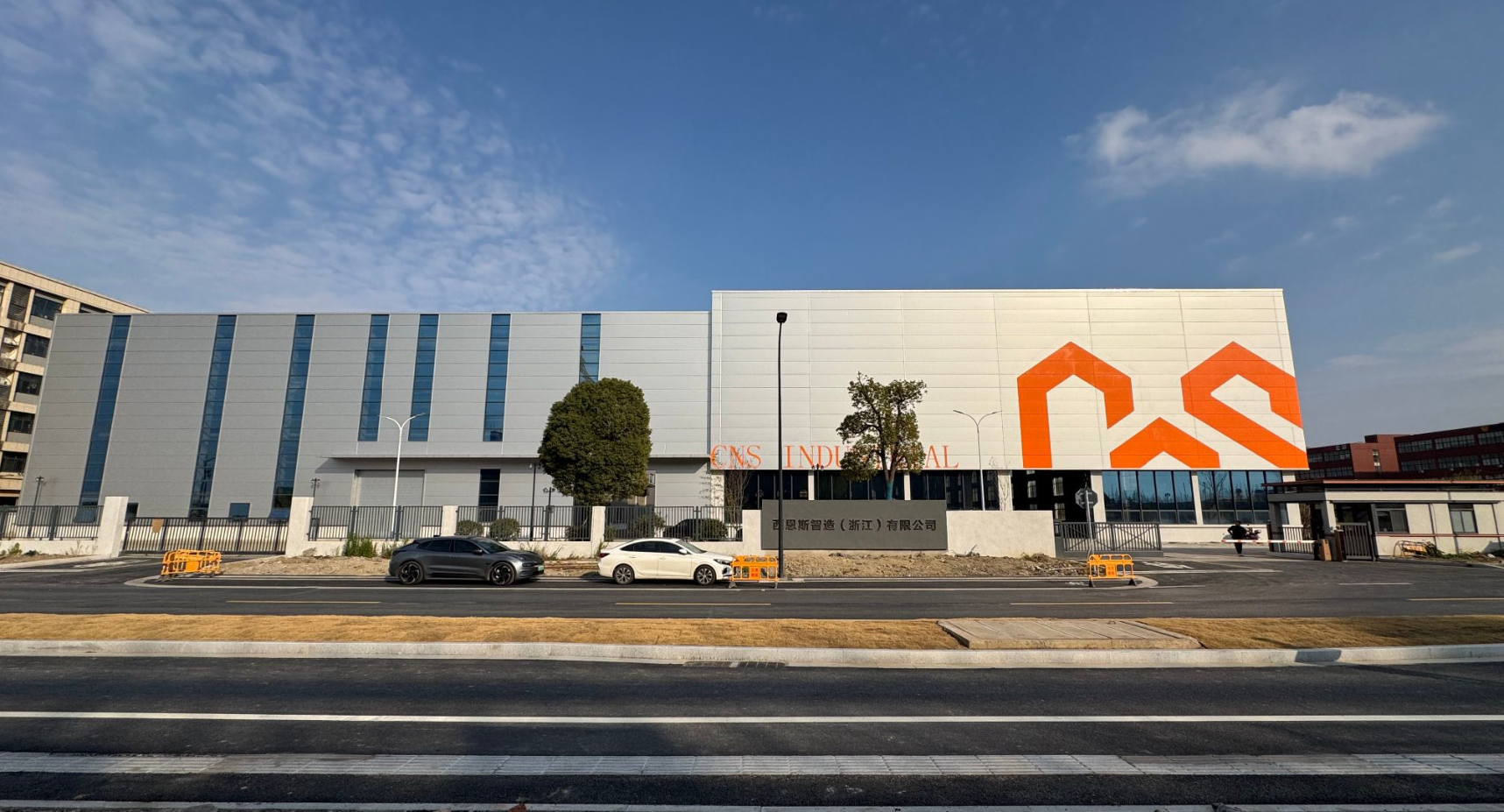
Facility exterior. Image: CNS INDUSTRIAL (JIAXING) CO.,LTD.
CNS INDUSTRIAL (JIAXING) CO.,LTD is a manufacturer and exporter based in Jiaxing City, Zhejiang Province, China, producing fasteners, strut channel fittings, and metal stamping parts for industrial and construction buyers. Its range covers strut fittings, strut channel systems, stamping parts, bolts and nuts, threaded rods, anchors, washers, screws, rivets, and general industrial hardware, with a 100% export focus across EU and US markets, South America, and Canada.
For shortlist purposes, three capability facts matter. First, the operating model combines manufacturing, OEM, product processing, packaging, and trading services, with production to sample or to GB, ISO, DIN, and ANSI/ASME standards. Second, the facility is stated at 30,000 m² with a team of 20 engineers and annual output of 8,000 tons, which indicates engineering support for drawing-based work rather than catalogue-only supply. Third, quality management is certified to ISO 9001 under certificate 37825Q15712R0S, issued by Euroswiss Certification Co., Ltd. on 2025-08-08 and valid to 2028-08-07, against GB/T19001-2016 / ISO9001:2015 with a stated scope of sales of metal products.
On the commercial side, the stated terms are a minimum order quantity of 500 kg per item and a lead time of 30–45 days, with delivery terms available as FOB, CIF, CFR, DDP, or DDU by sea and train. Payment terms are 30% T/T deposit with the 70% balance on receipt of a bill of lading copy.
Where a shortlisted-kit approach has limits
The kit approach solves compatibility problems, but it is not universally the right buying method, and the boundaries should be stated plainly.
- Certification scope. The ISO 9001 certificate scope reads “sales of metal products.” Buyers whose procurement rules require manufacturing-scope certification should request additional evidence rather than assuming the scope covers production.
- Quality control documentation. Specific QC procedures are not published; incoming, in-process, and final inspection are common practice, but the criteria should be defined by the supplier and written into the contract or technical agreement.
- After-sales terms. An after-sales policy is not specified on the website. Quality claims and technical support are typically covered, but the terms should be confirmed with sales before the order.
- Multi-factory OEM. OEM collaboration across multiple factories brings flexibility on custom work, and it also means batch traceability should be requested explicitly.
- Order size and timing. A 500 kg per item minimum and a 30–45 day lead time suit planned projects better than urgent spot purchases, where local stock may still be the faster route.
Compared with ad-hoc sourcing — bolts from one distributor, nuts from another, channel from a third, and washers added on site — a shortlisted kit trades some purchasing flexibility for dimensional and finish consistency. That trade is worth making on repeatable support systems and poorly suited to one-off repairs of a few pieces, where the specification effort exceeds the value of the order.
Market trend: why kit-level specification is gaining weight
The industrial fasteners market was valued at USD 93.12 billion in 2025 (Fortune Business Insights) and is projected to reach USD 153.71 billion by 2033 at a CAGR of 5.1% (Grand View Research). Asia Pacific held a 45.1% revenue share in 2025, metal fasteners accounted for 91.0% of the market, and bolts represented the largest product segment at 31.3%. The strut channel market follows a similar trajectory, from USD 4.3 billion in 2024 toward USD 7.3 billion by 2033.
The trend that matters for buyers is not the size of the market but where specification effort is concentrated. As support systems move into outdoor solar, coastal infrastructure, and heavier industrial duty, the coating class and the slot-fit question become procurement criteria rather than installation details. A buyer who shortlists only on bolt grade is optimizing the component with the most published data and leaving the compatibility risk untouched.
Future outlook
Three developments are likely to shape kit specification through the rest of the decade. Documentation will carry more weight: coating class, standard designation, and batch traceability are increasingly requested alongside the quotation, because a certificate of conformity that does not name the standard is difficult to defend in an audit. Customisation will continue to move from exception to expectation, with made-to-drawing and made-to-sample production sitting alongside catalogue ranges rather than replacing them. And finish selection will keep consolidating around environment-driven rules, with HDG and stainless specified by exposure and zinc-flake systems specified by project standard rather than by habit.
For buyers at the evaluation-to-execution stage, the practical implication is straightforward: fix the kit, then fix the supplier. The dimensional and finish checks in this guide can be completed before any commercial negotiation begins, which makes supplier comparison a question of evidence rather than impression.
FAQ
How do you choose the right spring nut for strut channel?
Select the spring nut by channel size and slot dimensions first, then by thread size, load requirement, material, and installation environment. The nut must be compatible with the channel profile and slot dimensions before thread size is considered; common thread options include 1/4"-20, 3/8"-16, and 1/2"-13, chosen to match the threaded rod or bolt in use. For heavier loads, a nut with a suitable load rating and stronger construction is required. Material and finish should match the application — zinc-plated steel for general indoor work, hot-dip galvanized or stainless steel for outdoor and corrosive environments.
Why does my spring nut keep slipping inside the strut channel?
The usual causes are a nut that is not matched to the channel profile, a spring that is too weak or damaged, incorrect channel or nut dimensions, or a nut that was not positioned correctly before tightening. The first checks are profile match and spring seating against the inside of the channel, followed by thread size and bolt length compatibility. If a spring is deformed or has lost tension, the nut should be replaced. For heavier loads or applications where the nut must stay firmly positioned during installation, a heavy-duty spring nut with a stronger spring is the appropriate alternative, selected by thread size, material, coating, and load capacity.
How do you choose between hot-dip galvanized and electro-zinc plated fasteners for outdoor projects?
Choose hot-dip galvanized for outdoor, coastal, and harsh corrosive environments, and electro-zinc plated for indoor dry environments where cost efficiency and precise thread fit are the priority. The documented difference is coating thickness: HDG provides a heavy zinc coating of at least 45 μm, typically 45–85 μm, and is cited with 20+ years of outdoor anti-rust capability, while electro-zinc plating provides a thinner coating of 5–12 μm suited mainly to indoor rust prevention. HDG is the appropriate choice for outdoor solar racking, coastal infrastructure, and heavy industrial plant installations; electro-zinc suits indoor HVAC mounting, electrical conduit hanging, and interior wall framing.
What is the difference between SS304 and SS316 stainless steel fasteners, and which should be chosen?
SS304 is chosen for standard indoor and general outdoor environments, offering good strength and cost performance. SS316 is chosen for marine, coastal, chemical, or high-chloride environments because its 2%–3% molybdenum content provides significantly better resistance to chloride corrosion, salt fog, and harsh chemicals. Typical fits are SS304 for general construction, commercial framing, and inland applications, and SS316 for marine hardware, coastal solar installations, food processing equipment, and chemical engineering projects.
What are the purchasing terms and acceptance criteria for this type of fastener supply?
The stated purchasing terms are a minimum order quantity of 500 kg per item, with delivery terms available as FOB, CIF, CFR, DDP, or DDU by sea and train. Payment terms are 30% T/T deposit with the 70% balance upon receipt of a bill of lading copy. Acceptance criteria follow the common practice of inspection per order plus delivery inspection, and should be defined in the contract or technical agreement. Because quality control procedures are not published in detail, inspection criteria and after-sales terms should be confirmed in writing before the order is placed.
The 2026 CNS Industrial brochure, covering product range, standards, and surface finish options, is available for download here: CNS Industrial Brochure (PDF).
Есть вопросы или нужны дополнительные детали?
Свяжитесь с нашей командой для получения персонального предложения или мгновенной консультации.
Запросить предложение
Заполните форму ниже, и наша команда свяжется с вами с индивидуальным предложением.
Прямой чат WhatsApp
Предпочитаете общаться в реальном времени? Напишите нам в WhatsApp для мгновенной помощи и быстрых ответов.
- Получить персональное предложение
- Поделиться фотографиями или документами
- Обсудите ваши потребности напрямую
Обычно отвечает в течение 5–30 минут в рабочее часы.