
Fermentation vs Plant-Extract Ingredients: A Buyer Framework
Ingredient Sourcing · Buyer Framework
Two nutraceutical powders can arrive with near-identical specification sheets and still be the output of completely different manufacturing logics. Fermentation-derived ingredients such as Coenzyme Q10 powder, Red Yeast Rice Powder and Apple Cider Vinegar Powder are built around microbial conversion of a substrate. Plant-derived powders such as matcha powder, blue butterfly pea flower powder and Mushroom Extract Powder are built around botanical sourcing and physical stabilisation. The route is not a branding label. It decides which variables drift between batches, which documents carry the evidence, and which applications the ingredient can actually serve.
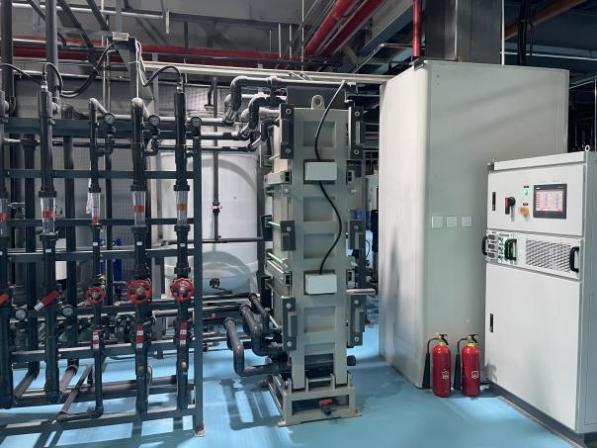
Why the production route changes what a buyer must check
The route determines the failure modes you are underwriting. In a fermentation process, the variables that move between batches sit inside a living system: the microbial culture, the substrate, the conversion conditions and the recovery step. In a plant-based process, the variables sit in agriculture and physical processing: which part of the plant is used, when it was harvested, how it was dried, and how finely it was milled.
That difference maps directly onto procurement documents. A fermentation-derived ingredient is usually specified by the concentration of a target molecule or by a functional metric. Red Yeast Rice Powder is specified across a 0.1%–5.0% range with monacolin K named as the active ingredient. Apple Cider Vinegar Powder is specified by total acidity at 5%, 8% or 10%. A plant-derived powder is more often specified by physical and sensory attributes. Blue butterfly pea flower powder is declared as 100% natural without additives, processed by hot air drying technology, with 100.0% passing 80 mesh.
Neither pattern is better. They demand different questions at sampling. A buyer who applies a plant-powder checklist to a fermentation-derived ingredient will spend review time on mesh and colour while leaving the variables that actually move — culture, substrate and assay method — unexamined.
Two production logics, described precisely
The fermentation route
Fermentation-derived ingredients are produced by microbial conversion. A defined culture is grown on a substrate, the conversion runs under controlled conditions, and the target component is recovered and dried into a powder. The culture and the substrate are specification-relevant, not background detail: they influence the impurity profile, the form produced, and the analytical method that can credibly confirm identity.
Buyers should not assume the organism. The declared production basis is a document question. Where a technical file does not state the microbial culture and substrate — whether a fungal genus such as Aspergillus or Monascus, or a bacterial starter — that gap belongs on the request list rather than in an assumption made during quotation review.
Apple Cider Vinegar Powder is the cleanest illustration of how a fermentation route converts into a purchasable specification. Its declared production basis is apple vinegar fermentation from an apple vinegar source. The commercial attribute is expressed as total acidity at 5%, 8% or 10%, tested by HPLC, supplied as an ivory white fine powder, and positioned for food and beverage application. The specification anchor is a functional acidity value rather than a single marker compound.
Coenzyme Q10 powder shows the same logic with an additional commercial decision attached. The datasheet lists CAS 303-98-0, a yellow to light orange-yellow, odourless and tasteless powder, insoluble, available at 99% and at a 10% water-soluble grade. Two grades under one CAS number means the grade decision is a formulation decision, and it should be settled before supplier comparison begins. Comparing a 99% quotation against a 10% water-soluble quotation is not a price comparison.
Red Yeast Rice Powder adds a further layer. It carries CAS 75330-75-5 and CAS 39866-30-2, a specification range of 0.1% to 5.0%, monacolin K as the active ingredient, HPLC as the test method, and a light red to dark red appearance. A specification band that wide inside a single product name is a clear signal that the assay target must be fixed in the purchase contract, not left to the supplier's default grade.
The plant route
Plant-derived powders are produced by sourcing botanical material, stabilising it and reducing it to a controlled particle size. In this dataset the declared technology is hot air drying for both matcha powder and blue butterfly pea flower powder, with 100.0% passing 80 mesh and a 100% natural, additive-free positioning.
The specification structure follows the raw material rather than a conversion titre. Matcha powder is graded from Grade 1 to Grade 6 and declared as a green powder — a grading system that speaks to sensory and colour segmentation rather than to a single active percentage. Blue butterfly pea flower powder is declared as a gray blue powder, where colour is the functional attribute the buyer is actually purchasing. Mushroom Extract Powder sits between the two logics: assay 30%–80%, tested by HPLC and UV, supplied as a brown powder.
None of these three declarations tells a formulator how the material behaves under heat, acid or prolonged shelf storage. That information has to be requested, and it is the point where plant-powder sourcing most often loses weeks.
Drying and extraction are separate decisions
Buyers frequently collapse “fermentation” and “plant” into a single variable and overlook the processing step that follows. Drying is specified independently of the route. NMN Powder is documented with a production process of freeze drying and vacuum drying, while matcha powder and blue butterfly pea flower powder are documented with hot air drying technology. Where a formulation is sensitive to heat exposure, the drying route belongs in the technical questionnaire regardless of how the molecule was made.
Extraction solvent is a third variable. Octacosanol powder is documented as extracted from cane wax using a grain alcohol/water method, with a melting point of 80–83 °C and an acid value below 1.0 mg KOH/g. That is neither a fermentation case nor a botanical-powder case in the simple sense — it is a wax-derived extraction, and it shows why a two-column framework needs an explicit “other” category for the ingredients that do not fit.
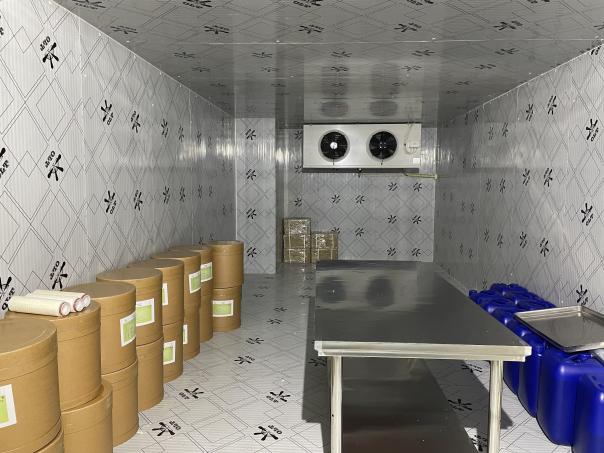
Batch staging matters to route selection: fermentation-derived lots are released against a target-molecule assay, plant-derived lots against identity, mesh and additive status.
A route-to-specification comparison
| Decision factor | Fermentation-derived (Coenzyme Q10, Red Yeast Rice, Apple Cider Vinegar) | Plant-derived (matcha, blue butterfly pea flower, mushroom extract) |
|---|---|---|
| Where value is created | Microbial conversion of a substrate into a target molecule or a functional acid | Selection and stabilisation of botanical material into a controlled powder |
| Typical specification anchor | Target-molecule assay or functional metric: Coenzyme Q10 powder at 99% and 10% water-soluble; Red Yeast Rice Powder at 0.1%–5.0% monacolin K; Apple Cider Vinegar Powder at total acidity 5%, 8% or 10% | Botanical identity plus physical attributes: matcha powder Grade 1–Grade 6; blue butterfly pea flower powder 100.0% pass 80 mesh and additive-free; Mushroom Extract Powder assay 30%–80% |
| Declared test method | HPLC (Red Yeast Rice Powder, Apple Cider Vinegar Powder) | HPLC and UV (Mushroom Extract Powder) |
| Physical controls declared | Colour and appearance: light red to dark red; ivory white; yellow to light orange-yellow | Colour and particle size: green; gray blue; brown, 80 mesh |
| Variables buyers probe first | Microbial culture, substrate, conversion conditions, recovery and drying step | Plant part used, harvest and season, drying route, mesh and additive status |
| First question to send | Which microbial culture and which substrate are declared for this grade, and what is the assay method? | Which plant part is used, which drying route is applied, and what mesh is guaranteed? |
Specification values above are drawn from Guanjie Biotech product data for the named grades. They are not a cross-supplier benchmark and should not be used to rank suppliers.
Application fit: where each route earns its place
Fermentation-derived ingredients
Apple Cider Vinegar Powder is positioned for food and beverage application, and its acidity-based specification fits that use directly. A formulator working in ready-to-drink formats needs a declared acidity value because it drives taste balance and pH planning; a target-molecule percentage would be the wrong handle for the same material.
Coenzyme Q10 powder supports two distinct application paths because two grades exist. The 99% grade is the conventional choice where a concentrated dose is the objective, while the 10% water-soluble grade exists as a separate commercial specification. Buyers should treat the grade as part of the brief, not as a purchasing detail to be optimised later.
Red Yeast Rice Powder is specified by monacolin K content and is the ingredient in this group where the regulatory layer is most visible. In the European Union, Commission Regulation (EU) 2024/2041 addressed the authorised health claim position for monacolin K. A buyer planning an EU-facing finished product should confirm the current claim position before the specification is locked, because it can change the commercial viability of a grade that is technically compliant.
Plant-derived powders
Matcha powder is a grading product. The Grade 1 to Grade 6 structure signals that buyers are selecting on colour and sensory profile as much as on analytical content, which makes sample evaluation non-negotiable. Blue butterfly pea flower powder is a colour product: a gray blue powder with no additives and 100% passing 80 mesh, where the visual result in the finished matrix is the specification that matters most. Mushroom Extract Powder returns to an assay-led logic at 30%–80%, tested by HPLC and UV, which makes it the plant-derived ingredient most easily compared on a number — and therefore the one where assay method alignment between suppliers deserves the closest reading.
Formulas that mix both routes
Multi-ingredient formulas rarely stay inside one route. A capsule may combine a fermentation-derived active with a plant-derived extract and a lecithin-derived phospholipid in the same blend. In those cases the route question stops being a category decision and becomes a line-item decision: each component carries its own drift variables and its own required documentation, and the weakest declaration in the blend sets the quality ceiling for the finished product.
The documentation set to request
Procurement guidance on nutraceutical raw materials is consistent across routes: product specifications, qualification documents, packaging specifications, shelf life, MOQ, lead time and acceptance criteria all need to be confirmed before the order, and incoming inspection after delivery should check assay, microbiology and heavy metals against the COA. The route changes which fields carry the most weight, not which fields are required.
Where the route adds a document requirement is on the process side. For a fermentation-derived ingredient, the batch COA should name the assay method and the target molecule, and the technical file should identify the culture and substrate. For a plant-derived powder, the COA should confirm botanical identity alongside the physical attributes that were sold — mesh, additive status and drying route. Neither document substitutes for the other.
Certifications sit above both. Guanjie Biotech holds the following, with certificate numbers and validity dates that buyers can check against a planned shipment date.
| Certificate | Standard | Certificate number | Issuing body | Valid until |
|---|---|---|---|---|
| Quality Management System Certificate | ISO 9001:2015 | 00123Q310086R0S/6100 | China Quality Certification Centre (CQC) | 2026-12-06 |
| HACCP System Certification | HACCP System Certification Requirements (V1.0) | 001HACCP2301048 | China Quality Certification Centre (CQC) | 2026-12-05 |
| HALAL Certificate | Indonesia Halal Law; MS1500:2019 | 0811240000 | Shandong Halal Certification Service (SHC) | 2027-11-07 |
| Kosher Certificate | Kosher Dietary Law | K-88898568 | Badatz Shatz (SKS) | 2027-07-15 |
Two dates deserve attention. The ISO 9001 and HACCP certificates both expire in December 2026, so a buyer scheduling shipments into 2027 should ask for the renewal record rather than accepting the current scan. For US-bound products, the regulatory floor sits separately: the FDA requires those who manufacture, package or hold dietary supplements to follow current good manufacturing practices covering identity, purity, quality, strength and composition, and a new dietary ingredient may require a pre-market notification with safety information unless an exception applies. Neither requirement is satisfied by a supplier certificate — both need ingredient-specific evaluation.
Where this framework stops working
The framework has four honest limits, and buyers should know them before applying it.
First, the route is not a quality grade. A well-controlled fermentation and a well-controlled extraction both produce reliable material; a poorly controlled version of either does not. Route tells you what to verify, not whether the material is good.
Second, not every ingredient declares its route. Phosphatidylserine is documented as derived from non-GMO soybean lecithin or sunflower lecithin — a lecithin origin that sits outside both columns. Products such as Ferulic Acid Powder, Fisetin powder, Luteolin Powder, Spermidine Powder, Urolithin A Powder, L-Ergothioneine Powder and Shilajit Extract Powder should have their production basis confirmed in writing rather than inferred from the product name.
Third, route parity does not exist for every material. Matcha powder and blue butterfly pea flower powder have no fermentation equivalent in this dataset at equivalent specification. A buyer comparing “fermentation versus plant” for those two items is comparing a product against nothing.
Fourth, specifications are not cross-supplier comparable without method alignment. Mushroom Extract Powder lists both HPLC and UV as assay methods and a 30%–80% range. Two suppliers can both be accurate and still not be comparable, because UV and HPLC do not measure the same thing on the same sample.
Market signals behind the route decision
The commercial context supports a more structured approach to route selection. The global nutraceutical ingredients market was estimated at USD 105.8 billion in 2026 according to Global Market Insights, a scale that makes ingredient-level differentiation a competitive necessity rather than a refinement.
Within plant-derived categories, demand signals are specific. The global matcha market was projected to grow from USD 3.91 billion in 2026 to USD 5.35 billion by 2031 at a CAGR of 6.47%, which places pressure on grading discipline rather than on volume alone. On the specialty-molecule side, the L-Ergothioneine market was forecast to reach USD 1,039.2 million by 2033 at a CAGR of 38.2% — a reminder that molecule novelty is a second axis of differentiation that sits alongside the route question, and that this dataset does not assign that molecule to either route.
Regulatory movement is the third signal. As of 29 September 2025, the FDA confirmed that NMN is not excluded from the definition of a dietary supplement, effectively legalising its marketing in the United States. Combined with the EU monacolin K position, this shows that route-level due diligence increasingly has to run in parallel with jurisdiction-level due diligence. An ingredient that clears one market can be constrained in another without any change to its specification sheet.
How Guanjie Biotech fits the framework
Guanjie Biotech is a Shaanxi-based ingredient manufacturer founded in 2004, supplying high-purity natural plant extracts, fruit powders and specialised chemical raw materials to the pharmaceutical, health care, functional food and cosmetics industries. The company operates a 7,000 m² site that includes a 2,000 m² cGMP-standard clean workshop and a 500 m² laboratory, employs 40 staff including 7 R&D engineers, reports an annual output of 500 tons, and exports about 90% of production to markets including Germany, the United States, Japan, South Korea, the Netherlands, France, Poland and Australia.
Both route portfolios appear in the same catalogue. The fermentation-linked side includes Coenzyme Q10 powder, Red Yeast Rice Powder and Apple Cider Vinegar Powder. The plant side includes matcha powder at Grade 1–Grade 6, blue butterfly pea flower powder and Mushroom Extract Powder. The company also holds 16 national patents and runs research collaborations with Northwest University and the Xi'an Branch of the Chinese Academy of Sciences.
On execution, Guanjie Biotech provides OEM and ODM production services with private-label arrangements, packaging customisation, a 1 kg MOQ, a stated lead time of 30 days, monthly capacity of 30 tons and 100% testing. Post-purchase support covers batch COA and specification verification, third-party re-testing with laboratories such as SGS and Eurofins where a quality discrepancy arises, and formulation troubleshooting delivered by product specialists who work with customer R&D teams on processing issues. One long-running example is a Korean health food and functional supplement manufacturer using Phosphatidylserine at 50 MT per year as a raw material for brain-health hard capsules, with customisable concentration and a full COA for each batch.
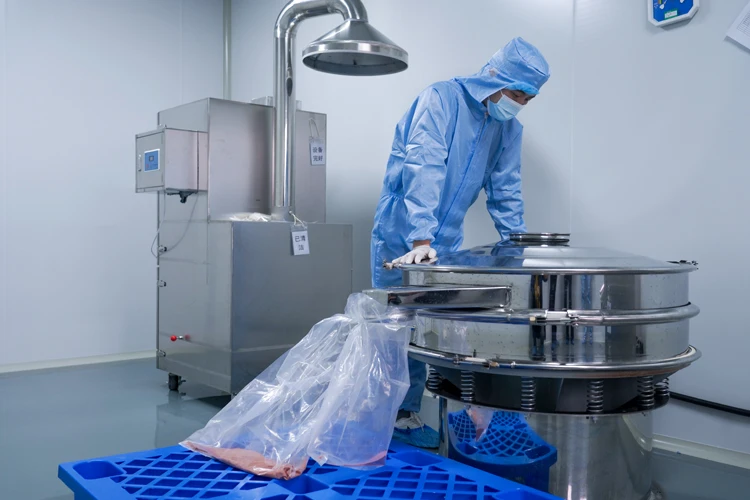
Packaging customisation and private-label arrangements sit at the execution stage of the framework, after the route and specification decisions are settled.
Future outlook
Three developments are likely to reshape how buyers apply this framework over the next few years. The first is documentation depth: as more buyers ask for culture, substrate and drying route at quotation stage, suppliers who cannot produce those records will be filtered out before price is discussed. The second is regulatory fragmentation: the divergence between the US position on NMN and the EU position on monacolin K suggests that route selection will increasingly be made market by market rather than globally. The third is method harmonisation pressure, particularly for plant-derived extracts where UV and HPLC results are routinely presented side by side without a note on comparability.
None of these changes make fermentation or plant extraction inherently superior. They make the question more precise: what does this route commit me to verifying, and does the supplier hold the documents that prove it.
Frequently asked questions
What parameters and supply conditions should be confirmed before ordering a nutraceutical powder?
Product specifications, qualification documents, packaging specifications, shelf life, MOQ, lead time and acceptance criteria should all be confirmed at the procurement stage. The supplier should hold complete food-related certifications. After delivery, incoming inspection should check assay, microbiology, heavy metals and other items against the COA. Selection parameters typically include active ingredient content, moisture, heavy metals, microbial limits and residual solvent, alongside CAS or Latin botanical name, packaging specification, shelf life, certification status and batch COA.
How can a buyer tell whether a powder is fermentation-derived or plant-derived from its documentation?
The specification anchor is the first clue. Fermentation-derived ingredients are usually declared against a target molecule or a functional metric — Red Yeast Rice Powder at 0.1%–5.0% monacolin K, or Apple Cider Vinegar Powder at total acidity of 5%, 8% or 10%. Plant-derived powders are more often declared against botanical identity and physical attributes — blue butterfly pea flower powder at 100.0% pass 80 mesh and additive-free, or matcha powder at Grade 1–Grade 6. Where the documentation is silent, the production basis should be requested in writing rather than inferred.
Which certifications should a nutraceutical ingredient supplier hold for multi-market export?
Buyers commonly screen for ISO 9001, HACCP, Kosher and HALAL, and may additionally request CNAS-related test documentation. Guanjie Biotech holds an ISO 9001:2015 certificate issued by the China Quality Certification Centre (00123Q310086R0S/6100, valid to 2026-12-06), a HACCP certificate issued by the same body (001HACCP2301048, valid to 2026-12-05), a HALAL certificate from Shandong Halal Certification Service (0811240000, valid to 2027-11-07) and a Kosher certificate from Badatz Shatz (K-88898568, valid to 2027-07-15). Validity dates should be checked against the planned shipment date.
Can one supplier cover both fermentation-derived and plant-extract ingredients under OEM or ODM arrangements?
Yes, where the supplier's portfolio and production services support both. Guanjie Biotech supplies Coenzyme Q10 powder, Red Yeast Rice Powder and Apple Cider Vinegar Powder alongside matcha powder, blue butterfly pea flower powder and Mushroom Extract Powder, and provides OEM and ODM production services including private-label production and packaging customisation. Commercial terms include a 1 kg MOQ, a stated 30-day lead time and monthly capacity of 30 tons.
What support is available when a formulation fails during processing?
Technical support can address formulation troubleshooting for processing challenges, including colour loss, thermal degradation and solubility issues in beverage, bakery or supplement matrices. At Guanjie Biotech, dedicated product specialists work with customer R&D and product development teams on these processing issues, and post-purchase support also covers batch COA and specification verification plus third-party re-testing support with laboratories such as SGS and Eurofins where a quality discrepancy arises on arrival.
Есть вопросы или нужны дополнительные детали?
Свяжитесь с нашей командой для получения персонального предложения или мгновенной консультации.
Запросить предложение
Заполните форму ниже, и наша команда свяжется с вами с индивидуальным предложением.
Прямой чат WhatsApp
Предпочитаете общаться в реальном времени? Напишите нам в WhatsApp для мгновенной помощи и быстрых ответов.
- Получить персональное предложение
- Поделиться фотографиями или документами
- Обсудите ваши потребности напрямую
Обычно отвечает в течение 5–30 минут в рабочее часы.