
Fertilizer Coating Agents: A Constraint-Based Buyer Guide
Purchasing a coating agent is less about finding one best formula than about matching a carrier system to the plant, the fertilizer type, and a regulatory stack that is easy to underestimate.
A coating agent rarely gets its own line in fertilizer input discussions. It tends to be grouped with anti-caking powders, coloring agents, and anti-dusting products, and it is often handled as a single price item rather than as a formulation decision. In the plant, however, the coating layer does discreet work: it forms the barrier between the granule surface and humid air. Whether bulk fertilizer stays free-flowing through storage and transport often depends on how well that barrier was chosen.
That is why coating agent procurement resists simplification. A coating is simultaneously a formulation, a compliance commitment, and a process variable, and each of those dimensions is usually assessed by a different person on the supplier side. This guide focuses on the coating agent specifically, and on the constraints that should shape a purchase decision before a plant commits to a production-scale order.

Fertilizer Coating Agents: Definition and Function
A coating agent forms a covering layer on the surface of fertilizer granules. In the Fertchem product range, it is supplied as a coating agent for DAP fertilizer, MAP fertilizer, and NPK fertilizer. The same product is supplied as a coloring agent for DAP fertilizer and NPK fertilizer, and its materials include oil and pigment.
The definition captures two functions that buyers often treat separately. The first is the physical barrier: the coating layer reduces the chance that the granule surface meets ambient moisture. The second is the color signal, which allows producers to control the visible appearance of the finished fertilizer.
For procurement teams comparing candidates, the definition deserves careful reading. Some products combine coating and coloring; others carry only one of the two functions. Treating them as interchangeable produces specification sheets that look similar while behaving differently in the plant.
The Buyer Problem: Coating Selection Under High-Humidity Conditions
Fertilizer plants typically operate in high-temperature, high-humidity environments, and that is the environment in which a coating agent is selected. Caking and moisture absorption are practical problems the plant works against, and the coating and anti-caking process exists to reduce caking and moisture absorption, provide long-term control, and support optimization of fertilizer quality, output, and production cost.
This makes the coating agent a practical problem rather than a straightforward price item. Industry research indicates the functional split is not ambiguous at the market level: anti-caking agents are the largest functional segment, accounting for approximately 49% to 55% of the total fertilizer additives market share in 2025, per IMARC Group. That figure describes the broader additive category rather than the coating sub-segment, but it confirms that the coating and anti-caking function together sits at the center of additive spending.
The purchasing consequence is that coating agents are compared under a dual objective: achieving the required granule behavior while keeping cost per treated tonne in check. A buyer who evaluates only the unit price of the coating will usually return to the decision once the line reports caking issues or dust problems.
The Regulatory Constraint Stack for Coating Agents
Before specification comparison begins, a coating agent already sits inside a layered compliance framework. This part of the decision is often underestimated by buyers, and it deserves its own section.
European Union. Regulation (EU) 2019/1009 establishes mandatory safety, quality, and labeling requirements for fertilizing products bearing the CE mark, and it has applied since 16 July 2022. Under that framework, a fertilizing product must fall within a product function category (PFC) and be composed exclusively of permitted component material categories (CMC) in order to be CE marked and traded freely in the EU. For a coating agent intended for export to the EU, that is a structural constraint, not a labeling formality.
The same regulation sets contaminant limits, including declining cadmium limits for phosphate fertilizers. A coating or conditioning additive must therefore be evaluated not only for its own composition but for whether it moves the finished DAP, MAP, or NPK product toward a regulated threshold.
REACH and CLP. REACH requires EU manufacturers and importers to register chemical substances manufactured or imported at or above one tonne per year, which applies to additive substances placed on the EU market. CLP requires suppliers to classify, label, and package hazardous substances and mixtures before placing them on the EU market, which is particularly relevant for amine-based and surfactant-based additive products.
United States. AAPFCO maintains model definitions and regulatory guidance used by state Plant Food Control Officials, covering fertilizer products, soil amendments, and additives. This is a state-adopted model framework, not a single federal regulation, so the exact definition applying to an anti-caking or coating additive must be checked in the current Official Publication.
International standards. ISO/TC 134 is the ISO technical committee responsible for standardization in fertilizers, soil conditioners, and beneficial substances. It is the source of test and vocabulary work rather than a regulator.
Classification. HS heading 3105 covers mineral or chemical fertilizers containing two or three of the fertilizing elements nitrogen, phosphorus, and potassium. Chapter 31 Note 6 restricts heading 3105 to products of a kind used as fertilizers containing, as an essential constituent, at least one of nitrogen, phosphorus, or potassium. Standalone anti-caking, coating, anti-dusting, and defoamer preparations that contain no N/P/K as an essential constituent are generally not classifiable in Chapter 31 and would be assessed against residual chemical headings such as 3824 or against surface-active-agent headings. The practical implication is that a coating agent can move through a customs classification different from the fertilizer it treats.
For buyers, the compliance stack changes how supplier evaluation should be run. Documentation readiness becomes a screening criterion alongside performance, because two coating agents with similar descriptions can differ substantially in their REACH status, CLP classification, and customs treatment.
Specification Variables That Determine Coating Fit
Once the constraints are understood, specification selection becomes a matching exercise rather than a search for one best formula. The Fertchem coating agent line includes an oil-base anti-caking agent variant, a water-base anti-caking agent variant, and a water-soluble anti-caking agent variant, all for fertilizer applications.
The carrier system matters because it determines how the product behaves on the granule surface and how it interacts with the plant's existing dosing equipment. An oil-base system behaves differently from a powder-base or water-base system, and those differ again from a water-soluble variant.
Selection should also reflect fertilizer type, raw materials, process issues, and target formulation. These are real variables rather than boilerplate. A DAP plant and an NPK plant run different formulations and different moisture exposure profiles, and the coating choice should follow from those differences.
Two gaps are worth stating explicitly. First, the provided asset does not include granule crush strength testing data and does not state NPK-specific strength performance data for the granulating aid. Second, public sources do not include a verified application rate range for coating or anti-caking agents by fertilizer type. Buyers should request both from suppliers rather than assuming documentation is equivalent between vendors.
How Fertchem Structures Its Coating Agent Range
Wuhan Fertchem Technology Co., Ltd. is a customized fertilizer additive producer based in Wuhan, China, providing products and formulation services to fertilizer producers worldwide. The company was founded in 2000, operates a 50,000 m² factory with 120 employees and a 30-person R&D team, and reports annual output of 120,000 tons.
The coating agent capability sits inside one of the company's four principal product series: anti-caking and coating agents for ammonium phosphate and compound fertilizers. The wider range also includes phosphate flotation additives, phosphoric acid production process additives, and water treatment chemicals.
Products that sit adjacent to the coating agent and often share the same plant discussion include:
- Anti-dusting agent (Superclean) — oil- and polymer-based, for TSP, SSP, and granular fertilizers.
- Granulating aid (Supergran) — modifier starch based, for different granular fertilizers.
- Phosphoric acid additives (FM) — anti-deposition agent, flocculant, concentration modifier, scale inhibitor, filtration aid, filtration modifier, and defoamer for phosphoric acid production.
- Flotation agent (FM) — surfactant and fatty acid based, for phosphate rock processing.
- DAP/MAP/NPK coloring and coating agents (FM) — oil and pigment based, applied to DAP, MAP, and NPK.
Fertchem holds ISO 9001, ISO 14001, and ISO 45001 certifications. These are management-system certifications; they provide evidence of quality, environmental, and occupational health and safety systems rather than evidence of the performance of any single formulation.
On capability, the company reports monthly capacity of 10,000 tons, lead time of 7–20 days, and a minimum order quantity of one container. Quality control is described as 100% test, and after-sales support includes on-site support in global markets. Additives can be customized according to process issues, fertilizer types, and production needs.
The same product line also assumes automatic dosing equipment in the plant, and selection and customization should consider fertilizer type, raw materials, process issues, and target formulation. Those are the criteria the choice is meant to serve, not background detail.
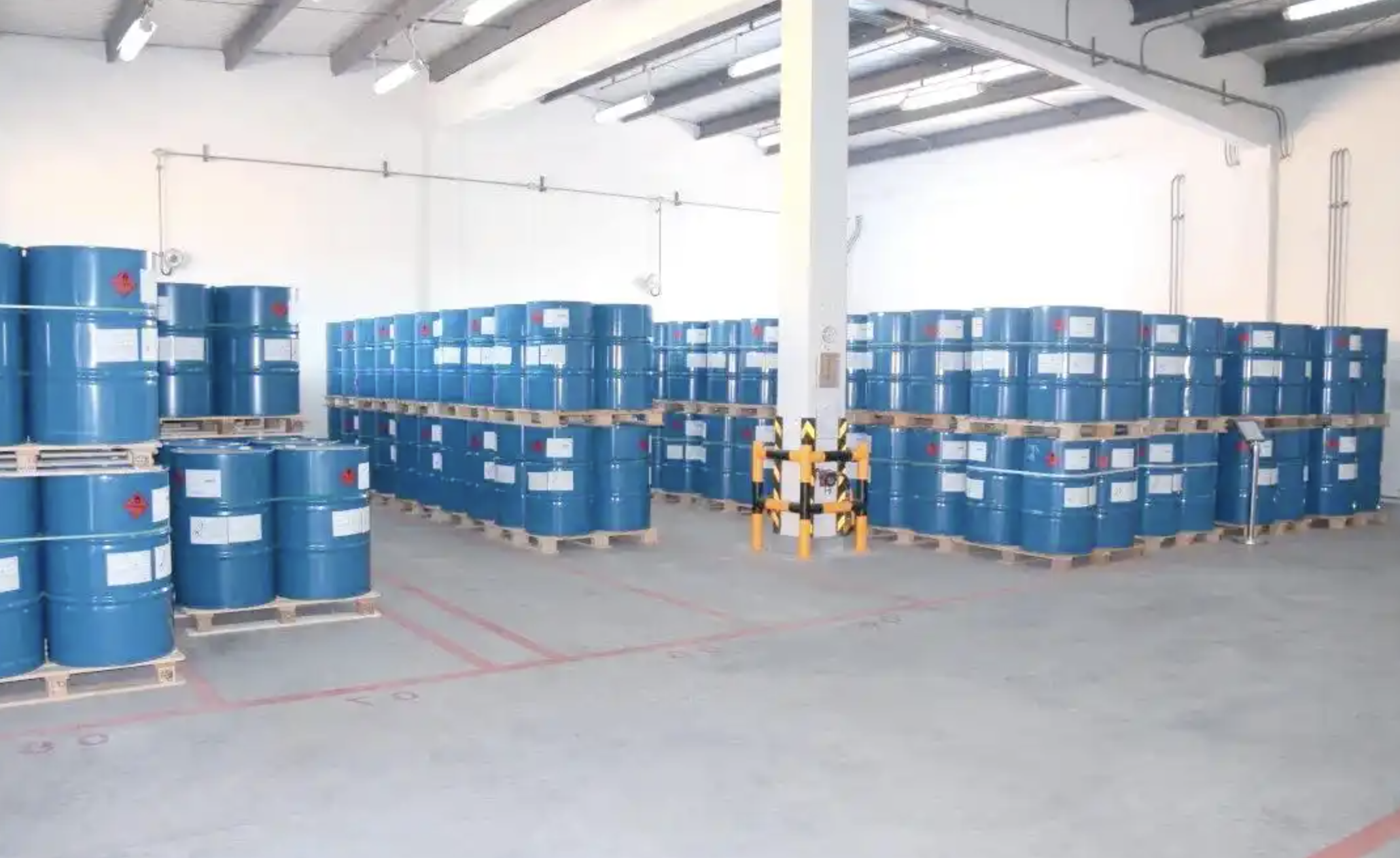
Application Scenarios Where Coating Agents Are Specified
Coating agents are specified inside fertilizer plants, compound fertilizer plants, DAP/MAP plants, and related phosphoric acid and flotation operations. The working condition is typically high temperature and high humidity, and the operation mode is typically 24/7.
In practice, this means the coating agent is consumed in a plant that cannot easily stop. Automatic dosing equipment runs at a set rate, and any drift in the coating formulation will first show up as a granule handling issue and only later in laboratory results.
The practical implication for buyers is that coating decisions should be planned as a stable production process, not as an opportunistic purchase. That is why plant teams tend to begin with a trial batch rather than a full container commitment.
Market Trends Shaping Coating Agent Procurement
IMARC Group estimates the global fertilizer additives market at approximately USD 3,123.3 million in 2025. Different research houses report different figures because the definition of additive scope varies, so the figure is better read as a magnitude than as a precise number.
Two proportions are more useful:
- Anti-caking agents held approximately 49% to 55% of the fertilizer additives market share in 2025, making them the largest functional segment.
- Asia Pacific dominated the market with a share above 60.5% in 2025, led by China and India.
A third signal concerns the organic and bio-based segment, which IMARC Group indicates is growing at a faster rate than the mineral segment. The direction is plausible given the regulatory pressure on contaminant limits, but buyers should treat the bio-based route as an option to verify rather than an assumed upgrade.
Finally, the compliance framework itself is becoming a procurement category. The EU fertilizing products regulation alone introduces CE marking and cadmium limits with direct implications for coating chemistry, and procurement teams are being asked to think about regulatory review as part of the coating agent evaluation rather than as a separate legal exercise.
Coating Agents vs. Traditional Conditioning Approaches
Traditional conditioning approaches rely heavily on powder anti-caking agents and simple caking control measures. These remain useful, but a buyer comparing them to coating agents should account for the distinctions that matter:
- Coverage mechanism. A powder anti-caking agent acts between granules, while an oil-base coating acts at the surface. The two are not directly interchangeable and produce different handling behavior.
- Process fit. Oil-base, water-base, and water-soluble coatings interact differently with existing dosing equipment, so the cheapest unit price is not automatically the lowest cost per treated tonne.
- Compliance path. Powder and oil-based coatings have different REACH and CLP profiles, and may require different registration and labeling routes for the EU market.
- Verified performance. Crush strength and dust index testing are the evidence that a coating holds up in long storage. Public sources currently provide limited verified test data for these properties.
This is also where the limits deserve an honest statement. The provided material does not include granule crush strength testing data and does not state NPK-specific strength performance data for the granulating aid. That is not a statement about product performance; it is a boundary on what can be claimed without plant trial data. For a coating agent, this limitation is more consequential than buyers usually assume, because the decision ultimately turns on granule behavior in storage and transport, and that behavior must be demonstrated rather than inferred from a spec sheet.
What a Coating Agent RFQ Should Contain
A useful RFQ for a coating agent specifies the constraints in three layers instead of asking only for price.
| Layer | What to specify |
|---|---|
| Specification | Fertilizer type (DAP/MAP/NPK/urea), preferred variant (oil-base, water-base, or water-soluble), intended dosing equipment. |
| Compliance | REACH registration status, CLP classification, applicable HS classification path, and ISO certificates. |
| Validation | Trial batch protocol, testing methods, batch consistency checks, and the after-sales support terms if issues appear. |
Framing the RFQ this way helps a buyer avoid the common outcome in which two coating agents look similar on paper, but only one survives a production-scale trial unchanged.
Future Outlook
In the coming years, coating agent procurement is likely to be shaped more directly by regulatory factors. EU fertilizing product regulation and the cadmium limits within it, together with REACH and CLP obligations, will continue to influence which coating chemistries can be used where. Suppliers who can present complete documentation will be at an advantage, particularly for export-oriented fertilizer producers.
A second direction is formulation transparency. The industry still lacks publicly verifiable data on coating agent application rates, test methods, and cost benchmarks, and until suppliers are willing to document that information, buyer evaluation will depend on trial batches and plant-side validation.
Third, the dominance of Asia Pacific in fertilizer additive demand suggests supplier selection will concentrate around a small number of manufacturing clusters. That concentration can make supply efficient, but it is also a reason to check qualified alternatives before relying on a single source.
More technical detail on the Fertchem additive range is available through the company's product catalogue, which can be accessed at the official catalogue link.
Frequently Asked Questions
What materials are used in fertilizer coating agents?
In the Fertchem product, the coating agent for DAP, MAP, and NPK fertilizers is composed of oil and pigment. The same product also serves as a coloring agent for DAP and NPK fertilizers, so the coating and coloring functions come from the same formulation.
What is the difference between an oil-base, water-base, and water-soluble anti-caking agent?
The product line includes oil-base, water-base, and water-soluble anti-caking agent variants, all intended for fertilizer applications. The difference is the carrier system, which affects how the product is applied to the granule surface. Buyers should match the variant to the plant's existing dosing equipment, raw material compatibility, and target formulation.
Can a coating agent be used on DAP, MAP, and NPK fertilizers?
Yes. The Fertchem coating agent is supplied for DAP fertilizer, MAP fertilizer, and NPK fertilizer, and the coloring function is applied to DAP and NPK fertilizer. There is no single universal formulation: selection should reflect fertilizer type, raw materials, process issues, and target formulation.
How can buyers verify a coating agent supplier's compliance documentation?
Buyers should request ISO 9001, ISO 14001, and ISO 45001 certificates together with the quality system behind them. For EU markets, they should also check whether the additive substance requires REACH registration and carries a CLP classification, because these are obligations that exist independently of the supplier's ISO status.
Does a coating agent prevent caking, and how is it tested?
The anti-caking product forms a uniform protective film on fertilizer granule surfaces, blocks moisture absorption, and reduces crystal bridge formation so that fertilizer keeps free-flowing during long-term storage and transportation. Buyers should request crush strength and dust index data from the supplier. The provided asset does not include granule crush strength testing data and does not state NPK-specific strength performance data for the granulating aid, so validation should be planned as a trial batch.
Is a coating agent customized for specific fertilizer types?
Yes. Additives can be customized according to process issues, fertilizer types, and production needs. Selection and customization should consider fertilizer type, raw materials, process issues, and target formulation, and the selection should not be reduced to a single catalogue specification.
Есть вопросы или нужны дополнительные детали?
Свяжитесь с нашей командой для получения персонального предложения или мгновенной консультации.
Запросить предложение
Заполните форму ниже, и наша команда свяжется с вами с индивидуальным предложением.
Прямой чат WhatsApp
Предпочитаете общаться в реальном времени? Напишите нам в WhatsApp для мгновенной помощи и быстрых ответов.
- Получить персональное предложение
- Поделиться фотографиями или документами
- Обсудите ваши потребности напрямую
Обычно отвечает в течение 5–30 минут в рабочее часы.