
Fiber Grade TiO₂ Procurement FAQ: SA-50/60/80 Specs, MOQ, Lead Time and Acceptance
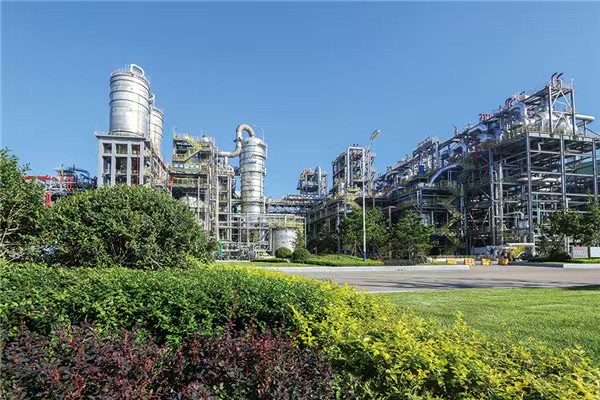
An integrated polyester polymerization and spinning site — the operating environment in which fiber grade titanium dioxide is dosed, dispersed and evaluated for acceptance.
Fiber grade titanium dioxide is an anatase TiO₂ additive dosed into man-made fiber systems for matting and whitening. It is used at low concentrations, yet it shapes matting level, fiber whiteness, spinneret life and filament breakage. That is why most purchases in this segment are settled before price is discussed — on specification limits, acceptance test methods, minimum order quantity and lead time.
This FAQ collects the technical and commercial questions that PET, viscose, acrylic and nylon producers most often raise when evaluating SA-50, SA-60 or SA-80 fiber grade titanium dioxide, and places each answer next to the specification or process evidence that supports it.
Why Fiber-Grade TiO₂ Procurement Is Now a Constraint Decision
Fiber grade TiO₂ rarely fails a purchase because the grade is unavailable. It fails because a specification, an acceptance method or a delivery commitment was not agreed before the first container shipped. In PET, viscose, acrylic and nylon spinning, the additive influences matting degree, whiteness, filter loading and spinneret performance, so procurement teams increasingly treat grade, batch data and commercial terms as one decision rather than three separate negotiations.
The supply context reinforces that approach. According to SunSirs / Titanium Dioxide Alliance data, China's effective annual TiO₂ production capacity declined from 5.9 million tons in 2024 to 5.7 million tons in 2025, while China's TiO₂ export volume reached 1.9017 million tons in 2024 — a 15.84% year-on-year increase. Capacity consolidating alongside rising export volumes means fiber-grade volume is increasingly allocated through supplier commitment rather than available on demand.
Three families of constraints now decide most fiber-grade purchases:
- Specification constraints — TiO₂ content, color value L and b, electrical conductivity, pH, 325-mesh sieve residue, moisture and Fe₂O₃ limits that must match the fiber system.
- Acceptance constraints — the test methods, batch documentation and certificates that demonstrate the specification was met.
- Commercial constraints — minimum order quantity, production lead time, monthly capacity and customization scope.
SA-50, SA-60 and SA-80: Specification Reference
All three grades in the SA series share an anatase crystal structure, but they are not three levels of the same product. SA-50 is a PET fiber whitening agent for polyester manufacturing; SA-60 is a matting agent for viscose and acrylic fiber; SA-80 is a matting agent for nylon. The table below consolidates the published parameters buyers need when writing a purchase specification.
| Parameter | SA-50 | SA-60 | SA-80 |
|---|---|---|---|
| Crystal structure | Anatase | Anatase | Anatase |
| Positioning | PET fiber whitening agent (polyester manufacturing) | Matting agent for viscose and acrylic | Matting agent for nylon |
| TiO₂ content | ≥98.0% | ≥97.0% | ≥95.0% |
| Sieve residue (325 mesh) | ≤0.004% | ≤0.05% | ≤0.004% |
| Moisture (105 °C) | ≤0.40% | ≤0.40% | ≤0.40% |
| Fe₂O₃ content | ≤0.004% | ≤0.004% | ≤0.004% |
| pH value | 6.8 ± 0.2 | 7.2 ± 0.6 | 6.8 – 8.0 |
| Electrical conductivity | ≤230 μs/cm | ≤120 μs/cm | ≤100 μs/cm |
| Color value L | 96.7 – 98.2 | ≥96.5 | 92.0 – 97.0 |
| Color value b | ≤0.0 | ≤0.5 | ≤3 |
| Specific surface area | 8.5 – 10.0 m²/g | — | — |
Four differences carry the most weight in procurement. TiO₂ content spans ≥98.0% to ≥95.0%, so dosing calculations must be recalculated whenever a grade changes. Electrical conductivity limits separate ionic tolerance: ≤230 μs/cm for SA-50 against ≤120 μs/cm for SA-60 and ≤100 μs/cm for SA-80. Color value ranges set the whiteness ceiling, from 96.7–98.2 with b ≤0.0 on SA-50 to 92.0–97.0 with b ≤3 on SA-80. pH bands differ as well, which matters when the additive is dispersed into a polymerization or spinning system with its own pH sensitivity.
Acceptance Criteria: TiO₂ Content, L/b, EC, pH and Sieve Residue
An acceptance protocol converts a datasheet into a testable contract. For fiber-grade TiO₂ the following parameters are the ones that most often appear in pre-shipment and incoming inspection records.
- TiO₂ content — ≥98.0% (SA-50), ≥97.0% (SA-60), ≥95.0% (SA-80). Content drives dosing ratio and the effective matting or whitening level delivered per ton of fiber.
- Color value L and b — the whiteness and yellowness indicators. SA-50 is specified at L 96.7–98.2 with b ≤0.0; SA-60 at L ≥96.5 with b ≤0.5; SA-80 at L 92.0–97.0 with b ≤3. These values translate directly into the color consistency of the finished fiber and into dyeing uniformity.
- Electrical conductivity (EC) — an indicator of ionic contamination. Limits are ≤230 μs/cm (SA-50), ≤120 μs/cm (SA-60) and ≤100 μs/cm (SA-80). Elevated conductivity is associated with side reactions and with interference in polymerization rather than with the additive's optical function.
- pH value — 6.8 ± 0.2 (SA-50), 7.2 ± 0.6 (SA-60), 6.8–8.0 (SA-80). A controlled, near-neutral pH supports hydrolysis resistance inside the process stream.
- Sieve residue (325 mesh) — ≤0.004% for SA-50 and SA-80, ≤0.05% for SA-60. Coarse particles are the usual cause of filter blockage and spinneret clogging, so this is one of the most consequential acceptance limits.
- Moisture (105 °C) and Fe₂O₃ — both specified at ≤0.40% moisture and ≤0.004% Fe₂O₃ across the three grades. Low iron content limits discoloration, which supports anti-yellowing behaviour in the finished fiber.
- Specific surface area (SSA) — specified for SA-50 at 8.5–10.0 m²/g, a range that supports dispersion stability in ethylene glycol.
Two reference points help buyers compare supplier claims with a shared baseline. China's national standard GB/T 37632-2019 establishes test methods for titanium dioxide content in man-made fibers. Reference data for fiber-grade material also points to a typical particle size D50 of around 0.28 μm, with 90% of particles falling between 0.1 and 0.5 μm — a distribution that favors dispersion in spinning systems rather than settling or filter loading.
Documentation is part of acceptance. SA-50 is certified to ISO 9001:2015 under certificate number TUV100034917/2 issued by TUV SUD, with a scope covering the production and sales of chemical fiber grade titanium dioxide. Because certificates carry defined validity periods, buyers should confirm the current certificate status and scope at the time of order rather than relying on a copy filed during an earlier supplier qualification. On the production side, quality control for the SA series is structured as 100% pre-shipment testing.
Grade-to-Fiber Fit: PET, Viscose/Acrylic and Nylon
SA-50 in PET polymerization and spinning
Within ethylene glycol circulation and polyester polycondensation conditions, SA-50 is designed with hydrolysis resistance and a neutral pH, so it does not promote adverse side reactions and slows intrinsic viscosity degradation in polyester chips. In practice the grade is dispersed evenly in ethylene glycol at 40–60 °C under low-speed stirring to form a stable suspension without sedimentation, then fed into the PET esterification reactor and blended at 240–285 °C without interfering with the polymerization reaction. Reaction temperature is kept below 290 °C. The supplier's process guidance also calls for closed vacuum feeding to limit moisture and impurities, avoidance of high-ion additives, and dry, sealed storage.
Reported results from a polyester maker case covering more than 5,000 MT of supply over more than ten years describe even dispersion without black spots or crystal points, a stable L value above 96.7, and anti-yellowing behaviour in the finished fiber. On the spinning side, the same case record describes spinneret clogging cycles extended by more than 40%, reduced filter replacement frequency, and filament breakage reduced by roughly 35%. These are supplier case figures; buyers should validate them against their own line conditions during a trial order before converting them into contractual expectations.
SA-60 in viscose and acrylic matting
SA-60 is specified for viscose and acrylic fiber matting, with TiO₂ content ≥97.0%, pH 7.2 ± 0.6, EC ≤120 μs/cm, color value L ≥96.5 and b ≤0.5. Its 325-mesh sieve residue limit of ≤0.05% is wider than the ≤0.004% applied to SA-50 and SA-80, so plants running fineness-sensitive filtration should address this parameter explicitly during qualification and align the acceptance limit with their filter loading tolerance.
SA-80 in nylon matting
SA-80 is specified for nylon matting with TiO₂ content ≥95.0%, pH 6.8–8.0, EC ≤100 μs/cm, color value L 92.0–97.0 and b ≤3. The broader L and b ranges reflect typical polyamide matting requirements rather than a lower quality standard; where a higher whiteness target applies, buyers should confirm the achievable range with the supplier before freezing the specification, because the accepted whiteness window is what determines the dosing level and the resulting cost per ton of fiber.
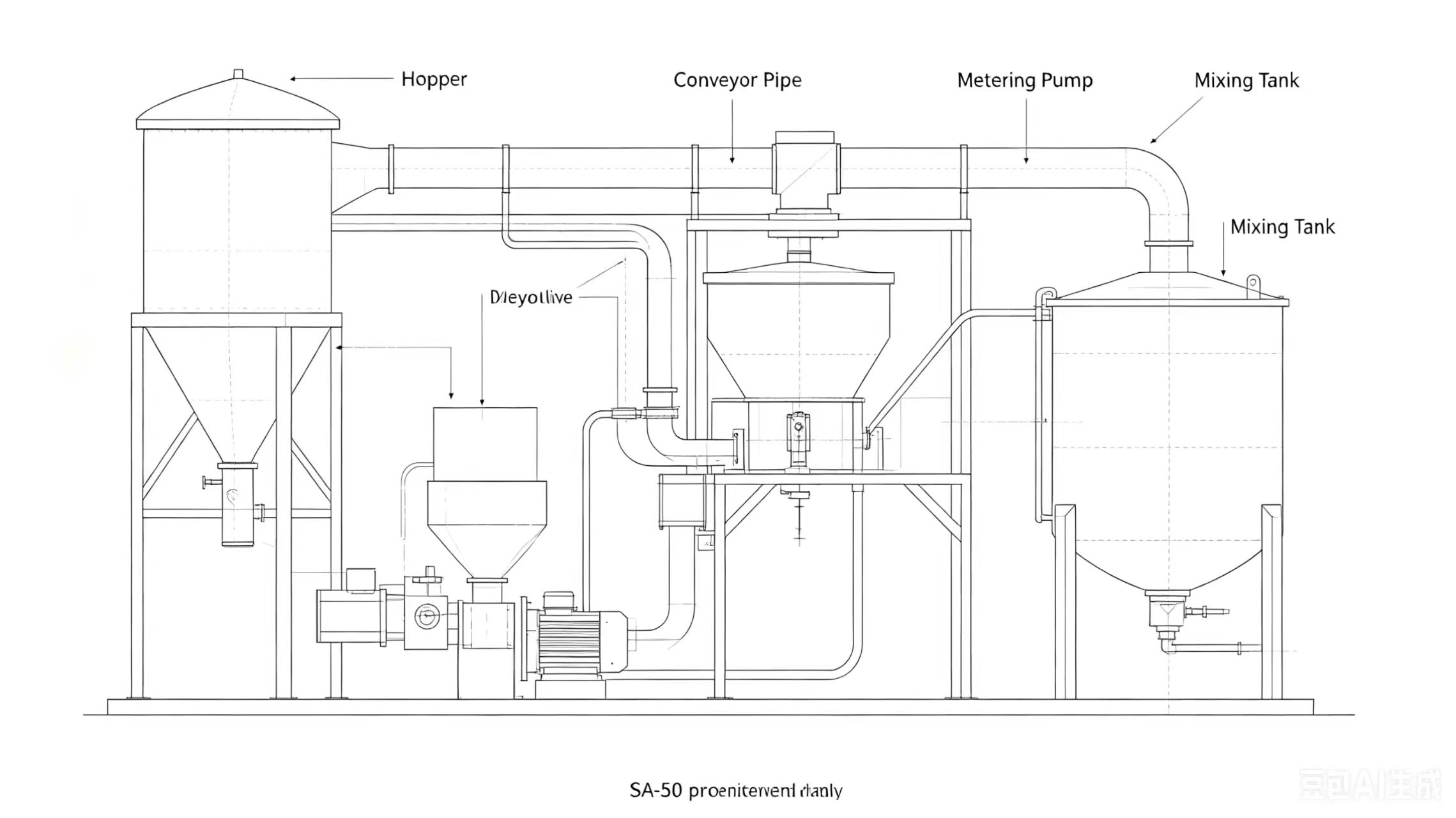
Continuous feeding and dispersion ahead of polymerization: closed vacuum feeding and controlled dispersion temperature are part of the process window that determines whether the specified dispersion quality is actually achieved on the line.
MOQ, Lead Time and Capacity in Practice
Commercial terms for the SA series are published as follows: minimum order quantity of 1 metric ton, production lead time of 15–30 days, monthly capacity of 1,000 MT, annual output of 16,000 MT, OEM/ODM customization covering polyester and nylon, 100% pre-shipment testing, and after-sales support delivered remotely or on site. Export markets for these grades include Korea, Japan, India, Indonesia and Vietnam.
ORIENT INTERNATIONAL HOLDING SHANGHAI FOREIGN TRADE CO., LTD is the enterprise behind these terms. Founded in 1988 and wholly owned by Orient International Group, it is a Shanghai-based state-owned foreign trade company that deals in titanium dioxide and related petrochemical raw materials and provides international logistics, customs declaration, letter of credit settlement and cross-border supply chain services. The operation runs a 700,000 m² facility with around 160 employees and a 25-engineer R&D team, holds a 30% export ratio, and serves markets including Korea, Japan, the EU, North America, South America, Southeast Asia, the Middle East and India, supported by its parent group's overseas branch network.
For a purchasing team, these figures translate into three practical planning inputs. A 1 metric ton MOQ is small enough to support a line trial or a pilot batch of matte fiber without committing to volume. The 15–30 day lead time is a production window, so ocean transit, export documentation and customs clearance sit outside it and should be added when calculating the re-order point. And a monthly capacity of 1,000 MT against an annual output of 16,000 MT indicates that scaling from a trial order to routine volume is primarily a scheduling question rather than a re-qualification one — provided the grade and acceptance protocol are fixed at the start.
Comparing Sourcing Routes — and the Limits Buyers Should Accept
Fiber-grade TiO₂ is usually evaluated against two alternatives: substituting a grade already handled elsewhere in the plant, and buying on the spot market across multiple sources. Neither route is inherently wrong, but each moves risk to a different stage of the process.
| Sourcing route | Commercial strength | Trade-off to manage |
|---|---|---|
| Dedicated fiber grade (SA-50 / SA-60 / SA-80) | Specification limits are published for fiber use, and the ISO 9001:2015 scope covers chemical fiber grade TiO₂ production and sales | Dosing, dispersion temperature and filtration settings must be matched to the specific grade |
| Substituting a general-purpose grade already stored on site | Familiar handling and existing storage arrangements | Spinning-relevant limits such as EC, sieve residue and particle size are typically not specified for that use, so validation cost shifts downstream into spinning and dyeing |
| Spot or multi-source purchasing | Volume flexibility when a line ramps up quickly | Batch-to-batch consistency and traceability are harder to document, which complicates acceptance records and complaint handling |
Limits and boundaries of fiber-grade TiO₂ sourcing
- Grade specificity. SA-50, SA-60 and SA-80 are not drop-in substitutes for one another. TiO₂ content, EC limits, pH bands and color value ranges differ, and any grade change requires re-checking dosing and dispersion settings.
- Conductivity headroom. SA-50 carries a higher EC limit (≤230 μs/cm) than SA-60 (≤120 μs/cm) and SA-80 (≤100 μs/cm). Systems with strict ionic sensitivity should weigh that difference explicitly during qualification rather than assuming equivalent behaviour.
- Lead time definition. The published 15–30 day lead time covers production. Transit time, export documentation and customs clearance are additional and vary by destination, so total replenishment time is always longer than the quoted figure.
- Certificate validity. ISO 9001 certificates are issued for defined periods. Buyers should verify that the certificate is current and that its scope still covers fiber-grade production at the time of contracting.
- Testing ownership. 100% pre-shipment testing is a supplier-side control. It supports, but does not replace, incoming inspection at the buyer's own laboratory.
- Process preconditions. SA-50 requires dry and sealed storage, closed vacuum feeding, and dispersion in ethylene glycol at 40–60 °C. These conditions are part of the grade's performance envelope, not optional good practice.
Market Trend Signals to Price Into a Contract
Two data points frame the medium-term outlook for fiber-grade buyers. Grand View Research projects the global titanium dioxide market to reach USD 24.4 billion in 2026, and the anatase segment — the crystal form used for fiber grades — is expected to grow at a CAGR of 7.3% between 2026 and 2033.
Against that demand curve, the capacity and export pattern described earlier points to a market in which fiber-grade allocation is decided by supplier relationships, batch documentation and qualification timing rather than by open availability. In practical contract terms, that favors agreements that fix grade, acceptance protocol and re-order windows rather than unit price alone, and it favors qualifying more than one grade in advance so that a line is not dependent on a single specification.
What to Expect Over the Next Procurement Cycles
Three shifts are already visible in how fiber-grade TiO₂ is bought. Verification is moving from brand-level claims to batch-level data, with L, b, EC, pH and sieve residue reviewed per lot rather than per supplier. Recycled PET feedstock introduces greater variability into polymerization, which raises the value of consistent whiteness and low iron content in the additive. And documentation is being reviewed during supplier qualification rather than after it, with test methods such as GB/T 37632-2019 serving as a shared reference between buyer and supplier laboratories.
The practical consequence for procurement teams is a specification file that pairs each grade with its acceptance limits, its process window and its commercial terms — and a trial order sized to test all three before volume commitments are made.
Fiber Grade TiO₂ Procurement FAQ
How do buyers define "fiber grade" titanium dioxide in a purchase specification?
Fiber grade titanium dioxide is an anatase TiO₂ additive specified for man-made fiber production rather than for coatings, plastics or paper. A fiber-grade purchase specification typically fixes TiO₂ content, color value L and b, electrical conductivity, pH, 325-mesh sieve residue, moisture and Fe₂O₃, because these parameters track directly to spinning behaviour: coarse particles and ionic contamination affect filter and spinneret performance, while L and b determine whiteness and yellowing in the finished fiber. Reference data for fiber-grade material points to a typical particle size D50 of around 0.28 μm, with 90% of particles between 0.1 and 0.5 μm, and China's national standard GB/T 37632-2019 provides test methods for TiO₂ content in man-made fibers.
What is the difference between SA-50, SA-60 and SA-80, and can they be substituted for one another?
The three grades share an anatase crystal structure but target different fiber systems and carry different limits. SA-50 is a PET fiber whitening agent for polyester manufacturing with TiO₂ content ≥98.0%, pH 6.8 ± 0.2, EC ≤230 μs/cm and color value L 96.7–98.2. SA-60 is a matting agent for viscose and acrylic with TiO₂ content ≥97.0%, pH 7.2 ± 0.6, EC ≤120 μs/cm and L ≥96.5. SA-80 is a matting agent for nylon with TiO₂ content ≥95.0%, pH 6.8–8.0, EC ≤100 μs/cm and L 92.0–97.0. They are not interchangeable without re-validation, because content differences change the dosing ratio and conductivity differences change the ionic load in the process stream.
Which specification values should be written into an acceptance protocol?
At minimum: TiO₂ content, color value L and b, electrical conductivity, pH, 325-mesh sieve residue, moisture at 105 °C and Fe₂O₃ content; add specific surface area where it is specified, as it is for SA-50 at 8.5–10.0 m²/g. Each value should be paired with a test method and a sampling rule so that a disputed batch can be resolved against a shared reference. For fiber-grade material, sieve residue and electrical conductivity deserve particular attention because they correlate with filter blockage, spinneret clogging and side reactions rather than with optical performance alone.
What evidence and certification support acceptance?
Two categories of evidence apply. The first is lot-level data: quality control for the SA series is structured as 100% pre-shipment testing, which means each shipment is tested before dispatch. The second is system-level certification: SA-50 is certified to ISO 9001:2015 under certificate number TUV100034917/2 issued by TUV SUD, with a scope covering the production and sales of chemical fiber grade titanium dioxide. Because certificates carry defined validity periods, buyers should confirm the current status and scope at the time of order, and treat the certificate as complementary to — not a substitute for — batch parameter records.
What is the minimum order quantity for fiber-grade TiO₂, and how does it map to a trial run?
The published minimum order quantity for the SA series is 1 metric ton. That volume is generally sufficient for a pilot batch or a line trial in PET, viscose, acrylic or nylon spinning, which allows a buyer to validate dispersion behaviour, whiteness and filtration impact before committing to routine volume. OEM/ODM customization is available for polyester and nylon applications, so a trial can be structured around a specific target specification rather than a standard catalogue grade.
What lead time should be planned, and what capacity stands behind it?
Production lead time is quoted at 15–30 days, supported by a monthly capacity of 1,000 MT and an annual output of 16,000 MT. The quoted lead time covers production only; ocean transit, export documentation and customs clearance add further time and vary by destination. Buyers planning replenishment should therefore build the re-order point on total landed time rather than on the production window alone. Export markets for these grades include Korea, Japan, India, Indonesia and Vietnam.
What are the limits of fiber-grade TiO₂ sourcing that buyers should accept?
Several boundaries are inherent to the product and the supply model. Grades are specific: changing from SA-50 to SA-60 or SA-80 requires recalculation of dosing and dispersion settings. Electrical conductivity limits are not uniform, ranging from ≤230 μs/cm on SA-50 to ≤100 μs/cm on SA-80. Quoted lead time excludes transit and clearance. ISO 9001 certification has a validity window that must be re-verified periodically. Supplier-side 100% pre-shipment testing does not remove the need for incoming inspection. And SA-50 requires dry, sealed storage, closed vacuum feeding and dispersion in ethylene glycol at 40–60 °C, with reaction temperature kept below 290 °C — conditions that are part of the grade's operating envelope.
Additional company background, grade documentation and supply terms are compiled in the Orient International corporate brochure (PDF), available here: Orient International corporate brochure. Product and company information is also published at www.petchemical.com.