
Fiber for Concrete: Steel Fiber Fit in Tunnels and Mining
Steel fiber selection for tunnel segments and mining concrete is a constraint-matching problem, not a ranking problem. The product family discussed here is specified within a diameter band of 0.5–1.0 mm, a length band of 25–60 mm and a tensile strength band of 1100–2100 MPa. The buyer decision is which point inside that envelope fits a particular mix design, dosing line and placement method.
Tunnel segment casting and underground mining support share a characteristic that most above-ground concrete work does not: the reinforcement decision is effectively frozen once the mould, the batching sequence and the acceptance test regime are fixed. Changing fiber type late in a programme is not a substitution — it is a re-qualification. Buyers in these two segments therefore spend their time on constraints: dimensional band, tensile class, fiber form and certification scope, rather than on headline claims.
This reference sets out how those constraints interact for steel fiber used in tunnel segments, mining concrete and industrial flooring, using verified product data from Tianjin TingCo Tech Co., Ltd. together with published standards and market data. Recommendations are tied to declared specifications. Project-specific performance remains a matter for mix design and testing, not for a supplier brochure.
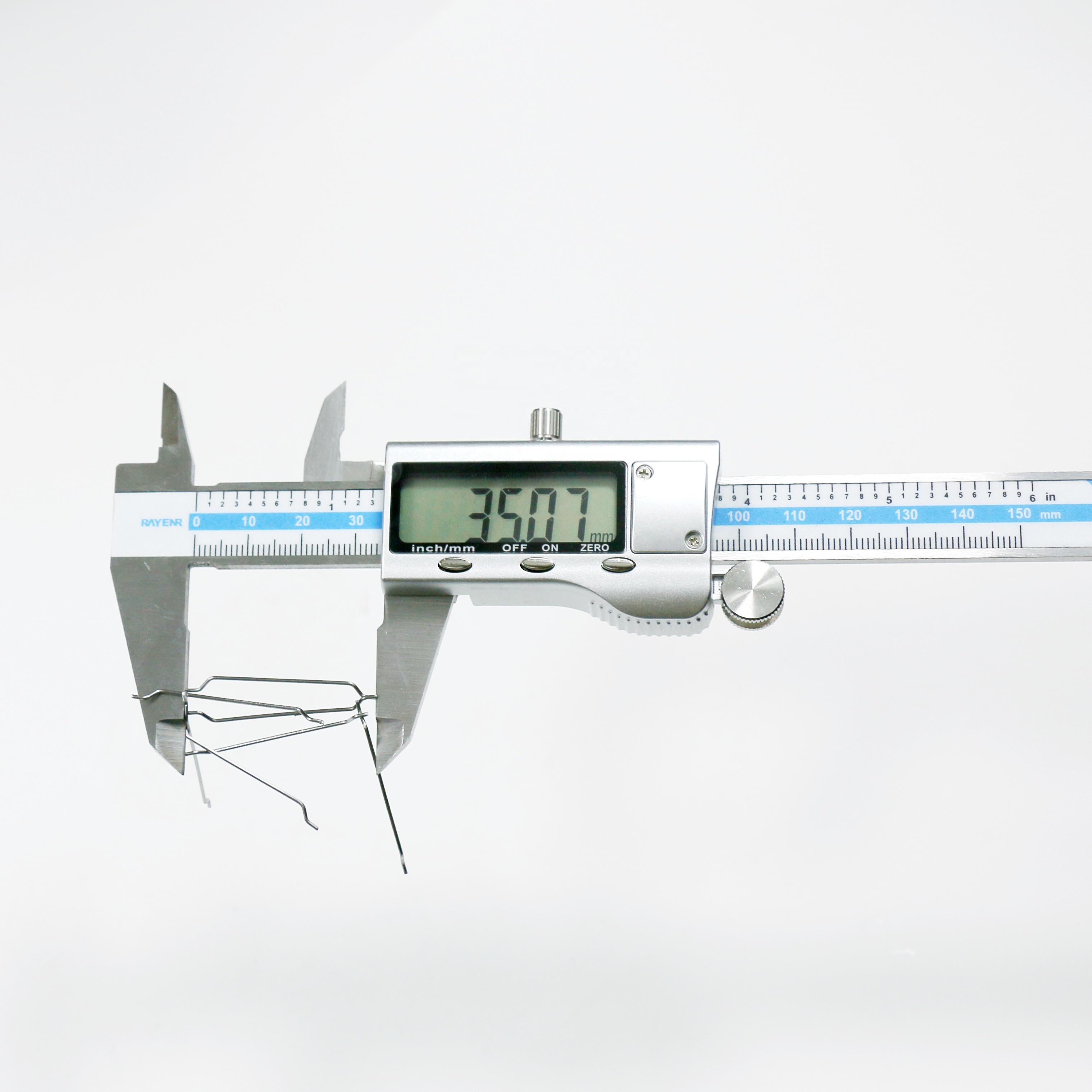
The constraint stack that shapes a tunnel or mine specification
Three constraints usually decide a steel fiber shortlist before price is discussed. They are independent of each other, and a supplier that satisfies one but not the others creates a re-qualification risk.
1. Certification scope, not certification existence
For EU-facing projects, the document that matters is a CE certificate with a defined scope. Tianjin TingCo Tech Co., Ltd. holds CE Certificate 1301 – CPR – 2456, issued by TSUS to EN 14889-1:2006, valid from 2025-05-13 to 2030-05-12. The scope covers steel fibres for concrete (Group I) for reinforcement of concrete, mortars and cementitious mixes. Critically, the certificate is stated to apply to steel fiber products with diameter 0.5–1.0 mm, length 25–60 mm and tensile strength 1100–2100 MPa, and it is stated to cover fiber supplied for industrial flooring as well as tunnel segment and mining applications.
The purchasing implication is straightforward. A certificate is only useful if the specification sits inside its dimensional and strength scope. A fiber at 0.55 mm diameter and 25 mm length and a fiber at 0.9 mm diameter and 60 mm length can both be inside the same certified band, but a specification that drifts outside the band is no longer covered by that document — even if the supplier and the factory are unchanged.
2. Geometry versus section and placement
The second constraint is whether the declared length works with the section being cast. A 60 mm fiber behaves differently in a segment of substantial thickness than a 25–35 mm fiber behaves in a thin overlay or in a dense reinforcement cage. Length drives anchorage across a crack; diameter drives the number of fibers per unit mass and the stiffness of each individual fiber. Both must be read against the section, the cover and the placement method.
3. Fiber form versus the dosing line
The third constraint is the form in which the fiber arrives at the batching plant. Loose fiber and glued bundled fiber are not marketing variants of the same input. They change feed rate, dispersion behaviour and the mixing time budget, and therefore change what the dosing equipment and the mixer operator have to do.
Why 60 mm length matters for mixing, dosing and placement
The steel fiber family described in the product data is available with a length of 60 mm, inside the overall 25–60 mm range. For tunnel segments and mining concrete, 60 mm is usually the upper end of the practical band, and it is chosen deliberately rather than by default.
Anchorage and crack bridging. A longer fiber develops anchorage over a longer embedment length on each side of a crack. In sections that can accommodate it, that geometry is the reason a designer moves up the length band. The trade-off is that the same geometry is less forgiving in thin sections, where a long fiber can protrude, align unfavourably or fail to develop anchorage within the cover.
Dispersion risk scales with length. Longer fibers are more prone to balling and to interlocking during charging. The application data for this product family states the requirement plainly: high dispersion uniformity, good compatibility with cement, and no agglomeration during mixing. That requirement is not decorative — it is the specific failure mode that 60 mm fiber introduces into a mixing cycle.
The mixing time budget changes. The manufacturer's dosing guidance recommends extending mixing time by 30–60 seconds compared with plain concrete to achieve uniform dispersion without clumping. In a segment plant running a fixed cycle, 30–60 seconds per batch is a real production constraint and should be planned before the first cast, not discovered at the trial mix.
Dosing sequence: the practical order of operations
The published mixing procedure for this product line is specific and worth reading as a production instruction rather than as general advice:
- Determine the dosage from the mix design. Guidance values are 20–40 kg/m³ for shotcrete, 15–30 kg/m³ for industrial floors and 10–30 kg/m³ for precast elements such as segments.
- Weigh the fiber — do not dose by volume or by bag count.
- Water-soluble packaging bags can be fed directly into the mixer with the aggregates; the stated dissolution time is approximately 5 seconds. Non-water-soluble packaging must be opened and the fiber spread evenly in batches.
- Extend mixing time by 30–60 seconds versus normal concrete to ensure uniform dispersion without clumping.
- Check slump and workability, and adjust superplasticizer dosage if necessary.
The stated safety note is equally operational: operators should wear protective gloves and goggles, and large quantities should not be dumped in a single charge, because that is the most common route to clumping. Where haul distances are long, pre-mixing at the batching plant is recommended over relying on the truck mixer.
Loose versus glued fiber at the plant level
The practical difference between loose and glued bundled fiber shows up in feeding and dispersion, not in the certified dimensional band. Glued bundles are designed to separate during mixing, which generally improves feed consistency and reduces the risk of balling at higher dosages. Loose fiber feeds more freely but depends on a controlled, uniform feed rate to avoid a local concentration in the mixer. Both forms are used in segment and mining work; the choice is a function of the plant's dosing equipment (dosing machine, concrete mixer, spraying machine), the operator's discipline and the dosage being run, not of a universal preference.
For sprayed concrete in mining, the same logic applies with an additional constraint: rebound. The dosing guidance for shotcrete sits at the higher end, 20–40 kg/m³, and the fiber must remain uniformly distributed through the spray stream. That places a premium on dispersion before the nozzle, not after it.
Where the four models sit in the certified envelope
The product data lists four model designations for this steel fiber family: TC-07560-HNG, TC-07560-HHG, TC-05535-HNG and TC-07535-HNL. All four are stated as carbon steel wire products intended for the Industrial Flooring, Tunnel Segment and Mining industries, and all four sit inside the same family-level specification.
| Model | Family specification (declared) | Intended industries (declared) | Certification coverage |
|---|---|---|---|
| TC-07560-HNG | Diameter 0.5–1.0 mm; length 25–60 mm; tensile strength 1100–2100 MPa | Industrial Flooring; Tunnel Segment; Mining | CE 1301 – CPR – 2456 to EN 14889-1:2006, within the stated dimensional and strength band |
| TC-07560-HHG | Diameter 0.5–1.0 mm; length 25–60 mm; tensile strength 1100–2100 MPa | Industrial Flooring; Tunnel Segment; Mining | CE 1301 – CPR – 2456 to EN 14889-1:2006, within the stated dimensional and strength band |
| TC-05535-HNG | Diameter 0.5–1.0 mm; length 25–60 mm; tensile strength 1100–2100 MPa | Industrial Flooring; Tunnel Segment; Mining | CE 1301 – CPR – 2456 to EN 14889-1:2006, within the stated dimensional and strength band |
| TC-07535-HNL | Diameter 0.5–1.0 mm; length 25–60 mm; tensile strength 1100–2100 MPa | Industrial Flooring; Tunnel Segment; Mining | CE 1301 – CPR – 2456 to EN 14889-1:2006, within the stated dimensional and strength band |
Note on reading the table: the specification and the certification apply to the product family envelope as declared. Buyers should obtain the per-model datasheet in writing and confirm the individual diameter and length against the project specification before issuing a purchase order. The certification covers conformity to EN 14889-1:2006 within the stated band; it does not certify project performance.
Scenario fit: tunnel segments, mining support and industrial flooring
Tunnel segments
Segment casting is a precast operation with a fixed cycle, a defined mould and a defined acceptance test. The relevant constraints are dispersion at the dosage used, mixing time inside the cycle, and the dimensional band of the certified fiber. The published precast dosage guidance of 10–30 kg/m³ is the starting range; the actual figure belongs to the segment design and the residual strength requirement, and it should be validated against the segment's own test regime rather than transferred from another project.
The working conditions declared for this application family are relevant to specification: humid environment, confined underground space, dynamic vehicle load, alternating temperature and vibration load. These are the conditions that make crack control the stated primary function of the fiber, and they are also the conditions under which fiber dispersion defects are least visible and most costly.
Mining and sprayed concrete
Mining support concrete is placed in a confined, humid, variable-temperature environment, typically by spraying. The stated matched equipment for this application family includes a spraying machine alongside the dosing machine and concrete mixer, and the shotcrete dosage guidance is the highest of the three ranges at 20–40 kg/m³. The design constraint is not simply strength: it is uniformity of distribution in a placement method that gives the operator limited ability to correct a bad batch after the fact.
Industrial flooring, as the reference case
Industrial flooring is the segment where this product family's performance has been documented in the most concrete terms. The application segment accounted for a 37.28% share of the steel fiber market in 2026, according to Fortune Business Insights, which makes it the reference point against which segment and mining specifications are usually priced and benchmarked.
A documented case illustrates the dosing logic. A wholesaler with technical support in Thailand used 2,000 tons of fiber over one year on heavy-duty industrial warehouse flooring, logistics park flooring and jointless flooring. The design used steel fiber in the industrial floor at a dosage of 20 kg/m³ with an 80/60 designation at 1200 MPa — the 80/60 shorthand commonly used to denote 0.8 mm diameter by 60 mm length. The technical highlight of that project was not the fiber itself: the pile layout was rearranged and optimised to better fit the slab-on-pile design. That detail matters for buyers, because it shows where fiber decisions and structural decisions interact, and where the fiber supplier's design support stops being a marketing line and becomes a drawing review.
Certification and evidence: what a buyer can actually check
The verifiable evidence base for this product family is narrower than a typical marketing page suggests, and that is useful. It consists of four checkable items.
- CE Certificate 1301 – CPR – 2456, issued by TSUS against EN 14889-1:2006, scope steel fibres for concrete (Group I), EU market, issued 2025-05-13, valid to 2030-05-12, applying to steel fiber products of 0.5–1.0 mm diameter, 25–60 mm length and 1100–2100 MPa tensile strength.
- Standard alignment. EN 14889-1:2006 defines definitions, specifications and conformity for steel fibers used in concrete within the EU. ASTM A820/A820M-16 is the core international specification covering steel fiber types for fiber-reinforced concrete. Tianjin TingCo Tech Co., Ltd. states CE certification in accordance with EN 14889-1, compliance with ASTM A820 and ISO 13270, and ISO 9001 quality certification for its factory.
- Testing capability. The company operates its own steel fiber reinforced concrete testing laboratory at the factory, where each product line undergoes beam bending, compression and toughness tests.
- Process control. In-line inspection and pre-shipment inspection are stated as the quality control regime, covering specification, quantity and packaging before dispatch.
The verification gap that remains is the project-level one. Flexural toughness is verified by three-point bending beam test to EN 14651, beam test to ASTM C1609 or panel test to ASTM C1550, and those tests establish residual flexural strength and toughness index for a specific mix. They cannot be inferred from a fiber datasheet, and no supplier should be asked to guarantee them without a trial mix.
Market signals: where steel fiber demand is concentrating
Published market data helps explain why tunnel and mining buyers are being asked harder specification questions than five years ago.
Fortune Business Insights projects the global steel fiber market to reach approximately USD 2.87 billion by 2026. Within that total, industrial floors accounted for a 37.28% share in 2026, and hooked-end steel fibers held the leading type share at 58.89%. On the supply side, trade data aggregator Zauba recorded China as the largest exporter of steel fiber under HS code 7326, at 51.85% of the imports identified in that dataset — a figure that should be treated as directional, since it comes from commercial customs aggregation rather than an official statistical release.
One caution is worth carrying into any procurement discussion. Market-sizing estimates for this category vary widely by publisher, because some include synthetic fibers and rebar-replacement value modelling within the same heading. A competing estimate places the 2025 market materially higher than the 2026 figure above, largely for that methodological reason. Buyers who quote a market size in an internal business case should quote the source and the scope alongside it.
The adjacent synthetic fiber market is also expanding: Fortune Business Insights expects the global polypropylene fiber market for construction to grow at a CAGR of 6.4% from 2026 to 2034. That growth is relevant to steel fiber specification in flooring and mining, because it pushes more projects towards hybrid or comparative evaluations rather than a single-material default.
Steel fiber versus conventional reinforcement — and where the comparison stops
The honest comparison is not steel fiber against rebar in the abstract. It is steel fiber against the specific alternative a project would otherwise use, evaluated on the same acceptance criteria.
| Consideration | Steel fiber (this family) | Conventional bar or mesh reinforcement | Synthetic macro fiber |
|---|---|---|---|
| Primary function | Crack control; contribution expressed as residual flexural strength and toughness | Provides designed tensile capacity and structural continuity | Crack control, with no corrosion risk |
| Declared strength reference | Tensile strength 1100–2100 MPa (family band) | Depends on bar grade and detailing | PP macro fiber tensile strength 550–600 MPa; PP twisted fiber 450–650 MPa |
| Placement impact | Dispersion must be controlled; slump falls and superplasticizer adjustment is typically required | Fixing labour and cover control; no mixing impact | Low dosage by mass; no corrosion but lower stiffness contribution |
| Verification route | EN 14651, ASTM C1609 or ASTM C1550 on the project mix | Design check plus inspection of placed steel | Equivalent flexural testing on the project mix |
| Stated construction-time effect | Manufacturer states up to 50% reduction in construction time and 30–40% lower total cost versus conventional reinforcement | Reference case | Comparable programme savings where corrosion protection is avoided |
Where the comparison breaks down is worth stating plainly. Steel fiber does not automatically replace designed bar reinforcement; its contribution is counted through residual strength and toughness within the limits that design codes allow, and those limits are project-specific. The construction-time and cost figures above are the manufacturer's stated positioning for the product family, not independently audited project outcomes. Dispersion and workability are real operational risks that require a mixing time allowance and superplasticizer adjustment. And the CE certificate covers conformity within a dimensional and strength band — it is not a performance guarantee for a segment, a tunnel lining or a mine roadway.
The synthetic alternative has its own boundary. Polypropylene fiber removes the corrosion question entirely and is materially lighter, but its declared tensile strength sits below the steel band, which changes what it can be expected to contribute in a heavily loaded segment or a dynamic mining floor. That is a design comparison, not a quality judgement.
Future outlook
Three developments are likely to shape how steel fiber is specified for tunnel and mining work over the next several years.
Certification literacy is rising. As CE scope statements become standard reading in procurement, specifications will increasingly be written to match a certified band rather than a preferred brand. Suppliers whose certificate scope can be quoted verbatim against a project specification will have an advantage in tender clarification.
Testing data is becoming a purchasing document. With hooked-end fiber holding 58.89% of the type segment and industrial floors at 37.28% of application share, differentiation is shifting from geometry claims to demonstrated mix performance. Manufacturers with in-house beam bending and toughness testing capability can supply project teams with pre-qualification data instead of assertions.
Hybrid reinforcement is becoming a normal conversation. With the construction PP fiber market projected to grow at 6.4% CAGR to 2034, more projects will compare steel, synthetic and combined solutions on the same acceptance criteria. For tunnel segments and mining floors, the practical outcome is likely to be more explicit design justification rather than a shift away from steel.
Frequently asked questions
What dimensional and tensile range should a tunnel segment specification quote for steel fiber?
The certified envelope for this product family is a diameter of 0.5–1.0 mm, a length of 25–60 mm and a tensile strength of 1100–2100 MPa. CE Certificate 1301 – CPR – 2456 applies to steel fiber products within that band, and the certificate is stated to cover fiber for tunnel segment and mining applications as well as industrial flooring.
Does the choice between loose and glued fiber change mixing and dosing?
It changes feeding and dispersion behaviour rather than the certified specification. The published procedure applies to both forms: dose by weight according to the mix design, feed water-soluble packaging bags directly into the mixer with aggregates (stated dissolution time approximately 5 seconds), spread non-water-soluble product evenly in batches, and extend mixing by 30–60 seconds versus plain concrete to achieve uniform dispersion without clumping. Checking slump and adjusting superplasticizer after charging is part of the same procedure.
What dosage ranges apply to mining shotcrete, industrial floors and precast segments?
The stated guidance is 20–40 kg/m³ for shotcrete, 15–30 kg/m³ for industrial floors and 10–30 kg/m³ for precast elements. These are starting ranges for mix design, not fixed values; the actual dosage belongs to the structural design and must be confirmed by testing the project mix.
Which certificate covers these products for EU projects, and what does its scope not include?
CE Certificate 1301 – CPR – 2456, issued by TSUS to EN 14889-1:2006, valid from 2025-05-13 to 2030-05-12, covers steel fibres for concrete (Group I) for reinforcement of concrete, mortars and cementitious mixes on the EU market, restricted to products of 0.5–1.0 mm diameter, 25–60 mm length and 1100–2100 MPa tensile strength. It does not certify project-specific performance for a given segment, lining or roadway; that must be established by testing the actual mix.
How should fiber performance be verified before acceptance?
Through flexural toughness testing on the project mix: three-point bending beam test to EN 14651, beam test to ASTM C1609, or panel test to ASTM C1550. These methods establish residual flexural strength and toughness index and are the documented basis for engineering design and acceptance of steel fiber reinforced concrete.
What are the stated supply constraints for ordering?
Tianjin TingCo Tech Co., Ltd. states a minimum order quantity of 24 tons, a lead time of 10–15 days, a monthly capacity of 2,000 tons and an annual output of 24,000 tons, with OEM/ODM customisation including logo and fiber design variations. Quality control is stated as in-line inspection plus pre-shipment inspection, and after-sales support includes remote technical support, quality problem compensation and construction consultation.
Further reference
For buyers who need the underlying company and project documentation rather than a summary, the TingCo corporate and project brochure is available for public access and download: TingCo corporate and project brochure (PDF).
Есть вопросы или нужны дополнительные детали?
Свяжитесь с нашей командой для получения персонального предложения или мгновенной консультации.
Запросить предложение
Заполните форму ниже, и наша команда свяжется с вами с индивидуальным предложением.
Прямой чат WhatsApp
Предпочитаете общаться в реальном времени? Напишите нам в WhatsApp для мгновенной помощи и быстрых ответов.
- Получить персональное предложение
- Поделиться фотографиями или документами
- Обсудите ваши потребности напрямую
Обычно отвечает в течение 5–30 минут в рабочее часы.