
Fiberglass Fabric Specs and Certification: A Buyer Reference
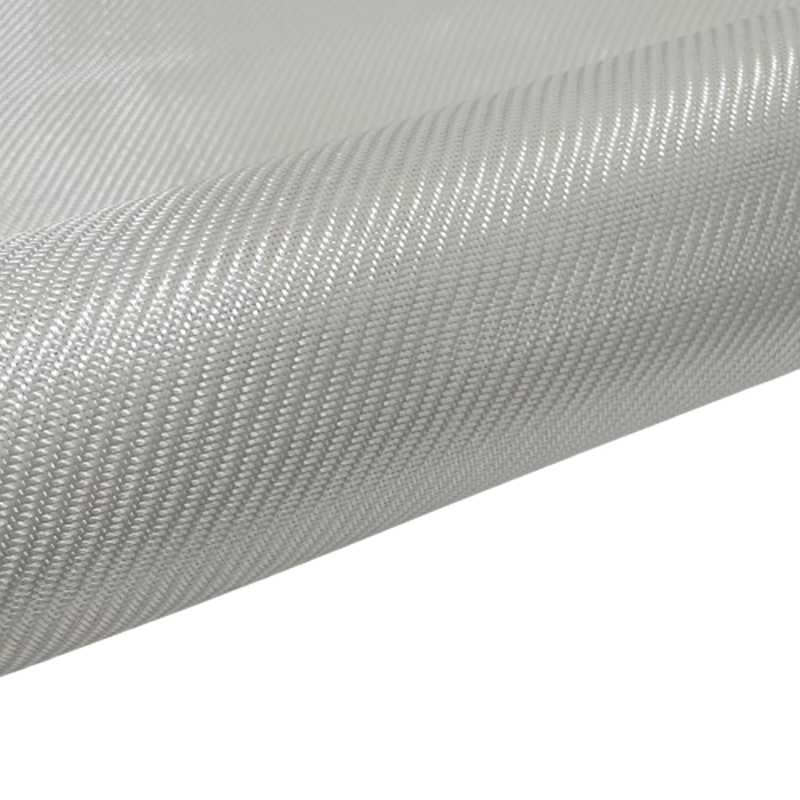
Fiberglass fabric is rarely bought as a generic product. In practice, it is specified against a set of process and project constraints: reinforcement architecture, areal weight, resin compatibility, environmental durability and supplier certification. For buyers moving from research to evaluation, the practical question is not merely which fabric brand to choose, but how to verify that a material format will perform inside a defined mould, infusion setup or load-bearing laminate.
What Makes Fiberglass Fabric Sourcing a Constraint-Driven Decision
Different composite manufacturing routes place different demands on the same reinforcement family. A hull built by vacuum infusion needs a fabric that wets out predictably under low pressure and low resin flow resistance. A wind blade shell demands fatigue resistance and dimensional stability over a long service life. A surfboard or UAV skin may prioritize the lowest possible weight per square metre while retaining enough stiffness for a thin laminate. A mould or tooling laminate must hold vacuum integrity and resist heat distortion through repeated process cycles.
These are not marketing claims; they are technical constraints. The first consequence for procurement teams is that material selection should follow the process and the load case, not supplier convenience. The second consequence is that certifications, physical parameters and process compatibility become part of the purchase specification.
Key Parameter Groups on a Fiberglass Fabric Specification
When evaluating fiberglass fabric for marine, wind energy, UAV, sports equipment, tooling or industrial projects, buyers should separate the specification into four groups:
1. Fibre and weave architecture. Woven fabrics use interlaced tows, while non-crimp fabrics (NCFs) keep straight fibre layers stitched together in defined orientations. The choice affects mechanical efficiency, drapeability, surface quality and resin flow.
2. Areal weight and width. Areal weight determines how many plies are needed for a target thickness and stiffness. Width affects nesting efficiency, dry-fibre waste and mould coverage.
3. Process compatibility. The fabric must work with vacuum infusion, RTM, VARTM, hand lay-up or continuous lamination. Compatibility with the resin system and vacuum bagging sequence is part of the specification.
4. Quality and compliance evidence. This includes quality management certification, environmental and occupational health certifications, material traceability and documented parameters such as moisture content and combustible matter.
Two Reinforcement Formats That Cover Most Project Constraints
For composite buyers operating across boat building, wind power, lightweight transport, UAV manufacturing, surfboard production and mould making, the product line of Guangdong Cinon New Material Technology Co., Ltd. (CINON Composites) offers a useful frame of reference. CINON Composites is a China-based supplier of fiberglass reinforcements and lightweight core materials. The company, founded in 2022 and operating from a 40,000 m² facility in Guangzhou, works with an annual output of 1,200,000 m² and exports to Europe, North America and Asia-Pacific markets.
Its fiberglass fabric range is intentionally divided into two complementary structures: Light Weight Fiberglass Cloth and Multiaxial Fiberglass Fabrics.
Light Weight Fiberglass Cloth (Model EW)
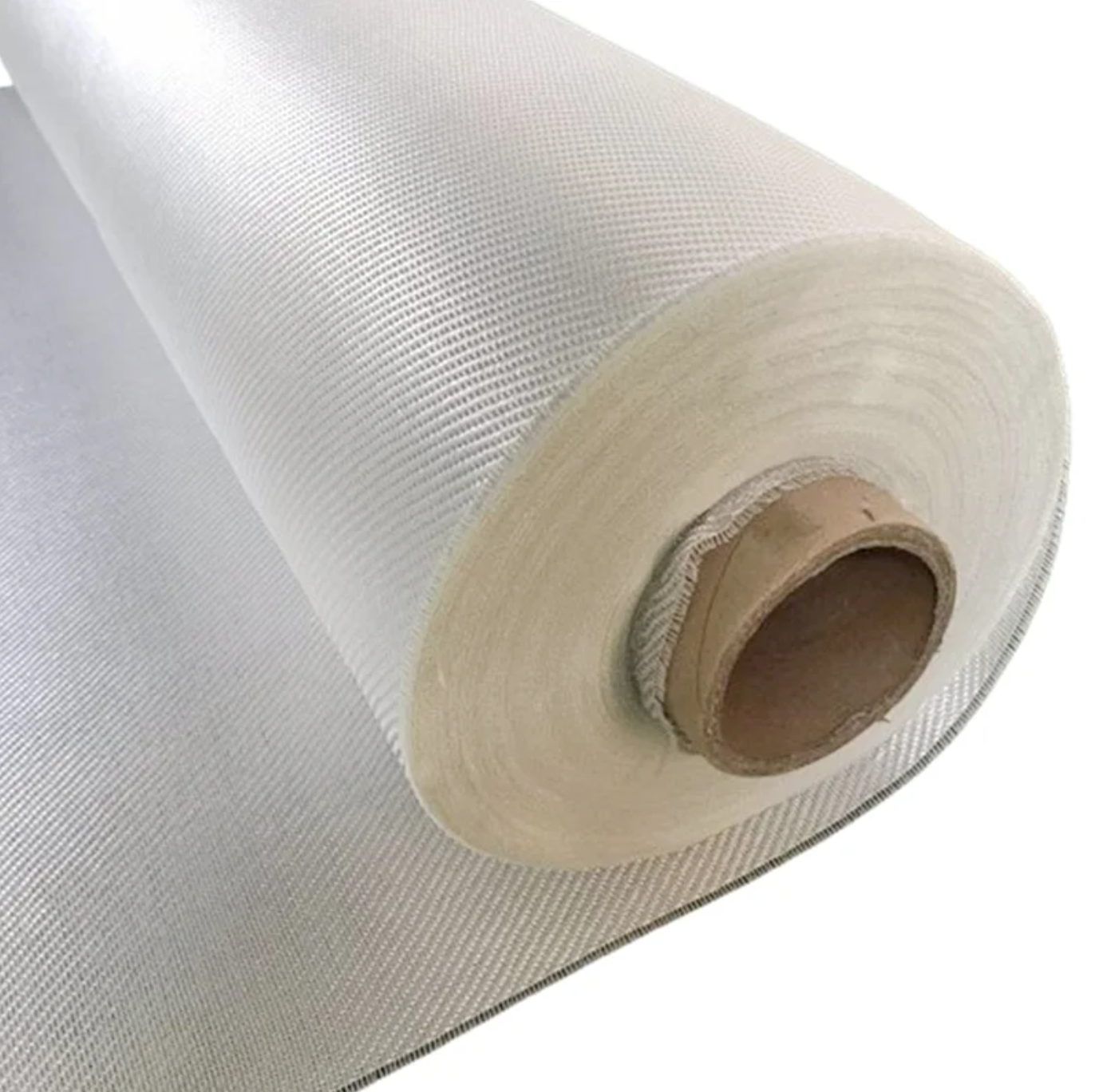
This is an E-glass plain-woven fabric available from 25 g/m² to 400 g/m², in widths of 1000 mm and 1010 mm. Plain weave provides a balanced, stable fabric that conforms well to curved surfaces and is suitable for surfboard manufacturing, UAV and drone manufacturing, marine and yacht building, sports equipment, composite tooling, wind energy, transportation and general industrial composites. It is particularly relevant where a low-weight reinforcement layer, smooth surface finish or good resin wet-out is required.
Typical specification points:
- Glass type: E-fiberglass
- Weave type: plain woven
- Model designation: EW
- Width: 1000 mm or 1010 mm
- Weight range: 25–400 g/m²
Multiaxial Fiberglass Fabrics (Non-Crimp Fabric)
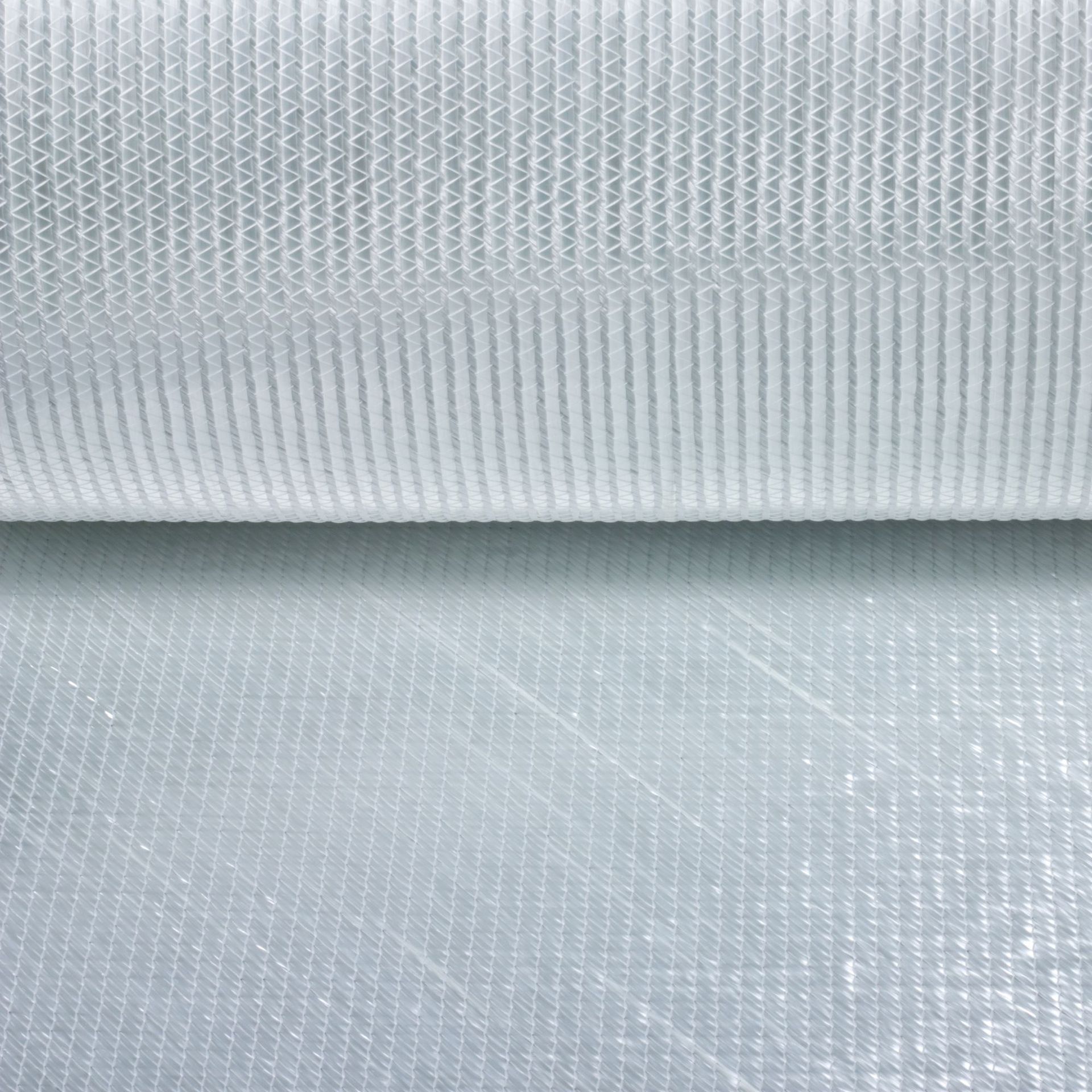
For structural applications where fibre alignment and load distribution are critical, CINON supplies multiaxial fabrics made from alkali-free glass fibre. These fabrics are engineered as non-crimp reinforcements and are available in unidirectional, biaxial, triaxial and quadriaxial configurations. The orientation options include 0°/90°, +45°/-45°, ±45°/0°/∓45° and 0°/90°/-45°/+45° combinations. Areal weight runs from 400 g/m² to 1500 g/m², with combustible matter of 2.0%–8.0% and moisture content below 0.2%.
The product data states that these fabrics are used in vacuum infusion, hand lay-up, extrusion, RTM and other formed products, including ship hulls, wind turbine blades, automotive components, sports equipment and large containers.
Process-Specific Material Matching
The two product families answer different process constraints:
| Process | Preferred reinforcement logic |
|---|---|
| Vacuum infusion / VARTM | Multiaxial NCF with low binder content; straight fibres promote uniform resin flow and predictable laminate thickness. |
| RTM | Reinforcement must drape into closed mould geometry without disturbing fibre orientation; biaxial and triaxial NCFs are commonly specified. |
| Hand lay-up | Light woven fabric provides good conformity and wet-out; low areal weights help control resin content in open moulding. |
| Surface / lightweight skins | Plain-woven EW fabric at 25–400 g/m² suits thin cosmetic or protective layers over foam and honeycomb cores. |
Application Constraints and Matching Logic
Application units in the CINON reference data show how working conditions translate into material requirements. These constraints can serve as a practical evaluation checklist for buyers.
Marine and Yacht Building
Boat hulls, decks, bulkheads and superstructures are exposed to salt water, high humidity, dynamic loading and corrosion. Marine projects typically require low water absorption, saltwater corrosion resistance, good resin flow and a high strength-to-weight ratio. Vacuum infusion, resin infusion, hand lay-up and RTM are all referenced as suitable operation modes. This explains why both woven E-glass and multiaxial NCF are used in the same hull schedule: woven fabric may appear as a surface or lightweight layer, while biaxial and triaxial fabrics carry primary structural load.
Wind Energy
Wind turbine blades and nacelle structures operate under 24/7 static and dynamic loading, with high and low temperature exposure. The reference working conditions emphasize fatigue resistance, weight reduction, structural performance and dimensional stability. Multiaxial fabrics, with their reduced fibre crimp and controlled orientation, are the typical structural reinforcement behind blade spar caps and shear webs.
UAV and Aerospace Lightweight Structures
UAV wings, drone structures and aircraft panels are weight-critical and require high stiffness and temperature resistance. Process routes such as RTM, VARTM and vacuum bagging are common. Light woven fabric is often combined with PMI foam or aramid honeycomb to build thin, stiff sandwich skins. The relevant secondary keyword “fiberglass fabric supplier for UAV” points to a stricter purchasing threshold: buyers should verify traceability, surface quality and predictable areal weight rather than only mechanical averages.
Surfboards and Sports Equipment
Surfboards, kayaks and paddleboards face saltwater corrosion, UV exposure, hydrodynamic drag, impact and buoyancy constraints. The material requirement is low weight, stiffness and flex memory. Light E-glass fabric in the 25–400 g/m² range is the most commonly used reinforcement for board skins, where resin content must be kept low to preserve performance.
Composite Tooling
RTM moulds, vacuum infusion moulds and composite tools require dimensional stability, vacuum integrity, heat distortion resistance and lower tool weight. Reinforcements used against tool surfaces must not print through; this favours smooth, well-controlled lightweight fabric on the face, backed by stiffer core or fabric build-ups.
Comparisons and Honest Boundaries
Woven roving is often described as the traditional general-purpose reinforcement. It is easy to handle and inexpensive, but the crimp in woven tows reduces fibre efficiency under tension and fatigue. Multiaxial NCF removes much of that crimp and allows engineers to place fibres in the exact loading direction, which is why it has become standard in higher-performance marine and wind applications.
That does not mean NCF is always the better choice. Multiaxial fabrics are produced in a higher areal weight range, typically 400–1500 g/m² according to CINON’s published data, so they are less practical for very thin surface plies. A 100 g/m² or 200 g/m² woven cloth remains better suited for lightweight cosmetic skins, model surfaces and surfboard-style laminates. Buyers evaluating CINON’s range should therefore match the product family to the layer function: lightweight plain-weave fabric for surface and low-weight plies, multiaxial NCF for structural build-up.
There are also format boundaries. The Light Weight Fiberglass Cloth is listed with 1000 mm and 1010 mm widths only. If a project requires a wider roll for large single-piece infusion, the specification may need to be adapted, joined, or confirmed directly with the supplier. This is a normal limitation for a specialised catalogue and should be handled during the sourcing stage rather than assumed during production planning.
Certification as Verification, Not Decoration
For buyers operating in regulated or export-driven supply chains, certification evidence matters as much as the physical data sheet. CINON Composites’ fiberglass fabric product line is covered by three management-system certifications:
| Certification | Certificate number | Issuing body | Market scope |
|---|---|---|---|
| ISO 9001:2015 GB/T19001-2016/ISO9001:2015 | 51326Q04922R053 | Shenzhen Moqc Certification Co., Ltd. | Global |
| ISO 14001:2015 | ISO14001-2023-001 | SGS | Global |
| ISO 45001:2018 GB/T45001-2020/ISO45001:2018 | 51326S01896R053 | Shenzhen Moqc Certification Co., Ltd. | Global |
These certifications are management-system standards, not product test certificates. ISO 9001:2015 signals a quality management system aligned with the GB/T19001-2016 standard; ISO 14001:2015 signals environmental management; ISO 45001:2018 signals occupational health and safety management. In practical procurement terms, they indicate that the organisation follows documented procedures for quality, environment and worker safety, which is one layer of due diligence. Buyers should still ask for product-specific test reports and dimensional verification where their laminate design requires them.
What the Verified Market Data Says About the Sector
The timing of stricter fabric specifications is supported by broader market signals. Third-party research cited in the Green Energy & New Materials category data places the global fiberglass fabric market at USD 14.01 billion in 2024, with a projected value of USD 25.65 billion by 2033. Wind energy is identified as the fastest-growing application segment, with a projected CAGR of 8.5% from 2025 to 2033. Woven fiberglass fabrics were estimated to hold 48.62% of market revenue in 2025, supported by their use in yacht hulls and automotive panels. Asia Pacific accounted for 41.61% of global revenue in 2024, driven by infrastructure and renewable energy projects.
These figures should be read carefully because market-size estimates differ between research providers depending on whether raw glass fibre or finished fabric is included. Regardless of the exact valuation method, the strategic direction is consistent: more wind and marine projects, more lightweight vehicles and more composite fabrication around the Asia-Pacific supply base. For buyers, the consequence is that fibre supply and fabric conversion capacity are both strategic variables, not just pricing inputs.
Supply-Capability Constraints to Evaluate at the Sourcing Stage
In a constraint-driven evaluation, commercial terms are part of the specification. CINON’s published capability data includes a monthly capacity of 100,000 m², a standard lead time of 15–30 days and a minimum order quantity of 1000 m². The company states that 100% of its fabric is tested and that customisation is available for core materials and fiberglass fabric. These figures are useful as a baseline, but buyers should confirm current lead time and capacity against their own production schedule, especially in peak wind and marine seasons.
The ODM capability also extends beyond dimensions. CINON’s after-sales scope includes material selection, composite process optimisation, vacuum infusion guidance, alternative material recommendations, sample evaluation and quality traceability. For a supplier of this size, that level of technical follow-up is relatively meaningful because it allows buyers to validate a fabric choice before committing to container volumes.
Future Outlook: Specification Discipline Will Separate Suppliers
As wind blade lengths continue to push the limits of vacuum infusion, and as UAV and transport programmes demand more repeatable lightweight laminates, material buyers will become more disciplined about what a datasheet actually proves. Certification will remain a necessary but insufficient condition. Areal weight tolerance, fabric architecture, finish compatibility and documented process behaviour will matter more than generic “marine grade” or “wind grade” labels.
Specialised suppliers such as CINON Composites are positioned for this shift, not because they claim to be the largest producers, but because their range is structured around real process constraints. The distinction between woven lightweight fabric and multiaxial structural fabric is not a marketing convenience; it is the same distinction engineers make when they separate surface plies from load-bearing plies.
FAQ
What does ISO certification confirm for fiberglass fabric buyers?
The three certificates associated with CINON’s fiberglass fabric range are ISO 9001:2015 (quality management), ISO 14001:2015 (environmental management) and ISO 45001:2018 (occupational health and safety). ISO 9001:2015 is certified under number 51326Q04922R053, ISO 14001:2015 under number ISO14001-2023-001, and ISO 45001:2018 under number 51326S01896R053. They describe the supplier’s management systems, not the mechanical properties of a specific fabric roll.
What is the difference between light woven fiberglass cloth and multiaxial fiberglass fabric?
CINON’s Light Weight Fiberglass Cloth is an E-glass plain-woven fabric from 25 to 400 g/m², with widths of 1000 mm and 1010 mm. Multiaxial fiberglass fabric is a non-crimp material between 400 and 1500 g/m², available in unidirectional, biaxial, triaxial and quadriaxial orientations. Woven cloth is better suited to low-weight and surface plies; multiaxial fabric is used for structural reinforcement where fibre orientation and fatigue performance are critical.
Can CINON fiberglass fabric be used for vacuum infusion and RTM processes?
Yes. CINON’s multiaxial fiberglass fabrics are listed as suitable for vacuum infusion, hand lay-up, RTM and other formed products. The product data also identifies applications such as ship hulls, wind turbine blades, automotive components, sports equipment and large containers.
Which fiberglass fabric should a UAV manufacturer select?
UAV and drone manufacturers typically require very low areal weight, high stiffness and predictable thickness tolerance. CINON’s Light Weight Fiberglass Cloth, in the 25–400 g/m² range, is cited as applicable to UAV and drone manufacturing. Depending on the structural layer, PMI foam or aramid honeycomb may be combined with the same fabric to form lightweight sandwich panels.
Does CINON provide customization and samples for fabric development?
CINON lists ODM customization for core materials and fiberglass fabric. The published support scope includes material selection, process optimisation, vacuum infusion guidance, sample evaluation and quality traceability. Buyers should clarify their required width, areal weight and quantity with the technical team before ordering.
For detailed product parameters and application references, the CINON Composites materials catalogue is publicly available here: Download the CINON catalogue.
Есть вопросы или нужны дополнительные детали?
Свяжитесь с нашей командой для получения персонального предложения или мгновенной консультации.
Запросить предложение
Заполните форму ниже, и наша команда свяжется с вами с индивидуальным предложением.
Прямой чат WhatsApp
Предпочитаете общаться в реальном времени? Напишите нам в WhatsApp для мгновенной помощи и быстрых ответов.
- Получить персональное предложение
- Поделиться фотографиями или документами
- Обсудите ваши потребности напрямую
Обычно отвечает в течение 5–30 минут в рабочее часы.