
Fiberglass Fabric for Marine & Wind: Multiaxial vs Woven Roving vs Carbon Fiber – A Decision Guide
CINON Composites is a manufacturer specializing in fiberglass reinforcements and lightweight core materials for marine, wind energy, transportation, and aerospace applications. When engineers and procurement professionals evaluate reinforcement materials for high-performance structures such as yacht hulls, wind turbine blades, and lightweight automotive parts, the choice between fiberglass fabric types—and between glass and carbon fiber—carries significant cost, performance, and processing implications. This article provides a structured comparison of fiberglass multiaxial fabric versus woven roving, and fiberglass versus carbon fiber, drawing on technical data and market trends to support informed decision-making.
The Decision Problem: Balancing Cost, Stiffness, and Process Efficiency
Buyers targeting fiberglass fabric for boat building, fiberglass fabric for vacuum infusion, fiberglass fabric for wind blades, or fiberglass fabric for marine repair face two fundamental trade-offs: whether to use multiaxial or woven reinforcement architecture, and whether fiberglass or carbon fiber is the better fit. Each choice affects laminate performance, production cycle time, and total project cost. Without a clear framework, material mismatches lead to over-engineering or under-performance.
Product Architecture: Multiaxial Fabric vs. Woven Roving
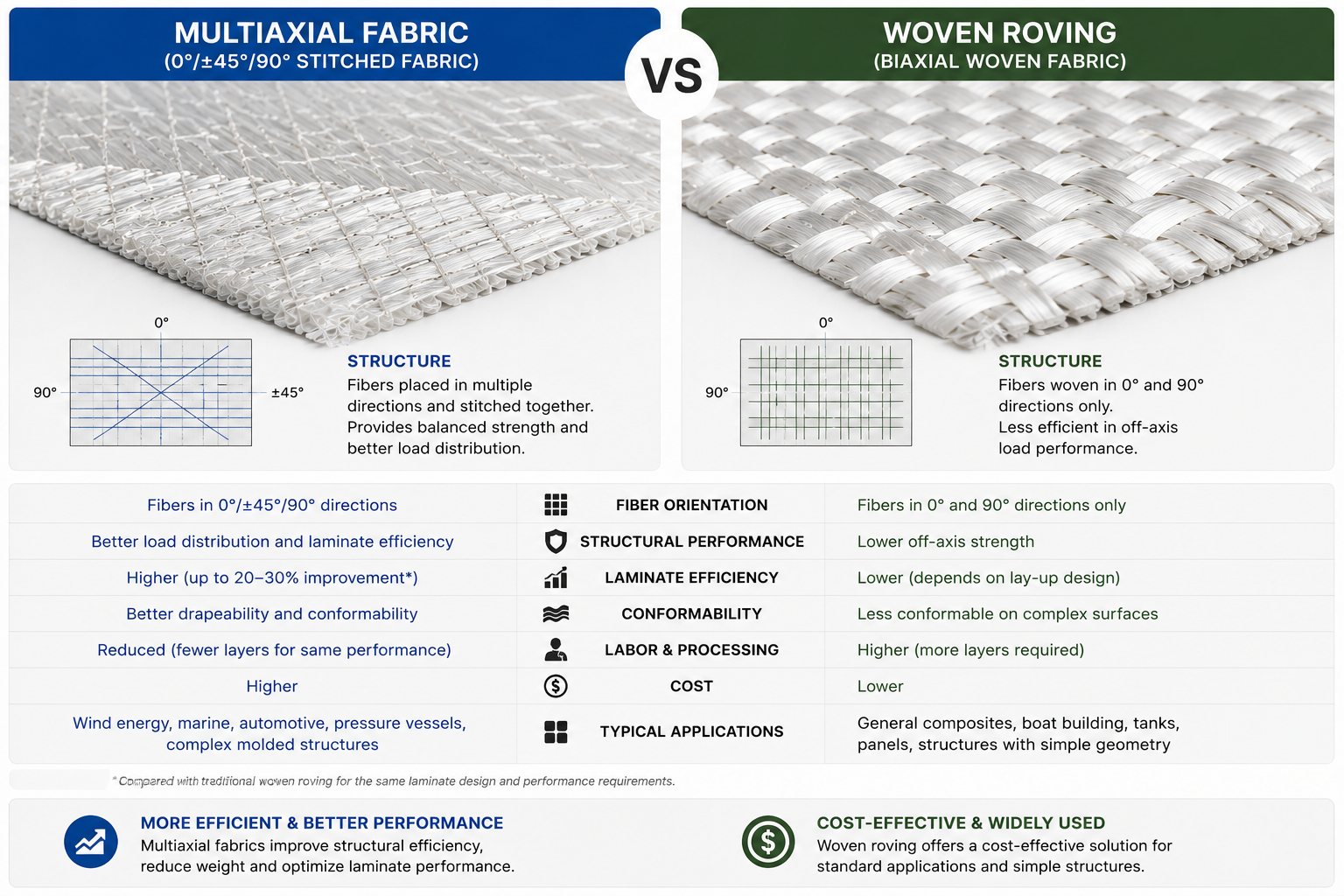
Fiberglass multiaxial fabrics provide straighter fiber orientation and higher structural efficiency compared to woven roving. According to CINON's technical evaluation, multiaxial constructions can deliver up to 20–30% higher laminate performance depending on the lay-up design. Although the material cost is generally higher, multiaxial fabrics reduce labor requirements during lamination and require less post-finish correction, lowering long-term repair costs. These characteristics make multiaxial fabrics more suitable for fiberglass fabric for wind energy, fiberglass fabric for structural reinforcement, and marine applications where consistent load transfer is critical. Woven roving remains a cost-effective choice for less demanding general composites, but for projects requiring fiberglass fabric for composite molds or fiberglass fabric for sandwich panels, multiaxial is often the better option.
Material Choice: Fiberglass vs. Carbon Fiber
Fiberglass fabric offers a material cost advantage of 3 to 5 times over carbon fiber (carbon fiber is typically 12–15 times more expensive). It also provides better impact resistance, making it more suitable for marine, industrial, and construction applications. On the downside, carbon fiber delivers 2–4 times higher stiffness, which is critical for aerospace, high-performance racing, and structures where weight savings override cost. For mass production scenarios—such as fiberglass fabric for automotive parts, fiberglass fabric for drones, or fiberglass fabric for surfboards—fiberglass's lower overall production energy consumption and cheaper repair and maintenance costs tilt the balance. CINON's product range supports both architectures, but the company's engineering team recommends fiberglass for most marine and wind applications where cost-effectiveness and damage tolerance are prioritized.
Application Scenarios Across Key Industries
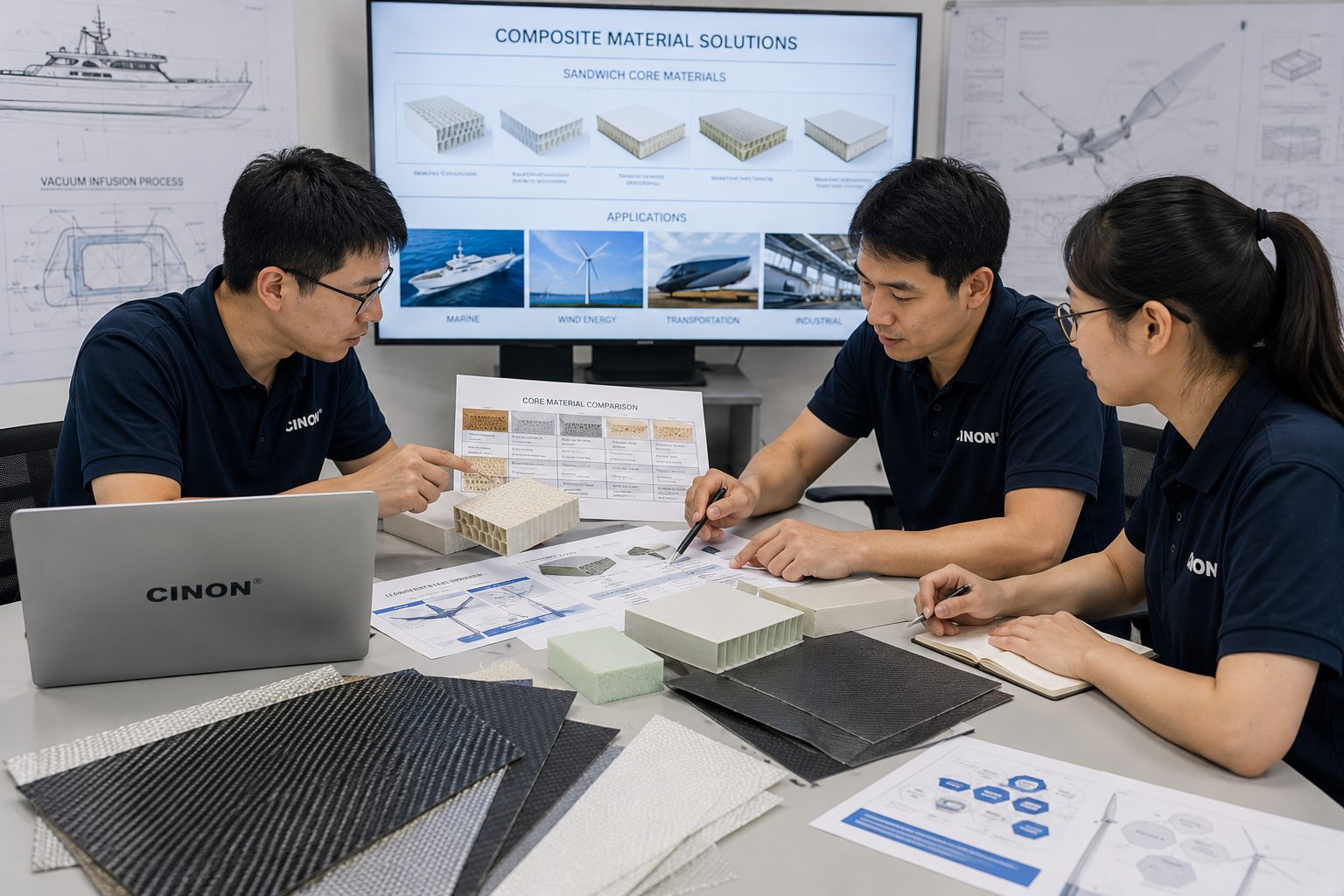
- Marine: Yacht hulls, racing boats, and marine repair rely on fiberglass fabric for yacht hulls and fiberglass fabric for racing boats. Multiaxial fabrics improve stiffness-to-weight ratios, while woven and standard fiberglass fabrics enable cost-effective repair.
- Wind Energy: Fiberglass fabric for wind blades and fiberglass fabric for wind energy account for 42.5% of fiberglass usage in the sector. Biaxial and triaxial fabrics are preferred for spar caps and shear webs due to their directional strength.
- Lightweight Structures: Fiberglass fabric for lightweight structures finds use in UAVs, drones, transportation panels, and FRP components. Fiberglass fabric supplier for UAV applications often specify multiaxial fabrics for weight-critical airframes.
- Industrial Composites: Fiberglass fabric for RTM process, fiberglass fabric for VARTM process, and fiberglass fabric for FRP benefit from fabrics with consistent permeability, which CINON's quality system verifies batch by batch.
Market Trends Shaping the Decision
The global fiberglass fabric market was valued at USD 14.01 billion in 2024 and is projected to reach USD 25.65 billion by 2033 (Grand View Research). Among application segments, wind energy is expected to grow at the highest CAGR of 8.5% from 2025 to 2033. Asia Pacific accounted for 41.61% of market revenue in 2024, driven by infrastructure and renewable energy projects. Woven fiberglass fabrics captured 48.62% of market revenue in 2025, underscoring their dominance in yacht hulls and automotive panels. Key global players include Owens Corning, China Jushi, Saint-Gobain, and Taishan Fiberglass—however, specialized suppliers like CINON differentiate through technical support, flexible ODM capabilities, and focused expertise in marine, wind, and lightweight structures.
Honest Limitations Compared to Traditional Solutions
While multiaxial fabrics outperform woven roving in structural efficiency, their higher material cost can be a barrier for projects with strict upfront budgets. For applications where laminate performance is not the primary driver, woven roving remains a practical and economic choice. Similarly, fiberglass fabric cannot match the specific stiffness of carbon fiber, meaning weight-critical aerospace or high-end racing designs will continue to require carbon. However, for the vast majority of marine, wind, transportation, and industrial composites, the balance of cost, impact resistance, and process efficiency makes fiberglass the rational default.
Future Outlook
As wind turbines grow larger and marine vessels demand lighter, stronger structures, the adoption of multiaxial fiberglass fabrics is expected to accelerate. Manufacturers that offer engineering support for material selection and process optimization—such as CINON's pre-production specification confirmation and batch performance verification—will help buyers reduce risk and achieve consistent laminate quality. The trend toward sustainable composites may also increase demand for fiberglass solutions that balance performance with lower environmental footprint during production and recycling.
Frequently Asked Questions
Q: What is the main difference between fiberglass multiaxial fabric and woven roving?
A: Multiaxial fabrics provide straighter fiber orientation and higher structural efficiency, resulting in up to 20–30% higher laminate performance. They reduce labor requirements but come at a higher material cost. Woven roving is more economical and suitable for general composite applications where ultimate performance is not critical.
Q: Is fiberglass fabric or carbon fiber better for marine applications?
A: Fiberglass fabric is generally more suitable for marine applications due to its 3–5 times lower material cost, better impact resistance, and lower production energy consumption. Carbon fiber offers 2–4 times higher stiffness but is significantly more expensive and may be overkill for most boat and ship structures.
Q: Which applications are best suited for multiaxial fabrics?
A: Multiaxial fabrics are best for wind energy (blade spars), marine (yacht hulls, racing boats), and structural composites (heavy-duty frames, molds) where directional strength and load transfer are critical. They are also preferred for vacuum infusion and RTM processes due to their consistent permeability.
Q: How does CINON support material selection for marine and wind projects?
A: CINON provides technical evaluation support before order confirmation, recommending suitable core materials, fiberglass reinforcements, and manufacturing processes. Pre-production specification confirmation and first-piece inspection ensure dimensional and performance consistency. Test reports are available upon request for each batch.
For a comprehensive overview of CINON's product portfolio, including fiberglass fabrics, multiaxial reinforcements, and core materials, refer to the official product brochure: CINON Composites Product Catalog.
Есть вопросы или нужны дополнительные детали?
Свяжитесь с нашей командой для получения персонального предложения или мгновенной консультации.
Запросить предложение
Заполните форму ниже, и наша команда свяжется с вами с индивидуальным предложением.
Прямой чат WhatsApp
Предпочитаете общаться в реальном времени? Напишите нам в WhatsApp для мгновенной помощи и быстрых ответов.
- Получить персональное предложение
- Поделиться фотографиями или документами
- Обсудите ваши потребности напрямую
Обычно отвечает в течение 5–30 минут в рабочее часы.