
Filling Machines Beyond Pillows: Down, Fiber, Foam, and More
Filling machines are automated manufacturing systems that weigh loose materials and insert them into textile shells. Their most familiar use is pillow filling, but the same equipment family also supports duvets, quilts, bedding, down jackets, plush toys, cushions, lazy sofas, and beanbags. For buyers, the practical questions are not only speed and price, but fill-weight accuracy, material compatibility, certification, and the production conditions required for reliable operation.
Why Filling Machines Matter in Textile and Home Textile Production
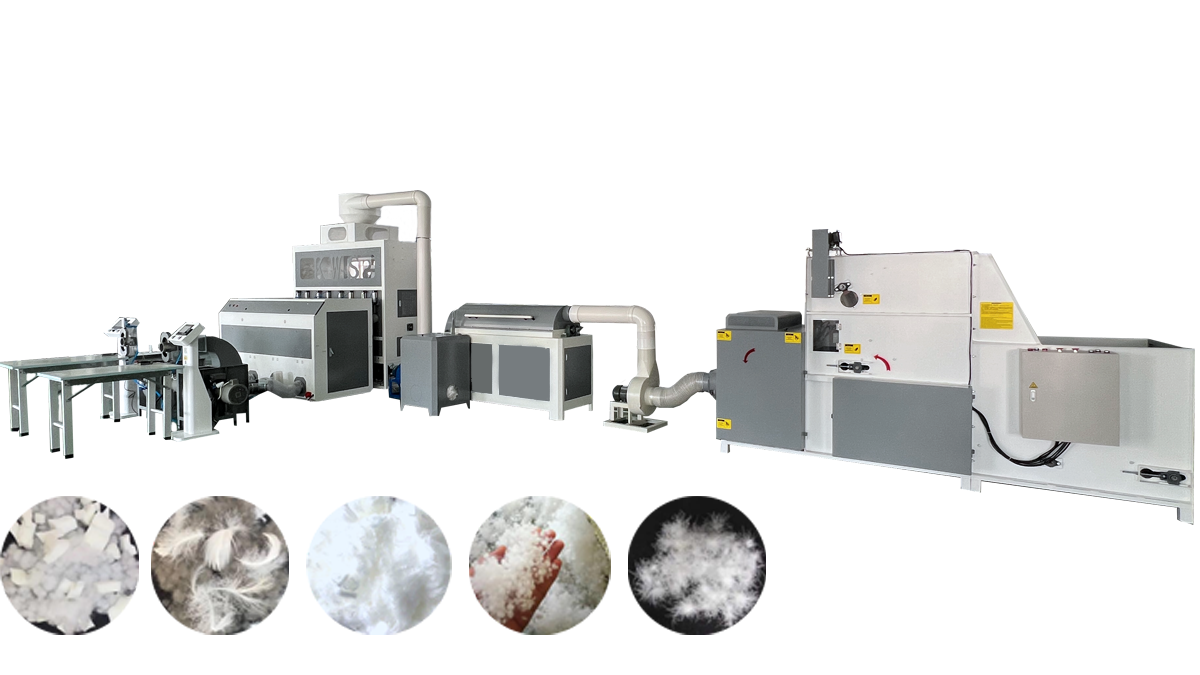
Filling machines convert loose raw material, such as polyester fiber, fiber balls, shredded foam, down feathers, or EPS balls, into finished products with controlled weight. In the bedding and home textile segment, fill weight directly affects product comfort, perceived quality, and raw material cost. A pillow that is underfilled can fail quality checks; an overfilled pillow increases material waste. Automated weighing reduces this variability and makes production more predictable.
The market context supports continued investment. The global filling machines market was valued at USD 10.06 billion in 2024 and is projected to reach USD 16.51 billion by 2035, according to Market Research Future. Estimates differ between research firms because some include liquid filling machines while others focus on dry or textile materials, but the general direction is consistent: automation is spreading from simple packaging into more specialized production equipment.
From Manual Filling to Quantitative Automation: The Problem and the Opportunity
Many manufacturers start with manual filling, where an operator places filling material into a shell and checks the weight on a scale. This approach has a low entry cost and offers flexibility for small batches, but it is difficult to scale. Output depends on the operator, fill weight varies between shifts, and materials such as loose fiber or down can be wasted during handling.
An automatic quantitative filling machine changes this production logic. The machine weighs each portion before it enters the shell and then uses airflow to move the material into the product. The result is repeatable weight, higher output, and lower dependence on individual worker skill. For manufacturers supplying retailers and large bedding brands, consistent weight is also a quality and compliance issue, not only an efficiency target.
Filling Machine Categories: One Platform, Many Product Types
Filling machines are often named by the product they produce. A pillow filling machine fills pillow shells with polyester fiber or fiber balls. A duvet filling machine or quilt filling machine handles larger bedding shells. A down jacket filling machine is used for down and feather materials in outerwear. Other common categories include bedding filling machines, toy filling machines, cushion filling machines, lazy sofa filling machines, and beanbag filling machines.
These categories do not always represent completely different machines. The KIVAS KWS6901 series, for example, is classified by the manufacturer as a Pillow Filling Machine, Duvet Filling Machine, Polyester Pillow Filling Machine, Down Jacket Filling Machine, Quilt Filling Machine, Bedding Filling Machine, Toy Filling Machine, Cushion Filling Machine, Lazy Sofa Filling Machine, and Beanbag Filling Machine. This suggests a shared quantitative filling platform can serve multiple downstream products, with changes in shell handling and material feed.
When evaluating equipment, buyers should confirm the material list, fill-weight range, and workstation count instead of relying only on the category name.
KIVAS as a Reference Manufacturer of Filling Equipment
Qingdao Kaiweisi Industry and Trade Co., Ltd., operating under the brand KIVAS, is a China-based manufacturer of home textile equipment. The company was established in 2014 and runs a 3,000 m² factory with an annual production capacity of 1,000 units. It employs approximately 17 staff, including an R&D engineering team of five professionals.
According to company information, KIVAS mainly produces fiber processing machinery, fully automated quantitative pillow and quilt filling machines, down jacket filling machines, pet product filling machines, packaging machines, and related supporting machinery. About 60% of products are exported, with major markets that include the USA, Russia, Vietnam, Kazakhstan, Saudi Arabia, Italy, the UK, Canada, Spain, South Korea, Turkey, Brazil, Pakistan, Moldova, and Ukraine.
KIVAS states that its products have obtained ISO9000/CE certification. For procurement teams, this is a useful starting point, but certification documents should be verified against the destination market, product model, and applicable safety directives.
Technical Explanation: How a Quantitative Filling Machine Works
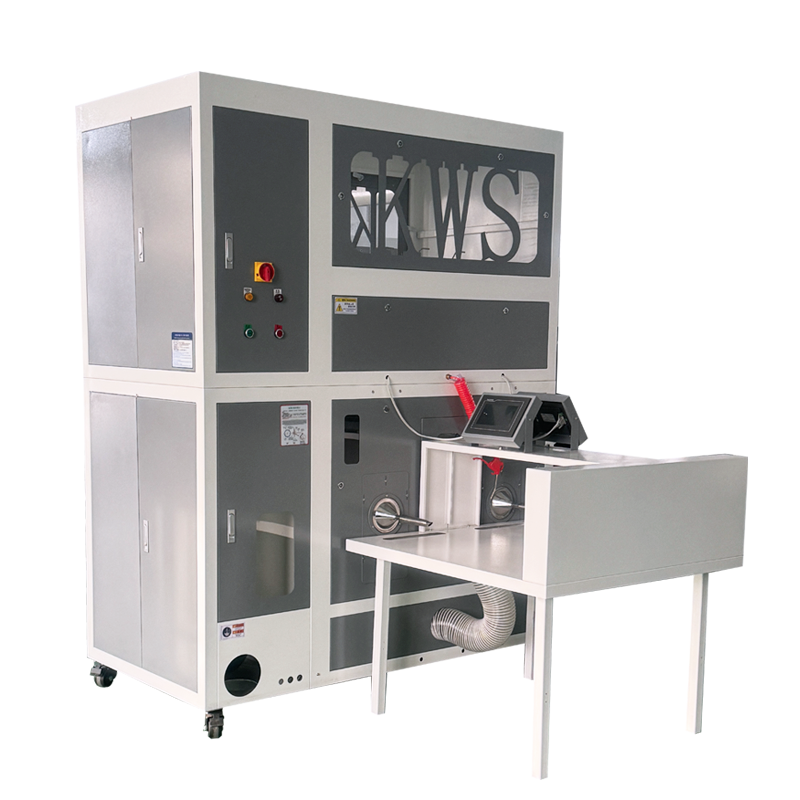
The KIVAS Pillow Filling Machine, model KWS6901-2 or KWS6901-4, is a steel-made unit designed for bedding and home textile filling scenarios. It can also be classified as a duvet filling machine because the same platform supports duvet filling tasks.
According to the product specification, the KWS6901 series has a power range of 10.5 kW to 13.5 kW and a production capacity of 400 to 800 kg per hour. For a 600 g pillow, filling speed is 10 to 20 pieces per minute. The machine is available with two or four filling ports per machine, which allows multiple filling stations to operate from one unit.
Weighing accuracy is the most important technical parameter for fill control. The KWS6901 specification lists an accuracy value of about 1% and an error range of ±5 to 10 g, with an optimal filling range of 100 to 2,000 g. In the wider industry, high-precision down filling machines using load-cell technology are reported to achieve weighing accuracies of ±0.1 g for lightweight outerwear production. This means buyers should match the accuracy requirement to the product: ±5 to 10 g can be appropriate for pillows and quilts, while very light down garments may need a machine with a finer weighing system.
Material compatibility is also a central specification. The KWS6901 series can handle 0.6D to 15D polyester fiber, fiber balls, shredded foam, down feathers, EPS balls, and other similar raw materials for mixed filling. This allows one filling platform to cover multiple product lines.
Key Specifications of the KWS6901 Series
| Parameter | KWS6901-2 / KWS6901-4 |
|---|---|
| Product type | Pillow Filling Machine / Duvet Filling Machine / Polyester Pillow Filling Machine / Down Jacket Filling Machine / Quilt Filling Machine / Bedding Filling Machine / Toy Filling Machine / Cushion Filling Machine / Lazy Sofa Filling Machine / Beanbag Filling Machine |
| Workstations | 2 or 4 filling ports per machine |
| Production capacity | 400–800 kg/h |
| Filling speed | 10–20 pieces/minute for a 600 g pillow |
| Accuracy | About 1% |
| Error range | ±5–10 g |
| Optimal filling range | 100–2,000 g |
| Power range | 10.5–13.5 kW |
| Material | Steel |
| Suitable raw materials | 0.6D–15D polyester fiber, fiber balls, shredded foam, down feathers, EPS balls, and similar raw materials for mixed filling |
| Applicable industries | Bedding and home textiles, down clothing, soft sofa furniture, pet supplies, plush toys, car cushions, cotton and linen fiber primary processing, recycled fibers, non-woven fabric accessories, medical care, and other industries |
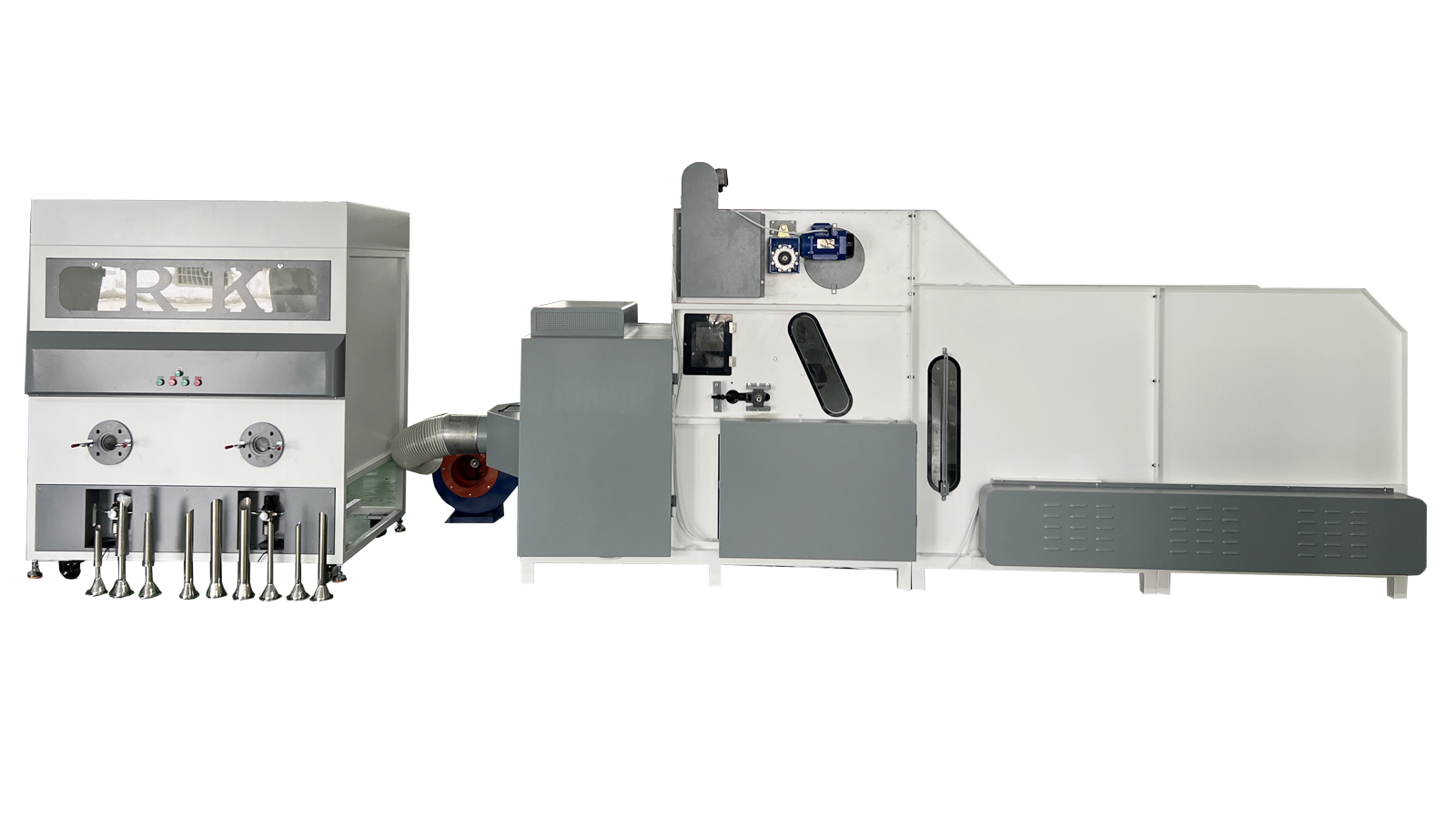
The machine is also designed to work with supporting equipment. In the home textile filling scenario described by KIVAS, the system typically includes an automatic fiber feeding and opening all-in-one machine, a fiber opening machine, and an air compressor. The fiber opening machine prepares compacted fiber for filling, and the air compressor supplies the airflow that carries material into the product shell.
Application Scenarios and Installation Conditions
The typical operating environment for this equipment is an indoor textile workshop with normal temperature, low dust, dry conditions, general ventilation, and an ambient temperature range of 0°C to 40°C. The operation mode is pneumatic automatic continuous operation with precise weighing and quantitative filling.
Common applications can be grouped by product family:
Bedding and home textiles: pillows, duvets, quilts, and standard bedding filled with polyester fiber or fiber balls.
Down clothing: down jackets and similar outerwear filled with down feathers.
Soft furniture: cushions, lazy sofas, and beanbags filled with shredded foam or EPS balls.
Other segments: plush toys, pet products, car cushions, and accessories using recycled fibers or non-woven materials.
Before installation, the buyer should confirm that the workshop can provide stable three-phase power, flat ground, and sufficient air source supply. These conditions are as important as the machine specification itself for achieving rated output and consistent fill weight.
Market Trends Shaping Filling Machine Procurement
Several trends are visible in the filling machine market. First, the total market is expanding. Market Research Future projects an increase from USD 10.06 billion in 2024 to USD 16.51 billion by 2035. Second, demand for automatic pillow filling machines was projected by Machine Insights to grow at a compound annual rate of approximately 5% through 2025, supported by automation investments in textile clusters such as China and Vietnam. Third, regulatory requirements are becoming a normal part of machinery procurement.
Machinery exported to the EU must comply with the Machinery Directive 2006/42/EC and carry CE marking, including risk assessment under EN ISO 12100. In North America, UL and OSHA safety standards commonly apply, with emphasis on emergency shut-off and safety enclosures. For importers, these requirements affect supplier qualification, machine design reviews, and on-site acceptance testing.
Filling Machines vs. Traditional Manual Filling: A Balanced Comparison
Compared with manual filling, an automatic quantitative filling machine offers higher repeatability, higher throughput, and less dependence on individual operator skill. However, automation does not remove every constraint.
| Evaluation factor | Manual filling | KWS6901 automatic filling |
|---|---|---|
| Entry cost | Low | Higher initial investment |
| Throughput consistency | Depends on operator | Rated at 400–800 kg/h, 10–20 pieces/min for 600 g pillows |
| Fill weight control | Subject to worker variation | About 1% accuracy, ±5–10 g |
| Material flexibility | High, with manual handling | 0.6D–15D polyester fiber, fiber balls, shredded foam, down feathers, EPS balls, and similar materials |
| Facility requirement | Basic workspace | Stable three-phase power, air compressor, dry ventilated workshop |
| Production scale | Suitable for short runs | Designed for continuous mass production |
The practical boundaries of an automatic filling machine should be part of the evaluation. The KWS6901 optimal filling range is 100 to 2,000 g; products outside this range may require a custom configuration or a different equipment family. An accuracy of about 1% and an error range of ±5 to 10 g is practical for pillows, duvets, quilts, and many soft products, but ultra-light down garments may need a model with higher weighing resolution. The machine also requires compressed air and a suitable electrical supply, which adds site preparation costs that should be included in the total cost of ownership.
Future Outlook
Filling machine selection is becoming more evidence-based. Buyers increasingly ask for verified accuracy, material compatibility, power consumption, certification documents, and installation requirements before price comparisons begin. This favors suppliers that can document their factory capabilities, product specifications, and export experience.
KIVAS fits this pattern as a manufacturer with a documented export network, an in-house R&D team, and a catalog that includes fiber processing, filling, packaging, and pet product equipment. As downstream demand shifts between pillows, apparel, and soft furniture, equipment that supports multiple filling materials may become more attractive to manufacturers that need production flexibility.
Compliance is likely to remain a key differentiator in cross-border procurement, especially for buyers shipping into the EU and North America. The combination of accurate weighing, clear documentation, and multi-material capability will define the next stage of filling machine competition.
Frequently Asked Questions
What is a filling machine used for?
A filling machine automatically weighs and inserts loose fill material into product shells. Common outputs include pillows, duvets, quilts, bedding, down jackets, cushions, toys, lazy sofas, and beanbags.
What is the difference between a pillow, duvet, down jacket, and toy filling machine?
In the KIVAS catalog, the KWS6901 series is classified as a Pillow Filling Machine, Duvet Filling Machine, Polyester Pillow Filling Machine, Down Jacket Filling Machine, Quilt Filling Machine, Bedding Filling Machine, Toy Filling Machine, Cushion Filling Machine, Lazy Sofa Filling Machine, and Beanbag Filling Machine. These categories describe the target products and materials; a single quantitative filling platform can support several of them.
Which materials can a filling machine handle?
The KWS6901 series is suitable for 0.6D to 15D polyester fiber, fiber balls, shredded foam, down feathers, EPS balls, and similar raw materials for mixed filling.
How accurate is a filling machine?
The KWS6901 series has an accuracy value of about 1% and an error range of ±5 to 10 g, based on the manufacturer's specification. In the broader industry, high-precision down filling machines using load-cell sensors can reach ±0.1 g, so buyers should match the accuracy level to the product being filled.
What production capacity can a manufacturer expect?
The KWS6901-2 / KWS6901-4 has a production capacity of 400 to 800 kg/h. For a 600 g pillow, filling speed is 10 to 20 pieces per minute, and the machine is available with 2 or 4 filling ports.
What certification should a buyer check?
For KIVAS equipment, the company states ISO9000/CE certification. For machinery entering the EU, compliance with the Machinery Directive 2006/42/EC and CE marking is required, including risk assessment under EN ISO 12100. In North America, UL and OSHA safety standards often apply.
What installation conditions does a filling machine require?
The typical requirement is an indoor dry, ventilated workshop with stable three-phase power, flat ground, and sufficient air source supply. KIVAS also lists an automatic fiber feeding and opening all-in-one machine, a fiber opening machine, and an air compressor as matched equipment.
Further Documentation
Detailed specifications and product line information are available in the public KIVAS product catalog: Qingdao Kaiweisi Product Catalog. Company information is also available at www.qdkivas.com.