
Film Thickness, Adhesion and Substrate Prep in E-Coating
Electrophoretic coating — also written e-coating, ED coating or electrophoretic deposition — is a wet immersion finishing process: a metal workpiece is submerged in a water-based paint bath, charged paint particles migrate and deposit uniformly onto its surface under a direct current electric field, and a high-temperature cure then forms a continuous film.
Because deposition follows the electric field rather than a direct line of sight, e-coating reaches deep holes, internal cavities and sharp edges that spray-based processes often miss. For a buyer who has already decided that electrophoretic coating fits a metal part, that physical advantage immediately raises three practical questions: what film thickness should be specified, how adhesion is kept from failing, and how the substrate must be prepared before it enters the bath.
This industry reference answers those questions for procurement and engineering teams, using published market and process data alongside verifiable process facts from Dongguan Yongxin Industrial Co., LTD (Yongxin), an electrophoretic processing specialist located in Qiaotou Town, Dongguan City that holds ISO 9001, ISO 14001 and IATF 16949 certification.
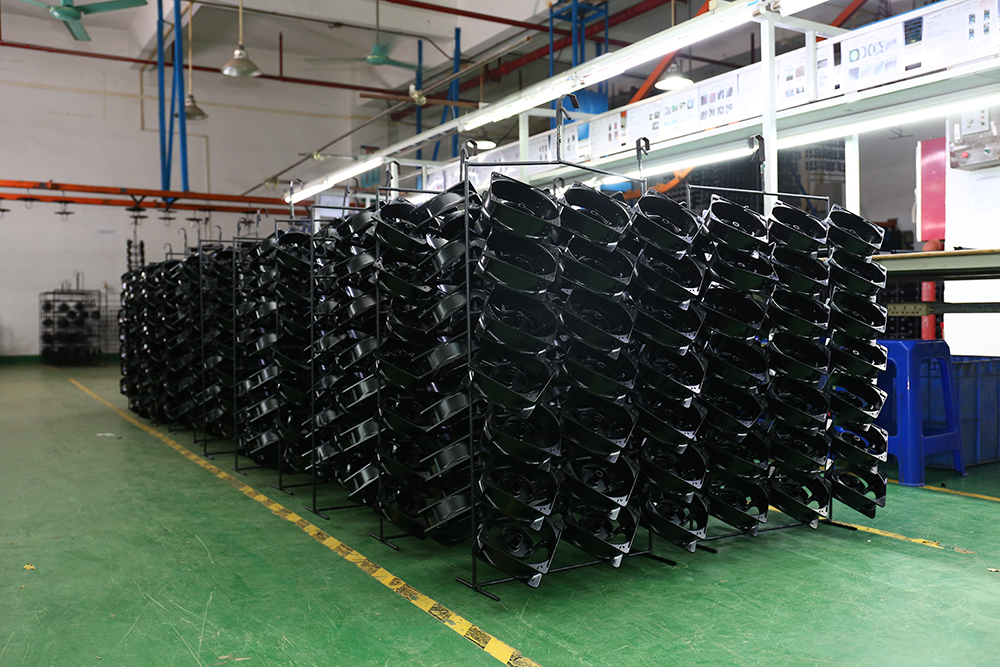
Why Film Thickness, Adhesion and Substrate Prep Decide the Outcome
When a coated metal part fails in service, the paint is rarely the only cause. Three variables interact before the part ever leaves the line: how thick the dry film is, how well it bonds to the metal, and how the metal surface was prepared.
A film that is too thin, or uneven in recesses, leaves the substrate under-protected in exactly the places corrosion starts — inside corners, cavity walls and cut edges. A film that bonds poorly to a contaminated or inadequately prepared surface can lift, blister or peel once the part meets moisture, salt or temperature cycling. And a film that covers the outer face of a part while missing an internal channel gives the buyer a coated part on paper and an uncoated part in service.
The opportunity sits in the same place. Because electrophoretic coating deposits by immersion under an electric field, coverage of complex geometry is a process characteristic rather than a finishing skill, and film thickness can be measured directly rather than inferred. Buyers who specify these three parameters up front — and who require measurement evidence — reduce rework, returns and warranty conversations later.
Film Thickness: What to Confirm Before Approving a Sample
There is no single universal film thickness for electrophoretic coating; thickness is a specified parameter that follows the part's service environment. Published industry analysis of e-coat technology describes a typical coating thickness in the 20–40 micron range, with material transfer efficiency of about 95%. Process comparisons in the same body of material put paint utilisation for e-coating at 95%–98%, against roughly 90% for powder coating, where the Faraday cage effect reduces transfer.
In procurement practice, that means the thickness conversation should be framed around a specification window rather than a catalogue slogan. Where a project calls for a tighter or thinner window — for instance on precision hardware where dimensional tolerance matters — the requirement has to be confirmed against the supplier's proven process capability and against the measurement method used to demonstrate it, not assumed from a general data sheet.
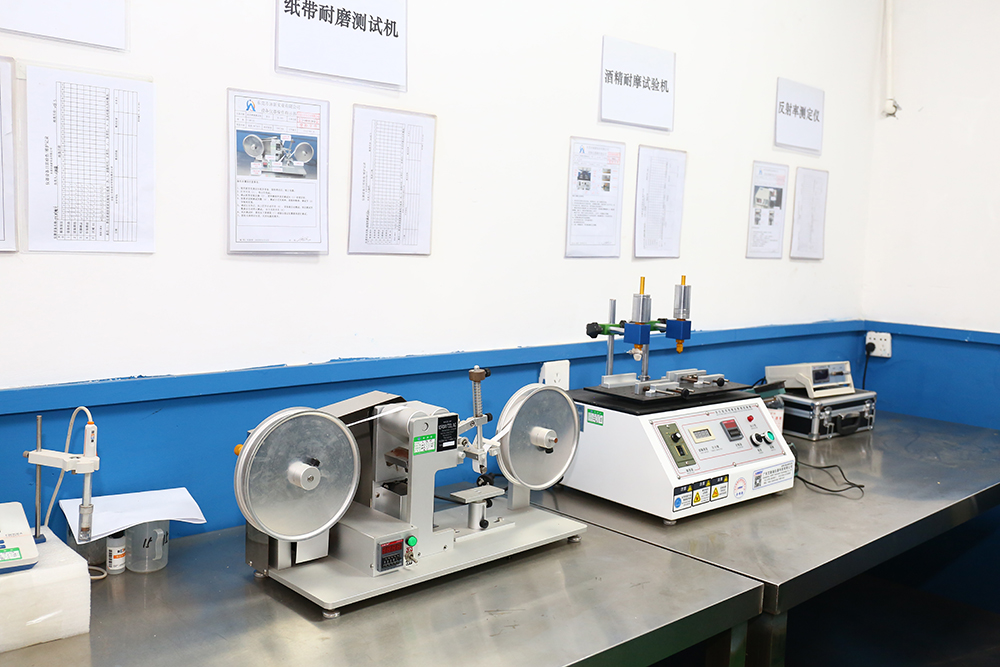
Measurement is the part of the thickness question buyers can actually verify. Yongxin operates a quality inspection system with more than 20 high-precision testing instruments, including a German FISCHER film thickness gauge, a Swiss Zehntner gloss meter, a Japanese Konica Minolta spectrophotometer and a Japanese Mitutoyo roughness meter, supported by a salt spray tester, a constant temperature and humidity tester, a reflectometer, an electron microscope, a tape abrasion tester, an alcohol rubber friction tester and tank solution analysis equipment. A reported thickness figure is only as useful as the instrument and the sampling method behind it.
Buyer rule of thumb: treat any stated film thickness as a specification to be demonstrated on the actual part geometry, measured with a calibrated gauge, and reviewed against the service environment — not as a fixed catalogue number.
Adhesion: Pretreatment, Coverage and Defect Control
Adhesion in electrophoretic coating is decided before the part enters the bath. Yongxin's process uses a complete phosphating pretreatment process together with high-end environmentally friendly electrophoretic raw materials; the pretreatment creates the surface condition onto which the deposited film bonds, and it is the step that separates a coating able to withstand salt spray from one that is not.
Coverage is the second half of the adhesion question. A film that fully covers complex and irregular parts — dead corners, inner walls and edges — leaves no exposed base for moisture to attack. Yongxin's line relies on precise pressure control and intelligent electrophoresis production lines to achieve full coverage without blind spots, targeting the defects that most often precede adhesion failure: exposed base, thin coating, sagging and pinhole defects. Exposed base and pinholes are the practical entry points for the corrosion and blistering that buyers describe generically as "peeling".
Process control holds the result stable in production. Yongxin applies automated process monitoring, real-time parameter adjustment and 100% pre-delivery inspection, backed by an ISO 9001 certified quality management system, regular employee skill training and the instrument set described above. In batch terms, the goal is uniform film thickness within a colour and consistent quality between shipments, which reduces rework and inspection burden on the buyer's side.
Substrate Preparation and Material Fit: Steel, Aluminum, Magnesium and Zinc Alloys
Substrate preparation is where the three parameters converge. Different metal families behave differently in a coating line, and pretreatment is what normalises them. For ferrous substrates such as carbon steel and alloy steel, phosphating is the standard preparation step that produces a uniform surface for deposition; the same logic applies, with different chemistry, to non-ferrous alloys.
Yongxin's named electrophoretic coating capabilities cover several of these families directly, including zinc alloy electrophoretic coating, aluminum alloy electrophoretic coating and electrophoretic coating of magnesium alloys, alongside electrophoretic coating of die-cast parts and stamping parts.
| Substrate | Preparation consideration before e-coating | Named capability |
|---|---|---|
| Carbon steel / alloy steel | Ferrous surfaces need a phosphating pretreatment step so the deposit forms a uniform, continuous film. | Metal Electrophoretic Coating; Electrophoretic Coating of stamping parts |
| Zinc alloys | Cast surfaces and parting lines must be prepared consistently so deposition is even rather than localised. | Zinc alloy Electrophoretic Coating; Electrophoretic Coating of die-cast parts |
| Aluminum alloys | Surface oxide and machining residue must be controlled so the film bonds rather than sits on top. | Aluminum alloy Electrophoretic Coating |
| Magnesium alloys | Magnesium is chemically active, which makes pretreatment a decisive step for adhesion and corrosion performance. | Electrophoretic Coating of magnesium alloys |
| Die-cast and stamped parts | Internal corners, cavity walls and cut edges place a premium on throwing power and full coverage. | Electrophoretic Coating of die-cast parts; Electrophoretic Coating of stamping parts |
The practical message for buyers is that substrate preparation is not a supplier detail to be taken on trust. It is the first item to raise in any supplier evaluation, because film thickness consistency and adhesion both depend on it.
How Yongxin Approaches Film Thickness, Adhesion and Substrate Prep
Dongguan Yongxin Industrial Co., LTD is a high-tech enterprise focused on electrophoretic processing for metal surface treatment, established in 2018 in Qiaotou Town, Dongguan City, Guangdong Province. The company holds ISO 9001 Quality Management System Certification, ISO 14001 Environmental Management System Certification and IATF 16949 Automotive Quality Management System Certification, and was awarded National High-Tech Enterprise status in 2023.
Production capacity relevant to coating consistency includes six professional electrophoresis production lines and more than 20 general processing units such as sand blasters, polishers, shot blasting machines and laser equipment. In 2025 the company completed the expansion of a modern factory with a total plant area of 10,000 square metres, supported by a diversified metal processing system — more than 20 CNC machines, more than 10 die-casting machines and more than 10 metal stamping machines — that allows metal forming, precision machining and surface treatment to be coordinated within one chain.
For the three questions in this reference, the relevant facts are specific: a complete phosphating pretreatment process for substrate preparation, high-end environmentally friendly electrophoretic raw materials for film quality, and precise pressure control with intelligent production lines to achieve full coverage without blind spots, eliminating common defects such as exposed base, thin coating, sagging and pinhole defects. Quality verification runs on a complete inspection system of more than 20 high-precision instruments, with every production procedure inspected.
Where These Parameters Matter Most
Film thickness, adhesion and substrate preparation matter most where part geometry is complex and the service environment is unforgiving. Typical e-coating applications include automotive frames and chassis components, electric motor housings, precision hardware, hydraulic valve blocks and fasteners, and the coating is frequently used as an anti-corrosion primer.
Yongxin's processed products are used across automobiles, bicycles, communication equipment, consumer electronics, drones and security. The company's process positioning is explicitly aimed at outdoor, humid and harsh working conditions that require high anti-corrosion and weather resistance, where the process uses high-end environmentally friendly raw materials and a complete phosphating pretreatment to support corrosion resistance and coating uniformity.
Market Trend: Where E-Coating Demand Is Heading
Published market analysis places the global electrophoretic coating market at approximately USD 3.5 billion in 2023, projected to reach USD 6.1 billion by 2032, with a compound annual growth rate of 6.5% from 2024 to 2032 driven by automotive and construction demand (Dataintelo). Asia-Pacific is described as the largest and fastest-growing region, holding over 46% revenue share in the broader coatings market in 2025, led by China and India (Grand View Research).
On the performance side, cathodic epoxy coatings — the type most relevant to anti-corrosion applications — frequently exceed 1,000 hours of salt spray resistance under ASTM B117, while anodic coatings typically maintain around 500 hours (Market Reports World).
Note on market figures: published estimates vary by source scope, because some measures cover E-coat chemicals while others cover complete coating services. Any single market figure is best treated as directional rather than precise.
Comparison with Traditional Solutions
Powder coating remains the most common alternative to electrophoretic coating for metal parts, and the two processes are not interchangeable. The core difference is the deposition mechanism: e-coating uses wet immersion with electrical deposition, while powder coating is a dry electrostatic spray process limited by the Faraday cage effect.
| Dimension | Electrophoretic coating (e-coating) | Powder coating |
|---|---|---|
| Deposition | Wet immersion; charged particles deposit under a DC field | Dry electrostatic spray of powder, then heat-cured |
| Coverage of complex geometry | Coats deep holes, internal cavities and sharp edges; full coverage without blind spots in Yongxin's process | Limited by the Faraday cage effect; deep recesses may be repelled or unevenly coated |
| Material utilisation | 95%–98% | Approximately 90% |
| Typical best fit | Complex geometry, tight dimensional tolerance, demanding base-level anti-corrosion; automotive frames, electric motor housings, precision hardware, hydraulic valve blocks, fasteners | High aesthetic appeal, long-term outdoor exposure, mechanical resistance; aluminum doors and windows, electrical cabinets, guardrails, appliance exteriors, metal furniture |
| Initial equipment investment | Higher — tanks, ultrafiltration, multi-stage rinsing and pure water systems | Lower — spray guns, booths and curing ovens |
| Operating model | Continuous 24/7 bath circulation with strict monitoring of pH, conductivity, solids and temperature | Flexible start-stop; simpler colour changes |
| Curing temperature | Approximately 100–180°C | Approximately 150–200°C |
Where e-coating is not the best answer: the trade-offs are real and should be planned for. Electrophoretic coating carries markedly higher initial equipment investment, and because the bath must circulate continuously, shut-down maintenance is costly and daily monitoring of bath parameters is mandatory rather than optional. The process also generates phosphorus- and paint-containing wastewater that requires dedicated treatment, adding environmental compliance cost. Finally, for small-batch, multi-colour production, powder coating's flexible start-stop model and simpler colour changes are usually the more economical choice. Buyers comparing the two should weigh total cost of ownership across volume, geometry and colour complexity — not unit price alone.
Future Outlook
The direction of the market is toward more verifiable coating performance. A 6.5% projected CAGR through 2032, Asia-Pacific's leading share and the dominance of cathodic epoxy systems at 1,000+ hours of salt spray resistance all point to continued demand for coatings that can be quantified rather than described.
For suppliers, that shifts the competitive ground toward measurement: calibrated film thickness gauges, documented pretreatment, monitored bath chemistry and consistent batch output. Yongxin's stated direction — investment in automated intelligent equipment, optimised production structure and green production practices — reflects the same logic. For buyers, it makes substrate preparation, film thickness specification and adhesion evidence the three most useful questions to bring to any electrophoretic coating quotation.
A full overview of Yongxin's electrophoretic coating scope is available in the company brochure: Enameled Flat Wire and Electrophoretic Coating Solutions (PDF).
FAQ: Film Thickness, Adhesion and Substrate Prep
What film thickness should be specified for electrophoretic coating?
Thickness is a specified parameter rather than a single fixed number. Published industry analysis describes typical e-coat technology reaching 20–40 microns, with material transfer efficiency of about 95%, and process comparisons cite paint utilisation of 95%–98% for e-coating against roughly 90% for powder coating. Where a project requires a tighter window, that requirement should be confirmed against the supplier's proven process capability and its measurement method rather than taken from a general data sheet. Yongxin, for example, measures films with a German FISCHER film thickness gauge within a system of more than 20 high-precision testing instruments.
How is adhesion controlled, and what causes peeling or blistering?
Adhesion rests on pretreatment and coverage. Yongxin's process applies a complete phosphating pretreatment together with high-end environmentally friendly electrophoretic raw materials, creating the surface condition the film bonds to. Coverage matters because exposed base and pinhole defects are the practical entry points where moisture reaches the substrate and adhesion failures generally begin. Automated process monitoring, real-time parameter adjustment and 100% pre-delivery inspection are used to keep films free of exposed base, thin coating, sagging and pinhole defects.
What substrate preparation is needed before e-coating?
Metal parts must be cleaned and chemically prepared so the surface accepts a uniform deposit. In Yongxin's line, that preparation is a complete phosphating pretreatment process. Preparation is most critical where geometry is complex — internal corners, cavity walls and cut edges — and where the substrate family behaves differently in the bath, as with zinc, aluminum and magnesium alloys. Inconsistent preparation typically shows up as uneven film thickness, exposed base or thin coating in recesses.
Which metals can be electrophoretically coated?
Yongxin's named capabilities include zinc alloy electrophoretic coating, aluminum alloy electrophoretic coating and electrophoretic coating of magnesium alloys, together with electrophoretic coating of die-cast parts and stamping parts, all under the general category of metal electrophoretic coating. Ferrous substrates such as carbon steel and alloy steel are prepared with phosphating pretreatment before deposition. Because each substrate family has different surface chemistry, the pretreatment step — not the paint alone — determines whether thickness and adhesion targets are met.
Does e-coating cover complex shapes better than powder coating?
For complex geometry, yes. E-coating is a wet immersion process with electrical deposition, so it reaches deep holes, internal cavities and sharp edges that a spray process can miss. Powder coating is a dry electrostatic process limited by the Faraday cage effect, which can repel powder from deep recesses or deposit it unevenly. The trade-off is that e-coating demands higher initial equipment investment and continuous bath management, so the coverage advantage has to be weighed against volume and colour complexity.
What limitations should buyers plan for with e-coating?
Three are worth planning around. Initial equipment investment is higher than for powder coating, and the bath must circulate continuously with strict daily monitoring of parameters such as pH, conductivity, solids and temperature, which makes unplanned shutdown costly. The process also produces phosphorus- and paint-containing wastewater that requires dedicated treatment. Curing also runs at approximately 100–180°C for e-coating against approximately 150–200°C for powder coating, so temperature-sensitive assemblies need to be checked against the cure schedule.