
Five Hydraulic Adapter Series Worth Shortlisting in 2026: 6800s, 5400s & More
Five Hydraulic Adapter Series Worth Shortlisting in 2026: 6800s, 5400s & More
A series-level shortlist for procurement teams that have to commit to stock, not just to a single part number.
The hydraulic fittings market, which includes adapters and couplings, was valued at USD 4.8 billion in 2025 and is projected to reach USD 7.9 billion by 2034, with hydraulic adapters alone accounting for 28.4% of the product mix in 2025 (Dataintelo). Those figures describe an industry, not a purchase order. What a buyer entering 2026 actually has to decide is narrower and harder: which adapter families deserve warehouse space, a place on the approved-vendor list, and a line in the next container.
This article shortlists five documented adapter families: the 6800 series SAE adapters (6801–6850), the 2400–2600 JIC group, the 5000 / 5400–5600 NPT fittings, the 1B series BSPP fittings, and the 1T / 1BT series BSPT fittings. Each section states the specific condition under which a family is the right choice, and each model range below is drawn from documented product data rather than from supplier claims.
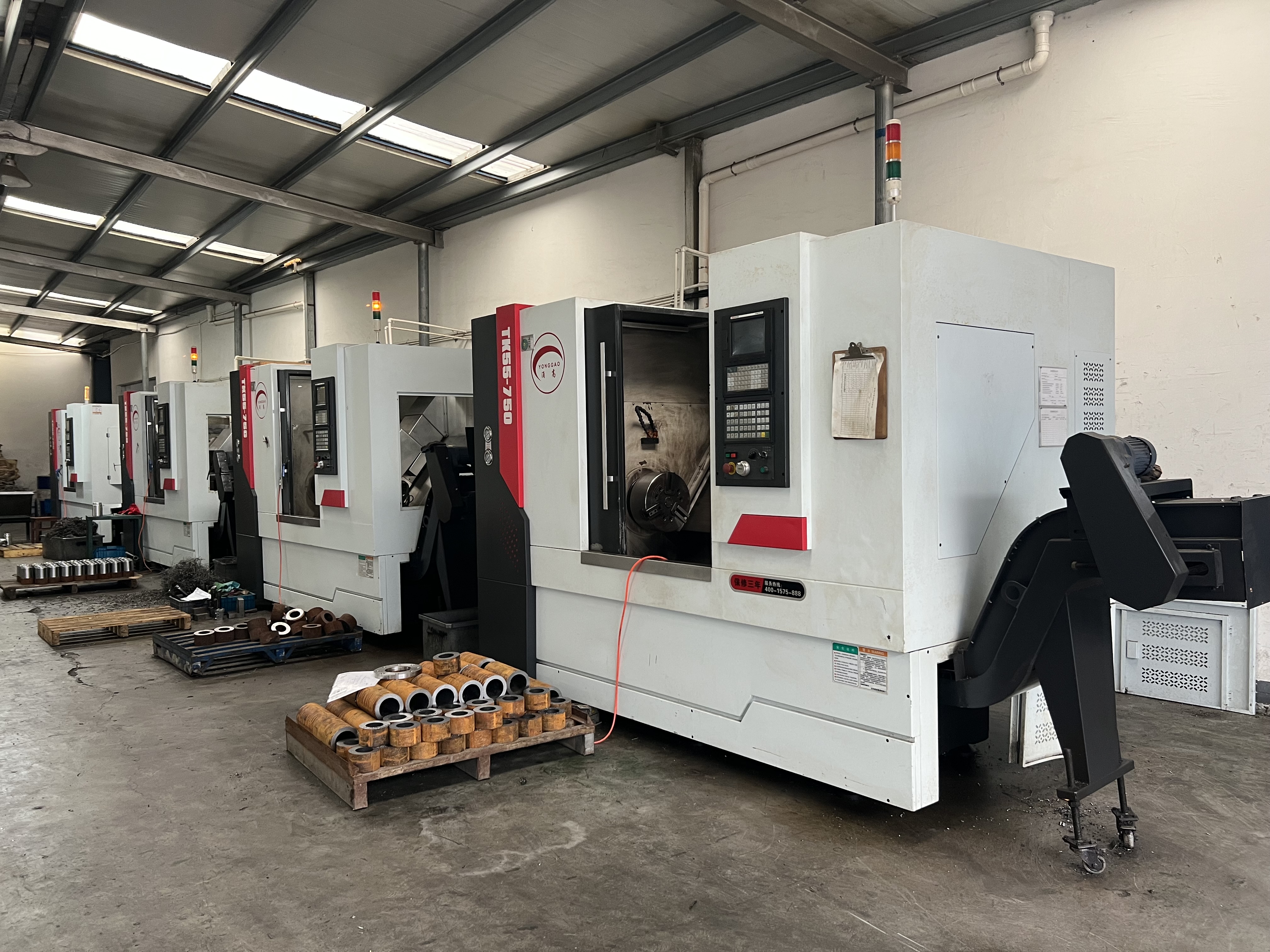
Fully automated CNC workshop: adapter production runs at series scale, which is the level at which shortlisting decisions are actually made.
The Shortlisting Problem: Fewer Series, More Port Coverage
A shortlist is a risk-management instrument. Thread standards fragment hydraulic connections into several incompatible families: SAE 37 degree flare (JIC), O-ring boss (ORB), O-ring face seal (ORFS), NPT and NPTF taper threads, BSPP parallel threads, BSPT taper threads, and metric DIN connections. A single mixed-origin fleet can present four or five of these on the same machine, and a shortlist that covers only two of them converts a routine replacement into a production stoppage.
The opportunity runs in the opposite direction. Adapter numbering systems are organised by family, so a buyer who understands the numbering logic can cover dozens of port combinations with a handful of series. That reduces SKU count, reduces picking errors, and makes stock planning predictable. The cost of choosing wrongly is therefore not the unit price of the part; it is the value of the machine that is standing still, plus the container of fittings that cannot be used.
Five evaluation criteria belong at series level rather than part level. First, does the numbering range cover the port types that appear in your installed base? Second, does the family use a sealing method that can be re-made in the field, or one that permanently deforms on first assembly? Third, are material, plating, and pressure data documented rather than implied? Fourth, does the supplier's stock and minimum-order policy match how you actually buy? Fifth, does the supplier publish limitations as clearly as capabilities? On mobile machinery, where most of the demand sits, those questions matter more than catalogue breadth: the mobile hydraulics segment held over 58% of total hydraulics market revenue share in 2024 (Grand View Research), and field re-makeability is a defining requirement in that segment.
Five Documented Adapter Series for 2026 Shortlists
NingBo NJ Hydraulic Adapter Co., Ltd is a manufacturer of hydraulic adapters and machined hydraulic components based in Fenghua, Ningbo, China, founded in 2004 and producing according to TS16949 standards with a documented annual production capacity of 4,000,000 units. Its published ranges give a concrete example of what a series-level shortlist looks like in practice.
| Series family | Documented models | Thread / sealing type | Shortlist it when |
|---|---|---|---|
| 6800 series SAE adapters | 6801; 6802; 6803; 6804; 6805; 6806; 6807; 6808; 6809; 6810; 6815; 6818; 6820; 6832; 6835; 6840; 6850 | JIC / ORB / ORFS | Ports are SAE 37 degree flare, O-ring boss, or face-seal |
| 2400–2600 JIC group | 2403; 2404; 2405; 2406; 2408; 2500; 2501; 2502; 2503; 2504; 2505; 2601; 2602; 2603; 2605; 2606; 2608; 2609 | JIC and JIC-to-NPT | JIC lines must be bridged to NPT ports or hoses |
| 5000 / 5400–5600 NPT fittings | 5000; 5404; 5405; 5406; 5406-C; 5406-HP; 5406-P; 5406-SHP; 5500–5505; 5600–5605; 5650; 5652 | NPT thread fitting | NPT / NPTF ports dominate the installed base |
| 1B series BSPP fittings | 1B; 1B4; 1B9; 1BG; 1BG4; 1BG9; 1BH; 1BH9; 1BJ; 1BK; 1BM; 1BN; 1BO; 1BT; 1BT9; 2B; 2B9; 2BJ; 2GB; 2HB; 22NB; 2TB9; 2OB; 2TB; 3B; 4B; 4BN; 5B; 5BN; 5NB; 5BT; 5GB; 5OB; 5TB9; 6B; 7B; 7B9; 9B; EB; AB; BB | BSPP parallel thread | European and Asian parallel-port equipment |
| 1T / 1BT series BSPT fittings | 1T; 1T9; 1BT; 1ST; 4T; 5T | BSPT tapered thread | Mating ports are BSPT, not BSPP |
| 0300 cap nut and lock nut range | 0304C; 0306; 0318; 0319; 0403; 0500; FS0304C; FS0306; FS0318; FS0319 | Accessory lock nut | Assembly completion and stock completeness |
1. 6800 Series: SAE JIC, ORB and ORFS Adapters (6801–6850)
The 6800 range is the broadest single family in the documented set, spanning 17 models from 6801 through 6850 and covering JIC, ORB, and ORFS configurations. It includes shape and orientation options such as a male JIC to adjustable ORB 90 degree elbow, which is the classic case where orientation, not thread size, decides the part. This is the family to shortlist when the machine uses SAE ports, when a hose run must be turned through an elbow without adding a second joint, and when an adjustable O-ring boss allows the fitting to be aligned after tightening. It is also the family to check first when a face-seal connection is specified: ORFS fittings for dash size -4 (1/4 inch) are rated for 6000 PSI working pressure under SAE J1453.
2. 2400–2600 Series: JIC and JIC-to-NPT Adapters
The 2403 to 2609 group carries JIC adapters and JIC-to-NPT adapters. Its role on a shortlist is translation: it converts a 37 degree flared JIC connection into an NPT thread, which is exactly the mismatch that appears when North American hose assemblies meet imported equipment, or when a repair is done with whatever port the replacement component carries. ISO 8434-2:2007 specifies design and performance requirements for 37 degree flared connectors covering tubes from 6 mm to 50.8 mm, which is the dimensional frame a buyer should assume when checking that a JIC adapter sits within a specified tube range rather than at its edge.
3. 5000 / 5400–5600 Series: NPT Thread Fittings
NPT remains the dominant thread convention in many North American machinery circuits, and the 5000, 5404–5406, 5500–5505, and 5600–5605 ranges, up to 5650 and 5652, cover that convention. The shortlist argument here is straightforward: if most of the ports you touch are tapered pipe threads, this family earns stock space. Two cautions are worth stating before ordering. First, the 5406 group carries documented variants (5406, 5406-C, 5406-HP, 5406-P, 5406-SHP), and the specific variant must be confirmed against the port requirement rather than assumed from the base number. Second, tapered threads seal by interference, so torque discipline and sealant practice directly affect joint reliability; NPTF straight threads for 1/4 inch size typically carry a working pressure rating of 4000 PSI with a 4:1 safety factor.
4. 1B Series: BSPP Parallel Thread Fittings
The 1B range is the largest numbering family in the documented set, running from 1B and 1B4 through 1BG, 1BH, 1BJ, 1BK, 2B, 2GB, 3B, 4B, 5B, 6B, 7B, 9B, EB, AB and BB. It covers BSPP parallel thread fittings, including configurations such as 1BG. Parallel threads seal on a washer rather than on thread deformation, which makes them comparatively forgiving to re-make when a joint is opened during service access. This is the family to shortlist for European and Asian equipment, and it is also the family where identification discipline pays: BSPP and BSPT have the same nominal thread appearance at a glance and are not interchangeable.
5. 1T / 1BT Series: BSPT Tapered Thread Fittings
The BSPT family is documented across 1T, 1T9, 1BT, 1ST, 4T, and 5T. It exists on the shortlist because tapered BSP ports are still specified widely enough that a BSPP-only inventory generates failures. Buyers generally hold a smaller quantity of BSPT than BSPP, but zero coverage is the expensive position: a missing tapered adapter stops a machine just as effectively as a missing main-line part.
For stock completeness, the cap nut and lock nut range (0304C, 0306, 0318, 0319, 0403, 0500 and the FS0304C, FS0306, FS0318, FS0319 variants) belongs on the same list. It shares the same documented pressure range of 3000–6000 PSI, the same material options, and the same maximum stable operating temperature of 220 degrees Celsius as the adapter families above.
Technical Explanation: What Each Sealing Method Requires
Shortlisting by thread family is only safe if the sealing mechanism behind each family is understood, because the sealing method decides how a joint behaves after it has been opened and re-made.
| Connection | Sealing principle | Reference point |
|---|---|---|
| JIC 37 degree flare | Metal-to-metal flare seat; no sealant required | ISO 8434-2:2007, tubes 6 mm to 50.8 mm |
| ORFS face seal | Flat face plus O-ring | SAE J1453; -4 (1/4 inch) rated 6000 PSI working |
| ORB O-ring boss | O-ring plus washer on a boss; adjustable elbow locked by nut | Orientation set before final tightening |
| NPT / NPTF | Taper thread interference; sealant practice matters | 1/4 inch NPTF typically 4000 PSI working, 4:1 safety factor |
| BSPP | Parallel thread with bonded washer; no thread deformation | Re-makeable after service access |
| BSPT | Taper thread; sealant and torque discipline required | Not interchangeable with BSPP |
| Metric DIN tube fittings | 24 degree cone with nut and ferrule | DIN 2353 categories: LL 100 bar, L 315–500 bar, S 630–800 bar |
Material and rating documentation is the second half of the technical picture. The adapter ranges described here are offered in carbon steel, SS304, and SS316, with a documented pressure range of 3000–6000 PSI and a maximum stable operating temperature of 220 degrees Celsius. Corrosion performance is documented through a 120-hour salt spray test using a trivalent chromium surface treatment, with white rust observed at 120 hours and red rust at 240 hours. For stainless duty, AISI 316 hydraulic adapters support working temperatures from -60 degrees Celsius up to +400 degrees Celsius according to DIN 17440. Steel material accounted for 45.2% of hydraulic fitting revenue share in 2025, driven by high-pressure durability requirements (Dataintelo).
Where These Series Are Used
The documented application base for these families is broad and largely mobile: construction machinery, agricultural machinery, general-purpose machinery, firefighting equipment, marine machinery, mining, transportation, automotive hydraulic assemblies, oil and gas extraction, iron and steel metallurgy, and water conservancy engineering. Typical mating equipment includes hydraulic hoses, hydraulic cylinders, hydraulic pumps, threaded bolts, pipe joints, and mechanical cylinder assemblies, with sealing, thread locking and fastening, and pressure-bearing protection as the main functions.
The documented operating condition for these assemblies is demanding rather than nominal: a static pressure of 6,000 PSI and a burst pressure of 9,000 PSI without deformation, while maintaining continuous operation and seal integrity under high temperature and high pressure, with rust, heat, and pressure resistance specified together. Demand-side data explains why that envelope matters. Over 58% of total hydraulics market revenue share in 2024 came from mobile hydraulics (Grand View Research), and Asia accounted for 74% of global industrial robot installations in 2024 (Ken Research), a figure that reflects how much precise hydraulic connection work now sits behind automated production machinery.
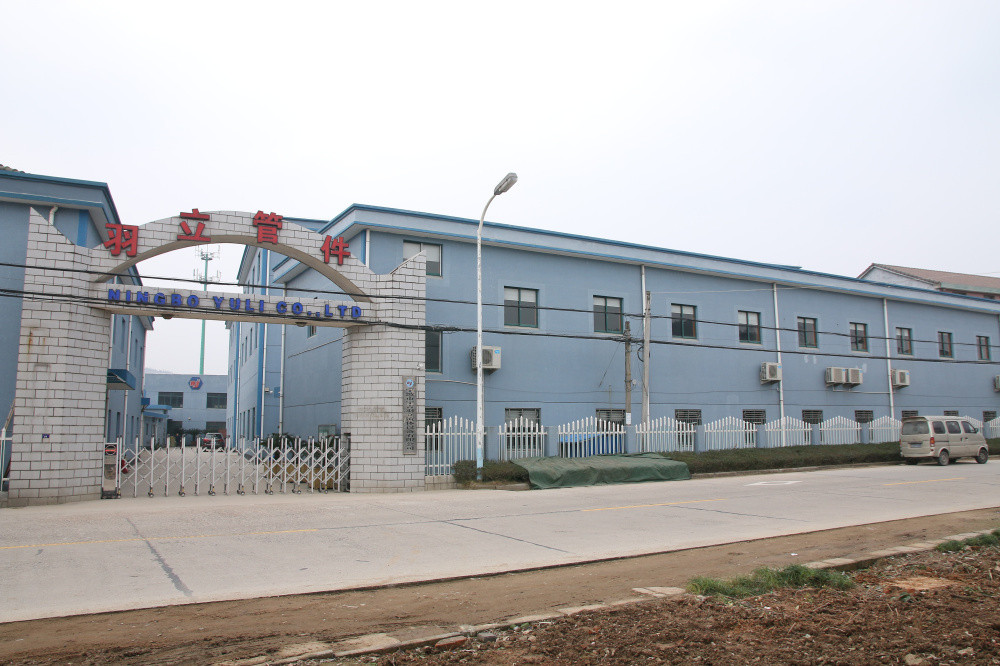
Production department factory gate at the Fenghua, Ningbo facility, where the documented adapter ranges are manufactured.
2026 Market Trend Analysis
Three verified data points frame the 2026 shortlisting decision. The hydraulic fittings market is projected to reach USD 7.9 billion by 2034 from USD 4.8 billion in 2025, with adapters holding the largest product-type share at 28.4% (Dataintelo). A separate estimate puts growth in the fittings and adapters market at a CAGR of 4.5% between 2025 and 2033, reaching USD 5.8 billion. Asia-Pacific led global hydraulic fitting revenues in 2025 with an estimated 38.6% share, which aligns with the concentration of both manufacturing capacity and equipment demand in the region.
These sources do not measure identical scopes, and buyers should treat the absolute values as directional rather than interchangeable: estimates for the fittings and adapters sub-segment differ materially from estimates for hydraulics equipment as a whole. What the data does support is a stable, moderate-growth demand environment in which series coverage and documentation quality, rather than volume alone, determine who can serve a distribution channel reliably.
Where the Shortlist Stops: Limits and Trade-offs
A shortlist that is presented without boundaries is not a shortlist. The following limits apply to the families described above.
- Catalogue coverage is not universal. The documented ranges cover the configurations listed; non-standard items require production from drawings or samples, which follows a manufacturing cycle rather than a stock cycle.
- The documented working envelope is 3000–6000 PSI with a maximum stable operating temperature of 220 degrees Celsius. Applications outside that envelope require a different specification, not a higher-rated version of the same part; for reference, DIN 2353 heavy (S) tube fittings are specified up to 630–800 bar.
- Material selection is a trade-off. Carbon steel with trivalent chromium treatment passes the documented 120-hour salt spray test, while SS304 and SS316 resist corrosion more strongly at higher material cost. Salt spray data is corrosion evidence under test conditions; it is not a substitute for choosing stainless steel in saltwater or aggressive chemical service.
- Tapered threads (NPT, BSPT) seal by interference and are more sensitive to torque, sealant, and repeated assembly than JIC or ORFS connections. Parallel threads (BSPP) depend on the correct bonded washer being present.
- Identification risk is real. BSPP and BSPT are frequently confused, and variant suffixes within a group such as 5406 must be confirmed against the port rather than assumed.
- Stock-based flexibility has a boundary of its own: orders can ship with no minimum quantity where stock is available, but that condition depends on inventory at the time of order rather than on a general policy.
Manufacturing and Long-Term Supply Context
Execution-stage buyers are usually assessing a supplier as much as a part. NingBo NJ Hydraulic Adapter Co., Ltd was founded in 2004 and operates a 20,000 square metre facility with approximately 200 staff, including a four-engineer R&D team, producing according to TS16949 standards with an annual production capacity of 4,000,000 units. Its product portfolio extends beyond adapters to flanges, valves, valve components, plungers, cylinder accessories, wheel hubs, auto parts, and forged and cast components, including non-standard items. Approximately 75% of output is exported, with the United States and Canada as the main markets, and the company is located in Fenghua, Ningbo, Zhejiang Province.
Commercial terms at execution stage are documented as follows: minimum order quantity of 1 unit; delivery terms including FOB, CIF, EXW and C&F; acceptance either door-to-door or at the port of arrival; and payment by full advance payment before shipment, with alternative payment methods open to discussion once a long-term partnership has been established. Stock items can ship without a minimum quantity where stock is available, volume discounts apply, and orders above USD 10,000 qualify for free FOB terms. Customisation options include carton and plastic bag packaging, laser-engraved logos, and production to drawings or samples. On after-sales, the documented process is that the customer provides inspection photos and videos of non-conforming products, and once verification confirms responsibility, the supplier manufactures compliant replacements shipped by the next sea consignment or by air, or processes a deduction subject to supporting documentation. Missing or wrong-delivered items are handled the same way after photographic verification.
Future Outlook
Through the remainder of the decade, two forces are likely to shape adapter shortlists. The first is regional demand concentration: with Asia-Pacific holding an estimated 38.6% of fitting revenues and mobile hydraulics accounting for the majority of the broader hydraulics market, series coverage for mobile machinery ports will remain the core purchasing requirement. The second is documentation. As adapters hold the largest product-type share within the fittings market, qualification processes move toward asking for material grades, pressure ratings, and corrosion test results as standard attachments rather than as exceptions. Suppliers that can present series-level documentation, stated limits, and consistent replacement processes will be easier to keep on a long-term list than those that compete on unit price alone.
FAQ
Which adapter series should be shortlisted first when the equipment fleet is mixed?
Start with the thread standard rather than the part number. Where SAE ports dominate, the 6800 series (6801–6850) covers JIC, ORB and ORFS configurations; where NPT ports dominate, the 5000 and 5404–5652 ranges apply; where European or Asian parallel ports are present, the 1B BSPP range including 1BG-type configurations applies; and where tapered BSP ports appear, the 1T, 1T9, 1BT, 1ST, 4T and 5T range applies. Most buyers begin with the two families that cover the majority of their installed ports and add further families when a failure demonstrates the gap.
How do JIC, ORB, ORFS, NPT and BSP connections differ in the way they seal?
JIC connections seal on a 37 degree metal-to-metal flare and require no sealant; ISO 8434-2:2007 covers 37 degree flared connectors for tubes from 6 mm to 50.8 mm. ORFS connections seal on a flat face with an O-ring and are rated for 6000 PSI working pressure at dash size -4 under SAE J1453. ORB connections seal with an O-ring and washer on a boss, and an adjustable elbow allows orientation to be set before final tightening. NPT and NPTF tapered threads seal by thread interference, with 1/4 inch NPTF straight threads typically rated at 4000 PSI working pressure with a 4:1 safety factor. BSPP seals on a parallel thread with a bonded washer, while BSPT is a taper thread and is not interchangeable with BSPP.
What pressure and temperature range do these adapter series support?
The documented pressure range for the adapter and cap nut ranges described is 3000–6000 PSI, with a maximum stable operating temperature of 220 degrees Celsius, in carbon steel, SS304 or SS316. Corrosion performance is documented through a 120-hour salt spray test on a trivalent chromium surface treatment, with white rust at 120 hours and red rust at 240 hours. Where stainless material is used, AISI 316 hydraulic adapters support working temperatures from -60 degrees Celsius up to +400 degrees Celsius according to DIN 17440. Duties above the documented pressure envelope require a different fitting specification rather than a higher rating of the same part.
Which material and surface treatment should be specified for corrosive environments?
Carbon steel with trivalent chromium treatment is the volume option and carries the documented 120-hour salt spray result. SS304 and SS316 are the appropriate choices where saltwater, marine, or chemically aggressive conditions are present, with AISI 316 specified for the widest temperature range under DIN 17440. Material selection changes cost and machinability, so the decision should follow the actual service environment rather than a general preference for stainless. Buyers evaluating corrosion claims should request the salt spray test documentation rather than accept a corrosion-resistance description on its own.
How should long-term distribution partners evaluate supply continuity and after-sales terms?
Documented terms provide the basis for comparison: minimum order quantity of 1 unit, delivery terms including FOB, CIF, EXW and C&F, and acceptance either door-to-door or at the port of arrival. Payment is by full advance payment before shipment, with alternative payment methods open to discussion after a long-term partnership has been established. Orders can ship with no minimum quantity where stock is available, volume discounts apply, and orders above USD 10,000 qualify for free FOB terms. For non-conforming or missing items, the documented process requires customer inspection photos and videos, after which the supplier either ships compliant replacements by the next sea consignment or by air, or processes a deduction subject to supporting documentation.
Reference material: the manufacturer's product catalogue is publicly available for download at NingBo NJ Hydraulic Adapter catalogue (PDF).